How to Read a Drone EMI Test Without Missing Real Risk
Publication Date
author
A drone electromagnetic interference test can reveal far more than a pass/fail label—especially for teams comparing heavy lift uav for construction platforms, mapping drone for mining industry systems, or validating uav gps rtk accuracy millimeter claims. This guide shows engineers, operators, buyers, and decision-makers how to read EMI data correctly, spot hidden flight risks, and separate marketing language from real electromagnetic resilience.
Why a “Pass” EMI Report Still May Hide Real Flight Risk
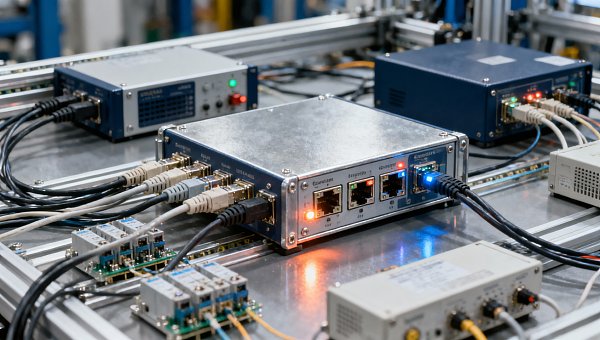
[[IMG:img_01]]In UAV procurement, EMI test interpretation is often reduced to one question: did the drone pass? That shortcut is risky. A pass result may only confirm that the aircraft stayed within a selected test boundary, frequency band, installation state, or operating mode. It does not automatically prove stable behavior when payload power systems, RTK modules, radios, cameras, and mission computers operate together in a harsh field environment.
For information researchers and procurement teams, the real task is to read what was tested, what was not tested, and how close the platform came to functional upset. In many commercial UAV programs, the difference between acceptable electromagnetic compatibility and mission risk appears in margins, not headlines. A control link that survives at one lab setup may still degrade when a heavy lift uav for construction adds a new battery architecture or when a mapping drone for mining industry works near mobile comms towers and high-current machinery.
Operators face a different pain point. They need to know whether EMI behavior will affect positioning hold, compass stability, payload triggering, telemetry continuity, or video downlink quality during continuous flights of 20–45 minutes. A report that focuses only on emissions curves without recording navigation deviation, packet loss, or sensor drift leaves the most important operational questions unanswered.
At TSV, the useful reading method starts with engineering context rather than marketing labels. Parameters do not lie, but reports can still be incomplete. A credible EMI review links laboratory data to mission architecture, identifies coupling paths, and checks whether interference risk remains controlled across 3 layers: component level, integrated airframe level, and real application level.
What decision-makers should verify first
- Whether the report covers both emissions and immunity, not just one side of electromagnetic performance.
- Whether the drone was tested in mission-relevant configurations such as payload on, RTK active, datalink transmitting, and motors under representative load.
- Whether functional criteria were recorded, including GPS lock quality, compass behavior, link stability, and autopilot anomalies across multiple frequency ranges.
- Whether margin to limit was narrow, moderate, or comfortable, especially in the bands used by GNSS, telemetry, video, and onboard computing.
How to Read the Core Sections of a Drone EMI Test Report
A practical drone EMI test report usually includes test scope, standards reference, equipment under test configuration, operating modes, measurement setup, emissions results, immunity results, and observations of functional performance. Buyers should never read the graph before reading the setup. If the setup does not reflect expected mission states, the curve may look clean while real use remains vulnerable.
The most important details often appear in small technical notes. For example, was the aircraft tested with empty payload rails or with full sensor integration? Was the battery at nominal charge only, or across low and high states of charge? Were motors spinning at idle, hover-equivalent load, or high-throttle load? A platform can behave very differently across these conditions because cable harness currents, switching noise, and structural coupling paths change.
For teams evaluating uav gps rtk accuracy millimeter positioning claims, special attention should go to the GNSS and RTK chain. EMI may not cause total signal loss, yet it can still degrade carrier phase stability, increase correction dropouts, or trigger intermittent heading disagreement. That means the drone may not fail dramatically; it may simply lose the precision margin that the mission economics depend on.
The table below organizes the report sections that matter most when moving from technical reading to procurement judgment. It is designed for mixed audiences: engineers need technical depth, while senior buyers need a fast filter for hidden risk.
A strong report does not just say compliant or non-compliant. It shows the operating condition, the measurement method, and the observable system response. If those three pieces are disconnected, engineers will struggle to replicate findings, and procurement teams will struggle to compare suppliers on equal ground.
Three reading rules that prevent misinterpretation
First, compare the test mode to the use case. A mining survey platform flying near crushers, conveyors, and site communications has a different EMI exposure profile than a low-complexity agricultural scout. Second, inspect the acceptance criteria. Functional degradation that was classified as temporary may still be unacceptable for precision mapping or construction lifting. Third, review repeatability. One clean run is not enough if the mission demands daily operation over 6–12 month service intervals.
A useful engineering question
Ask this: if the drone encounters interference at the edge of the tested threshold, what exactly happens first? Does the video flicker, the compass bias shift, the RTK fix drop, or the autopilot switch mode? The answer reveals operational consequence, which is often more valuable than the compliance label itself.
Which EMI Signals Matter Most in Construction, Mining, and Precision RTK Missions?
Different UAV applications fail in different ways under electromagnetic stress. A heavy lift uav for construction may experience control instability or payload release concern when high-current power electronics, auxiliary modules, and long wiring runs increase internal emissions. A mapping drone for mining industry may continue flying but deliver lower-value output if geotag integrity, point cloud consistency, or trigger timing becomes unstable.
The evaluation focus should therefore align with mission loss, not just aircraft survival. For construction lifting, the first concern is usually command integrity and system stability under transient current demand. For mining mapping, the first concern is data integrity over repeated sorties, often 2–5 flights per day in dense equipment environments. For RTK-driven inspection or surveying, the first concern is whether precision positioning degrades before the user notices obvious alarms.
Teams often underestimate coupled effects. A mild emissions issue from power conversion may interfere with GNSS reception; that degraded position solution may then trigger flight controller corrections; those corrections may reduce image overlap or survey line quality. The EMI report should therefore be read as a system interaction document, not as an isolated electronics record.
The following comparison helps operators and buyers prioritize what to monitor in field acceptance tests after reviewing the lab report.
This is where TSV’s engineering benchmarking mindset becomes useful. Instead of accepting broad claims like anti-interference optimized, decision-makers should require mission-linked evidence. In many B2B drone programs, the meaningful question is not whether EMI exists, but whether the remaining interference stays below the threshold where output value drops, rework increases, or safety procedures tighten.
A field checklist for users and test teams
- Run at least 3 mission-representative operating modes: idle systems, nominal mission load, and peak communication or payload load.
- Track 4 functional indicators during exposure or site trials: GNSS status, link quality, attitude stability, and payload data continuity.
- Record whether anomalies are recoverable, repeatable, or escalating over 15–30 minute windows.
- Compare lab margins with site environment complexity before approving deployment at scale.
What Procurement Teams Should Ask Before Accepting an EMI Claim
Procurement mistakes often happen when technical documents are treated as proof without asking qualification questions. A supplier may provide an EMI report, but the report can still be weak for sourcing decisions if it does not define the exact system boundary. Did testing include the same antennas, cable lengths, battery pack, payload power converters, and firmware revision planned for delivery? If not, the report may describe a similar drone, not the purchased drone.
Senior buyers should translate EMI reading into supplier risk management. Narrow compliance margin can mean future redesign cost. Missing integrated testing can mean delayed commissioning. Limited functional logging can mean dispute difficulty if field instability appears after handover. In projects with 4–8 week pilot phases, those gaps can quietly extend validation time and increase internal engineering effort.
For cross-functional teams, a practical selection process uses 5 checkpoints: standards relevance, integrated configuration coverage, functional monitoring depth, margin sufficiency, and change-control discipline. That last point matters because drones often evolve through payload updates, radio changes, or software revisions. An old report may not remain decision-grade after configuration drift.
The table below can be used during supplier review meetings, RFQ comparison, or pre-award technical clarification. It keeps conversations anchored to evidence rather than sales wording.
A useful procurement decision does not require perfect certainty, but it does require visible engineering logic. The strongest suppliers can explain not just what passed, but why it passed, what changed after testing, and what conditions still deserve caution. That transparency shortens qualification cycles and reduces the hidden cost of downstream troubleshooting.
Questions worth asking in a technical review call
- Which mission configuration was used during EMI testing, and how different is it from the quoted delivery configuration?
- What were the 3 most interference-sensitive subsystems observed during testing?
- What mitigation methods were used: shielding, grounding changes, cable routing, filtering, antenna separation, or software fallback logic?
- If the platform is customized within 2–6 weeks after PO, what parts of the EMI assessment must be repeated?
Common Misreadings, Compliance Limits, and Practical Next Steps
One common mistake is assuming that an EMI report alone guarantees safe field operation. Electromagnetic compatibility is only one layer. Installation quality, antenna placement, grounding discipline, payload integration, firmware behavior, and site conditions all influence real performance. A drone with acceptable lab behavior can still suffer mission instability if retrofit changes introduce new cable loops or if site emitters create unexpected exposure patterns.
Another mistake is treating all failures equally. Some interference causes recoverable nuisance effects; other interference undermines navigation confidence, mission accuracy, or operator workload. For decision-makers, the practical distinction is whether the anomaly increases operational burden, reflight probability, or safety control requirements. In commercial programs, those secondary costs can matter as much as the aircraft price.
A disciplined implementation path usually has 4 stages: document review, lab result clarification, limited field validation, and controlled scale-up. Depending on mission complexity, this can take 1–2 weeks for a simple standard configuration or 3–6 weeks for a customized payload stack. The advantage of this staged approach is that it converts EMI paperwork into operational evidence before full rollout.
TSV supports this kind of evidence-based decision process by filtering noise out of technical claims. For teams working across robotics, UAV systems, sensors, and precision manufacturing supply chains, the same principle applies: exact parameters, tolerance logic, and traceable test conditions are more useful than promotional language. When the mission involves expensive hardware, dense environments, or high-precision outputs, engineering truth is a procurement tool, not just a technical ideal.
FAQ: the questions buyers and operators ask most
Does a passed drone EMI test prove reliable GPS and RTK performance?
Not by itself. It proves only that the platform met the tested criteria under the tested conditions. For uav gps rtk accuracy millimeter-level work, ask whether GNSS and RTK functions were actively monitored during testing, whether the antenna layout matched delivery configuration, and whether precision performance was verified again in mission-representative environments.
What matters more for a mapping drone for mining industry: emissions or immunity?
Both matter, but the priority depends on environment and mission value. Emissions affect whether the drone disturbs its own navigation and payload chain. Immunity affects whether external sources disturb the aircraft. In mining environments with heavy equipment and communications infrastructure, immunity evidence is often especially important, but it should still be read together with internal emissions behavior.
When should a heavy lift uav for construction be retested?
Retesting or at least targeted reassessment is wise after meaningful changes to payload power demand, cable routing, antennas, battery architecture, radio modules, or flight controller integration. Even if the frame and motors remain the same, electromagnetic behavior can change materially after these modifications.
What is the fastest way to compare two suppliers’ EMI evidence?
Use a structured matrix with 5 checks: standards relevance, tested configuration, frequency coverage, functional monitoring, and change-control traceability. If one supplier provides only pass statements and another provides condition-based results with subsystem observations, the second report is usually more useful for a serious B2B decision even before deeper engineering review.
Why Work With TSV When EMI Data Must Support Real Procurement Decisions
TechStat Vanguard is built for teams that cannot afford vague technical language. In hard-tech sourcing, the cost of misreading a parameter often appears later as redesign time, delayed qualification, repeat site testing, or unreliable field output. Our approach is to strip away non-verifiable claims and focus on measurable engineering facts across UAV and aerospace metrics, sensor behavior, automation systems, and precision manufacturing performance.
If your team is reviewing a drone EMI test, preparing a supplier shortlist, or validating whether a claimed anti-interference design fits construction, mining, inspection, or survey use, we can help frame the right technical questions. That includes parameter confirmation, report interpretation, test scope review, mission-fit analysis, and supplier comparison logic tailored to your deployment constraints.
For procurement leaders, we can support decision checkpoints such as whether a document is sufficient for RFQ closure, which configuration changes require renewed verification, and how to judge engineering margin before scaling orders. For operators and technical managers, we can help map EMI findings to real concerns such as GNSS drift risk, datalink resilience, payload compatibility, and validation sequencing over pilot programs.
Contact TSV if you need a data-driven review of drone EMI claims, support comparing heavy lift uav for construction options, assessment of mapping drone for mining industry electromagnetic suitability, or clarification of uav gps rtk accuracy millimeter-level evidence. A useful conversation can start with 6 concrete items: tested configuration, target mission, payload stack, required standards, delivery timeline, and quotation stage. That is how engineering truth becomes a practical buying advantage.
Search News
Hot Articles
- Carbon Fiber StructuresHow to Specify Aerospace Carbon Fiber Assemblies for Lightweight, Load-Bearing PartsJul 11, 2026
- Machine VisionXiaomi, Alibaba DAMO Academy Drive Open-Source Robotics Model Ecosystem, Lowering Algorithm Development Barriers for Overseas SMEs Adopting Chinese Robotics SolutionsMar 30, 2026
- Cobots & ArmsShanxi 'AI+' Conference Showcases Embodied Intelligence with Multinational Buyer Engagement: Key Industry ImplicationsMar 30, 2026
Popular Tags
Recommended News
 Jul 11, 2026How to Specify Aerospace Carbon Fiber Assemblies for Lightweight, Load-Bearing PartsAerospace carbon fiber assemblies: learn how to specify laminate design, load data, joining methods, and inspection controls for lighter, reliable load-bearing aerospace parts.Elena Rostova (UAV Systems Researcher)
 Mar 30, 2026Xiaomi, Alibaba DAMO Academy Drive Open-Source Robotics Model Ecosystem, Lowering Algorithm Development Barriers for Overseas SMEs Adopting Chinese Robotics SolutionsXiaomi & Alibaba DAMO Academy's open-source robotics models lower algorithm barriers for global SMEs. Boost efficiency in manufacturing, logistics & smart retail with ROS 2 compatible solutions.TSV Data Lab
 Mar 30, 2026Shanxi 'AI+' Conference Showcases Embodied Intelligence with Multinational Buyer Engagement: Key Industry ImplicationsShanxi 'AI+' Conference highlights embodied intelligence with Tesla, Ubtech & Jiantao showcasing multimodal robotics. 40+ global buyers validated tech on-site, creating new B2B channels for industrial automation & AI solutions.Chen Wei (Automation Lead Engineer)
 Mar 30, 2026Zhongguancun Unveils 6G Integrated Sensing-Computing-Intelligence Platform to Empower Embodied Robots for Global Industrial ApplicationsZhongguancun's new 6G platform revolutionizes industrial robotics with <10ms latency, empowering global automotive, logistics & port automation. Discover how this tech boosts China's smart manufacturing exports.TSV Data Lab
 Mar 30, 2026Mech-Mind Tianjin Embodied Intelligence R&D and Production Base Goes Live, Cutting Delivery Time by 20%–30% for Global Customized AMR+Vision SolutionsMech-Mind's Tianjin AMR+Vision production base cuts delivery time by 20%-30% for欧美 & Latin American markets. Discover how this PLd-certified facility accelerates customized robotics solutions for smart manufacturing and logistics.Chen Wei (Automation Lead Engineer)
 Mar 30, 2026Boao Forum Reveals 'Co-evolution of Big and Small Brains' Trend in Humanoid Robots, China's Embodied Intelligence Accelerates Adaptation to Overseas Manufacturing Service ScenariosDiscover how China's humanoid robots, featuring 'Co-evolution of Big and Small Brains,' are revolutionizing global manufacturing. Learn about Embodied Tian Gong 3.0's ISO compliance and overseas deployment at Boao Forum 2026.Chen Wei (Automation Lead Engineer)
 Mar 30, 2026China Railway Industrial Secures Patent for Embodied Robotics in Material Handling, Boosting High-Precision Delivery Capabilities for Overseas Infrastructure and Manufacturing ProjectsChina Railway Industrial's new patent for embodied robotics in material handling boosts high-precision delivery for global infrastructure & manufacturing. Discover how this innovation enhances logistics accuracy in automotive, rail transit & EPC projects.Chen Wei (Automation Lead Engineer)
 Oct 22, 2026KUKA Showcases Physical AI and iiQKA.AI Vision at NVIDIA GTC BerlinExplore KUKA’s Physical AI showcase at NVIDIA GTC Berlin and discover how iiQKA.AI Vision aims to simplify robotic vision integration and improve 2D and 3D scene recognition.TSV Data Lab
 Oct 22, 2026Robotic Machining of Advanced Composites: What Tolerances Are Achievable?Explore advanced materials machining robotics: discover what drives achievable composite tolerances and how to validate accuracy before investing in your next machining system.Dr. Marcus Vance
 Oct 21, 2026China’s Industrial Robot Exports Near RMB 10 Billion in First Nine Months of 2026China’s industrial robot exports neared RMB 10 billion in January–September 2026, with value rising faster than volume. Explore the data and what it could mean for suppliers.Chen Wei (Automation Lead Engineer)
 Oct 21, 2026Low-Latency Industrial Data Processing: Pricing and Key Cost DriversExplore industrial data latency price drivers, from edge hardware to integration and support. Learn how to compare quotes, verify performance, and avoid unnecessary costs.TSV Data Lab
 Oct 20, 2026KUKA Launches iiQKA.AI Vision to Simplify Industrial Image ProcessingKUKA iiQKA.AI Vision simplifies industrial image processing with controller-based 2D and 3D vision. Explore drag-and-drop setup for vision-guided automation.TSV Data Lab
 Oct 20, 2026Smart Industrial Edge Devices: Key Criteria for Legacy PLC IntegrationChoose smart industrial edge devices for legacy PLC integration. Discover key criteria for compatibility, data quality, security, and reliable collection without disrupting control.TSV Data Lab
 Oct 19, 2026Choosing a Radar Sensor by Application: Range, Resolution, and Field of ViewSimplify radar sensor application based product selection. Compare range, resolution, and field of view to avoid blind spots and choose with confidence. Explore the guide.TSV Data Lab
 Oct 18, 2026Comparing Material Options for Procurement: Specs, Costs, and Supply RisksExplore procurement oriented technical content on material options, specs, costs, and supply risks. Compare alternatives to cut hidden expenses and make confident sourcing decisions.Dr. Marcus Vance
 Oct 17, 20265-Axis CNC Positioning Accuracy: How to Interpret ISO 230-2 Test ResultsAssess 5 axis CNC machining positioning accuracy with ISO 230-2. Learn to interpret repeatability, reversal error, and test conditions to compare suppliers and make confident acceptance decisions.Dr. Marcus Vance
 Oct 16, 2026Choosing a Rugged Edge AI Box Supplier: Thermal Tests and Lifecycle SupportChoose a rugged edge AI box supplier with proven thermal performance and reliable lifecycle support. Discover the tests and commitments to verify before you buy.TSV Data Lab
 Oct 15, 2026R&D Cost Reduction Services: How to Evaluate Fees, Savings, and ROIEvaluate R&D cost reduction services with confidence. Compare fees, verify savings, and calculate ROI without compromising performance. Discover how to choose a provider that delivers real value.Chen Wei (Automation Lead Engineer)
 Oct 22, 2026How Do You Test AMR Navigation Accuracy in a Warehouse?Test AMR navigation accuracy in warehouses with practical methods for localization, path tracking, and docking. Learn to set tolerances and compare robots before deployment.Chen Wei (Automation Lead Engineer)
 Oct 21, 2026How Should You Balance Cobot Payload Against Reach?Explore cobot payload versus reach to choose the right robot. Learn how tooling, load limits, workspace, and cycle time affect performance—and avoid costly selection mistakes.Chen Wei (Automation Lead Engineer)
 Oct 20, 2026How Do You Measure Industrial IoT Gateway Latency Under Load?Measure industrial IoT gateway latency under load with reliable timestamps, realistic traffic, and tail-latency analysis. Discover how to expose bottlenecks and choose the right gateway.TSV Data Lab
 Oct 19, 2026How Do You Verify That Precision Machined Parts Meet Tolerances?Master precision machining tolerance verification with the right tools, datum setups, and acceptance rules. Learn how to validate parts confidently and reduce costly inspection errors.Dr. Marcus Vance
 Oct 18, 2026What Should an AS9100 Machining Supplier Checklist Include?Build an AS9100 machining supplier checklist that verifies capability, traceability, inspection, and outsourced processes. Discover what to check before approving your next aerospace supplier.Dr. Marcus Vance
 Oct 17, 2026How Should You Interpret Industrial Robot Repeatability Specs?Decode industrial robot repeatability specifications, understand ISO 9283 test conditions, and avoid costly selection mistakes. Learn how to verify performance for your process.Chen Wei (Automation Lead Engineer)