Drone Electromagnetic Interference Test Results That Often Mislead
Publication Date
author
Drone electromagnetic interference test results can look decisive yet still distort real-world risk. For teams comparing a heavy lift uav for construction or a mapping drone for mining industry, misleading data can undermine uav gps rtk accuracy millimeter claims, flight controller latency benchmark assumptions, and drone telemetry range test expectations. This article shows how to read EMI results through an engineering lens, not a marketing one.
Why drone EMI test reports often look stronger than they really are
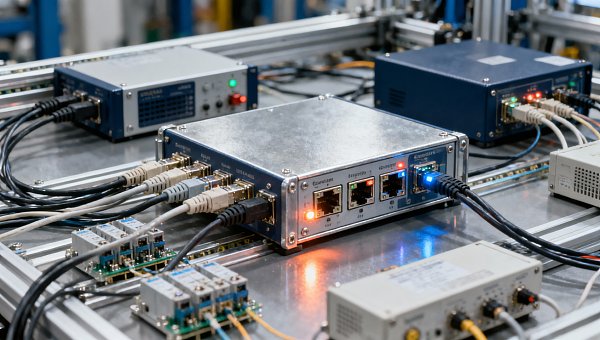
[[IMG:img_01]]In UAV procurement, electromagnetic interference data is often presented as a pass or fail summary, but that format hides the variables that matter most in field use. A drone can pass a bench test inside a controlled chamber and still show unstable GNSS lock, compass deviation, video downlink dropouts, or flight controller anomalies once it operates near cranes, substations, blasting equipment, diesel generators, or dense industrial radio traffic.
The first problem is test simplification. Many reports compress multiple exposure conditions into 1 headline number or 1 compliance statement. That is not enough for information researchers, operators, or buyers who need to know whether the airframe was tested with full payload, which antennas were active, what cable routing was used, and whether the test covered both radiated and conducted susceptibility over realistic frequency bands such as 80 MHz–6 GHz.
The second problem is configuration drift. EMI behavior changes when battery chemistry, gimbal wiring, RTK modules, radar altimeters, payload computers, and power distribution boards change. A platform marketed to construction, mining, survey, or industrial inspection teams may have 3–5 common payload combinations. If the report only reflects the lightest baseline configuration, its conclusions can mislead procurement teams evaluating mission-ready reliability.
What gets hidden behind a “passed” label
A single pass label may ignore recovery behavior. For example, two systems can both maintain control under interference, yet one may recover telemetry in less than 2 seconds while another takes 10–15 seconds. In mapping, corridor inspection, or heavy lift construction work, that difference affects route continuity, safety margin, and mission productivity.
Another hidden factor is threshold proximity. If a drone only passes with narrow margin, minor production variation can move units closer to susceptibility limits. TSV’s engineering-first reading of test data emphasizes tolerance, repeatability, and configuration traceability rather than headline claims. That matters because procurement decisions are not made for a single demo unit but for fleets, replacements, and future payload integrations over 12–36 month planning horizons.
- Check whether the report states test mode: hover, cruise simulation, payload active, datalink active, and RTK enabled or disabled.
- Check whether results include both interference onset and post-event recovery time, not only survival.
- Check whether the tested build reflects the actual purchased BOM, firmware revision, antenna placement, and cable harness design.
Which EMI data points matter for heavy lift UAV, mapping, and mining operations?
Not every application interprets interference the same way. A heavy lift uav for construction may prioritize command stability, return-to-home integrity, and power system resilience during high-current load swings. A mapping drone for mining industry may care more about uav gps rtk accuracy millimeter claims, timestamp integrity, magnetometer bias, and georeferencing consistency across repeated sorties. The same EMI report can therefore be relevant in one scenario and incomplete in another.
Teams should separate mission-critical functions into at least 4 domains: navigation, control, payload, and communications. Each domain can fail differently under interference. Navigation drift may stay hidden until post-processing. Flight controller latency benchmark degradation may remain within safe flight limits but still reduce obstacle avoidance confidence. Telemetry range can appear normal in open-field tests yet collapse around reflective industrial structures.
The table below translates EMI reading priorities by application. It helps buyers avoid a common mistake: comparing drones on generic compliance language instead of scenario-linked operational outcomes.
This comparison shows why procurement teams should request application-specific evidence instead of universal claims. In practice, 3 drones with similar published telemetry range test numbers can behave very differently when the mission environment introduces metal density, switching noise, or co-located radios. TSV recommends linking every EMI review to a mission profile, not just a catalog specification sheet.
The minimum engineering questions to ask
Ask whether the vendor measured RTK performance under active datalink load, whether the payload was powered from the same bus as the flight controller, and whether any test included intentional frequency sweeps across the command, video, and GNSS ecosystem. If those details are missing, the report may be useful for screening but not for final source selection.
A practical 4-point review sequence
- Identify the mission profile: payload mass, flight duration, altitude band, and radio environment.
- Map the report to subsystems: GNSS, IMU, compass, telemetry, video link, and payload data path.
- Check test margins, not just pass labels, including degradation thresholds and recovery time.
- Request field validation over 2–3 representative locations before committing fleet purchase.
How to compare EMI reports without being trapped by selective parameters
Most misleading comparisons happen when teams place side-by-side brochures next to side-by-side engineering reports as if they were equivalent. They are not. One supplier may emphasize flight controller latency benchmark numbers measured under ideal RF conditions. Another may publish a broader susceptibility range but include little detail on payload-induced noise. The safer approach is to compare on structure, not on slogans.
A robust comparison framework should include at least 5 dimensions: test scope, configuration fidelity, environmental realism, failure criterion, and repeatability. For enterprise decision-makers, this reduces the chance of selecting a platform that looks compliant on paper but creates hidden integration costs after deployment. Those costs often surface as re-tuning, shielding modifications, firmware changes, repeated flight acceptance tests, and delayed operational handover across 2–8 weeks.
The next table is designed as a buyer-oriented filter. It helps information researchers and procurement staff distinguish useful drone electromagnetic interference test results from reports that are technically thin or commercially selective.
This kind of framework supports rational sourcing. It also reflects TSV’s operating principle: parameters do not lie, but isolated parameters can still mislead if they are removed from system context. For UAV and aerospace metrics, context means wiring architecture, load profile, firmware behavior, and the electromagnetic character of the actual jobsite.
Why field-equivalent interpretation matters more than lab theater
Lab data is necessary, but it is not the final truth. Industrial users should treat it as a controlled baseline. The closer the report gets to field-equivalent conditions, the more valuable it becomes. A report that includes active payload power draw, realistic cable routing, and simultaneous radio use often tells you more than a visually impressive document full of charts but thin on operating state disclosure.
Procurement checklist: what buyers, operators, and CTOs should verify before approval
For B2B teams, the cost of misunderstanding EMI goes beyond technical inconvenience. It affects supplier qualification cycles, spare part planning, mission readiness, and contract risk. A procurement review should therefore combine engineering evidence with implementation reality. If the drone fleet will be deployed across construction sites, mines, utilities, or industrial plants, EMI assessment should be part of source selection, acceptance, and periodic validation.
A useful review path has 3 stages. Stage 1 is document screening over 3–7 days. Stage 2 is technical clarification with the vendor, usually 1–2 meetings plus data exchange. Stage 3 is controlled field validation over 1–2 sites. This staged approach helps teams reduce trial-and-error costs without slowing every project into endless lab work.
Key checks before issuing a purchase order
- Confirm whether EMI testing covered the exact payload class you plan to use, including camera, LiDAR, RTK rover, release mechanism, or edge processor.
- Request test condition disclosure: frequency range, field strength levels, power source, cable harness layout, and software version.
- Ask for symptom-level reporting, not just compliance language: GNSS drift, telemetry packet loss, video latency, compass upset, and recovery sequence.
- Verify whether post-sale modifications such as new antennas, third-party sensors, or battery substitutions could invalidate the original report.
- Define acceptance tests in the contract, including at least 4–6 checks relevant to your mission profile and site conditions.
Operators should also be included early. They often detect field symptoms that procurement documentation misses, such as intermittent attitude twitch near rebar-dense structures or recurrent loss of RTK fix during specific flight segments. Their feedback turns abstract drone telemetry range test claims into usable operational evidence.
A simple acceptance matrix for deployment teams
Use an acceptance matrix with mission-specific pass bands rather than generic compliance language. For example, define acceptable navigation continuity, control response, and data link behavior over repeated flights of 15–30 minutes under representative RF conditions. This makes vendor comparison more objective and reduces argument after delivery.
Standards, misconceptions, and the questions that should shape your next evaluation
Many buyers assume that if a UAV references recognized EMC or environmental standards, the system is automatically suitable for harsh industrial deployment. That is a misconception. Standards provide a framework, not a complete operational guarantee. The engineering question is not only whether a test was performed, but how close that test comes to the operational electromagnetic environment the drone will face.
Another misconception is that better shielding alone solves everything. In reality, susceptibility can also come from grounding strategy, return current paths, antenna separation, connector quality, firmware filtering, and synchronization between payload and flight systems. A platform can show acceptable shielding in isolation and still experience control or navigation instability when subsystems interact under load.
FAQ: the most useful questions to ask about drone EMI test results
How should I read uav gps rtk accuracy millimeter claims when EMI is involved?
Treat millimeter-level claims as conditional, not universal. RTK accuracy depends on correction quality, antenna placement, satellite visibility, multipath environment, and interference tolerance. Ask whether the claimed accuracy was maintained with payload active, datalink transmitting, and power demand near mission average rather than idle bench state.
Are open-field drone telemetry range test results enough for industrial procurement?
Usually not. Open-field range tests are useful baselines, but they rarely represent dense industrial RF conditions, steel reflections, or electrical noise. For mining, utilities, and construction, request at least 1 field-equivalent validation or a staged proof plan before full deployment approval.
What is the biggest warning sign in a vendor EMI report?
The biggest warning sign is lack of test context. If you cannot identify configuration, active subsystems, failure criteria, or recovery behavior, the report may be too thin for procurement use. It may still support early screening, but not final decision-making.
When should a company request third-party benchmarking or deeper technical review?
Request deeper review when the UAV supports revenue-critical operations, heavy payload transport, regulated inspection activity, or high-cost survey missions where reflight, drift, or control anomalies could create material schedule or safety impact. In those cases, spending extra time upfront often saves 2–4 cycles of troubleshooting later.
Why choose TSV for EMI interpretation, supplier screening, and technical due diligence
TechStat Vanguard exists for teams that need engineering truth rather than polished ambiguity. In UAV and aerospace metrics, that means helping R&D teams, procurement directors, operators, and executives read drone electromagnetic interference test results with the right filters: tolerance, traceability, scenario fit, and integration risk. We do not treat a pass statement as the end of the story. We examine what was tested, what was omitted, and what that means for real procurement decisions.
If you are comparing a heavy lift uav for construction, evaluating a mapping drone for mining industry, or reviewing flight controller latency benchmark and drone telemetry range test claims, TSV can help structure the decision. Our work focuses on parameter confirmation, benchmarking logic, supplier qualification support, and engineering-first interpretation that reduces information noise across the hard-tech supply chain.
You can contact TSV to discuss specific evaluation items such as RTK stability under interference, payload-related EMI risk, acceptance test planning, supplier report review, likely delivery-stage verification points, and the practical questions to raise before quotation or pilot deployment. This is especially useful when your project timeline is tight, your certification expectations are strict, or your team needs a more disciplined basis for shortlist decisions.
- Parameter confirmation for navigation, control, telemetry, and payload interaction.
- Selection support for mission-specific UAV comparison and supplier screening.
- Review of delivery cycle assumptions, validation checkpoints, and field acceptance planning.
- Discussion of customization impact, compliance expectations, sample evaluation scope, and quotation communication.
When your decision depends on what the data really means, not how the brochure sounds, TSV provides the technical lens to move from attractive claims to usable engineering judgment.
Search News
Hot Articles
- Carbon Fiber StructuresHow to Specify Aerospace Carbon Fiber Assemblies for Lightweight, Load-Bearing PartsJul 11, 2026
- Machine VisionXiaomi, Alibaba DAMO Academy Drive Open-Source Robotics Model Ecosystem, Lowering Algorithm Development Barriers for Overseas SMEs Adopting Chinese Robotics SolutionsMar 30, 2026
- Cobots & ArmsShanxi 'AI+' Conference Showcases Embodied Intelligence with Multinational Buyer Engagement: Key Industry ImplicationsMar 30, 2026
Popular Tags
Recommended News
 Jul 11, 2026How to Specify Aerospace Carbon Fiber Assemblies for Lightweight, Load-Bearing PartsAerospace carbon fiber assemblies: learn how to specify laminate design, load data, joining methods, and inspection controls for lighter, reliable load-bearing aerospace parts.Elena Rostova (UAV Systems Researcher)
 Mar 30, 2026Xiaomi, Alibaba DAMO Academy Drive Open-Source Robotics Model Ecosystem, Lowering Algorithm Development Barriers for Overseas SMEs Adopting Chinese Robotics SolutionsXiaomi & Alibaba DAMO Academy's open-source robotics models lower algorithm barriers for global SMEs. Boost efficiency in manufacturing, logistics & smart retail with ROS 2 compatible solutions.TSV Data Lab
 Mar 30, 2026Shanxi 'AI+' Conference Showcases Embodied Intelligence with Multinational Buyer Engagement: Key Industry ImplicationsShanxi 'AI+' Conference highlights embodied intelligence with Tesla, Ubtech & Jiantao showcasing multimodal robotics. 40+ global buyers validated tech on-site, creating new B2B channels for industrial automation & AI solutions.Chen Wei (Automation Lead Engineer)
 Mar 30, 2026Zhongguancun Unveils 6G Integrated Sensing-Computing-Intelligence Platform to Empower Embodied Robots for Global Industrial ApplicationsZhongguancun's new 6G platform revolutionizes industrial robotics with <10ms latency, empowering global automotive, logistics & port automation. Discover how this tech boosts China's smart manufacturing exports.TSV Data Lab
 Mar 30, 2026Mech-Mind Tianjin Embodied Intelligence R&D and Production Base Goes Live, Cutting Delivery Time by 20%–30% for Global Customized AMR+Vision SolutionsMech-Mind's Tianjin AMR+Vision production base cuts delivery time by 20%-30% for欧美 & Latin American markets. Discover how this PLd-certified facility accelerates customized robotics solutions for smart manufacturing and logistics.Chen Wei (Automation Lead Engineer)
 Mar 30, 2026Boao Forum Reveals 'Co-evolution of Big and Small Brains' Trend in Humanoid Robots, China's Embodied Intelligence Accelerates Adaptation to Overseas Manufacturing Service ScenariosDiscover how China's humanoid robots, featuring 'Co-evolution of Big and Small Brains,' are revolutionizing global manufacturing. Learn about Embodied Tian Gong 3.0's ISO compliance and overseas deployment at Boao Forum 2026.Chen Wei (Automation Lead Engineer)
 Mar 30, 2026China Railway Industrial Secures Patent for Embodied Robotics in Material Handling, Boosting High-Precision Delivery Capabilities for Overseas Infrastructure and Manufacturing ProjectsChina Railway Industrial's new patent for embodied robotics in material handling boosts high-precision delivery for global infrastructure & manufacturing. Discover how this innovation enhances logistics accuracy in automotive, rail transit & EPC projects.Chen Wei (Automation Lead Engineer)
 Oct 23, 2026Choosing Industrial Sensing Systems for Global Plants: Protocol CompatibilityCompare industrial sensing systems international buyers can trust. Explore protocol compatibility, reduce integration risks, and select proven configurations for reliable global plant deployments.TSV Data Lab
 Oct 22, 2026KUKA Showcases Physical AI and iiQKA.AI Vision at NVIDIA GTC BerlinExplore KUKA’s Physical AI showcase at NVIDIA GTC Berlin and discover how iiQKA.AI Vision aims to simplify robotic vision integration and improve 2D and 3D scene recognition.TSV Data Lab
 Oct 22, 2026Robotic Machining of Advanced Composites: What Tolerances Are Achievable?Explore advanced materials machining robotics: discover what drives achievable composite tolerances and how to validate accuracy before investing in your next machining system.Dr. Marcus Vance
 Oct 21, 2026China’s Industrial Robot Exports Near RMB 10 Billion in First Nine Months of 2026China’s industrial robot exports neared RMB 10 billion in January–September 2026, with value rising faster than volume. Explore the data and what it could mean for suppliers.Chen Wei (Automation Lead Engineer)
 Oct 21, 2026Low-Latency Industrial Data Processing: Pricing and Key Cost DriversExplore industrial data latency price drivers, from edge hardware to integration and support. Learn how to compare quotes, verify performance, and avoid unnecessary costs.TSV Data Lab
 Oct 20, 2026KUKA Launches iiQKA.AI Vision to Simplify Industrial Image ProcessingKUKA iiQKA.AI Vision simplifies industrial image processing with controller-based 2D and 3D vision. Explore drag-and-drop setup for vision-guided automation.TSV Data Lab
 Oct 20, 2026Smart Industrial Edge Devices: Key Criteria for Legacy PLC IntegrationChoose smart industrial edge devices for legacy PLC integration. Discover key criteria for compatibility, data quality, security, and reliable collection without disrupting control.TSV Data Lab
 Oct 19, 2026Choosing a Radar Sensor by Application: Range, Resolution, and Field of ViewSimplify radar sensor application based product selection. Compare range, resolution, and field of view to avoid blind spots and choose with confidence. Explore the guide.TSV Data Lab
 Oct 18, 2026Comparing Material Options for Procurement: Specs, Costs, and Supply RisksExplore procurement oriented technical content on material options, specs, costs, and supply risks. Compare alternatives to cut hidden expenses and make confident sourcing decisions.Dr. Marcus Vance
 Oct 17, 20265-Axis CNC Positioning Accuracy: How to Interpret ISO 230-2 Test ResultsAssess 5 axis CNC machining positioning accuracy with ISO 230-2. Learn to interpret repeatability, reversal error, and test conditions to compare suppliers and make confident acceptance decisions.Dr. Marcus Vance
 Oct 16, 2026Choosing a Rugged Edge AI Box Supplier: Thermal Tests and Lifecycle SupportChoose a rugged edge AI box supplier with proven thermal performance and reliable lifecycle support. Discover the tests and commitments to verify before you buy.TSV Data Lab
 Oct 15, 2026R&D Cost Reduction Services: How to Evaluate Fees, Savings, and ROIEvaluate R&D cost reduction services with confidence. Compare fees, verify savings, and calculate ROI without compromising performance. Discover how to choose a provider that delivers real value.Chen Wei (Automation Lead Engineer)
 Oct 22, 2026How Do You Test AMR Navigation Accuracy in a Warehouse?Test AMR navigation accuracy in warehouses with practical methods for localization, path tracking, and docking. Learn to set tolerances and compare robots before deployment.Chen Wei (Automation Lead Engineer)
 Oct 21, 2026How Should You Balance Cobot Payload Against Reach?Explore cobot payload versus reach to choose the right robot. Learn how tooling, load limits, workspace, and cycle time affect performance—and avoid costly selection mistakes.Chen Wei (Automation Lead Engineer)
 Oct 20, 2026How Do You Measure Industrial IoT Gateway Latency Under Load?Measure industrial IoT gateway latency under load with reliable timestamps, realistic traffic, and tail-latency analysis. Discover how to expose bottlenecks and choose the right gateway.TSV Data Lab
 Oct 19, 2026How Do You Verify That Precision Machined Parts Meet Tolerances?Master precision machining tolerance verification with the right tools, datum setups, and acceptance rules. Learn how to validate parts confidently and reduce costly inspection errors.Dr. Marcus Vance
 Oct 18, 2026What Should an AS9100 Machining Supplier Checklist Include?Build an AS9100 machining supplier checklist that verifies capability, traceability, inspection, and outsourced processes. Discover what to check before approving your next aerospace supplier.Dr. Marcus Vance