Engineering Data Platform Architecture Explained: Core Layers, Integrations, and Data Flow
Publication Date
author
Engineering data platform architecture sits behind many of the decisions that determine whether an industrial program stays on schedule, meets tolerance targets, or absorbs avoidable risk. In advanced manufacturing, aerospace, robotics, and edge AI, data is no longer useful simply because it exists. It becomes useful when specifications, test records, operational telemetry, supplier information, and engineering changes move through a structure that preserves context and trust.
That is why engineering data platform architecture matters now. As technical teams confront noisy supplier claims, fragmented systems, and faster design cycles, the architecture itself becomes a control point. It defines how truth is collected, verified, connected, and delivered. For organizations aligned with the TSV view of engineering truth through data, that structure is not an IT detail. It is part of technical governance.
What the Architecture Really Includes
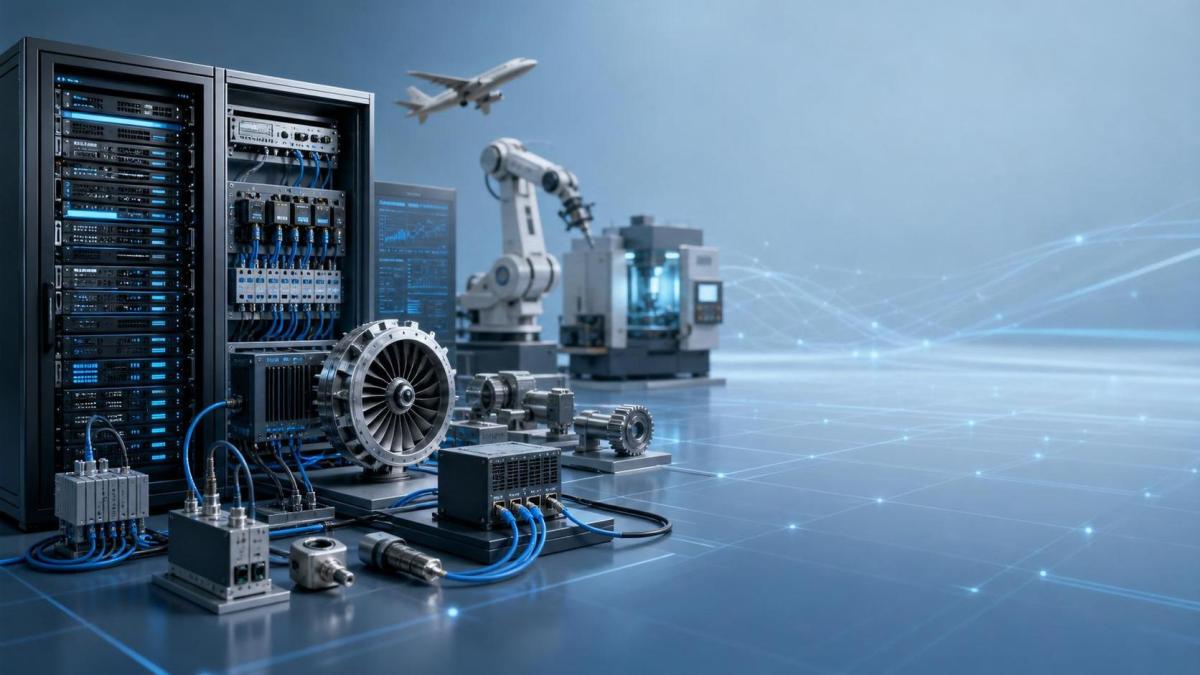
At a practical level, engineering data platform architecture is the blueprint for handling data across its full lifecycle. It covers ingestion, storage, transformation, orchestration, access, governance, and downstream use.
The term often sounds abstract because many discussions stop at tools. In practice, the architecture is less about naming a cloud service and more about defining how engineering evidence moves without losing meaning.
For example, a fatigue test result is not just a number. It may depend on batch history, machine setup, environmental conditions, measurement method, revision status, and acceptance thresholds. A sound architecture keeps those relationships intact.
This is especially relevant in sectors where TSV focuses attention: robotics, UAV and aerospace systems, sensors and edge AI, and precision machining. In each area, decisions depend on exact parameters rather than broad narratives.
Why the Topic Has Moved to the Center
Industrial programs now generate more data than their operating models were built to absorb. Design files live in PLM environments. Quality data sits in MES or QMS systems. Supplier records may exist in ERP platforms and spreadsheets at the same time.
That fragmentation creates familiar problems. Teams compare different versions of the same metric. Qualification cycles stretch because traceability is incomplete. Technical reviews get delayed because no one trusts the lineage of the source data.
An effective engineering data platform architecture responds to those conditions by connecting systems without flattening technical meaning. It creates a reliable path from raw signals and documents to decisions about design readiness, supplier fit, process capability, and field performance.
In other words, the architecture matters because noise has become a cost center. TSV’s broader argument applies here: when markets are crowded with weak claims, structured evidence becomes a strategic asset.
Core Layers That Shape Data Reliability
Most engineering data platform architecture models can be understood through a few core layers. The exact stack changes by industry, but the logic stays consistent.
Source Layer
This is where the original data is created. It may include CAD and PLM systems, SCADA streams, test benches, LiDAR datasets, CNC logs, ERP records, supplier portals, and lab databases.
The risk at this layer is inconsistency. Naming conventions differ. Units change. Revision control may be uneven. Manual exports introduce delays and hidden errors.
Ingestion and Integration Layer
This layer moves data from operational systems into the platform. Common patterns include APIs, event streaming, connectors, batch pipelines, and secure file transfers.
The integration question is not only how to connect systems. It is also how to preserve timestamp accuracy, schema meaning, source attribution, and error handling.
Storage Layer
Here, data lands in forms suited to different uses. Raw zones keep original records. Curated zones support analysis. Warehouses and lakehouse models often coexist when teams need both flexibility and strong query performance.
For engineering work, storage design should support structured and unstructured assets together. Sensor logs, compliance certificates, test images, and tolerance reports rarely fit a single format.
Semantic and Transformation Layer
This is where raw records become usable engineering information. Units are standardized. Part numbers are reconciled. Test outcomes are matched with specifications. Derived metrics are calculated.
Without this layer, dashboards may look polished while still comparing incompatible data. That failure is common when engineering data platform architecture is designed for reporting first and engineering interpretation second.
Access and Application Layer
This is where users consume the platform through analytics tools, digital twins, benchmarking portals, supplier scorecards, workflow engines, or machine learning pipelines.
Access design should reflect decision context. A sourcing review needs traceable supplier capability data. A flight controller analysis needs latency, stability, and environmental test evidence. One interface rarely serves all cases well.
Governance Layer
Governance spans every layer. It includes ownership, lineage, auditability, data quality rules, security, retention, and approval logic.
In hard-tech environments, governance is not just a compliance exercise. It is what allows a parameter to be trusted in a design review, certification package, or supplier qualification decision.
How Data Flow Should Work Across the Platform
A useful way to judge engineering data platform architecture is to follow one decision backward. Take a rejected component batch. The architecture should allow a clean path from the rejection event to the original drawing revision, process window, material certificate, machine conditions, and prior failure patterns.
That path is data flow in business terms. It starts with capture, moves through validation and transformation, and ends in action. If any handoff breaks, the final decision becomes slower and less defensible.
The strongest platforms make this flow visible. Lineage is searchable. Exceptions are logged. Threshold logic is transparent. That visibility is central when teams need to defend technical choices across functions and geographies.
Integration Priorities in Real Industrial Programs
The integration side of engineering data platform architecture usually determines whether the platform becomes operational or remains a reporting layer with limited value.
In robotics and automation, integration often centers on machine telemetry, maintenance history, and process quality. In UAV and aerospace work, traceability between design intent, test results, and environmental performance becomes critical.
For sensors and edge AI, the architecture must handle high-frequency data, latency sensitivity, and model feedback loops. In precision machining, the platform needs to connect tolerance measurements, machine settings, material batches, and certification evidence.
- PLM plus ERP integration supports change control and sourcing alignment.
- MES plus QMS integration links production events with nonconformance data.
- IoT and edge gateways feed real-time operating signals into analytical models.
- Supplier and certification systems strengthen qualification and audit readiness.
The point is not to connect everything at once. It is to integrate the systems that explain the highest-cost decisions first.
What to Look for When Evaluating the Design
A good engineering data platform architecture should answer a few hard questions clearly.
- Can every critical metric be traced back to its original source and revision?
- Are engineering definitions standardized across plants, programs, and suppliers?
- Does the platform support both real-time monitoring and historical analysis?
- Can unstructured technical evidence be linked to structured records?
- Are quality rules explicit enough to stop misleading data early?
- Does access control protect sensitive design and supplier information?
These checks matter more than a long feature list. Many platforms appear capable in demonstrations, yet fail when asked to support tolerance analysis, benchmark comparability, or cross-site traceability under audit pressure.
A More Useful Way to Apply It
The most effective starting point is usually one decision chain, not a full enterprise rebuild. Choose a workflow where technical uncertainty is expensive: supplier qualification, performance benchmarking, field failure analysis, or spec sheet validation.
Then map the current data path. Identify where lineage breaks, where manual reconciliation happens, and where definitions drift. That exercise often reveals that architecture problems are governance and semantics problems before they are infrastructure problems.
For organizations shaped by the TSV philosophy, this approach fits naturally. The goal is not more dashboards. It is a system where exact parameters, tolerances, and benchmark evidence can move through the business without distortion.
From there, the next step is straightforward: define the highest-value engineering questions, align integrations to those questions, and build an engineering data platform architecture that makes every important number explainable.
Search News
Hot Articles
- Carbon Fiber StructuresHow to Specify Aerospace Carbon Fiber Assemblies for Lightweight, Load-Bearing PartsJul 11, 2026
- Machine VisionXiaomi, Alibaba DAMO Academy Drive Open-Source Robotics Model Ecosystem, Lowering Algorithm Development Barriers for Overseas SMEs Adopting Chinese Robotics SolutionsMar 30, 2026
- Cobots & ArmsShanxi 'AI+' Conference Showcases Embodied Intelligence with Multinational Buyer Engagement: Key Industry ImplicationsMar 30, 2026
Popular Tags
Recommended News
 Jul 11, 2026How to Specify Aerospace Carbon Fiber Assemblies for Lightweight, Load-Bearing PartsAerospace carbon fiber assemblies: learn how to specify laminate design, load data, joining methods, and inspection controls for lighter, reliable load-bearing aerospace parts.Elena Rostova (UAV Systems Researcher)
 Mar 30, 2026Xiaomi, Alibaba DAMO Academy Drive Open-Source Robotics Model Ecosystem, Lowering Algorithm Development Barriers for Overseas SMEs Adopting Chinese Robotics SolutionsXiaomi & Alibaba DAMO Academy's open-source robotics models lower algorithm barriers for global SMEs. Boost efficiency in manufacturing, logistics & smart retail with ROS 2 compatible solutions.TSV Data Lab
 Mar 30, 2026Shanxi 'AI+' Conference Showcases Embodied Intelligence with Multinational Buyer Engagement: Key Industry ImplicationsShanxi 'AI+' Conference highlights embodied intelligence with Tesla, Ubtech & Jiantao showcasing multimodal robotics. 40+ global buyers validated tech on-site, creating new B2B channels for industrial automation & AI solutions.Chen Wei (Automation Lead Engineer)
 Mar 30, 2026Zhongguancun Unveils 6G Integrated Sensing-Computing-Intelligence Platform to Empower Embodied Robots for Global Industrial ApplicationsZhongguancun's new 6G platform revolutionizes industrial robotics with <10ms latency, empowering global automotive, logistics & port automation. Discover how this tech boosts China's smart manufacturing exports.TSV Data Lab
 Mar 30, 2026Mech-Mind Tianjin Embodied Intelligence R&D and Production Base Goes Live, Cutting Delivery Time by 20%–30% for Global Customized AMR+Vision SolutionsMech-Mind's Tianjin AMR+Vision production base cuts delivery time by 20%-30% for欧美 & Latin American markets. Discover how this PLd-certified facility accelerates customized robotics solutions for smart manufacturing and logistics.Chen Wei (Automation Lead Engineer)
 Mar 30, 2026Boao Forum Reveals 'Co-evolution of Big and Small Brains' Trend in Humanoid Robots, China's Embodied Intelligence Accelerates Adaptation to Overseas Manufacturing Service ScenariosDiscover how China's humanoid robots, featuring 'Co-evolution of Big and Small Brains,' are revolutionizing global manufacturing. Learn about Embodied Tian Gong 3.0's ISO compliance and overseas deployment at Boao Forum 2026.Chen Wei (Automation Lead Engineer)
 Mar 30, 2026China Railway Industrial Secures Patent for Embodied Robotics in Material Handling, Boosting High-Precision Delivery Capabilities for Overseas Infrastructure and Manufacturing ProjectsChina Railway Industrial's new patent for embodied robotics in material handling boosts high-precision delivery for global infrastructure & manufacturing. Discover how this innovation enhances logistics accuracy in automotive, rail transit & EPC projects.Chen Wei (Automation Lead Engineer)
 Oct 10, 2026How to Select a Machine Performance Monitoring Platform for OEE and Downtime ReductionMachine performance monitoring platform selection guide: validate machine states, OEE data, downtime reasons, integrations, and scalability to reduce losses with confidence.TSV Data Lab
 Oct 08, 2026How to Machine Inconel 625 Blades Without Heat Cracks or Edge ChippingInconel 625 blade machining guide: prevent heat cracks, edge chipping, chatter, and work hardening with proven tooling, cooling, fixturing, and inspection strategies.Dr. Marcus Vance
 Oct 07, 2026How to Evaluate an HMI Panel Distributor for Industrial Automation ProjectsHMI panel distributor evaluation guide: verify technical compatibility, traceability, supply reliability, lifecycle support, and total cost for automation projects.Victor Lin (Chief Software Architect)
 Oct 06, 2026Navigation Fault Tolerance Standards for AMRs: What Safety Teams Must VerifyNavigation fault tolerance standards: learn what AMR safety teams must verify, from localization loss and sensor faults to stopping distance, safe restart, and site-specific validation.Chen Wei (Automation Lead Engineer)
 Oct 05, 2026Calculating Edge Computing Total Cost of Ownership Across Distributed SitesEdge computing ownership cost explained: calculate deployment, energy, connectivity, security, remote support, and refresh costs across distributed sites.TSV Data Lab
 Oct 04, 2026CAD/CAM Benchmarking in the GCC: What Manufacturers Should Ask a ConsultantCAD CAM benchmark consultant GCC guide: learn the key questions manufacturers should ask to validate post-processors, workflows, machine performance, and production risk.Victor Lin (Chief Software Architect)
 Oct 03, 2026Selecting Automotive Radar Sensor Modules for ADAS Range, Resolution, and IntegrationAutomotive radar sensor module selection guide for ADAS: compare range, resolution, field of view, latency, and integration to build safer, reliable vehicle systems.TSV Data Lab
 Oct 02, 2026How to Qualify Machined Parts Suppliers for Hard Tech ProgramsHard tech supply chain machined parts demand rigorous supplier qualification. Learn how to assess capability, traceability, quality controls, and delivery resilience.Dr. Marcus Vance
 Oct 01, 2026How to Select an Outdoor Security Radar Sensor for Perimeter Detection?Outdoor security radar sensor selection guide: compare range, accuracy, false-alarm control, integration, and field testing for reliable perimeter detection.TSV Data Lab
 Sep 30, 2026How to Evaluate Solid-State LiDAR Hardware for Outdoor Autonomous VehiclesSolid state LiDAR hardware evaluation guide for outdoor autonomous vehicles—compare range, point-cloud quality, environmental resilience, integration, and safety.TSV Data Lab
 Sep 29, 2026ISO 9283 Repeatability: How to Evaluate Cobot Positioning PerformanceISO 9283 cobot repeatability explained: learn how payload, reach, approach direction, and test conditions affect positioning performance and cell capability.Chen Wei (Automation Lead Engineer)
 Oct 10, 2026When does the cost of industrial robots pay back in high-volume production?Cost of industrial robots: discover how high-volume manufacturers calculate payback through uptime, cycle time, labor, quality, and integration before investing.Chen Wei (Automation Lead Engineer)
 Oct 09, 2026What does a manufacturing robot really cost beyond the purchase price?Manufacturing robot cost goes far beyond the purchase price. Explore integration, tooling, safety, uptime, and total ownership factors for smarter automation investments.Chen Wei (Automation Lead Engineer)
 Oct 08, 2026AGV vs. AMR: Which Is Better for Frequently Changing Routes?Which is better for changing routes? Compare AGVs and AMRs for flexible navigation, docking precision, traffic control, and faster facility reconfiguration.Chen Wei (Automation Lead Engineer)
 Oct 07, 2026How Much Does an Automated Guided Vehicle Cost in 2026?How much does an automated guided vehicle cost in 2026? Explore AGV price ranges, hidden deployment costs, and smart buying factors for stronger ROI.Chen Wei (Automation Lead Engineer)
 Oct 06, 2026Are Collaborative Robots Safe Enough to Operate Without Fencing?Are collaborative robots safe enough to work without fencing? Explore risk assessment, safeguarding options, and practical guidance for safer, productive cobot cells.Chen Wei (Automation Lead Engineer)
 Oct 05, 2026What Causes Machine Vision Systems to Miss Small Defects?What causes machine vision systems to miss small defects? Discover how lighting, optics, motion, and AI thresholds affect detection—and prevent costly escapes.TSV Data Lab