Embedded AI module supplier claims that need closer checking
Publication Date
author
An embedded AI module supplier may promise fast deployment, low edge computing power consumption, and high edge AI inference speed FPS, but those claims deserve closer scrutiny. For engineers, buyers, and decision-makers comparing machine vision sub-pixel accuracy, solid-state LiDAR point cloud density, and industrial IoT gateway latency, the real differentiator is not branding—it is verified performance data that holds up in actual deployment conditions.
If you are evaluating embedded AI modules for machine vision, robotics, UAVs, smart sensors, or industrial edge systems, the core search intent is clear: you want to know which supplier claims can be trusted, which metrics are often presented without context, and how to verify whether a module will actually perform in your deployment. The most useful answer is not a list of marketing phrases, but a practical checking framework.
For most technical and commercial readers, the biggest concerns are straightforward: Will the module deliver the claimed AI inference speed under real workloads? Is the power figure measured at idle, average, or peak load? Does the claimed compatibility reduce integration effort, or hide software and driver limitations? Can the supplier support lifecycle, traceability, and long-term availability? These are the questions that shape procurement risk, development time, and total project cost.
This article focuses on those decision points. It highlights the supplier claims that deserve closer checking, explains what evidence to request, and shows how engineers, procurement teams, and business leaders can evaluate embedded AI module suppliers with fewer assumptions and lower qualification risk.
Which embedded AI module supplier claims should trigger immediate verification?
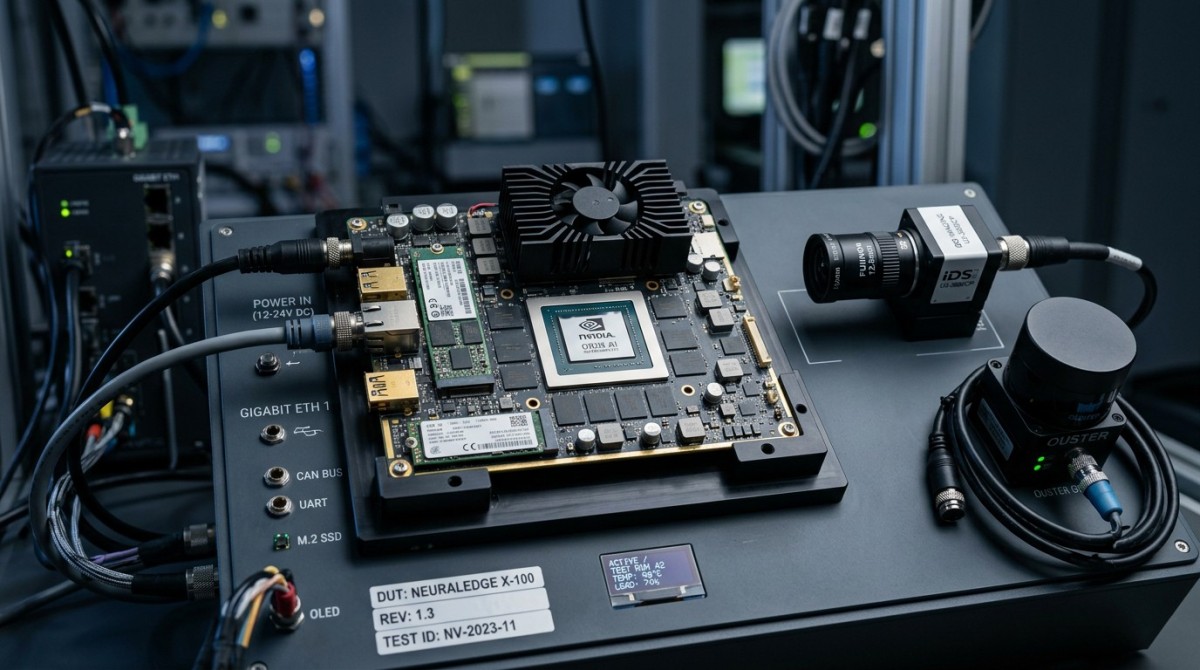
Not every supplier statement is misleading, but several recurring claims should always be validated before shortlisting a vendor. These claims often sound precise, yet become ambiguous once you ask how they were measured.
1. “High AI inference speed” without workload definition
A claim such as “200 FPS” or “real-time multi-stream inference” means very little unless the supplier discloses the model type, input resolution, batch size, quantization format, and preprocessing pipeline. A lightweight image classification model running at low resolution is not equivalent to a multi-object detection or segmentation workload in production.
What to check:
- Model architecture used in testing
- Input resolution and number of channels
- Precision format such as INT8, FP16, or FP32
- Whether FPS includes preprocessing and postprocessing
- Thermal conditions during the benchmark
- Sustained versus burst performance over time
2. “Low power consumption” without a measurement window
Low edge computing power consumption is one of the most attractive claims in edge AI procurement, especially for battery-powered devices, sealed enclosures, and thermally constrained systems. But power numbers are frequently presented without stating whether they represent idle draw, average draw, TDP, or peak load under full inference.
What to check:
- Idle, average, and peak power separately
- Power draw during your actual model workload
- Power impact of connected sensors, storage, and peripherals
- Thermal throttling behavior at sustained load
- Performance per watt rather than absolute power only
3. “Ready for industrial deployment” without reliability evidence
Industrial suitability is often claimed based on enclosure images or broad references to rugged design. In practice, embedded AI module reliability depends on much more: operating temperature range, vibration tolerance, EMC resilience, connector durability, memory endurance, and long-duration software stability.
What to check:
- Operating and storage temperature specifications
- Vibration and shock test records
- EMC or EMI compliance data
- MTBF methodology
- Long-duration stress test and memory error behavior
- Documented field deployment history
4. “Easy integration” without software boundary clarity
Many suppliers promise rapid deployment, but integration effort often depends on SDK maturity, driver support, middleware compatibility, and documentation quality. The module may run a demo quickly while still requiring substantial engineering work to connect cameras, LiDAR, industrial buses, or cloud interfaces.
What to check:
- Supported operating systems and kernel versions
- Availability of APIs, SDKs, and deployment tools
- Support for your sensor stack and interface standards
- Update mechanism and rollback capability
- Containerization or edge orchestration support
- Known limitations in the software release notes
How should engineers verify real-world performance instead of brochure performance?
The most effective way to assess an embedded AI module supplier is to recreate your own deployment logic as early as possible. Brochure benchmarks may be useful as a starting point, but they are rarely enough for supplier selection.
A practical validation workflow includes:
Define a workload that matches the deployment
If your system runs machine vision inspection, do not accept benchmarks based only on image classification. If your application is autonomous navigation, test the data path from sensor input to inference output to control action. For vision systems, include image acquisition, preprocessing, inference, postprocessing, and transmission latency. For multi-sensor systems, include sensor fusion overhead.
Measure sustained, not just peak, behavior
Some modules show attractive edge AI inference speed FPS in short runs, then throttle under thermal or memory pressure. A 30-minute or 4-hour sustained test often reveals much more than a one-minute benchmark. This matters in production lines, mobile robots, UAV payload systems, and 24/7 monitoring equipment.
Test latency, not just throughput
In many industrial and embedded applications, predictable latency is more important than raw FPS. A module that delivers lower average throughput but tighter latency consistency may be the better choice for machine control, defect detection, and collision avoidance.
Check sensor-to-decision timing
Suppliers may isolate compute performance from the rest of the system. But real deployment value depends on end-to-end timing. If you are also evaluating machine vision sub-pixel accuracy, solid-state LiDAR point cloud density, or industrial IoT gateway latency, the AI module should be tested as part of that full chain rather than as an isolated processor.
What evidence should procurement teams ask from an embedded AI module supplier?
Procurement teams do not need to replicate every engineering test, but they do need enough evidence to separate mature suppliers from presentation-driven ones. The right documentation reduces qualification cycles and exposes hidden downstream cost.
Ask for the following before moving into volume discussions:
- Formal test reports with benchmark methodology
- Bill of materials stability and key component sourcing plan
- Product change notification policy
- Lifecycle commitment and end-of-life notice period
- Regulatory and environmental compliance documents
- Failure analysis and RMA process definition
- Reference customers in similar application classes
- Firmware and software support roadmap
- Security update policy and vulnerability response process
For enterprise buyers, one of the most overlooked risks is lifecycle instability. A technically strong module can still become a poor choice if the supplier cannot guarantee component continuity, software maintenance, or timely engineering support. In embedded systems, redesign cost often exceeds the initial hardware savings from choosing the cheapest vendor.
Which technical claims are most often misunderstood by non-technical stakeholders?
Decision-makers outside the engineering team are often presented with simplified metrics that look comparable but are not. This creates avoidable procurement mistakes.
TOPS is not equal to application performance
A higher TOPS figure does not automatically mean better real-world results. Compute utilization depends on memory bandwidth, model optimization, software stack maturity, and I/O architecture. For many workloads, the actual bottleneck is not theoretical compute.
FPS is not enough without accuracy and stability
Fast inference is valuable only if model accuracy remains acceptable and performance is sustained. If a supplier reaches high FPS by aggressively quantizing the model or reducing input resolution below your operational requirement, the result may be unusable despite impressive benchmark numbers.
Wide compatibility claims often hide integration effort
“Supports multiple cameras and industrial protocols” may still mean custom engineering is needed for your exact configuration. Compatibility should be broken down by tested sensor models, interface versions, driver maturity, and known deployment constraints.
Industrial branding is not the same as industrial qualification
Some products are marketed to industrial users without showing traceable reliability data. Real industrial qualification requires evidence, not adjectives.
How do embedded AI module choices affect business value, not just technical fit?
For enterprise decision-makers, the right embedded AI module supplier affects more than system performance. It influences time to market, support cost, field reliability, upgrade flexibility, and supply chain resilience.
A stronger supplier usually creates value in five areas:
- Faster validation: Better documentation and tested reference designs reduce engineering trial-and-error.
- Lower deployment risk: Stable thermal, power, and software behavior reduces field issues.
- Better lifecycle economics: Long-term availability lowers redesign frequency.
- Improved support efficiency: Clear escalation paths reduce downtime during integration and operation.
- More credible scaling: Pilot success is easier to reproduce at production volume.
This is why supplier evaluation should not stop at unit price or lab benchmark performance. A cheaper module with weak support, unstable firmware, or uncertain availability may cost more over the full program lifecycle.
A practical checklist for comparing embedded AI module suppliers
If your team needs a simple decision framework, use this shortlist of checks during technical and commercial evaluation:
- Request workload-specific benchmarks, not generic AI demos.
- Compare sustained performance under realistic thermal conditions.
- Verify low edge computing power consumption with idle, average, and peak values.
- Measure end-to-end latency, not processor-only speed.
- Review SDK quality, update cadence, and known software limitations.
- Check industrial reliability evidence and compliance documentation.
- Confirm component lifecycle, change notification, and long-term supply support.
- Assess application fit for machine vision, LiDAR, gateways, robotics, or UAV payloads separately.
- Evaluate performance per watt and integration effort together.
- Ask whether the supplier can support validation with your own dataset and sensor stack.
For teams operating in advanced manufacturing, robotics, UAV systems, and smart sensing, this checklist is often more useful than headline specifications. It converts supplier evaluation from marketing comparison into engineering risk control.
Conclusion: trust verified deployment data, not isolated supplier claims
When an embedded AI module supplier claims high inference speed, low power, fast deployment, and industrial readiness, the right response is not immediate rejection or acceptance. It is structured verification. The suppliers most worth considering are usually the ones willing to disclose test methods, explain workload boundaries, share lifecycle commitments, and support real application validation.
For engineers, this reduces integration surprises. For procurement teams, it lowers supplier qualification risk. For business leaders, it improves the odds that a pilot program can scale without hidden redesign cost.
In embedded AI, branding may open the conversation, but verified performance data should close it.
Search News
Hot Articles
- Carbon Fiber StructuresHow to Specify Aerospace Carbon Fiber Assemblies for Lightweight, Load-Bearing PartsJul 11, 2026
- Machine VisionXiaomi, Alibaba DAMO Academy Drive Open-Source Robotics Model Ecosystem, Lowering Algorithm Development Barriers for Overseas SMEs Adopting Chinese Robotics SolutionsMar 30, 2026
- Cobots & ArmsShanxi 'AI+' Conference Showcases Embodied Intelligence with Multinational Buyer Engagement: Key Industry ImplicationsMar 30, 2026
Popular Tags
Recommended News
 Jul 11, 2026How to Specify Aerospace Carbon Fiber Assemblies for Lightweight, Load-Bearing PartsAerospace carbon fiber assemblies: learn how to specify laminate design, load data, joining methods, and inspection controls for lighter, reliable load-bearing aerospace parts.Elena Rostova (UAV Systems Researcher)
 Mar 30, 2026Xiaomi, Alibaba DAMO Academy Drive Open-Source Robotics Model Ecosystem, Lowering Algorithm Development Barriers for Overseas SMEs Adopting Chinese Robotics SolutionsXiaomi & Alibaba DAMO Academy's open-source robotics models lower algorithm barriers for global SMEs. Boost efficiency in manufacturing, logistics & smart retail with ROS 2 compatible solutions.TSV Data Lab
 Mar 30, 2026Shanxi 'AI+' Conference Showcases Embodied Intelligence with Multinational Buyer Engagement: Key Industry ImplicationsShanxi 'AI+' Conference highlights embodied intelligence with Tesla, Ubtech & Jiantao showcasing multimodal robotics. 40+ global buyers validated tech on-site, creating new B2B channels for industrial automation & AI solutions.Chen Wei (Automation Lead Engineer)
 Mar 30, 2026Zhongguancun Unveils 6G Integrated Sensing-Computing-Intelligence Platform to Empower Embodied Robots for Global Industrial ApplicationsZhongguancun's new 6G platform revolutionizes industrial robotics with <10ms latency, empowering global automotive, logistics & port automation. Discover how this tech boosts China's smart manufacturing exports.TSV Data Lab
 Mar 30, 2026Mech-Mind Tianjin Embodied Intelligence R&D and Production Base Goes Live, Cutting Delivery Time by 20%–30% for Global Customized AMR+Vision SolutionsMech-Mind's Tianjin AMR+Vision production base cuts delivery time by 20%-30% for欧美 & Latin American markets. Discover how this PLd-certified facility accelerates customized robotics solutions for smart manufacturing and logistics.Chen Wei (Automation Lead Engineer)
 Mar 30, 2026Boao Forum Reveals 'Co-evolution of Big and Small Brains' Trend in Humanoid Robots, China's Embodied Intelligence Accelerates Adaptation to Overseas Manufacturing Service ScenariosDiscover how China's humanoid robots, featuring 'Co-evolution of Big and Small Brains,' are revolutionizing global manufacturing. Learn about Embodied Tian Gong 3.0's ISO compliance and overseas deployment at Boao Forum 2026.Chen Wei (Automation Lead Engineer)
 Mar 30, 2026China Railway Industrial Secures Patent for Embodied Robotics in Material Handling, Boosting High-Precision Delivery Capabilities for Overseas Infrastructure and Manufacturing ProjectsChina Railway Industrial's new patent for embodied robotics in material handling boosts high-precision delivery for global infrastructure & manufacturing. Discover how this innovation enhances logistics accuracy in automotive, rail transit & EPC projects.Chen Wei (Automation Lead Engineer)
 Oct 21, 2026China’s Industrial Robot Exports Near RMB 10 Billion in First Nine Months of 2026China’s industrial robot exports neared RMB 10 billion in January–September 2026, with value rising faster than volume. Explore the data and what it could mean for suppliers.Chen Wei (Automation Lead Engineer)
 Oct 21, 2026Low-Latency Industrial Data Processing: Pricing and Key Cost DriversExplore industrial data latency price drivers, from edge hardware to integration and support. Learn how to compare quotes, verify performance, and avoid unnecessary costs.TSV Data Lab
 Oct 20, 2026KUKA Launches iiQKA.AI Vision to Simplify Industrial Image ProcessingKUKA iiQKA.AI Vision simplifies industrial image processing with controller-based 2D and 3D vision. Explore drag-and-drop setup for vision-guided automation.TSV Data Lab
 Oct 20, 2026Smart Industrial Edge Devices: Key Criteria for Legacy PLC IntegrationChoose smart industrial edge devices for legacy PLC integration. Discover key criteria for compatibility, data quality, security, and reliable collection without disrupting control.TSV Data Lab
 Oct 19, 2026Choosing a Radar Sensor by Application: Range, Resolution, and Field of ViewSimplify radar sensor application based product selection. Compare range, resolution, and field of view to avoid blind spots and choose with confidence. Explore the guide.TSV Data Lab
 Oct 18, 2026Comparing Material Options for Procurement: Specs, Costs, and Supply RisksExplore procurement oriented technical content on material options, specs, costs, and supply risks. Compare alternatives to cut hidden expenses and make confident sourcing decisions.Dr. Marcus Vance
 Oct 17, 20265-Axis CNC Positioning Accuracy: How to Interpret ISO 230-2 Test ResultsAssess 5 axis CNC machining positioning accuracy with ISO 230-2. Learn to interpret repeatability, reversal error, and test conditions to compare suppliers and make confident acceptance decisions.Dr. Marcus Vance
 Oct 16, 2026Choosing a Rugged Edge AI Box Supplier: Thermal Tests and Lifecycle SupportChoose a rugged edge AI box supplier with proven thermal performance and reliable lifecycle support. Discover the tests and commitments to verify before you buy.TSV Data Lab
 Oct 15, 2026R&D Cost Reduction Services: How to Evaluate Fees, Savings, and ROIEvaluate R&D cost reduction services with confidence. Compare fees, verify savings, and calculate ROI without compromising performance. Discover how to choose a provider that delivers real value.Chen Wei (Automation Lead Engineer)
 Oct 21, 2026How Should You Balance Cobot Payload Against Reach?Explore cobot payload versus reach to choose the right robot. Learn how tooling, load limits, workspace, and cycle time affect performance—and avoid costly selection mistakes.Chen Wei (Automation Lead Engineer)
 Oct 20, 2026How Do You Measure Industrial IoT Gateway Latency Under Load?Measure industrial IoT gateway latency under load with reliable timestamps, realistic traffic, and tail-latency analysis. Discover how to expose bottlenecks and choose the right gateway.TSV Data Lab
 Oct 19, 2026How Do You Verify That Precision Machined Parts Meet Tolerances?Master precision machining tolerance verification with the right tools, datum setups, and acceptance rules. Learn how to validate parts confidently and reduce costly inspection errors.Dr. Marcus Vance
 Oct 18, 2026What Should an AS9100 Machining Supplier Checklist Include?Build an AS9100 machining supplier checklist that verifies capability, traceability, inspection, and outsourced processes. Discover what to check before approving your next aerospace supplier.Dr. Marcus Vance
 Oct 17, 2026How Should You Interpret Industrial Robot Repeatability Specs?Decode industrial robot repeatability specifications, understand ISO 9283 test conditions, and avoid costly selection mistakes. Learn how to verify performance for your process.Chen Wei (Automation Lead Engineer)
 Oct 16, 2026How Can You Fairly Compare MTBF Across Industrial Servo Motors?Make a fair industrial servo motor MTBF comparison with matched operating profiles, failure criteria, and confidence bounds. Discover how to assess reliability beyond advertised numbers.Chen Wei (Automation Lead Engineer)
 Oct 15, 2026How Should You Compare TechStat Vanguard 5-Axis CNC Tolerances?TechStat Vanguard 5-axis CNC tolerance comparison: learn how to verify part accuracy, assess inspection evidence, and choose suppliers that reliably meet your drawing requirements.Dr. Marcus Vance
 Oct 14, 2026Drone Frame Composites: Carbon Fiber vs. Fiberglass for Weight and StiffnessExplore drone structural materials composites: compare carbon fiber and fiberglass for weight, stiffness, cost, and antenna compatibility. Find the right material for your drone frame.Elena Rostova (UAV Systems Researcher)