Semiconductor Price Hikes Drive Industrial Motion Control Shift
Publication Date
author
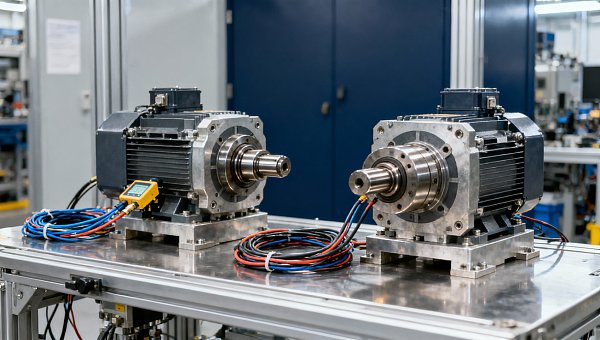
On April 16, 2026, rising global shortages of memory chips and MCUs triggered a 22% average price increase and 26-week lead times for imported industrial servo motors — prompting accelerated adoption of domestic high-performance motion control solutions, particularly among automotive manufacturing and industrial automation stakeholders.
Event Overview
On April 16, 2026, import industrial servo motor prices rose by an average of 22%, with delivery lead times extending to 26 weeks, driven by sustained global shortages of memory chips and microcontroller units (MCUs). Concurrently, orders for domestically produced high-performance motion control solutions surged. A Shenzhen-based company’s RISC-V-based EtherCAT bus motion controller achieved UL 61800-5-1 certification and entered mass export to automotive welding lines in Turkey and Mexico.
Industries Affected
Automotive Manufacturing (Welding & Assembly Lines)
Automotive OEMs and Tier-1 suppliers relying on imported servo motors for precision welding and robotic assembly face higher capex and extended project timelines. The 26-week lead time directly impacts line ramp-up schedules, especially for new model launches or regional plant expansions.
Industrial Automation System Integrators
System integrators designing motion-controlled machinery must revise bill-of-materials (BOM) cost models and requalify controllers. The shift toward certified domestic alternatives — such as the UL 61800-5-1-compliant EtherCAT controller — introduces new validation and interoperability considerations, particularly for safety-critical applications.
Electronics Contract Manufacturers (ECMs)
ECMs sourcing servo-driven test or handling equipment encounter cascading cost pressure: not only do motor prices rise, but associated MCU-dependent control boards also face supply constraints and pricing volatility, affecting margin stability and quoting accuracy.
Industrial Distributors & Channel Partners
Distributors of imported motion hardware face declining order velocity and increased customer inquiries about local alternatives. Inventory planning becomes more complex due to mismatched lead times between motors, drives, and controllers — especially when cross-supplier dependencies exist.
What Enterprises and Practitioners Should Monitor and Act On
Track certification status and regional compliance alignment
UL 61800-5-1 certification signals baseline safety compliance for drive systems in North America and select international markets. Enterprises evaluating domestic motion controllers should verify whether certifications cover their target end markets (e.g., CE for EU, INMETRO for Brazil), not just UL.
Assess BOM-level exposure beyond motors
The shortage originates upstream in memory and MCUs — components embedded in drives, PLCs, and I/O modules. Procurement teams should map full motion-control stack dependencies, not only servo motors, to identify hidden bottlenecks and alternative sourcing paths.
Validate local technical support capacity before scaling trials
Price advantage alone is insufficient. The cited case highlights “local technical support” as a key differentiator. Before committing to volume adoption, engineering teams should evaluate responsiveness, documentation quality, and firmware update cadence from domestic vendors — especially for EtherCAT network commissioning and diagnostics.
Reassess lead-time buffers in capital project planning
A 26-week motor lead time implies revised procurement milestones for machinery retrofits or greenfield lines. Project managers should adjust critical path scheduling and consider early-bid strategies for motion-control subsystems to avoid downstream delays.
Editorial Observation / Industry Perspective
From an industry perspective, this development is better understood as an acceleration signal — not yet a full substitution outcome. While domestic motion controllers are gaining traction in specific export segments (e.g., Turkish and Mexican automotive weld lines), broad-based replacement remains constrained by application-specific validation cycles, long-term reliability data, and ecosystem maturity (e.g., third-party EtherCAT slave device compatibility). Analysis suggests the current shift reflects pragmatic procurement adaptation under acute supply stress, rather than a wholesale technology transition. Continued monitoring of certification expansion, field failure rates, and design-win frequency across Tier-2 industrial OEMs will clarify whether this marks a structural inflection point or a cyclical response.
Conclusion
This event underscores how semiconductor supply volatility propagates beyond component-level procurement into system architecture decisions and regional manufacturing strategy. It does not indicate immediate obsolescence of imported motion hardware, but rather highlights growing viability — and increasing operational relevance — of certified domestic alternatives where price sensitivity, lead time discipline, and localized support converge. Current conditions favor scenario-based planning over binary vendor selection.
Information Sources
Primary source: Verified public announcement dated April 16, 2026, referencing verified UL 61800-5-1 certification, export destinations (Turkey, Mexico), and quantified price/lead-time metrics. No additional background, market share data, or vendor names beyond the Shenzhen-based company were provided or confirmed. Ongoing observation is warranted for certification scope updates and further export market announcements.
Search News
Hot Articles
- Carbon Fiber StructuresHow to Specify Aerospace Carbon Fiber Assemblies for Lightweight, Load-Bearing PartsJul 11, 2026
- Machine VisionXiaomi, Alibaba DAMO Academy Drive Open-Source Robotics Model Ecosystem, Lowering Algorithm Development Barriers for Overseas SMEs Adopting Chinese Robotics SolutionsMar 30, 2026
- Cobots & ArmsShanxi 'AI+' Conference Showcases Embodied Intelligence with Multinational Buyer Engagement: Key Industry ImplicationsMar 30, 2026
Popular Tags
Recommended News
 Jul 11, 2026How to Specify Aerospace Carbon Fiber Assemblies for Lightweight, Load-Bearing PartsAerospace carbon fiber assemblies: learn how to specify laminate design, load data, joining methods, and inspection controls for lighter, reliable load-bearing aerospace parts.Elena Rostova (UAV Systems Researcher)
 Mar 30, 2026Xiaomi, Alibaba DAMO Academy Drive Open-Source Robotics Model Ecosystem, Lowering Algorithm Development Barriers for Overseas SMEs Adopting Chinese Robotics SolutionsXiaomi & Alibaba DAMO Academy's open-source robotics models lower algorithm barriers for global SMEs. Boost efficiency in manufacturing, logistics & smart retail with ROS 2 compatible solutions.TSV Data Lab
 Mar 30, 2026Shanxi 'AI+' Conference Showcases Embodied Intelligence with Multinational Buyer Engagement: Key Industry ImplicationsShanxi 'AI+' Conference highlights embodied intelligence with Tesla, Ubtech & Jiantao showcasing multimodal robotics. 40+ global buyers validated tech on-site, creating new B2B channels for industrial automation & AI solutions.Chen Wei (Automation Lead Engineer)
 Mar 30, 2026Zhongguancun Unveils 6G Integrated Sensing-Computing-Intelligence Platform to Empower Embodied Robots for Global Industrial ApplicationsZhongguancun's new 6G platform revolutionizes industrial robotics with <10ms latency, empowering global automotive, logistics & port automation. Discover how this tech boosts China's smart manufacturing exports.TSV Data Lab
 Mar 30, 2026Mech-Mind Tianjin Embodied Intelligence R&D and Production Base Goes Live, Cutting Delivery Time by 20%–30% for Global Customized AMR+Vision SolutionsMech-Mind's Tianjin AMR+Vision production base cuts delivery time by 20%-30% for欧美 & Latin American markets. Discover how this PLd-certified facility accelerates customized robotics solutions for smart manufacturing and logistics.Chen Wei (Automation Lead Engineer)
 Mar 30, 2026Boao Forum Reveals 'Co-evolution of Big and Small Brains' Trend in Humanoid Robots, China's Embodied Intelligence Accelerates Adaptation to Overseas Manufacturing Service ScenariosDiscover how China's humanoid robots, featuring 'Co-evolution of Big and Small Brains,' are revolutionizing global manufacturing. Learn about Embodied Tian Gong 3.0's ISO compliance and overseas deployment at Boao Forum 2026.Chen Wei (Automation Lead Engineer)
 Mar 30, 2026China Railway Industrial Secures Patent for Embodied Robotics in Material Handling, Boosting High-Precision Delivery Capabilities for Overseas Infrastructure and Manufacturing ProjectsChina Railway Industrial's new patent for embodied robotics in material handling boosts high-precision delivery for global infrastructure & manufacturing. Discover how this innovation enhances logistics accuracy in automotive, rail transit & EPC projects.Chen Wei (Automation Lead Engineer)
 Oct 20, 2026KUKA Launches iiQKA.AI Vision to Simplify Industrial Image ProcessingKUKA iiQKA.AI Vision simplifies industrial image processing with controller-based 2D and 3D vision. Explore drag-and-drop setup for vision-guided automation.TSV Data Lab
 Oct 20, 2026Smart Industrial Edge Devices: Key Criteria for Legacy PLC IntegrationChoose smart industrial edge devices for legacy PLC integration. Discover key criteria for compatibility, data quality, security, and reliable collection without disrupting control.TSV Data Lab
 Oct 19, 2026Choosing a Radar Sensor by Application: Range, Resolution, and Field of ViewSimplify radar sensor application based product selection. Compare range, resolution, and field of view to avoid blind spots and choose with confidence. Explore the guide.TSV Data Lab
 Oct 18, 2026Comparing Material Options for Procurement: Specs, Costs, and Supply RisksExplore procurement oriented technical content on material options, specs, costs, and supply risks. Compare alternatives to cut hidden expenses and make confident sourcing decisions.Dr. Marcus Vance
 Oct 17, 20265-Axis CNC Positioning Accuracy: How to Interpret ISO 230-2 Test ResultsAssess 5 axis CNC machining positioning accuracy with ISO 230-2. Learn to interpret repeatability, reversal error, and test conditions to compare suppliers and make confident acceptance decisions.Dr. Marcus Vance
 Oct 16, 2026Choosing a Rugged Edge AI Box Supplier: Thermal Tests and Lifecycle SupportChoose a rugged edge AI box supplier with proven thermal performance and reliable lifecycle support. Discover the tests and commitments to verify before you buy.TSV Data Lab
 Oct 15, 2026R&D Cost Reduction Services: How to Evaluate Fees, Savings, and ROIEvaluate R&D cost reduction services with confidence. Compare fees, verify savings, and calculate ROI without compromising performance. Discover how to choose a provider that delivers real value.Chen Wei (Automation Lead Engineer)
 Oct 20, 2026How Do You Measure Industrial IoT Gateway Latency Under Load?Measure industrial IoT gateway latency under load with reliable timestamps, realistic traffic, and tail-latency analysis. Discover how to expose bottlenecks and choose the right gateway.TSV Data Lab
 Oct 19, 2026How Do You Verify That Precision Machined Parts Meet Tolerances?Master precision machining tolerance verification with the right tools, datum setups, and acceptance rules. Learn how to validate parts confidently and reduce costly inspection errors.Dr. Marcus Vance
 Oct 18, 2026What Should an AS9100 Machining Supplier Checklist Include?Build an AS9100 machining supplier checklist that verifies capability, traceability, inspection, and outsourced processes. Discover what to check before approving your next aerospace supplier.Dr. Marcus Vance
 Oct 17, 2026How Should You Interpret Industrial Robot Repeatability Specs?Decode industrial robot repeatability specifications, understand ISO 9283 test conditions, and avoid costly selection mistakes. Learn how to verify performance for your process.Chen Wei (Automation Lead Engineer)
 Oct 16, 2026How Can You Fairly Compare MTBF Across Industrial Servo Motors?Make a fair industrial servo motor MTBF comparison with matched operating profiles, failure criteria, and confidence bounds. Discover how to assess reliability beyond advertised numbers.Chen Wei (Automation Lead Engineer)
 Oct 15, 2026How Should You Compare TechStat Vanguard 5-Axis CNC Tolerances?TechStat Vanguard 5-axis CNC tolerance comparison: learn how to verify part accuracy, assess inspection evidence, and choose suppliers that reliably meet your drawing requirements.Dr. Marcus Vance
 Oct 14, 2026Drone Frame Composites: Carbon Fiber vs. Fiberglass for Weight and StiffnessExplore drone structural materials composites: compare carbon fiber and fiberglass for weight, stiffness, cost, and antenna compatibility. Find the right material for your drone frame.Elena Rostova (UAV Systems Researcher)
 Oct 13, 2026Smart Cameras vs. PC-Based Machine Vision: Which Fits High-Speed Inspection?This industrial product comparison for machine vision weighs smart cameras vs. PC-based systems on latency, throughput, and cost. Discover your best fit for high-speed inspection.TSV Data Lab
 Oct 12, 2026How to Verify RoHS Compliance in Industrial Sensing Systems Before DeploymentRoHS compliant sensing systems: learn how to verify materials, supplier declarations, testing, and configuration controls before industrial deployment.TSV Data Lab
 Oct 11, 2026How Procurement-Oriented Content Taxonomy Improves B2B Buying JourneysProcurement-oriented content taxonomy streamlines B2B buying journeys with clearer evidence, supplier comparisons, risk visibility, and faster approvals.TSV Data Lab