
What changes at 6 axis robot arm wholesale order volume
Publication Date
author
For distributors, agents, and channel buyers, the real question is not just price—it is what changes at 6 axis robot arm wholesale order volume. As quantities rise, unit cost, lead time, customization options, quality consistency, and after-sales terms can shift significantly. This introduction cuts through sales language to examine the commercial and engineering factors that matter most when scaling procurement decisions.
Understanding what wholesale volume really changes
A 6 axis robot arm wholesale order is not simply a larger version of a single-unit purchase. Once order volume increases, the transaction moves from product buying into supply-chain coordination. The buyer is no longer evaluating only payload, reach, repeatability, controller functions, and safety interfaces. The buyer must also assess production slot availability, component sourcing stability, firmware consistency, packaging standards, warranty obligations, regional certification, and the supplier’s ability to support distributed channel sales.
For distributors and agents, this matters because order volume changes risk exposure on both sides. Manufacturers gain planning visibility and may offer better pricing or tailored configurations. At the same time, the channel partner takes on higher inventory, quality control, and after-sales responsibilities. In real market terms, the value of a 6 axis robot arm wholesale project depends on whether the commercial terms remain aligned with engineering realities.
This is especially important in advanced manufacturing, where procurement decisions increasingly depend on verifiable parameters rather than broad claims. As TechStat Vanguard’s industry view suggests, serious buyers need repeatability ranges, duty-cycle limits, integration compatibility, and service response commitments. Wholesale volume amplifies every weak point in the supplier relationship, but it also amplifies every advantage when the foundation is strong.
Why the market pays attention to 6 axis robot arm wholesale trends
The growth of automation across electronics, metalworking, packaging, automotive components, warehousing, and light assembly has pushed demand for flexible robotic systems upward. A six-axis arm remains one of the most versatile formats because it can handle welding, pick-and-place, screwdriving, polishing, palletizing support tasks, vision-guided handling, and machine tending in relatively compact footprints.
As a result, 6 axis robot arm wholesale demand often comes from channel partners serving mixed customer bases rather than from one large end user. A distributor may need standard units for stock, a modified end-effector package for one customer, and localized user interface support for another. Volume purchasing becomes attractive not only because of unit economics, but because it can create better availability, more predictable deployment schedules, and stronger market positioning for resellers.
At the same time, macroeconomic pressures have changed the conversation. Buyers now focus on landed cost, tariff sensitivity, spare parts policy, controller chipset continuity, and software update discipline. In other words, wholesale volume is becoming a strategic decision. It affects channel margin, service reputation, and the ability to win repeat industrial accounts.
The main variables that shift when order quantity rises
The first visible change is usually unit price, but that is only one layer. In a mature 6 axis robot arm wholesale arrangement, volume can affect at least seven critical dimensions: commercial cost, delivery timing, technical configuration, consistency of quality, packaging and logistics, documentation depth, and after-sales support terms.
Unit pricing often improves in volume, but price breaks may depend on whether motors, reducers, servo drives, and controllers are locked under a stable bill of materials. If a supplier is quoting aggressively without confirming component availability, the apparent discount may later be offset by lead time slippage or substitute parts. For channel buyers, the lower quote only matters if the shipped specification remains unchanged.
Lead time can improve or worsen. If the factory can reserve production capacity, larger orders may move more efficiently than fragmented monthly purchases. However, when demand spikes or key components are constrained, wholesale orders may face longer scheduling windows. This is why distributors should ask not only for promised ship dates but also for capacity allocation rules and backlog visibility.
Customization is another major shift. Small orders usually receive standard flanges, standard harness lengths, and default software packages. Larger volume may unlock private labeling, custom paint, language localization, connector changes, controller cabinet options, or bundled gripper integration. These upgrades can strengthen channel differentiation, but they also require tighter revision control and testing discipline.
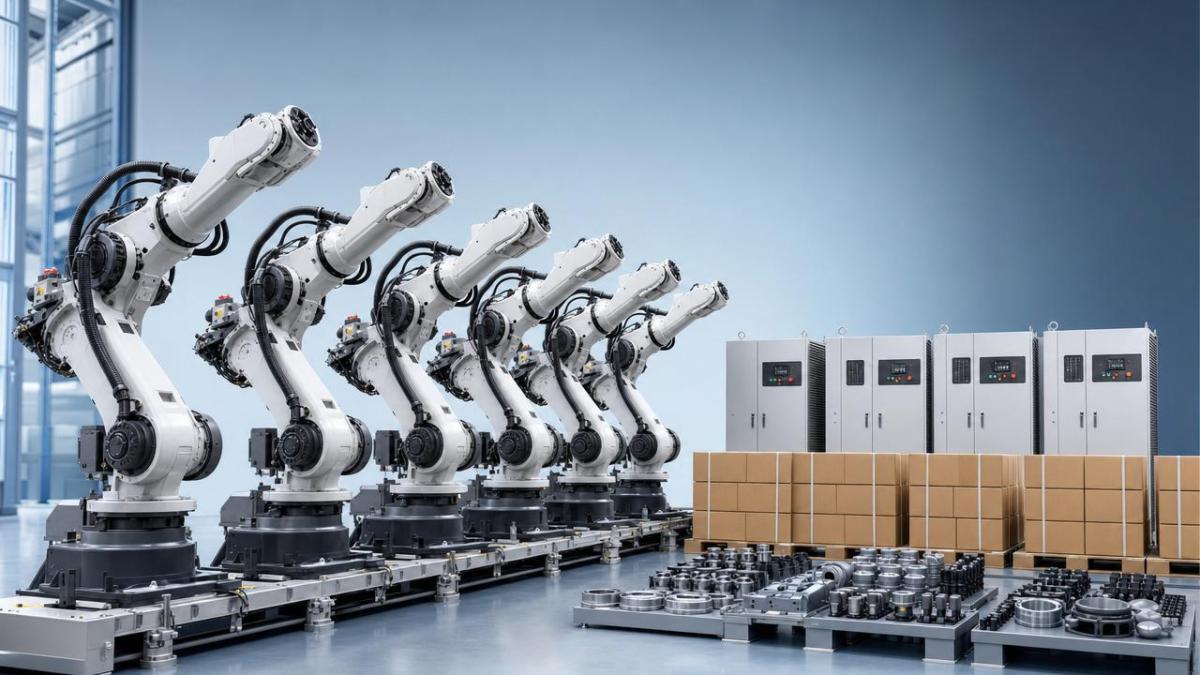
A practical industry overview of volume-related changes
The table below summarizes how expectations typically evolve as a 6 axis robot arm wholesale order moves from trial stage to larger channel commitment. Exact numbers vary by supplier, payload class, and region, but the pattern is broadly useful for evaluation.
Business value for distributors, agents, and regional channel partners
For the target audience, the value of 6 axis robot arm wholesale is not only cost reduction. It is also about building a repeatable sales and service model. A distributor with stable access to the same arm platform can standardize training, simplify spare parts stocking, shorten integration time, and create stronger confidence among system integrators and end customers.
Wholesale volume also supports stronger market segmentation. One channel partner may focus on educational robotics and entry-level industrial automation. Another may target machine tending in CNC workshops, while a third may specialize in electronics assembly with vision systems. In each case, consistent platform access allows the seller to build solution packages instead of one-off quotations. That is where wholesale volume becomes commercially powerful.
There is also a branding effect. End users tend to trust channel partners that can provide not only a robot arm, but a documented ecosystem: controller manuals, integration guides, maintenance schedules, replacement part lists, and failure response timelines. Wholesale arrangements make it easier to create that full package, provided the supplier shares technical data transparently.
Common application categories that influence wholesale buying patterns
Not every application creates the same demand profile. The best 6 axis robot arm wholesale strategy depends on payload class, precision expectations, environmental conditions, and integration complexity. Channel buyers should classify demand before locking volume terms.
What should be verified before increasing 6 axis robot arm wholesale volume
Before scaling a 6 axis robot arm wholesale commitment, buyers should verify specification discipline. This includes repeatability tolerance, maximum payload at stated reach, duty cycle assumptions, ingress protection where relevant, controller communication protocols, safety rating, and software version traceability. If these points are not fixed clearly, large-volume buying can turn small technical inconsistencies into widespread field problems.
Second, confirm quality consistency across batches. Ask how the factory controls reducer sourcing, servo tuning, cable harness quality, burn-in testing, and final calibration. A sample unit that performs well is useful, but distribution success depends on batch reliability rather than isolated performance.
Third, assess service architecture. A good wholesale partner should define spare part lead times, remote diagnostics capability, training materials, escalation contacts, and warranty boundaries. If the manufacturer expects the distributor to carry first-line support, that responsibility should be matched with technical access and parts availability.
Fourth, review documentation quality. Engineering-grade procurement depends on dimensional drawings, electrical interface definitions, controller manuals, maintenance instructions, packing lists, and compliance records. These documents reduce integration friction and protect the channel partner from avoidable support disputes.
Commercial and operational advice for scaling responsibly
A balanced approach usually works better than jumping straight to the largest possible 6 axis robot arm wholesale volume. Many successful distributors scale in stages: pilot verification, small batch market test, structured forecast agreement, and then strategic volume allocation. This method allows real demand, support burden, and return rates to be measured before inventory exposure becomes too high.
It is also wise to separate commercial discounts from engineering change control. If a custom connector, software language pack, or private label marking is introduced, that revision should be documented independently from price negotiations. Otherwise, future reorders may drift in specification without either side noticing quickly enough.
Channel buyers should also negotiate for data, not only for discount. Batch serial traceability, failure mode reporting, firmware release notes, and spare parts interchangeability can be more valuable than a small additional price reduction. In industrial robotics, technical transparency often protects margin better than headline cost savings.
Conclusion and next-step thinking
In practical terms, what changes at 6 axis robot arm wholesale order volume is the entire balance between cost, control, and capability. Higher volume can improve pricing, unlock customization, and strengthen market presence, but it can also expose weaknesses in supply stability, service structure, and specification management. For distributors, agents, and regional partners, the smartest path is to evaluate wholesale volume through both commercial and engineering lenses.
A strong supplier should be able to explain not just how much cheaper a larger order becomes, but how repeatability is maintained, how lead times are protected, how revisions are controlled, and how support will scale after delivery. That is the standard serious channel buyers should expect. When a 6 axis robot arm wholesale program is built on verified data and disciplined execution, volume stops being a simple purchasing metric and becomes a durable growth lever.
Search News
Hot Articles
- Carbon Fiber StructuresHow to Specify Aerospace Carbon Fiber Assemblies for Lightweight, Load-Bearing PartsJul 11, 2026
- Machine VisionXiaomi, Alibaba DAMO Academy Drive Open-Source Robotics Model Ecosystem, Lowering Algorithm Development Barriers for Overseas SMEs Adopting Chinese Robotics SolutionsMar 30, 2026
- Cobots & ArmsShanxi 'AI+' Conference Showcases Embodied Intelligence with Multinational Buyer Engagement: Key Industry ImplicationsMar 30, 2026
Popular Tags
Recommended News
 Jul 11, 2026How to Specify Aerospace Carbon Fiber Assemblies for Lightweight, Load-Bearing PartsAerospace carbon fiber assemblies: learn how to specify laminate design, load data, joining methods, and inspection controls for lighter, reliable load-bearing aerospace parts.Elena Rostova (UAV Systems Researcher)
 Mar 30, 2026Xiaomi, Alibaba DAMO Academy Drive Open-Source Robotics Model Ecosystem, Lowering Algorithm Development Barriers for Overseas SMEs Adopting Chinese Robotics SolutionsXiaomi & Alibaba DAMO Academy's open-source robotics models lower algorithm barriers for global SMEs. Boost efficiency in manufacturing, logistics & smart retail with ROS 2 compatible solutions.TSV Data Lab
 Mar 30, 2026Shanxi 'AI+' Conference Showcases Embodied Intelligence with Multinational Buyer Engagement: Key Industry ImplicationsShanxi 'AI+' Conference highlights embodied intelligence with Tesla, Ubtech & Jiantao showcasing multimodal robotics. 40+ global buyers validated tech on-site, creating new B2B channels for industrial automation & AI solutions.Chen Wei (Automation Lead Engineer)
 Mar 30, 2026Zhongguancun Unveils 6G Integrated Sensing-Computing-Intelligence Platform to Empower Embodied Robots for Global Industrial ApplicationsZhongguancun's new 6G platform revolutionizes industrial robotics with <10ms latency, empowering global automotive, logistics & port automation. Discover how this tech boosts China's smart manufacturing exports.TSV Data Lab
 Mar 30, 2026Mech-Mind Tianjin Embodied Intelligence R&D and Production Base Goes Live, Cutting Delivery Time by 20%–30% for Global Customized AMR+Vision SolutionsMech-Mind's Tianjin AMR+Vision production base cuts delivery time by 20%-30% for欧美 & Latin American markets. Discover how this PLd-certified facility accelerates customized robotics solutions for smart manufacturing and logistics.Chen Wei (Automation Lead Engineer)
 Mar 30, 2026Boao Forum Reveals 'Co-evolution of Big and Small Brains' Trend in Humanoid Robots, China's Embodied Intelligence Accelerates Adaptation to Overseas Manufacturing Service ScenariosDiscover how China's humanoid robots, featuring 'Co-evolution of Big and Small Brains,' are revolutionizing global manufacturing. Learn about Embodied Tian Gong 3.0's ISO compliance and overseas deployment at Boao Forum 2026.Chen Wei (Automation Lead Engineer)
 Mar 30, 2026China Railway Industrial Secures Patent for Embodied Robotics in Material Handling, Boosting High-Precision Delivery Capabilities for Overseas Infrastructure and Manufacturing ProjectsChina Railway Industrial's new patent for embodied robotics in material handling boosts high-precision delivery for global infrastructure & manufacturing. Discover how this innovation enhances logistics accuracy in automotive, rail transit & EPC projects.Chen Wei (Automation Lead Engineer)
 Sep 29, 2026ISO 9283 Repeatability: How to Evaluate Cobot Positioning PerformanceISO 9283 cobot repeatability explained: learn how payload, reach, approach direction, and test conditions affect positioning performance and cell capability.Chen Wei (Automation Lead Engineer)
 Sep 28, 2026Spindle Runout Measurement in Germany: DIN Standards, Methods, and Acceptance LimitsSpindle runout measurement Germany: explore DIN standards, proven methods, acceptance limits, and audit-ready practices for reliable machining quality.Dr. Marcus Vance
 Sep 27, 2026How to Select Wall-Mount Edge Devices for Space-Constrained Factory NetworksWall mount edge devices for space-constrained factories: evaluate workload, thermal design, power resilience, cable access, and network reliability for smarter deployments.TSV Data Lab
 Sep 26, 2026Machining Tolerance Analysis: How to Set Limits That Meet Function and Cost TargetsMachining tolerance analysis: learn how to set functional limits, control tolerance stacks, reduce inspection risk, and balance precision with production cost.Dr. Marcus Vance
 Sep 25, 2026How to Evaluate an Industrial Infrastructure Data Platform for Multi-Site OperationsIndustrial infrastructure data platform evaluation guide for multi-site operations: compare data quality, edge resilience, interoperability, governance, and scalable proof-of-value criteria.Victor Lin (Chief Software Architect)
 Sep 24, 2026How to Select Machine Vision Optics for Accurate Inspection at Different Working DistancesMachine vision optics selection guide for accurate inspection at every working distance. Compare FOV, pixel scale, DOF, distortion, lighting, and telecentric options.TSV Data Lab
 Sep 23, 2026How to Evaluate a Machine Vision System Integrator for High-Speed Inspection LinesChoose a machine vision system integrator with proven expertise in high-speed inspection, reliable reject timing, robust optics, and measurable acceptance criteria.TSV Data Lab
 Sep 28, 2026When is a SCADA API the right choice for connecting plant systems?SCADA API guide: learn when governed plant data integration improves traceability, security, and scalability—without compromising real-time control.Victor Lin (Chief Software Architect)
 Sep 27, 2026How SCADA data integration improves traceability across production linesSCADA data integration connects production-line data to improve traceability, accelerate quality investigations, and strengthen safety decisions.Victor Lin (Chief Software Architect)
 Sep 26, 2026What to define before starting SCADA integration planningSCADA integration planning starts with clear scope, control boundaries, data models, cybersecurity, and testing. Discover the definitions that reduce risk and costly rework.Victor Lin (Chief Software Architect)
 Sep 25, 2026How a smart factory with Industrial IoT reduces production blind spotsDiscover how a smart factory with Industrial IoT turns real-time machine, quality, and workflow data into actionable insights that reduce production blind spots and delivery risks.Victor Lin (Chief Software Architect)
 Sep 24, 2026When does Industrial IoT make smart manufacturing easier to scale?Smart manufacturing Industrial IoT scales when trusted data, interoperable systems, and secure workflows turn connected assets into measurable gains.TSV Data Lab
 Sep 23, 2026What drives ultra-precision machining cost at 1-micron tolerance?Ultra precision machining cost per part at 1 micron tolerance depends on process, material, metrology, and yield. Learn how to compare quotes confidently.Dr. Marcus Vance
 Sep 22, 2026Drone Engine-T550CC Applications: Build the UAV Power System Around the MissionAn application guide for Drone Engine-T550CC integration, covering payload planning, airframe matching, cooling, fuel, vibration, test procedures, documentation, and service preparation.Elena Rostova (UAV Systems Researcher)
 Sep 22, 2026How to Evaluate Industrial Edge Computing Vendors for Factory DeploymentIndustrial edge computing vendor evaluation guide for factories: compare latency, protocol fit, reliability, security, and lifecycle support before deployment.TSV Data Lab
 Sep 21, 2026Drone Payload Integration: Matching Power, Data, and Center of Gravity for Reliable FlightsDrone payload integration made practical: balance power, data, center of gravity, and endurance to build safer, more reliable mission-ready flights.Elena Rostova (UAV Systems Researcher)
 Sep 20, 2026Autonomous Navigation Pricing: Cost Drivers and Budget Benchmarks for AMR ProjectsAutonomous navigation price explained: compare AMR cost drivers, software, sensors, integration, safety, and lifecycle budgets to build a scalable project plan.Chen Wei (Automation Lead Engineer)























