Welding robot arm price is only half the budgeting story
Publication Date
author
A welding robot arm price can look attractive on a quotation sheet, but for finance approvers, that number reflects only part of the real investment. Integration complexity, programming time, maintenance cycles, duty requirements, and productivity gains all shape the true cost profile. This article examines how to evaluate welding robot arm price with engineering rigor, helping decision-makers avoid budget distortions and approve automation projects with clearer ROI logic.
For most finance approvers, the key question is not simply “What is the welding robot arm price?” It is “What will this automation cell really cost, what risk does it remove, and when does it start paying back?” That distinction matters because the robot arm itself is often only a fraction of the capital decision.
In practical procurement, the visible robot quotation may account for roughly half of the project budget, and in some cases even less. Fixtures, welding power source, positioners, safety fencing, offline programming, installation, commissioning, operator training, and future spare parts can materially change the investment case. A low robot arm quote can therefore create false confidence if the rest of the system is not defined with equal discipline.
For companies evaluating automation in a data-driven way, the better approach is to treat welding robot arm price as one line item inside a total cost and total value model. Finance teams that approve projects on that basis are more likely to avoid underbudgeting, schedule overruns, and disappointing utilization after installation.
Why the welding robot arm price is only one layer of the budget
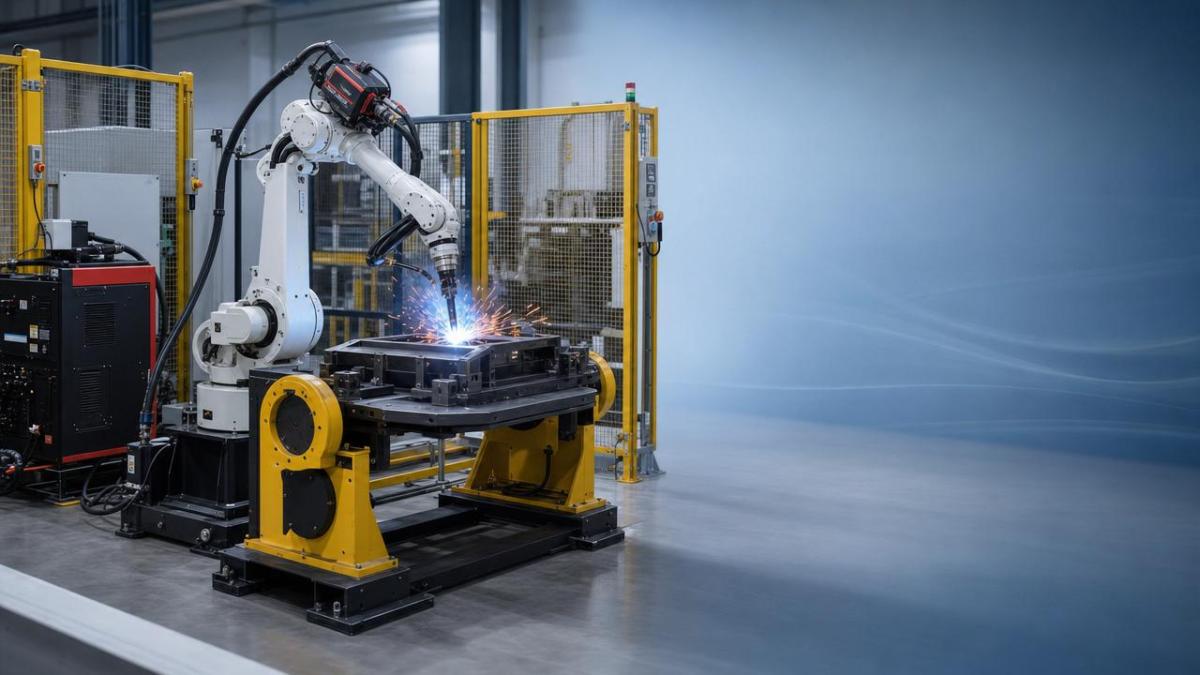
When suppliers promote a competitive welding robot arm price, they are usually referring to the manipulator itself. That number can be useful for benchmark comparison, but it is not the same as the final delivered cost of a production-ready welding automation system. A finance approver should separate component price from cell-level investment.
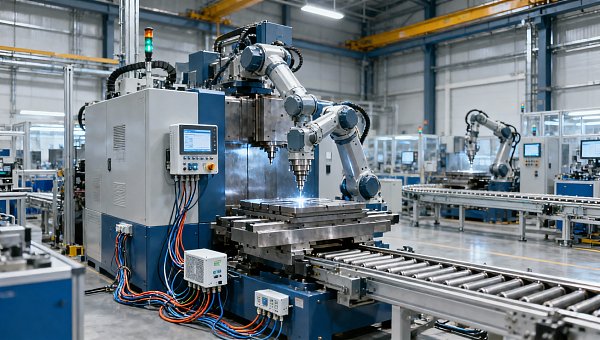
A complete robotic welding setup typically includes the robot arm, controller, teach pendant, welding power source, torch package, dress pack, wire feeder, torch cleaning station, workpiece fixtures, rotary positioners, safety enclosure, fume extraction, sensors, integration labor, and programming. If one of these elements is missing from the initial quote, the apparent affordability can be misleading.
This is why project teams often discover late-stage budget expansion. The arm price looked acceptable, but the application required more complex tooling, tighter weld path repeatability, or more safety engineering than expected. From a capital approval perspective, the relevant metric is not the arm alone but the installed, commissioned, and stable production cost.
For finance leaders, that means every welding robot arm price should trigger a second question: what exactly is included, what is excluded, and what assumptions are being made about cycle time, throughput, and product mix? The answer determines whether the quotation supports a realistic approval case or only a partial one.
What finance approvers actually need to know before saying yes
Technical teams may focus on payload, reach, axis speed, and repeatability. These are important, but finance approvers usually need a different decision framework. They want to know whether the proposed robot cell solves a measurable business problem and whether the budget has enough definition to prevent unpleasant surprises.
The first issue is scope clarity. Is the budget for replacing manual welding in a high-volume line, stabilizing quality for difficult welds, handling labor shortages, or increasing output without adding shifts? A clear business objective changes how the welding robot arm price should be interpreted. A cheap robot for the wrong production need is expensive in practice.
The second issue is expected utilization. A robotic welding cell running one predictable product family at high duty cycle has a very different return profile than a cell supporting many low-volume variants with frequent changeovers. Finance teams should ask what percentage of planned production will actually migrate to the robot and how often reprogramming will be required.
The third issue is risk transfer. Automation can reduce rework, operator variability, scrap, and dependence on hard-to-hire manual welders. In some facilities, those avoided costs are more economically meaningful than direct labor substitution. The value of the project may come from schedule reliability and quality consistency, not just from headcount reduction.
The fourth issue is lifecycle burden. A lower initial welding robot arm price can be offset by higher maintenance frequency, shorter consumable life, less local service support, or more downtime during fault recovery. For financial approval, an attractive purchase price is only credible if operating assumptions are equally transparent.
Which cost elements are commonly underestimated
The most common budgeting error is to underestimate integration. Even if the robot arm itself is standardized, the surrounding welding process is highly application-specific. Part geometry, fixture design, seam accessibility, torch angles, heat input control, and spatter management all affect engineering effort. Integration cost rises quickly when the process is not already stable in manual production.
Programming is another underestimated item. Basic demonstrations make robotic welding look simple, but production-grade path optimization, touch sensing routines, collision avoidance, and multi-part recipes take time. If the factory produces many variants or frequently changes part designs, programming and validation become recurring costs rather than a one-time setup activity.
Tooling and fixturing often consume more budget than non-specialists expect. A robot can only deliver repeatable welding if the workpiece is presented repeatably. Poor fixtures force compensating logic, slower cycles, and quality drift. For finance approvers, fixture precision should be seen as a cost multiplier and a performance enabler, not as a minor accessory.
Commissioning downtime should also be priced honestly. Installation may interrupt current production, require temporary dual-running with manual welding, or expose upstream process variation that was previously hidden. These costs do not always appear in supplier quotations, yet they affect cash flow and payback timing.
Training and change management deserve similar attention. Operators, maintenance staff, and production supervisors all need enough process understanding to keep the cell productive after handover. A project with insufficient internal capability may show acceptable capital cost but underperform because the organization cannot sustain the new operating model.
How to evaluate total cost of ownership instead of headline price
A better purchasing method is to build a total cost of ownership model over three to seven years, depending on the expected depreciation period and production horizon. This model should include not only the quoted welding robot arm price, but also all installation costs, software licenses, maintenance contracts, spares, consumables, training, and expected downtime exposure.
Finance teams should ask suppliers and internal engineers to organize costs into four categories: acquisition, deployment, operation, and recovery. Acquisition covers the arm and major hardware. Deployment includes integration, programming, and startup. Operation includes energy, consumables, maintenance, and labor oversight. Recovery refers to salvage value, redeployment options, or upgrade potential at the end of the first use case.
This framework helps compare offers that otherwise look similar on paper. One vendor may present a lower welding robot arm price but require more third-party integration. Another may cost more upfront yet include validated welding packages, local support, and faster commissioning. The financially stronger choice is the one with lower total cost per acceptable welded part, not necessarily the lowest purchase line item.
It is also wise to model multiple utilization scenarios. A base case, conservative case, and high-throughput case can reveal how sensitive ROI is to actual production loading. If the project only works financially under perfect assumptions, approval should be cautious. Robust projects retain value even when utilization is lower than planned or programming time is higher than expected.
How productivity, quality, and labor economics change the ROI equation
Many buyers start with a simple labor replacement calculation, but that approach is too narrow. Robotic welding ROI often depends on a combination of throughput improvement, weld quality consistency, scrap reduction, lower rework, better traceability, and less dependency on difficult labor markets. These benefits are operational, but they ultimately convert into financial value.
For example, a robotic cell may not eliminate as many direct labor hours as expected if operators are redeployed to loading, inspection, or secondary tasks. However, if the robot stabilizes cycle times and reduces weld defects, the plant may achieve higher schedule adherence and lower cost of poor quality. Those gains can justify the project even when direct wage savings are moderate.
In sectors with expensive downstream consequences, quality stability matters even more. Rejected welded assemblies can delay final delivery, disrupt customer commitments, or create warranty exposure. In those situations, the right question is not whether the welding robot arm price is low, but whether the automation investment reduces costly production variance.
Labor economics should also be assessed structurally rather than tactically. If manual welding recruitment is becoming harder, overtime dependence is rising, or employee turnover is unstable, automation may protect capacity planning. The financial benefit then includes resilience and continuity, which are often invisible in a narrow equipment comparison but material at plant level.
Questions finance teams should ask vendors and internal engineers
Before approving any budget, finance decision-makers should request a structured answer set. The first question is: what production problem is this robot cell solving, and how is that problem measured today? If the current baseline on output, defect rate, labor hours, and downtime is unclear, future savings claims will be weak.
The second question is: what is included in the quoted welding robot arm price and what must be procured separately? This should cover controller, welding source, tooling, safety systems, software, installation, travel, programming, training, and acceptance testing. Line-by-line transparency prevents artificial price compression in the initial proposal.
The third question is: what assumptions define the ROI model? These assumptions should include annual operating hours, number of part variants, target uptime, maintenance intervals, consumables usage, and labor redeployment logic. Finance teams should reject broad productivity claims that do not specify operating conditions.
The fourth question is: what are the technical risks that could delay ramp-up? Examples include unstable incoming part tolerances, poor fixture repeatability, limited welding procedure standardization, or insufficient in-house robot expertise. Financial risk rises when technical readiness is low, even if the equipment quote appears attractive.
The fifth question is: what support infrastructure exists after commissioning? Local spare parts availability, response time for service calls, software support, and operator retraining all influence real lifecycle cost. A slightly higher vendor price may be justified if it materially reduces downtime risk over the next several years.
When a low welding robot arm price is a smart buy—and when it is a trap
A low welding robot arm price can be a smart decision when the application is standardized, production volumes are stable, fixtures are mature, and the internal team already has experience with robotic cells. In that environment, the organization can capture the value of a competitively priced arm because the surrounding process risk is controlled.
It becomes a trap when the purchase is driven by capital minimization rather than process fit. If product mix is unstable, weld access is difficult, tolerances vary widely, or the plant lacks robotics programming capability, the cheapest arm may trigger higher downstream engineering cost and slower time to value. In such cases, under-specification is more dangerous than overpricing.
Another warning sign is when the proposal focuses heavily on arm price but lightly on welding procedure validation. Robotic welding performance depends on the full process stack, not just the mechanical manipulator. If torch package durability, seam tracking, fixture repeatability, and power source compatibility are not clearly addressed, the financial model rests on weak ground.
Finance approvers should therefore treat unusually low quotations as a signal for deeper scrutiny rather than immediate approval. The goal is not to buy the cheapest robot. The goal is to acquire reliable welded output at a predictable cost with acceptable implementation risk.
A practical approval framework for clearer capital decisions
A strong approval process starts by reframing the investment from “buying a robot” to “buying a repeatable welding capability.” That mindset helps align engineering, operations, procurement, and finance around the same decision criteria. It also prevents the robot arm from being evaluated in isolation from the process it must support.
One practical approach is to require a three-part approval pack. First, a technical scope document defining parts, weld types, throughput targets, and quality requirements. Second, a commercial breakdown showing every included and excluded cost beyond the welding robot arm price. Third, a financial model with scenario-based ROI, sensitivity analysis, and implementation risks.
It is also useful to require milestone-based payment logic tied to acceptance outcomes. Instead of treating the purchase as complete on delivery, finance teams can align disbursement with installation, commissioning, and production performance criteria. This creates discipline around what “successful deployment” actually means.
Finally, compare proposals using normalized metrics. Cost per welded assembly, cost per production hour, expected uptime, and payback under conservative utilization are often more meaningful than comparing robot arm quotes directly. These metrics translate engineering decisions into financial language that supports stronger approvals.
Conclusion: approve the system, not just the sticker price
The central lesson for finance approvers is simple: welding robot arm price is important, but it is only half the budgeting story. The real investment lives in integration, tooling, programming, process stability, uptime support, and the measurable business value created after commissioning. A low sticker price without system clarity can distort the budget and weaken returns.
The most effective approval decisions come from total-cost thinking and production-level evidence. If the project team can show scope transparency, realistic operating assumptions, clear productivity logic, and manageable technical risk, then the investment case becomes far stronger. If they cannot, even an attractive robot quote may hide more cost than value.
For organizations serious about automation, the right question is never just “What is the welding robot arm price?” It is “What does this welded-output capability cost across its lifecycle, and what operational truth will it deliver?” That is the standard of rigor finance teams should apply before approving any robotic welding project.
Search News
Hot Articles
- Carbon Fiber StructuresHow to Specify Aerospace Carbon Fiber Assemblies for Lightweight, Load-Bearing PartsJul 11, 2026
- Machine VisionXiaomi, Alibaba DAMO Academy Drive Open-Source Robotics Model Ecosystem, Lowering Algorithm Development Barriers for Overseas SMEs Adopting Chinese Robotics SolutionsMar 30, 2026
- Cobots & ArmsShanxi 'AI+' Conference Showcases Embodied Intelligence with Multinational Buyer Engagement: Key Industry ImplicationsMar 30, 2026
Popular Tags
Recommended News
 Jul 11, 2026How to Specify Aerospace Carbon Fiber Assemblies for Lightweight, Load-Bearing PartsAerospace carbon fiber assemblies: learn how to specify laminate design, load data, joining methods, and inspection controls for lighter, reliable load-bearing aerospace parts.Elena Rostova (UAV Systems Researcher)
 Mar 30, 2026Xiaomi, Alibaba DAMO Academy Drive Open-Source Robotics Model Ecosystem, Lowering Algorithm Development Barriers for Overseas SMEs Adopting Chinese Robotics SolutionsXiaomi & Alibaba DAMO Academy's open-source robotics models lower algorithm barriers for global SMEs. Boost efficiency in manufacturing, logistics & smart retail with ROS 2 compatible solutions.TSV Data Lab
 Mar 30, 2026Shanxi 'AI+' Conference Showcases Embodied Intelligence with Multinational Buyer Engagement: Key Industry ImplicationsShanxi 'AI+' Conference highlights embodied intelligence with Tesla, Ubtech & Jiantao showcasing multimodal robotics. 40+ global buyers validated tech on-site, creating new B2B channels for industrial automation & AI solutions.Chen Wei (Automation Lead Engineer)
 Mar 30, 2026Zhongguancun Unveils 6G Integrated Sensing-Computing-Intelligence Platform to Empower Embodied Robots for Global Industrial ApplicationsZhongguancun's new 6G platform revolutionizes industrial robotics with <10ms latency, empowering global automotive, logistics & port automation. Discover how this tech boosts China's smart manufacturing exports.TSV Data Lab
 Mar 30, 2026Mech-Mind Tianjin Embodied Intelligence R&D and Production Base Goes Live, Cutting Delivery Time by 20%–30% for Global Customized AMR+Vision SolutionsMech-Mind's Tianjin AMR+Vision production base cuts delivery time by 20%-30% for欧美 & Latin American markets. Discover how this PLd-certified facility accelerates customized robotics solutions for smart manufacturing and logistics.Chen Wei (Automation Lead Engineer)
 Mar 30, 2026Boao Forum Reveals 'Co-evolution of Big and Small Brains' Trend in Humanoid Robots, China's Embodied Intelligence Accelerates Adaptation to Overseas Manufacturing Service ScenariosDiscover how China's humanoid robots, featuring 'Co-evolution of Big and Small Brains,' are revolutionizing global manufacturing. Learn about Embodied Tian Gong 3.0's ISO compliance and overseas deployment at Boao Forum 2026.Chen Wei (Automation Lead Engineer)
 Mar 30, 2026China Railway Industrial Secures Patent for Embodied Robotics in Material Handling, Boosting High-Precision Delivery Capabilities for Overseas Infrastructure and Manufacturing ProjectsChina Railway Industrial's new patent for embodied robotics in material handling boosts high-precision delivery for global infrastructure & manufacturing. Discover how this innovation enhances logistics accuracy in automotive, rail transit & EPC projects.Chen Wei (Automation Lead Engineer)
 Sep 28, 2026Spindle Runout Measurement in Germany: DIN Standards, Methods, and Acceptance LimitsSpindle runout measurement Germany: explore DIN standards, proven methods, acceptance limits, and audit-ready practices for reliable machining quality.Dr. Marcus Vance
 Sep 27, 2026How to Select Wall-Mount Edge Devices for Space-Constrained Factory NetworksWall mount edge devices for space-constrained factories: evaluate workload, thermal design, power resilience, cable access, and network reliability for smarter deployments.TSV Data Lab
 Sep 26, 2026Machining Tolerance Analysis: How to Set Limits That Meet Function and Cost TargetsMachining tolerance analysis: learn how to set functional limits, control tolerance stacks, reduce inspection risk, and balance precision with production cost.Dr. Marcus Vance
 Sep 25, 2026How to Evaluate an Industrial Infrastructure Data Platform for Multi-Site OperationsIndustrial infrastructure data platform evaluation guide for multi-site operations: compare data quality, edge resilience, interoperability, governance, and scalable proof-of-value criteria.Victor Lin (Chief Software Architect)
 Sep 24, 2026How to Select Machine Vision Optics for Accurate Inspection at Different Working DistancesMachine vision optics selection guide for accurate inspection at every working distance. Compare FOV, pixel scale, DOF, distortion, lighting, and telecentric options.TSV Data Lab
 Sep 23, 2026How to Evaluate a Machine Vision System Integrator for High-Speed Inspection LinesChoose a machine vision system integrator with proven expertise in high-speed inspection, reliable reject timing, robust optics, and measurable acceptance criteria.TSV Data Lab
 Sep 28, 2026When is a SCADA API the right choice for connecting plant systems?SCADA API guide: learn when governed plant data integration improves traceability, security, and scalability—without compromising real-time control.Victor Lin (Chief Software Architect)
 Sep 27, 2026How SCADA data integration improves traceability across production linesSCADA data integration connects production-line data to improve traceability, accelerate quality investigations, and strengthen safety decisions.Victor Lin (Chief Software Architect)
 Sep 26, 2026What to define before starting SCADA integration planningSCADA integration planning starts with clear scope, control boundaries, data models, cybersecurity, and testing. Discover the definitions that reduce risk and costly rework.Victor Lin (Chief Software Architect)
 Sep 25, 2026How a smart factory with Industrial IoT reduces production blind spotsDiscover how a smart factory with Industrial IoT turns real-time machine, quality, and workflow data into actionable insights that reduce production blind spots and delivery risks.Victor Lin (Chief Software Architect)
 Sep 24, 2026When does Industrial IoT make smart manufacturing easier to scale?Smart manufacturing Industrial IoT scales when trusted data, interoperable systems, and secure workflows turn connected assets into measurable gains.TSV Data Lab
 Sep 23, 2026What drives ultra-precision machining cost at 1-micron tolerance?Ultra precision machining cost per part at 1 micron tolerance depends on process, material, metrology, and yield. Learn how to compare quotes confidently.Dr. Marcus Vance
 Sep 22, 2026Drone Engine-T550CC Applications: Build the UAV Power System Around the MissionAn application guide for Drone Engine-T550CC integration, covering payload planning, airframe matching, cooling, fuel, vibration, test procedures, documentation, and service preparation.Elena Rostova (UAV Systems Researcher)
 Sep 22, 2026How to Evaluate Industrial Edge Computing Vendors for Factory DeploymentIndustrial edge computing vendor evaluation guide for factories: compare latency, protocol fit, reliability, security, and lifecycle support before deployment.TSV Data Lab
 Sep 21, 2026Drone Payload Integration: Matching Power, Data, and Center of Gravity for Reliable FlightsDrone payload integration made practical: balance power, data, center of gravity, and endurance to build safer, more reliable mission-ready flights.Elena Rostova (UAV Systems Researcher)
 Sep 20, 2026Autonomous Navigation Pricing: Cost Drivers and Budget Benchmarks for AMR ProjectsAutonomous navigation price explained: compare AMR cost drivers, software, sensors, integration, safety, and lifecycle budgets to build a scalable project plan.Chen Wei (Automation Lead Engineer)
 Sep 19, 2026How to Scope Automation Integration Services for Multi-System Factory ProjectsAutomation integration services: learn how to scope multi-system factory projects with clear workflows, interface contracts, safety boundaries, and acceptance criteria.Victor Lin (Chief Software Architect)