SCARA robot wholesale price varies more by tooling than by reach
Publication Date
author
For procurement teams comparing automation options, scara robot wholesale price is often shaped less by arm reach and more by tooling complexity, payload matching, cycle-time demands, and integration requirements. Understanding these cost drivers early helps buyers avoid misleading headline quotes, shorten supplier evaluation cycles, and make data-based sourcing decisions that align with real production performance.
Why pricing conversations are shifting in the SCARA market
A notable change in industrial automation sourcing is that buyers are no longer satisfied with a simple base-unit quotation. In earlier purchasing cycles, many teams compared SCARA robots mainly by reach, payload, and brand reputation. Today, that approach is increasingly incomplete. The practical discussion around scara robot wholesale price has moved toward end-effector design, application tuning, controller compatibility, safety architecture, and deployment speed.
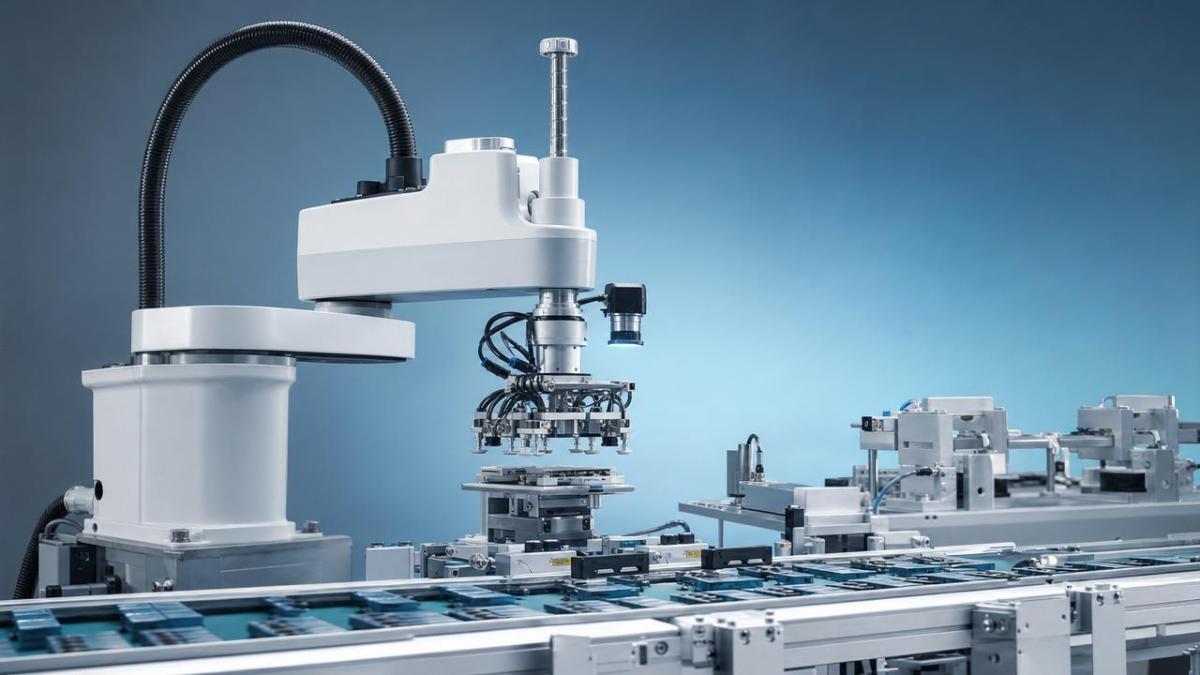
This shift is tied to broader manufacturing pressure. Shorter product life cycles, labor instability, mixed-SKU production, and stricter takt-time expectations mean that the robot arm itself is only one part of the investment decision. A SCARA unit with a modest reach but custom vacuum gripper arrays, vision alignment, and traceability integration may cost more in wholesale projects than a longer-reach standard model with basic pick-and-place tooling. For sourcing teams, this is not a pricing anomaly. It is a signal that application specificity now matters more than headline geometry.
In sectors ranging from electronics assembly to packaging, medical consumables, and light precision machining support, the most useful price benchmark is no longer “cost per robot.” It is closer to “cost per validated application cell.” That change is influencing RFQ structure, supplier selection criteria, and internal capital approval logic.
The strongest market signal: tooling is becoming the real pricing divider
The clearest trend behind scara robot wholesale price variation is the growing share of tooling and application engineering in total project cost. Reach still matters, especially where footprint constraints or workstation spacing are critical, but it often does not explain the largest quotation gap between two suppliers.
Why is tooling taking a larger role? Because modern production lines demand higher consistency at higher speed while handling more product variation. That pushes suppliers to engineer around part geometry, grip force, anti-static requirements, food-contact constraints, surface protection, and error-proofing. Every one of those factors can reshape the commercial offer.
For procurement managers, the implication is straightforward: if a supplier quote looks unusually low, the missing value may be hidden in tooling assumptions, unpriced commissioning time, or unresolved interface work.
What is driving this change in purchasing economics
Several forces are pushing the market in this direction. First, factories want flexible automation rather than single-SKU fixed lines. A SCARA robot that can switch between trays, pouches, small housings, and light assembly steps needs more sophisticated tooling and software logic than a simple repetitive transfer cell.
Second, the tolerance for downtime is lower. Buyers increasingly ask not just for robot performance, but for stable performance in their exact production environment. That means vacuum redundancy, cable routing, changeover fixtures, force control, and maintenance access receive more engineering attention. Those items affect the final scara robot wholesale price more than many first-time buyers expect.
Third, integration has become a strategic issue. Modern SCARA deployments often connect with MES signals, barcode systems, conveyors, feeders, and machine vision stations. The robot may be standard, but the communication layer is not. In many quotes, the true pricing spread comes from system responsibility: who owns debugging, interoperability, cycle validation, and acceptance testing.
Fourth, risk is being priced more explicitly. Suppliers know that underestimating tooling complexity can destroy margins during commissioning. As a result, experienced vendors build more engineering buffer into quotes for demanding applications. Lower-cost suppliers may exclude that risk up front, leaving buyers exposed later through change orders or delayed launch schedules.
How the trend affects different procurement roles
The change in scara robot wholesale price structure does not affect every stakeholder equally. Procurement teams, plant engineering, and finance often evaluate the same quotation through different lenses, which can create friction if the application assumptions are unclear.
This is why many successful sourcing teams now request application videos, part drawings, takt targets, and tooling assumptions during early RFQ stages. The goal is not to make the process heavier. It is to prevent a false comparison between a minimal hardware quote and a production-ready proposal.
Why reach is losing its dominance as a quote shortcut
Reach remains an easy number to compare, so it still appears prominently in distributor listings and online catalogs. However, as a predictor of total project value, it is weaker than before. Two SCARA robots with similar reach can produce very different outcomes depending on acceleration profiles, mounting constraints, EOAT inertia, cleanliness requirements, and part presentation consistency.
A procurement shortcut based mainly on arm length can therefore distort supplier evaluation. The practical question is not “How far can it move?” but “How reliably can it complete this task under our takt time, part variability, and maintenance conditions?” Once buyers ask that question, the center of gravity shifts from catalog dimensions to application engineering.
That is exactly why scara robot wholesale price can vary sharply in projects that appear similar on paper. The hidden variables are usually not mysterious. They are simply buried in tooling detail, validation scope, and performance risk allocation.
Signals procurement teams should watch over the next buying cycle
Looking ahead, several signals deserve close attention. One is the rising use of modular tooling platforms. Suppliers that standardize gripper interfaces, cable routing, and quick-change plates may offer better long-term value even when their initial quote is not the lowest. Another is the spread of integrated vision packages for part location and orientation correction. As labor variability and product mix increase, vision is becoming less of a premium option and more of a resilience feature.
A third signal is the growing importance of supportability. Buyers are paying more attention to spare parts, remote diagnostics, local service response, and mean-time-to-recovery. These issues influence the realistic cost of ownership and should be considered part of any serious scara robot wholesale price assessment.
A fourth signal is supplier transparency. Vendors able to separate robot cost, tooling cost, controls cost, and commissioning cost in a structured way are often easier to evaluate and less likely to generate late-stage surprises. In a market where many quotations still mix these elements unevenly, pricing transparency itself is a procurement advantage.
A more reliable way to compare supplier quotes
For teams trying to interpret scara robot wholesale price correctly, a practical evaluation method is to compare quotes across five normalized layers: base robot, controller and software, tooling package, integration scope, and acceptance criteria. If any one of these layers is vague, the total quote becomes difficult to trust.
Buyers should also ask whether the proposed payload includes the full end-of-arm tooling mass, cable drag effects, and dynamic moment during acceleration. Many performance gaps appear only after the system is installed, when nominal payload proves irrelevant to real operating conditions. A quote that seems cheaper at procurement stage can become more expensive after redesign, slowdown, or tooling revision.
Another useful step is to define the acceptable cycle-time window and repeatability requirement in production terms, not brochure terms. Procurement teams that translate application needs into measurable acceptance standards are more likely to receive realistic offers and avoid hidden compromises.
What companies should do now as the market keeps evolving
The current direction of the market suggests that SCARA sourcing will become more engineering-led, not less. As product diversity rises and factories push for leaner staffing, standardized robot hardware will remain important, but the decisive cost and performance difference will increasingly sit in tooling, integration quality, and lifecycle support.
Companies preparing future RFQs should build internal alignment early between procurement, manufacturing engineering, and operations. That means documenting part handling risks, defining changeover expectations, clarifying traceability needs, and identifying which failures are unacceptable in production. The better these variables are framed, the more meaningful the supplier comparison becomes.
In practical terms, if your team wants to judge whether a quoted scara robot wholesale price is competitive, focus on three questions. What exactly is included in the tooling and validation scope? What production risks are priced in versus excluded? And how much of the application burden remains with your internal team after delivery? Those questions often reveal more commercial truth than a headline unit price ever can.
For organizations seeking data-based supplier screening, the most effective next step is not simply asking for lower pricing. It is asking for clearer engineering boundaries. In a market where automation value is being reshaped by application complexity, the smartest buyers will be the ones who evaluate complete deployment reality, not just arm reach on a datasheet.
Search News
Hot Articles
- Carbon Fiber StructuresHow to Specify Aerospace Carbon Fiber Assemblies for Lightweight, Load-Bearing PartsJul 11, 2026
- Machine VisionXiaomi, Alibaba DAMO Academy Drive Open-Source Robotics Model Ecosystem, Lowering Algorithm Development Barriers for Overseas SMEs Adopting Chinese Robotics SolutionsMar 30, 2026
- Cobots & ArmsShanxi 'AI+' Conference Showcases Embodied Intelligence with Multinational Buyer Engagement: Key Industry ImplicationsMar 30, 2026
Popular Tags
Recommended News
 Jul 11, 2026How to Specify Aerospace Carbon Fiber Assemblies for Lightweight, Load-Bearing PartsAerospace carbon fiber assemblies: learn how to specify laminate design, load data, joining methods, and inspection controls for lighter, reliable load-bearing aerospace parts.Elena Rostova (UAV Systems Researcher)
 Mar 30, 2026Xiaomi, Alibaba DAMO Academy Drive Open-Source Robotics Model Ecosystem, Lowering Algorithm Development Barriers for Overseas SMEs Adopting Chinese Robotics SolutionsXiaomi & Alibaba DAMO Academy's open-source robotics models lower algorithm barriers for global SMEs. Boost efficiency in manufacturing, logistics & smart retail with ROS 2 compatible solutions.TSV Data Lab
 Mar 30, 2026Shanxi 'AI+' Conference Showcases Embodied Intelligence with Multinational Buyer Engagement: Key Industry ImplicationsShanxi 'AI+' Conference highlights embodied intelligence with Tesla, Ubtech & Jiantao showcasing multimodal robotics. 40+ global buyers validated tech on-site, creating new B2B channels for industrial automation & AI solutions.Chen Wei (Automation Lead Engineer)
 Mar 30, 2026Zhongguancun Unveils 6G Integrated Sensing-Computing-Intelligence Platform to Empower Embodied Robots for Global Industrial ApplicationsZhongguancun's new 6G platform revolutionizes industrial robotics with <10ms latency, empowering global automotive, logistics & port automation. Discover how this tech boosts China's smart manufacturing exports.TSV Data Lab
 Mar 30, 2026Mech-Mind Tianjin Embodied Intelligence R&D and Production Base Goes Live, Cutting Delivery Time by 20%–30% for Global Customized AMR+Vision SolutionsMech-Mind's Tianjin AMR+Vision production base cuts delivery time by 20%-30% for欧美 & Latin American markets. Discover how this PLd-certified facility accelerates customized robotics solutions for smart manufacturing and logistics.Chen Wei (Automation Lead Engineer)
 Mar 30, 2026Boao Forum Reveals 'Co-evolution of Big and Small Brains' Trend in Humanoid Robots, China's Embodied Intelligence Accelerates Adaptation to Overseas Manufacturing Service ScenariosDiscover how China's humanoid robots, featuring 'Co-evolution of Big and Small Brains,' are revolutionizing global manufacturing. Learn about Embodied Tian Gong 3.0's ISO compliance and overseas deployment at Boao Forum 2026.Chen Wei (Automation Lead Engineer)
 Mar 30, 2026China Railway Industrial Secures Patent for Embodied Robotics in Material Handling, Boosting High-Precision Delivery Capabilities for Overseas Infrastructure and Manufacturing ProjectsChina Railway Industrial's new patent for embodied robotics in material handling boosts high-precision delivery for global infrastructure & manufacturing. Discover how this innovation enhances logistics accuracy in automotive, rail transit & EPC projects.Chen Wei (Automation Lead Engineer)
 Sep 28, 2026Spindle Runout Measurement in Germany: DIN Standards, Methods, and Acceptance LimitsSpindle runout measurement Germany: explore DIN standards, proven methods, acceptance limits, and audit-ready practices for reliable machining quality.Dr. Marcus Vance
 Sep 27, 2026How to Select Wall-Mount Edge Devices for Space-Constrained Factory NetworksWall mount edge devices for space-constrained factories: evaluate workload, thermal design, power resilience, cable access, and network reliability for smarter deployments.TSV Data Lab
 Sep 26, 2026Machining Tolerance Analysis: How to Set Limits That Meet Function and Cost TargetsMachining tolerance analysis: learn how to set functional limits, control tolerance stacks, reduce inspection risk, and balance precision with production cost.Dr. Marcus Vance
 Sep 25, 2026How to Evaluate an Industrial Infrastructure Data Platform for Multi-Site OperationsIndustrial infrastructure data platform evaluation guide for multi-site operations: compare data quality, edge resilience, interoperability, governance, and scalable proof-of-value criteria.Victor Lin (Chief Software Architect)
 Sep 24, 2026How to Select Machine Vision Optics for Accurate Inspection at Different Working DistancesMachine vision optics selection guide for accurate inspection at every working distance. Compare FOV, pixel scale, DOF, distortion, lighting, and telecentric options.TSV Data Lab
 Sep 23, 2026How to Evaluate a Machine Vision System Integrator for High-Speed Inspection LinesChoose a machine vision system integrator with proven expertise in high-speed inspection, reliable reject timing, robust optics, and measurable acceptance criteria.TSV Data Lab
 Sep 28, 2026When is a SCADA API the right choice for connecting plant systems?SCADA API guide: learn when governed plant data integration improves traceability, security, and scalability—without compromising real-time control.Victor Lin (Chief Software Architect)
 Sep 27, 2026How SCADA data integration improves traceability across production linesSCADA data integration connects production-line data to improve traceability, accelerate quality investigations, and strengthen safety decisions.Victor Lin (Chief Software Architect)
 Sep 26, 2026What to define before starting SCADA integration planningSCADA integration planning starts with clear scope, control boundaries, data models, cybersecurity, and testing. Discover the definitions that reduce risk and costly rework.Victor Lin (Chief Software Architect)
 Sep 25, 2026How a smart factory with Industrial IoT reduces production blind spotsDiscover how a smart factory with Industrial IoT turns real-time machine, quality, and workflow data into actionable insights that reduce production blind spots and delivery risks.Victor Lin (Chief Software Architect)
 Sep 24, 2026When does Industrial IoT make smart manufacturing easier to scale?Smart manufacturing Industrial IoT scales when trusted data, interoperable systems, and secure workflows turn connected assets into measurable gains.TSV Data Lab
 Sep 23, 2026What drives ultra-precision machining cost at 1-micron tolerance?Ultra precision machining cost per part at 1 micron tolerance depends on process, material, metrology, and yield. Learn how to compare quotes confidently.Dr. Marcus Vance
 Sep 22, 2026Drone Engine-T550CC Applications: Build the UAV Power System Around the MissionAn application guide for Drone Engine-T550CC integration, covering payload planning, airframe matching, cooling, fuel, vibration, test procedures, documentation, and service preparation.Elena Rostova (UAV Systems Researcher)
 Sep 22, 2026How to Evaluate Industrial Edge Computing Vendors for Factory DeploymentIndustrial edge computing vendor evaluation guide for factories: compare latency, protocol fit, reliability, security, and lifecycle support before deployment.TSV Data Lab
 Sep 21, 2026Drone Payload Integration: Matching Power, Data, and Center of Gravity for Reliable FlightsDrone payload integration made practical: balance power, data, center of gravity, and endurance to build safer, more reliable mission-ready flights.Elena Rostova (UAV Systems Researcher)
 Sep 20, 2026Autonomous Navigation Pricing: Cost Drivers and Budget Benchmarks for AMR ProjectsAutonomous navigation price explained: compare AMR cost drivers, software, sensors, integration, safety, and lifecycle budgets to build a scalable project plan.Chen Wei (Automation Lead Engineer)
 Sep 19, 2026How to Scope Automation Integration Services for Multi-System Factory ProjectsAutomation integration services: learn how to scope multi-system factory projects with clear workflows, interface contracts, safety boundaries, and acceptance criteria.Victor Lin (Chief Software Architect)