Robot Welding Cells: Where Cycle Time Is Commonly Lost
Publication Date
author
In robot welding cells, cycle time is rarely lost in the arc alone. For enterprise decision-makers evaluating industrial robots for welding applications, the real bottlenecks often hide in part handling, fixture access, torch positioning, rework, and data visibility. This article examines where those hidden seconds accumulate—and how engineering-led analysis can turn fragmented welding performance into measurable throughput gains.
Why cycle-time loss is getting more attention now
A clear shift is happening across manufacturing: welding automation is no longer judged only by whether a cell can produce acceptable parts. It is increasingly judged by how consistently it can protect takt time, labor flexibility, energy use, and traceable quality at scale. That change matters because many companies adopted robotic welding first to address labor shortages or safety exposure, but are now discovering that installed automation does not automatically deliver expected throughput.
For buyers of industrial robots for welding applications, this creates a more demanding evaluation environment. Capital budgets are tighter, product mix is more variable, and management teams want shorter payback periods. In this context, a robot that welds well but waits too long between welds may underperform a less glamorous system with stronger part flow, fixture design, and process visibility. The market focus is therefore moving from headline robot specifications toward total cell behavior.
This is also why engineering teams are revisiting old assumptions. A fast robot arm does not guarantee a fast welding cell. If torch access is awkward, if operators lose time loading unstable parts, or if rework loops are hidden in downstream inspection, the practical cycle time may drift far from the programmed estimate. The most important trend signal is simple: decision-makers are asking where time is lost outside the arc, not just during the weld itself.
The hidden shift: from robot speed to system-level time accounting
In earlier automation waves, procurement teams often compared payload, reach, repeatability, and brand support as primary decision factors. Those metrics still matter, but the next level of performance comes from system-level accounting. Companies using industrial robots for welding applications now look more closely at non-value-added motion, fixture exchange time, changeover logic, wire handling, torch cleaning frequency, and upstream material presentation.
This shift is driven by two realities. First, many welded products are moving toward higher mix and lower batch predictability. Second, executive teams expect digital manufacturing assets to produce actionable data, not just output. A welding cell that cannot explain why actual cycle time differs from estimated cycle time becomes difficult to optimize, justify, or scale to new lines and plants.
For enterprises comparing industrial robots for welding applications, the takeaway is not to downgrade robot specifications, but to place them in the right order. A technically capable robot inside a poorly balanced cell often delivers less value than a moderately specified robot integrated into a highly disciplined workflow.
Where cycle time is commonly lost inside modern welding cells
The largest time losses tend to come from repeated small inefficiencies rather than dramatic failures. These losses are difficult to see when organizations review only overall output numbers. They become visible when each cycle is broken into motion, preparation, weld execution, quality confirmation, and reset phases.
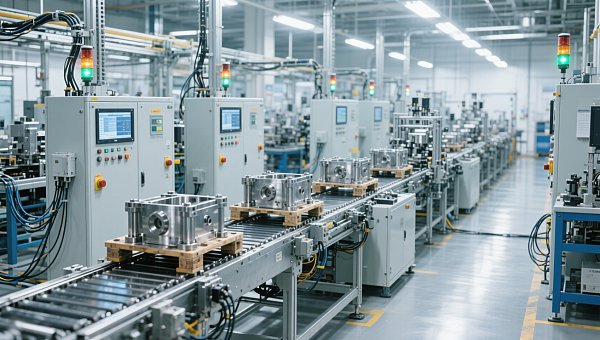
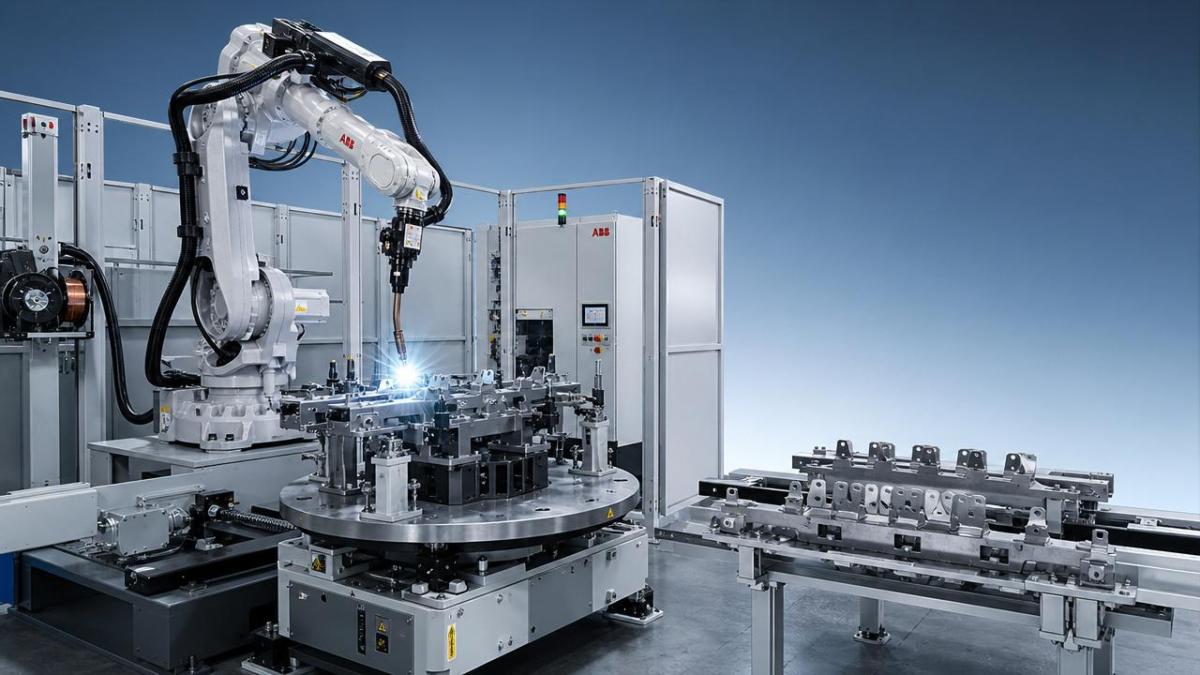
Part handling is often the first issue. If components arrive in inconsistent orientation, operators spend extra seconds correcting position before clamping. In high-volume environments, those seconds scale quickly into major capacity loss. The second issue is fixture access. Engineers may design a fixture for holding strength, but not for easy robot entry and exit. The result is longer approach paths, slower travel speeds near collision zones, and more conservative programming.
Torch positioning is another frequent source of hidden delay. In many industrial robots for welding applications, travel paths include unnecessary intermediate points added during commissioning to avoid risk. Over time, these “safe” moves remain in production even after the process stabilizes. The cell runs reliably, but not efficiently. Similarly, poor cable routing or difficult torch angles can trigger extra cleaning, nozzle changes, or minor stoppages.
Rework is the most underestimated cycle-time drain because it is often tracked as a quality issue rather than a throughput issue. When distortion, gap variation, spatter buildup, or missed starts create downstream corrections, the original cell may appear productive while the plant loses time elsewhere. From a business standpoint, that is still cycle-time loss. Finally, lack of data visibility slows improvement itself. If teams cannot separate arc time from search time, handling time, and fault recovery time, optimization discussions remain subjective.
What is driving these losses to become more expensive
Several industry forces are making hidden inefficiencies more costly than before. The first is product complexity. Fabricated assemblies increasingly include tighter tolerances, lighter materials, and more customized variants. That means industrial robots for welding applications must handle changing geometry without creating excessive setup friction.
The second driver is labor structure. Even where robotic welding reduces direct manual weld labor, plants still rely on skilled technicians for setup, maintenance, and troubleshooting. If cell performance depends too heavily on tribal knowledge, throughput becomes fragile. The third driver is management visibility. Digital operations reviews now push plants to explain downtime categories, first-pass yield, OEE trends, and line balancing performance. What was once tolerated as “normal delay” is now expected to be measured and reduced.
A fourth driver is supply chain volatility. Irregular material quality, part variation from upstream processes, and shifting customer schedules all amplify the cost of a rigid welding cell. In this environment, decision-makers are not simply buying industrial robots for welding applications; they are buying resilience against variation.
How the impact differs across decision-makers and business functions
Not every stakeholder feels cycle-time loss in the same way. Understanding this difference helps enterprise teams frame more effective investment decisions and supplier discussions.
This cross-functional view is important because many underperforming welding projects fail not at robot selection, but at alignment. One team buys for speed, another designs for safety, another measures for quality, and nobody owns the full time map. The best-performing users of industrial robots for welding applications usually build a shared definition of cycle time before finalizing architecture.
What better-performing companies are doing differently
A noticeable market pattern is emerging: stronger performers treat welding cells as measurable production systems rather than isolated automation assets. They break time loss into categories early, often before line launch. Instead of accepting vendor cycle estimates at face value, they ask how the estimate changes with part tolerance drift, operator variability, consumable changes, and fault recovery events.
They also involve fixture design, robot programming, and quality planning much earlier in the project. That matters because many cycle-time penalties are designed in long before the first part is welded. If the fixture blocks the ideal torch angle, or if access windows force awkward wrist motion, no amount of later optimization fully recovers the loss. In industrial robots for welding applications, mechanical simplicity often produces better lifetime economics than software complexity added later to compensate.
Another difference is data discipline. Better-performing plants capture arc-on time, part-present time, handling delays, cleaning intervals, alarm frequency, and rework feedback in ways that support root-cause analysis. They do not rely on broad uptime percentages alone. This enables faster decisions on whether to adjust fixturing, path logic, consumables, preventive maintenance, or upstream part control.
What enterprise buyers should evaluate before the next investment cycle
For enterprise buyers considering industrial robots for welding applications, the next decision cycle should include more than a robot comparison sheet. It should test whether the proposed cell can sustain business objectives under realistic operating conditions. Five questions are especially useful.
First, where exactly is the cycle-time budget allocated? If a supplier cannot separate welding time from loading, indexing, approach, cleaning, inspection, and reset, the estimate may be too optimistic. Second, how tolerant is the cell to part variation? Third, what data outputs are available for continuous improvement? Fourth, which delays require manual intervention, and how long is recovery? Fifth, how difficult is model changeover when product mix shifts?
These questions align with the broader industry direction: automation investments must prove not only capability, but operational transparency. For companies with multiple plants or future line replication plans, that transparency becomes even more valuable than marginal differences in robot motion speed.
Signals worth monitoring over the next 12 to 24 months
Several signals deserve ongoing attention. One is the growing use of simulation not just for reach and collision checks, but for realistic cycle-time validation under variation. Another is increased demand for weld cell analytics that connect quality events to time loss, rather than treating them as separate dashboards. A third is the move toward modular fixturing and more flexible material presentation, especially in mixed-model production.
There is also a broader procurement signal: buyers are becoming more skeptical of generic claims and more interested in application-specific evidence. That aligns closely with the philosophy behind data-driven engineering review. In industrial robots for welding applications, the value of a system is increasingly determined by measurable behavior under plant conditions, not marketing language.
A practical decision framework for acting on this trend
If your organization is preparing a new welding automation project or reassessing an existing cell, the most useful next step is to build a loss map before building a business case. Document where time is expected to be spent, where variation is most likely, and which delays have the highest financial effect. Then compare that map against proposed cell design choices, data collection capability, and supplier support assumptions.
For leaders evaluating industrial robots for welding applications, the core judgment is not whether robotic welding works. It does. The real question is whether the full cell is engineered to convert robot capability into stable, repeatable throughput. When cycle time is analyzed at system level, hidden losses become visible, improvement priorities become clearer, and investment decisions become easier to defend.
If your enterprise wants to judge the trend’s impact on your own operations, start by confirming three points: where non-arc time is accumulating today, whether rework is masking true throughput loss, and whether current data is precise enough to support engineering decisions. Those answers will do more for performance than any broad promise about automation alone.
Search News
Hot Articles
- Carbon Fiber StructuresHow to Specify Aerospace Carbon Fiber Assemblies for Lightweight, Load-Bearing PartsJul 11, 2026
- Machine VisionXiaomi, Alibaba DAMO Academy Drive Open-Source Robotics Model Ecosystem, Lowering Algorithm Development Barriers for Overseas SMEs Adopting Chinese Robotics SolutionsMar 30, 2026
- Cobots & ArmsShanxi 'AI+' Conference Showcases Embodied Intelligence with Multinational Buyer Engagement: Key Industry ImplicationsMar 30, 2026
Popular Tags
Recommended News
 Jul 11, 2026How to Specify Aerospace Carbon Fiber Assemblies for Lightweight, Load-Bearing PartsAerospace carbon fiber assemblies: learn how to specify laminate design, load data, joining methods, and inspection controls for lighter, reliable load-bearing aerospace parts.Elena Rostova (UAV Systems Researcher)
 Mar 30, 2026Xiaomi, Alibaba DAMO Academy Drive Open-Source Robotics Model Ecosystem, Lowering Algorithm Development Barriers for Overseas SMEs Adopting Chinese Robotics SolutionsXiaomi & Alibaba DAMO Academy's open-source robotics models lower algorithm barriers for global SMEs. Boost efficiency in manufacturing, logistics & smart retail with ROS 2 compatible solutions.TSV Data Lab
 Mar 30, 2026Shanxi 'AI+' Conference Showcases Embodied Intelligence with Multinational Buyer Engagement: Key Industry ImplicationsShanxi 'AI+' Conference highlights embodied intelligence with Tesla, Ubtech & Jiantao showcasing multimodal robotics. 40+ global buyers validated tech on-site, creating new B2B channels for industrial automation & AI solutions.Chen Wei (Automation Lead Engineer)
 Mar 30, 2026Zhongguancun Unveils 6G Integrated Sensing-Computing-Intelligence Platform to Empower Embodied Robots for Global Industrial ApplicationsZhongguancun's new 6G platform revolutionizes industrial robotics with <10ms latency, empowering global automotive, logistics & port automation. Discover how this tech boosts China's smart manufacturing exports.TSV Data Lab
 Mar 30, 2026Mech-Mind Tianjin Embodied Intelligence R&D and Production Base Goes Live, Cutting Delivery Time by 20%–30% for Global Customized AMR+Vision SolutionsMech-Mind's Tianjin AMR+Vision production base cuts delivery time by 20%-30% for欧美 & Latin American markets. Discover how this PLd-certified facility accelerates customized robotics solutions for smart manufacturing and logistics.Chen Wei (Automation Lead Engineer)
 Mar 30, 2026Boao Forum Reveals 'Co-evolution of Big and Small Brains' Trend in Humanoid Robots, China's Embodied Intelligence Accelerates Adaptation to Overseas Manufacturing Service ScenariosDiscover how China's humanoid robots, featuring 'Co-evolution of Big and Small Brains,' are revolutionizing global manufacturing. Learn about Embodied Tian Gong 3.0's ISO compliance and overseas deployment at Boao Forum 2026.Chen Wei (Automation Lead Engineer)
 Mar 30, 2026China Railway Industrial Secures Patent for Embodied Robotics in Material Handling, Boosting High-Precision Delivery Capabilities for Overseas Infrastructure and Manufacturing ProjectsChina Railway Industrial's new patent for embodied robotics in material handling boosts high-precision delivery for global infrastructure & manufacturing. Discover how this innovation enhances logistics accuracy in automotive, rail transit & EPC projects.Chen Wei (Automation Lead Engineer)
 Sep 28, 2026Spindle Runout Measurement in Germany: DIN Standards, Methods, and Acceptance LimitsSpindle runout measurement Germany: explore DIN standards, proven methods, acceptance limits, and audit-ready practices for reliable machining quality.Dr. Marcus Vance
 Sep 27, 2026How to Select Wall-Mount Edge Devices for Space-Constrained Factory NetworksWall mount edge devices for space-constrained factories: evaluate workload, thermal design, power resilience, cable access, and network reliability for smarter deployments.TSV Data Lab
 Sep 26, 2026Machining Tolerance Analysis: How to Set Limits That Meet Function and Cost TargetsMachining tolerance analysis: learn how to set functional limits, control tolerance stacks, reduce inspection risk, and balance precision with production cost.Dr. Marcus Vance
 Sep 25, 2026How to Evaluate an Industrial Infrastructure Data Platform for Multi-Site OperationsIndustrial infrastructure data platform evaluation guide for multi-site operations: compare data quality, edge resilience, interoperability, governance, and scalable proof-of-value criteria.Victor Lin (Chief Software Architect)
 Sep 24, 2026How to Select Machine Vision Optics for Accurate Inspection at Different Working DistancesMachine vision optics selection guide for accurate inspection at every working distance. Compare FOV, pixel scale, DOF, distortion, lighting, and telecentric options.TSV Data Lab
 Sep 23, 2026How to Evaluate a Machine Vision System Integrator for High-Speed Inspection LinesChoose a machine vision system integrator with proven expertise in high-speed inspection, reliable reject timing, robust optics, and measurable acceptance criteria.TSV Data Lab
 Sep 28, 2026When is a SCADA API the right choice for connecting plant systems?SCADA API guide: learn when governed plant data integration improves traceability, security, and scalability—without compromising real-time control.Victor Lin (Chief Software Architect)
 Sep 27, 2026How SCADA data integration improves traceability across production linesSCADA data integration connects production-line data to improve traceability, accelerate quality investigations, and strengthen safety decisions.Victor Lin (Chief Software Architect)
 Sep 26, 2026What to define before starting SCADA integration planningSCADA integration planning starts with clear scope, control boundaries, data models, cybersecurity, and testing. Discover the definitions that reduce risk and costly rework.Victor Lin (Chief Software Architect)
 Sep 25, 2026How a smart factory with Industrial IoT reduces production blind spotsDiscover how a smart factory with Industrial IoT turns real-time machine, quality, and workflow data into actionable insights that reduce production blind spots and delivery risks.Victor Lin (Chief Software Architect)
 Sep 24, 2026When does Industrial IoT make smart manufacturing easier to scale?Smart manufacturing Industrial IoT scales when trusted data, interoperable systems, and secure workflows turn connected assets into measurable gains.TSV Data Lab
 Sep 23, 2026What drives ultra-precision machining cost at 1-micron tolerance?Ultra precision machining cost per part at 1 micron tolerance depends on process, material, metrology, and yield. Learn how to compare quotes confidently.Dr. Marcus Vance
 Sep 22, 2026Drone Engine-T550CC Applications: Build the UAV Power System Around the MissionAn application guide for Drone Engine-T550CC integration, covering payload planning, airframe matching, cooling, fuel, vibration, test procedures, documentation, and service preparation.Elena Rostova (UAV Systems Researcher)
 Sep 22, 2026How to Evaluate Industrial Edge Computing Vendors for Factory DeploymentIndustrial edge computing vendor evaluation guide for factories: compare latency, protocol fit, reliability, security, and lifecycle support before deployment.TSV Data Lab
 Sep 21, 2026Drone Payload Integration: Matching Power, Data, and Center of Gravity for Reliable FlightsDrone payload integration made practical: balance power, data, center of gravity, and endurance to build safer, more reliable mission-ready flights.Elena Rostova (UAV Systems Researcher)
 Sep 20, 2026Autonomous Navigation Pricing: Cost Drivers and Budget Benchmarks for AMR ProjectsAutonomous navigation price explained: compare AMR cost drivers, software, sensors, integration, safety, and lifecycle budgets to build a scalable project plan.Chen Wei (Automation Lead Engineer)
 Sep 19, 2026How to Scope Automation Integration Services for Multi-System Factory ProjectsAutomation integration services: learn how to scope multi-system factory projects with clear workflows, interface contracts, safety boundaries, and acceptance criteria.Victor Lin (Chief Software Architect)