Why Dynamic Navigation Still Fails in Busy AMR Routes
Publication Date
author
In high-traffic facilities, navigation performance is not defined by demos but by recovery under pressure. This article examines why AGV AMR dynamic navigation fault tolerance still breaks down on busy routes, where occlusions, mixed traffic, and edge-case latency expose the gap between advertised intelligence and engineering reality. For technical evaluators, the real question is not whether a system can navigate, but how precisely it fails, recovers, and sustains throughput.
For most technical evaluation teams, the core answer is straightforward: dynamic navigation still fails in busy AMR routes because route intelligence is only one layer of the problem. Real-world reliability depends on perception quality, localization stability, traffic policy design, controller timing, fleet orchestration, and recovery logic under disruption. In controlled demonstrations, many systems appear competent. In dense production environments, however, the weak point is often not path planning itself, but AGV AMR dynamic navigation fault tolerance under compounding disturbances.
That distinction matters during procurement and validation. If a platform can replan around a single obstacle in an empty aisle, that says little about performance in a live facility where forklifts cross lanes, pallets protrude into travel paths, workers pause unpredictably, and wireless latency introduces timing errors between vehicle, edge controller, and fleet manager. Evaluators who focus only on advertised autonomy features often miss the operational bottlenecks that actually determine throughput and downtime.
What technical evaluators are really trying to verify in busy-route navigation
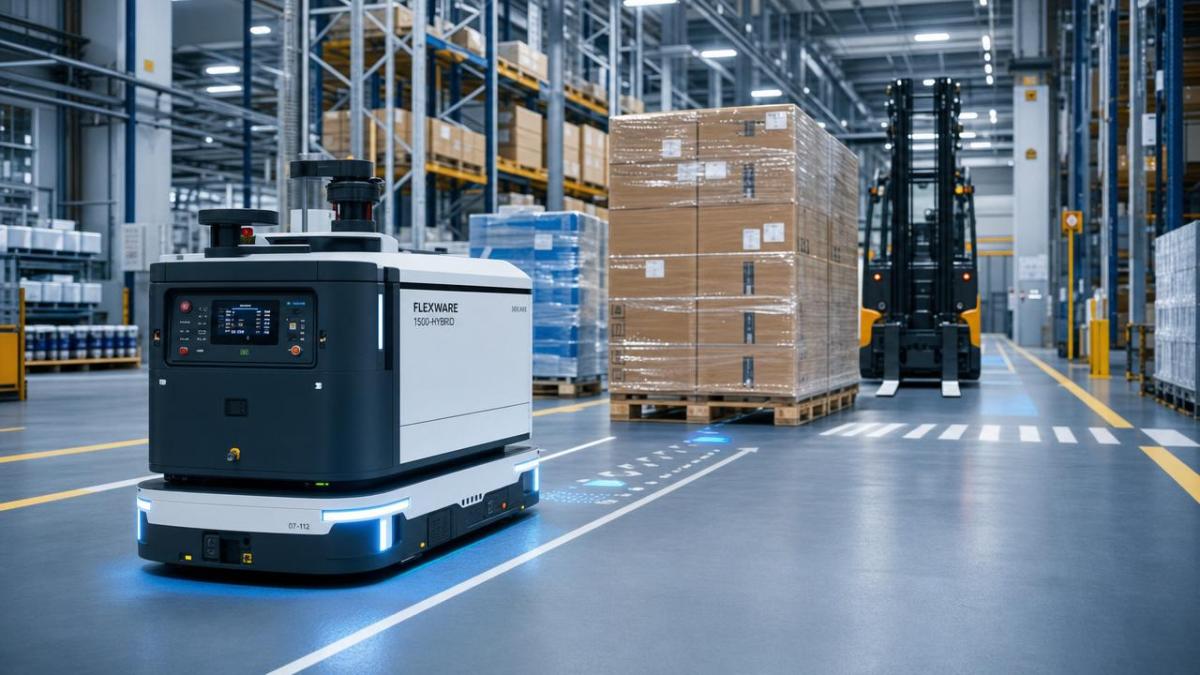
The search intent behind this topic is not academic curiosity. It is practical risk assessment. Technical evaluators want to know why navigation claims degrade under traffic, what failure patterns are most common, and how to judge whether a vendor’s system can maintain safe flow instead of creating hidden congestion. They are usually not looking for generic definitions of SLAM, obstacle avoidance, or AI. They want evidence that a system will keep moving product when the facility is noisy, crowded, and only partially predictable.
The most important questions are usually these: how often does the AMR hesitate unnecessarily, how does it behave when visibility is partially blocked, how quickly does it recover from localization drift, what happens when multiple mobile assets compete for the same narrow corridor, and what throughput loss appears before a full stop event occurs. These are engineering questions tied to measurable failure behavior, not branding language.
That is why a useful evaluation framework must focus on degradation modes rather than ideal-state capability. A navigation stack should not be judged only by whether it reaches a destination. It should be judged by how gracefully performance declines under pressure, how consistently it recovers, and whether failures remain bounded, explainable, and operationally manageable.
Why dynamic navigation logic alone cannot solve busy-route failure
Many buyers implicitly assume that “dynamic navigation” means the AMR can continuously adapt to changing surroundings and therefore handle any traffic condition. In practice, dynamic navigation is just a decision layer built on imperfect inputs. If sensor data is degraded, localization confidence fluctuates, or map semantics are incomplete, the path planner is making decisions with uncertainty. The result may still look intelligent in simple tests, but become unstable in crowded lanes.
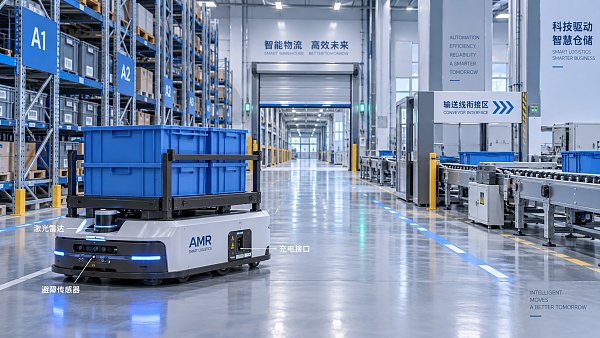
Busy routes amplify every upstream weakness. A slight delay in obstacle classification can trigger unnecessary braking. A temporary occlusion can cause the robot to treat a passing object as a persistent blockage. Minor localization error near intersections can lead to cautious slowdowns, route dithering, or stop-and-wait loops. When several AMRs exhibit the same conservative behavior in the same corridor, congestion is no longer a local issue; it becomes a fleet-level throughput collapse.
This is the core engineering gap behind many disappointing deployments. Vendors often showcase local obstacle avoidance, but real facilities require interaction management across time, space, and fleet priority. Dynamic navigation that lacks robust fault tolerance does not fail dramatically at first. It fails by adding seconds of hesitation, repeated micro-stops, false reroutes, and human intervention events. Those small losses accumulate into missed takt time and reduced line efficiency.
The main failure mechanisms in high-traffic AMR routes
Occlusion is one of the most underestimated causes of navigation breakdown. In busy environments, AMRs rarely enjoy clean sensor visibility. Pallets, carts, forklifts, open doors, protective curtains, and even tightly grouped workers can block line-of-sight long enough to confuse object persistence models. The robot may either freeze too often or assume the path is clear too early. Neither outcome is acceptable when aisle traffic is dense and timing windows are narrow.
Mixed traffic creates another layer of complexity. Human pedestrians do not move according to deterministic traffic rules, and forklifts often exhibit aggressive acceleration, wide turning arcs, and temporary aisle encroachment. If the AMR’s behavior model is tuned too conservatively, traffic flow collapses into excessive yielding. If tuned too aggressively, safety margins become unacceptable. The challenge is not simply detection, but context-aware prediction and policy enforcement in shared spaces.
Localization instability is also a frequent hidden issue. Facilities change. Reflective surfaces move, racks are rearranged, cartons stack differently, and temporary inventory alters visual texture and LiDAR returns. A map that performed well during commissioning may no longer represent the route faithfully three months later. When localization confidence drops near bottlenecks, the AMR often slows sharply or requests intervention. Evaluators should treat this as a critical reliability signal, not a minor calibration matter.
Then there is latency. In busy routes, milliseconds matter because decision chains become dense. Sensor processing, onboard compute scheduling, wireless handoff, and fleet management coordination all introduce delay. A single delay event may be harmless. Repeated edge-case latency across multiple vehicles causes desynchronization: one unit brakes late, another reroutes unnecessarily, and a third waits for a path reservation that is no longer optimal. The system still appears functional, but route efficiency degrades in ways that standard demos rarely reveal.
Why throughput loss is often a better signal than outright navigation failure
Technical evaluators often ask whether an AMR “can navigate” a route. That is too low a bar. In production environments, the more meaningful question is how much throughput is lost before anyone labels the situation a failure. A robot that completes every mission but adds repeated delays may be more damaging than one that occasionally hard-stops in a visible and diagnosable way.
This is where AGV AMR dynamic navigation fault tolerance should be measured as operational resilience, not merely path completion rate. Useful metrics include mission time variance, stop frequency per kilometer, average dwell at intersections, recovery time after occlusion, localization confidence decay rate, intervention frequency, and throughput reduction under escalating traffic density. These parameters expose whether the system remains predictable under strain.
From a procurement standpoint, hidden inefficiency is expensive because it is hard to detect in short pilot windows. Teams may validate safe movement and basic route completion, yet miss the fact that the system only sustains target output under unrealistically light traffic. Once deployed, operators compensate informally by spacing jobs, adding manual crossings, or creating buffer zones, all of which reduce the expected ROI.
How to evaluate fault tolerance instead of marketing claims
For technical evaluators, the best approach is to shift testing from capability demonstration to failure characterization. Ask the vendor to define the exact envelope in which navigation performance remains within target thresholds. What traffic density was used? What obstacle classes were present? What was the aisle width? How many concurrent vehicles were active? What localization confidence threshold triggers slowdown or intervention? If those details are vague, the performance claim is probably not decision-grade.
Scenario-based stress testing is essential. Instead of one clean route trial, build repeatable test cases around realistic disruptions: a forklift partially blocking a lane for eight seconds, a pedestrian cluster near an intersection, a cart protruding twenty centimeters into the path, temporary Wi-Fi degradation, and simultaneous mission dispatch to competing vehicles. The goal is not to make the robot fail theatrically. It is to observe how it degrades, reprioritizes, and recovers.
It is also important to distinguish between onboard autonomy and fleet-level traffic control. Some systems perform well as single vehicles but deteriorate once fleet coordination becomes dense. Ask whether deadlock prevention is rule-based, reservation-based, or predictive. Ask how priority conflicts are resolved between urgent and non-urgent missions. Ask how long a route segment can remain blocked before the system escalates from waiting to rerouting. Good answers should be specific enough to map into validation criteria.
Data transparency matters as much as behavior. A credible supplier should provide logs showing perception events, localization confidence, planner decisions, stop causes, and recovery timestamps. Black-box claims about “AI-driven adaptation” are of limited value if the buyer cannot audit why hesitations or reroutes occurred. In engineering procurement, explainability is part of fault tolerance because unresolved ambiguity extends troubleshooting cycles.
The engineering conditions that usually improve busy-route performance
In many facilities, better performance does not come from a single smarter algorithm. It comes from tighter systems engineering. Multi-sensor fusion improves resilience when one modality is degraded by glare, dust, reflective wrap, or temporary occlusion. High-quality semantic mapping helps the AMR interpret intersections, lane boundaries, and no-stop zones more consistently. Stable time synchronization across sensing and control layers reduces behavior jitter that can otherwise look like poor intelligence.
Traffic design inside the facility also matters more than many buyers expect. One-way aisles, protected merge zones, explicit crossing rules, geofenced slow areas, and well-defined staging points can dramatically reduce conflict frequency. This does not mean the robot is less autonomous. It means the operational environment is engineered to reduce ambiguity. In high-value deployments, route architecture and vehicle intelligence must be evaluated together.
Edge infrastructure can further improve reliability. Local compute near the operation area may reduce dependence on unstable network paths for latency-sensitive decisions. Better wireless planning lowers handoff failures and telemetry delay. In some cases, the right answer is not to demand unlimited autonomy from the AMR, but to create a control architecture where time-critical functions remain local and fleet optimization happens at a higher layer.
Common evaluation mistakes that lead to poor buying decisions
One common mistake is over-weighting nominal maximum speed. In busy routes, sustainable flow matters more than peak travel speed. A faster vehicle that brakes often, waits too long, or triggers cascading slowdowns can produce lower net throughput than a slightly slower but behaviorally stable platform. Evaluators should focus on consistency under mixed traffic, not brochure-level velocity claims.
Another mistake is accepting pilot conditions that are too clean. Vendors naturally prefer well-prepared demos with limited traffic and cooperative surroundings. Buyers should insist on trials during real operating windows, with ordinary staff movement, routine material handling, and natural environmental variability. If testing only occurs in sanitized conditions, the resulting data will systematically overstate field performance.
A third mistake is failing to separate safety conservatism from poor fault tolerance. Frequent stops are sometimes defended as evidence of safety. But safety and efficiency are not opposites; mature systems should maintain safe behavior without excessive false positives. Evaluators should ask whether stop events are genuinely risk-driven or caused by weak perception confidence, unstable localization, or simplistic conflict policy.
What a strong buying conclusion should look like
For technical evaluation teams, the decision should not be framed as whether an AMR vendor offers dynamic navigation. Most do. The real question is whether the system demonstrates robust AGV AMR dynamic navigation fault tolerance in the exact traffic patterns, aisle geometries, and disruption profiles that define your operation. That means validating not only nominal navigation success, but bounded failure, transparent diagnostics, and recoverable performance under pressure.
A strong platform will usually show several traits at once: low hesitation rates under partial occlusion, stable localization in changing environments, predictable intersection behavior, measurable recovery logic, and fleet coordination that preserves throughput instead of amplifying congestion. Just as importantly, the supplier should provide evidence in engineering terms rather than generic autonomy language.
In busy facilities, navigation is not proven by movement alone. It is proven by disciplined recovery, stable decision timing, and consistent throughput when the route is contested. That is the standard technical evaluators should apply. If a system cannot show how it fails, how fast it recovers, and how much output it preserves under real disruption, then its navigation intelligence is still a demo feature, not an operational capability.
Search News
Hot Articles
- Carbon Fiber StructuresHow to Specify Aerospace Carbon Fiber Assemblies for Lightweight, Load-Bearing PartsJul 11, 2026
- Machine VisionXiaomi, Alibaba DAMO Academy Drive Open-Source Robotics Model Ecosystem, Lowering Algorithm Development Barriers for Overseas SMEs Adopting Chinese Robotics SolutionsMar 30, 2026
- Cobots & ArmsShanxi 'AI+' Conference Showcases Embodied Intelligence with Multinational Buyer Engagement: Key Industry ImplicationsMar 30, 2026
Popular Tags
Recommended News
 Jul 11, 2026How to Specify Aerospace Carbon Fiber Assemblies for Lightweight, Load-Bearing PartsAerospace carbon fiber assemblies: learn how to specify laminate design, load data, joining methods, and inspection controls for lighter, reliable load-bearing aerospace parts.Elena Rostova (UAV Systems Researcher)
 Mar 30, 2026Xiaomi, Alibaba DAMO Academy Drive Open-Source Robotics Model Ecosystem, Lowering Algorithm Development Barriers for Overseas SMEs Adopting Chinese Robotics SolutionsXiaomi & Alibaba DAMO Academy's open-source robotics models lower algorithm barriers for global SMEs. Boost efficiency in manufacturing, logistics & smart retail with ROS 2 compatible solutions.TSV Data Lab
 Mar 30, 2026Shanxi 'AI+' Conference Showcases Embodied Intelligence with Multinational Buyer Engagement: Key Industry ImplicationsShanxi 'AI+' Conference highlights embodied intelligence with Tesla, Ubtech & Jiantao showcasing multimodal robotics. 40+ global buyers validated tech on-site, creating new B2B channels for industrial automation & AI solutions.Chen Wei (Automation Lead Engineer)
 Mar 30, 2026Zhongguancun Unveils 6G Integrated Sensing-Computing-Intelligence Platform to Empower Embodied Robots for Global Industrial ApplicationsZhongguancun's new 6G platform revolutionizes industrial robotics with <10ms latency, empowering global automotive, logistics & port automation. Discover how this tech boosts China's smart manufacturing exports.TSV Data Lab
 Mar 30, 2026Mech-Mind Tianjin Embodied Intelligence R&D and Production Base Goes Live, Cutting Delivery Time by 20%–30% for Global Customized AMR+Vision SolutionsMech-Mind's Tianjin AMR+Vision production base cuts delivery time by 20%-30% for欧美 & Latin American markets. Discover how this PLd-certified facility accelerates customized robotics solutions for smart manufacturing and logistics.Chen Wei (Automation Lead Engineer)
 Mar 30, 2026Boao Forum Reveals 'Co-evolution of Big and Small Brains' Trend in Humanoid Robots, China's Embodied Intelligence Accelerates Adaptation to Overseas Manufacturing Service ScenariosDiscover how China's humanoid robots, featuring 'Co-evolution of Big and Small Brains,' are revolutionizing global manufacturing. Learn about Embodied Tian Gong 3.0's ISO compliance and overseas deployment at Boao Forum 2026.Chen Wei (Automation Lead Engineer)
 Mar 30, 2026China Railway Industrial Secures Patent for Embodied Robotics in Material Handling, Boosting High-Precision Delivery Capabilities for Overseas Infrastructure and Manufacturing ProjectsChina Railway Industrial's new patent for embodied robotics in material handling boosts high-precision delivery for global infrastructure & manufacturing. Discover how this innovation enhances logistics accuracy in automotive, rail transit & EPC projects.Chen Wei (Automation Lead Engineer)
 Sep 29, 2026ISO 9283 Repeatability: How to Evaluate Cobot Positioning PerformanceISO 9283 cobot repeatability explained: learn how payload, reach, approach direction, and test conditions affect positioning performance and cell capability.Chen Wei (Automation Lead Engineer)
 Sep 28, 2026Spindle Runout Measurement in Germany: DIN Standards, Methods, and Acceptance LimitsSpindle runout measurement Germany: explore DIN standards, proven methods, acceptance limits, and audit-ready practices for reliable machining quality.Dr. Marcus Vance
 Sep 27, 2026How to Select Wall-Mount Edge Devices for Space-Constrained Factory NetworksWall mount edge devices for space-constrained factories: evaluate workload, thermal design, power resilience, cable access, and network reliability for smarter deployments.TSV Data Lab
 Sep 26, 2026Machining Tolerance Analysis: How to Set Limits That Meet Function and Cost TargetsMachining tolerance analysis: learn how to set functional limits, control tolerance stacks, reduce inspection risk, and balance precision with production cost.Dr. Marcus Vance
 Sep 25, 2026How to Evaluate an Industrial Infrastructure Data Platform for Multi-Site OperationsIndustrial infrastructure data platform evaluation guide for multi-site operations: compare data quality, edge resilience, interoperability, governance, and scalable proof-of-value criteria.Victor Lin (Chief Software Architect)
 Sep 24, 2026How to Select Machine Vision Optics for Accurate Inspection at Different Working DistancesMachine vision optics selection guide for accurate inspection at every working distance. Compare FOV, pixel scale, DOF, distortion, lighting, and telecentric options.TSV Data Lab
 Sep 23, 2026How to Evaluate a Machine Vision System Integrator for High-Speed Inspection LinesChoose a machine vision system integrator with proven expertise in high-speed inspection, reliable reject timing, robust optics, and measurable acceptance criteria.TSV Data Lab
 Sep 28, 2026When is a SCADA API the right choice for connecting plant systems?SCADA API guide: learn when governed plant data integration improves traceability, security, and scalability—without compromising real-time control.Victor Lin (Chief Software Architect)
 Sep 27, 2026How SCADA data integration improves traceability across production linesSCADA data integration connects production-line data to improve traceability, accelerate quality investigations, and strengthen safety decisions.Victor Lin (Chief Software Architect)
 Sep 26, 2026What to define before starting SCADA integration planningSCADA integration planning starts with clear scope, control boundaries, data models, cybersecurity, and testing. Discover the definitions that reduce risk and costly rework.Victor Lin (Chief Software Architect)
 Sep 25, 2026How a smart factory with Industrial IoT reduces production blind spotsDiscover how a smart factory with Industrial IoT turns real-time machine, quality, and workflow data into actionable insights that reduce production blind spots and delivery risks.Victor Lin (Chief Software Architect)
 Sep 24, 2026When does Industrial IoT make smart manufacturing easier to scale?Smart manufacturing Industrial IoT scales when trusted data, interoperable systems, and secure workflows turn connected assets into measurable gains.TSV Data Lab
 Sep 23, 2026What drives ultra-precision machining cost at 1-micron tolerance?Ultra precision machining cost per part at 1 micron tolerance depends on process, material, metrology, and yield. Learn how to compare quotes confidently.Dr. Marcus Vance
 Sep 22, 2026Drone Engine-T550CC Applications: Build the UAV Power System Around the MissionAn application guide for Drone Engine-T550CC integration, covering payload planning, airframe matching, cooling, fuel, vibration, test procedures, documentation, and service preparation.Elena Rostova (UAV Systems Researcher)
 Sep 22, 2026How to Evaluate Industrial Edge Computing Vendors for Factory DeploymentIndustrial edge computing vendor evaluation guide for factories: compare latency, protocol fit, reliability, security, and lifecycle support before deployment.TSV Data Lab
 Sep 21, 2026Drone Payload Integration: Matching Power, Data, and Center of Gravity for Reliable FlightsDrone payload integration made practical: balance power, data, center of gravity, and endurance to build safer, more reliable mission-ready flights.Elena Rostova (UAV Systems Researcher)
 Sep 20, 2026Autonomous Navigation Pricing: Cost Drivers and Budget Benchmarks for AMR ProjectsAutonomous navigation price explained: compare AMR cost drivers, software, sensors, integration, safety, and lifecycle budgets to build a scalable project plan.Chen Wei (Automation Lead Engineer)