Pick and place robot manufacturer options for high-mix production
Publication Date
author
Choosing the right pick and place robot manufacturer can determine whether high-mix production scales efficiently or stalls under changeovers, quality drift, and sourcing risk. For decision-makers, the real question is not marketing claims, but repeatability, integration flexibility, cycle stability, and long-term supply chain reliability. This article examines manufacturer options through a data-driven lens to help enterprises compare technical fit, procurement value, and operational resilience.
In high-mix environments, the buying decision is rarely about robot speed alone. It is about whether a system can switch between 20, 50, or even 200 SKUs without excessive reteaching, feeder changes, validation delays, or unexpected downtime. For CTOs, plant directors, and procurement leaders, a capable pick and place robot manufacturer should be evaluated like a long-term engineering partner rather than a catalog supplier.
From TSV’s data-first perspective, the most useful comparison framework starts with measurable variables: repeatability in millimeters, payload-to-cycle tradeoffs, vision calibration stability, mean time between service events, spare parts availability, software openness, and deployment lead times. These factors matter more than broad claims such as “smart,” “flexible,” or “best in class.”
Why High-Mix Production Changes the Manufacturer Selection Criteria
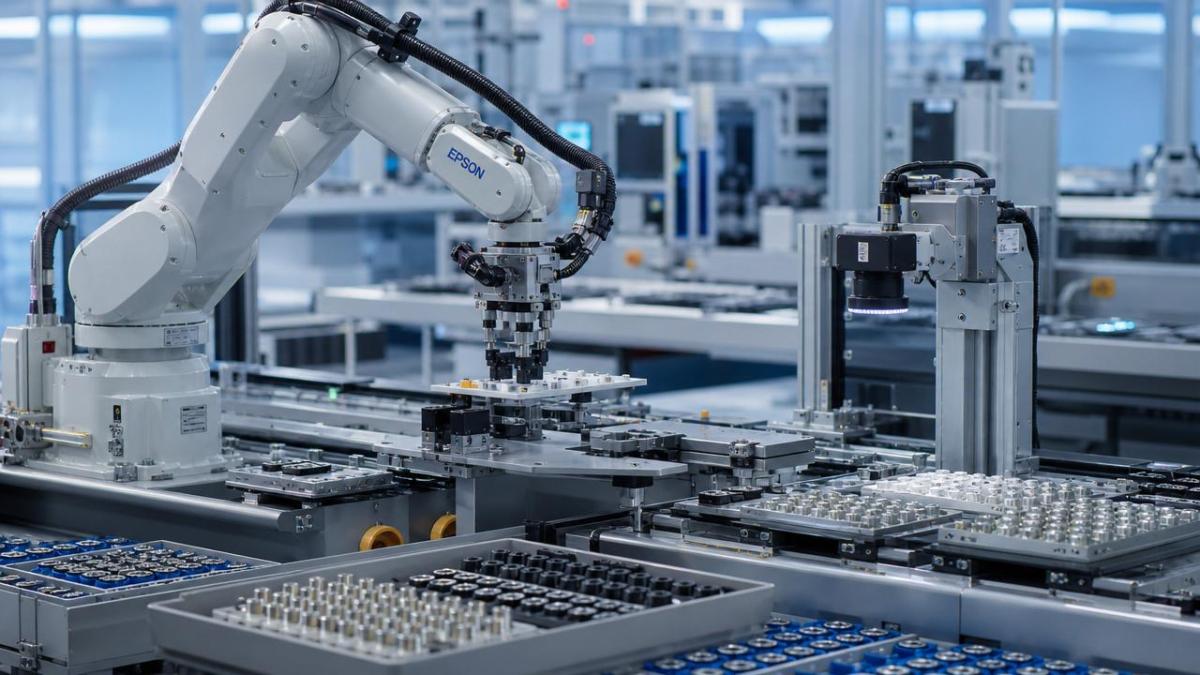
A pick and place robot manufacturer serving high-volume, low-variation production may not be the right fit for high-mix lines. In low-mix settings, one toolhead, one fixture family, and one validated motion path can run for 6 to 18 months with limited adjustment. High-mix production is different: changeovers may occur 3 to 12 times per shift, and new part introductions can arrive every 2 to 6 weeks.
That reality changes what “good performance” means. A robot rated at 120 picks per minute is not necessarily superior if each SKU change requires 45 minutes of reprogramming, a new end-of-arm tool, and a vision relight procedure. For many mixed-product factories, the better system is the one that sustains 60 to 80 picks per minute while cutting changeover time from 40 minutes to under 10.
Core operational pressures in high-mix lines
- Frequent product changeovers across multiple package sizes, materials, or geometries
- Short production runs, often below 500 to 2,000 units per batch
- Higher risk of placement variation due to part inconsistency or feeder setup drift
- Greater demand for vision-guided correction and recipe-based job switching
- Increased dependence on software, operator training, and remote support responsiveness
This is where manufacturer strategy matters. Some suppliers are optimized for standardized hardware, while others are stronger in configurable software architecture, modular tooling, and application engineering. If your product mix changes weekly, software adaptability and deployment support may influence ROI more than raw mechanical throughput.
What enterprise buyers should compare first
Before requesting quotes, define a short technical baseline. A practical comparison should include at least 8 dimensions: repeatability, payload range, vision compatibility, gripper flexibility, recipe management, integration protocol support, service response time, and spare parts lead time. This prevents vendor evaluations from collapsing into price-only discussions.
The table below outlines how selection priorities shift when a factory moves from stable volume production to high-mix manufacturing.
The key conclusion is simple: a high-mix operation should favor a pick and place robot manufacturer that reduces engineering hours per SKU, not just one that advertises high line speed. When product variety rises, every extra 15 minutes of changeover compounds into lost weekly capacity.
How to Evaluate Pick and Place Robot Manufacturer Options
A useful manufacturer review should separate machine capability from deployment capability. Many vendors can demonstrate a successful cell in a showroom. Fewer can support a 3-site rollout, integrate with existing PLC and MES layers, localize guarding requirements, and maintain service continuity over a 5- to 7-year lifecycle.
1. Mechanical performance and repeatability
For high-mix applications, repeatability usually matters more than theoretical accuracy. A typical enterprise shortlist may look for repeatability in the ±0.02 mm to ±0.1 mm range depending on product size, placement tolerance, and downstream inspection sensitivity. Payload requirements also vary widely, from sub-1 kg electronics handling to 10 kg or more for kitting, tray loading, or secondary packaging.
Ask each pick and place robot manufacturer to define test conditions behind published performance figures. Were cycle rates measured at full payload or partial payload? Was repeatability recorded at a single point or across the full work envelope? Were vision offsets included or excluded? These questions expose whether published data matches real production conditions.
Technical checkpoints
- Repeatability specification under actual load case
- Cycle time at 50%, 80%, and 100% payload
- Work envelope suitability for current and future SKU families
- Vibration behavior during rapid acceleration and deceleration
2. Software flexibility and integration depth
In high-mix production, software can account for 30% to 50% of implementation success. A manufacturer with rigid proprietary logic may force your team into expensive custom work each time a new part format is introduced. By contrast, systems with reusable recipes, vision-assisted adjustment, and standard communication protocols can reduce new SKU onboarding from several days to a few hours.
Look closely at support for EtherNet/IP, PROFINET, Modbus TCP, OPC UA, and common HMI workflows. If your enterprise runs plant-wide traceability, recipe validation, or batch genealogy, robot data exchange must be engineered upfront. A robot that cannot fit your control architecture often creates hidden cost well beyond the initial purchase.
3. Application engineering and changeover design
Not every pick and place robot manufacturer offers the same level of application support. Some deliver a machine and basic commissioning. Others help optimize feeders, tray handling, lighting, part presentation, reject logic, and fixture strategy. In mixed manufacturing, these surrounding elements often determine whether the cell performs consistently across 12 months of production changes.
A practical benchmark is changeover design. Can operators switch grippers without special tools? Can job recipes be locked by role permissions? Can vision templates be duplicated and adjusted without full recertification? Saving 20 minutes per changeover across 4 changes per day can return more value than a 10% faster robot arm.
The following table helps decision-makers compare manufacturers on deployment-critical criteria rather than brochure language.
The strongest manufacturer option is usually the one that can show a repeatable deployment method, not just a capable robot. For enterprise buyers, support structure, documentation quality, and service logistics are part of the product.
Typical Manufacturer Categories and Where They Fit Best
The market includes several manufacturer profiles, each with different strengths. Understanding these categories helps avoid overbuying, underbuying, or selecting a platform that cannot evolve with the production mix.
Global robot OEMs
Large OEMs usually offer robust hardware, worldwide service footprints, and mature controller ecosystems. They are often suitable for enterprises operating across multiple regions or requiring standardization across 3, 5, or 10 plants. Their limitations can include higher total system cost and more structured change processes for custom applications.
Application-focused automation builders
These suppliers may combine robot platforms with feeders, conveyors, vision, and tooling into a targeted solution. For high-mix packaging, assembly, or kitting, they can sometimes provide faster application tailoring than large OEMs. The tradeoff is that long-term support depth depends heavily on their engineering scale, parts strategy, and software documentation discipline.
Cobot-centered solution providers
Collaborative systems can be attractive when floor space is tight, payloads are moderate, and changeovers are frequent. They often reduce guarding complexity and simplify operator interaction. However, buyers should still confirm whether the cobot-based cell can meet required throughput, especially if takt time is under 3 to 5 seconds per pick-place cycle.
Selection by production profile
- Choose a global OEM when multi-site standardization and service continuity are top priorities.
- Choose an application builder when the challenge is process-specific handling, feeding, or inspection complexity.
- Choose a cobot-oriented supplier when product variety is high, human interaction is frequent, and cycle time demands are moderate.
For many enterprises, the right answer is not one universal category. A plant may use high-speed delta or SCARA platforms for primary placement, while deploying cobots for end-of-line mixed-case tasks or engineering changeover cells. The best pick and place robot manufacturer is the one whose architecture matches the production economics of your line.
Procurement Risks, Hidden Costs, and a Smarter Buying Process
A poor selection process usually fails in one of three ways: specification gaps, integration underestimation, or lifecycle cost blindness. Enterprises often compare capital quotes without modeling downtime risk, engineering rework, operator retraining, software lock-in, or critical spare delays. That is where a low purchase price becomes an expensive operating decision.
Common buying mistakes
- Using a single demo part instead of a representative SKU set of 5 to 10 products
- Ignoring feeder and tool change time in ROI calculations
- Accepting published cycle rates without defining acceleration limits and actual payload
- Overlooking cybersecurity, remote access governance, and data integration requirements
- Failing to negotiate spare parts kits and training hours into the original contract
A five-step evaluation workflow
A more resilient procurement process typically follows 5 steps. First, define the product mix envelope, including dimensions, mass range, surface sensitivity, and takt target. Second, shortlist 3 to 5 manufacturer options based on technical fit. Third, request application trials using multiple real SKUs. Fourth, compare total deployment scope, not just arm cost. Fifth, confirm service model, acceptance criteria, and support terms before purchase order release.
This disciplined method aligns with TSV’s engineering-first view: the goal is not to buy the most advertised system, but to reduce trial-and-error cost and supplier qualification time. In hard-tech procurement, ambiguity is risk. Clear parameter definitions reduce both technical failure and commercial friction.
Questions to put in the RFQ
An effective RFQ for a pick and place robot manufacturer should ask for repeatability, payload, achievable cycle time by product type, utility requirements, software licensing model, training scope, FAT content, recommended spare list, and expected maintenance intervals. It should also define whether acceptance is based on speed alone, or on speed plus first-pass placement quality over a sample run such as 500 or 1,000 cycles.
Decision-makers who structure procurement around measurable criteria gain two advantages: clearer vendor differentiation and a stronger basis for internal capital approval. Engineering, operations, quality, and sourcing can align faster when the decision is anchored in testable numbers.
Final Decision Guidance for Enterprise Buyers
A strong pick and place robot manufacturer for high-mix production is rarely defined by one headline metric. The better choice is the supplier that can balance repeatability, software adaptability, changeover speed, validation discipline, and long-term service support. In practical terms, that means looking beyond the robot arm to the full application stack: tooling, vision, controls, training, and parts continuity.
For enterprises facing frequent SKU turnover, the most valuable manufacturer is often the one that cuts engineering friction and operational volatility over the next 3 to 7 years. If your team is assessing manufacturer options, build the comparison around measurable thresholds, representative production trials, and lifecycle support evidence rather than generic marketing language.
If you need a more rigorous framework to compare supplier fit, deployment risk, and technical parameters, TechStat Vanguard can help you turn broad vendor claims into decision-grade evaluation criteria. Contact us to discuss your production profile, request a custom comparison framework, or learn more solutions for data-driven automation sourcing.
Search News
Hot Articles
- Carbon Fiber StructuresHow to Specify Aerospace Carbon Fiber Assemblies for Lightweight, Load-Bearing PartsJul 11, 2026
- Machine VisionXiaomi, Alibaba DAMO Academy Drive Open-Source Robotics Model Ecosystem, Lowering Algorithm Development Barriers for Overseas SMEs Adopting Chinese Robotics SolutionsMar 30, 2026
- Cobots & ArmsShanxi 'AI+' Conference Showcases Embodied Intelligence with Multinational Buyer Engagement: Key Industry ImplicationsMar 30, 2026
Popular Tags
Recommended News
 Jul 11, 2026How to Specify Aerospace Carbon Fiber Assemblies for Lightweight, Load-Bearing PartsAerospace carbon fiber assemblies: learn how to specify laminate design, load data, joining methods, and inspection controls for lighter, reliable load-bearing aerospace parts.Elena Rostova (UAV Systems Researcher)
 Mar 30, 2026Xiaomi, Alibaba DAMO Academy Drive Open-Source Robotics Model Ecosystem, Lowering Algorithm Development Barriers for Overseas SMEs Adopting Chinese Robotics SolutionsXiaomi & Alibaba DAMO Academy's open-source robotics models lower algorithm barriers for global SMEs. Boost efficiency in manufacturing, logistics & smart retail with ROS 2 compatible solutions.TSV Data Lab
 Mar 30, 2026Shanxi 'AI+' Conference Showcases Embodied Intelligence with Multinational Buyer Engagement: Key Industry ImplicationsShanxi 'AI+' Conference highlights embodied intelligence with Tesla, Ubtech & Jiantao showcasing multimodal robotics. 40+ global buyers validated tech on-site, creating new B2B channels for industrial automation & AI solutions.Chen Wei (Automation Lead Engineer)
 Mar 30, 2026Zhongguancun Unveils 6G Integrated Sensing-Computing-Intelligence Platform to Empower Embodied Robots for Global Industrial ApplicationsZhongguancun's new 6G platform revolutionizes industrial robotics with <10ms latency, empowering global automotive, logistics & port automation. Discover how this tech boosts China's smart manufacturing exports.TSV Data Lab
 Mar 30, 2026Mech-Mind Tianjin Embodied Intelligence R&D and Production Base Goes Live, Cutting Delivery Time by 20%–30% for Global Customized AMR+Vision SolutionsMech-Mind's Tianjin AMR+Vision production base cuts delivery time by 20%-30% for欧美 & Latin American markets. Discover how this PLd-certified facility accelerates customized robotics solutions for smart manufacturing and logistics.Chen Wei (Automation Lead Engineer)
 Mar 30, 2026Boao Forum Reveals 'Co-evolution of Big and Small Brains' Trend in Humanoid Robots, China's Embodied Intelligence Accelerates Adaptation to Overseas Manufacturing Service ScenariosDiscover how China's humanoid robots, featuring 'Co-evolution of Big and Small Brains,' are revolutionizing global manufacturing. Learn about Embodied Tian Gong 3.0's ISO compliance and overseas deployment at Boao Forum 2026.Chen Wei (Automation Lead Engineer)
 Mar 30, 2026China Railway Industrial Secures Patent for Embodied Robotics in Material Handling, Boosting High-Precision Delivery Capabilities for Overseas Infrastructure and Manufacturing ProjectsChina Railway Industrial's new patent for embodied robotics in material handling boosts high-precision delivery for global infrastructure & manufacturing. Discover how this innovation enhances logistics accuracy in automotive, rail transit & EPC projects.Chen Wei (Automation Lead Engineer)
 Sep 28, 2026Spindle Runout Measurement in Germany: DIN Standards, Methods, and Acceptance LimitsSpindle runout measurement Germany: explore DIN standards, proven methods, acceptance limits, and audit-ready practices for reliable machining quality.Dr. Marcus Vance
 Sep 27, 2026How to Select Wall-Mount Edge Devices for Space-Constrained Factory NetworksWall mount edge devices for space-constrained factories: evaluate workload, thermal design, power resilience, cable access, and network reliability for smarter deployments.TSV Data Lab
 Sep 26, 2026Machining Tolerance Analysis: How to Set Limits That Meet Function and Cost TargetsMachining tolerance analysis: learn how to set functional limits, control tolerance stacks, reduce inspection risk, and balance precision with production cost.Dr. Marcus Vance
 Sep 25, 2026How to Evaluate an Industrial Infrastructure Data Platform for Multi-Site OperationsIndustrial infrastructure data platform evaluation guide for multi-site operations: compare data quality, edge resilience, interoperability, governance, and scalable proof-of-value criteria.Victor Lin (Chief Software Architect)
 Sep 24, 2026How to Select Machine Vision Optics for Accurate Inspection at Different Working DistancesMachine vision optics selection guide for accurate inspection at every working distance. Compare FOV, pixel scale, DOF, distortion, lighting, and telecentric options.TSV Data Lab
 Sep 23, 2026How to Evaluate a Machine Vision System Integrator for High-Speed Inspection LinesChoose a machine vision system integrator with proven expertise in high-speed inspection, reliable reject timing, robust optics, and measurable acceptance criteria.TSV Data Lab
 Sep 28, 2026When is a SCADA API the right choice for connecting plant systems?SCADA API guide: learn when governed plant data integration improves traceability, security, and scalability—without compromising real-time control.Victor Lin (Chief Software Architect)
 Sep 27, 2026How SCADA data integration improves traceability across production linesSCADA data integration connects production-line data to improve traceability, accelerate quality investigations, and strengthen safety decisions.Victor Lin (Chief Software Architect)
 Sep 26, 2026What to define before starting SCADA integration planningSCADA integration planning starts with clear scope, control boundaries, data models, cybersecurity, and testing. Discover the definitions that reduce risk and costly rework.Victor Lin (Chief Software Architect)
 Sep 25, 2026How a smart factory with Industrial IoT reduces production blind spotsDiscover how a smart factory with Industrial IoT turns real-time machine, quality, and workflow data into actionable insights that reduce production blind spots and delivery risks.Victor Lin (Chief Software Architect)
 Sep 24, 2026When does Industrial IoT make smart manufacturing easier to scale?Smart manufacturing Industrial IoT scales when trusted data, interoperable systems, and secure workflows turn connected assets into measurable gains.TSV Data Lab
 Sep 23, 2026What drives ultra-precision machining cost at 1-micron tolerance?Ultra precision machining cost per part at 1 micron tolerance depends on process, material, metrology, and yield. Learn how to compare quotes confidently.Dr. Marcus Vance
 Sep 22, 2026Drone Engine-T550CC Applications: Build the UAV Power System Around the MissionAn application guide for Drone Engine-T550CC integration, covering payload planning, airframe matching, cooling, fuel, vibration, test procedures, documentation, and service preparation.Elena Rostova (UAV Systems Researcher)
 Sep 22, 2026How to Evaluate Industrial Edge Computing Vendors for Factory DeploymentIndustrial edge computing vendor evaluation guide for factories: compare latency, protocol fit, reliability, security, and lifecycle support before deployment.TSV Data Lab
 Sep 21, 2026Drone Payload Integration: Matching Power, Data, and Center of Gravity for Reliable FlightsDrone payload integration made practical: balance power, data, center of gravity, and endurance to build safer, more reliable mission-ready flights.Elena Rostova (UAV Systems Researcher)
 Sep 20, 2026Autonomous Navigation Pricing: Cost Drivers and Budget Benchmarks for AMR ProjectsAutonomous navigation price explained: compare AMR cost drivers, software, sensors, integration, safety, and lifecycle budgets to build a scalable project plan.Chen Wei (Automation Lead Engineer)
 Sep 19, 2026How to Scope Automation Integration Services for Multi-System Factory ProjectsAutomation integration services: learn how to scope multi-system factory projects with clear workflows, interface contracts, safety boundaries, and acceptance criteria.Victor Lin (Chief Software Architect)