Delta robot manufacturer comparisons often hide maintenance tradeoffs
Publication Date
author
A delta robot manufacturer comparison may look decisive on paper, but after-sales teams know the real cost often appears in maintenance intervals, spare-part access, and downtime recovery. This article cuts past brochure claims to examine where performance metrics can obscure service tradeoffs, helping maintenance professionals evaluate delta robot manufacturer options through the lens of reliability, repairability, and long-term operational risk.
In high-speed pick-and-place environments, a 0.28-second cycle time or a quoted repeatability of ±0.1 mm can dominate procurement discussions. Yet maintenance teams are usually the first to discover whether that speed comes with 3-month belt checks, difficult arm replacement procedures, or controller faults that require overseas intervention. For facilities running 16 to 24 hours per day, these tradeoffs matter more than brochure language.
For engineers, plant service leaders, and technical buyers aligned with TechStat Vanguard’s data-first view, the better question is not only which delta robot manufacturer offers the fastest robot. It is which supplier enables predictable uptime over 3 to 7 years, supports field repairs within acceptable recovery windows, and provides service documentation detailed enough for real maintenance work.
Why delta robot manufacturer comparisons often miss the maintenance reality
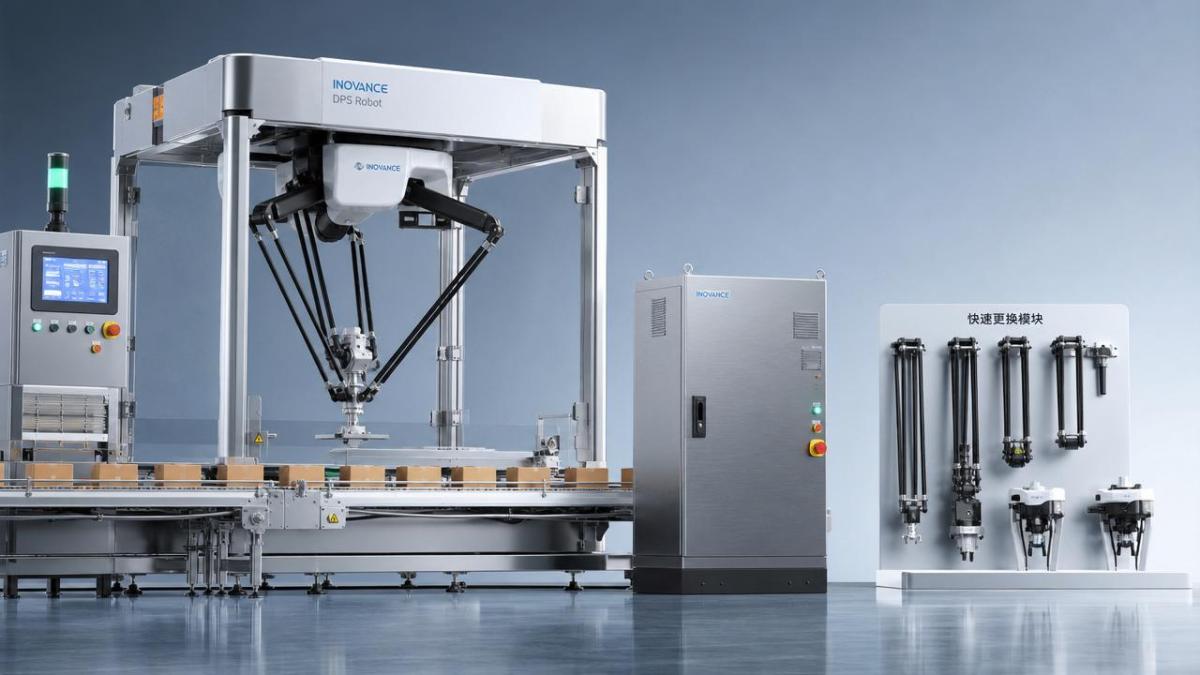
Most comparison sheets prioritize payload, reach, acceleration, and units per minute. Those metrics are useful, but they do not capture how a system behaves after 8,000 operating hours, after washdown exposure, or after repeated high-speed duty cycles in warm production cells. A delta robot manufacturer may look technically superior while still creating a heavier service burden for the people responsible for uptime.
The gap between published performance and field service conditions
Delta robots are typically chosen for packaging, food handling, electronics sorting, and lightweight assembly. In these applications, actual maintenance stress is shaped by contamination, vibration, shift patterns, and operator variability. A machine rated for continuous motion may still require lubrication every 2,000 to 4,000 hours, encoder inspection every 6 months, or arm-joint replacement sooner when duty cycles exceed nominal assumptions.
After-sales personnel should therefore treat any delta robot manufacturer comparison as incomplete unless it includes service intervals, mean time to repair, fault diagnostics depth, and spare-part lead times. These factors directly influence line recovery. Losing 6 hours on a packaging line because a parallel arm set is not locally stocked can erase the value of a modest purchase-price advantage.
Four hidden variables that affect service cost
- Access time to wear parts such as belts, joints, bearings, or arm assemblies
- Controller diagnostic depth, including alarm granularity and fault history retention
- Availability of local or regional spare parts within 24 to 72 hours
- Training burden for technicians, especially when reset, calibration, or axis recovery requires vendor-only tools
The table below reframes a typical delta robot manufacturer evaluation from a maintenance perspective rather than a purely procurement or performance perspective.
The practical lesson is clear: the strongest delta robot manufacturer is not always the one with the highest top-line specification. For maintenance teams, the better supplier is often the one that reduces unplanned service events, simplifies part replacement, and shortens fault isolation from 90 minutes to 20 minutes.
The maintenance metrics that should sit beside speed and repeatability
A robust delta robot manufacturer assessment should include service-side metrics with the same weight as performance data. If your plant cannot obtain these numbers during evaluation, that is already a useful signal. Maintenance transparency is often a better predictor of long-term partnership quality than headline motion performance.
Core service metrics worth requesting
- Preventive maintenance interval in operating hours, not just calendar months
- Mean time to repair for common failures such as arm collision, encoder alarm, or drive fault
- Recommended spare-parts list for 12 months and 24 months of operation
- Regional spare-part lead time, ideally segmented into 24-hour, 72-hour, and 7-day categories
- Training requirement for Level 1, Level 2, and advanced diagnostics tasks
- Firmware update process, rollback method, and controller compatibility policy
What these numbers reveal
For example, two delta robot manufacturer options may both support a 3 kg payload and a similar working envelope, yet one may require 6 to 8 technician hours for an arm set replacement while another can be restored in 2 to 3 hours with standard tools. Over a year, that difference compounds. If a site runs 4 lines and experiences only 3 major interventions per line, the labor and downtime delta becomes significant.
Likewise, a support promise is only meaningful when tied to realistic service structure. A stated “global support network” does not guarantee local stock of reducers, servo amplifiers, or cable sets. A maintenance team should ask whether critical parts are held in-country, regionally, or only at a central factory. The difference between a 48-hour and a 14-day wait can determine whether backup inventory or production rescheduling is required.
Maintenance-centered comparison criteria
The table below provides a structured way to compare any delta robot manufacturer beyond marketing language. It can be adapted into a supplier scorecard for procurement and service teams working together.
Used properly, this scorecard changes supplier conversations. Instead of asking only how fast the robot can move, teams start asking how quickly it can be restored, how many maintenance hours it consumes per quarter, and what spare inventory should be budgeted per installed cell.
Common tradeoffs hidden inside a delta robot manufacturer decision
Different delta robot manufacturer strategies create different maintenance burdens. Some designs prioritize ultra-high acceleration, some simplify washdown compliance, and some lower upfront price by shifting more burden onto field service. None of these are automatically wrong, but they must be understood before a purchase decision is locked in.
High speed versus component wear
Higher acceleration can improve throughput, but it can also increase stress on linkages, end-effectors, and drivetrain components. In lines operating above 100 picks per minute for multiple shifts, even small differences in vibration damping and joint design can affect service frequency. Maintenance teams should request expected wear behavior under target duty cycle, not under ideal laboratory conditions.
Compact architecture versus repair accessibility
A compact mechanical structure may save floor space and improve integration, yet tightly packaged routing can complicate cable replacement and sensor access. If replacing a harness requires removing several covers, detensioning assemblies, and revalidating calibration, what looked elegant in a showroom may become costly in a live plant.
Lower purchase price versus lifecycle exposure
A lower initial quote often attracts attention during sourcing. However, if the selected delta robot manufacturer has limited service coverage, no regional spare stock, and a narrow trained-partner network, the site may absorb higher risk over the next 24 to 60 months. Maintenance leaders should convert these risks into operational terms such as expected downtime hours, emergency freight exposure, and technician dependency.
Three questions to ask before approval
- What are the top 5 failure items for this robot configuration in similar duty cycles?
- Can our technicians complete 80% of routine corrective actions without waiting for a factory engineer?
- How many days of critical spare stock should we hold per 10 installed robots?
These questions force a delta robot manufacturer discussion back to engineering fundamentals, which is exactly where maintenance decisions belong. They also help align procurement, operations, and service teams around measurable risk rather than sales language.
A practical framework for after-sales teams evaluating suppliers
Maintenance professionals rarely control the full supplier selection process, but they can shape it. A practical evaluation framework turns after-sales experience into a formal decision input. That is especially valuable when comparing multiple delta robot manufacturer offers that appear similar at the specification level.
Step 1: Build a 4-part maintenance review
- Mechanical serviceability: access to arms, joints, belts, bearings, and tool-side components
- Electrical diagnostics: controller alarms, drive replacement logic, and I/O traceability
- Spare-part logistics: local stock, reorder thresholds, and emergency shipment options
- Vendor support maturity: documentation quality, training modules, and escalation timing
Step 2: Simulate a real failure event
Ask each delta robot manufacturer or integrator to walk through a realistic breakdown scenario. Examples include a collision alarm, a failed servo amplifier, or arm linkage replacement after wear detection. Track how many steps are needed, what tools are required, whether calibration must be repeated, and whether remote support can shorten the process.
This exercise often reveals more than a specification sheet. One supplier may provide a clear 7-step recovery path with part numbers and expected service time. Another may rely on broad statements like “contact technical support.” For maintenance teams, that difference is decisive.
Step 3: Quantify annual maintenance burden
Estimate technician hours per robot per year. Include scheduled checks, lubrication, cleaning validation, firmware maintenance, and corrective repairs. Even a difference of 10 to 15 hours annually per unit becomes meaningful at scale. In a facility with 20 delta robots, that could equal 200 to 300 labor hours before considering downtime losses.
Recommended internal checklist
- Request parts list for first 12 months of operation
- Verify remote support hours and time-zone coverage
- Confirm training duration for maintenance staff, typically 1 to 3 days
- Review controller backup and restore procedure
- Document tools needed for top 5 service tasks
- Set target mean time to repair threshold before supplier approval
When this framework is applied consistently, a delta robot manufacturer decision becomes more resilient. It reduces the chance that maintenance teams inherit a fast but fragile platform that looks efficient only at the moment of purchase.
What strong supplier support looks like in long-term operation
The best delta robot manufacturer relationships are not defined by sales responsiveness alone. They are defined by what happens during the second year of operation, during a night shift fault, or when a plant expands from 2 robots to 12. Service maturity becomes visible over time.
Signals of a support model that lowers operational risk
- Documentation includes exploded views, torque guidance, maintenance intervals, and alarm logic
- Critical spare parts are categorized by urgency and stocked accordingly
- Software backups and parameter files are simple to export and restore
- Field issues can be escalated within defined windows such as 4 hours, 24 hours, or next business day
- Training is repeatable for new technicians rather than dependent on one expert
Signals of a support model that may create hidden cost
- Frequent reliance on factory-only access for routine adjustments
- Long gaps between part identification and shipment confirmation
- Incomplete fault history or generic alarms that slow troubleshooting
- Service manuals that describe operation but not repair detail
- Major wear parts available only as expensive full assemblies
For after-sales teams, these differences shape daily reality. A technically capable delta robot manufacturer that also respects field maintainability creates compounding value: lower stoppage duration, more predictable maintenance scheduling, easier technician onboarding, and less friction between production and service teams.
For organizations evaluating automation with a data-first mindset, maintenance should not be treated as an afterthought or a post-purchase issue. It should be part of the original supplier score. If you are comparing delta robot manufacturer options and need a more rigorous framework for serviceability, spare-part planning, or lifecycle risk review, now is the right time to formalize those criteria. Contact us to discuss your maintenance evaluation approach, request a tailored comparison checklist, or explore more hard-tech decision frameworks grounded in measurable engineering reality.
Search News
Hot Articles
- Carbon Fiber StructuresHow to Specify Aerospace Carbon Fiber Assemblies for Lightweight, Load-Bearing PartsJul 11, 2026
- Machine VisionXiaomi, Alibaba DAMO Academy Drive Open-Source Robotics Model Ecosystem, Lowering Algorithm Development Barriers for Overseas SMEs Adopting Chinese Robotics SolutionsMar 30, 2026
- Cobots & ArmsShanxi 'AI+' Conference Showcases Embodied Intelligence with Multinational Buyer Engagement: Key Industry ImplicationsMar 30, 2026
Popular Tags
Recommended News
 Jul 11, 2026How to Specify Aerospace Carbon Fiber Assemblies for Lightweight, Load-Bearing PartsAerospace carbon fiber assemblies: learn how to specify laminate design, load data, joining methods, and inspection controls for lighter, reliable load-bearing aerospace parts.Elena Rostova (UAV Systems Researcher)
 Mar 30, 2026Xiaomi, Alibaba DAMO Academy Drive Open-Source Robotics Model Ecosystem, Lowering Algorithm Development Barriers for Overseas SMEs Adopting Chinese Robotics SolutionsXiaomi & Alibaba DAMO Academy's open-source robotics models lower algorithm barriers for global SMEs. Boost efficiency in manufacturing, logistics & smart retail with ROS 2 compatible solutions.TSV Data Lab
 Mar 30, 2026Shanxi 'AI+' Conference Showcases Embodied Intelligence with Multinational Buyer Engagement: Key Industry ImplicationsShanxi 'AI+' Conference highlights embodied intelligence with Tesla, Ubtech & Jiantao showcasing multimodal robotics. 40+ global buyers validated tech on-site, creating new B2B channels for industrial automation & AI solutions.Chen Wei (Automation Lead Engineer)
 Mar 30, 2026Zhongguancun Unveils 6G Integrated Sensing-Computing-Intelligence Platform to Empower Embodied Robots for Global Industrial ApplicationsZhongguancun's new 6G platform revolutionizes industrial robotics with <10ms latency, empowering global automotive, logistics & port automation. Discover how this tech boosts China's smart manufacturing exports.TSV Data Lab
 Mar 30, 2026Mech-Mind Tianjin Embodied Intelligence R&D and Production Base Goes Live, Cutting Delivery Time by 20%–30% for Global Customized AMR+Vision SolutionsMech-Mind's Tianjin AMR+Vision production base cuts delivery time by 20%-30% for欧美 & Latin American markets. Discover how this PLd-certified facility accelerates customized robotics solutions for smart manufacturing and logistics.Chen Wei (Automation Lead Engineer)
 Mar 30, 2026Boao Forum Reveals 'Co-evolution of Big and Small Brains' Trend in Humanoid Robots, China's Embodied Intelligence Accelerates Adaptation to Overseas Manufacturing Service ScenariosDiscover how China's humanoid robots, featuring 'Co-evolution of Big and Small Brains,' are revolutionizing global manufacturing. Learn about Embodied Tian Gong 3.0's ISO compliance and overseas deployment at Boao Forum 2026.Chen Wei (Automation Lead Engineer)
 Mar 30, 2026China Railway Industrial Secures Patent for Embodied Robotics in Material Handling, Boosting High-Precision Delivery Capabilities for Overseas Infrastructure and Manufacturing ProjectsChina Railway Industrial's new patent for embodied robotics in material handling boosts high-precision delivery for global infrastructure & manufacturing. Discover how this innovation enhances logistics accuracy in automotive, rail transit & EPC projects.Chen Wei (Automation Lead Engineer)
 Sep 28, 2026Spindle Runout Measurement in Germany: DIN Standards, Methods, and Acceptance LimitsSpindle runout measurement Germany: explore DIN standards, proven methods, acceptance limits, and audit-ready practices for reliable machining quality.Dr. Marcus Vance
 Sep 27, 2026How to Select Wall-Mount Edge Devices for Space-Constrained Factory NetworksWall mount edge devices for space-constrained factories: evaluate workload, thermal design, power resilience, cable access, and network reliability for smarter deployments.TSV Data Lab
 Sep 26, 2026Machining Tolerance Analysis: How to Set Limits That Meet Function and Cost TargetsMachining tolerance analysis: learn how to set functional limits, control tolerance stacks, reduce inspection risk, and balance precision with production cost.Dr. Marcus Vance
 Sep 25, 2026How to Evaluate an Industrial Infrastructure Data Platform for Multi-Site OperationsIndustrial infrastructure data platform evaluation guide for multi-site operations: compare data quality, edge resilience, interoperability, governance, and scalable proof-of-value criteria.Victor Lin (Chief Software Architect)
 Sep 24, 2026How to Select Machine Vision Optics for Accurate Inspection at Different Working DistancesMachine vision optics selection guide for accurate inspection at every working distance. Compare FOV, pixel scale, DOF, distortion, lighting, and telecentric options.TSV Data Lab
 Sep 23, 2026How to Evaluate a Machine Vision System Integrator for High-Speed Inspection LinesChoose a machine vision system integrator with proven expertise in high-speed inspection, reliable reject timing, robust optics, and measurable acceptance criteria.TSV Data Lab
 Sep 28, 2026When is a SCADA API the right choice for connecting plant systems?SCADA API guide: learn when governed plant data integration improves traceability, security, and scalability—without compromising real-time control.Victor Lin (Chief Software Architect)
 Sep 27, 2026How SCADA data integration improves traceability across production linesSCADA data integration connects production-line data to improve traceability, accelerate quality investigations, and strengthen safety decisions.Victor Lin (Chief Software Architect)
 Sep 26, 2026What to define before starting SCADA integration planningSCADA integration planning starts with clear scope, control boundaries, data models, cybersecurity, and testing. Discover the definitions that reduce risk and costly rework.Victor Lin (Chief Software Architect)
 Sep 25, 2026How a smart factory with Industrial IoT reduces production blind spotsDiscover how a smart factory with Industrial IoT turns real-time machine, quality, and workflow data into actionable insights that reduce production blind spots and delivery risks.Victor Lin (Chief Software Architect)
 Sep 24, 2026When does Industrial IoT make smart manufacturing easier to scale?Smart manufacturing Industrial IoT scales when trusted data, interoperable systems, and secure workflows turn connected assets into measurable gains.TSV Data Lab
 Sep 23, 2026What drives ultra-precision machining cost at 1-micron tolerance?Ultra precision machining cost per part at 1 micron tolerance depends on process, material, metrology, and yield. Learn how to compare quotes confidently.Dr. Marcus Vance
 Sep 22, 2026Drone Engine-T550CC Applications: Build the UAV Power System Around the MissionAn application guide for Drone Engine-T550CC integration, covering payload planning, airframe matching, cooling, fuel, vibration, test procedures, documentation, and service preparation.Elena Rostova (UAV Systems Researcher)
 Sep 22, 2026How to Evaluate Industrial Edge Computing Vendors for Factory DeploymentIndustrial edge computing vendor evaluation guide for factories: compare latency, protocol fit, reliability, security, and lifecycle support before deployment.TSV Data Lab
 Sep 21, 2026Drone Payload Integration: Matching Power, Data, and Center of Gravity for Reliable FlightsDrone payload integration made practical: balance power, data, center of gravity, and endurance to build safer, more reliable mission-ready flights.Elena Rostova (UAV Systems Researcher)
 Sep 20, 2026Autonomous Navigation Pricing: Cost Drivers and Budget Benchmarks for AMR ProjectsAutonomous navigation price explained: compare AMR cost drivers, software, sensors, integration, safety, and lifecycle budgets to build a scalable project plan.Chen Wei (Automation Lead Engineer)
 Sep 19, 2026How to Scope Automation Integration Services for Multi-System Factory ProjectsAutomation integration services: learn how to scope multi-system factory projects with clear workflows, interface contracts, safety boundaries, and acceptance criteria.Victor Lin (Chief Software Architect)