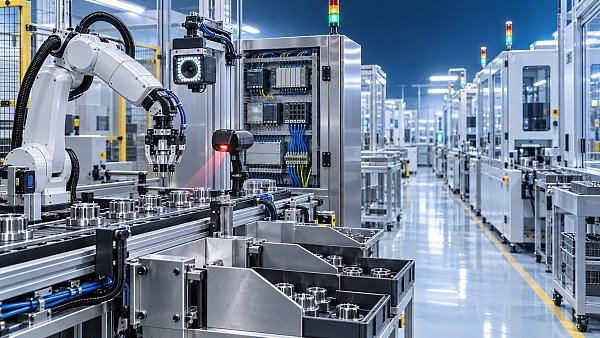
Industrial robots for automotive assembly: speed vs flexibility
Publication Date
author
For enterprise decision-makers evaluating industrial robots for automotive assembly, the core question is no longer automation alone, but the trade-off between cycle-time efficiency and production flexibility. As vehicle platforms diversify and model lifecycles shorten, choosing the right robotic architecture demands hard data on repeatability, uptime, retooling speed, and total cost of integration. This article examines where speed delivers value, where flexibility protects margins, and how to benchmark both with engineering precision.
Why are industrial robots for automotive assembly under renewed scrutiny now?
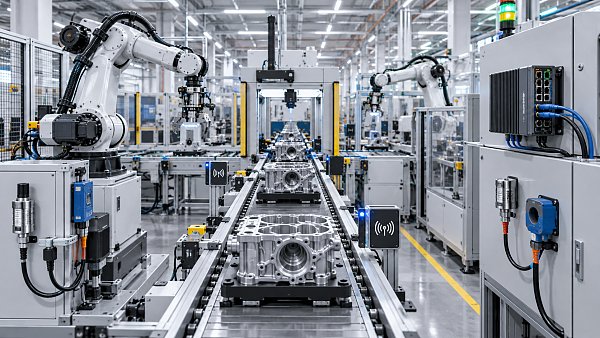
Industrial robots for automotive assembly have been a mature technology for decades, so why has the debate intensified? The answer is structural change in automotive manufacturing. Plants are no longer optimized for a handful of high-volume, slow-changing models. They now face mixed production of internal combustion vehicles, hybrids, battery electric vehicles, and region-specific variants on shared lines. That shift changes the economics of automation.
In the past, the fastest robot cell usually won because line balance was the main objective. Today, speed still matters, especially in body-in-white welding, high-throughput material handling, sealing, and paint applications. However, a robot system that achieves excellent cycle time but requires long reprogramming windows, expensive end-of-arm tooling changes, or complex safety recertification can become a hidden cost center. For decision-makers, the real issue is not whether to automate, but what type of automation architecture can preserve output while absorbing product variation.
This is exactly where a data-first approach becomes essential. At TechStat Vanguard, the principle is simple: parameters matter more than claims. When comparing industrial robots for automotive assembly, teams should look beyond brochure speed and ask how performance changes under real payload, actual reach, thermal drift, maintenance intervals, and line-side reconfiguration conditions.
What does “speed versus flexibility” actually mean in automotive assembly?
In practical terms, speed refers to throughput capability: cycle time, acceleration, path accuracy at production velocity, and uptime under continuous operation. Flexibility refers to the ability to handle model changes, option complexity, part variation, and process updates with minimal disruption. Both are valuable, but they create different operational profiles.
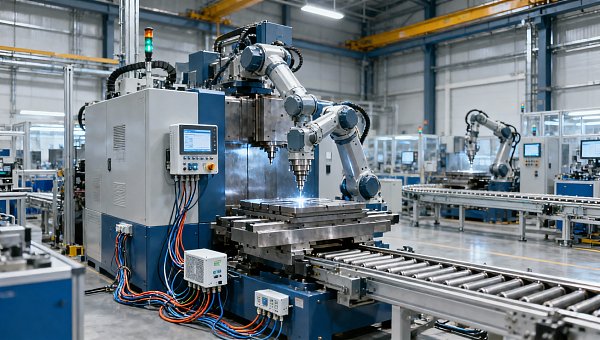
A high-speed robot cell is typically engineered around stable, repetitive work. It performs best when task geometry is fixed, fixtures are highly controlled, and production volumes justify dedicated integration. This suits applications such as spot welding, heavy part transfer, and repetitive adhesive dispensing. In contrast, a flexible robot cell may use modular grippers, vision guidance, offline programming, quick-change tooling, and interoperable software. It may sacrifice some peak speed, but it reduces changeover time and engineering burden when product mix shifts.
For automotive leaders, the key insight is that speed and flexibility are not opposites in theory; they are often competing priorities in budgeting, floor layout, controls strategy, and commissioning. The right balance depends on where instability exists in your operation: product design, supplier consistency, labor availability, or demand volatility.
Which automotive assembly processes should prioritize speed, and which should prioritize flexibility?
Not every station should be evaluated by the same criteria. That is one of the most common procurement mistakes. Industrial robots for automotive assembly should be selected process by process, based on takt sensitivity and variation risk.
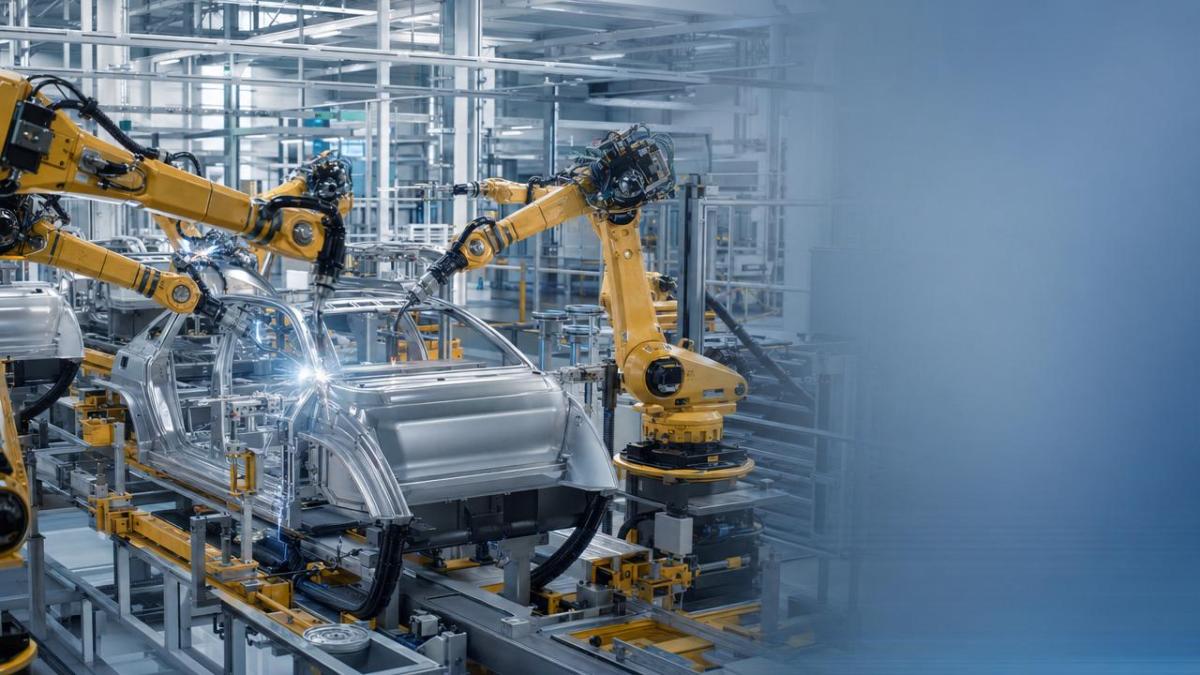
Speed usually deserves priority in body shop operations, especially spot welding, arc welding of repeatable joints, and heavy handling where the entire line can be constrained by a few bottleneck stations. In these areas, milliseconds accumulate into measurable plant output, and dedicated robot integration often pays back quickly. Paint shops also reward speed and motion consistency because path quality, overlap control, and uptime directly affect finish quality and rework cost.
Flexibility often deserves greater weight in final assembly, battery pack assembly, trim installation, small-part kitting assistance, and tasks influenced by variant complexity. These environments benefit from adaptable vision systems, force sensing, programmable fastening sequences, and easier model change support. For EV-related assembly, where pack formats and joining methods are still evolving, overcommitting to highly rigid automation can shorten the useful life of the investment.
A practical rule is this: where geometry is stable and takt is unforgiving, bias toward speed. Where product variants, engineering changes, or uncertain future configurations dominate, bias toward flexibility.
What metrics should decision-makers compare when evaluating industrial robots for automotive assembly?
Brochure specifications alone are not enough. Enterprise buyers should define a benchmarking framework that reflects actual production conditions. Start with repeatability, but do not stop there. Repeatability measured in a controlled test says little if payload, reach extension, cable dress, or thermal cycling in production alters performance.
For speed-focused applications, compare real cycle time under expected payload, acceleration limits with installed tooling, path deviation at production speed, controller latency, and Mean Time Between Failures under continuous duty. Also review maintenance access time, spare parts lead time, and recovery behavior after emergency stops or fault resets, because uptime losses often erase theoretical speed gains.
For flexibility-focused applications, compare changeover time, teach and reprogram efficiency, compatibility with machine vision and torque systems, digital twin support, offline programming quality, and the ability to reuse end-effectors across future models. Safety architecture also matters. If each process change requires extensive guarding redesign or revalidation, flexibility on paper may not translate into flexibility on the floor.
Decision-makers should also examine integration metrics that rarely appear in marketing material: commissioning duration, controls interoperability with PLC and MES layers, workforce training requirements, and supplier support responsiveness across regions. These factors directly affect total cost of integration and time to stable production.
Is higher speed always the better financial decision?
No. Higher speed improves economics only when the plant can monetize that speed. If upstream supply, downstream inspection, labor constraints, or maintenance bottlenecks limit overall output, a faster robot may create little real value. In some cases, the premium paid for maximum-performance hardware, tighter fixtures, and more complex guarding cannot be recovered.
This is why industrial robots for automotive assembly should be evaluated through total cost of ownership, not acquisition price or nameplate performance. TCO includes integration engineering, energy consumption, preventive maintenance, spare inventory, unplanned downtime, software licensing, and future model conversion costs. A robot cell that is 8% slower but can be retooled in half the time may deliver better multi-year returns in a mixed-model plant.
A robust investment case should therefore model at least three scenarios: stable high-volume production, medium-variation production, and high-changeover production. If only one scenario supports the return, the procurement strategy may be too fragile. Financial resilience often comes from balanced capability, not just peak output.
What mistakes do companies make when choosing industrial robots for automotive assembly?
The first mistake is buying for today’s takt without considering tomorrow’s platform changes. Automotive programs now evolve faster, and robot investments outlast individual models. A system optimized too narrowly for current geometry can become expensive to convert.
The second mistake is overvaluing nominal speed while undervaluing integration complexity. A robot with excellent specs but poor software usability, limited diagnostics, or weak local support can consume engineering resources for years. For enterprise buyers, supplier capability should be assessed as rigorously as hardware capability.
The third mistake is assuming flexibility means universal applicability. Flexible cells still have limits in payload, positional stiffness, environmental resistance, and achievable takt. If the task demands extreme consistency at high force or very short cycle time, a more dedicated architecture may still be the better choice.
Finally, some organizations fail to define acceptance criteria in measurable terms. “Easy to retool” is not a requirement. “New variant deployment within six hours, without mechanical guard redesign, using existing controller architecture” is a requirement. Precision in specification prevents misalignment later.
How should a procurement team benchmark suppliers before making a final decision?
The most effective method is a structured benchmark built around process truth, not sales narrative. Start by defining a representative use case: actual part dimensions, payload envelope, cycle target, environmental conditions, and expected changeover frequency. Then require each supplier to respond against the same conditions.
Next, request evidence in four categories. First, performance data: repeatability, cycle time, fault recovery, and uptime assumptions. Second, flexibility data: reprogramming workflow, end-effector change procedure, and software portability. Third, lifecycle data: maintenance intervals, support model, spare availability, and obsolescence planning. Fourth, integration data: PLC compatibility, vision integration, cybersecurity readiness, and simulation quality.
Where possible, run a pilot or factory acceptance test with predefined scoring. Decision-makers should also weight criteria differently by station type. Body shop welding may prioritize throughput and stiffness; final assembly may prioritize adaptability and operator-safe interaction. The result is a more realistic supplier ranking and a clearer business case.
What questions should executives ask internally before approving a robot investment?
Before approving industrial robots for automotive assembly, leaders should align operations, engineering, quality, and finance around a few non-negotiable questions. Is the production mix likely to change materially within the asset life? Which stations are true throughput constraints today? How costly are current changeovers? Which quality losses are caused by manual inconsistency versus upstream variation? What support footprint is needed across regions or plants?
These questions matter because the right answer is rarely “fastest robot wins” or “most flexible robot wins.” The best investment is the one that matches process stability, platform roadmap, workforce capability, and required resilience. In many cases, the optimal strategy is hybrid: dedicated high-speed automation where the process is fixed, combined with modular, software-driven automation where volatility is high.
If you need to move from strategy to specification, the next conversation should focus on measurable criteria: target cycle time under full payload, acceptable repeatability drift, MTBF assumptions, changeover duration, commissioning timeline, interoperability requirements, and conversion cost across future vehicle variants. That is the fastest route to comparing industrial robots for automotive assembly with engineering truth rather than marketing language.
Search News
Hot Articles
- Carbon Fiber StructuresHow to Specify Aerospace Carbon Fiber Assemblies for Lightweight, Load-Bearing PartsJul 11, 2026
- Machine VisionXiaomi, Alibaba DAMO Academy Drive Open-Source Robotics Model Ecosystem, Lowering Algorithm Development Barriers for Overseas SMEs Adopting Chinese Robotics SolutionsMar 30, 2026
- Cobots & ArmsShanxi 'AI+' Conference Showcases Embodied Intelligence with Multinational Buyer Engagement: Key Industry ImplicationsMar 30, 2026
Popular Tags
Recommended News
 Jul 11, 2026How to Specify Aerospace Carbon Fiber Assemblies for Lightweight, Load-Bearing PartsAerospace carbon fiber assemblies: learn how to specify laminate design, load data, joining methods, and inspection controls for lighter, reliable load-bearing aerospace parts.Elena Rostova (UAV Systems Researcher)
 Mar 30, 2026Xiaomi, Alibaba DAMO Academy Drive Open-Source Robotics Model Ecosystem, Lowering Algorithm Development Barriers for Overseas SMEs Adopting Chinese Robotics SolutionsXiaomi & Alibaba DAMO Academy's open-source robotics models lower algorithm barriers for global SMEs. Boost efficiency in manufacturing, logistics & smart retail with ROS 2 compatible solutions.TSV Data Lab
 Mar 30, 2026Shanxi 'AI+' Conference Showcases Embodied Intelligence with Multinational Buyer Engagement: Key Industry ImplicationsShanxi 'AI+' Conference highlights embodied intelligence with Tesla, Ubtech & Jiantao showcasing multimodal robotics. 40+ global buyers validated tech on-site, creating new B2B channels for industrial automation & AI solutions.Chen Wei (Automation Lead Engineer)
 Mar 30, 2026Zhongguancun Unveils 6G Integrated Sensing-Computing-Intelligence Platform to Empower Embodied Robots for Global Industrial ApplicationsZhongguancun's new 6G platform revolutionizes industrial robotics with <10ms latency, empowering global automotive, logistics & port automation. Discover how this tech boosts China's smart manufacturing exports.TSV Data Lab
 Mar 30, 2026Mech-Mind Tianjin Embodied Intelligence R&D and Production Base Goes Live, Cutting Delivery Time by 20%–30% for Global Customized AMR+Vision SolutionsMech-Mind's Tianjin AMR+Vision production base cuts delivery time by 20%-30% for欧美 & Latin American markets. Discover how this PLd-certified facility accelerates customized robotics solutions for smart manufacturing and logistics.Chen Wei (Automation Lead Engineer)
 Mar 30, 2026Boao Forum Reveals 'Co-evolution of Big and Small Brains' Trend in Humanoid Robots, China's Embodied Intelligence Accelerates Adaptation to Overseas Manufacturing Service ScenariosDiscover how China's humanoid robots, featuring 'Co-evolution of Big and Small Brains,' are revolutionizing global manufacturing. Learn about Embodied Tian Gong 3.0's ISO compliance and overseas deployment at Boao Forum 2026.Chen Wei (Automation Lead Engineer)
 Mar 30, 2026China Railway Industrial Secures Patent for Embodied Robotics in Material Handling, Boosting High-Precision Delivery Capabilities for Overseas Infrastructure and Manufacturing ProjectsChina Railway Industrial's new patent for embodied robotics in material handling boosts high-precision delivery for global infrastructure & manufacturing. Discover how this innovation enhances logistics accuracy in automotive, rail transit & EPC projects.Chen Wei (Automation Lead Engineer)
 Sep 28, 2026Spindle Runout Measurement in Germany: DIN Standards, Methods, and Acceptance LimitsSpindle runout measurement Germany: explore DIN standards, proven methods, acceptance limits, and audit-ready practices for reliable machining quality.Dr. Marcus Vance
 Sep 27, 2026How to Select Wall-Mount Edge Devices for Space-Constrained Factory NetworksWall mount edge devices for space-constrained factories: evaluate workload, thermal design, power resilience, cable access, and network reliability for smarter deployments.TSV Data Lab
 Sep 26, 2026Machining Tolerance Analysis: How to Set Limits That Meet Function and Cost TargetsMachining tolerance analysis: learn how to set functional limits, control tolerance stacks, reduce inspection risk, and balance precision with production cost.Dr. Marcus Vance
 Sep 25, 2026How to Evaluate an Industrial Infrastructure Data Platform for Multi-Site OperationsIndustrial infrastructure data platform evaluation guide for multi-site operations: compare data quality, edge resilience, interoperability, governance, and scalable proof-of-value criteria.Victor Lin (Chief Software Architect)
 Sep 24, 2026How to Select Machine Vision Optics for Accurate Inspection at Different Working DistancesMachine vision optics selection guide for accurate inspection at every working distance. Compare FOV, pixel scale, DOF, distortion, lighting, and telecentric options.TSV Data Lab
 Sep 23, 2026How to Evaluate a Machine Vision System Integrator for High-Speed Inspection LinesChoose a machine vision system integrator with proven expertise in high-speed inspection, reliable reject timing, robust optics, and measurable acceptance criteria.TSV Data Lab
 Sep 28, 2026When is a SCADA API the right choice for connecting plant systems?SCADA API guide: learn when governed plant data integration improves traceability, security, and scalability—without compromising real-time control.Victor Lin (Chief Software Architect)
 Sep 27, 2026How SCADA data integration improves traceability across production linesSCADA data integration connects production-line data to improve traceability, accelerate quality investigations, and strengthen safety decisions.Victor Lin (Chief Software Architect)
 Sep 26, 2026What to define before starting SCADA integration planningSCADA integration planning starts with clear scope, control boundaries, data models, cybersecurity, and testing. Discover the definitions that reduce risk and costly rework.Victor Lin (Chief Software Architect)
 Sep 25, 2026How a smart factory with Industrial IoT reduces production blind spotsDiscover how a smart factory with Industrial IoT turns real-time machine, quality, and workflow data into actionable insights that reduce production blind spots and delivery risks.Victor Lin (Chief Software Architect)
 Sep 24, 2026When does Industrial IoT make smart manufacturing easier to scale?Smart manufacturing Industrial IoT scales when trusted data, interoperable systems, and secure workflows turn connected assets into measurable gains.TSV Data Lab
 Sep 23, 2026What drives ultra-precision machining cost at 1-micron tolerance?Ultra precision machining cost per part at 1 micron tolerance depends on process, material, metrology, and yield. Learn how to compare quotes confidently.Dr. Marcus Vance
 Sep 22, 2026Drone Engine-T550CC Applications: Build the UAV Power System Around the MissionAn application guide for Drone Engine-T550CC integration, covering payload planning, airframe matching, cooling, fuel, vibration, test procedures, documentation, and service preparation.Elena Rostova (UAV Systems Researcher)
 Sep 22, 2026How to Evaluate Industrial Edge Computing Vendors for Factory DeploymentIndustrial edge computing vendor evaluation guide for factories: compare latency, protocol fit, reliability, security, and lifecycle support before deployment.TSV Data Lab
 Sep 21, 2026Drone Payload Integration: Matching Power, Data, and Center of Gravity for Reliable FlightsDrone payload integration made practical: balance power, data, center of gravity, and endurance to build safer, more reliable mission-ready flights.Elena Rostova (UAV Systems Researcher)
 Sep 20, 2026Autonomous Navigation Pricing: Cost Drivers and Budget Benchmarks for AMR ProjectsAutonomous navigation price explained: compare AMR cost drivers, software, sensors, integration, safety, and lifecycle budgets to build a scalable project plan.Chen Wei (Automation Lead Engineer)
 Sep 19, 2026How to Scope Automation Integration Services for Multi-System Factory ProjectsAutomation integration services: learn how to scope multi-system factory projects with clear workflows, interface contracts, safety boundaries, and acceptance criteria.Victor Lin (Chief Software Architect)