Where automotive assembly robots still create hidden bottlenecks
Publication Date
author
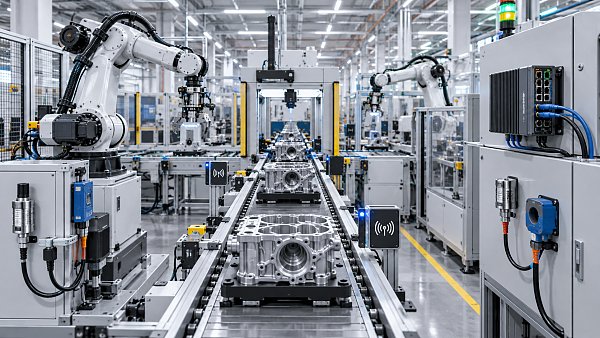
Even with mature automation strategies, industrial robots for automotive assembly can still create hidden bottlenecks that quietly erode throughput, quality consistency, and project ROI. For project leaders and engineering managers, the real issue is rarely whether robots belong on the line. The real issue is whether the robotic cells, fixtures, upstream logistics, controls architecture, and inspection loops are balanced well enough to let the whole system perform as designed.
The core search intent behind this topic is practical diagnosis. Readers are not looking for generic praise of automation. They want to know where automotive assembly robots still slow production, why these constraints are often missed during planning, and how to identify the difference between a robot problem and a system problem. They also want to understand what to measure before approving upgrades, redesigns, or new capital expenditures.
For project managers, engineering leads, and plant decision-makers, the most useful perspective is this: robots usually do not become bottlenecks because they are inherently too slow. They become bottlenecks because they are deployed into line architectures with cycle-time mismatch, poorly governed changeovers, unstable part presentation, insufficient data visibility, or maintenance strategies that only react after losses appear. In other words, the hidden bottleneck is usually at the interface between the robot and the surrounding process.
This article focuses on the areas that matter most for decision-making: where bottlenecks typically form, how to detect them early, which metrics reveal the real constraint, and how to prioritize corrective action without wasting budget on the wrong fix.
Why automotive assembly robots still become bottlenecks in mature lines
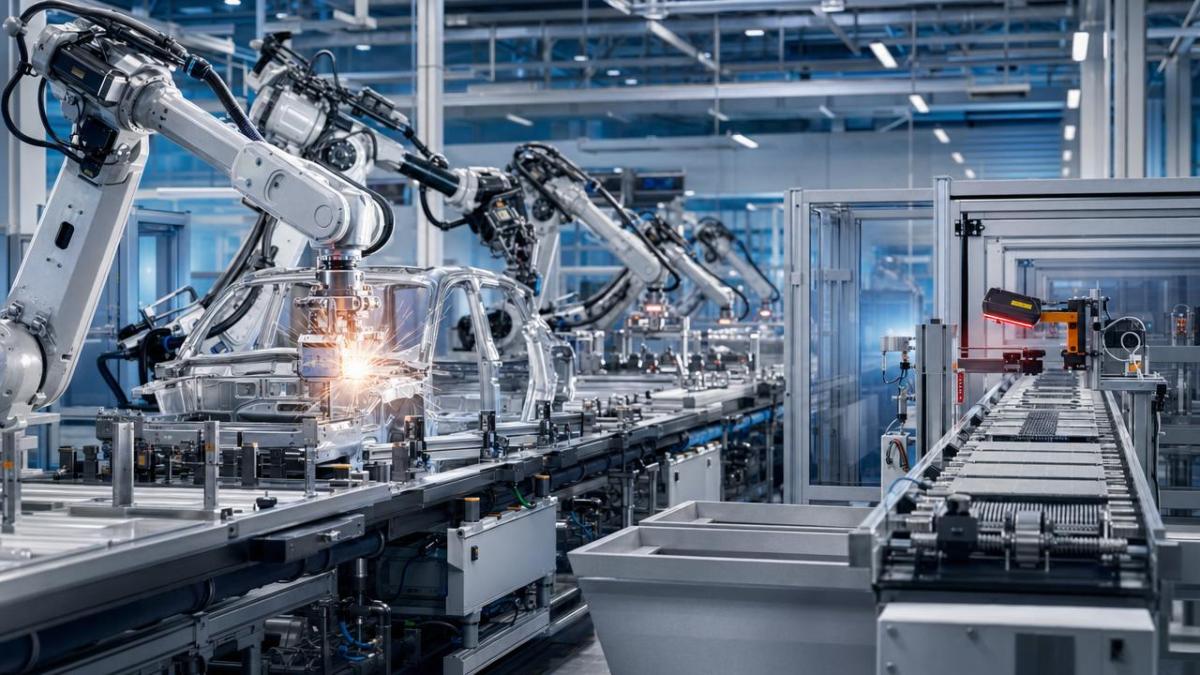
In most automotive plants, robotic automation is already established across body-in-white, welding, painting, sealing, material handling, and final assembly support. That maturity can create a dangerous assumption: if the line is automated, then the line is optimized. In practice, mature automation often hides persistent losses because planners and operators become accustomed to “normal” delays, micro-stoppages, and rework loops that are never formally treated as bottlenecks.
One reason this happens is that robot performance is often evaluated at the cell level, while throughput is determined at the line level. A robotic station may meet its nominal cycle time during standalone tests, yet still constrain production when buffer behavior, operator interaction, part variability, and downstream dependencies are included. Project teams that focus too narrowly on robot specifications may miss the broader production physics.
Another issue is that many lines were designed around earlier product mixes and then expanded incrementally. As vehicle architectures become more complex, with more variant combinations and tighter joining tolerances, previously acceptable robot paths, fixture concepts, and takt assumptions can become unstable. The bottleneck emerges gradually rather than through a visible failure event.
This is especially important for leaders sourcing or benchmarking industrial robots for automotive assembly. Robot repeatability, payload, and reach still matter, but they are not enough. What matters more is whether the robot can maintain performance within the real conditions of the line: part tolerance variation, tool wear, thermal drift, maintenance windows, and communication latency across the control stack.
Where hidden bottlenecks most often appear
The first common bottleneck is cycle-time mismatch between robotic cells and adjacent processes. This often occurs when engineering teams optimize high-visibility stations while ignoring lower-profile feeders, conveyors, adhesive cure delays, vision verification steps, or manual assist tasks. A robot that completes its programmed motion in 42 seconds does not help if the part arrives inconsistently every 47 seconds. Over time, the line is paced by the slowest repeatable handoff, not by the fastest robot.
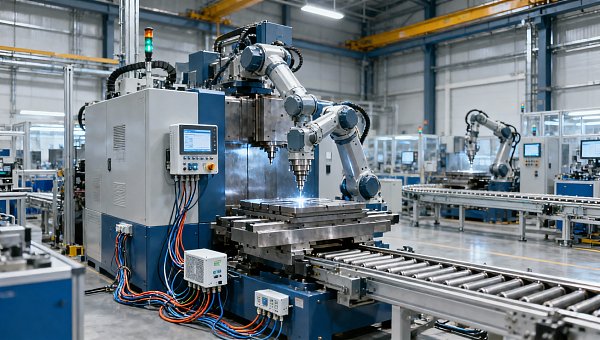
The second is tooling and fixture constraint. In automotive assembly, the robot is often blamed for poor throughput or dimensional variation when the deeper cause is fixture rigidity, clamping inconsistency, datum shift, or tool-change instability. If a gripper requires repeated correction, if weld guns drift out of ideal alignment, or if end-of-arm tooling adds unnecessary mass and inertia, cycle time and quality both suffer. These problems are easy to misclassify as “robot limitations” even when the robot itself is not the root cause.
The third is part presentation variability. Robots depend on predictability. When stamped parts, subassemblies, or fastener-fed components arrive with inconsistent orientation or tolerance stack-up, the robot compensates through slower motion profiles, additional confirmation steps, or increased fault frequency. The bottleneck is hidden because the robot continues to run, but it runs defensively rather than efficiently.
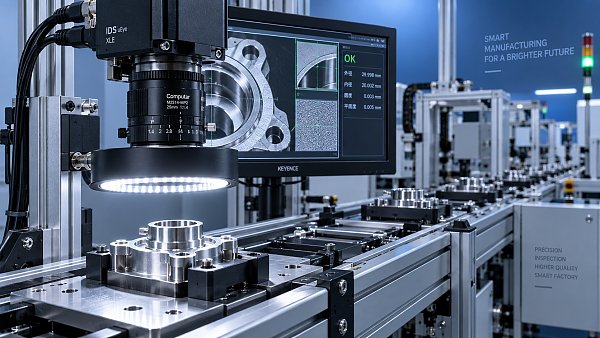
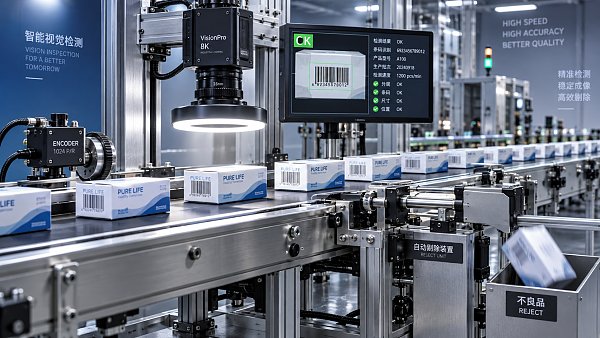
The fourth is vision and sensor latency. Plants increasingly rely on machine vision, force sensing, barcode verification, and edge-based inspection logic to improve flexibility. Yet these layers can introduce subtle delays. If image processing times fluctuate, if lighting conditions drive re-tries, or if sensor fusion logic is not synchronized with robot motion control, the cell loses seconds that are rarely visible in top-line OEE reports.
The fifth is changeover complexity. Automotive assembly rarely operates at a single stable product mix. Variant-heavy production adds recipe switching, tool changes, verification logic, and quality interlocks. A robotic system that looks efficient in a steady-state engineering trial may perform poorly in real mixed-model production. For project managers, this is one of the most underestimated hidden bottlenecks because acceptance testing often underrepresents true production variation.
The sixth is maintenance recovery behavior. Mean time between failures is important, but mean time to recover is often more critical for bottleneck analysis. A robot cell that fails infrequently but requires long restart sequences, complex homing, or manual intervention can damage line stability more than a less sophisticated cell with faster recovery. In high-volume automotive assembly, recovery characteristics deserve the same attention as uptime.
How to tell whether the robot is the bottleneck or the system around it
For project leaders, the most valuable question is not “Is this robot underperforming?” but “What exactly is constraining line output?” Answering that requires separating direct robot limitations from system-induced losses.
Start with time-distribution analysis. Break each cycle into motion time, wait time, handshake time, verification time, and fault-recovery time. Many hidden bottlenecks appear as non-motion losses rather than motion inefficiency. If the robot spends meaningful time waiting for fixture confirmation, part presence signals, or downstream release, then replacing the robot may produce little benefit.
Next, compare designed cycle time versus sustained cycle time over a statistically meaningful production window. Designed cycle time reflects engineering assumptions. Sustained cycle time reflects reality, including micro-stops and product variation. The gap between the two usually reveals where hidden losses live.
Then examine buffer occupancy and starvation/blockage patterns. If a robotic cell is frequently starved, the upstream process is the issue. If it is frequently blocked, the downstream process is likely constraining output. If neither is obvious but output still lags, the problem may lie in synchronization logic, queue behavior, or batch-dependent quality holds.
Another powerful method is first-pass yield mapping by station interaction. Some robotic bottlenecks do not show up as slower cycle time but as rework volume. A station that creates dimensional inconsistency, weak joins, seal defects, or misapplied components may appear productive in isolation while silently consuming downstream capacity. In these cases, quality loss is throughput loss in disguise.
Finally, review manual intervention frequency. If operators frequently reset faults, clear misfeeds, teach offsets, or assist part loading, the line may be relying on hidden labor to stabilize robotic performance. That is a major warning sign for both scalability and ROI.
The metrics that matter more than marketing specifications
When evaluating industrial robots for automotive assembly, project teams are often presented with headline metrics such as maximum speed, payload, repeatability, and reach. These are necessary, but they rarely identify hidden bottlenecks on their own. For real operational decisions, a different metric set is more informative.
One critical metric is cycle-time stability under load variation. A robot that achieves nominal speed only in ideal conditions may underperform in production. Ask how cycle time changes with actual tooling mass, cable routing, acceleration limits, and product variant complexity.
Another is path accuracy in the full process environment. Repeatability alone does not guarantee robust joining, dispensing, or handling performance. Thermal effects, compliance in tooling, and base-frame stability can all affect the real result. For welding, sealing, and precision placement, process capability matters more than brochure-level repeatability.
Fault taxonomy and recovery time should also be measured. Do not look only at total downtime. Categorize stoppages by root cause: vision faults, gripper issues, fixture interlocks, PLC communication, servo alarms, safety resets, or part-detection failures. The distribution of fault types tells you whether the hidden bottleneck is mechanical, electrical, software-related, or process-driven.
OEE by reason code depth is more useful than aggregate OEE. A high-level utilization number can hide systematic losses. Project managers should insist on reason codes that distinguish starvation, blockage, small stops, quality loss, and scheduled but ineffective availability.
Also important is changeover performance by variant. Measure the slowest and most failure-prone product transitions, not just the average condition. In mixed-model automotive assembly, averages can conceal the exact situations where delivery risk appears.
How hidden robotic bottlenecks damage project ROI
From a capital planning perspective, hidden bottlenecks are dangerous because they distort the business case. A robotic line may pass factory acceptance tests, meet installation milestones, and still underdeliver financially because the modeled throughput was based on optimistic integration assumptions. The result is not just lower output. It is delayed payback, underutilized labor planning, unstable launch schedules, and recurring engineering firefighting.
There is also a compounding quality cost. When robots operate near process limits due to fixture instability, part variation, or poor synchronization, defects rise gradually rather than catastrophically. This leads to more inspection, more rework, more containment activity, and more supplier disputes. For project managers responsible for launch success, such hidden losses can outweigh the direct equipment cost delta between robotic solutions.
Another ROI issue is misdirected corrective investment. If the true constraint lies in feeders, clamps, communication logic, or data architecture, replacing the robot or adding a second robot may produce disappointing returns. Accurate bottleneck diagnosis prevents expensive but low-impact fixes.
What project managers should prioritize before approving upgrades or new deployments
First, require a system-level bottleneck map, not just a robot-level performance review. Every upgrade proposal should show how the cell interacts with upstream supply, fixturing, controls, quality gates, and downstream release conditions. If that map is missing, the project is still too close to vendor theater and too far from engineering truth.
Second, validate real production envelopes. Do not approve decisions based only on nominal takt, ideal parts, or clean engineering trials. Ask for data across variant mix, operator shift differences, maintenance states, and environmental ranges. Hidden bottlenecks often appear only at the edges of the operating envelope.
Third, prioritize instrumentation and traceability. Many plants have enough automation but not enough granular data. If timestamps, fault logs, quality outcomes, and recovery sequences are not captured at sufficient resolution, teams will continue debating symptoms rather than solving causes. Better data often yields better ROI than a faster robot.
Fourth, assess maintainability and restart design during procurement and commissioning. Easy access, simplified calibration, faster homing, and clearer fault isolation can have outsized benefits in automotive assembly environments where line stoppages are expensive.
Fifth, insist on joint reviews between manufacturing engineering, controls, maintenance, quality, and operations. Hidden bottlenecks survive in organizational gaps. The robot programmer sees one issue, maintenance sees another, and production supervisors see only output loss. Cross-functional review is often the fastest path to accurate diagnosis.
A practical framework to reduce hidden bottlenecks in automotive robotic assembly
A useful framework is to assess every robotic cell across five dimensions: flow, precision, visibility, recoverability, and adaptability.
Flow asks whether material, parts, and process timing are balanced around the robot. Precision asks whether tooling, fixtures, and robot path performance remain capable under real variation. Visibility asks whether the data is detailed enough to identify losses at source. Recoverability asks how fast and safely the system returns to stable operation after interruptions. Adaptability asks whether the cell maintains performance across model changes and future product complexity.
If a cell scores poorly in flow, focus on handoffs, buffers, and line balancing. If it scores poorly in precision, investigate fixtures, datum strategy, end-of-arm tooling, and process capability. If visibility is weak, improve event capture and reason-code structure. If recoverability is the problem, redesign alarm handling and maintenance access. If adaptability is low, review recipe logic, sensor strategy, and changeover architecture.
This framework helps prevent a common mistake in projects involving industrial robots for automotive assembly: assuming that all bottlenecks can be solved by buying faster or more advanced robots. Often, the highest-return improvements come from reducing uncertainty and friction around the robot, not from changing the robot itself.
Conclusion: the hidden bottleneck is usually an integration truth, not a robot myth
Automotive assembly robots remain essential to scale, consistency, and safety, but they do not automatically eliminate production constraints. Hidden bottlenecks still emerge where robotic motion meets real-world variability: part presentation, fixtures, sensors, controls, changeovers, and maintenance recovery. For project managers and engineering leads, the right response is not broader automation rhetoric. It is sharper bottleneck diagnosis.
The most reliable conclusion is simple: if throughput, quality, or ROI are under pressure, look beyond the robot specification sheet. Measure the interfaces, not just the machine. In modern automotive assembly, the winning teams are the ones that understand that system integration quality determines whether industrial robots create competitive advantage or just automate inefficiency.
Search News
Hot Articles
- Carbon Fiber StructuresHow to Specify Aerospace Carbon Fiber Assemblies for Lightweight, Load-Bearing PartsJul 11, 2026
- Machine VisionXiaomi, Alibaba DAMO Academy Drive Open-Source Robotics Model Ecosystem, Lowering Algorithm Development Barriers for Overseas SMEs Adopting Chinese Robotics SolutionsMar 30, 2026
- Cobots & ArmsShanxi 'AI+' Conference Showcases Embodied Intelligence with Multinational Buyer Engagement: Key Industry ImplicationsMar 30, 2026
Popular Tags
Recommended News
 Jul 11, 2026How to Specify Aerospace Carbon Fiber Assemblies for Lightweight, Load-Bearing PartsAerospace carbon fiber assemblies: learn how to specify laminate design, load data, joining methods, and inspection controls for lighter, reliable load-bearing aerospace parts.Elena Rostova (UAV Systems Researcher)
 Mar 30, 2026Xiaomi, Alibaba DAMO Academy Drive Open-Source Robotics Model Ecosystem, Lowering Algorithm Development Barriers for Overseas SMEs Adopting Chinese Robotics SolutionsXiaomi & Alibaba DAMO Academy's open-source robotics models lower algorithm barriers for global SMEs. Boost efficiency in manufacturing, logistics & smart retail with ROS 2 compatible solutions.TSV Data Lab
 Mar 30, 2026Shanxi 'AI+' Conference Showcases Embodied Intelligence with Multinational Buyer Engagement: Key Industry ImplicationsShanxi 'AI+' Conference highlights embodied intelligence with Tesla, Ubtech & Jiantao showcasing multimodal robotics. 40+ global buyers validated tech on-site, creating new B2B channels for industrial automation & AI solutions.Chen Wei (Automation Lead Engineer)
 Mar 30, 2026Zhongguancun Unveils 6G Integrated Sensing-Computing-Intelligence Platform to Empower Embodied Robots for Global Industrial ApplicationsZhongguancun's new 6G platform revolutionizes industrial robotics with <10ms latency, empowering global automotive, logistics & port automation. Discover how this tech boosts China's smart manufacturing exports.TSV Data Lab
 Mar 30, 2026Mech-Mind Tianjin Embodied Intelligence R&D and Production Base Goes Live, Cutting Delivery Time by 20%–30% for Global Customized AMR+Vision SolutionsMech-Mind's Tianjin AMR+Vision production base cuts delivery time by 20%-30% for欧美 & Latin American markets. Discover how this PLd-certified facility accelerates customized robotics solutions for smart manufacturing and logistics.Chen Wei (Automation Lead Engineer)
 Mar 30, 2026Boao Forum Reveals 'Co-evolution of Big and Small Brains' Trend in Humanoid Robots, China's Embodied Intelligence Accelerates Adaptation to Overseas Manufacturing Service ScenariosDiscover how China's humanoid robots, featuring 'Co-evolution of Big and Small Brains,' are revolutionizing global manufacturing. Learn about Embodied Tian Gong 3.0's ISO compliance and overseas deployment at Boao Forum 2026.Chen Wei (Automation Lead Engineer)
 Mar 30, 2026China Railway Industrial Secures Patent for Embodied Robotics in Material Handling, Boosting High-Precision Delivery Capabilities for Overseas Infrastructure and Manufacturing ProjectsChina Railway Industrial's new patent for embodied robotics in material handling boosts high-precision delivery for global infrastructure & manufacturing. Discover how this innovation enhances logistics accuracy in automotive, rail transit & EPC projects.Chen Wei (Automation Lead Engineer)
 Sep 29, 2026ISO 9283 Repeatability: How to Evaluate Cobot Positioning PerformanceISO 9283 cobot repeatability explained: learn how payload, reach, approach direction, and test conditions affect positioning performance and cell capability.Chen Wei (Automation Lead Engineer)
 Sep 29, 2026How Do You Verify Servo Motor Torque Under Continuous Load?How do I verify servo motor torque under continuous load? Learn RMS torque checks, torque-speed limits, thermal derating, and real-machine testing.Chen Wei (Automation Lead Engineer)
 Sep 28, 2026Spindle Runout Measurement in Germany: DIN Standards, Methods, and Acceptance LimitsSpindle runout measurement Germany: explore DIN standards, proven methods, acceptance limits, and audit-ready practices for reliable machining quality.Dr. Marcus Vance
 Sep 27, 2026How to Select Wall-Mount Edge Devices for Space-Constrained Factory NetworksWall mount edge devices for space-constrained factories: evaluate workload, thermal design, power resilience, cable access, and network reliability for smarter deployments.TSV Data Lab
 Sep 26, 2026Machining Tolerance Analysis: How to Set Limits That Meet Function and Cost TargetsMachining tolerance analysis: learn how to set functional limits, control tolerance stacks, reduce inspection risk, and balance precision with production cost.Dr. Marcus Vance
 Sep 25, 2026How to Evaluate an Industrial Infrastructure Data Platform for Multi-Site OperationsIndustrial infrastructure data platform evaluation guide for multi-site operations: compare data quality, edge resilience, interoperability, governance, and scalable proof-of-value criteria.Victor Lin (Chief Software Architect)
 Sep 24, 2026How to Select Machine Vision Optics for Accurate Inspection at Different Working DistancesMachine vision optics selection guide for accurate inspection at every working distance. Compare FOV, pixel scale, DOF, distortion, lighting, and telecentric options.TSV Data Lab
 Sep 23, 2026How to Evaluate a Machine Vision System Integrator for High-Speed Inspection LinesChoose a machine vision system integrator with proven expertise in high-speed inspection, reliable reject timing, robust optics, and measurable acceptance criteria.TSV Data Lab
 Sep 29, 2026How MES and OEE work together to identify production lossesMES and OEE work together to uncover hidden production losses, connect downtime, speed, and quality data, and drive smarter shop-floor improvements.Victor Lin (Chief Software Architect)
 Sep 28, 2026When is a SCADA API the right choice for connecting plant systems?SCADA API guide: learn when governed plant data integration improves traceability, security, and scalability—without compromising real-time control.Victor Lin (Chief Software Architect)
 Sep 27, 2026How SCADA data integration improves traceability across production linesSCADA data integration connects production-line data to improve traceability, accelerate quality investigations, and strengthen safety decisions.Victor Lin (Chief Software Architect)
 Sep 26, 2026What to define before starting SCADA integration planningSCADA integration planning starts with clear scope, control boundaries, data models, cybersecurity, and testing. Discover the definitions that reduce risk and costly rework.Victor Lin (Chief Software Architect)
 Sep 25, 2026How a smart factory with Industrial IoT reduces production blind spotsDiscover how a smart factory with Industrial IoT turns real-time machine, quality, and workflow data into actionable insights that reduce production blind spots and delivery risks.Victor Lin (Chief Software Architect)
 Sep 24, 2026When does Industrial IoT make smart manufacturing easier to scale?Smart manufacturing Industrial IoT scales when trusted data, interoperable systems, and secure workflows turn connected assets into measurable gains.TSV Data Lab
 Sep 23, 2026What drives ultra-precision machining cost at 1-micron tolerance?Ultra precision machining cost per part at 1 micron tolerance depends on process, material, metrology, and yield. Learn how to compare quotes confidently.Dr. Marcus Vance
 Sep 22, 2026Drone Engine-T550CC Applications: Build the UAV Power System Around the MissionAn application guide for Drone Engine-T550CC integration, covering payload planning, airframe matching, cooling, fuel, vibration, test procedures, documentation, and service preparation.Elena Rostova (UAV Systems Researcher)
 Sep 22, 2026How to Evaluate Industrial Edge Computing Vendors for Factory DeploymentIndustrial edge computing vendor evaluation guide for factories: compare latency, protocol fit, reliability, security, and lifecycle support before deployment.TSV Data Lab