How to judge a China cobot manufacturer beyond brochures
Publication Date
author
Brochures rarely reveal whether an industrial cobot manufacturer china can deliver stable repeatability, traceable quality, and scalable support under real production demands. For business evaluators, the real test lies in audited engineering data, supply chain transparency, certification depth, and post-deployment performance. This guide shows how to assess manufacturers beyond marketing claims and identify partners that can withstand technical, commercial, and long-cycle procurement scrutiny.
What should business evaluators verify first when screening an industrial cobot manufacturer china?

The first screening step is not price. It is evidence quality. Many suppliers can present polished catalogs, application photos, and generic claims about smart factories. Far fewer can show controlled test records, batch traceability, revision history for critical components, and documented performance under load, speed, and duty-cycle constraints.
For procurement and commercial evaluation teams, the central question is simple: can this supplier move from sample-stage promise to repeatable volume delivery without creating hidden operational risk? In collaborative robotics, that risk often appears in three places: unstable consistency across batches, incomplete service capability after commissioning, and vague technical disclosures that make comparison impossible.
At TechStat Vanguard, the working principle is clear: parameters do not lie; tolerances dictate success. When reviewing a China cobot supplier, decision-makers should ask for measurable proof tied to deployment reality rather than adjectives tied to marketing. A manufacturer that respects engineering truth will usually be comfortable discussing limits, test conditions, and trade-offs.
- Ask for repeatability values with test conditions, not just a single headline figure. Payload, arm extension, speed, and mounting orientation all affect real-world performance.
- Request component sourcing logic for servo systems, reducers, controllers, safety modules, and cables, including alternatives when shortages occur.
- Check whether the supplier can support risk documents, acceptance plans, spare-parts strategy, and lifecycle communication after installation.
- Verify whether technical staff can answer process-specific questions for welding, pick-and-place, machine tending, assembly, inspection, or packaging.
Why brochures create false confidence
Brochures compress complexity into a few attractive metrics. They seldom explain backlash growth over time, cycle-count assumptions, safety integration boundaries, software update discipline, or the availability of local service partners. For a business evaluator, those omitted details affect total cost of ownership more than brochure language ever will.
This is especially important when comparing an industrial cobot manufacturer china across several shortlists. Suppliers may look similar on paper, yet differ sharply in engineering process maturity. One may have robust incoming inspection and documented end-of-line validation. Another may rely heavily on manual adjustment and informal troubleshooting. The commercial risk profile is not the same.
Which technical signals matter more than brand presentation?
A serious evaluation should translate business risk into technical checkpoints. Instead of asking whether a cobot is advanced, ask whether the manufacturer can prove control over the variables that influence throughput, precision, downtime, and compliance. The table below helps structure those questions when comparing an industrial cobot manufacturer china with alternative suppliers.
A commercial team should read these dimensions as cost drivers. Weak traceability leads to slower root-cause analysis. Weak software discipline leads to longer downtime and difficult fleet updates. Weak safety documentation delays site acceptance. The technical layer is inseparable from the financial layer.
How to interpret repeatability claims correctly
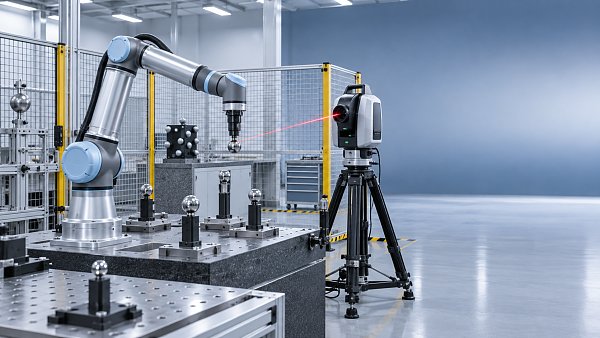
Repeatability is one of the most misused metrics in cobot sourcing. A quoted figure can be useful, but only within a declared test framework. Evaluators should ask whether the number reflects point-to-point tests or path accuracy, whether the arm was warm or cold, and whether the payload was near nominal. In dispensing, precision assembly, and inspection assistance, these distinctions directly affect yield.
A credible industrial cobot manufacturer china should also discuss wear behavior over time. Initial performance is important, but long-cycle stability matters more for factories planning multi-shift operations. If the supplier cannot explain how it monitors drift, backlash, or cable fatigue, the brochure metric has limited decision value.
How to compare manufacturers on quality systems, traceability, and compliance
Quality maturity is often the dividing line between a low-friction rollout and a costly qualification loop. For business evaluators, compliance is not a box-ticking exercise. It determines whether documents, inspections, and change control can support procurement across industries with different regulatory expectations, from electronics and automotive components to medical-adjacent production and aerospace-support environments.
The table below provides a practical way to compare certification and control depth when assessing an industrial cobot manufacturer china.
A strong supplier does not need to claim perfection. It needs to demonstrate control. When documents are clear, exceptions are logged, and engineering changes are disciplined, evaluators can estimate implementation risk with greater confidence. That is the practical value of data-driven supplier review.
Standards that deserve attention
Exact requirements depend on destination market and application, but common reference points include quality management frameworks, machinery safety concepts, electrical safety expectations, EMC considerations, and process-specific validation duties. Evaluators should confirm which requirements are covered by the robot itself, which belong to the integrator, and which remain the end user’s responsibility.
- Do not assume a generic certificate covers the full robotic cell.
- Separate robot compliance from end-of-arm tooling, guarding, conveyor logic, and application software.
- Confirm whether export documentation matches the final shipment configuration, not just a standard catalog version.
Which supply chain questions expose real manufacturer depth?
In many sourcing projects, the brochure is only the visible layer. The deeper question is whether the manufacturer has enough supply chain resilience to preserve delivery commitments and product consistency. This is where evaluators should probe beyond assembly capability and ask how the supplier manages critical parts, second-source strategies, and failure-response workflows.
A practical due-diligence checklist
- Identify critical components with long lead times, such as reducers, drives, chips, safety boards, connectors, and harness assemblies.
- Ask what happens if a key component becomes unavailable. A mature industrial cobot manufacturer china should have documented engineering change and qualification routines.
- Review incoming quality control logic. Sampling plans, nonconformance disposition, and supplier scorecards often reveal whether the factory operates predictably.
- Check spare-parts policy for field service. Lead time on replacement joints, controllers, teach pendants, and cables can determine downtime exposure.
- Confirm whether firmware and hardware revisions are synchronized. A hardware change without software validation can create silent deployment risk.
TSV’s broader hard-tech view is useful here because robotics quality cannot be judged in isolation. Controller latency, sensor interface reliability, machine-vision compatibility, and machining precision in arm structures all influence field performance. A manufacturer with weak upstream discipline may still produce attractive demos, but multi-site rollout becomes more fragile.
How should buyers evaluate service, deployment risk, and total cost instead of unit price alone?
The lowest quote is often the most expensive option if integration takes longer, support is remote only, or spares are difficult to obtain. Business evaluators should estimate total cost across acquisition, deployment, training, maintenance, downtime, and scaling. For an industrial cobot manufacturer china, service architecture is often a deciding factor in cross-border projects.
The table below summarizes the cost areas that commonly distort supplier comparison.
This cost view shifts the conversation from unit price to operational economics. A slightly higher upfront quote may reduce downtime, simplify qualification, and shorten implementation. For finance-facing evaluators, that is often the stronger procurement case.
Service questions that reveal post-sale reality
- Is remote diagnosis available in the target time zone, and what data access is required?
- Can the supplier support application tuning after production changes, not only initial startup?
- Are consumables and vulnerable parts identified upfront with recommended stocking levels?
- Does the supplier provide a clear escalation path from operator issue to engineering resolution?
Common mistakes when judging a China cobot supplier
Many sourcing errors happen because teams evaluate collaborative robots as isolated products instead of production assets embedded in a process chain. The result is a mismatch between brochure expectations and plant-floor reality. Avoiding these mistakes can significantly reduce supplier qualification cycles.
Mistake 1: treating payload and reach as enough for selection
Payload and reach matter, but they do not reveal path stability, acceleration behavior, or interaction with grippers, feeders, and vision systems. The right cobot is the one that performs within process tolerance, not the one with the most attractive headline dimensions.
Mistake 2: ignoring software and interface fit
An industrial cobot manufacturer china may offer competitive hardware, but deployment can still stall if protocol support, PLC integration, MES communication, or vision interface compatibility is weak. Commercial teams should involve controls and manufacturing engineering early in the review.
Mistake 3: assuming support can be solved later
Delayed support planning often turns small technical issues into large production losses. Response time, spare availability, remote diagnostic capability, and documentation completeness should be negotiated before order placement, not after a failure occurs.
FAQ for evaluating an industrial cobot manufacturer china
How do I compare two suppliers that show similar technical brochures?
Use a structured scorecard based on repeatability conditions, traceability depth, software maintenance discipline, safety documentation, spare-parts lead time, and integration support. Similar brochures often hide very different process maturity. Ask for sample records, not just sample claims.
What is the most overlooked risk in cross-border cobot sourcing?
Post-deployment support is often underestimated. A competitively priced robot can become costly if fault response is slow, documentation is incomplete, or key spares require long international lead times. Evaluators should calculate downtime exposure as carefully as purchase price.
Should buyers request factory audits for every project?
Not always, but for larger orders, customized applications, regulated industries, or multi-site rollout plans, a factory audit or third-party technical review is often justified. The goal is to verify process discipline, change control, and test logic before risk becomes embedded in a contract.
Which documents are most useful before issuing a purchase order?
Prioritize a detailed specification sheet, interface list, compliance document set, factory acceptance outline, spare-parts recommendation, and service-response framework. These documents align commercial expectations with engineering reality and reduce downstream disputes.
Why choose a data-driven evaluation partner before supplier commitment?
When the shortlist includes multiple candidates, internal teams often need an independent filter that can translate supplier language into engineering evidence. That is where TechStat Vanguard adds practical value. TSV focuses on hard-tech benchmarking, supply chain traceability logic, and parameter-based comparison so business evaluators can distinguish polished presentation from operational readiness.
If you are reviewing an industrial cobot manufacturer china for a pilot line, plant expansion, or multi-site automation plan, you can consult TSV on specific decision points: parameter confirmation, application-fit analysis, qualification checklist design, certification review scope, delivery risk assessment, spare-parts planning, and quote comparison logic.
Contact us when you need a clearer basis for product selection, acceptance criteria, lead-time evaluation, customization boundaries, sample support questions, or structured supplier comparison. In hard-tech procurement, better decisions start when marketing noise ends and engineering data takes over.
Search News
Hot Articles
- Carbon Fiber StructuresHow to Specify Aerospace Carbon Fiber Assemblies for Lightweight, Load-Bearing PartsJul 11, 2026
- Machine VisionXiaomi, Alibaba DAMO Academy Drive Open-Source Robotics Model Ecosystem, Lowering Algorithm Development Barriers for Overseas SMEs Adopting Chinese Robotics SolutionsMar 30, 2026
- Cobots & ArmsShanxi 'AI+' Conference Showcases Embodied Intelligence with Multinational Buyer Engagement: Key Industry ImplicationsMar 30, 2026
Popular Tags
Recommended News
 Jul 11, 2026How to Specify Aerospace Carbon Fiber Assemblies for Lightweight, Load-Bearing PartsAerospace carbon fiber assemblies: learn how to specify laminate design, load data, joining methods, and inspection controls for lighter, reliable load-bearing aerospace parts.Elena Rostova (UAV Systems Researcher)
 Mar 30, 2026Xiaomi, Alibaba DAMO Academy Drive Open-Source Robotics Model Ecosystem, Lowering Algorithm Development Barriers for Overseas SMEs Adopting Chinese Robotics SolutionsXiaomi & Alibaba DAMO Academy's open-source robotics models lower algorithm barriers for global SMEs. Boost efficiency in manufacturing, logistics & smart retail with ROS 2 compatible solutions.TSV Data Lab
 Mar 30, 2026Shanxi 'AI+' Conference Showcases Embodied Intelligence with Multinational Buyer Engagement: Key Industry ImplicationsShanxi 'AI+' Conference highlights embodied intelligence with Tesla, Ubtech & Jiantao showcasing multimodal robotics. 40+ global buyers validated tech on-site, creating new B2B channels for industrial automation & AI solutions.Chen Wei (Automation Lead Engineer)
 Mar 30, 2026Zhongguancun Unveils 6G Integrated Sensing-Computing-Intelligence Platform to Empower Embodied Robots for Global Industrial ApplicationsZhongguancun's new 6G platform revolutionizes industrial robotics with <10ms latency, empowering global automotive, logistics & port automation. Discover how this tech boosts China's smart manufacturing exports.TSV Data Lab
 Mar 30, 2026Mech-Mind Tianjin Embodied Intelligence R&D and Production Base Goes Live, Cutting Delivery Time by 20%–30% for Global Customized AMR+Vision SolutionsMech-Mind's Tianjin AMR+Vision production base cuts delivery time by 20%-30% for欧美 & Latin American markets. Discover how this PLd-certified facility accelerates customized robotics solutions for smart manufacturing and logistics.Chen Wei (Automation Lead Engineer)
 Mar 30, 2026Boao Forum Reveals 'Co-evolution of Big and Small Brains' Trend in Humanoid Robots, China's Embodied Intelligence Accelerates Adaptation to Overseas Manufacturing Service ScenariosDiscover how China's humanoid robots, featuring 'Co-evolution of Big and Small Brains,' are revolutionizing global manufacturing. Learn about Embodied Tian Gong 3.0's ISO compliance and overseas deployment at Boao Forum 2026.Chen Wei (Automation Lead Engineer)
 Mar 30, 2026China Railway Industrial Secures Patent for Embodied Robotics in Material Handling, Boosting High-Precision Delivery Capabilities for Overseas Infrastructure and Manufacturing ProjectsChina Railway Industrial's new patent for embodied robotics in material handling boosts high-precision delivery for global infrastructure & manufacturing. Discover how this innovation enhances logistics accuracy in automotive, rail transit & EPC projects.Chen Wei (Automation Lead Engineer)
 Sep 29, 2026ISO 9283 Repeatability: How to Evaluate Cobot Positioning PerformanceISO 9283 cobot repeatability explained: learn how payload, reach, approach direction, and test conditions affect positioning performance and cell capability.Chen Wei (Automation Lead Engineer)
 Sep 28, 2026Spindle Runout Measurement in Germany: DIN Standards, Methods, and Acceptance LimitsSpindle runout measurement Germany: explore DIN standards, proven methods, acceptance limits, and audit-ready practices for reliable machining quality.Dr. Marcus Vance
 Sep 27, 2026How to Select Wall-Mount Edge Devices for Space-Constrained Factory NetworksWall mount edge devices for space-constrained factories: evaluate workload, thermal design, power resilience, cable access, and network reliability for smarter deployments.TSV Data Lab
 Sep 26, 2026Machining Tolerance Analysis: How to Set Limits That Meet Function and Cost TargetsMachining tolerance analysis: learn how to set functional limits, control tolerance stacks, reduce inspection risk, and balance precision with production cost.Dr. Marcus Vance
 Sep 25, 2026How to Evaluate an Industrial Infrastructure Data Platform for Multi-Site OperationsIndustrial infrastructure data platform evaluation guide for multi-site operations: compare data quality, edge resilience, interoperability, governance, and scalable proof-of-value criteria.Victor Lin (Chief Software Architect)
 Sep 24, 2026How to Select Machine Vision Optics for Accurate Inspection at Different Working DistancesMachine vision optics selection guide for accurate inspection at every working distance. Compare FOV, pixel scale, DOF, distortion, lighting, and telecentric options.TSV Data Lab
 Sep 23, 2026How to Evaluate a Machine Vision System Integrator for High-Speed Inspection LinesChoose a machine vision system integrator with proven expertise in high-speed inspection, reliable reject timing, robust optics, and measurable acceptance criteria.TSV Data Lab
 Sep 28, 2026When is a SCADA API the right choice for connecting plant systems?SCADA API guide: learn when governed plant data integration improves traceability, security, and scalability—without compromising real-time control.Victor Lin (Chief Software Architect)
 Sep 27, 2026How SCADA data integration improves traceability across production linesSCADA data integration connects production-line data to improve traceability, accelerate quality investigations, and strengthen safety decisions.Victor Lin (Chief Software Architect)
 Sep 26, 2026What to define before starting SCADA integration planningSCADA integration planning starts with clear scope, control boundaries, data models, cybersecurity, and testing. Discover the definitions that reduce risk and costly rework.Victor Lin (Chief Software Architect)
 Sep 25, 2026How a smart factory with Industrial IoT reduces production blind spotsDiscover how a smart factory with Industrial IoT turns real-time machine, quality, and workflow data into actionable insights that reduce production blind spots and delivery risks.Victor Lin (Chief Software Architect)
 Sep 24, 2026When does Industrial IoT make smart manufacturing easier to scale?Smart manufacturing Industrial IoT scales when trusted data, interoperable systems, and secure workflows turn connected assets into measurable gains.TSV Data Lab
 Sep 23, 2026What drives ultra-precision machining cost at 1-micron tolerance?Ultra precision machining cost per part at 1 micron tolerance depends on process, material, metrology, and yield. Learn how to compare quotes confidently.Dr. Marcus Vance
 Sep 22, 2026Drone Engine-T550CC Applications: Build the UAV Power System Around the MissionAn application guide for Drone Engine-T550CC integration, covering payload planning, airframe matching, cooling, fuel, vibration, test procedures, documentation, and service preparation.Elena Rostova (UAV Systems Researcher)
 Sep 22, 2026How to Evaluate Industrial Edge Computing Vendors for Factory DeploymentIndustrial edge computing vendor evaluation guide for factories: compare latency, protocol fit, reliability, security, and lifecycle support before deployment.TSV Data Lab
 Sep 21, 2026Drone Payload Integration: Matching Power, Data, and Center of Gravity for Reliable FlightsDrone payload integration made practical: balance power, data, center of gravity, and endurance to build safer, more reliable mission-ready flights.Elena Rostova (UAV Systems Researcher)
 Sep 20, 2026Autonomous Navigation Pricing: Cost Drivers and Budget Benchmarks for AMR ProjectsAutonomous navigation price explained: compare AMR cost drivers, software, sensors, integration, safety, and lifecycle budgets to build a scalable project plan.Chen Wei (Automation Lead Engineer)