Warehouse Automation with AGV or AMR Starts with the Wrong Question
Publication Date
author
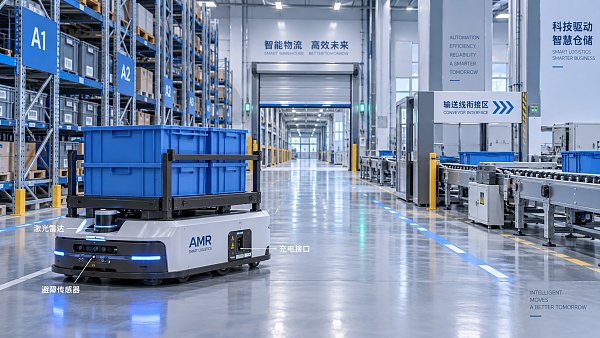
Most warehouse automation projects begin by comparing vehicle types, but that is often the wrong starting point. The real issue is not choosing AGV or AMR first, but defining workflow constraints, navigation risk, payload variability, and system-level ROI. For teams researching AGV AMR for warehouse automation, this article reframes the decision through engineering logic, operational data, and procurement reality.
The Market Has Shifted from Vehicle Selection to System Fit
A visible change is happening across distribution centers, factories, spare-parts hubs, and mixed-use logistics sites: warehouse automation is no longer evaluated as a standalone equipment purchase. It is increasingly judged as a workflow redesign project. That shift matters because many early discussions about AGV AMR for warehouse automation still begin with a simplified question: which vehicle is better? In reality, operators are now under pressure from labor instability, shorter order cycles, SKU expansion, and stricter uptime expectations. Under those conditions, the more useful question is whether the material flow is stable enough for fixed logic, or variable enough to require adaptive navigation and orchestration.
This is why the AGV versus AMR discussion has become more nuanced. In the past, warehouse operators often accepted a direct comparison based on navigation technology alone. Today, engineering, operations, and procurement teams are forced to consider congestion patterns, charging strategy, traffic density, software integration depth, and exception handling. A vehicle may perform well in a demo, yet fail to create measurable value if the upstream pick process, pallet standardization, rack geometry, or WMS interface remains unstable.
For information researchers, this trend is important because it changes how credible suppliers should be evaluated. The strongest suppliers are no longer the ones with the loudest claims about autonomy. They are the ones that can quantify route success rates, recovery behavior after obstruction, fleet utilization under peak load, and maintenance impact across shifts.
Why the Old AGV or AMR Debate Is Losing Precision
The traditional distinction is clear enough on paper: AGVs typically follow predefined paths with higher process rigidity, while AMRs navigate more dynamically and adjust to environmental changes. But in current procurement practice, that distinction is no longer sufficient. Warehouses now operate in hybrid conditions. A single site may contain repetitive line-feeding loops, variable case-picking zones, shared forklift corridors, and temporary staging areas created by seasonal demand. In such environments, one facility can need both deterministic motion and adaptive routing.
That means AGV AMR for warehouse automation should be treated less as a binary product category and more as a decision about workflow architecture. If 80 percent of traffic follows repeatable point-to-point transport, high-control AGV logic may support simpler validation and more predictable throughput. If routes change frequently, obstacles are common, and operators share aisles with mobile robots, AMR capabilities may reduce reconfiguration costs. The wrong question is “Which technology is more advanced?” The better question is “Which operating constraints create the highest cost of failure?”
What Is Driving This Change in Warehouse Automation Decisions
Several forces are pushing buyers toward a more engineering-based evaluation model. First, the cost of poor fit has become more visible. When mobile automation underperforms, the problem is rarely isolated to the robot. It can trigger aisle congestion, delayed replenishment, operator workarounds, and missed dispatch windows. Second, facilities are being asked to support more volatile demand without expanding labor at the same rate. That raises the value of adaptable capacity, but it also raises the cost of operational ambiguity.
Third, software maturity now matters as much as vehicle hardware. In many projects, the competitive gap is not payload or top speed. It is fleet coordination, map management, mission assignment logic, and the ability to recover from real-world exceptions. Fourth, procurement teams are under growing pressure to justify capital expenditure with measurable performance indicators rather than broad automation narratives. That aligns with the data-first mindset promoted by engineering-led organizations such as TechStat Vanguard: parameters, tolerances, and traceable operating metrics matter more than marketing superlatives.
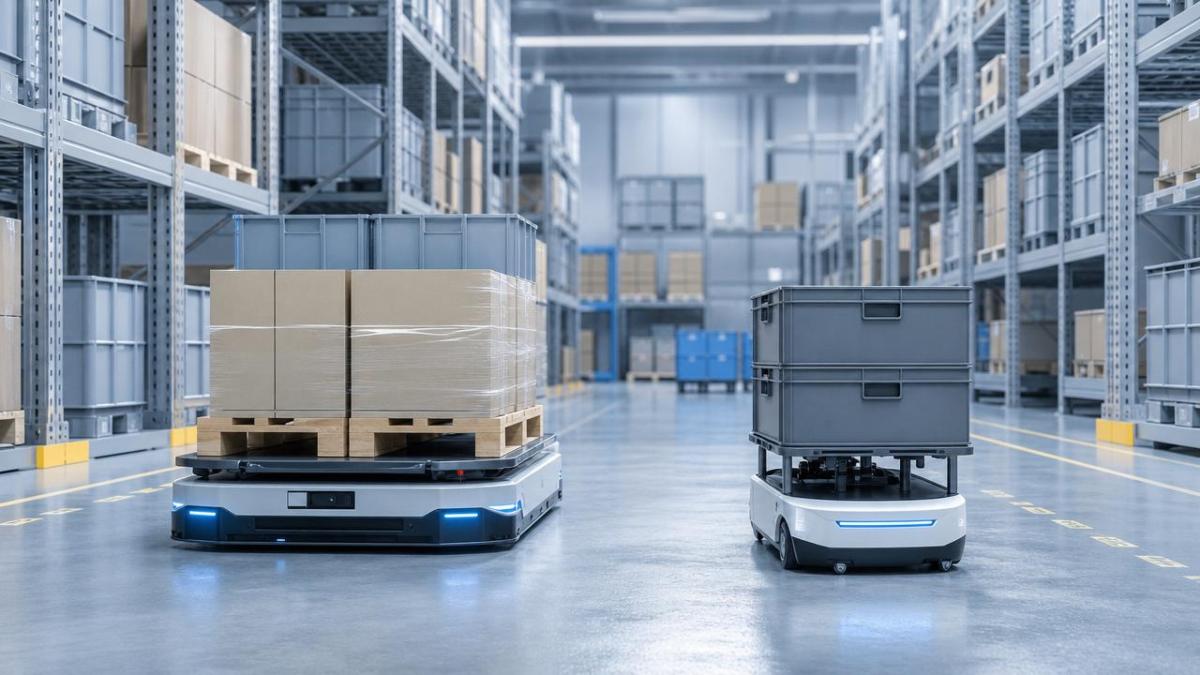
The Real Evaluation Framework for AGV AMR for Warehouse Automation
A stronger decision framework begins with process classification. Before comparing platforms, teams should map transport tasks into categories: fixed repetitive moves, variable replenishment, person-to-goods support, pallet transfer, and exception transport. Once that is done, vehicle decisions become easier because each task has a different tolerance for route rigidity, obstacle uncertainty, and latency.
The next layer is risk definition. In some sites, the highest risk is not navigation failure but mission interruption caused by uneven loads, poor barcode visibility, floor inconsistency, or unreliable handoff interfaces. In others, the main issue is traffic unpredictability in busy aisles. This is why AGV AMR for warehouse automation should be linked to site physics and process discipline, not only to product brochures.
A practical evaluation model usually includes these questions:
- How stable are pickup and drop-off points across weeks and seasons?
- How much payload variation exists in dimensions, weight, and center of gravity?
- What percentage of operating time occurs in mixed human and forklift traffic?
- What is the acceptable recovery time after blockage, map deviation, or failed task completion?
- Which systems must exchange data in real time: WMS, ERP, MES, WES, or safety systems?
How Different Stakeholders Feel the Impact
The shift in decision logic affects more than automation engineers. Operations leaders care about throughput stability and labor planning. Procurement teams care about vendor transparency, lifecycle cost, spare parts, and service coverage. IT teams care about cybersecurity, interfaces, and data governance. Safety and compliance personnel care about traffic behavior, stopping performance, and predictable interaction with people. This is why selecting AGV AMR for warehouse automation increasingly requires cross-functional alignment rather than isolated equipment sourcing.
What Signals Buyers Should Watch Next
The next phase of warehouse automation will likely be shaped by convergence rather than strict category separation. Buyers should expect more hybrid deployments, where fixed-path logic handles stable transport and adaptive vehicles support changing zones. They should also expect supplier claims to move toward software-centered language: orchestration, digital twins, multi-robot coordination, predictive maintenance, and analytics dashboards. Those features may create value, but only if backed by evidence from real operating conditions.
Another signal worth tracking is standardization pressure. As warehouse networks become more geographically distributed, companies want repeatable deployment templates. That may favor platforms with clearer validation methods, strong documentation, and measurable integration discipline. For global buyers, regional service depth also becomes decisive. A technically strong vehicle is less attractive if spare parts support, local commissioning expertise, or long-term firmware maintenance is weak.
How to Respond Without Falling for Hype
For teams now evaluating AGV AMR for warehouse automation, the most useful action is to reframe the purchase as a staged validation exercise. Start with process data, not with brand preference. Identify where route certainty is high, where variability is costly, and where human interaction creates safety or productivity constraints. Then request evidence from suppliers in those exact conditions. Ask for metrics on docking accuracy, obstruction recovery, fleet efficiency during peak traffic, and maintenance intervention frequency.
It is also wise to compare deployment models across time horizons. A lower-cost vehicle can become more expensive if site changes require repeated remapping, custom controls work, or frequent workflow exceptions. Conversely, an advanced AMR platform may be unnecessary if the process is highly standardized and does not benefit from adaptive routing. The correct judgment comes from matching constraint profiles to technology behavior.
FAQ: Common Research Questions Behind the AGV and AMR Decision
Is AMR always better than AGV for warehouse automation?
No. AMR is not automatically better. For stable, repetitive routes with tightly controlled operating conditions, AGV-based approaches may deliver simpler validation and predictable performance. The best option depends on workflow variation, traffic conditions, and system integration needs.
What is the biggest mistake when researching AGV AMR for warehouse automation?
The biggest mistake is evaluating the vehicle before defining the process constraints. If load consistency, aisle geometry, handoff precision, and software interfaces are unclear, the technology comparison becomes misleading.
What should procurement teams ask suppliers first?
They should ask for evidence tied to site reality: uptime assumptions, recovery behavior, support model, integration boundaries, battery lifecycle, and measurable results from similar throughput environments.
A Better Final Question for Decision-Makers
The most useful conclusion is simple: the future of AGV AMR for warehouse automation will be defined less by category labels and more by operational fit, software discipline, and measurable resilience. The question is not whether AGV or AMR sounds more modern. The question is which architecture reduces process risk, supports throughput under change, and creates defendable ROI over the full lifecycle.
If your team wants to judge how these trends affect your own warehouse automation roadmap, focus first on five points: route stability, payload variability, mixed-traffic intensity, integration depth, and failure recovery tolerance. Once those are clear, the right technology conversation becomes much easier, and far more credible.
Search News
Hot Articles
- Carbon Fiber StructuresHow to Specify Aerospace Carbon Fiber Assemblies for Lightweight, Load-Bearing PartsJul 11, 2026
- Machine VisionXiaomi, Alibaba DAMO Academy Drive Open-Source Robotics Model Ecosystem, Lowering Algorithm Development Barriers for Overseas SMEs Adopting Chinese Robotics SolutionsMar 30, 2026
- Cobots & ArmsShanxi 'AI+' Conference Showcases Embodied Intelligence with Multinational Buyer Engagement: Key Industry ImplicationsMar 30, 2026
Popular Tags
Recommended News
 Jul 11, 2026How to Specify Aerospace Carbon Fiber Assemblies for Lightweight, Load-Bearing PartsAerospace carbon fiber assemblies: learn how to specify laminate design, load data, joining methods, and inspection controls for lighter, reliable load-bearing aerospace parts.Elena Rostova (UAV Systems Researcher)
 Mar 30, 2026Xiaomi, Alibaba DAMO Academy Drive Open-Source Robotics Model Ecosystem, Lowering Algorithm Development Barriers for Overseas SMEs Adopting Chinese Robotics SolutionsXiaomi & Alibaba DAMO Academy's open-source robotics models lower algorithm barriers for global SMEs. Boost efficiency in manufacturing, logistics & smart retail with ROS 2 compatible solutions.TSV Data Lab
 Mar 30, 2026Shanxi 'AI+' Conference Showcases Embodied Intelligence with Multinational Buyer Engagement: Key Industry ImplicationsShanxi 'AI+' Conference highlights embodied intelligence with Tesla, Ubtech & Jiantao showcasing multimodal robotics. 40+ global buyers validated tech on-site, creating new B2B channels for industrial automation & AI solutions.Chen Wei (Automation Lead Engineer)
 Mar 30, 2026Zhongguancun Unveils 6G Integrated Sensing-Computing-Intelligence Platform to Empower Embodied Robots for Global Industrial ApplicationsZhongguancun's new 6G platform revolutionizes industrial robotics with <10ms latency, empowering global automotive, logistics & port automation. Discover how this tech boosts China's smart manufacturing exports.TSV Data Lab
 Mar 30, 2026Mech-Mind Tianjin Embodied Intelligence R&D and Production Base Goes Live, Cutting Delivery Time by 20%–30% for Global Customized AMR+Vision SolutionsMech-Mind's Tianjin AMR+Vision production base cuts delivery time by 20%-30% for欧美 & Latin American markets. Discover how this PLd-certified facility accelerates customized robotics solutions for smart manufacturing and logistics.Chen Wei (Automation Lead Engineer)
 Mar 30, 2026Boao Forum Reveals 'Co-evolution of Big and Small Brains' Trend in Humanoid Robots, China's Embodied Intelligence Accelerates Adaptation to Overseas Manufacturing Service ScenariosDiscover how China's humanoid robots, featuring 'Co-evolution of Big and Small Brains,' are revolutionizing global manufacturing. Learn about Embodied Tian Gong 3.0's ISO compliance and overseas deployment at Boao Forum 2026.Chen Wei (Automation Lead Engineer)
 Mar 30, 2026China Railway Industrial Secures Patent for Embodied Robotics in Material Handling, Boosting High-Precision Delivery Capabilities for Overseas Infrastructure and Manufacturing ProjectsChina Railway Industrial's new patent for embodied robotics in material handling boosts high-precision delivery for global infrastructure & manufacturing. Discover how this innovation enhances logistics accuracy in automotive, rail transit & EPC projects.Chen Wei (Automation Lead Engineer)
 Sep 29, 2026ISO 9283 Repeatability: How to Evaluate Cobot Positioning PerformanceISO 9283 cobot repeatability explained: learn how payload, reach, approach direction, and test conditions affect positioning performance and cell capability.Chen Wei (Automation Lead Engineer)
 Sep 28, 2026Spindle Runout Measurement in Germany: DIN Standards, Methods, and Acceptance LimitsSpindle runout measurement Germany: explore DIN standards, proven methods, acceptance limits, and audit-ready practices for reliable machining quality.Dr. Marcus Vance
 Sep 27, 2026How to Select Wall-Mount Edge Devices for Space-Constrained Factory NetworksWall mount edge devices for space-constrained factories: evaluate workload, thermal design, power resilience, cable access, and network reliability for smarter deployments.TSV Data Lab
 Sep 26, 2026Machining Tolerance Analysis: How to Set Limits That Meet Function and Cost TargetsMachining tolerance analysis: learn how to set functional limits, control tolerance stacks, reduce inspection risk, and balance precision with production cost.Dr. Marcus Vance
 Sep 25, 2026How to Evaluate an Industrial Infrastructure Data Platform for Multi-Site OperationsIndustrial infrastructure data platform evaluation guide for multi-site operations: compare data quality, edge resilience, interoperability, governance, and scalable proof-of-value criteria.Victor Lin (Chief Software Architect)
 Sep 24, 2026How to Select Machine Vision Optics for Accurate Inspection at Different Working DistancesMachine vision optics selection guide for accurate inspection at every working distance. Compare FOV, pixel scale, DOF, distortion, lighting, and telecentric options.TSV Data Lab
 Sep 23, 2026How to Evaluate a Machine Vision System Integrator for High-Speed Inspection LinesChoose a machine vision system integrator with proven expertise in high-speed inspection, reliable reject timing, robust optics, and measurable acceptance criteria.TSV Data Lab
 Sep 28, 2026When is a SCADA API the right choice for connecting plant systems?SCADA API guide: learn when governed plant data integration improves traceability, security, and scalability—without compromising real-time control.Victor Lin (Chief Software Architect)
 Sep 27, 2026How SCADA data integration improves traceability across production linesSCADA data integration connects production-line data to improve traceability, accelerate quality investigations, and strengthen safety decisions.Victor Lin (Chief Software Architect)
 Sep 26, 2026What to define before starting SCADA integration planningSCADA integration planning starts with clear scope, control boundaries, data models, cybersecurity, and testing. Discover the definitions that reduce risk and costly rework.Victor Lin (Chief Software Architect)
 Sep 25, 2026How a smart factory with Industrial IoT reduces production blind spotsDiscover how a smart factory with Industrial IoT turns real-time machine, quality, and workflow data into actionable insights that reduce production blind spots and delivery risks.Victor Lin (Chief Software Architect)
 Sep 24, 2026When does Industrial IoT make smart manufacturing easier to scale?Smart manufacturing Industrial IoT scales when trusted data, interoperable systems, and secure workflows turn connected assets into measurable gains.TSV Data Lab
 Sep 23, 2026What drives ultra-precision machining cost at 1-micron tolerance?Ultra precision machining cost per part at 1 micron tolerance depends on process, material, metrology, and yield. Learn how to compare quotes confidently.Dr. Marcus Vance
 Sep 22, 2026Drone Engine-T550CC Applications: Build the UAV Power System Around the MissionAn application guide for Drone Engine-T550CC integration, covering payload planning, airframe matching, cooling, fuel, vibration, test procedures, documentation, and service preparation.Elena Rostova (UAV Systems Researcher)
 Sep 22, 2026How to Evaluate Industrial Edge Computing Vendors for Factory DeploymentIndustrial edge computing vendor evaluation guide for factories: compare latency, protocol fit, reliability, security, and lifecycle support before deployment.TSV Data Lab
 Sep 21, 2026Drone Payload Integration: Matching Power, Data, and Center of Gravity for Reliable FlightsDrone payload integration made practical: balance power, data, center of gravity, and endurance to build safer, more reliable mission-ready flights.Elena Rostova (UAV Systems Researcher)
 Sep 20, 2026Autonomous Navigation Pricing: Cost Drivers and Budget Benchmarks for AMR ProjectsAutonomous navigation price explained: compare AMR cost drivers, software, sensors, integration, safety, and lifecycle budgets to build a scalable project plan.Chen Wei (Automation Lead Engineer)