Warehouse Automation Bottlenecks AGV and AMR Can Actually Fix
Publication Date
author
Warehouse automation often stalls not because the vision is wrong, but because bottlenecks in transport, routing, labor coordination, and real-time visibility keep operations from scaling. For project leaders evaluating AGV AMR for warehouse automation, the real question is not hype, but which constraints these systems can measurably remove. This article examines the bottlenecks AGV and AMR can actually fix, with a practical focus on throughput, flexibility, and implementation risk.
Which warehouse bottlenecks are worth fixing first?
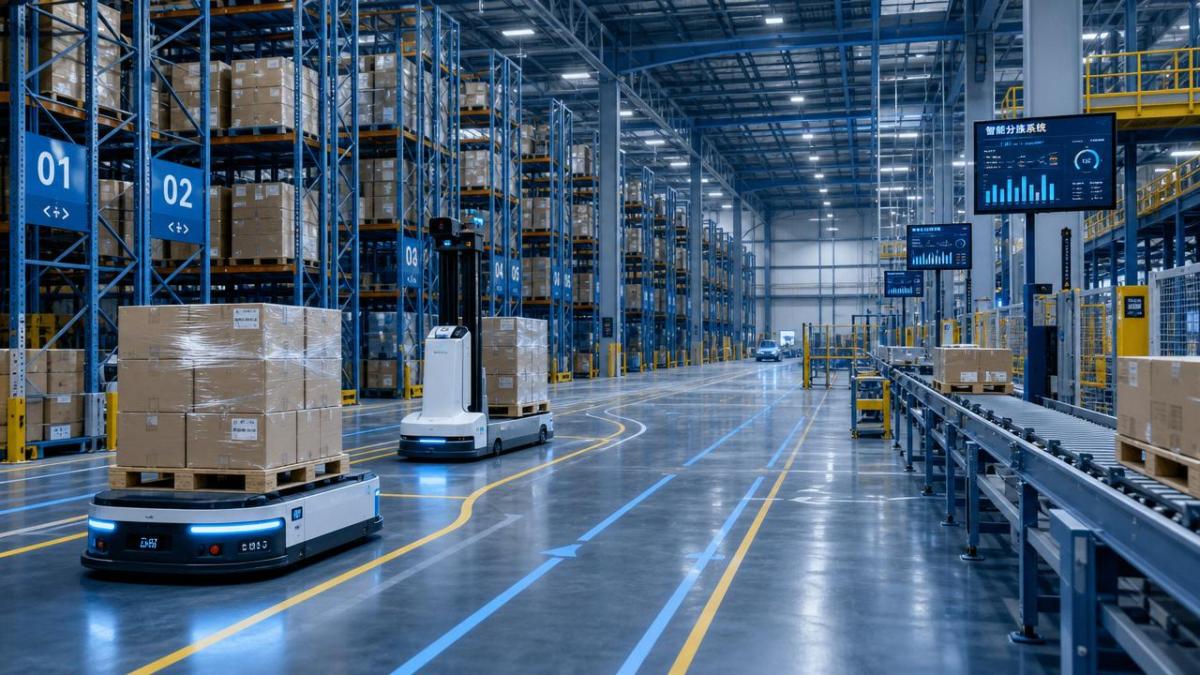
For project managers, the biggest mistake is treating automation as a broad modernization project instead of a bottleneck removal exercise. In most facilities, AGV AMR for warehouse automation delivers value only when it is mapped to a specific operational constraint: travel waste, aisle congestion, inconsistent replenishment, labor dependency, or delayed task visibility.
TechStat Vanguard approaches this from an engineering-first perspective. The useful question is not whether mobile robotics is advanced, but whether measurable transport tasks can be stabilized, whether routing logic can reduce queue time, and whether system behavior remains predictable under peak load, battery cycling, and mixed traffic conditions.
In practice, warehouse bottlenecks usually cluster into five categories:
- Manual point-to-point transport consumes labor hours that should be used for exception handling, picking quality, or line support.
- Static material routes fail when SKU mix, order frequency, or workcell layout changes.
- Traffic conflicts between forklifts, pallet jacks, and pedestrians reduce safe speed and create hidden idle time.
- Supervisors lack real-time task visibility, so delay causes are discovered late rather than prevented early.
- Scaling operations during seasonal peaks requires labor that may not be available, trainable, or consistent enough for time-sensitive execution.
These are exactly the areas where AGVs and AMRs can help, but not in the same way. The difference matters for budget, deployment time, and system fit.
AGV vs AMR: what constraint does each system actually remove?
The market often groups AGV and AMR together, yet their engineering logic is different. AGVs typically follow predefined guidance methods or tightly controlled paths. AMRs navigate more dynamically using onboard sensors, localization, and software-based route planning. For warehouse automation, that difference changes where each platform removes friction.
The comparison below helps project teams match the technology to the bottleneck rather than to a generic innovation target.
For project leaders, the takeaway is direct. If your problem is repetitive movement between fixed nodes, an AGV may remove waste with less operational variability. If your problem is constant change in route priorities, workcell placement, or congestion patterns, AMR architecture often fits better. AGV AMR for warehouse automation should therefore be specified by task physics and layout volatility, not by vendor language.
Where AGV and AMR create measurable gains in real warehouse operations
Not every warehouse process benefits equally. The best results usually come from internal logistics tasks that are repetitive enough to model and costly enough to optimize. In mixed-industry facilities, three use cases repeatedly stand out: pallet transfer, line-side replenishment, and cross-zone material movement.
Pallet transfer between receiving, storage, and staging
This is often the cleanest use case because source and destination points are clear, travel distance is meaningful, and labor time is visible. AGVs work well where routes remain stable and traffic can be organized. AMRs become stronger when staging priorities change by shift, outbound mix, or dock demand.
Line-side replenishment in manufacturing-linked warehouses
In plants connected to assembly, missed replenishment creates much higher costs than transport alone. Here, AGV AMR for warehouse automation improves schedule discipline. The value is not only fewer manual trips, but more predictable feed timing and lower risk of starving downstream processes.
Cross-zone movement in multi-SKU operations
When reserve storage, picking, packing, and QA are distributed across zones, travel distance expands while accountability becomes blurred. AMRs can reduce this friction by accepting software-driven tasks, rerouting around temporary blockages, and feeding queue data back into a warehouse control layer.
The following table shows where common bottlenecks align with the more suitable mobile robotics approach.
A recurring lesson from TSV-style benchmarking is that mobile robotics does not eliminate all warehouse losses. It removes transport instability best when upstream inventory logic, task release rules, and pickup/drop-off design are already disciplined. Weak process design cannot be hidden behind autonomous movement.
What technical parameters should project leaders verify before procurement?
If you are evaluating AGV AMR for warehouse automation, brochure language is rarely enough. Project managers should ask for parameters that relate directly to throughput, safety, maintainability, and integration risk. This is consistent with TSV’s data-driven position: parameters matter because they determine whether a deployment survives real operating conditions.
Core engineering checks
- Payload and payload stability: Verify not only rated capacity, but center-of-gravity tolerance and behavior under uneven loads.
- Navigation performance: Ask how the vehicle behaves under reflective surfaces, narrow aisles, temporary obstacles, and changing floor markings.
- Battery and charging logic: Review runtime at realistic duty cycles, not only ideal laboratory conditions. Opportunity charging affects fleet sizing.
- Traffic orchestration: A single robot demo proves little. Fleet manager behavior under queue contention is what determines scalability.
- Interface readiness: Check whether the system can exchange task, status, and alarm data with WMS, MES, ERP, or warehouse control software.
- Safety architecture: Review emergency stop logic, obstacle detection zones, speed reduction behavior, and operator interaction rules.
For many project teams, the hidden issue is not robot capability but robot behavior under non-ideal conditions. Mixed pallets, floor damage, wireless dead zones, and temporary rack changes often separate a stable deployment from an expensive pilot that never scales.
How should you build a procurement and implementation plan?
A sound procurement process for AGV AMR for warehouse automation starts with a task map, not a vendor shortlist. Define where transport starts, what triggers movement, what counts as a completed task, and which delay states matter to operations. Only then can you calculate expected cycle reduction or labor redeployment value.
Recommended decision sequence
- Quantify current-state transport: trip frequency, average distance, wait time, labor touchpoints, and peak-hour congestion.
- Separate fixed routes from variable routes so AGV and AMR options are not compared on the wrong basis.
- Define integration depth: manual dispatch, semi-integrated calls, or full orchestration through warehouse and production systems.
- Evaluate facility constraints including floor condition, rack geometry, crossing traffic, charging space, and wireless coverage.
- Run a limited-scope pilot with clear acceptance criteria such as cycle adherence, intervention rate, and task completion consistency.
The decision table below is useful when procurement teams need to compare solutions beyond purchase price.
This is where independent engineering review becomes valuable. Teams often overfocus on the vehicle and underfocus on acceptance criteria, interoperability, and lifecycle support. A rigorous specification process shortens supplier qualification and prevents false comparisons.
What are the most common mistakes in AGV AMR for warehouse automation projects?
The most common failure mode is buying flexibility where discipline is needed, or buying simplicity where variability dominates. Both choices create avoidable cost. Another mistake is assuming labor reduction is the only value metric. In many operations, the larger gain comes from schedule stability, reduced expediting, fewer missed transfers, and better visibility into execution status.
- Ignoring upstream process noise. If task creation is inconsistent, autonomous vehicles simply automate poor release logic.
- Skipping floor and layout validation. Sensor performance and navigation confidence can degrade in reflective, crowded, or damaged environments.
- Measuring success too early. Initial movement is not the same as sustained throughput under shift changes and peak orders.
- Underestimating integration. Manual workarounds may be acceptable in a pilot but usually become bottlenecks during scale-up.
A practical rule is simple: if the robot path looks elegant in a demo but your exception handling remains manual and invisible, the real bottleneck has only moved, not disappeared.
FAQ for project managers evaluating AGV and AMR
How do I know whether AGV or AMR is better for my warehouse?
Start with route stability and decision complexity. If transport points are fixed and repetitive, AGV logic is often sufficient and easier to standardize. If priorities, stops, and paths shift frequently, AMR platforms usually provide better operational fit. The right choice depends less on trend and more on variability tolerance.
What KPI should I track during a pilot?
Track completed tasks per hour, average cycle time, intervention frequency, queue delay, charging impact, and on-time delivery to destination points. If the warehouse supports production, include line-side service level or missed replenishment events. These metrics reveal whether AGV AMR for warehouse automation is removing the true bottleneck.
Can mobile robots work without full WMS integration?
Yes, but only for simpler deployments. Manual dispatch or local calling can be enough for early-stage use cases. However, once task volume rises, lack of integration often limits prioritization, traceability, and exception handling. Integration depth should match the operational importance of the transport flow.
What implementation risk should I plan for most carefully?
Plan around mixed traffic, task spikes, and non-ideal facility conditions. Many systems look strong in controlled demos yet struggle when pedestrian crossings, temporary pallets, or route conflicts increase. Validation should therefore include worst-case operating windows, not only average daily flow.
Why work with a data-driven technical advisor before you commit?
Project leaders do not need more automation slogans. They need a clearer line between claimed performance and usable performance. That is where TechStat Vanguard adds value. TSV focuses on engineering truth: navigation fault tolerance, real operating constraints, interoperability questions, and the parameters that decide whether a system scales beyond a pilot.
If you are assessing AGV AMR for warehouse automation, TSV can help you refine the specification before procurement pressure distorts the decision. This is especially useful when multiple suppliers describe similar outcomes but provide different assumptions, test methods, or interface maturity.
- Parameter confirmation: review payload logic, navigation method, runtime assumptions, and fleet behavior under peak demand.
- Solution selection: compare AGV and AMR fit by route stability, layout volatility, and integration depth.
- Delivery planning: assess deployment sequence, pilot scope, facility readiness, and realistic ramp-up risk.
- Compliance and interface review: clarify safety expectations, software handshakes, and documentation requirements for internal approval.
- Quotation alignment: make sure pricing discussions are tied to actual task scope, support model, and lifecycle assumptions.
If your team is deciding whether AGV or AMR can fix a specific warehouse bottleneck, contact TSV with your route map, throughput targets, layout constraints, and integration questions. A data-grounded review will help you identify which constraints are truly solvable, which parameters should be written into the spec sheet, and which implementation risks need to be surfaced before budget approval.
Search News
Hot Articles
- Carbon Fiber StructuresHow to Specify Aerospace Carbon Fiber Assemblies for Lightweight, Load-Bearing PartsJul 11, 2026
- Machine VisionXiaomi, Alibaba DAMO Academy Drive Open-Source Robotics Model Ecosystem, Lowering Algorithm Development Barriers for Overseas SMEs Adopting Chinese Robotics SolutionsMar 30, 2026
- Cobots & ArmsShanxi 'AI+' Conference Showcases Embodied Intelligence with Multinational Buyer Engagement: Key Industry ImplicationsMar 30, 2026
Popular Tags
Recommended News
 Jul 11, 2026How to Specify Aerospace Carbon Fiber Assemblies for Lightweight, Load-Bearing PartsAerospace carbon fiber assemblies: learn how to specify laminate design, load data, joining methods, and inspection controls for lighter, reliable load-bearing aerospace parts.Elena Rostova (UAV Systems Researcher)
 Mar 30, 2026Xiaomi, Alibaba DAMO Academy Drive Open-Source Robotics Model Ecosystem, Lowering Algorithm Development Barriers for Overseas SMEs Adopting Chinese Robotics SolutionsXiaomi & Alibaba DAMO Academy's open-source robotics models lower algorithm barriers for global SMEs. Boost efficiency in manufacturing, logistics & smart retail with ROS 2 compatible solutions.TSV Data Lab
 Mar 30, 2026Shanxi 'AI+' Conference Showcases Embodied Intelligence with Multinational Buyer Engagement: Key Industry ImplicationsShanxi 'AI+' Conference highlights embodied intelligence with Tesla, Ubtech & Jiantao showcasing multimodal robotics. 40+ global buyers validated tech on-site, creating new B2B channels for industrial automation & AI solutions.Chen Wei (Automation Lead Engineer)
 Mar 30, 2026Zhongguancun Unveils 6G Integrated Sensing-Computing-Intelligence Platform to Empower Embodied Robots for Global Industrial ApplicationsZhongguancun's new 6G platform revolutionizes industrial robotics with <10ms latency, empowering global automotive, logistics & port automation. Discover how this tech boosts China's smart manufacturing exports.TSV Data Lab
 Mar 30, 2026Mech-Mind Tianjin Embodied Intelligence R&D and Production Base Goes Live, Cutting Delivery Time by 20%–30% for Global Customized AMR+Vision SolutionsMech-Mind's Tianjin AMR+Vision production base cuts delivery time by 20%-30% for欧美 & Latin American markets. Discover how this PLd-certified facility accelerates customized robotics solutions for smart manufacturing and logistics.Chen Wei (Automation Lead Engineer)
 Mar 30, 2026Boao Forum Reveals 'Co-evolution of Big and Small Brains' Trend in Humanoid Robots, China's Embodied Intelligence Accelerates Adaptation to Overseas Manufacturing Service ScenariosDiscover how China's humanoid robots, featuring 'Co-evolution of Big and Small Brains,' are revolutionizing global manufacturing. Learn about Embodied Tian Gong 3.0's ISO compliance and overseas deployment at Boao Forum 2026.Chen Wei (Automation Lead Engineer)
 Mar 30, 2026China Railway Industrial Secures Patent for Embodied Robotics in Material Handling, Boosting High-Precision Delivery Capabilities for Overseas Infrastructure and Manufacturing ProjectsChina Railway Industrial's new patent for embodied robotics in material handling boosts high-precision delivery for global infrastructure & manufacturing. Discover how this innovation enhances logistics accuracy in automotive, rail transit & EPC projects.Chen Wei (Automation Lead Engineer)
 Sep 28, 2026Spindle Runout Measurement in Germany: DIN Standards, Methods, and Acceptance LimitsSpindle runout measurement Germany: explore DIN standards, proven methods, acceptance limits, and audit-ready practices for reliable machining quality.Dr. Marcus Vance
 Sep 27, 2026How to Select Wall-Mount Edge Devices for Space-Constrained Factory NetworksWall mount edge devices for space-constrained factories: evaluate workload, thermal design, power resilience, cable access, and network reliability for smarter deployments.TSV Data Lab
 Sep 26, 2026Machining Tolerance Analysis: How to Set Limits That Meet Function and Cost TargetsMachining tolerance analysis: learn how to set functional limits, control tolerance stacks, reduce inspection risk, and balance precision with production cost.Dr. Marcus Vance
 Sep 25, 2026How to Evaluate an Industrial Infrastructure Data Platform for Multi-Site OperationsIndustrial infrastructure data platform evaluation guide for multi-site operations: compare data quality, edge resilience, interoperability, governance, and scalable proof-of-value criteria.Victor Lin (Chief Software Architect)
 Sep 24, 2026How to Select Machine Vision Optics for Accurate Inspection at Different Working DistancesMachine vision optics selection guide for accurate inspection at every working distance. Compare FOV, pixel scale, DOF, distortion, lighting, and telecentric options.TSV Data Lab
 Sep 23, 2026How to Evaluate a Machine Vision System Integrator for High-Speed Inspection LinesChoose a machine vision system integrator with proven expertise in high-speed inspection, reliable reject timing, robust optics, and measurable acceptance criteria.TSV Data Lab
 Sep 28, 2026When is a SCADA API the right choice for connecting plant systems?SCADA API guide: learn when governed plant data integration improves traceability, security, and scalability—without compromising real-time control.Victor Lin (Chief Software Architect)
 Sep 27, 2026How SCADA data integration improves traceability across production linesSCADA data integration connects production-line data to improve traceability, accelerate quality investigations, and strengthen safety decisions.Victor Lin (Chief Software Architect)
 Sep 26, 2026What to define before starting SCADA integration planningSCADA integration planning starts with clear scope, control boundaries, data models, cybersecurity, and testing. Discover the definitions that reduce risk and costly rework.Victor Lin (Chief Software Architect)
 Sep 25, 2026How a smart factory with Industrial IoT reduces production blind spotsDiscover how a smart factory with Industrial IoT turns real-time machine, quality, and workflow data into actionable insights that reduce production blind spots and delivery risks.Victor Lin (Chief Software Architect)
 Sep 24, 2026When does Industrial IoT make smart manufacturing easier to scale?Smart manufacturing Industrial IoT scales when trusted data, interoperable systems, and secure workflows turn connected assets into measurable gains.TSV Data Lab
 Sep 23, 2026What drives ultra-precision machining cost at 1-micron tolerance?Ultra precision machining cost per part at 1 micron tolerance depends on process, material, metrology, and yield. Learn how to compare quotes confidently.Dr. Marcus Vance
 Sep 22, 2026Drone Engine-T550CC Applications: Build the UAV Power System Around the MissionAn application guide for Drone Engine-T550CC integration, covering payload planning, airframe matching, cooling, fuel, vibration, test procedures, documentation, and service preparation.Elena Rostova (UAV Systems Researcher)
 Sep 22, 2026How to Evaluate Industrial Edge Computing Vendors for Factory DeploymentIndustrial edge computing vendor evaluation guide for factories: compare latency, protocol fit, reliability, security, and lifecycle support before deployment.TSV Data Lab
 Sep 21, 2026Drone Payload Integration: Matching Power, Data, and Center of Gravity for Reliable FlightsDrone payload integration made practical: balance power, data, center of gravity, and endurance to build safer, more reliable mission-ready flights.Elena Rostova (UAV Systems Researcher)
 Sep 20, 2026Autonomous Navigation Pricing: Cost Drivers and Budget Benchmarks for AMR ProjectsAutonomous navigation price explained: compare AMR cost drivers, software, sensors, integration, safety, and lifecycle budgets to build a scalable project plan.Chen Wei (Automation Lead Engineer)
 Sep 19, 2026How to Scope Automation Integration Services for Multi-System Factory ProjectsAutomation integration services: learn how to scope multi-system factory projects with clear workflows, interface contracts, safety boundaries, and acceptance criteria.Victor Lin (Chief Software Architect)