Rugged UAV Metrics: Assessing Wind Resistance, Endurance and IP Ratings
Publication Date
author
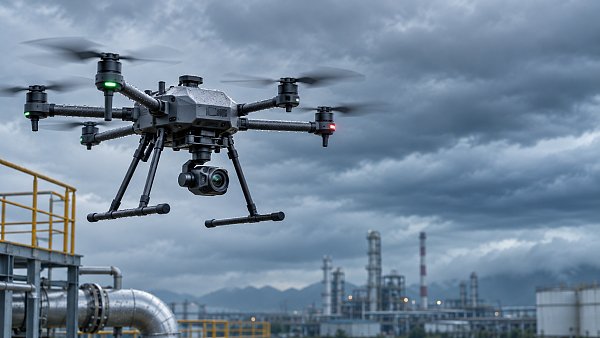
A UAV selected for an exposed inspection route can appear suitable on paper yet struggle to hold position in gusts, reach the final waypoint with a safe battery reserve, or operate after rain reaches a connector. The decision rests on three linked questions: whether the aircraft can control its position in the expected wind, complete the mission with usable energy remaining, and tolerate the actual dust and water exposure in its operating configuration.
Compare rugged UAV metrics against a defined mission rather than treating maximum wind speed, flight time, and an IP code as independent guarantees. Each figure needs a test condition, a configuration, and an acceptance limit. A platform should be excluded when evidence for a mission-critical condition is missing, not assumed capable because another headline specification looks strong.
Start with the operating envelope
Define the mission before requesting a comparison. Record the payload and mounting position, takeoff mass, route distance, expected hover time, altitude, temperature range, likely wind and gust exposure, and the surfaces available for takeoff and landing. Include the energy needed for diversion, return, and landing—not only the time spent collecting data.
Separate conditions that may occur from conditions in which flight must continue. A UAV that can survive a rain shower while parked is not necessarily approved for flight in rain. Similarly, an aircraft that can land in a given wind may not be able to maintain the camera pointing accuracy required for inspection at that wind speed.
Use this envelope to identify acceptance criteria. For example, a mapping mission may depend on position stability and image overlap, while a close inspection may depend more on safe clearance and controlled camera movement. Ask suppliers to state which results apply to the intended payload, battery, propellers, and software configuration.
Wind resistance: distinguish control from mission performance
A wind-resistance number alone rarely explains what the aircraft can accomplish. It may describe a maximum recommended operating wind, a demonstrated survival condition, or a limit derived from a particular test. Request the definition and the test method before comparing figures.
Check whether the stated wind is a sustained speed, a gust, or an average measured over a specified interval. Measurement height and location matter: a reading at ground level may not represent the wind at flight altitude, and airflow near buildings, cliffs, or structures can be turbulent and highly directional.
Ask what the aircraft had to maintain
Position hold, route tracking, ground speed, heading, and payload stability are different outcomes. A UAV may remain airborne while drifting beyond the tolerance needed for an image or sensor measurement. In a headwind, it may also lose useful ground speed even though its airspeed remains sufficient for controlled flight.
Request evidence for the performance that matters to the mission:
- Position control: horizontal and vertical deviation, measurement method, duration, and whether satellite positioning was available.
- Mission progress: achievable ground speed on headwind and crosswind legs, including any speed restrictions imposed by the flight controller.
- Payload output: image blur, pointing error, or other relevant data-quality criteria under the stated wind.
- Control margin: warnings, maximum tilt or thrust demand, and behavior when the aircraft approaches its operating limit.
Payload drag and the aircraft’s orientation can change the result. A bulky sensor, landing gear, or external antenna may expose more area to the wind than the configuration used for a published figure. Ask whether the wind limit applies with the intended payload installed and whether it covers takeoff and landing as well as flight at altitude.
Also distinguish steady wind from gust response. Average wind speed cannot describe the rapid changes in direction and magnitude that affect control. A meaningful demonstration records gust conditions alongside position error and control behavior; a single maximum value without those observations is not enough to establish mission capability.
Endurance: convert a flight-time claim into a mission budget
Published endurance is often measured under conditions chosen to characterize the aircraft, not to reproduce a demanding route. Check whether the figure represents hover or forward flight, whether a payload was installed, and what battery, temperature, altitude, wind, and end-of-test battery condition were used. A maximum time ending at a very low state of charge is not automatically usable mission time.
Build the budget in segments: takeoff and climb, outbound transit, work at the site, repositioning, return, descent, and landing. Add a reserve based on the operating procedure, alternate landing options, and uncertainty in weather and battery condition. The mission is acceptable only if the expected energy demand plus that reserve remains within the usable energy available under the anticipated conditions.
Time alone can hide an important wind effect. An outbound tailwind may make the first leg look efficient while the return leg requires more power and takes longer. Evaluate both directions, including the possibility that the wind changes before recovery. For a long route, determine the latest point at which the UAV can turn back and still reach a safe landing area with the required reserve.
Configuration changes invalidate simple comparisons
Additional payload mass generally increases the power needed to hover, but mass is not the only variable. Aerodynamic drag, center of gravity, sensor power draw, flight speed, and the use of onboard computing can alter consumption. A heavier battery may add energy while also increasing aircraft mass; whether it improves useful mission time must be demonstrated for the complete configuration.
Battery temperature and health also matter. Cold conditions can reduce available performance, while battery aging and storage history can change the capacity available for a mission. Request the battery condition and temperature range associated with the endurance claim, as well as any preconditioning requirements. Avoid comparing a new, warm battery result with a mission profile that assumes an aged or cold pack.
For a fair supplier comparison, ask for an energy-versus-time or energy-versus-distance record for a representative profile, together with payload, wind, and starting and landing state of charge. If only a headline flight time is available, treat it as an initial screening figure rather than proof that the route can be completed.
IP ratings: identify what was tested and what was not
An Ingress Protection rating describes protection against specified access, solid-particle, and water ingress conditions under IEC 60529. The first characteristic numeral concerns access and solid foreign objects, including dust at relevant levels; the second concerns water. A higher numeral should be interpreted against its defined test, not as a general promise that the UAV is waterproof or suitable for every wet environment.
An “X” in either position means that protection for that characteristic is not specified by the code. It does not mean zero protection, and it does not establish a passing result. Likewise, a water rating does not by itself prove resistance to salt spray, chemicals, condensation, high-pressure cleaning, or repeated wet-dry cycles.
Some water tests address jets, while others address temporary or continuous immersion under specified conditions. These are different exposure types; do not assume that an immersion designation automatically covers every jet condition. Ask for the complete marking and the applicable test scope when the mission involves more than one kind of exposure.
The tested configuration is part of the rating
Confirm whether the rating applies to the whole aircraft or only to a component such as a camera enclosure. Battery latches, payload interfaces, removable storage covers, charging ports, and antennas can all affect the sealed configuration. A rating with protective caps fitted may not describe the aircraft while a payload cable is connected.
Request the test report or a sufficiently detailed supplier declaration identifying the tested assembly, its configuration, the applied test, and the acceptance criteria. Establish whether the aircraft was energized or operating during exposure if flight in precipitation is required. An enclosure test alone does not establish that motors, sensors, propellers, visibility systems, or flight-control performance remain suitable in rain.
Maintenance matters as well. Inspect seals and mating surfaces according to the manufacturer’s instructions, and establish what happens to the declared protection after a battery change, repair, or payload swap. Water trapped around a connector can become a problem when a cover is opened even if the closed enclosure passed its original test.
Put the three metrics into one comparison
Use a common mission configuration and record both the claim and its supporting conditions. The following comparison identifies the evidence needed before assigning a pass, fail, or unresolved status.
Keep unresolved items visible. A supplier may provide a wind limit but no position-error data, or an IP rating for a payload without a rating for the aircraft interface. Those are evidence gaps, not necessarily failures, but they prevent a defensible acceptance decision until the relevant information is supplied or tested.
Validate the shortlisted configuration
Where a requirement is critical, agree on a test plan before procurement acceptance. Define the aircraft and payload, firmware, battery condition, environmental measurements, flight profile, data to be recorded, and pass/fail thresholds. Establish who controls the test and how anomalies or deviations will be handled. Use approved operating limits and procedures; do not deliberately exceed them to obtain a dramatic result.
A practical sequence is to verify configuration and interfaces first, then measure energy consumption on the representative route, and finally assess mission performance across permissible wind conditions. Record the actual wind rather than relying solely on a forecast. For ingress protection, review documentary evidence and configuration controls; any additional exposure testing should be designed so it does not compromise flight safety.
Compare results with the mission’s acceptance limits, not merely with another platform’s best result. If endurance passes only with no reserve, wind performance passes only without the required payload, or the IP evidence excludes an exposed interface, the configuration has not yet demonstrated fitness for that mission. Adjust the route, operating window, payload, or platform requirement and repeat the assessment against the revised conditions.
Search News
Hot Articles
- Carbon Fiber StructuresHow to Specify Aerospace Carbon Fiber Assemblies for Lightweight, Load-Bearing PartsJul 11, 2026
- Machine VisionXiaomi, Alibaba DAMO Academy Drive Open-Source Robotics Model Ecosystem, Lowering Algorithm Development Barriers for Overseas SMEs Adopting Chinese Robotics SolutionsMar 30, 2026
- Cobots & ArmsShanxi 'AI+' Conference Showcases Embodied Intelligence with Multinational Buyer Engagement: Key Industry ImplicationsMar 30, 2026
Popular Tags
Recommended News
 Jul 11, 2026How to Specify Aerospace Carbon Fiber Assemblies for Lightweight, Load-Bearing PartsAerospace carbon fiber assemblies: learn how to specify laminate design, load data, joining methods, and inspection controls for lighter, reliable load-bearing aerospace parts.Elena Rostova (UAV Systems Researcher)
 Mar 30, 2026Xiaomi, Alibaba DAMO Academy Drive Open-Source Robotics Model Ecosystem, Lowering Algorithm Development Barriers for Overseas SMEs Adopting Chinese Robotics SolutionsXiaomi & Alibaba DAMO Academy's open-source robotics models lower algorithm barriers for global SMEs. Boost efficiency in manufacturing, logistics & smart retail with ROS 2 compatible solutions.TSV Data Lab
 Mar 30, 2026Shanxi 'AI+' Conference Showcases Embodied Intelligence with Multinational Buyer Engagement: Key Industry ImplicationsShanxi 'AI+' Conference highlights embodied intelligence with Tesla, Ubtech & Jiantao showcasing multimodal robotics. 40+ global buyers validated tech on-site, creating new B2B channels for industrial automation & AI solutions.Chen Wei (Automation Lead Engineer)
 Mar 30, 2026Zhongguancun Unveils 6G Integrated Sensing-Computing-Intelligence Platform to Empower Embodied Robots for Global Industrial ApplicationsZhongguancun's new 6G platform revolutionizes industrial robotics with <10ms latency, empowering global automotive, logistics & port automation. Discover how this tech boosts China's smart manufacturing exports.TSV Data Lab
 Mar 30, 2026Mech-Mind Tianjin Embodied Intelligence R&D and Production Base Goes Live, Cutting Delivery Time by 20%–30% for Global Customized AMR+Vision SolutionsMech-Mind's Tianjin AMR+Vision production base cuts delivery time by 20%-30% for欧美 & Latin American markets. Discover how this PLd-certified facility accelerates customized robotics solutions for smart manufacturing and logistics.Chen Wei (Automation Lead Engineer)
 Mar 30, 2026Boao Forum Reveals 'Co-evolution of Big and Small Brains' Trend in Humanoid Robots, China's Embodied Intelligence Accelerates Adaptation to Overseas Manufacturing Service ScenariosDiscover how China's humanoid robots, featuring 'Co-evolution of Big and Small Brains,' are revolutionizing global manufacturing. Learn about Embodied Tian Gong 3.0's ISO compliance and overseas deployment at Boao Forum 2026.Chen Wei (Automation Lead Engineer)
 Mar 30, 2026China Railway Industrial Secures Patent for Embodied Robotics in Material Handling, Boosting High-Precision Delivery Capabilities for Overseas Infrastructure and Manufacturing ProjectsChina Railway Industrial's new patent for embodied robotics in material handling boosts high-precision delivery for global infrastructure & manufacturing. Discover how this innovation enhances logistics accuracy in automotive, rail transit & EPC projects.Chen Wei (Automation Lead Engineer)
 Nov 19, 2026Choosing a Palletizing System for Bagged Food: Speed and Bag HandlingChoose the right palletizing system for bagged food. Compare throughput, bag handling, food safety, and robotic vs. conventional options.Chen Wei (Automation Lead Engineer)
 Nov 18, 2026Formnext 2026 Opens as Additive Manufacturing Advances Industrial ApplicationsFormnext 2026 highlights additive manufacturing innovations for industrial applications. Explore what they could mean for production, procurement and suppliers.Dr. Marcus Vance
 Nov 18, 2026Flexible Robotics Integration for High-Mix, Low-Volume ProductionFlexible robotics integration can make high-mix, low-volume production more adaptable. Explore practical ways to reduce changeover risk and plan a reliable robotic cell.Victor Lin (Chief Software Architect)
 Nov 17, 2026Formnext 2026: UK Additive Manufacturing Leads in Research but Faces Production BarriersUK additive manufacturing leads in research but faces barriers to production at scale. Explore the Formnext 2026 insights and what businesses should consider.Dr. Marcus Vance
 Nov 17, 2026Choosing Warehouse Automation Packaging Systems: Throughput and SpaceCompare warehouse automation packaging systems by throughput, footprint, and order mix. Discover how to choose a layout that meets peak demand.Victor Lin (Chief Software Architect)
 Nov 16, 2026China's October Industrial Robot Output Up 26%, 3D Printing Equipment Up 85.9%China's industrial robot output reportedly rose 26% in October, while 3D printing equipment grew 85.9%. Explore what the figures could mean for buyers.Chen Wei (Automation Lead Engineer)
 Nov 16, 2026Commercial Drones in North America: Choosing Payloads for Inspection and MappingCommercial drones North America: compare RGB, thermal and LiDAR payloads for inspection and mapping, and choose a system that delivers reliable data.Elena Rostova (UAV Systems Researcher)
 Nov 15, 2026Aerospace Materials in the UK: Choosing Metals and Composites for AircraftExplore aerospace materials UK teams use for aircraft. Compare metals and composites by weight, fatigue, manufacturing and approval needs to make informed choices.Dr. Marcus Vance
 Nov 14, 2026Ukraine Tests 3D-Printed Protective Structure Against M2 Heavy Machine-Gun FireUkraine’s 3D-printed protective structure reportedly resisted M2 heavy machine-gun fire. Explore the test’s limits and potential procurement implications.Dr. Marcus Vance
 Nov 14, 2026Rugged UAV Metrics: Assessing Wind Resistance, Endurance and IP RatingsCompare rugged UAV metrics for wind resistance, endurance and IP ratings. Learn what evidence to request and choose a platform fit for your mission.Chen Wei (Automation Lead Engineer)
 Nov 13, 2026Physical AI Gains Attention as Robot Investment Moves Beyond HardwarePhysical AI is reshaping robot investment beyond hardware. Explore what the shift toward perception and algorithms could mean for buyers and suppliers.Chen Wei (Automation Lead Engineer)
 Nov 13, 2026Precision Machining Benchmarks: A Guide to Tolerances and Surface FinishExplore this precision machining benchmarks guide to compare tolerances, surface finish, and inspection methods—and specify parts with confidence.Dr. Marcus Vance
 Nov 12, 2026Beijing Issues Three-Year Plan for Embodied AI Robotics IndustryBeijing’s embodied AI robotics plan targets leading humanoid robot makers by 2028. Explore its goals for supply chains, AI models and deployment.Chen Wei (Automation Lead Engineer)
 Nov 12, 2026Choosing an Edge AI Box for Robotics: Compute, Latency and I/OChoose the right edge AI box for robotics with practical guidance on compute, latency, sensor I/O and sustained performance. Explore the selection checklist.Chen Wei (Automation Lead Engineer)
 Nov 11, 2026Beijing Sets 200,000-Unit Annual Capacity Goal in Robotics PlanBeijing's robotics plan targets 200,000 units of annual capacity by 2027. Explore its technology goals, benchmark applications and adoption outlook.Chen Wei (Automation Lead Engineer)
 Nov 11, 2026Aero Engine Blade Machining: 5-Axis CNC Methods and ChallengesExplore aero engine blade machining, from 5-axis toolpaths to thin-wall challenges, surface integrity, and inspection. Learn what makes a process reliable.Dr. Marcus Vance
 Nov 10, 2026FAA Authorizes Skyways’ Long-Distance BVLOS Flights for Shell in Gulf of MexicoFAA authorizes Skyways’ long-distance BVLOS drone flights for Shell in the Gulf of Mexico. Discover what the decision means for offshore pipeline inspection.Elena Rostova (UAV Systems Researcher)