Formnext 2026: UK Additive Manufacturing Leads in Research but Faces Production Barriers
Publication Date
author
As Formnext 2026 opens with the United Kingdom as partner country, a specialist media feature has highlighted a persistent challenge for UK additive manufacturing: turning research strength and experience in industrial production into commercial manufacturing at scale. The timing of the underlying event is not specified in the supplied information, and no new policy, regulation, standard or certification requirement is identified. For manufacturers, buyers and suppliers, the report nevertheless raises practical questions about how production expectations, evidence and procurement requirements may affect the move from prototype to repeatable delivery.
UK research strength meets the challenge of scale
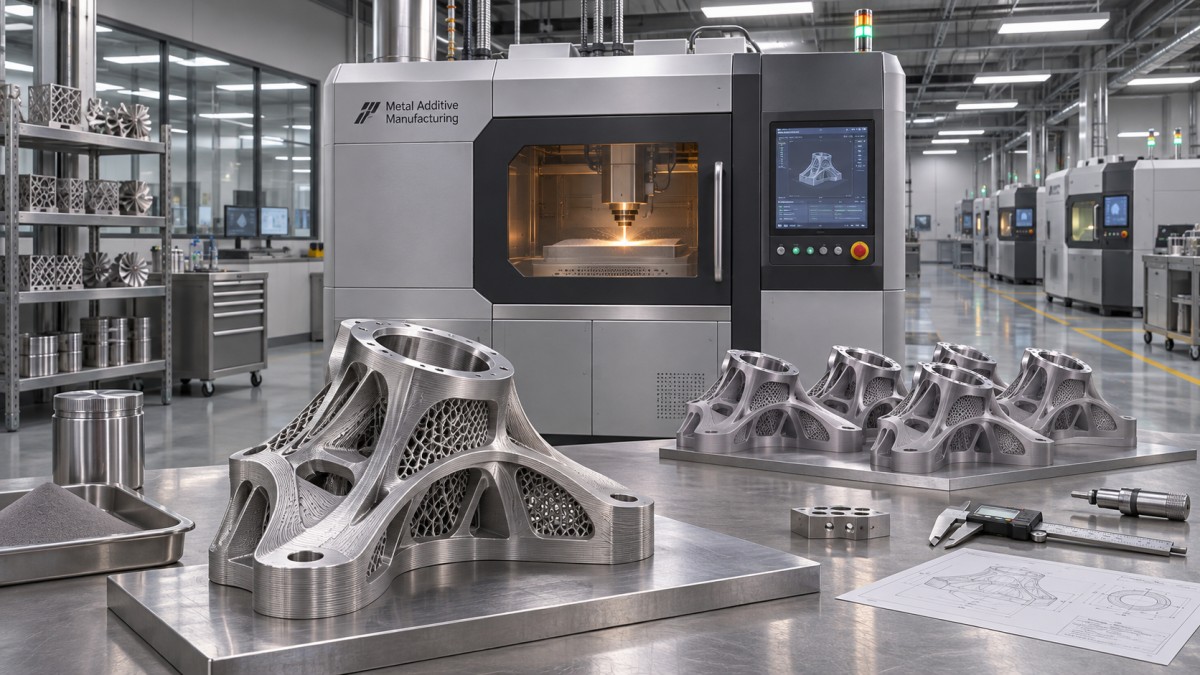
The feature was published around the opening of Formnext 2026, where the United Kingdom is the partner country. It describes the UK as maintaining a central position in additive manufacturing research and as having previously led in industrial-scale production.
At the same time, the report says the UK faces significant challenges in translating the technology into large-scale commercial production. It examines the bottlenecks between prototype development and actual volume manufacturing, along with the industry's future direction.
These are the facts available from the supplied title and summary. They do not identify a specific policy decision, regulatory amendment, technical standard, certification scheme or trade measure associated with the report.
Where the move beyond prototypes could affect business decisions
Manufacturers face a different production question
From an industry perspective, the gap identified in the feature suggests that a successful prototype may be only the starting point for a commercial production decision. A manufacturer considering a larger order could need to establish whether its process can deliver parts consistently across the quantities, schedules and specifications agreed with a buyer. The supplied information does not identify the causes of the reported bottleneck, so no single technical or regulatory obstacle should be assumed.
Analysis suggests that the distinction matters when manufacturers discuss quality evidence, production capacity and delivery commitments. Documents that support an initial demonstration may not, on their own, answer every question a customer asks before placing a repeat order. The relevant evidence would depend on the product and contract; the feature does not establish any new documentation obligation.
Buyers may need clearer acceptance terms
For procurement teams, the practical issue is whether a supplier can meet the intended use and delivery conditions beyond an initial sample. Buyers may wish to examine how specifications, inspection arrangements and acceptance criteria are defined when a project moves toward production. If these points remain open, differences in interpretation could affect quotations, approval schedules or delivery planning.
This is a potential commercial consequence, not a finding that UK buyers have changed their purchasing rules. The available summary does not identify a particular tender, customer requirement or sector-specific approval. Any applicable contractual or regulatory requirements would need to be checked for the actual product and transaction.
Suppliers and service providers could face closer scrutiny
Businesses supplying materials, equipment, testing or production support may also be involved when a prototype programme is assessed for scale. In analysis, a manufacturer planning repeat deliveries could ask suppliers for clearer information about material consistency, equipment capability, test methods or records needed to investigate a quality issue. What is requested would depend on the manufacturer's process and its agreement with the customer.
For testing and certification providers, the report may be a reason to follow how customers define production evidence. It does not establish that a new test, certificate or accreditation is required. Service providers should therefore distinguish between an existing obligation applicable to a specific order and a buyer's additional commercial preference.
Delivery and cross-border sales remain contract-specific
For sellers handling commercial orders, the transition to scale may bring questions about lead times, traceability and the allocation of responsibility if a delivered part does not meet an agreed specification. Where an order crosses a border, parties may also need to verify the trade and documentation requirements applicable to that transaction. These are considerations for assessment, not trade-rule changes reported by the feature.
The supplied information does not name an affected export market, product category or customs measure. Businesses should avoid treating the Formnext feature itself as evidence that tariffs, border procedures or market-access conditions have changed.
What to check before committing to production
Separate the prototype specification from the production agreement
A useful first step for a manufacturer and its buyer may be to compare the specification used for a prototype with the terms proposed for repeat production. They could identify which product characteristics need to be verified, who will perform the checks and what evidence will accompany delivery. If the intended quantity or operating conditions differ from the initial project, the parties can assess whether further validation is appropriate before fixing a delivery commitment.
This is a suggested review, not a requirement created by the reported event. The appropriate level of detail will vary with the product, its intended application and the terms agreed by the parties.
Verify the rules that actually apply to the product
Businesses considering commercial production may wish to check applicable legal requirements, customer specifications and any relevant standards or certification conditions for each product and destination. Particular attention could be paid to whether an approval relates to a design, a material, a process, a finished part or some combination of these. The input does not identify any specific standard or certification scheme, so those checks cannot be completed from the feature summary alone.
Where requirements are uncertain, procurement and technical teams could seek clarification before treating an order as ready for production. They may also find it useful to record which conditions are mandatory and which are negotiated customer terms. That distinction can help prevent an assumed industry practice from being presented as a formal rule.
Review evidence and supplier commitments together
Analysis suggests that production planning may benefit from a review of the records available at each stage: material information, process documentation, inspection results and delivery records, where relevant to the order. The purpose is to determine whether the proposed evidence would allow the parties to assess conformity and investigate a concern. The feature does not say that any of these documents are absent or that a new recordkeeping regime is in force.
Manufacturers could also discuss changes in materials, equipment or suppliers with their customers before making commitments that depend on a particular production route. Any need for additional verification should be assessed against the applicable requirements and contract, rather than assumed from the existence of a prototype.
Test delivery assumptions before offering scale
The commercialisation challenge described in the feature makes delivery planning another relevant area for review. A potential producer could compare the proposed order volume and schedule with its demonstrated capabilities, then discuss contingencies with suppliers and buyers. Alternative materials or production arrangements may be worth evaluating where appropriate, but their suitability and any need for customer approval would have to be established for the specific part.
Such preparation does not guarantee that a project can move into commercial production. It can, however, help the parties identify unanswered questions before they make contractual commitments. The supplied report gives no basis for predicting how quickly the wider bottleneck will be resolved.
A signal to examine, not a rule already in force
Editorial analysis suggests that the report is best understood as a signal to examine the conditions for commercialisation, rather than as evidence of a rule change. It places the gap between research and production in view, but the supplied summary does not say that an authority has proposed or implemented measures to close it. Nor does it establish that industry-wide procurement or certification practices have changed.
That distinction matters for commercial decisions. A company can reasonably review its own readiness for production while waiting for specific evidence about any policy proposal, standard revision or change in buyer expectations. Treating an observation about a sector as an enacted requirement could lead to unnecessary changes; ignoring product-specific obligations would carry a different risk. Each claimed requirement should be verified at its source and assessed against the relevant transaction.
Further information that could affect the assessment includes any later official policy detail, clarification of certification practice, changes in tender documents and feedback from businesses attempting to place or fulfil production orders. These are areas to monitor, not developments confirmed by the input.
From research capability to dependable delivery
The Formnext 2026 feature presents a measured challenge for UK additive manufacturing: strong research and previous industrial production leadership do not, by themselves, establish that large-scale commercial production is straightforward. The implications for an individual business will depend on its products, customers, suppliers and applicable requirements.
At this stage, the most defensible response is to treat the report as a prompt for targeted commercial and compliance review. Manufacturers and buyers can examine evidence, acceptance terms and delivery assumptions for their own projects while watching for substantiated policy, standards and market developments.
Basis for this report and points to verify
This article is based on the supplied news title, the statement that the event time was not specified, and the supplied event summary. No specific official source link was provided in the input; subsequent claims should therefore be checked as further information becomes available.
Relevant material for continued verification may include official announcements, regulatory publications, standards organisation documents, industry association information and authoritative media reporting. Particular points to monitor are policy details, certification interpretation, tender requirements, trade execution and feedback from businesses involved in commercial production.
Search News
Hot Articles
- Carbon Fiber StructuresHow to Specify Aerospace Carbon Fiber Assemblies for Lightweight, Load-Bearing PartsJul 11, 2026
- Machine VisionXiaomi, Alibaba DAMO Academy Drive Open-Source Robotics Model Ecosystem, Lowering Algorithm Development Barriers for Overseas SMEs Adopting Chinese Robotics SolutionsMar 30, 2026
- Cobots & ArmsShanxi 'AI+' Conference Showcases Embodied Intelligence with Multinational Buyer Engagement: Key Industry ImplicationsMar 30, 2026
Popular Tags
Recommended News
 Jul 11, 2026How to Specify Aerospace Carbon Fiber Assemblies for Lightweight, Load-Bearing PartsAerospace carbon fiber assemblies: learn how to specify laminate design, load data, joining methods, and inspection controls for lighter, reliable load-bearing aerospace parts.Elena Rostova (UAV Systems Researcher)
 Mar 30, 2026Xiaomi, Alibaba DAMO Academy Drive Open-Source Robotics Model Ecosystem, Lowering Algorithm Development Barriers for Overseas SMEs Adopting Chinese Robotics SolutionsXiaomi & Alibaba DAMO Academy's open-source robotics models lower algorithm barriers for global SMEs. Boost efficiency in manufacturing, logistics & smart retail with ROS 2 compatible solutions.TSV Data Lab
 Mar 30, 2026Shanxi 'AI+' Conference Showcases Embodied Intelligence with Multinational Buyer Engagement: Key Industry ImplicationsShanxi 'AI+' Conference highlights embodied intelligence with Tesla, Ubtech & Jiantao showcasing multimodal robotics. 40+ global buyers validated tech on-site, creating new B2B channels for industrial automation & AI solutions.Chen Wei (Automation Lead Engineer)
 Mar 30, 2026Zhongguancun Unveils 6G Integrated Sensing-Computing-Intelligence Platform to Empower Embodied Robots for Global Industrial ApplicationsZhongguancun's new 6G platform revolutionizes industrial robotics with <10ms latency, empowering global automotive, logistics & port automation. Discover how this tech boosts China's smart manufacturing exports.TSV Data Lab
 Mar 30, 2026Mech-Mind Tianjin Embodied Intelligence R&D and Production Base Goes Live, Cutting Delivery Time by 20%–30% for Global Customized AMR+Vision SolutionsMech-Mind's Tianjin AMR+Vision production base cuts delivery time by 20%-30% for欧美 & Latin American markets. Discover how this PLd-certified facility accelerates customized robotics solutions for smart manufacturing and logistics.Chen Wei (Automation Lead Engineer)
 Mar 30, 2026Boao Forum Reveals 'Co-evolution of Big and Small Brains' Trend in Humanoid Robots, China's Embodied Intelligence Accelerates Adaptation to Overseas Manufacturing Service ScenariosDiscover how China's humanoid robots, featuring 'Co-evolution of Big and Small Brains,' are revolutionizing global manufacturing. Learn about Embodied Tian Gong 3.0's ISO compliance and overseas deployment at Boao Forum 2026.Chen Wei (Automation Lead Engineer)
 Mar 30, 2026China Railway Industrial Secures Patent for Embodied Robotics in Material Handling, Boosting High-Precision Delivery Capabilities for Overseas Infrastructure and Manufacturing ProjectsChina Railway Industrial's new patent for embodied robotics in material handling boosts high-precision delivery for global infrastructure & manufacturing. Discover how this innovation enhances logistics accuracy in automotive, rail transit & EPC projects.Chen Wei (Automation Lead Engineer)
 Nov 19, 2026Choosing a Palletizing System for Bagged Food: Speed and Bag HandlingChoose the right palletizing system for bagged food. Compare throughput, bag handling, food safety, and robotic vs. conventional options.Chen Wei (Automation Lead Engineer)
 Nov 18, 2026Formnext 2026 Opens as Additive Manufacturing Advances Industrial ApplicationsFormnext 2026 highlights additive manufacturing innovations for industrial applications. Explore what they could mean for production, procurement and suppliers.Dr. Marcus Vance
 Nov 18, 2026Flexible Robotics Integration for High-Mix, Low-Volume ProductionFlexible robotics integration can make high-mix, low-volume production more adaptable. Explore practical ways to reduce changeover risk and plan a reliable robotic cell.Victor Lin (Chief Software Architect)
 Nov 17, 2026Formnext 2026: UK Additive Manufacturing Leads in Research but Faces Production BarriersUK additive manufacturing leads in research but faces barriers to production at scale. Explore the Formnext 2026 insights and what businesses should consider.Dr. Marcus Vance
 Nov 17, 2026Choosing Warehouse Automation Packaging Systems: Throughput and SpaceCompare warehouse automation packaging systems by throughput, footprint, and order mix. Discover how to choose a layout that meets peak demand.Victor Lin (Chief Software Architect)
 Nov 16, 2026China's October Industrial Robot Output Up 26%, 3D Printing Equipment Up 85.9%China's industrial robot output reportedly rose 26% in October, while 3D printing equipment grew 85.9%. Explore what the figures could mean for buyers.Chen Wei (Automation Lead Engineer)
 Nov 16, 2026Commercial Drones in North America: Choosing Payloads for Inspection and MappingCommercial drones North America: compare RGB, thermal and LiDAR payloads for inspection and mapping, and choose a system that delivers reliable data.Elena Rostova (UAV Systems Researcher)
 Nov 15, 2026Aerospace Materials in the UK: Choosing Metals and Composites for AircraftExplore aerospace materials UK teams use for aircraft. Compare metals and composites by weight, fatigue, manufacturing and approval needs to make informed choices.Dr. Marcus Vance
 Nov 14, 2026Ukraine Tests 3D-Printed Protective Structure Against M2 Heavy Machine-Gun FireUkraine’s 3D-printed protective structure reportedly resisted M2 heavy machine-gun fire. Explore the test’s limits and potential procurement implications.Dr. Marcus Vance
 Nov 14, 2026Rugged UAV Metrics: Assessing Wind Resistance, Endurance and IP RatingsCompare rugged UAV metrics for wind resistance, endurance and IP ratings. Learn what evidence to request and choose a platform fit for your mission.Chen Wei (Automation Lead Engineer)
 Nov 13, 2026Physical AI Gains Attention as Robot Investment Moves Beyond HardwarePhysical AI is reshaping robot investment beyond hardware. Explore what the shift toward perception and algorithms could mean for buyers and suppliers.Chen Wei (Automation Lead Engineer)
 Nov 13, 2026Precision Machining Benchmarks: A Guide to Tolerances and Surface FinishExplore this precision machining benchmarks guide to compare tolerances, surface finish, and inspection methods—and specify parts with confidence.Dr. Marcus Vance
 Nov 12, 2026Beijing Issues Three-Year Plan for Embodied AI Robotics IndustryBeijing’s embodied AI robotics plan targets leading humanoid robot makers by 2028. Explore its goals for supply chains, AI models and deployment.Chen Wei (Automation Lead Engineer)
 Nov 12, 2026Choosing an Edge AI Box for Robotics: Compute, Latency and I/OChoose the right edge AI box for robotics with practical guidance on compute, latency, sensor I/O and sustained performance. Explore the selection checklist.Chen Wei (Automation Lead Engineer)
 Nov 11, 2026Beijing Sets 200,000-Unit Annual Capacity Goal in Robotics PlanBeijing's robotics plan targets 200,000 units of annual capacity by 2027. Explore its technology goals, benchmark applications and adoption outlook.Chen Wei (Automation Lead Engineer)
 Nov 11, 2026Aero Engine Blade Machining: 5-Axis CNC Methods and ChallengesExplore aero engine blade machining, from 5-axis toolpaths to thin-wall challenges, surface integrity, and inspection. Learn what makes a process reliable.Dr. Marcus Vance
 Nov 10, 2026FAA Authorizes Skyways’ Long-Distance BVLOS Flights for Shell in Gulf of MexicoFAA authorizes Skyways’ long-distance BVLOS drone flights for Shell in the Gulf of Mexico. Discover what the decision means for offshore pipeline inspection.Elena Rostova (UAV Systems Researcher)