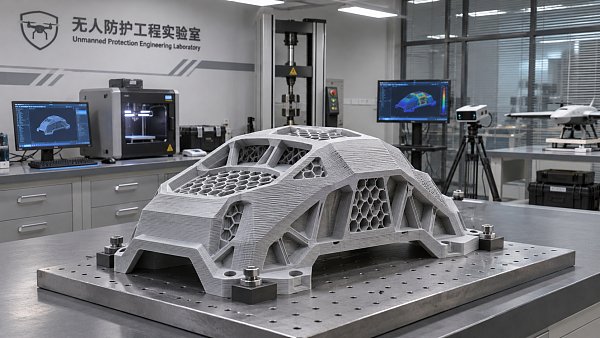
Ukraine Tests 3D-Printed Protective Structure Against M2 Heavy Machine-Gun Fire
Publication Date
author
Ukrainian researchers have produced a 3D-printed protective structure that resisted Browning M2 heavy machine-gun fire in a live-fire test, according to a report cited from Ukraine’s national news agency. The date of the event was not specified. The information provided identifies no new policy, standard or certification requirement, but the reported result raises questions for manufacturers, testing providers and defence purchasers about how such performance could be documented and assessed in future procurement.
What the reported live-fire test established
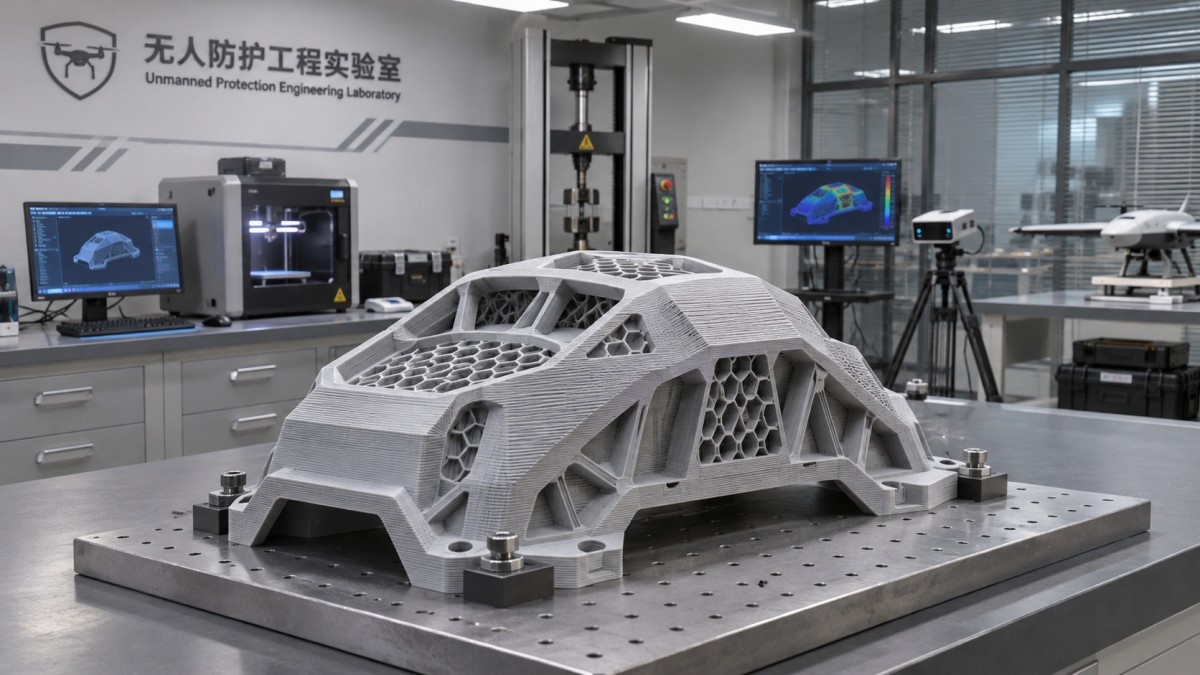
The supplied report states that researchers in Ukraine used 3D printing to manufacture a new protective structure. In live-fire testing, the structure successfully resisted fire from a Browning M2 heavy machine gun using 12.7 mm ammunition. The event illustrates an application of additive manufacturing to protective components with complex geometries and to defence engineering.
The supplied information does not specify when the event occurred. It also does not describe the structure’s material, dimensions or production process, or provide the test conditions and underlying report.
How a test result could affect the path to procurement
From an industry perspective, the immediate issue is the distance between a reported demonstration and an accepted procurement specification. The information supplied does not establish that any purchasing authority has changed its rules or that the structure has received certification. Its relevance to commercial activity therefore lies in questions that buyers and suppliers may need to resolve if they consider similar components for a defined application.
Manufacturers face questions about repeatability
For additive manufacturers, the reported use of a complex protective geometry may draw attention to the relationship between design, production and demonstrated performance. A manufacturer considering a comparable application could be asked to show that components made repeatedly under controlled conditions perform as intended, rather than relying on a description of one reported test.
Analysis suggests that manufacturing records could become useful in discussions with prospective buyers: they may help explain which design, materials and production settings correspond to a particular sample. The input does not establish what records were kept for the reported structure, which process was used or whether repeatability was assessed. Those points would need verification before any wider performance claim could be made.
Buyers may need more precise evidence
For defence purchasers and engineering contractors, a result described as resisting a particular weapon’s fire is relevant only within the limits of the test that produced it. A prospective buyer could seek details of the tested configuration, the conditions of the firing and the criteria used to judge the result. These details would help determine whether the evidence relates to the proposed use and whether additional evaluation is appropriate.
That is a purchasing consideration, not a newly announced requirement. The supplied information does not say whether the tested structure is available for purchase, whether any tender is planned or whether a buyer has accepted the result. It also does not establish how the component would perform under other conditions.
Testing and certification decisions remain open
Testing providers and organizations involved in conformity assessment may have a role if a purchaser later seeks independent evidence for a similar component. Analysis suggests that the scope of a test, the identity of the tested configuration and the way results are reported could affect whether the evidence is useful in a procurement decision.
The input names no applicable certification scheme or standard and does not say that certification was obtained or required. A provider should therefore avoid treating the reported live-fire result as a substitute for whatever assessment a future customer or applicable authority may specify. Equally, it would be premature to conclude that a new certification route is being introduced.
Delivery and supply arrangements could depend on qualification
Suppliers of production equipment, materials and related services may face questions if a buyer moves from a demonstration to an order. Analysis suggests that a change in a material, manufacturing process or design could prompt a buyer to ask whether earlier evidence remains representative. The answer would depend on the proposed use, the contract and any applicable requirements, none of which are described in the input.
For a contractor planning delivery, the time needed to agree on a test scope or review technical documents could matter as much as production time. This is a scenario for planning, not evidence of a delay in the reported project. The information provided contains no delivery schedule, supplier arrangement or procurement commitment.
What companies can check before relying on the result
Request the test basis and its limits
A company evaluating the report could first seek the underlying test documentation and identify exactly what was tested. Useful questions include how the protective structure was configured, how the firing conditions were defined and what constituted successful resistance. The supplied summary does not answer those questions, so they should remain open rather than be filled by assumption.
It may also be useful to distinguish the tested sample from any proposed production item. If the design or production method changes, a buyer and supplier could discuss whether the existing evidence still applies and what further validation, if any, would support the intended use. The appropriate approach would depend on the evidence and the purchaser’s specifications.
Align technical documents with the proposed use
Before submitting a bid or making a performance claim, a supplier could compare its available documentation with the language in the relevant request for proposals or contract. In a potential procurement involving printed protective components, that review might cover the component configuration, the test report, production records and any buyer-specified acceptance criteria.
Analysis suggests that precise wording matters: a statement that a tested structure resisted M2 fire should not be expanded into a claim that every printed component, geometry or production batch offers the same protection. The reported result concerns the structure described in the supplied summary, while the evidence needed for a different item would have to be assessed separately.
Verify applicable rules and commercial conditions
Companies considering a transaction could check the requirements applicable to the actual product, destination, parties and intended use. Depending on those circumstances, a purchaser or supplier may need to review contractual specifications, authorization conditions, trade documentation or other applicable controls. The input does not identify a transaction or establish which rules would apply, so no particular authorization or document can be inferred from it.
Where a project involves more than one supplier, the parties could also agree on which version of the design and which evidence accompany delivery. Such preparation may make it easier to address questions about the relationship between the tested item and the delivered item. It does not imply that a new traceability rule has been adopted for this technology.
Compare alternatives on a consistent basis
A purchaser considering a printed component alongside another protective solution could define the intended application and compare the available evidence against the same purchasing criteria. Where the test conditions or documentation differ, further clarification may be needed before the results can support a meaningful comparison.
This is an analytical suggestion rather than a finding that the reported structure outperforms an alternative. The input provides no comparison, cost information, service-life data or basis for judging suitability beyond the reported live-fire result.
Why this is a signal to monitor, not a confirmed rule change
At this stage, the report is best understood as a technical demonstration with possible implications for future purchasing and assessment. It is not evidence that a policy has been adopted, a standard revised or a certification obligation introduced. The absence of an event date and detailed test information also limits what can be inferred about the maturity or current status of the work.
Editorial analysis suggests that the next meaningful development would be more specific evidence: the publication of test conditions, a description of the production configuration, or an official or purchasing document explaining how a comparable result would be assessed. Industry feedback could also clarify whether manufacturers and buyers consider the available evidence sufficient for a particular application.
Any later change in tender language, certification practice or trade execution would need to be established from the relevant documents. Until then, companies can monitor those channels without treating a possible future requirement as an existing obligation. A reported test may inform questions for a supplier; it does not by itself settle the contractual or regulatory status of a product.
Keeping the reported performance in context
The reported test connects additive manufacturing with a specific protective engineering application: a 3D-printed structure reportedly resisted 12.7 mm fire from a Browning M2. For industry participants, the practical significance lies in examining how that result was produced and whether comparable evidence could support a defined purchase or delivery.
A measured response is to treat the report as a development to verify and monitor. Procurement, compliance and certification conclusions should follow the applicable documents and evidence for the actual component, rather than be inferred from the summary alone.
Basis for this article and further verification
This article is based on the supplied news title, event-time information and event summary, which cite Ukraine’s national news agency. A specific official source link was not provided in the input and remains to be verified. The event date was also not specified.
Further checks could include the underlying media report, any official announcements, relevant testing documents, purchasing specifications and applicable standards or regulatory publications. Subsequent certification interpretations, tender changes, trade execution and feedback from manufacturers and buyers would also need to be observed before drawing conclusions about wider implementation.
Search News
Hot Articles
- Carbon Fiber StructuresHow to Specify Aerospace Carbon Fiber Assemblies for Lightweight, Load-Bearing PartsJul 11, 2026
- Machine VisionXiaomi, Alibaba DAMO Academy Drive Open-Source Robotics Model Ecosystem, Lowering Algorithm Development Barriers for Overseas SMEs Adopting Chinese Robotics SolutionsMar 30, 2026
- Cobots & ArmsShanxi 'AI+' Conference Showcases Embodied Intelligence with Multinational Buyer Engagement: Key Industry ImplicationsMar 30, 2026
Popular Tags
Recommended News
 Jul 11, 2026How to Specify Aerospace Carbon Fiber Assemblies for Lightweight, Load-Bearing PartsAerospace carbon fiber assemblies: learn how to specify laminate design, load data, joining methods, and inspection controls for lighter, reliable load-bearing aerospace parts.Elena Rostova (UAV Systems Researcher)
 Mar 30, 2026Xiaomi, Alibaba DAMO Academy Drive Open-Source Robotics Model Ecosystem, Lowering Algorithm Development Barriers for Overseas SMEs Adopting Chinese Robotics SolutionsXiaomi & Alibaba DAMO Academy's open-source robotics models lower algorithm barriers for global SMEs. Boost efficiency in manufacturing, logistics & smart retail with ROS 2 compatible solutions.TSV Data Lab
 Mar 30, 2026Shanxi 'AI+' Conference Showcases Embodied Intelligence with Multinational Buyer Engagement: Key Industry ImplicationsShanxi 'AI+' Conference highlights embodied intelligence with Tesla, Ubtech & Jiantao showcasing multimodal robotics. 40+ global buyers validated tech on-site, creating new B2B channels for industrial automation & AI solutions.Chen Wei (Automation Lead Engineer)
 Mar 30, 2026Zhongguancun Unveils 6G Integrated Sensing-Computing-Intelligence Platform to Empower Embodied Robots for Global Industrial ApplicationsZhongguancun's new 6G platform revolutionizes industrial robotics with <10ms latency, empowering global automotive, logistics & port automation. Discover how this tech boosts China's smart manufacturing exports.TSV Data Lab
 Mar 30, 2026Mech-Mind Tianjin Embodied Intelligence R&D and Production Base Goes Live, Cutting Delivery Time by 20%–30% for Global Customized AMR+Vision SolutionsMech-Mind's Tianjin AMR+Vision production base cuts delivery time by 20%-30% for欧美 & Latin American markets. Discover how this PLd-certified facility accelerates customized robotics solutions for smart manufacturing and logistics.Chen Wei (Automation Lead Engineer)
 Mar 30, 2026Boao Forum Reveals 'Co-evolution of Big and Small Brains' Trend in Humanoid Robots, China's Embodied Intelligence Accelerates Adaptation to Overseas Manufacturing Service ScenariosDiscover how China's humanoid robots, featuring 'Co-evolution of Big and Small Brains,' are revolutionizing global manufacturing. Learn about Embodied Tian Gong 3.0's ISO compliance and overseas deployment at Boao Forum 2026.Chen Wei (Automation Lead Engineer)
 Mar 30, 2026China Railway Industrial Secures Patent for Embodied Robotics in Material Handling, Boosting High-Precision Delivery Capabilities for Overseas Infrastructure and Manufacturing ProjectsChina Railway Industrial's new patent for embodied robotics in material handling boosts high-precision delivery for global infrastructure & manufacturing. Discover how this innovation enhances logistics accuracy in automotive, rail transit & EPC projects.Chen Wei (Automation Lead Engineer)
 Nov 19, 2026Choosing a Palletizing System for Bagged Food: Speed and Bag HandlingChoose the right palletizing system for bagged food. Compare throughput, bag handling, food safety, and robotic vs. conventional options.Chen Wei (Automation Lead Engineer)
 Nov 18, 2026Formnext 2026 Opens as Additive Manufacturing Advances Industrial ApplicationsFormnext 2026 highlights additive manufacturing innovations for industrial applications. Explore what they could mean for production, procurement and suppliers.Dr. Marcus Vance
 Nov 18, 2026Flexible Robotics Integration for High-Mix, Low-Volume ProductionFlexible robotics integration can make high-mix, low-volume production more adaptable. Explore practical ways to reduce changeover risk and plan a reliable robotic cell.Victor Lin (Chief Software Architect)
 Nov 17, 2026Formnext 2026: UK Additive Manufacturing Leads in Research but Faces Production BarriersUK additive manufacturing leads in research but faces barriers to production at scale. Explore the Formnext 2026 insights and what businesses should consider.Dr. Marcus Vance
 Nov 17, 2026Choosing Warehouse Automation Packaging Systems: Throughput and SpaceCompare warehouse automation packaging systems by throughput, footprint, and order mix. Discover how to choose a layout that meets peak demand.Victor Lin (Chief Software Architect)
 Nov 16, 2026China's October Industrial Robot Output Up 26%, 3D Printing Equipment Up 85.9%China's industrial robot output reportedly rose 26% in October, while 3D printing equipment grew 85.9%. Explore what the figures could mean for buyers.Chen Wei (Automation Lead Engineer)
 Nov 16, 2026Commercial Drones in North America: Choosing Payloads for Inspection and MappingCommercial drones North America: compare RGB, thermal and LiDAR payloads for inspection and mapping, and choose a system that delivers reliable data.Elena Rostova (UAV Systems Researcher)
 Nov 15, 2026Aerospace Materials in the UK: Choosing Metals and Composites for AircraftExplore aerospace materials UK teams use for aircraft. Compare metals and composites by weight, fatigue, manufacturing and approval needs to make informed choices.Dr. Marcus Vance
 Nov 14, 2026Ukraine Tests 3D-Printed Protective Structure Against M2 Heavy Machine-Gun FireUkraine’s 3D-printed protective structure reportedly resisted M2 heavy machine-gun fire. Explore the test’s limits and potential procurement implications.Dr. Marcus Vance
 Nov 14, 2026Rugged UAV Metrics: Assessing Wind Resistance, Endurance and IP RatingsCompare rugged UAV metrics for wind resistance, endurance and IP ratings. Learn what evidence to request and choose a platform fit for your mission.Chen Wei (Automation Lead Engineer)
 Nov 13, 2026Physical AI Gains Attention as Robot Investment Moves Beyond HardwarePhysical AI is reshaping robot investment beyond hardware. Explore what the shift toward perception and algorithms could mean for buyers and suppliers.Chen Wei (Automation Lead Engineer)
 Nov 13, 2026Precision Machining Benchmarks: A Guide to Tolerances and Surface FinishExplore this precision machining benchmarks guide to compare tolerances, surface finish, and inspection methods—and specify parts with confidence.Dr. Marcus Vance
 Nov 12, 2026Beijing Issues Three-Year Plan for Embodied AI Robotics IndustryBeijing’s embodied AI robotics plan targets leading humanoid robot makers by 2028. Explore its goals for supply chains, AI models and deployment.Chen Wei (Automation Lead Engineer)
 Nov 12, 2026Choosing an Edge AI Box for Robotics: Compute, Latency and I/OChoose the right edge AI box for robotics with practical guidance on compute, latency, sensor I/O and sustained performance. Explore the selection checklist.Chen Wei (Automation Lead Engineer)
 Nov 11, 2026Beijing Sets 200,000-Unit Annual Capacity Goal in Robotics PlanBeijing's robotics plan targets 200,000 units of annual capacity by 2027. Explore its technology goals, benchmark applications and adoption outlook.Chen Wei (Automation Lead Engineer)
 Nov 11, 2026Aero Engine Blade Machining: 5-Axis CNC Methods and ChallengesExplore aero engine blade machining, from 5-axis toolpaths to thin-wall challenges, surface integrity, and inspection. Learn what makes a process reliable.Dr. Marcus Vance
 Nov 10, 2026FAA Authorizes Skyways’ Long-Distance BVLOS Flights for Shell in Gulf of MexicoFAA authorizes Skyways’ long-distance BVLOS drone flights for Shell in the Gulf of Mexico. Discover what the decision means for offshore pipeline inspection.Elena Rostova (UAV Systems Researcher)