Flexible Robotics Integration for High-Mix, Low-Volume Production
Publication Date
author
High-mix, low-volume production puts project managers under pressure to automate without sacrificing flexibility or extending changeover times. Flexible robotics integration can address that challenge, but success depends on more than selecting a versatile robot. End-effector design, programming effort, cycle time, repeatability, and interfaces with existing equipment all shape project risk and return on investment. The practical question is not whether a robot can handle one part. It is whether the complete cell can move between part families reliably, within the time and skills available on the factory floor.
Define the production envelope before selecting hardware
A cell built around the most common component may perform well during a demonstration and struggle as soon as production schedules change. Start with the expected product families, not an individual part number. Map their dimensions, mass, center of gravity, surface condition, tolerances, orientation on arrival, and required operations. Include packaging and presentation: a part delivered in a consistent tray is a different automation problem from the same part arriving loose in a bin.
Then identify the exceptions. A casting with a variable surface, a thin machined component that can deform under clamping pressure, or an assembly with an obstructed gripping face may determine the cell architecture more than the average product does. These outliers do not all need to be automated on day one. They do need an explicit disposition: covered by the initial design, deferred to a later phase, or retained as a manual process.
Demand variability matters just as much as geometric variability. A part family with modest annual volume may still justify automation if it arrives in predictable batches and shares tooling with other products. Conversely, a high number of occasional variants can consume the business case through programming, validation, and fixture changes. Ask production planners for the actual mix and sequence where available, rather than relying only on annual volume forecasts.
Design around changeover, not just robot motion
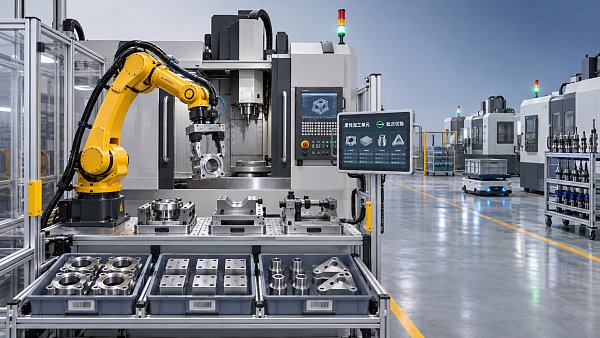
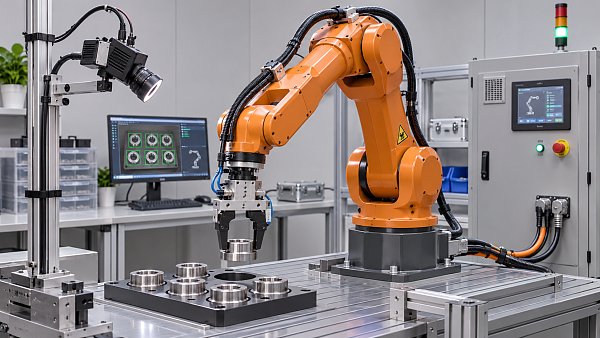
The end effector is often the real constraint on flexibility. A parallel gripper may cover a useful range of parts, but jaw geometry, gripping force, access, and surface protection still need checking. Vacuum tooling can simplify handling of suitable flat surfaces, while porous materials, uneven textures, and contamination may make it unreliable. A tool changer broadens the range of operations, but adds cost, interfaces, maintenance points, and time to each change.
Compare these options against a controlled set of representative parts. For each one, test the grip through acceleration, orientation changes, and the intended process forces—not merely at rest. If a dropped part could damage a machine or create a hazard, define how loss of grip will be detected and what the cell should do next.
Fixtures deserve the same scrutiny. A modular fixture can reduce hardware changes, but only if locating features and clamping methods are repeatable across the intended family. Adjustable stops are useful until an operator has to interpret an ambiguous setting between every batch. Where possible, design for positive location, clear setting references, and a check that confirms the correct fixture or configuration is installed.
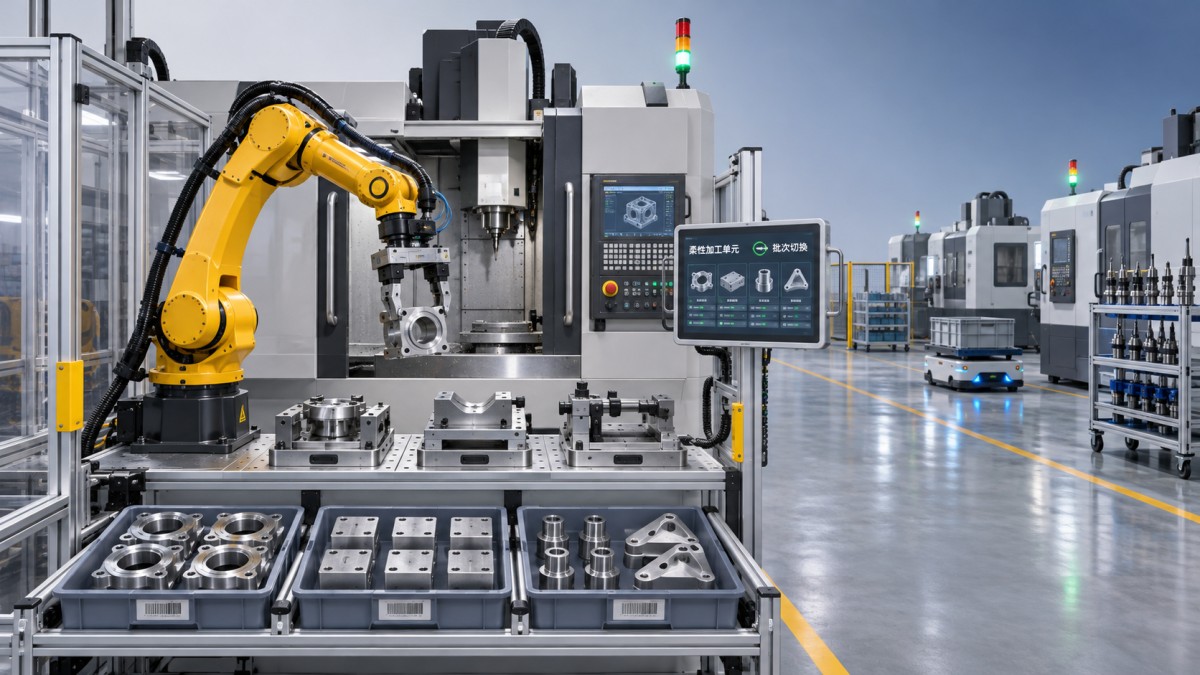
Measure changeover from the last acceptable part of one batch to the first acceptable part of the next. Include tool swaps, fixture adjustment, program selection, inspection, and recovery from a failed setup. A robot program that loads quickly does not compensate for a lengthy manual alignment or repeated first-article corrections.
Separate repeatability from the accuracy the process needs
Robot repeatability describes how consistently the robot returns to a commanded pose under specified conditions; it is not the same as absolute positioning accuracy. Neither number alone establishes the accuracy of a finished process. Tool deflection, fixture variation, calibration, thermal conditions, part presentation, and wear all contribute to the result at the point where work is performed.
For machine tending, the important question might be whether the part seats reliably in a chuck without interference. For dispensing, it may be bead position and consistency across a contoured surface. For inspection, it may be whether lighting, lens selection, calibration, and part location allow the required defect to be distinguished from normal variation. A robot can repeat its path faithfully while the overall process still misses its requirement.
Build a tolerance budget from the process requirement backward. Identify which sources of variation are measured, which are estimated, and which depend on the supplier’s proposed design. Where the margin is narrow, require a representative trial with the actual tool, payload, reach, speed, and part presentation. A favorable result with a lightweight demonstration gripper at an easy pose is not evidence for a heavy production tool working near the edge of the robot’s reach.
Decide where adaptability should live
There is no single best balance between mechanical constraint, sensing, and software. A precisely located tray may be cheaper and easier to support than a vision-guided bin-picking system. On the other hand, if upstream presentation changes frequently or manual tray loading becomes the bottleneck, additional sensing may be justified.
Vision adds capabilities but also introduces its own acceptance questions. Specify the part surfaces, lighting conditions, occlusion, field of view, and allowable pose error. Test difficult but plausible conditions, including reflective finishes, mixed orientations, and contaminated parts where relevant. Define what happens when confidence is insufficient: reject the pick, request an operator, or route the part to manual handling. A safe and observable failure is preferable to a system that guesses.
Programming strategy should follow the same logic. Parameterized recipes can make variants easier to introduce, but only if the variation is genuinely captured by a manageable set of inputs. A new part may still require reachability checks, collision review, grip validation, and process qualification. Offline programming can reduce disruption on the production floor, provided the digital model is maintained and the team has a plan for calibration and on-machine verification.
Clarify who owns those tasks after commissioning. If every minor recipe change requires the integrator to attend site, the cell may be technically flexible but operationally dependent. Training, access permissions, version control, and a documented rollback procedure belong in the project scope, not in an informal handover conversation.
Treat equipment interfaces as part of the process
Integration risk frequently sits between machines. A robot may be ready to unload a part, but the machine tool may still be clearing chips, waiting for a door confirmation, or reporting a fault that the robot cannot interpret. Map the sequence of operations and signal ownership before finalizing the layout: ready, request, complete, fault, reset, and any required part or recipe identification.
For existing equipment, verify available interfaces and access with the machine owner and relevant supplier. Do not assume that a listed communication protocol exposes every status or command the project needs. Legacy machines may require additional hardware or modifications; those changes can affect schedule, support responsibilities, and safety validation.
Recovery deserves its own sequence diagram. What happens after an interrupted cycle, a power loss, a missed pick, or a machine fault with a part still in the gripper? Operators need a clear view of part location and machine state, plus an authorized way to restore the cell without creating a second problem. If traceability is required, define how part identity and process records are preserved through rework and interruptions.
Use the cycle-time model to expose bottlenecks
A robot’s nominal speed is not cell throughput. Map the complete sequence, including door movement, machine processing, pick verification, inspection, tool changes, and any time the operator spends replenishing parts. Separate activities that can run in parallel from those that must be sequential. For a machine-tending cell, the longest recurring constraint may be the machine cycle rather than the robot; in another application, part presentation or inspection can dominate.
Model the production mix as well as the best-running part. Include scheduled changeovers and an explicit allowance for interruptions based on site evidence or clearly stated assumptions. If there is no reliable downtime history, show a range and update it after trials rather than presenting a single calculated output as a commitment.
The financial comparison should include engineering, guarding, installation, tooling, software, training, maintenance, and the labor needed to support changeovers. Compare those costs with a credible manual or semi-automated alternative, using the same demand assumptions. A flexible cell may be the right investment even when it is not the fastest option for one product, but that conclusion should rest on the expected mix—not on an unspecified promise of future adaptability.
Set acceptance criteria that reflect production
The most useful supplier comparison is a written test plan tied to the production envelope. TechStat Vanguard’s data-driven approach is a useful principle here: ask for measurement conditions and evidence, not broad claims about versatility. Agree on the representative parts, operating conditions, inspection method, responsibilities, and pass criteria before procurement is complete.
A factory acceptance test can demonstrate the integrated sequence before shipment; a site acceptance test should then verify performance with the actual utilities, upstream and downstream equipment, operators, and production environment. Neither test should cover only the easiest part. Include the parts that challenge grip, reach, tolerance, or presentation, along with at least one realistic changeover and defined fault-recovery exercises.
Safety must be assessed for the complete application, including the robot, tooling, workpiece, surrounding machinery, access, and operating modes. A collaborative robot does not automatically make an installation safe for unrestricted human contact. Determine applicable requirements with qualified personnel and verify protective measures during commissioning and after relevant changes.
Before approving the final design, ask the integrator to show exactly how a new, in-scope part moves from engineering data to an approved production recipe—and which steps the site team can perform without external support. That walkthrough often reveals the difference between a cell that can be reconfigured in principle and one that can be changed over on a busy shift.
Search News
Hot Articles
- Carbon Fiber StructuresHow to Specify Aerospace Carbon Fiber Assemblies for Lightweight, Load-Bearing PartsJul 11, 2026
- Machine VisionXiaomi, Alibaba DAMO Academy Drive Open-Source Robotics Model Ecosystem, Lowering Algorithm Development Barriers for Overseas SMEs Adopting Chinese Robotics SolutionsMar 30, 2026
- Cobots & ArmsShanxi 'AI+' Conference Showcases Embodied Intelligence with Multinational Buyer Engagement: Key Industry ImplicationsMar 30, 2026
Popular Tags
Recommended News
 Jul 11, 2026How to Specify Aerospace Carbon Fiber Assemblies for Lightweight, Load-Bearing PartsAerospace carbon fiber assemblies: learn how to specify laminate design, load data, joining methods, and inspection controls for lighter, reliable load-bearing aerospace parts.Elena Rostova (UAV Systems Researcher)
 Mar 30, 2026Xiaomi, Alibaba DAMO Academy Drive Open-Source Robotics Model Ecosystem, Lowering Algorithm Development Barriers for Overseas SMEs Adopting Chinese Robotics SolutionsXiaomi & Alibaba DAMO Academy's open-source robotics models lower algorithm barriers for global SMEs. Boost efficiency in manufacturing, logistics & smart retail with ROS 2 compatible solutions.TSV Data Lab
 Mar 30, 2026Shanxi 'AI+' Conference Showcases Embodied Intelligence with Multinational Buyer Engagement: Key Industry ImplicationsShanxi 'AI+' Conference highlights embodied intelligence with Tesla, Ubtech & Jiantao showcasing multimodal robotics. 40+ global buyers validated tech on-site, creating new B2B channels for industrial automation & AI solutions.Chen Wei (Automation Lead Engineer)
 Mar 30, 2026Zhongguancun Unveils 6G Integrated Sensing-Computing-Intelligence Platform to Empower Embodied Robots for Global Industrial ApplicationsZhongguancun's new 6G platform revolutionizes industrial robotics with <10ms latency, empowering global automotive, logistics & port automation. Discover how this tech boosts China's smart manufacturing exports.TSV Data Lab
 Mar 30, 2026Mech-Mind Tianjin Embodied Intelligence R&D and Production Base Goes Live, Cutting Delivery Time by 20%–30% for Global Customized AMR+Vision SolutionsMech-Mind's Tianjin AMR+Vision production base cuts delivery time by 20%-30% for欧美 & Latin American markets. Discover how this PLd-certified facility accelerates customized robotics solutions for smart manufacturing and logistics.Chen Wei (Automation Lead Engineer)
 Mar 30, 2026Boao Forum Reveals 'Co-evolution of Big and Small Brains' Trend in Humanoid Robots, China's Embodied Intelligence Accelerates Adaptation to Overseas Manufacturing Service ScenariosDiscover how China's humanoid robots, featuring 'Co-evolution of Big and Small Brains,' are revolutionizing global manufacturing. Learn about Embodied Tian Gong 3.0's ISO compliance and overseas deployment at Boao Forum 2026.Chen Wei (Automation Lead Engineer)
 Mar 30, 2026China Railway Industrial Secures Patent for Embodied Robotics in Material Handling, Boosting High-Precision Delivery Capabilities for Overseas Infrastructure and Manufacturing ProjectsChina Railway Industrial's new patent for embodied robotics in material handling boosts high-precision delivery for global infrastructure & manufacturing. Discover how this innovation enhances logistics accuracy in automotive, rail transit & EPC projects.Chen Wei (Automation Lead Engineer)
 Nov 19, 2026Choosing a Palletizing System for Bagged Food: Speed and Bag HandlingChoose the right palletizing system for bagged food. Compare throughput, bag handling, food safety, and robotic vs. conventional options.Chen Wei (Automation Lead Engineer)
 Nov 18, 2026Formnext 2026 Opens as Additive Manufacturing Advances Industrial ApplicationsFormnext 2026 highlights additive manufacturing innovations for industrial applications. Explore what they could mean for production, procurement and suppliers.Dr. Marcus Vance
 Nov 18, 2026Flexible Robotics Integration for High-Mix, Low-Volume ProductionFlexible robotics integration can make high-mix, low-volume production more adaptable. Explore practical ways to reduce changeover risk and plan a reliable robotic cell.Victor Lin (Chief Software Architect)
 Nov 17, 2026Formnext 2026: UK Additive Manufacturing Leads in Research but Faces Production BarriersUK additive manufacturing leads in research but faces barriers to production at scale. Explore the Formnext 2026 insights and what businesses should consider.Dr. Marcus Vance
 Nov 17, 2026Choosing Warehouse Automation Packaging Systems: Throughput and SpaceCompare warehouse automation packaging systems by throughput, footprint, and order mix. Discover how to choose a layout that meets peak demand.Victor Lin (Chief Software Architect)
 Nov 16, 2026China's October Industrial Robot Output Up 26%, 3D Printing Equipment Up 85.9%China's industrial robot output reportedly rose 26% in October, while 3D printing equipment grew 85.9%. Explore what the figures could mean for buyers.Chen Wei (Automation Lead Engineer)
 Nov 16, 2026Commercial Drones in North America: Choosing Payloads for Inspection and MappingCommercial drones North America: compare RGB, thermal and LiDAR payloads for inspection and mapping, and choose a system that delivers reliable data.Elena Rostova (UAV Systems Researcher)
 Nov 15, 2026Aerospace Materials in the UK: Choosing Metals and Composites for AircraftExplore aerospace materials UK teams use for aircraft. Compare metals and composites by weight, fatigue, manufacturing and approval needs to make informed choices.Dr. Marcus Vance
 Nov 14, 2026Ukraine Tests 3D-Printed Protective Structure Against M2 Heavy Machine-Gun FireUkraine’s 3D-printed protective structure reportedly resisted M2 heavy machine-gun fire. Explore the test’s limits and potential procurement implications.Dr. Marcus Vance
 Nov 14, 2026Rugged UAV Metrics: Assessing Wind Resistance, Endurance and IP RatingsCompare rugged UAV metrics for wind resistance, endurance and IP ratings. Learn what evidence to request and choose a platform fit for your mission.Chen Wei (Automation Lead Engineer)
 Nov 13, 2026Physical AI Gains Attention as Robot Investment Moves Beyond HardwarePhysical AI is reshaping robot investment beyond hardware. Explore what the shift toward perception and algorithms could mean for buyers and suppliers.Chen Wei (Automation Lead Engineer)
 Nov 13, 2026Precision Machining Benchmarks: A Guide to Tolerances and Surface FinishExplore this precision machining benchmarks guide to compare tolerances, surface finish, and inspection methods—and specify parts with confidence.Dr. Marcus Vance
 Nov 12, 2026Beijing Issues Three-Year Plan for Embodied AI Robotics IndustryBeijing’s embodied AI robotics plan targets leading humanoid robot makers by 2028. Explore its goals for supply chains, AI models and deployment.Chen Wei (Automation Lead Engineer)
 Nov 12, 2026Choosing an Edge AI Box for Robotics: Compute, Latency and I/OChoose the right edge AI box for robotics with practical guidance on compute, latency, sensor I/O and sustained performance. Explore the selection checklist.Chen Wei (Automation Lead Engineer)
 Nov 11, 2026Beijing Sets 200,000-Unit Annual Capacity Goal in Robotics PlanBeijing's robotics plan targets 200,000 units of annual capacity by 2027. Explore its technology goals, benchmark applications and adoption outlook.Chen Wei (Automation Lead Engineer)
 Nov 11, 2026Aero Engine Blade Machining: 5-Axis CNC Methods and ChallengesExplore aero engine blade machining, from 5-axis toolpaths to thin-wall challenges, surface integrity, and inspection. Learn what makes a process reliable.Dr. Marcus Vance
 Nov 10, 2026FAA Authorizes Skyways’ Long-Distance BVLOS Flights for Shell in Gulf of MexicoFAA authorizes Skyways’ long-distance BVLOS drone flights for Shell in the Gulf of Mexico. Discover what the decision means for offshore pipeline inspection.Elena Rostova (UAV Systems Researcher)