Indian Drone Federation Flags Chinese Components in Defence Procurement
Publication Date
author
The Drone Federation of India (DFI) has written to India’s Defence Secretary and Chief of Defence Staff, warning that procurement requirements involving Chinese drones and components create what it calls a risk within the system. The organisation is urging faster localisation of the defence supply chain in response to national security concerns and potential export controls.
DFI said 689 military and government tenders on India’s Government e-Marketplace (GeM) explicitly required Chinese drones or components between March 2021 and November 2026. The figure is the federation’s stated count of tenders; it does not establish how many contracts were awarded or what equipment was ultimately supplied.
Why tender specifications matter
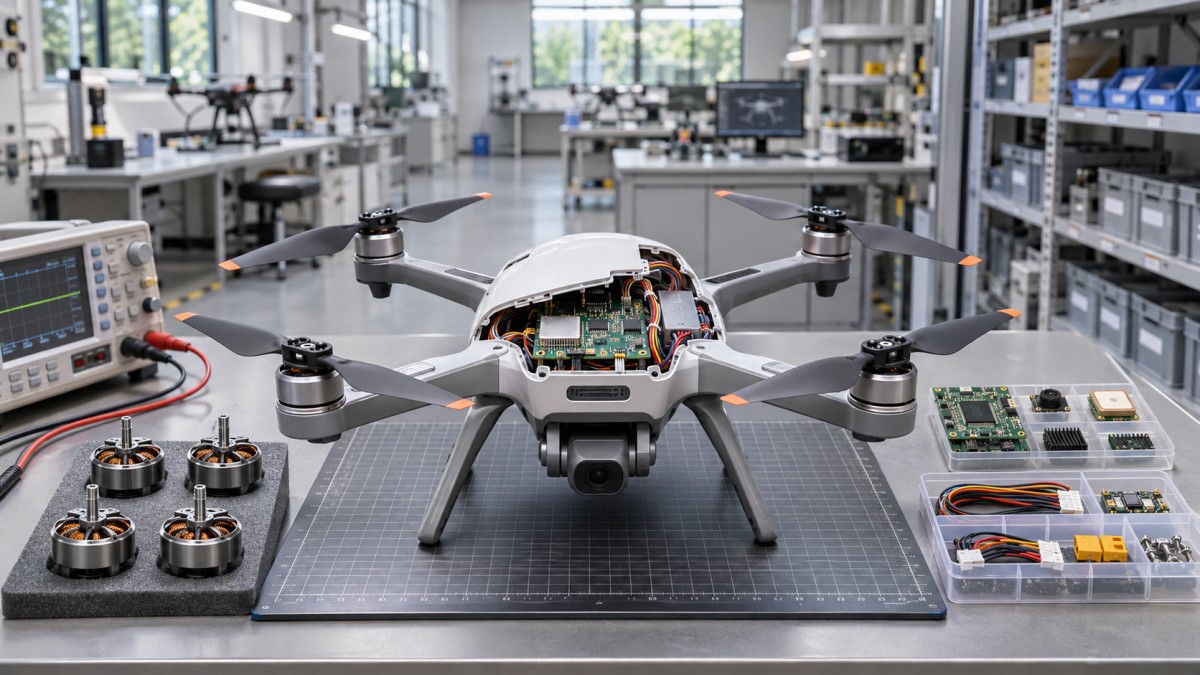
The federation’s concern centres on what buyers specify before a purchase is made. If a tender explicitly calls for a particular source of equipment or components, that requirement can shape which suppliers are able to bid and what they must include in their proposals. DFI’s intervention therefore places procurement specifications, as well as the origin of finished drones, at the centre of the supply-chain discussion.
The distinction is relevant to localisation. A supplier may assemble a drone locally while relying on components sourced elsewhere. Assessing how far a procurement requirement supports a local supply chain would therefore involve looking beyond the location of final assembly to the parts specified for the equipment. DFI’s stated concern is that requirements for Chinese products or components leave an exposure that faster localisation could address.
The reference to potential export controls adds a second dimension to that argument. Where a procurement specification depends on a particular external source, restrictions affecting that source could complicate future sourcing. The consequences would depend on the products covered, the terms of any controls and the availability of suitable alternatives. The federation’s warning does not itself establish that such controls have disrupted the tenders it identified.
From a warning to procurement changes
DFI has called for action, but its letter is an appeal to defence leadership rather than a procurement rule. Any practical effect would depend on whether the authorities respond and how any resulting requirements are framed. A change to future tender language could have different implications from a measure applied to existing procurements.
For buyers, one question is whether a specification requires equipment from a particular source or sets performance requirements that other suppliers can meet. For suppliers, the consequences would depend on which components are covered and whether acceptable local alternatives can satisfy the relevant requirements. Neither the federation’s tender count nor its call for localisation establishes what those alternatives would be for individual purchases.
Further attention will focus on any official response and on changes to defence tender requirements. Those developments would show whether DFI’s concern leads to revised purchasing criteria, and how broadly any localisation measures apply.
Search News
Hot Articles
- Carbon Fiber StructuresHow to Specify Aerospace Carbon Fiber Assemblies for Lightweight, Load-Bearing PartsJul 11, 2026
- Machine VisionXiaomi, Alibaba DAMO Academy Drive Open-Source Robotics Model Ecosystem, Lowering Algorithm Development Barriers for Overseas SMEs Adopting Chinese Robotics SolutionsMar 30, 2026
- Cobots & ArmsShanxi 'AI+' Conference Showcases Embodied Intelligence with Multinational Buyer Engagement: Key Industry ImplicationsMar 30, 2026
Popular Tags
Recommended News
 Jul 11, 2026How to Specify Aerospace Carbon Fiber Assemblies for Lightweight, Load-Bearing PartsAerospace carbon fiber assemblies: learn how to specify laminate design, load data, joining methods, and inspection controls for lighter, reliable load-bearing aerospace parts.Elena Rostova (UAV Systems Researcher)
 Mar 30, 2026Xiaomi, Alibaba DAMO Academy Drive Open-Source Robotics Model Ecosystem, Lowering Algorithm Development Barriers for Overseas SMEs Adopting Chinese Robotics SolutionsXiaomi & Alibaba DAMO Academy's open-source robotics models lower algorithm barriers for global SMEs. Boost efficiency in manufacturing, logistics & smart retail with ROS 2 compatible solutions.TSV Data Lab
 Mar 30, 2026Shanxi 'AI+' Conference Showcases Embodied Intelligence with Multinational Buyer Engagement: Key Industry ImplicationsShanxi 'AI+' Conference highlights embodied intelligence with Tesla, Ubtech & Jiantao showcasing multimodal robotics. 40+ global buyers validated tech on-site, creating new B2B channels for industrial automation & AI solutions.Chen Wei (Automation Lead Engineer)
 Mar 30, 2026Zhongguancun Unveils 6G Integrated Sensing-Computing-Intelligence Platform to Empower Embodied Robots for Global Industrial ApplicationsZhongguancun's new 6G platform revolutionizes industrial robotics with <10ms latency, empowering global automotive, logistics & port automation. Discover how this tech boosts China's smart manufacturing exports.TSV Data Lab
 Mar 30, 2026Mech-Mind Tianjin Embodied Intelligence R&D and Production Base Goes Live, Cutting Delivery Time by 20%–30% for Global Customized AMR+Vision SolutionsMech-Mind's Tianjin AMR+Vision production base cuts delivery time by 20%-30% for欧美 & Latin American markets. Discover how this PLd-certified facility accelerates customized robotics solutions for smart manufacturing and logistics.Chen Wei (Automation Lead Engineer)
 Mar 30, 2026Boao Forum Reveals 'Co-evolution of Big and Small Brains' Trend in Humanoid Robots, China's Embodied Intelligence Accelerates Adaptation to Overseas Manufacturing Service ScenariosDiscover how China's humanoid robots, featuring 'Co-evolution of Big and Small Brains,' are revolutionizing global manufacturing. Learn about Embodied Tian Gong 3.0's ISO compliance and overseas deployment at Boao Forum 2026.Chen Wei (Automation Lead Engineer)
 Mar 30, 2026China Railway Industrial Secures Patent for Embodied Robotics in Material Handling, Boosting High-Precision Delivery Capabilities for Overseas Infrastructure and Manufacturing ProjectsChina Railway Industrial's new patent for embodied robotics in material handling boosts high-precision delivery for global infrastructure & manufacturing. Discover how this innovation enhances logistics accuracy in automotive, rail transit & EPC projects.Chen Wei (Automation Lead Engineer)
 Nov 23, 2026How to Compare 5-Axis CNC Accuracy Claims: Tests and TolerancesHow do I compare 5-axis CNC machine accuracy claims? Learn which tests, tolerances, and acceptance criteria matter before choosing your machine.Dr. Marcus Vance
 Nov 22, 2026Indian Drone Federation Flags Chinese Components in Defence ProcurementIndia defence procurement faces scrutiny as the Drone Federation of India flags Chinese drone components and urges faster supply-chain localisation.Elena Rostova (UAV Systems Researcher)
 Nov 22, 2026Choosing a Cobot Exporter in China: What to Check Before OrderingChoosing a cobot exporter in China? Learn how to verify specifications, safety, landed costs and after-sales support before placing your order.Chen Wei (Automation Lead Engineer)
 Nov 21, 2026Choosing a Trampoline Park Manufacturer: Safety, Installation and SupportChoosing a trampoline park manufacturer? Compare safety evidence, installation plans, costs and ongoing support to reduce risk and buy with confidence.Chen Wei (Automation Lead Engineer)
 Nov 20, 2026Formnext 2026 Awards: Swiss Start-Up sallea Wins for Soluble ToolingFormnext 2026 Awards: Swiss start-up sallea wins for 3D-printed soluble tooling. Discover what buyers and manufacturers should assess before adoption.Dr. Marcus Vance
 Nov 20, 2026Retrofitting Quality Inspection Automation on Existing Production LinesQuality inspection automation retrofit: discover how to assess existing lines, integrate reliable detection and rejection, and build a sound investment case.Victor Lin (Chief Software Architect)
 Nov 19, 2026Choosing a Palletizing System for Bagged Food: Speed and Bag HandlingChoose the right palletizing system for bagged food. Compare throughput, bag handling, food safety, and robotic vs. conventional options.Chen Wei (Automation Lead Engineer)
 Nov 18, 2026Formnext 2026 Opens as Additive Manufacturing Advances Industrial ApplicationsFormnext 2026 highlights additive manufacturing innovations for industrial applications. Explore what they could mean for production, procurement and suppliers.Dr. Marcus Vance
 Nov 18, 2026Flexible Robotics Integration for High-Mix, Low-Volume ProductionFlexible robotics integration can make high-mix, low-volume production more adaptable. Explore practical ways to reduce changeover risk and plan a reliable robotic cell.Victor Lin (Chief Software Architect)
 Nov 17, 2026Formnext 2026: UK Additive Manufacturing Leads in Research but Faces Production BarriersUK additive manufacturing leads in research but faces barriers to production at scale. Explore the Formnext 2026 insights and what businesses should consider.Dr. Marcus Vance
 Nov 17, 2026Choosing Warehouse Automation Packaging Systems: Throughput and SpaceCompare warehouse automation packaging systems by throughput, footprint, and order mix. Discover how to choose a layout that meets peak demand.Victor Lin (Chief Software Architect)
 Nov 16, 2026China's October Industrial Robot Output Up 26%, 3D Printing Equipment Up 85.9%China's industrial robot output reportedly rose 26% in October, while 3D printing equipment grew 85.9%. Explore what the figures could mean for buyers.Chen Wei (Automation Lead Engineer)
 Nov 16, 2026Commercial Drones in North America: Choosing Payloads for Inspection and MappingCommercial drones North America: compare RGB, thermal and LiDAR payloads for inspection and mapping, and choose a system that delivers reliable data.Elena Rostova (UAV Systems Researcher)
 Nov 15, 2026Aerospace Materials in the UK: Choosing Metals and Composites for AircraftExplore aerospace materials UK teams use for aircraft. Compare metals and composites by weight, fatigue, manufacturing and approval needs to make informed choices.Dr. Marcus Vance
 Nov 14, 2026Ukraine Tests 3D-Printed Protective Structure Against M2 Heavy Machine-Gun FireUkraine’s 3D-printed protective structure reportedly resisted M2 heavy machine-gun fire. Explore the test’s limits and potential procurement implications.Dr. Marcus Vance
 Nov 14, 2026Rugged UAV Metrics: Assessing Wind Resistance, Endurance and IP RatingsCompare rugged UAV metrics for wind resistance, endurance and IP ratings. Learn what evidence to request and choose a platform fit for your mission.Chen Wei (Automation Lead Engineer)
 Nov 13, 2026Physical AI Gains Attention as Robot Investment Moves Beyond HardwarePhysical AI is reshaping robot investment beyond hardware. Explore what the shift toward perception and algorithms could mean for buyers and suppliers.Chen Wei (Automation Lead Engineer)