Formnext 2026 Awards: Swiss Start-Up sallea Wins for Soluble Tooling
Publication Date
author
On November 19, 2026, Formnext 2026 announced six award categories in Frankfurt, Germany, with Swiss start-up sallea receiving the Start-Up Award for its 3D-printed soluble cores and tooling. The announcement identifies a technology that may influence how manufacturers and buyers assess complex composite components, but the supplied information does not establish a new regulation, standard, certification or trade rule. For procurement, production and quality teams, the immediate question is how to evaluate the technology against existing product and delivery requirements.
Six award categories and a water-removable tooling technology
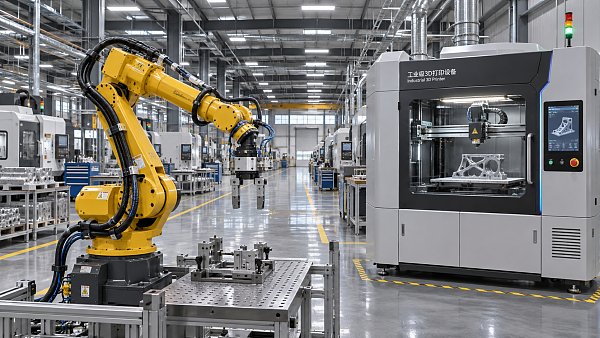
Formnext 2026, a global additive manufacturing exhibition, announced awards in six categories: AMbassador, Design, (R)Evolution, Newcomer, Start-Up and Sustainability. The awards highlighted applications of 3D printing in fields including dentistry, casting and medicine.
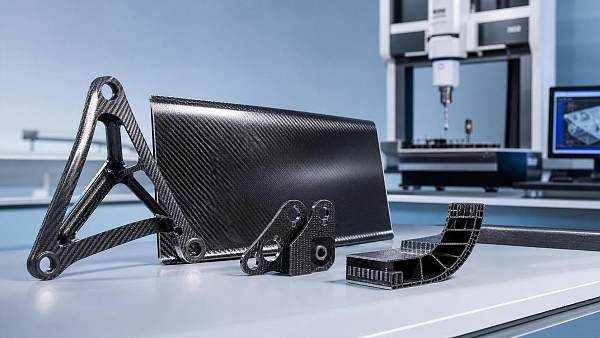
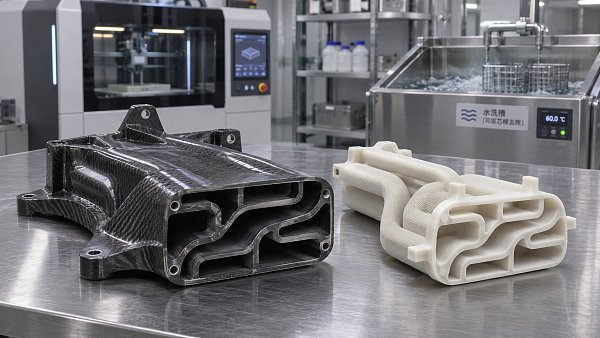
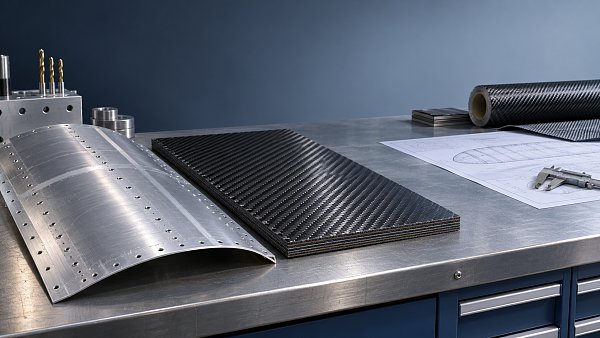
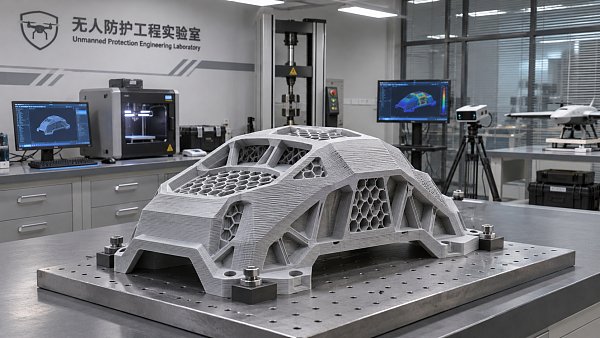
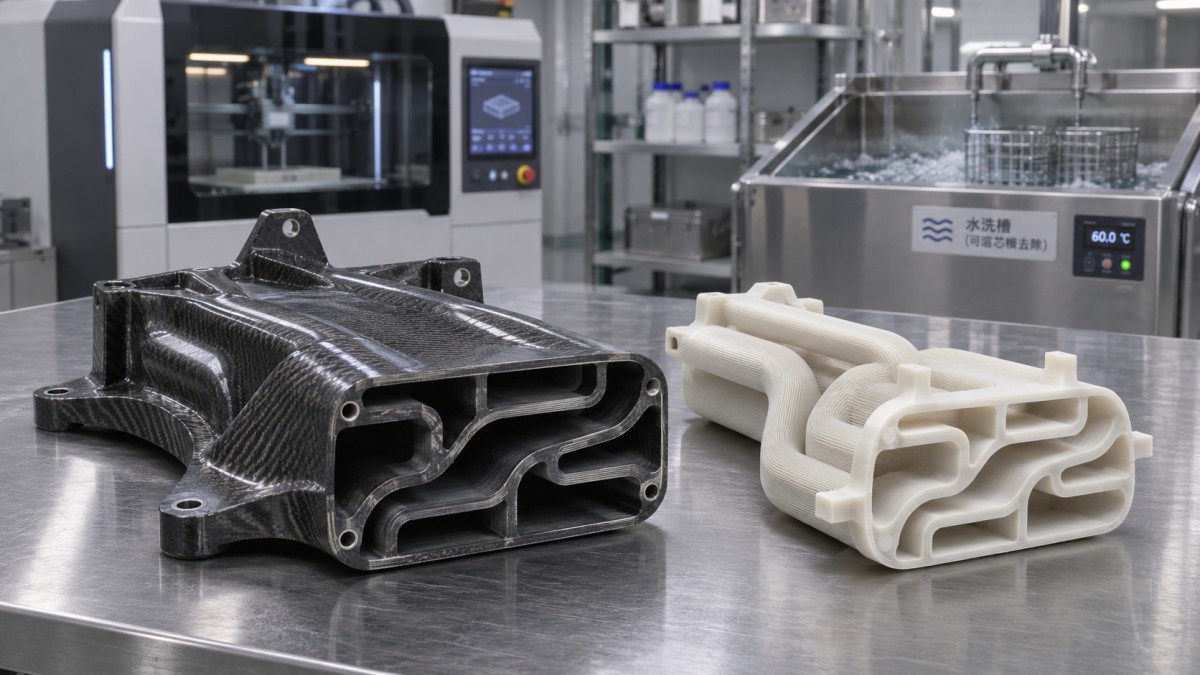
sallea won the Start-Up Award for its 3D-printed soluble core and tooling technology. The technology can be removed by washing with water and helps make lightweight, complex composite components.
Where soluble tooling could affect purchasing and delivery
Composite manufacturers assessing production routes
From a manufacturing perspective, the award may prompt closer examination of whether removable cores can support the production of complex composite components. The potential value depends on the component geometry, the production process and the ability to remove the tooling to an acceptable level. The supplied information does not establish performance limits, production capacity or results for particular applications.
Manufacturers considering the technology could compare it with their current tooling methods across design preparation, fabrication, removal, inspection and delivery. A water-washable core may affect process planning, but the time, equipment and controls needed for a particular component would require verification. Any change to an established production route may also need customer agreement under the applicable contract or product specification.
Buyers defining what suppliers must demonstrate
For procurement teams, the practical issue is whether the proposed tooling route can produce a component that meets the buyer's stated requirements. Analysis suggests that requests for quotation could usefully distinguish between the core or tooling itself and the finished composite part. A supplier's ability to provide a soluble core does not, on its own, demonstrate that the finished component is suitable for a specified use.
Buyers may wish to ask how a supplier would document material selection, removal of the core, inspection and traceability. Depending on the application and contract, they could also review what evidence is available for dimensional accuracy, component condition and delivery consistency. These are potential purchasing checks, not new requirements established by the award.
Testing and quality teams reviewing evidence
Quality and testing teams may be asked to assess a manufacturing route that includes both additive manufacturing and subsequent core removal. What deserves attention is the evidence needed to show that removal has been completed appropriately and that the finished part meets the agreed specification. The relevant checks would depend on the design, materials and intended use.
The award also highlights applications in dentistry, casting and medicine, but the supplied summary does not say that sallea's technology has been approved or adopted in those fields. Businesses exploring any such use would need to identify the applicable product requirements and assess the proposed process accordingly. An award should not be treated as a substitute for a required certification, qualification or customer approval.
Questions to resolve before specifying a soluble core
Confirm the scope of the proposed application
Companies evaluating the technology could begin with a specific component and define what the core must enable. Useful questions include whether the required geometry is feasible, how the core interfaces with the composite manufacturing process and where water must reach during removal. These questions frame a technical assessment; the announcement itself does not answer them.
It may also be useful to agree on the evidence needed before moving from a sample to a production order. The buyer and supplier could define acceptance criteria for the core, the finished component and any intermediate checks. Clear criteria would make it easier to compare the proposed route with an existing or alternative tooling method.
Document removal and finished-part inspection
Water removability is central to the announced technology, so prospective users could ask suppliers to explain the proposed removal procedure and how its outcome would be checked. Depending on the component, that discussion might cover access to internal features, treatment of remaining material and inspection of areas that are difficult to reach. The input does not specify a removal time, water condition or residue threshold, so none should be assumed.
Testing plans could focus on whether the finished part meets the relevant specification after core removal. Parties may also consider what records would be needed to trace materials and process steps for a particular order. The appropriate depth of documentation would depend on the product, customer agreement and any applicable requirements.
Review qualification before making certification claims
Analysis suggests that suppliers and buyers should separate the award announcement from evidence of product qualification. If a customer requires a test report, certification or approval, the parties could check its scope and whether it applies to the finished component, the process or a specific material. The supplied information does not identify any certification granted to sallea's technology.
Where an application is subject to regulatory or customer controls, companies could verify the relevant requirements before changing a qualified production method. They should also check whether a proposed change needs notification, additional testing or approval under existing arrangements. The award announcement provides no basis for treating any of those steps as a newly imposed obligation.
Align supplier commitments with delivery plans
Before including the technology in a purchasing plan, a buyer could discuss availability, lead times, order quantities and responsibility for technical support with the supplier. None of those commercial details is provided in the event summary. Early clarification may help buyers assess whether a proposed production schedule is realistic for their own application.
Contracts and order documents could identify who supplies the core, who performs the water-removal step and who confirms acceptance of the finished component. If the process is new to either party, they may also consider how nonconforming parts, repeat testing and changes to specifications would be handled. These are suggested points for negotiation, not terms established by Formnext.
An award signal, with rules and market adoption still to verify
At this stage, it is more appropriate to understand the announcement as a signal of industry attention to an additive manufacturing application than as a rule change. The supplied facts identify an award and describe the technology, but they do not announce a policy, regulation, standard revision, certification scheme or trade measure. They also do not establish that buyers have changed their specifications or that manufacturers have adopted the process at scale.
From an industry perspective, subsequent evidence could matter more to procurement decisions than the award alone. Relevant information may include technical documentation, application-specific testing, supplier delivery commitments and customer acceptance criteria. If any official standards, certification guidance or procurement documents later address the technology, their scope and effective status would need to be checked separately.
Market feedback could also clarify where water-removable tooling is useful and where established methods remain preferable. Such judgments would depend on performance, cost, production conditions and the requirements of each component. The event summary provides no comparative data on those factors, so a general conclusion about commercial advantage would be premature.
From recognition to an application-specific decision
The Formnext award brings attention to sallea's soluble core and tooling technology and its stated role in making lightweight, complex composite components. Its practical implications for a company will depend on whether the technology can meet that company's technical, quality and delivery needs. For now, the appropriate response is to assess a defined use case, request supporting evidence and verify any applicable requirements before changing specifications or purchasing commitments.
Basis for this report and points requiring follow-up
This article is based on the user-provided news title, event date and event summary. No specific official source link was provided in the input, and the announcement and its details require continued verification. Relevant follow-up sources could include official event announcements, technical documentation, standards publications and authoritative industry reporting.
Further review should distinguish confirmed developments from proposals or market expectations, including any changes to certification guidance, tender documents, trade implementation or customer requirements. Industry feedback and evidence from actual applications would also help businesses judge whether the technology is suitable for their intended use.
Search News
Hot Articles
- Carbon Fiber StructuresHow to Specify Aerospace Carbon Fiber Assemblies for Lightweight, Load-Bearing PartsJul 11, 2026
- Machine VisionXiaomi, Alibaba DAMO Academy Drive Open-Source Robotics Model Ecosystem, Lowering Algorithm Development Barriers for Overseas SMEs Adopting Chinese Robotics SolutionsMar 30, 2026
- Cobots & ArmsShanxi 'AI+' Conference Showcases Embodied Intelligence with Multinational Buyer Engagement: Key Industry ImplicationsMar 30, 2026
Popular Tags
Recommended News
 Jul 11, 2026How to Specify Aerospace Carbon Fiber Assemblies for Lightweight, Load-Bearing PartsAerospace carbon fiber assemblies: learn how to specify laminate design, load data, joining methods, and inspection controls for lighter, reliable load-bearing aerospace parts.Elena Rostova (UAV Systems Researcher)
 Mar 30, 2026Xiaomi, Alibaba DAMO Academy Drive Open-Source Robotics Model Ecosystem, Lowering Algorithm Development Barriers for Overseas SMEs Adopting Chinese Robotics SolutionsXiaomi & Alibaba DAMO Academy's open-source robotics models lower algorithm barriers for global SMEs. Boost efficiency in manufacturing, logistics & smart retail with ROS 2 compatible solutions.TSV Data Lab
 Mar 30, 2026Shanxi 'AI+' Conference Showcases Embodied Intelligence with Multinational Buyer Engagement: Key Industry ImplicationsShanxi 'AI+' Conference highlights embodied intelligence with Tesla, Ubtech & Jiantao showcasing multimodal robotics. 40+ global buyers validated tech on-site, creating new B2B channels for industrial automation & AI solutions.Chen Wei (Automation Lead Engineer)
 Mar 30, 2026Zhongguancun Unveils 6G Integrated Sensing-Computing-Intelligence Platform to Empower Embodied Robots for Global Industrial ApplicationsZhongguancun's new 6G platform revolutionizes industrial robotics with <10ms latency, empowering global automotive, logistics & port automation. Discover how this tech boosts China's smart manufacturing exports.TSV Data Lab
 Mar 30, 2026Mech-Mind Tianjin Embodied Intelligence R&D and Production Base Goes Live, Cutting Delivery Time by 20%–30% for Global Customized AMR+Vision SolutionsMech-Mind's Tianjin AMR+Vision production base cuts delivery time by 20%-30% for欧美 & Latin American markets. Discover how this PLd-certified facility accelerates customized robotics solutions for smart manufacturing and logistics.Chen Wei (Automation Lead Engineer)
 Mar 30, 2026Boao Forum Reveals 'Co-evolution of Big and Small Brains' Trend in Humanoid Robots, China's Embodied Intelligence Accelerates Adaptation to Overseas Manufacturing Service ScenariosDiscover how China's humanoid robots, featuring 'Co-evolution of Big and Small Brains,' are revolutionizing global manufacturing. Learn about Embodied Tian Gong 3.0's ISO compliance and overseas deployment at Boao Forum 2026.Chen Wei (Automation Lead Engineer)
 Mar 30, 2026China Railway Industrial Secures Patent for Embodied Robotics in Material Handling, Boosting High-Precision Delivery Capabilities for Overseas Infrastructure and Manufacturing ProjectsChina Railway Industrial's new patent for embodied robotics in material handling boosts high-precision delivery for global infrastructure & manufacturing. Discover how this innovation enhances logistics accuracy in automotive, rail transit & EPC projects.Chen Wei (Automation Lead Engineer)
 Nov 23, 2026How to Compare 5-Axis CNC Accuracy Claims: Tests and TolerancesHow do I compare 5-axis CNC machine accuracy claims? Learn which tests, tolerances, and acceptance criteria matter before choosing your machine.Dr. Marcus Vance
 Nov 22, 2026Indian Drone Federation Flags Chinese Components in Defence ProcurementIndia defence procurement faces scrutiny as the Drone Federation of India flags Chinese drone components and urges faster supply-chain localisation.Elena Rostova (UAV Systems Researcher)
 Nov 22, 2026Choosing a Cobot Exporter in China: What to Check Before OrderingChoosing a cobot exporter in China? Learn how to verify specifications, safety, landed costs and after-sales support before placing your order.Chen Wei (Automation Lead Engineer)
 Nov 21, 2026Choosing a Trampoline Park Manufacturer: Safety, Installation and SupportChoosing a trampoline park manufacturer? Compare safety evidence, installation plans, costs and ongoing support to reduce risk and buy with confidence.Chen Wei (Automation Lead Engineer)
 Nov 20, 2026Formnext 2026 Awards: Swiss Start-Up sallea Wins for Soluble ToolingFormnext 2026 Awards: Swiss start-up sallea wins for 3D-printed soluble tooling. Discover what buyers and manufacturers should assess before adoption.Dr. Marcus Vance
 Nov 20, 2026Retrofitting Quality Inspection Automation on Existing Production LinesQuality inspection automation retrofit: discover how to assess existing lines, integrate reliable detection and rejection, and build a sound investment case.Victor Lin (Chief Software Architect)
 Nov 19, 2026Choosing a Palletizing System for Bagged Food: Speed and Bag HandlingChoose the right palletizing system for bagged food. Compare throughput, bag handling, food safety, and robotic vs. conventional options.Chen Wei (Automation Lead Engineer)
 Nov 18, 2026Formnext 2026 Opens as Additive Manufacturing Advances Industrial ApplicationsFormnext 2026 highlights additive manufacturing innovations for industrial applications. Explore what they could mean for production, procurement and suppliers.Dr. Marcus Vance
 Nov 18, 2026Flexible Robotics Integration for High-Mix, Low-Volume ProductionFlexible robotics integration can make high-mix, low-volume production more adaptable. Explore practical ways to reduce changeover risk and plan a reliable robotic cell.Victor Lin (Chief Software Architect)
 Nov 17, 2026Formnext 2026: UK Additive Manufacturing Leads in Research but Faces Production BarriersUK additive manufacturing leads in research but faces barriers to production at scale. Explore the Formnext 2026 insights and what businesses should consider.Dr. Marcus Vance
 Nov 17, 2026Choosing Warehouse Automation Packaging Systems: Throughput and SpaceCompare warehouse automation packaging systems by throughput, footprint, and order mix. Discover how to choose a layout that meets peak demand.Victor Lin (Chief Software Architect)
 Nov 16, 2026China's October Industrial Robot Output Up 26%, 3D Printing Equipment Up 85.9%China's industrial robot output reportedly rose 26% in October, while 3D printing equipment grew 85.9%. Explore what the figures could mean for buyers.Chen Wei (Automation Lead Engineer)
 Nov 16, 2026Commercial Drones in North America: Choosing Payloads for Inspection and MappingCommercial drones North America: compare RGB, thermal and LiDAR payloads for inspection and mapping, and choose a system that delivers reliable data.Elena Rostova (UAV Systems Researcher)
 Nov 15, 2026Aerospace Materials in the UK: Choosing Metals and Composites for AircraftExplore aerospace materials UK teams use for aircraft. Compare metals and composites by weight, fatigue, manufacturing and approval needs to make informed choices.Dr. Marcus Vance
 Nov 14, 2026Ukraine Tests 3D-Printed Protective Structure Against M2 Heavy Machine-Gun FireUkraine’s 3D-printed protective structure reportedly resisted M2 heavy machine-gun fire. Explore the test’s limits and potential procurement implications.Dr. Marcus Vance
 Nov 14, 2026Rugged UAV Metrics: Assessing Wind Resistance, Endurance and IP RatingsCompare rugged UAV metrics for wind resistance, endurance and IP ratings. Learn what evidence to request and choose a platform fit for your mission.Chen Wei (Automation Lead Engineer)
 Nov 13, 2026Physical AI Gains Attention as Robot Investment Moves Beyond HardwarePhysical AI is reshaping robot investment beyond hardware. Explore what the shift toward perception and algorithms could mean for buyers and suppliers.Chen Wei (Automation Lead Engineer)