AGV/AMR Lead Times Stretch to 14 Weeks on Servo Shortage
Publication Date
author
The timing of the underlying disruption is not clearly specified in the source material, but the latest supply-chain update cited here shows a concrete change in delivery conditions for AGV and AMR equipment. More importantly for industry participants, this is not only a parts shortage story: it also signals tighter practical requirements around component selection, technical specification matching, procurement planning, and project delivery commitments where EtherCAT bus architecture and IP67-rated modular drive units are involved. Manufacturers, system integrators, buyers, and supply-chain service providers all have reason to watch how this affects execution risk in automation projects.
What the reported supply-chain change confirms
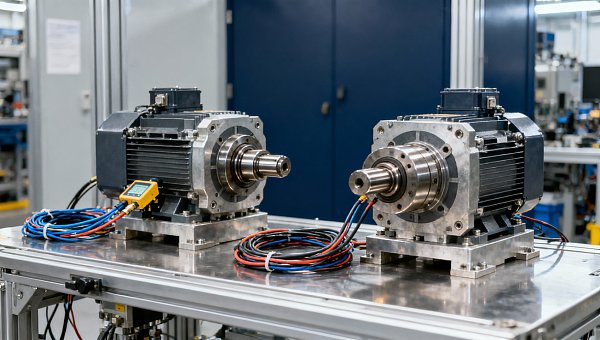
According to a TrendForce supply-chain report dated June 5, 2026, capacity scheduling for key mid-power servo motor models from Japan's Nidec and Germany's SEW-EEG has tightened. As a result, the global delivery cycle for complete AGV/AMR units has extended from an average of 9 weeks in the first quarter to 14 weeks at present. The same report states that the supply gap for modular drive units configured with EtherCAT bus and IP67 protection has reached 32%. The report further indicates that this shortage is directly constraining automation upgrade progress at logistics centers in Europe and electronics factories in Southeast Asia.
Where the pressure is likely to appear in actual business execution
Procurement and sourcing decisions are becoming more specification-sensitive
From an industry perspective, buyers and sourcing teams may be affected first because the shortage is linked to specific component categories rather than to AGV/AMR demand in general. Where procurement documents, internal technical standards, or bid requirements already lock in EtherCAT-compatible and IP67-rated modular drive configurations, replacement flexibility may narrow. In practical terms, what deserves closer attention is whether existing purchase orders, approved vendor lists, technical files, and delivery promises still reflect realistic lead times under current supply conditions.
Equipment manufacturers and integrators face greater delivery and documentation pressure
For AGV/AMR makers and system integrators, the immediate impact is likely to show up in production scheduling, configuration management, and contract fulfillment. Analysis shows that when core servo motor availability tightens, the pressure is not limited to assembly timing; it can also affect whether a delivered configuration remains aligned with previously agreed technical specifications. Companies involved in manufacturing or integration should therefore pay closer attention to specification alignment records, change-control documentation, and any compliance-related technical documents attached to customer acceptance, especially where protection grade or communication bus architecture is a defined requirement.
Project owners may need to reassess installation and upgrade sequencing
Operators of logistics facilities and electronics manufacturing sites may encounter delays not only in equipment receipt but also in automation upgrade sequencing. Observably, if a project depends on modular drive units with the reported EtherCAT and IP67 characteristics, schedule risk may move upstream into procurement approval and downstream into commissioning plans. This does not automatically mean projects will be cancelled or redesigned, but it does suggest that purchasers should review delivery assumptions in tenders, framework agreements, and implementation milestones.
Supply-chain and after-sales partners should watch traceability and service continuity
Service providers involved in logistics coordination, spare-parts planning, and after-sales support may also see knock-on effects. If lead times lengthen for complete machines and constrained drive modules, spare-parts availability, warranty replacement timing, and field service commitments may come under closer scrutiny. From a compliance and execution standpoint, maintaining clear traceability over component versions, delivery batches, and service records becomes more important when substitution or delayed fulfillment risks increase.
What companies should review now
Recheck whether technical requirements leave room for substitution
Analysis shows that companies should first verify how tightly their projects are tied to the affected configuration set. If tender documents, customer specifications, or internal standards explicitly require EtherCAT bus compatibility and IP67 protection at the modular drive level, any attempt to switch models or sources could trigger renewed technical review. At this stage, it is more appropriate to treat specification verification as a priority control point rather than assume equivalent replacement will be straightforward.
Update lead-time assumptions in contracts and procurement files
With reported lead times moving from 9 weeks to 14 weeks, companies should examine whether current quotations, delivery clauses, production schedules, and customer communications still match the market situation described in the report. This is especially relevant for businesses managing export delivery, cross-border project coordination, or milestone-based acceptance. The available information does not provide a formal regulatory change, so companies should not describe this as a new rule in force; however, they should treat it as a practical execution signal that may affect contractual performance.
Keep certification and compliance records aligned with actual delivered configurations
Where products are sold into regulated industrial environments or customer acceptance depends on specific technical documentation, firms should monitor whether any sourcing adjustment could affect the consistency of declared specifications, test records, or supporting technical files. The input does not provide detailed certification outcomes or enforcement measures, so no confirmed compliance consequence should be inferred. Even so, what deserves closer attention is the risk that documentation prepared for one component configuration may not automatically remain usable if supply constraints force engineering changes.
Track follow-up signals from the market rather than assume a settled outcome
The reported shortage points to an active supply-chain constraint, but the available material does not establish how long the condition will last or whether buyers will formally revise technical thresholds in future tenders. Companies should therefore continue tracking customer bid documents, supplier notices, delivery updates, and any revised acceptance requirements that may emerge as market participants respond to longer lead times.
Why this matters beyond a simple delivery delay
Observably, this development is better understood as an execution signal than as a stand-alone news item about inventory pressure. The reported shortage is concentrated in a component and configuration combination that carries technical and operational significance: servo motors tied to AGV/AMR drive systems, and modular units defined by EtherCAT and IP67 features. That means the commercial effect can extend beyond delayed shipments into procurement eligibility, specification compliance, project sequencing, and customer acceptance practice. At the same time, the current information does not confirm a formal policy revision, a new regulatory mandate, or a revised certification rule. For that reason, the industry should read this as a practical market-side constraint with possible compliance and tender implications, not as a fully codified rule change.
How the market may need to interpret the latest signal
At this stage, the most balanced reading is that the AGV/AMR sector is facing a tighter delivery environment centered on specific servo motor supply and on affected drive-unit configurations. For companies exposed to automation deployment, the significance lies in execution discipline: matching commitments to achievable lead times, preserving documentation consistency, and checking whether technical requirements have become harder to satisfy in practice. It is more appropriate to understand this as a confirmed supply-chain change with broader operational implications, while still recognizing that the downstream impact on procurement rules, tender language, and acceptance criteria requires continued observation.
Basis of this article and what still needs verification
This article is generated on the basis of the user-provided news title, event timing, and event summary. The specific official source link was not provided in the input and therefore still requires further verification. For events of this kind, market participants would typically continue checking source categories such as official announcements, regulator releases, customs or trade authority information, industry association updates, standards organization documents, and reporting from authoritative industry media. What still needs ongoing observation includes any more detailed implementation signals from the market, possible changes in certification or specification interpretation, updates in tender documents, supplier execution practices, and feedback from affected enterprises.
Search News
Hot Articles
- Carbon Fiber StructuresHow to Specify Aerospace Carbon Fiber Assemblies for Lightweight, Load-Bearing PartsJul 11, 2026
- Machine VisionXiaomi, Alibaba DAMO Academy Drive Open-Source Robotics Model Ecosystem, Lowering Algorithm Development Barriers for Overseas SMEs Adopting Chinese Robotics SolutionsMar 30, 2026
- Cobots & ArmsShanxi 'AI+' Conference Showcases Embodied Intelligence with Multinational Buyer Engagement: Key Industry ImplicationsMar 30, 2026
Popular Tags
Recommended News
 Jul 11, 2026How to Specify Aerospace Carbon Fiber Assemblies for Lightweight, Load-Bearing PartsAerospace carbon fiber assemblies: learn how to specify laminate design, load data, joining methods, and inspection controls for lighter, reliable load-bearing aerospace parts.Elena Rostova (UAV Systems Researcher)
 Mar 30, 2026Xiaomi, Alibaba DAMO Academy Drive Open-Source Robotics Model Ecosystem, Lowering Algorithm Development Barriers for Overseas SMEs Adopting Chinese Robotics SolutionsXiaomi & Alibaba DAMO Academy's open-source robotics models lower algorithm barriers for global SMEs. Boost efficiency in manufacturing, logistics & smart retail with ROS 2 compatible solutions.TSV Data Lab
 Mar 30, 2026Shanxi 'AI+' Conference Showcases Embodied Intelligence with Multinational Buyer Engagement: Key Industry ImplicationsShanxi 'AI+' Conference highlights embodied intelligence with Tesla, Ubtech & Jiantao showcasing multimodal robotics. 40+ global buyers validated tech on-site, creating new B2B channels for industrial automation & AI solutions.Chen Wei (Automation Lead Engineer)
 Mar 30, 2026Zhongguancun Unveils 6G Integrated Sensing-Computing-Intelligence Platform to Empower Embodied Robots for Global Industrial ApplicationsZhongguancun's new 6G platform revolutionizes industrial robotics with <10ms latency, empowering global automotive, logistics & port automation. Discover how this tech boosts China's smart manufacturing exports.TSV Data Lab
 Mar 30, 2026Mech-Mind Tianjin Embodied Intelligence R&D and Production Base Goes Live, Cutting Delivery Time by 20%–30% for Global Customized AMR+Vision SolutionsMech-Mind's Tianjin AMR+Vision production base cuts delivery time by 20%-30% for欧美 & Latin American markets. Discover how this PLd-certified facility accelerates customized robotics solutions for smart manufacturing and logistics.Chen Wei (Automation Lead Engineer)
 Mar 30, 2026Boao Forum Reveals 'Co-evolution of Big and Small Brains' Trend in Humanoid Robots, China's Embodied Intelligence Accelerates Adaptation to Overseas Manufacturing Service ScenariosDiscover how China's humanoid robots, featuring 'Co-evolution of Big and Small Brains,' are revolutionizing global manufacturing. Learn about Embodied Tian Gong 3.0's ISO compliance and overseas deployment at Boao Forum 2026.Chen Wei (Automation Lead Engineer)
 Mar 30, 2026China Railway Industrial Secures Patent for Embodied Robotics in Material Handling, Boosting High-Precision Delivery Capabilities for Overseas Infrastructure and Manufacturing ProjectsChina Railway Industrial's new patent for embodied robotics in material handling boosts high-precision delivery for global infrastructure & manufacturing. Discover how this innovation enhances logistics accuracy in automotive, rail transit & EPC projects.Chen Wei (Automation Lead Engineer)
 Oct 21, 2026Low-Latency Industrial Data Processing: Pricing and Key Cost DriversExplore industrial data latency price drivers, from edge hardware to integration and support. Learn how to compare quotes, verify performance, and avoid unnecessary costs.TSV Data Lab
 Oct 20, 2026KUKA Launches iiQKA.AI Vision to Simplify Industrial Image ProcessingKUKA iiQKA.AI Vision simplifies industrial image processing with controller-based 2D and 3D vision. Explore drag-and-drop setup for vision-guided automation.TSV Data Lab
 Oct 20, 2026Smart Industrial Edge Devices: Key Criteria for Legacy PLC IntegrationChoose smart industrial edge devices for legacy PLC integration. Discover key criteria for compatibility, data quality, security, and reliable collection without disrupting control.TSV Data Lab
 Oct 19, 2026Choosing a Radar Sensor by Application: Range, Resolution, and Field of ViewSimplify radar sensor application based product selection. Compare range, resolution, and field of view to avoid blind spots and choose with confidence. Explore the guide.TSV Data Lab
 Oct 18, 2026Comparing Material Options for Procurement: Specs, Costs, and Supply RisksExplore procurement oriented technical content on material options, specs, costs, and supply risks. Compare alternatives to cut hidden expenses and make confident sourcing decisions.Dr. Marcus Vance
 Oct 17, 20265-Axis CNC Positioning Accuracy: How to Interpret ISO 230-2 Test ResultsAssess 5 axis CNC machining positioning accuracy with ISO 230-2. Learn to interpret repeatability, reversal error, and test conditions to compare suppliers and make confident acceptance decisions.Dr. Marcus Vance
 Oct 16, 2026Choosing a Rugged Edge AI Box Supplier: Thermal Tests and Lifecycle SupportChoose a rugged edge AI box supplier with proven thermal performance and reliable lifecycle support. Discover the tests and commitments to verify before you buy.TSV Data Lab
 Oct 15, 2026R&D Cost Reduction Services: How to Evaluate Fees, Savings, and ROIEvaluate R&D cost reduction services with confidence. Compare fees, verify savings, and calculate ROI without compromising performance. Discover how to choose a provider that delivers real value.Chen Wei (Automation Lead Engineer)
 Oct 20, 2026How Do You Measure Industrial IoT Gateway Latency Under Load?Measure industrial IoT gateway latency under load with reliable timestamps, realistic traffic, and tail-latency analysis. Discover how to expose bottlenecks and choose the right gateway.TSV Data Lab
 Oct 19, 2026How Do You Verify That Precision Machined Parts Meet Tolerances?Master precision machining tolerance verification with the right tools, datum setups, and acceptance rules. Learn how to validate parts confidently and reduce costly inspection errors.Dr. Marcus Vance
 Oct 18, 2026What Should an AS9100 Machining Supplier Checklist Include?Build an AS9100 machining supplier checklist that verifies capability, traceability, inspection, and outsourced processes. Discover what to check before approving your next aerospace supplier.Dr. Marcus Vance
 Oct 17, 2026How Should You Interpret Industrial Robot Repeatability Specs?Decode industrial robot repeatability specifications, understand ISO 9283 test conditions, and avoid costly selection mistakes. Learn how to verify performance for your process.Chen Wei (Automation Lead Engineer)
 Oct 16, 2026How Can You Fairly Compare MTBF Across Industrial Servo Motors?Make a fair industrial servo motor MTBF comparison with matched operating profiles, failure criteria, and confidence bounds. Discover how to assess reliability beyond advertised numbers.Chen Wei (Automation Lead Engineer)
 Oct 15, 2026How Should You Compare TechStat Vanguard 5-Axis CNC Tolerances?TechStat Vanguard 5-axis CNC tolerance comparison: learn how to verify part accuracy, assess inspection evidence, and choose suppliers that reliably meet your drawing requirements.Dr. Marcus Vance
 Oct 14, 2026Drone Frame Composites: Carbon Fiber vs. Fiberglass for Weight and StiffnessExplore drone structural materials composites: compare carbon fiber and fiberglass for weight, stiffness, cost, and antenna compatibility. Find the right material for your drone frame.Elena Rostova (UAV Systems Researcher)
 Oct 13, 2026Smart Cameras vs. PC-Based Machine Vision: Which Fits High-Speed Inspection?This industrial product comparison for machine vision weighs smart cameras vs. PC-based systems on latency, throughput, and cost. Discover your best fit for high-speed inspection.TSV Data Lab
 Oct 12, 2026How to Verify RoHS Compliance in Industrial Sensing Systems Before DeploymentRoHS compliant sensing systems: learn how to verify materials, supplier declarations, testing, and configuration controls before industrial deployment.TSV Data Lab