PEEK CNC machining service: where tool wear changes the quote
Publication Date
author
In a PEEK CNC machining service, the quote is rarely driven by material cost alone. For finance approvers, tool wear can quietly reshape unit economics, lead time, and supplier risk. Understanding how cutter life, tolerance demands, and batch complexity affect pricing helps separate inflated estimates from data-backed proposals—and supports more confident approval decisions.
Why scenario differences matter before approving a PEEK CNC machining service quote
For many buyers, PEEK appears to be a premium polymer with a premium price, so a high machining quote can feel inevitable. That is only partly true. In a real peek cnc machining service, the final number often moves more because of machining behavior than because of the resin itself. Tool wear, burr control, heat management, dimensional stability, and inspection intensity can all change the supplier’s cost base. From a finance approval perspective, that means two suppliers using the same grade of PEEK may produce very different quotes for legitimate reasons—or for weak reasons hidden behind vague wording.
This is especially important in cross-functional purchasing environments. Engineering may prioritize tolerance and function. Procurement may focus on price and delivery. Finance usually carries the burden of approving working capital exposure, supplier risk, and margin impact. In this setting, a peek cnc machining service should not be judged by unit price alone. The right question is: which business scenario is driving the quote, and is the cost structure consistent with that scenario?
A prototype for a medical device trial, a low-volume aerospace bracket, and a repeat industrial insulator can all be made from PEEK, yet they demand different tool paths, inspection routines, and scrap assumptions. The deeper the part complexity, the more tool wear becomes a quoting variable rather than a shop-floor afterthought.
Where tool wear changes the economics in real-world application scenarios
Finance teams benefit when they can connect pricing logic to a specific operating scenario. Below are the most common situations where a peek cnc machining service becomes more expensive because tool life is short, process control is tighter, or the supplier is carrying greater execution risk.
Prototype and validation runs
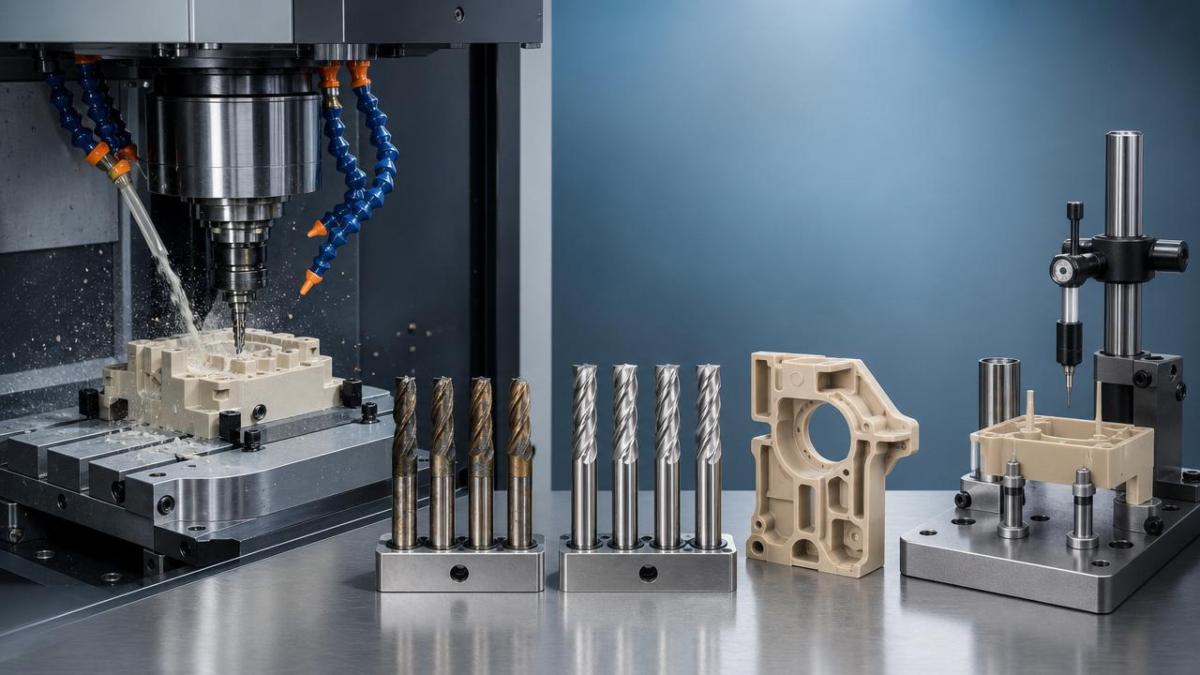
In prototype work, setup cost dominates. The supplier may use conservative cutting parameters to protect dimensional stability while iterating quickly around drawing revisions. Tool wear matters here because the first few parts often involve interrupted cuts, feature changes, and manual intervention. Even if the total material consumption is small, the machining cost per part rises due to lower tool utilization and higher engineering time. For finance approvers, a high quote in this scenario can be reasonable if the proposal clearly separates setup, programming, and inspection from recurring cost.
Tight-tolerance industrial components
When the application involves sealing faces, bearing interfaces, or precision electrical insulation components, a peek cnc machining service may require more frequent tool replacement to maintain edge sharpness and surface finish. Slight tool degradation can trigger dimensional drift, heat buildup, or micro-burring. This is where quotes often include hidden cost buffers. If the vendor cannot hold the tolerance band consistently with stable tool life, they price in extra passes, more inspections, and potential scrap.
Aerospace and UAV lightweight parts
In aerospace-adjacent applications, PEEK is selected for weight reduction, chemical resistance, and thermal performance. But these parts are often geometry-intensive, with pockets, thin walls, and demanding documentation. Tool wear becomes more visible in long cycle times and in the need to avoid chatter or deformation. For a financial reviewer, the key issue is not only cutter cost. It is the interaction between machine occupancy, inspection burden, and reject risk. A quote that looks high may still be efficient if it avoids schedule slips in flight hardware or UAV subsystem programs.
Medical and regulated-use parts
A regulated component may not always be harder to cut, but it is almost always harder to quote responsibly. A peek cnc machining service for medical, laboratory, or certified industrial use may include stricter traceability, dedicated tooling practices, and additional inspection records. Tool wear affects repeatability, and repeatability affects compliance confidence. Finance teams should expect more process overhead here, but they should also ask whether the supplier has tied those costs to specific controls rather than broad premium claims.
Scenario comparison table: what finance should expect from different quote profiles
The table below helps translate application context into likely quote behavior. It can be used as a quick approval lens when reviewing a peek cnc machining service proposal.
What different stakeholders should check in the same PEEK CNC machining service
An approval bottleneck often appears because each department reads the quote differently. The most effective approach is to align evaluation criteria by role.
For finance approvers
Ask whether the supplier has quantified tool replacement frequency, expected yield, and machine time assumptions. In a mature peek cnc machining service, these figures do not need to be perfect, but they should be directionally credible. If a quote uses broad statements such as “high difficulty material” without linking cost to process variables, the estimate may contain excessive risk padding.
For engineering teams
Engineers should identify which features truly require extreme tolerance and which can be relaxed. Small drawing changes can materially reduce tool wear and cycle time. A shoulder, undercut, deep pocket, or thin wall may be technically feasible but commercially expensive. The best peek cnc machining service outcome comes when design intent and manufacturability are reviewed together.
For procurement leaders
Procurement should compare suppliers not only on unit price but also on quote transparency. A lower initial price can mask unstable process capability, which later appears as delays, split shipments, or NCR-related cost. When PEEK parts support mission-critical devices or precision assemblies, supplier predictability often matters more than apparent savings.
Common quote gaps and scenario-based warning signs
Not every expensive quote is wrong, and not every cheap quote is a bargain. The key is recognizing patterns that do not match the application scenario.
Warning sign: high price for a simple repeat part with no tool-life logic
If the part geometry is simple and the batch size is stable, tool wear should become more predictable over time. A supplier charging a premium for every release without showing cost stabilization may lack process discipline. In this scenario, finance should ask for a learning-curve expectation or a volume-based cost reduction path.
Warning sign: low prototype price that ignores engineering effort
An unusually low prototype quote may seem attractive, but it can indicate weak DFM review, underpriced setup work, or a future change-order strategy. In prototype-heavy environments, a reliable peek cnc machining service partner should define revision assumptions, first article scope, and what happens if features need recutting.
Warning sign: regulated application quoted like standard industrial work
Medical, aerospace, and controlled-use projects carry documentation and repeatability burdens. If the quote does not mention traceability, inspection records, or process controls, the supplier may be underestimating compliance work. That creates downstream financial risk through delays, qualification failure, or supplier replacement.
How to judge whether a PEEK CNC machining service fits your business scenario
A practical fit assessment can be done with five questions. First, is the part a one-time development item or a repeat production component? Second, which dimensions truly drive functional performance? Third, what is the cost of late delivery versus the cost of higher upfront machining? Fourth, does the supplier explain how tool wear affects cycle time, finish, and consistency? Fifth, are inspection and traceability requirements reflected as explicit tasks rather than generic premiums?
These questions matter because the “best” peek cnc machining service is scenario-dependent. A premium supplier may be the right choice for low-volume, high-consequence parts. A cost-optimized supplier may be suitable for stable, repeat geometry where process windows are well proven. Financial discipline comes from matching supplier capability to application consequence, not from forcing one approval rule onto all projects.
Practical approval checklist for finance teams
Before approving a quote, request a short commercial-technical summary that includes the following points:
- Batch size and whether pricing assumes prototype, pilot, or steady production conditions
- Tolerance features that are responsible for extra tool wear or extra inspection time
- Expected tool-life management approach for the quoted volume
- Scrap and rework assumptions, especially for thin walls, fine features, or cosmetic surfaces
- Any compliance, traceability, or first article deliverables included in the price
- Cost-down triggers if the program moves from validation into repeat release
This checklist helps finance move beyond passive approval into informed challenge. It also encourages vendors to justify their peek cnc machining service pricing with measurable process logic rather than broad material-based storytelling.
Final takeaway: approve by scenario, not by headline price
Tool wear changes the quote because it changes more than consumable cost. It influences consistency, machine occupancy, lead time reliability, and scrap exposure. In a peek cnc machining service, those variables become more or less important depending on whether the part is a prototype, a precision industrial component, an aerospace structure, or a regulated-use item.
For finance approvers, the strongest position is not to chase the lowest number, but to ask whether the quoted process matches the actual business scenario. When supplier pricing clearly links tool wear, tolerances, and risk controls to the intended application, approval becomes faster, defensible, and more likely to support long-term total cost performance. If that linkage is missing, the right next step is not immediate approval—it is a request for data.
Search News
Hot Articles
- Carbon Fiber StructuresHow to Specify Aerospace Carbon Fiber Assemblies for Lightweight, Load-Bearing PartsJul 11, 2026
- Machine VisionXiaomi, Alibaba DAMO Academy Drive Open-Source Robotics Model Ecosystem, Lowering Algorithm Development Barriers for Overseas SMEs Adopting Chinese Robotics SolutionsMar 30, 2026
- Cobots & ArmsShanxi 'AI+' Conference Showcases Embodied Intelligence with Multinational Buyer Engagement: Key Industry ImplicationsMar 30, 2026
Popular Tags
Recommended News
 Jul 11, 2026How to Specify Aerospace Carbon Fiber Assemblies for Lightweight, Load-Bearing PartsAerospace carbon fiber assemblies: learn how to specify laminate design, load data, joining methods, and inspection controls for lighter, reliable load-bearing aerospace parts.Elena Rostova (UAV Systems Researcher)
 Mar 30, 2026Xiaomi, Alibaba DAMO Academy Drive Open-Source Robotics Model Ecosystem, Lowering Algorithm Development Barriers for Overseas SMEs Adopting Chinese Robotics SolutionsXiaomi & Alibaba DAMO Academy's open-source robotics models lower algorithm barriers for global SMEs. Boost efficiency in manufacturing, logistics & smart retail with ROS 2 compatible solutions.TSV Data Lab
 Mar 30, 2026Shanxi 'AI+' Conference Showcases Embodied Intelligence with Multinational Buyer Engagement: Key Industry ImplicationsShanxi 'AI+' Conference highlights embodied intelligence with Tesla, Ubtech & Jiantao showcasing multimodal robotics. 40+ global buyers validated tech on-site, creating new B2B channels for industrial automation & AI solutions.Chen Wei (Automation Lead Engineer)
 Mar 30, 2026Zhongguancun Unveils 6G Integrated Sensing-Computing-Intelligence Platform to Empower Embodied Robots for Global Industrial ApplicationsZhongguancun's new 6G platform revolutionizes industrial robotics with <10ms latency, empowering global automotive, logistics & port automation. Discover how this tech boosts China's smart manufacturing exports.TSV Data Lab
 Mar 30, 2026Mech-Mind Tianjin Embodied Intelligence R&D and Production Base Goes Live, Cutting Delivery Time by 20%–30% for Global Customized AMR+Vision SolutionsMech-Mind's Tianjin AMR+Vision production base cuts delivery time by 20%-30% for欧美 & Latin American markets. Discover how this PLd-certified facility accelerates customized robotics solutions for smart manufacturing and logistics.Chen Wei (Automation Lead Engineer)
 Mar 30, 2026Boao Forum Reveals 'Co-evolution of Big and Small Brains' Trend in Humanoid Robots, China's Embodied Intelligence Accelerates Adaptation to Overseas Manufacturing Service ScenariosDiscover how China's humanoid robots, featuring 'Co-evolution of Big and Small Brains,' are revolutionizing global manufacturing. Learn about Embodied Tian Gong 3.0's ISO compliance and overseas deployment at Boao Forum 2026.Chen Wei (Automation Lead Engineer)
 Mar 30, 2026China Railway Industrial Secures Patent for Embodied Robotics in Material Handling, Boosting High-Precision Delivery Capabilities for Overseas Infrastructure and Manufacturing ProjectsChina Railway Industrial's new patent for embodied robotics in material handling boosts high-precision delivery for global infrastructure & manufacturing. Discover how this innovation enhances logistics accuracy in automotive, rail transit & EPC projects.Chen Wei (Automation Lead Engineer)
 Sep 28, 2026Spindle Runout Measurement in Germany: DIN Standards, Methods, and Acceptance LimitsSpindle runout measurement Germany: explore DIN standards, proven methods, acceptance limits, and audit-ready practices for reliable machining quality.Dr. Marcus Vance
 Sep 27, 2026How to Select Wall-Mount Edge Devices for Space-Constrained Factory NetworksWall mount edge devices for space-constrained factories: evaluate workload, thermal design, power resilience, cable access, and network reliability for smarter deployments.TSV Data Lab
 Sep 26, 2026Machining Tolerance Analysis: How to Set Limits That Meet Function and Cost TargetsMachining tolerance analysis: learn how to set functional limits, control tolerance stacks, reduce inspection risk, and balance precision with production cost.Dr. Marcus Vance
 Sep 25, 2026How to Evaluate an Industrial Infrastructure Data Platform for Multi-Site OperationsIndustrial infrastructure data platform evaluation guide for multi-site operations: compare data quality, edge resilience, interoperability, governance, and scalable proof-of-value criteria.Victor Lin (Chief Software Architect)
 Sep 24, 2026How to Select Machine Vision Optics for Accurate Inspection at Different Working DistancesMachine vision optics selection guide for accurate inspection at every working distance. Compare FOV, pixel scale, DOF, distortion, lighting, and telecentric options.TSV Data Lab
 Sep 23, 2026How to Evaluate a Machine Vision System Integrator for High-Speed Inspection LinesChoose a machine vision system integrator with proven expertise in high-speed inspection, reliable reject timing, robust optics, and measurable acceptance criteria.TSV Data Lab
 Sep 28, 2026When is a SCADA API the right choice for connecting plant systems?SCADA API guide: learn when governed plant data integration improves traceability, security, and scalability—without compromising real-time control.Victor Lin (Chief Software Architect)
 Sep 27, 2026How SCADA data integration improves traceability across production linesSCADA data integration connects production-line data to improve traceability, accelerate quality investigations, and strengthen safety decisions.Victor Lin (Chief Software Architect)
 Sep 26, 2026What to define before starting SCADA integration planningSCADA integration planning starts with clear scope, control boundaries, data models, cybersecurity, and testing. Discover the definitions that reduce risk and costly rework.Victor Lin (Chief Software Architect)
 Sep 25, 2026How a smart factory with Industrial IoT reduces production blind spotsDiscover how a smart factory with Industrial IoT turns real-time machine, quality, and workflow data into actionable insights that reduce production blind spots and delivery risks.Victor Lin (Chief Software Architect)
 Sep 24, 2026When does Industrial IoT make smart manufacturing easier to scale?Smart manufacturing Industrial IoT scales when trusted data, interoperable systems, and secure workflows turn connected assets into measurable gains.TSV Data Lab
 Sep 23, 2026What drives ultra-precision machining cost at 1-micron tolerance?Ultra precision machining cost per part at 1 micron tolerance depends on process, material, metrology, and yield. Learn how to compare quotes confidently.Dr. Marcus Vance
 Sep 22, 2026Drone Engine-T550CC Applications: Build the UAV Power System Around the MissionAn application guide for Drone Engine-T550CC integration, covering payload planning, airframe matching, cooling, fuel, vibration, test procedures, documentation, and service preparation.Elena Rostova (UAV Systems Researcher)
 Sep 22, 2026How to Evaluate Industrial Edge Computing Vendors for Factory DeploymentIndustrial edge computing vendor evaluation guide for factories: compare latency, protocol fit, reliability, security, and lifecycle support before deployment.TSV Data Lab
 Sep 21, 2026Drone Payload Integration: Matching Power, Data, and Center of Gravity for Reliable FlightsDrone payload integration made practical: balance power, data, center of gravity, and endurance to build safer, more reliable mission-ready flights.Elena Rostova (UAV Systems Researcher)
 Sep 20, 2026Autonomous Navigation Pricing: Cost Drivers and Budget Benchmarks for AMR ProjectsAutonomous navigation price explained: compare AMR cost drivers, software, sensors, integration, safety, and lifecycle budgets to build a scalable project plan.Chen Wei (Automation Lead Engineer)
 Sep 19, 2026How to Scope Automation Integration Services for Multi-System Factory ProjectsAutomation integration services: learn how to scope multi-system factory projects with clear workflows, interface contracts, safety boundaries, and acceptance criteria.Victor Lin (Chief Software Architect)