Precision aluminum milling wholesale: low quotes often hide fixture limits
Publication Date
author
In precision aluminum milling wholesale, the lowest quote rarely tells the full engineering story. For procurement teams balancing cost, tolerance, and delivery risk, fixture capability is often the hidden variable that determines whether a supplier can actually hold repeatable accuracy at scale. This article examines why cheap pricing can mask setup limitations, unstable quality, and downstream sourcing costs that do not appear on the initial quotation.
For buyers evaluating precision aluminum milling wholesale suppliers, the practical answer is simple: a low quote is only attractive if the supplier can fixture the part consistently, control deformation, reduce rework, and repeat that performance across batches. If fixture design is weak, the real cost shows up later in scrap, inspection disputes, delayed launches, and emergency re-sourcing.
That is why procurement should not treat fixture capability as a shop-floor detail. In aluminum milling, especially for thin walls, tight flatness, cosmetic surfaces, and multi-operation parts, fixturing directly affects tolerance stability, cycle time, and yield. The supplier that quotes slightly higher but has robust fixture engineering often delivers a lower total cost of ownership.
Why fixture capability matters so much in precision aluminum milling wholesale
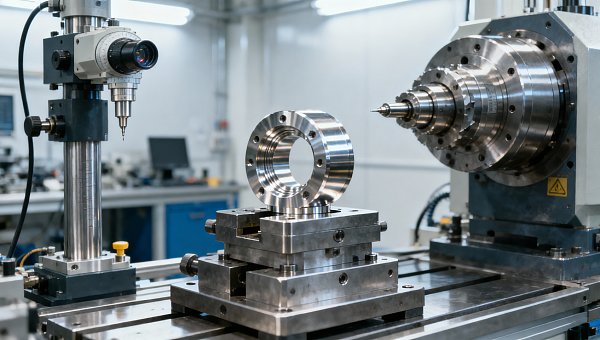
[[IMG:img_01]]In many sourcing discussions, fixtures are invisible because buyers usually compare material grade, machining tolerance, unit price, lead time, and surface finish requirements. Yet fixtures are what connect the drawing to actual production reality. They determine how securely the aluminum workpiece is held, how vibration is controlled, how datums are maintained between operations, and how distortion is minimized during cutting.
Aluminum is relatively easy to machine, but that can mislead buyers into assuming any CNC shop can produce the part economically. In reality, aluminum components often involve thin sections, pockets, ribs, lightweighting features, tight position tolerances, and surface appearance requirements. These features make the part sensitive to clamping force, heat, tool pressure, and part movement. If the fixture cannot support the part correctly, a supplier may hit dimensions on the first sample but fail in volume production.
For wholesale procurement, this matters even more because scale exposes weakness. A supplier may quote low based on a minimal setup strategy, soft jaws reused from similar jobs, or limited process planning. That approach may work for prototypes or small lots, but when order quantities rise, repeatability problems become visible. The result is often lot-to-lot variation, extended setup times, and growing inspection fallout.
What low quotes often hide from procurement teams
The lowest price in precision aluminum milling wholesale can reflect efficiency, but it can also reflect omission. In many cases, the quote does not fully account for dedicated fixture design, fixture validation, first article troubleshooting, or process redundancy for stable mass production. If these elements are missing, the initial commercial offer may look competitive while the true production risk remains unpriced.
One common issue is the use of generic fixtures instead of part-specific workholding. A supplier may rely on standard vises and simple clamping methods to avoid tooling cost. That lowers the quote up front, but it can create chatter, deformation, or misalignment on more complex features. For procurement, the risk is not only dimensional failure. It also includes inconsistent cycle times, slower ramp-up, and poor responsiveness when engineering changes occur.
Another hidden issue is setup dependence on operator skill. When fixture strategy is weak, production becomes highly sensitive to who loads the part, how the part is indicated, and how offsets are managed. This is dangerous in wholesale orders because repeatability should come from the process, not from individual heroics on the machine floor.
Low quotes can also hide low process capacity. A supplier may technically accept the drawing tolerance but have no robust margin between actual capability and specification limit. In that case, any minor material variation, tool wear, or ambient temperature change can push the process out of control. Procurement teams should recognize that a quote is not proof of capability. It is only a commercial statement until supported by process data.
How fixture limitations create downstream cost that never appears on the PO
Procurement often sees unit price clearly, but downstream quality cost is harder to quantify during supplier selection. Fixture limitations drive many of these hidden costs. The first is scrap. If a part shifts during machining or deforms after unclamping, the supplier may produce a higher-than-expected reject rate. Some shops absorb this for a short time, then recover the loss through slower deliveries, price renegotiation, or reduced service quality.
The second cost is rework. Aluminum parts with cosmetic anodized surfaces, threaded features, or critical datums can be expensive to salvage once an early operation goes wrong. Rework consumes machine time and inspection labor, and it often introduces additional handling damage. Even if reworked parts pass final inspection, the procurement team may face uncertainty over long-term consistency.
The third cost is delay. Weak fixturing frequently causes unstable setup times, repeated first-off checks, and engineering back-and-forth during production launch. If your components support a larger assembly line, delay costs can exceed the savings from the lower quote very quickly. This is especially critical in aerospace support hardware, automation frames, sensor housings, UAV structural parts, and edge-device enclosures where downstream schedules are tightly linked.
The fourth cost is supplier management overhead. When a source cannot stabilize production, buyers spend more time on corrective actions, quality meetings, containment plans, and alternate supplier qualification. In total-cost terms, the “cheap” source becomes expensive because it consumes procurement bandwidth and increases organizational risk.
What procurement teams should ask before approving a low-cost supplier
Buyers do not need to become fixture designers, but they do need better screening questions. The goal is to identify whether a supplier’s quote is backed by real process control. Start by asking whether the part will run on dedicated fixtures, modular fixtures, or standard vises. Each option has a place, but the answer should match the geometry, tolerance stack-up, and volume level of the project.
Ask how many setups are required and which datums are controlled in each setup. If the supplier cannot clearly explain how they maintain datum consistency across operations, that is a warning sign. For precision aluminum parts, setup strategy is often the difference between a stable process and a quality firefight.
Request information on how the supplier manages thin-wall deformation, flatness, and post-machining spring-back. Competent shops can usually explain whether they use vacuum fixtures, custom soft jaws, nest supports, low-force clamping, stress-relief sequencing, or semi-finishing strategies before final cuts. The specific method matters less than the fact that there is a method.
It is also valuable to ask whether fixture design was included in the quotation, amortized into piece price, or excluded as a separate tooling charge. This clarifies whether the supplier has genuinely planned for scalable production or is simply trying to win the business with a low headline number.
Finally, ask for capability evidence. This can include Cpk or Ppk data on similar aluminum parts, first article reports, gauge strategy, in-process inspection plans, and examples of repeat orders with comparable geometry. Procurement should not accept “we can do it” as enough. In data-driven sourcing, capability must be demonstrated, not asserted.
Red flags that suggest a quote is too low to be reliable
Some warning signs appear before production even starts. One is an unusually fast quote with almost no technical questions. If a part includes tight true position, parallelism, cosmetic finish zones, or thin sections, a serious supplier usually asks about critical-to-function dimensions, anodizing sequence, inspection priorities, and expected annual volume. Silence can indicate superficial review.
Another red flag is a quote that assumes all tolerances are equally manageable. Experienced suppliers know that not all drawing features carry the same manufacturing cost. If the price does not reflect obvious complexity, the supplier may be underestimating fixture needs or hoping to solve the problems later on the shop floor.
Watch for vague statements about “holding tolerance” without a discussion of repeatability. A shop may produce conforming samples under controlled conditions, but wholesale procurement requires stable output across shifts and batches. Buyers should distinguish between sample success and production capability.
Lead time promises can also expose unrealistic quoting. If a supplier offers aggressive delivery on a part that clearly requires fixture development, process prove-out, and dimensional validation, the timeline may be commercially attractive but operationally weak. Procurement teams should evaluate whether the schedule includes enough time for proper tooling and first-run learning.
How to evaluate total landed value instead of unit price alone
The best sourcing decisions in precision aluminum milling wholesale usually come from total value analysis, not quote ranking. Buyers should compare suppliers across five dimensions: unit price, process capability, fixture maturity, quality risk, and supply continuity. A higher-priced supplier with better workholding and more stable process control may reduce the full program cost over time.
One useful method is to score each supplier on operational evidence. For example, assign weighted points for dedicated fixturing, documented control plans, dimensional capability data, engineering responsiveness, and change-management discipline. This helps procurement defend supplier selection with objective criteria instead of defaulting to the cheapest offer.
It is also wise to estimate the cost of failure. If one delayed batch can stop assembly, miss a customer milestone, or trigger field risk, then the value of process stability rises sharply. In those cases, a quote that is 8% lower may be economically irrational if it introduces a 30% higher probability of disruption.
For recurring programs, procurement should also evaluate scalability. Can the supplier duplicate fixtures if demand increases? Can they maintain process consistency across multiple machines? Can they support engineering revisions without resetting the whole workflow? These questions matter because the real value of a machining partner appears over the life of the relationship, not on the first purchase order.
What a capable supplier should be able to show you
A credible supplier should be able to explain how the part will be held, how key datums are protected, where distortion risk exists, and how inspection will verify stability. They should also be transparent about where fixture investment is needed and what commercial structure supports it. This is not about impressive sales language. It is about engineering clarity.
For buyers, strong signs include fixture drawings or setup photos for similar parts, documented first article inspection routines, clear identification of critical dimensions, and willingness to discuss process limits honestly. The best suppliers do not promise impossible results at the lowest price. They explain trade-offs early so procurement can make informed decisions.
This is consistent with a data-first sourcing philosophy. In hard-tech supply chains, trust comes from measurable production logic: tolerance control, setup repeatability, inspection discipline, and traceable process planning. When suppliers can show those elements, a quote becomes more than a number. It becomes a realistic production commitment.
Conclusion: in precision aluminum milling wholesale, fixture strength is purchasing intelligence
For procurement teams, the core lesson is clear: in precision aluminum milling wholesale, low quotes often hide fixture limits that later appear as instability, rework, delays, and management burden. The cheapest supplier is not automatically the wrong choice, but the quote must be validated against workholding strategy and repeatable process capability.
If a supplier cannot explain how the aluminum part will be fixtured, how deformation will be controlled, and how volume repeatability will be proven, the price is incomplete regardless of how attractive it looks. Procurement should treat fixture capability as a commercial risk factor, not just a manufacturing detail.
Better buying decisions come from asking sharper questions, requesting real process evidence, and comparing total landed value rather than unit price alone. When fixture engineering is strong, quality becomes more repeatable, schedules become more credible, and sourcing risk declines. In a market crowded with low-cost offers, that is where real purchasing value is created.
Search News
Hot Articles
- Carbon Fiber StructuresHow to Specify Aerospace Carbon Fiber Assemblies for Lightweight, Load-Bearing PartsJul 11, 2026
- Machine VisionXiaomi, Alibaba DAMO Academy Drive Open-Source Robotics Model Ecosystem, Lowering Algorithm Development Barriers for Overseas SMEs Adopting Chinese Robotics SolutionsMar 30, 2026
- Cobots & ArmsShanxi 'AI+' Conference Showcases Embodied Intelligence with Multinational Buyer Engagement: Key Industry ImplicationsMar 30, 2026
Popular Tags
Recommended News
 Jul 11, 2026How to Specify Aerospace Carbon Fiber Assemblies for Lightweight, Load-Bearing PartsAerospace carbon fiber assemblies: learn how to specify laminate design, load data, joining methods, and inspection controls for lighter, reliable load-bearing aerospace parts.Elena Rostova (UAV Systems Researcher)
 Mar 30, 2026Xiaomi, Alibaba DAMO Academy Drive Open-Source Robotics Model Ecosystem, Lowering Algorithm Development Barriers for Overseas SMEs Adopting Chinese Robotics SolutionsXiaomi & Alibaba DAMO Academy's open-source robotics models lower algorithm barriers for global SMEs. Boost efficiency in manufacturing, logistics & smart retail with ROS 2 compatible solutions.TSV Data Lab
 Mar 30, 2026Shanxi 'AI+' Conference Showcases Embodied Intelligence with Multinational Buyer Engagement: Key Industry ImplicationsShanxi 'AI+' Conference highlights embodied intelligence with Tesla, Ubtech & Jiantao showcasing multimodal robotics. 40+ global buyers validated tech on-site, creating new B2B channels for industrial automation & AI solutions.Chen Wei (Automation Lead Engineer)
 Mar 30, 2026Zhongguancun Unveils 6G Integrated Sensing-Computing-Intelligence Platform to Empower Embodied Robots for Global Industrial ApplicationsZhongguancun's new 6G platform revolutionizes industrial robotics with <10ms latency, empowering global automotive, logistics & port automation. Discover how this tech boosts China's smart manufacturing exports.TSV Data Lab
 Mar 30, 2026Mech-Mind Tianjin Embodied Intelligence R&D and Production Base Goes Live, Cutting Delivery Time by 20%–30% for Global Customized AMR+Vision SolutionsMech-Mind's Tianjin AMR+Vision production base cuts delivery time by 20%-30% for欧美 & Latin American markets. Discover how this PLd-certified facility accelerates customized robotics solutions for smart manufacturing and logistics.Chen Wei (Automation Lead Engineer)
 Mar 30, 2026Boao Forum Reveals 'Co-evolution of Big and Small Brains' Trend in Humanoid Robots, China's Embodied Intelligence Accelerates Adaptation to Overseas Manufacturing Service ScenariosDiscover how China's humanoid robots, featuring 'Co-evolution of Big and Small Brains,' are revolutionizing global manufacturing. Learn about Embodied Tian Gong 3.0's ISO compliance and overseas deployment at Boao Forum 2026.Chen Wei (Automation Lead Engineer)
 Mar 30, 2026China Railway Industrial Secures Patent for Embodied Robotics in Material Handling, Boosting High-Precision Delivery Capabilities for Overseas Infrastructure and Manufacturing ProjectsChina Railway Industrial's new patent for embodied robotics in material handling boosts high-precision delivery for global infrastructure & manufacturing. Discover how this innovation enhances logistics accuracy in automotive, rail transit & EPC projects.Chen Wei (Automation Lead Engineer)
 Sep 28, 2026Spindle Runout Measurement in Germany: DIN Standards, Methods, and Acceptance LimitsSpindle runout measurement Germany: explore DIN standards, proven methods, acceptance limits, and audit-ready practices for reliable machining quality.Dr. Marcus Vance
 Sep 27, 2026How to Select Wall-Mount Edge Devices for Space-Constrained Factory NetworksWall mount edge devices for space-constrained factories: evaluate workload, thermal design, power resilience, cable access, and network reliability for smarter deployments.TSV Data Lab
 Sep 26, 2026Machining Tolerance Analysis: How to Set Limits That Meet Function and Cost TargetsMachining tolerance analysis: learn how to set functional limits, control tolerance stacks, reduce inspection risk, and balance precision with production cost.Dr. Marcus Vance
 Sep 25, 2026How to Evaluate an Industrial Infrastructure Data Platform for Multi-Site OperationsIndustrial infrastructure data platform evaluation guide for multi-site operations: compare data quality, edge resilience, interoperability, governance, and scalable proof-of-value criteria.Victor Lin (Chief Software Architect)
 Sep 24, 2026How to Select Machine Vision Optics for Accurate Inspection at Different Working DistancesMachine vision optics selection guide for accurate inspection at every working distance. Compare FOV, pixel scale, DOF, distortion, lighting, and telecentric options.TSV Data Lab
 Sep 23, 2026How to Evaluate a Machine Vision System Integrator for High-Speed Inspection LinesChoose a machine vision system integrator with proven expertise in high-speed inspection, reliable reject timing, robust optics, and measurable acceptance criteria.TSV Data Lab
 Sep 28, 2026When is a SCADA API the right choice for connecting plant systems?SCADA API guide: learn when governed plant data integration improves traceability, security, and scalability—without compromising real-time control.Victor Lin (Chief Software Architect)
 Sep 27, 2026How SCADA data integration improves traceability across production linesSCADA data integration connects production-line data to improve traceability, accelerate quality investigations, and strengthen safety decisions.Victor Lin (Chief Software Architect)
 Sep 26, 2026What to define before starting SCADA integration planningSCADA integration planning starts with clear scope, control boundaries, data models, cybersecurity, and testing. Discover the definitions that reduce risk and costly rework.Victor Lin (Chief Software Architect)
 Sep 25, 2026How a smart factory with Industrial IoT reduces production blind spotsDiscover how a smart factory with Industrial IoT turns real-time machine, quality, and workflow data into actionable insights that reduce production blind spots and delivery risks.Victor Lin (Chief Software Architect)
 Sep 24, 2026When does Industrial IoT make smart manufacturing easier to scale?Smart manufacturing Industrial IoT scales when trusted data, interoperable systems, and secure workflows turn connected assets into measurable gains.TSV Data Lab
 Sep 23, 2026What drives ultra-precision machining cost at 1-micron tolerance?Ultra precision machining cost per part at 1 micron tolerance depends on process, material, metrology, and yield. Learn how to compare quotes confidently.Dr. Marcus Vance
 Sep 22, 2026Drone Engine-T550CC Applications: Build the UAV Power System Around the MissionAn application guide for Drone Engine-T550CC integration, covering payload planning, airframe matching, cooling, fuel, vibration, test procedures, documentation, and service preparation.Elena Rostova (UAV Systems Researcher)
 Sep 22, 2026How to Evaluate Industrial Edge Computing Vendors for Factory DeploymentIndustrial edge computing vendor evaluation guide for factories: compare latency, protocol fit, reliability, security, and lifecycle support before deployment.TSV Data Lab
 Sep 21, 2026Drone Payload Integration: Matching Power, Data, and Center of Gravity for Reliable FlightsDrone payload integration made practical: balance power, data, center of gravity, and endurance to build safer, more reliable mission-ready flights.Elena Rostova (UAV Systems Researcher)
 Sep 20, 2026Autonomous Navigation Pricing: Cost Drivers and Budget Benchmarks for AMR ProjectsAutonomous navigation price explained: compare AMR cost drivers, software, sensors, integration, safety, and lifecycle budgets to build a scalable project plan.Chen Wei (Automation Lead Engineer)
 Sep 19, 2026How to Scope Automation Integration Services for Multi-System Factory ProjectsAutomation integration services: learn how to scope multi-system factory projects with clear workflows, interface contracts, safety boundaries, and acceptance criteria.Victor Lin (Chief Software Architect)