Custom 5-axis CNC machining for aerospace needs more than tight tolerance
Publication Date
author
In aerospace, precision is only the starting point. Custom 5-axis CNC machining aerospace programs demand verified process control, material traceability, fatigue-aware design execution, and supplier data transparency that can withstand real engineering scrutiny. For decision-makers evaluating high-value partners, the real question is not who claims tight tolerance, but who can consistently prove performance, compliance, and production reliability at scale.
That distinction matters because aerospace procurement is rarely about buying a single machined part. It is about reducing downstream certification risk, avoiding program delays, protecting airworthiness, and ensuring that a supplier can support production long after prototype approval. A shop that can hold a dimension on one batch but cannot document process capability, manage exotic materials, or control revision changes is not a strategic supplier.
For companies searching for custom 5-axis CNC machining aerospace solutions, the core intent is usually practical: identify what separates a capable aerospace machining partner from a standard precision machine shop. Decision-makers want to know how to assess technical credibility, how to compare suppliers beyond sales claims, and how to avoid quality failures that only surface during qualification, assembly, or field operation.
The short answer is simple. Tight tolerance is necessary, but it is not the deciding factor by itself. The better decision framework includes five areas: process stability, material and lot traceability, aerospace compliance discipline, fatigue-sensitive machining execution, and scalable production reliability. If a supplier cannot demonstrate these with data, the risk profile remains high no matter how impressive the headline tolerance looks.
Why tight tolerance alone is not enough in aerospace machining
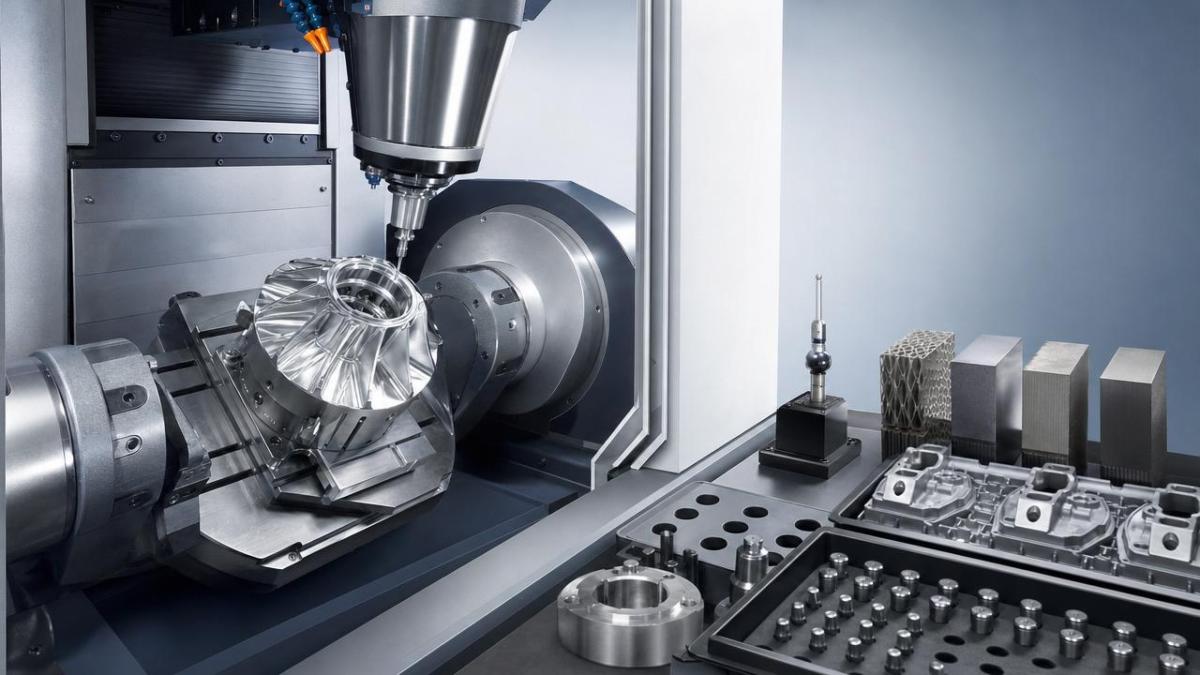
In many industries, dimensional accuracy is the primary benchmark for machining quality. In aerospace, it is only one layer of a much larger performance requirement. A component may pass dimensional inspection and still fail the broader engineering test if residual stress, surface integrity, burr control, geometric consistency, or traceability are weak.
This is especially true for structural brackets, housings, flight-critical interfaces, UAV payload frames, thermal management components, and precision mounting features. These parts often operate under vibration, thermal cycling, dynamic loading, and strict assembly stack-up conditions. A nominally accurate part can still create unacceptable risk if the machining process introduces microcracks, poor edge conditions, unstable flatness after heat treatment, or inconsistent hole position across batches.
For an enterprise buyer, this changes the procurement question. Instead of asking, “Can this supplier machine to ±0.01 mm?” the better question is, “Can this supplier repeatedly deliver conforming aerospace parts with stable process data, documented controls, and predictable production outcomes?” That is the real threshold for custom 5-axis CNC machining aerospace applications.
Five-axis capability adds clear value because it enables fewer setups, better access to complex geometries, improved positional accuracy on compound features, and more efficient machining of titanium, aluminum, Inconel, and engineered composites. But having a 5-axis machine is not the same as having an aerospace-ready 5-axis process. Machine kinematics, probing strategy, fixture design, toolpath optimization, thermal compensation, and post-process validation all determine whether the technology translates into dependable part quality.
What enterprise decision-makers actually need to verify before selecting a supplier
Senior procurement leaders, CTOs, and engineering managers usually care about three outcomes: lower risk, shorter qualification cycles, and dependable lifecycle support. To achieve that, they need evidence that goes beyond polished capability statements. The most useful supplier evaluation criteria are those that reveal whether the vendor can survive real program pressure.
Start with process capability. A strong aerospace machining partner should be able to explain how critical dimensions are controlled, what in-process inspection methods are used, how offsets are managed, and whether there is historical Cp or Cpk data for similar feature classes. If the supplier only offers final inspection reports without showing how the process stays in control, that is a warning sign.
Next is material discipline. In aerospace, raw material is not just a purchasing line item. It is part of the engineering evidence chain. Buyers should verify mill certificates, lot traceability, heat treatment records, segregation controls, and procedures for maintaining traceability from receiving through machining, finishing, and final shipment. If a supplier cannot quickly connect a finished part to its material origin and processing history, future audits or failure investigations become much harder.
Then comes revision and documentation control. Aerospace programs often evolve through prototype, pre-production, qualification, and steady-state manufacturing. Drawings change, tolerances shift, approved processes are updated, and customer-specific documentation requirements expand. A capable supplier should show strong configuration management, document revision discipline, first article inspection workflows, and a clean method for preventing obsolete instructions from reaching the shop floor.
Finally, ask about scalability. Many machine shops perform well on low-volume development work but struggle when demand becomes repetitive, schedule-sensitive, or multi-part-number based. Enterprise buyers should test whether the supplier has production planning maturity, redundant capacity, operator training structure, fixture repeatability, tool life monitoring, and realistic lead-time control. A good prototype supplier is not automatically a reliable production partner.
How custom 5-axis CNC machining supports aerospace performance when done correctly
The reason custom 5-axis CNC machining aerospace programs continue to expand is that aircraft, satellites, drones, and advanced air mobility systems increasingly depend on complex, lightweight, highly integrated parts. Five-axis machining supports this by reducing the need for multiple setups, allowing better tool access, and enabling complex surfaces and angles that would be difficult or inefficient on simpler platforms.
For aerospace design teams, that can mean consolidating assemblies, lowering part count, improving weight efficiency, and achieving more precise mating geometry. For procurement and operations teams, it can mean less secondary handling, lower fixture complexity, and better consistency when the process is properly engineered. These benefits are real, but only when customization is tied to application requirements rather than offered as a generic capability.
For example, a supplier working on thin-wall aluminum housings for avionics will need different process logic than one machining titanium structural components or high-temperature nickel alloy parts. Toolpath strategy, cutting parameters, workholding, coolant approach, chip evacuation, and inspection planning all change with the material and use case. This is why “custom” matters. Aerospace machining is not simply about running a part on a 5-axis machine; it is about adapting the full process to the part’s geometry, material behavior, and end-use load environment.
That adaptation also affects cost and schedule. A supplier that understands aerospace-specific manufacturability can often reduce risk early by recommending tolerance rationalization, datum strategy improvements, corner radius adjustments, or sequencing changes that improve yield without compromising function. From a business standpoint, this engineering feedback can reduce scrap, compress qualification time, and improve total cost of ownership even if the quoted piece price is not the lowest.
The hidden quality drivers that often matter more than the tolerance callout
Many procurement failures happen because supplier comparisons focus too heavily on visible specifications and too little on hidden process variables. In aerospace machining, several of these hidden drivers strongly influence real-world performance.
One is surface integrity. Aerospace parts exposed to fatigue, cyclic loading, or sealing interfaces may be highly sensitive to surface finish, recast layers from secondary operations, smeared material, or subsurface damage. A supplier should be able to discuss not only Ra targets, but also how machining parameters, tooling condition, and finishing methods support the intended performance.
Another is residual stress control. Thin-wall geometries, pockets, and high material removal ratios can create part movement during or after machining. Without proper roughing and finishing strategy, stress relief planning, and fixture logic, a part may inspect correctly immediately after machining but distort later during anodizing, assembly, or service. This is a known issue in aerospace-grade aluminum and titanium components.
Tool management is another overlooked factor. In high-value custom 5-axis CNC machining aerospace work, tool wear is not just a consumable cost issue. It directly affects dimensional drift, edge quality, burr formation, and consistency between lots. Suppliers that monitor tool life scientifically and use stable replacement criteria generally deliver better repeatability than those relying heavily on operator judgment alone.
Inspection strategy also matters. A mature aerospace supplier integrates probing, in-process checks, CMM validation, and first article documentation into the manufacturing flow. Inspection should not be treated as a final gate that discovers problems after value has already been added. For decision-makers, the most trustworthy suppliers are those that design quality into the process rather than sort defects out at the end.
Compliance, certification, and traceability are business issues, not just quality issues
Executives sometimes view certifications as a checklist item, but in aerospace they function as a risk-management layer. A supplier’s quality management system influences audit readiness, corrective action speed, nonconformance containment, and the credibility of every data package that supports part acceptance. This is why AS9100 alignment, controlled documentation practices, and traceability procedures deserve serious attention during supplier selection.
That said, certifications alone are not proof of machining excellence. The right approach is to treat them as the baseline framework, then test how the framework works in practice. Ask how nonconforming material is quarantined. Ask how special process approvals are managed. Ask how first article inspection is updated after engineering revisions. Ask how process deviations are communicated and approved. These questions reveal whether the system is operational or merely present on paper.
Traceability is especially important for aerospace buyers managing liability, lifecycle maintenance, and cross-border supply chains. If a field issue appears years later, the ability to reconstruct which material lot, machine program revision, operator authorization, inspection result, and finishing batch applied to a part can dramatically reduce investigation time and exposure. In this sense, traceability protects both engineering integrity and commercial continuity.
For global sourcing teams, supplier transparency also affects onboarding speed. When machining partners can provide structured process documentation, clean inspection records, and consistent revision control, technical approvals move faster. This helps shorten qualification cycles, which is often more valuable than minor price differences in strategic aerospace programs.
How to compare aerospace machining suppliers without getting trapped by marketing language
Many suppliers describe themselves with similar phrases: precision, quality, advanced equipment, strict inspection, customer focus. These claims are too generic to support a high-stakes sourcing decision. Enterprise buyers need a comparison framework built on evidence.
A practical method is to evaluate suppliers across four layers. First, technical fit: materials, machine envelope, geometric complexity, and demonstrated experience with similar aerospace parts. Second, process maturity: fixturing logic, in-process control, inspection integration, and change management. Third, quality system discipline: traceability, document control, nonconformance handling, and first article rigor. Fourth, business reliability: lead-time realism, communication quality, engineering responsiveness, and capacity stability.
During supplier review, ask for anonymized examples of comparable work, sample inspection packages, first article formats, and explanations of how critical features are controlled. If allowed, request a discussion on historical production challenges and how they were solved. Strong suppliers usually answer these questions with clarity and specifics. Weak suppliers often return to broad claims or avoid data-backed detail.
It is also useful to distinguish between a shop that can “make the part” and a partner that can “support the program.” The first may be sufficient for low-risk prototypes. The second is what aerospace organizations usually need when schedules tighten, documentation requirements expand, and repeatability becomes commercially critical.
What a strong sourcing decision looks like for custom 5-axis CNC machining aerospace programs
A well-informed sourcing decision balances engineering, quality, and operational realities. The goal is not simply to find the cheapest or fastest quote, but to identify the supplier most likely to reduce lifecycle risk while supporting current and future program needs.
In practice, that means prioritizing partners who can demonstrate controlled machining processes, application-specific engineering knowledge, robust traceability, and data transparency. It also means recognizing that a slightly higher upfront machining cost may be economically superior if it reduces qualification delays, scrap exposure, rework cycles, and future supply disruption.
For decision-makers, the best question to carry into supplier evaluation is this: can this company prove not only that it can hit the print, but that it can manage the full aerospace manufacturing responsibility behind the print? That includes material discipline, fatigue-aware execution, revision control, inspection credibility, and production consistency.
Custom 5-axis CNC machining aerospace work creates value when it is treated as a controlled engineering process, not a commodity service. Suppliers that understand this difference become more than vendors. They become risk-reduction assets in a sector where performance claims are easy to make, but engineering truth must be demonstrated.
In the end, tight tolerance is the entry requirement, not the final standard. For aerospace buyers, the smarter benchmark is proven capability under scrutiny: repeatable quality, verified data, compliant systems, and reliable execution at scale. That is the standard that truly supports high-consequence aerospace manufacturing.
Search News
Hot Articles
- Carbon Fiber StructuresHow to Specify Aerospace Carbon Fiber Assemblies for Lightweight, Load-Bearing PartsJul 11, 2026
- Machine VisionXiaomi, Alibaba DAMO Academy Drive Open-Source Robotics Model Ecosystem, Lowering Algorithm Development Barriers for Overseas SMEs Adopting Chinese Robotics SolutionsMar 30, 2026
- Cobots & ArmsShanxi 'AI+' Conference Showcases Embodied Intelligence with Multinational Buyer Engagement: Key Industry ImplicationsMar 30, 2026
Popular Tags
Recommended News
 Jul 11, 2026How to Specify Aerospace Carbon Fiber Assemblies for Lightweight, Load-Bearing PartsAerospace carbon fiber assemblies: learn how to specify laminate design, load data, joining methods, and inspection controls for lighter, reliable load-bearing aerospace parts.Elena Rostova (UAV Systems Researcher)
 Mar 30, 2026Xiaomi, Alibaba DAMO Academy Drive Open-Source Robotics Model Ecosystem, Lowering Algorithm Development Barriers for Overseas SMEs Adopting Chinese Robotics SolutionsXiaomi & Alibaba DAMO Academy's open-source robotics models lower algorithm barriers for global SMEs. Boost efficiency in manufacturing, logistics & smart retail with ROS 2 compatible solutions.TSV Data Lab
 Mar 30, 2026Shanxi 'AI+' Conference Showcases Embodied Intelligence with Multinational Buyer Engagement: Key Industry ImplicationsShanxi 'AI+' Conference highlights embodied intelligence with Tesla, Ubtech & Jiantao showcasing multimodal robotics. 40+ global buyers validated tech on-site, creating new B2B channels for industrial automation & AI solutions.Chen Wei (Automation Lead Engineer)
 Mar 30, 2026Zhongguancun Unveils 6G Integrated Sensing-Computing-Intelligence Platform to Empower Embodied Robots for Global Industrial ApplicationsZhongguancun's new 6G platform revolutionizes industrial robotics with <10ms latency, empowering global automotive, logistics & port automation. Discover how this tech boosts China's smart manufacturing exports.TSV Data Lab
 Mar 30, 2026Mech-Mind Tianjin Embodied Intelligence R&D and Production Base Goes Live, Cutting Delivery Time by 20%–30% for Global Customized AMR+Vision SolutionsMech-Mind's Tianjin AMR+Vision production base cuts delivery time by 20%-30% for欧美 & Latin American markets. Discover how this PLd-certified facility accelerates customized robotics solutions for smart manufacturing and logistics.Chen Wei (Automation Lead Engineer)
 Mar 30, 2026Boao Forum Reveals 'Co-evolution of Big and Small Brains' Trend in Humanoid Robots, China's Embodied Intelligence Accelerates Adaptation to Overseas Manufacturing Service ScenariosDiscover how China's humanoid robots, featuring 'Co-evolution of Big and Small Brains,' are revolutionizing global manufacturing. Learn about Embodied Tian Gong 3.0's ISO compliance and overseas deployment at Boao Forum 2026.Chen Wei (Automation Lead Engineer)
 Mar 30, 2026China Railway Industrial Secures Patent for Embodied Robotics in Material Handling, Boosting High-Precision Delivery Capabilities for Overseas Infrastructure and Manufacturing ProjectsChina Railway Industrial's new patent for embodied robotics in material handling boosts high-precision delivery for global infrastructure & manufacturing. Discover how this innovation enhances logistics accuracy in automotive, rail transit & EPC projects.Chen Wei (Automation Lead Engineer)
 Sep 28, 2026Spindle Runout Measurement in Germany: DIN Standards, Methods, and Acceptance LimitsSpindle runout measurement Germany: explore DIN standards, proven methods, acceptance limits, and audit-ready practices for reliable machining quality.Dr. Marcus Vance
 Sep 27, 2026How to Select Wall-Mount Edge Devices for Space-Constrained Factory NetworksWall mount edge devices for space-constrained factories: evaluate workload, thermal design, power resilience, cable access, and network reliability for smarter deployments.TSV Data Lab
 Sep 26, 2026Machining Tolerance Analysis: How to Set Limits That Meet Function and Cost TargetsMachining tolerance analysis: learn how to set functional limits, control tolerance stacks, reduce inspection risk, and balance precision with production cost.Dr. Marcus Vance
 Sep 25, 2026How to Evaluate an Industrial Infrastructure Data Platform for Multi-Site OperationsIndustrial infrastructure data platform evaluation guide for multi-site operations: compare data quality, edge resilience, interoperability, governance, and scalable proof-of-value criteria.Victor Lin (Chief Software Architect)
 Sep 24, 2026How to Select Machine Vision Optics for Accurate Inspection at Different Working DistancesMachine vision optics selection guide for accurate inspection at every working distance. Compare FOV, pixel scale, DOF, distortion, lighting, and telecentric options.TSV Data Lab
 Sep 23, 2026How to Evaluate a Machine Vision System Integrator for High-Speed Inspection LinesChoose a machine vision system integrator with proven expertise in high-speed inspection, reliable reject timing, robust optics, and measurable acceptance criteria.TSV Data Lab
 Sep 28, 2026When is a SCADA API the right choice for connecting plant systems?SCADA API guide: learn when governed plant data integration improves traceability, security, and scalability—without compromising real-time control.Victor Lin (Chief Software Architect)
 Sep 27, 2026How SCADA data integration improves traceability across production linesSCADA data integration connects production-line data to improve traceability, accelerate quality investigations, and strengthen safety decisions.Victor Lin (Chief Software Architect)
 Sep 26, 2026What to define before starting SCADA integration planningSCADA integration planning starts with clear scope, control boundaries, data models, cybersecurity, and testing. Discover the definitions that reduce risk and costly rework.Victor Lin (Chief Software Architect)
 Sep 25, 2026How a smart factory with Industrial IoT reduces production blind spotsDiscover how a smart factory with Industrial IoT turns real-time machine, quality, and workflow data into actionable insights that reduce production blind spots and delivery risks.Victor Lin (Chief Software Architect)
 Sep 24, 2026When does Industrial IoT make smart manufacturing easier to scale?Smart manufacturing Industrial IoT scales when trusted data, interoperable systems, and secure workflows turn connected assets into measurable gains.TSV Data Lab
 Sep 23, 2026What drives ultra-precision machining cost at 1-micron tolerance?Ultra precision machining cost per part at 1 micron tolerance depends on process, material, metrology, and yield. Learn how to compare quotes confidently.Dr. Marcus Vance
 Sep 22, 2026Drone Engine-T550CC Applications: Build the UAV Power System Around the MissionAn application guide for Drone Engine-T550CC integration, covering payload planning, airframe matching, cooling, fuel, vibration, test procedures, documentation, and service preparation.Elena Rostova (UAV Systems Researcher)
 Sep 22, 2026How to Evaluate Industrial Edge Computing Vendors for Factory DeploymentIndustrial edge computing vendor evaluation guide for factories: compare latency, protocol fit, reliability, security, and lifecycle support before deployment.TSV Data Lab
 Sep 21, 2026Drone Payload Integration: Matching Power, Data, and Center of Gravity for Reliable FlightsDrone payload integration made practical: balance power, data, center of gravity, and endurance to build safer, more reliable mission-ready flights.Elena Rostova (UAV Systems Researcher)
 Sep 20, 2026Autonomous Navigation Pricing: Cost Drivers and Budget Benchmarks for AMR ProjectsAutonomous navigation price explained: compare AMR cost drivers, software, sensors, integration, safety, and lifecycle budgets to build a scalable project plan.Chen Wei (Automation Lead Engineer)
 Sep 19, 2026How to Scope Automation Integration Services for Multi-System Factory ProjectsAutomation integration services: learn how to scope multi-system factory projects with clear workflows, interface contracts, safety boundaries, and acceptance criteria.Victor Lin (Chief Software Architect)