Microscope Slides Wholesale: How to Compare Glass Types, Packaging, and MOQ
Publication Date
author
Microscope Slides Wholesale: What really changes the total purchase cost?
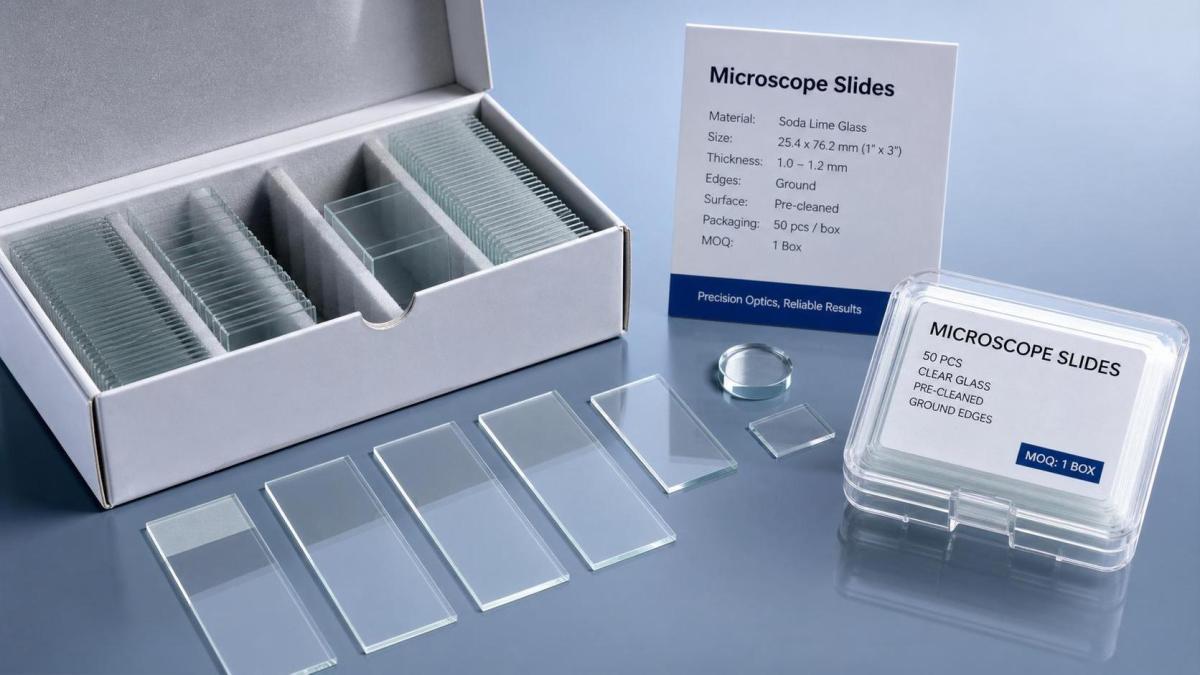
When teams compare microscope slides wholesale offers, unit price is usually the easiest number to see.
It is rarely the number that decides the best deal.
Breakage during transport, poor optical consistency, edge defects, and awkward carton sizes can quietly raise the real landed cost.
That is why a data-led review matters more than catalog language.
A slide that looks interchangeable on paper may behave very differently in pathology, education, routine staining, or automated lab workflows.
In practice, microscope slides wholesale decisions sit at the intersection of material control, packaging discipline, and order planning.
This is also where TechStat Vanguard’s viewpoint is useful.
Engineering truth starts with measurable parameters, not claims.
For microscope slides wholesale sourcing, that means asking for exact glass type, thickness tolerance, edge treatment, pack count, and carton drop protection.
The more precisely those details are defined, the faster poor-fit offers can be filtered out.
Are all glass slides basically the same, or does glass type materially affect use?
This is usually the first wrong assumption in microscope slides wholesale buying.
Slides may share the same dimensions, yet differ in composition, flatness, surface quality, and resistance to processing chemicals.
For basic classroom use, soda-lime glass is often enough.
It is widely available and cost-efficient for large-volume orders.
For more demanding imaging, extra-clear or low-iron glass may produce cleaner visual results.
The gain is not always dramatic, but it matters when image consistency is part of the workflow.
Frosted-end slides, adhesion-coated slides, and charged slides introduce another layer of difference.
Those versions can improve labeling, sample retention, or process compatibility, but they also change storage life and budget.
A practical way to compare microscope slides wholesale options is to separate need from habit.
- Routine teaching and simple observation: standard soda-lime may be the right baseline.
- Histology and staining-heavy processes: chemical resistance and coating consistency matter more.
- Automated handling: dimensional tolerance and edge precision become critical.
- Long storage of prepared specimens: surface stability and clean packaging become more important.
If a supplier cannot provide specification ranges, that is already useful information.
In a noisy supply market, missing data often means hidden variation.
What should be compared besides glass type when reviewing microscope slides wholesale quotes?
The quote sheet needs more than dimensions and price.
Several low-visibility details affect whether a low bid stays low after delivery.
Edge finish is one of them.
Ground edges and polished edges reduce chip risk and handling injury compared with rough-cut edges.
Thickness tolerance is another area worth checking.
If slides vary too much, fit and imaging consistency may suffer, especially in semi-automated equipment.
Cleanliness standard is often overlooked.
Dust, residue, or oil traces raise prep time and can compromise sensitive work.
Before approving microscope slides wholesale supply, it helps to compare the following factors side by side.
This kind of comparison shortens sourcing cycles because it turns a generic quote into a technical match check.
Why does packaging matter so much in microscope slides wholesale orders?
Because fragile products fail in transit long before they fail in use.
A low-cost microscope slides wholesale shipment can become expensive if even a small share arrives chipped, stuck together, or contaminated.
The risk grows with export distance, pallet stacking, humidity shifts, and manual handling across multiple transfer points.
Better packaging is not only about thicker cartons.
It also includes sleeve structure, separators, moisture control, and carton count that matches warehouse practices.
More common trouble appears when box size looks efficient on paper but is awkward in daily replenishment.
For example, very large cartons may reduce freight cost per piece, yet create break-open inventory and higher internal damage.
A useful packaging review should include these questions.
- How many slides are packed per inner box, and does that fit actual consumption rhythm?
- Are slides separated well enough to prevent edge contact during vibration?
- Does the carton design protect corners under compression and repeated handling?
- Can the packaging lot code support traceability if defects appear later?
That last point matters more than it seems.
TSV’s broader sourcing philosophy is that traceability reduces qualification friction.
Even simple lab consumables benefit from that discipline.
How should MOQ be judged without overbuying or creating stock risk?
MOQ is often presented as a price lever.
In reality, it is also a risk lever.
A lower minimum order quantity can improve flexibility, especially during supplier validation or mixed-site rollout.
A higher MOQ may lower unit cost, but it increases exposure if slide performance proves inconsistent.
The better question is not, “What is the cheapest MOQ?”
It is, “What order size balances landed cost, storage, and qualification confidence?”
In practical microscope slides wholesale sourcing, MOQ decisions usually depend on four variables.
- Monthly usage stability
- Shelf-life or packaging integrity over time
- Lead time variability
- Cost of failed qualification or return handling
When demand is predictable, larger microscope slides wholesale contracts can make sense.
When demand fluctuates, staged delivery under one annual agreement is often cleaner than forcing a single bulk shipment.
That structure preserves negotiated pricing while protecting working inventory.
It also gives more room to monitor early batch quality before full volume is released.
Where do buyers usually misjudge microscope slides wholesale offers?
The most common error is treating all losses as visible breakage.
Some losses are slower and harder to see.
Time spent sorting dusty slides, relabeling poor frosted ends, or rejecting mixed-thickness batches still has a cost.
Another frequent mistake is approving by sample only.
A hand-checked sample pack may look excellent, while production lots behave differently.
That is why batch consistency and lot traceability deserve equal attention.
A third issue is accepting vague wording.
Terms such as “premium glass” or “high clarity” are not technical controls.
For microscope slides wholesale evaluation, useful language is measurable language.
If a quote does not define tolerances, edge type, cleanliness, and pack structure, comparison becomes guesswork.
A short pre-approval checklist helps reduce that ambiguity.
- Request the formal specification sheet, not only the sales sheet.
- Confirm whether the sample came from regular production.
- Ask for breakage claim rules and replacement timing.
- Match carton configuration to receiving and storage conditions.
- Review whether MOQ can be paired with split shipments.
What is the smartest next step before placing a microscope slides wholesale order?
Start by writing the use case in technical terms, not purchasing shorthand.
That means defining slide type, dimensions, coating need, acceptable breakage rate, pack count, and target order rhythm.
Then compare microscope slides wholesale offers against those criteria line by line.
This approach mirrors the TSV principle that parameters should drive supplier filtering.
It keeps the review grounded in evidence instead of broad claims.
If two offers look close, the tie-breaker is usually consistency risk.
Choose the source that can document tolerances, packaging control, and lot traceability with fewer assumptions.
For microscope slides wholesale sourcing, that discipline often saves more than chasing the lowest visible price.
A practical next move is to build a one-page comparison sheet for glass type, edge finish, packaging, MOQ, lead time, and defect handling.
Once that sheet exists, decisions become faster, cleaner, and easier to defend across future reorders.
Search News
Hot Articles
- Carbon Fiber StructuresHow to Specify Aerospace Carbon Fiber Assemblies for Lightweight, Load-Bearing PartsJul 11, 2026
- Machine VisionXiaomi, Alibaba DAMO Academy Drive Open-Source Robotics Model Ecosystem, Lowering Algorithm Development Barriers for Overseas SMEs Adopting Chinese Robotics SolutionsMar 30, 2026
- Cobots & ArmsShanxi 'AI+' Conference Showcases Embodied Intelligence with Multinational Buyer Engagement: Key Industry ImplicationsMar 30, 2026
Popular Tags
Recommended News
 Jul 11, 2026How to Specify Aerospace Carbon Fiber Assemblies for Lightweight, Load-Bearing PartsAerospace carbon fiber assemblies: learn how to specify laminate design, load data, joining methods, and inspection controls for lighter, reliable load-bearing aerospace parts.Elena Rostova (UAV Systems Researcher)
 Mar 30, 2026Xiaomi, Alibaba DAMO Academy Drive Open-Source Robotics Model Ecosystem, Lowering Algorithm Development Barriers for Overseas SMEs Adopting Chinese Robotics SolutionsXiaomi & Alibaba DAMO Academy's open-source robotics models lower algorithm barriers for global SMEs. Boost efficiency in manufacturing, logistics & smart retail with ROS 2 compatible solutions.TSV Data Lab
 Mar 30, 2026Shanxi 'AI+' Conference Showcases Embodied Intelligence with Multinational Buyer Engagement: Key Industry ImplicationsShanxi 'AI+' Conference highlights embodied intelligence with Tesla, Ubtech & Jiantao showcasing multimodal robotics. 40+ global buyers validated tech on-site, creating new B2B channels for industrial automation & AI solutions.Chen Wei (Automation Lead Engineer)
 Mar 30, 2026Zhongguancun Unveils 6G Integrated Sensing-Computing-Intelligence Platform to Empower Embodied Robots for Global Industrial ApplicationsZhongguancun's new 6G platform revolutionizes industrial robotics with <10ms latency, empowering global automotive, logistics & port automation. Discover how this tech boosts China's smart manufacturing exports.TSV Data Lab
 Mar 30, 2026Mech-Mind Tianjin Embodied Intelligence R&D and Production Base Goes Live, Cutting Delivery Time by 20%–30% for Global Customized AMR+Vision SolutionsMech-Mind's Tianjin AMR+Vision production base cuts delivery time by 20%-30% for欧美 & Latin American markets. Discover how this PLd-certified facility accelerates customized robotics solutions for smart manufacturing and logistics.Chen Wei (Automation Lead Engineer)
 Mar 30, 2026Boao Forum Reveals 'Co-evolution of Big and Small Brains' Trend in Humanoid Robots, China's Embodied Intelligence Accelerates Adaptation to Overseas Manufacturing Service ScenariosDiscover how China's humanoid robots, featuring 'Co-evolution of Big and Small Brains,' are revolutionizing global manufacturing. Learn about Embodied Tian Gong 3.0's ISO compliance and overseas deployment at Boao Forum 2026.Chen Wei (Automation Lead Engineer)
 Mar 30, 2026China Railway Industrial Secures Patent for Embodied Robotics in Material Handling, Boosting High-Precision Delivery Capabilities for Overseas Infrastructure and Manufacturing ProjectsChina Railway Industrial's new patent for embodied robotics in material handling boosts high-precision delivery for global infrastructure & manufacturing. Discover how this innovation enhances logistics accuracy in automotive, rail transit & EPC projects.Chen Wei (Automation Lead Engineer)
 Oct 12, 2026How to Verify RoHS Compliance in Industrial Sensing Systems Before DeploymentRoHS compliant sensing systems: learn how to verify materials, supplier declarations, testing, and configuration controls before industrial deployment.TSV Data Lab
 Oct 11, 2026How Procurement-Oriented Content Taxonomy Improves B2B Buying JourneysProcurement-oriented content taxonomy streamlines B2B buying journeys with clearer evidence, supplier comparisons, risk visibility, and faster approvals.TSV Data Lab
 Oct 10, 2026How to Select a Machine Performance Monitoring Platform for OEE and Downtime ReductionMachine performance monitoring platform selection guide: validate machine states, OEE data, downtime reasons, integrations, and scalability to reduce losses with confidence.TSV Data Lab
 Oct 08, 2026How to Machine Inconel 625 Blades Without Heat Cracks or Edge ChippingInconel 625 blade machining guide: prevent heat cracks, edge chipping, chatter, and work hardening with proven tooling, cooling, fixturing, and inspection strategies.Dr. Marcus Vance
 Oct 07, 2026How to Evaluate an HMI Panel Distributor for Industrial Automation ProjectsHMI panel distributor evaluation guide: verify technical compatibility, traceability, supply reliability, lifecycle support, and total cost for automation projects.Victor Lin (Chief Software Architect)
 Oct 06, 2026Navigation Fault Tolerance Standards for AMRs: What Safety Teams Must VerifyNavigation fault tolerance standards: learn what AMR safety teams must verify, from localization loss and sensor faults to stopping distance, safe restart, and site-specific validation.Chen Wei (Automation Lead Engineer)
 Oct 05, 2026Calculating Edge Computing Total Cost of Ownership Across Distributed SitesEdge computing ownership cost explained: calculate deployment, energy, connectivity, security, remote support, and refresh costs across distributed sites.TSV Data Lab
 Oct 04, 2026CAD/CAM Benchmarking in the GCC: What Manufacturers Should Ask a ConsultantCAD CAM benchmark consultant GCC guide: learn the key questions manufacturers should ask to validate post-processors, workflows, machine performance, and production risk.Victor Lin (Chief Software Architect)
 Oct 03, 2026Selecting Automotive Radar Sensor Modules for ADAS Range, Resolution, and IntegrationAutomotive radar sensor module selection guide for ADAS: compare range, resolution, field of view, latency, and integration to build safer, reliable vehicle systems.TSV Data Lab
 Oct 02, 2026How to Qualify Machined Parts Suppliers for Hard Tech ProgramsHard tech supply chain machined parts demand rigorous supplier qualification. Learn how to assess capability, traceability, quality controls, and delivery resilience.Dr. Marcus Vance
 Oct 01, 2026How to Select an Outdoor Security Radar Sensor for Perimeter Detection?Outdoor security radar sensor selection guide: compare range, accuracy, false-alarm control, integration, and field testing for reliable perimeter detection.TSV Data Lab
 Sep 30, 2026How to Evaluate Solid-State LiDAR Hardware for Outdoor Autonomous VehiclesSolid state LiDAR hardware evaluation guide for outdoor autonomous vehicles—compare range, point-cloud quality, environmental resilience, integration, and safety.TSV Data Lab
 Sep 29, 2026ISO 9283 Repeatability: How to Evaluate Cobot Positioning PerformanceISO 9283 cobot repeatability explained: learn how payload, reach, approach direction, and test conditions affect positioning performance and cell capability.Chen Wei (Automation Lead Engineer)
 Oct 12, 2026What should be included in predictive maintenance pricing for factories?Predictive maintenance pricing for factories: compare sensors, software, integration, support, and total cost to secure measurable uptime gains and avoid hidden expenses.TSV Data Lab
 Oct 11, 2026How payload and reach change the cost of an industrial robotCost of industrial robot systems depends heavily on payload and reach. Learn how sizing, torque, tooling, safety, and lifecycle factors shape smarter automation investments.Chen Wei (Automation Lead Engineer)
 Oct 10, 2026When does the cost of industrial robots pay back in high-volume production?Cost of industrial robots: discover how high-volume manufacturers calculate payback through uptime, cycle time, labor, quality, and integration before investing.Chen Wei (Automation Lead Engineer)
 Oct 09, 2026What does a manufacturing robot really cost beyond the purchase price?Manufacturing robot cost goes far beyond the purchase price. Explore integration, tooling, safety, uptime, and total ownership factors for smarter automation investments.Chen Wei (Automation Lead Engineer)