How payload and reach change the cost of an industrial robot
Publication Date
author
How Payload and Reach Change the Cost of an Industrial Robot
The cost of industrial robot systems is rarely defined by the robot arm alone. Payload capacity and reach directly influence structural design, motor sizing, gearbox requirements, safety integration, and installation complexity. For technical evaluators comparing automation investments, understanding these engineering trade-offs is essential to separating nominal purchase price from lifecycle cost, performance limits, and application-specific value.
A robot quoted at a lower initial price can become the more expensive choice if it operates close to its torque limit, needs a larger safety envelope, requires a reinforced pedestal, or cannot maintain cycle time with the real end-of-arm tooling attached. Conversely, selecting a substantially oversized robot “for future flexibility” can add capital cost, energy demand, floor-space pressure, and unnecessary commissioning work. The practical question is not simply, “What payload do we need?” It is: “What load, at what center of gravity, across what path, at what speed, for how many operating hours?”
That distinction matters because a robot’s published payload and reach are headline figures, while the actual mechanical burden is driven by moments, inertia, acceleration, duty cycle, and mounting geometry. Engineering Truth Through Data means looking beyond broad marketing categories and examining the parameters that determine whether a robot is appropriately sized for a production cell.
Payload is more than the weight of the workpiece
Industrial robot payload is commonly understood as the maximum mass carried by the wrist. In real applications, however, the relevant moving load includes every item downstream of the flange: gripper, welding torch, spindle, vacuum cup assembly, tool changer, vision camera, cable package, protective covers, sensors, brackets, and the part itself. A palletizing application may carry a light carton but use a relatively heavy vacuum tooling frame. A machine-tending cell may handle a modest casting while adding a dual gripper that holds both an incoming and an outgoing part during the transfer.
This total mass is only the first check. The position of that mass matters just as much. A load held farther from the robot wrist creates a larger bending moment. A long tool, even when light, can shift the center of gravity outward and increase stress on wrist axes, reducers, bearings, and motors. Tooling designers sometimes solve an access problem by extending the end effector, then discover that the selected robot’s usable capacity has narrowed materially.
For that reason, a payload rating should never be read in isolation. Technical evaluation should request the manufacturer’s load diagrams, allowable center-of-gravity limits, axis torque constraints, and inertia limits. These documents show the operating boundary more accurately than a single payload number. They also reveal whether the proposed application sits comfortably within the robot’s capability or merely fits under a simplified static condition.
Higher payload capacity generally raises the cost of an industrial robot because the machine needs stronger links, larger bearings, more capable gearboxes, higher-torque servo motors, and a more rigid base. The controller, cable routing, brake design, and power requirements may also scale upward. These are not cosmetic differences. They are the hardware required to repeatedly accelerate, decelerate, and position a larger load without unacceptable deflection or premature wear.
Reach amplifies the mechanical challenge
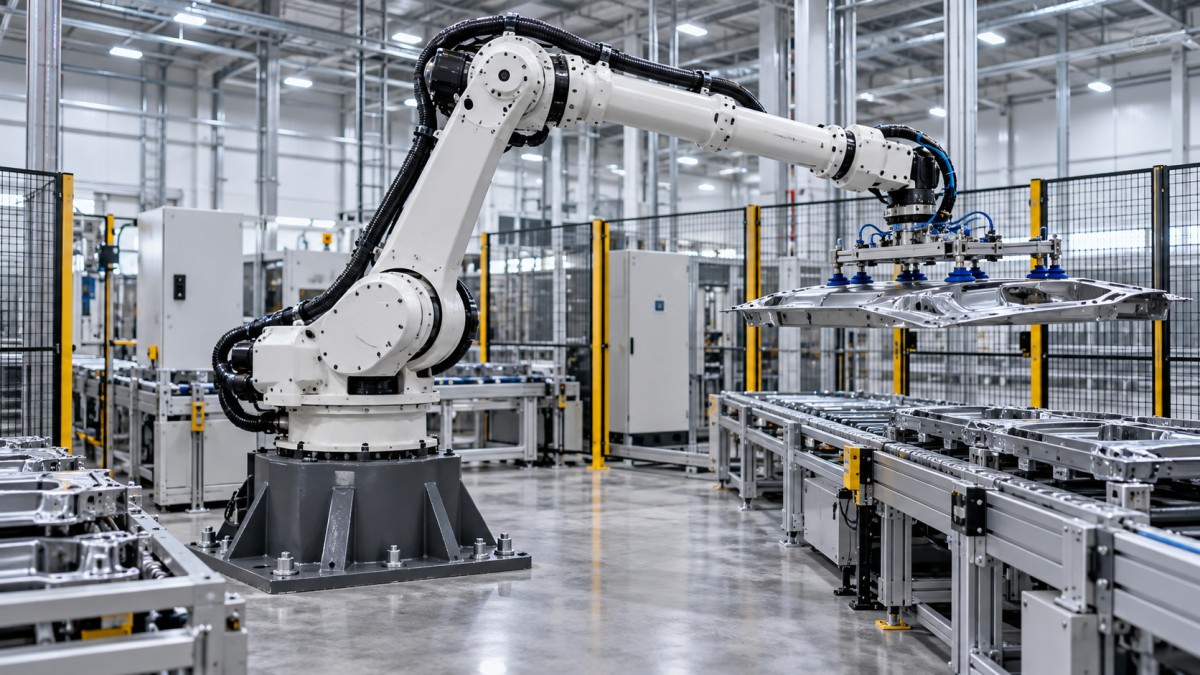
Reach changes the cost equation because it changes leverage. As the arm extends, a payload creates higher torque at upstream joints. The same mass that is manageable close to the robot base can become demanding at maximum extension. Long-reach robots therefore need more than longer links. They often require stiffer arm structures, stronger drives, more robust reducers, and careful control of vibration and settling time.
This explains a common sourcing mistake: comparing two robots by payload alone. A robot with a similar nominal payload but significantly longer reach may be engineered for a very different load moment. It may cost more, need a larger controller or cabinet, and require a wider protected operating zone. If the application only needs a compact working envelope, paying for extended reach may yield no production benefit. If the application genuinely needs to serve multiple machines, access a deep fixture, or palletize across a broad pallet pattern, insufficient reach can be even more costly because it forces changes to layout, conveyors, fixtures, or manual intervention.
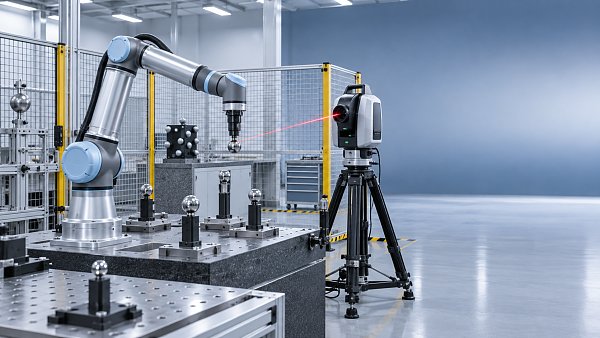
Reach also affects dynamic accuracy. Most robot datasheets publish repeatability, which describes the ability to return to a taught point under stated conditions. It should not be confused with absolute accuracy or path accuracy. At longer extension, structural flex, payload variation, thermal effects, and high acceleration can influence the actual tool position more noticeably. For welding, sealing, dispensing, laser processing, or precision assembly, the relevant evaluation may include path performance, calibration strategy, vision correction, or external metrology—not repeatability alone.
The payload-reach combination drives robot class
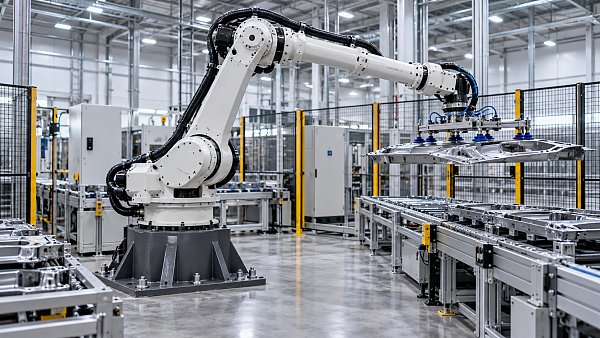
Payload and reach should be considered as a pair rather than two independent filters. A small robot with a short reach may be suitable for tabletop assembly, inspection, or compact machine tending. A medium-range six-axis unit may suit welding or general handling. A long-reach palletizing robot can cover a large area, but its value depends on pallet pattern, infeed position, layer height, end-effector mass, and required throughput.
The relationship becomes particularly important at the edge of a robot’s workspace. An arm may physically reach a point, yet reach it with limited orientation freedom, reduced speed, or a near-singular joint configuration. A specification review should therefore test the full set of required poses, not merely draw a circle around the nominal maximum reach. This is especially relevant when a robot must enter a CNC machine, work around guarding, approach angled fixtures, or maintain a tool orientation over a complex surface.
Why the robot purchase price is only part of the cost
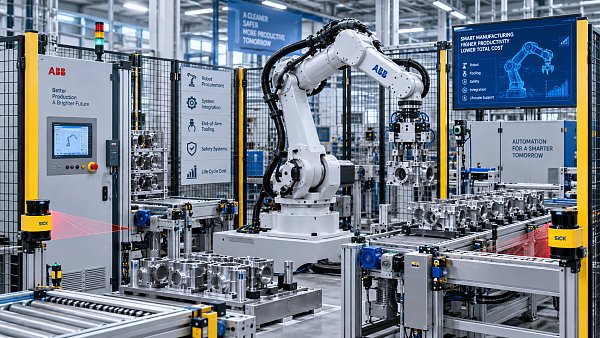
A larger payload or longer reach robot can change costs throughout the cell. The most visible effect is the arm price, but the system-level effects are often more consequential. A heavier robot may require a stronger mounting surface, engineered baseplate, or reinforced pedestal. Its physical envelope may demand larger perimeter guarding, safety scanners, interlocked doors, or a reconfigured material flow. Transport, rigging, installation access, and electrical infrastructure can also become more involved.
End-of-arm tooling deserves equal scrutiny. As reach increases, an integrator may use longer tooling to access a process point, which further increases moment and inertia. As payload rises, pneumatic circuits, cabling, tool changers, and gripper construction may grow as well. The robot choice and tooling choice are therefore coupled. Treating them as separate procurement packages is a reliable way to miss the real operating load.
There is also a lifecycle issue. A robot that works continuously near its limits is not automatically a poor choice; manufacturers define ratings for intended operation. But a technical team should understand the duty assumptions behind its cycle. High acceleration, abrupt reversals, elevated temperatures, contamination, and frequent operation at long extension can alter maintenance planning. Discussions about service intervals, spare-part availability, gearbox condition monitoring, brake checks, and mean time between failures should be grounded in the specific operating environment rather than in generic uptime claims.
Do not buy margin blindly
It is sensible to allow margin for product variation, tooling revisions, and uncertainty during early engineering. Yet margin should be tied to a documented risk, not selected by habit. An oversized robot can be harder to place in a constrained cell, may have lower practical speed for a light-load application, and can impose a larger safety footprint. The best economic choice is usually the smallest robot that meets the verified envelope with adequate dynamic capacity and a defensible allowance for foreseeable changes.
This does not mean choosing the lowest rated model. If future programs will add a vision module, a second gripper, or a heavier part family, those assumptions should appear in the load model. The useful distinction is between an evidenced expansion path and vague “future-proofing.” One can be assessed; the other often becomes an expensive placeholder.
A better technical comparison starts with the load model
Before comparing supplier quotations, prepare a common application sheet. It should identify the mass of every tool-side component, each center-of-gravity location, estimated inertia where available, maximum horizontal and vertical reach, required orientations, target cycle time, operating hours, environmental conditions, and mounting concept. It should also identify whether the robot will carry one part, two parts, or a part plus a fixture during any phase of the cycle.
Then ask each supplier or integrator to evaluate the same envelope. A credible proposal should distinguish static payload from dynamic feasibility. It should make clear whether the stated cycle time depends on reduced acceleration, restricted wrist orientation, simplified motion, or a payload condition different from the actual tool. If simulations are used, request clarity on assumptions. Simulation is valuable, but its output is only as useful as the masses, paths, acceleration settings, and collision model supplied to it.
This is where independent benchmarking has practical value. TechStat Vanguard approaches robotics evaluation as a filtering problem: remove ambiguous claims, compare equivalent parameters, and identify the conditions attached to each rating. “Parameters do not lie; tolerances dictate success” is directly applicable to robot selection. A payload figure without a center-of-gravity limit is incomplete. A reach figure without a usable orientation study is incomplete. A cycle-time promise without a motion profile is incomplete.
Questions that expose hidden cost early
- Does the quoted payload include the complete end effector, cables, tool changer, and worst-case part condition?
- What are the allowable center-of-gravity and inertia limits at the required wrist orientation?
- Can the robot achieve the target cycle at the farthest required point, not only in a favorable central position?
- What foundation, pedestal, guarding, and safety-zone requirements follow from the selected model?
- Are accuracy, repeatability, and path-performance requirements appropriate for the process, or is external calibration needed?
- What operating conditions could reduce the intended service interval or require additional protection?
Payload and reach are not merely catalog filters. They shape the mechanical architecture of the robot, the layout of the cell, the design of the tooling, and the operating risk carried into production. The cost of industrial robot ownership becomes clearer when teams model the real load and motion before negotiating the machine price. For technical evaluators, the most useful next step is to convert application assumptions into a parameter-backed specification sheet, then compare each proposed system against that same evidence rather than against a headline rating.
Search News
Hot Articles
- Carbon Fiber StructuresHow to Specify Aerospace Carbon Fiber Assemblies for Lightweight, Load-Bearing PartsJul 11, 2026
- Machine VisionXiaomi, Alibaba DAMO Academy Drive Open-Source Robotics Model Ecosystem, Lowering Algorithm Development Barriers for Overseas SMEs Adopting Chinese Robotics SolutionsMar 30, 2026
- Cobots & ArmsShanxi 'AI+' Conference Showcases Embodied Intelligence with Multinational Buyer Engagement: Key Industry ImplicationsMar 30, 2026
Popular Tags
Recommended News
 Jul 11, 2026How to Specify Aerospace Carbon Fiber Assemblies for Lightweight, Load-Bearing PartsAerospace carbon fiber assemblies: learn how to specify laminate design, load data, joining methods, and inspection controls for lighter, reliable load-bearing aerospace parts.Elena Rostova (UAV Systems Researcher)
 Mar 30, 2026Xiaomi, Alibaba DAMO Academy Drive Open-Source Robotics Model Ecosystem, Lowering Algorithm Development Barriers for Overseas SMEs Adopting Chinese Robotics SolutionsXiaomi & Alibaba DAMO Academy's open-source robotics models lower algorithm barriers for global SMEs. Boost efficiency in manufacturing, logistics & smart retail with ROS 2 compatible solutions.TSV Data Lab
 Mar 30, 2026Shanxi 'AI+' Conference Showcases Embodied Intelligence with Multinational Buyer Engagement: Key Industry ImplicationsShanxi 'AI+' Conference highlights embodied intelligence with Tesla, Ubtech & Jiantao showcasing multimodal robotics. 40+ global buyers validated tech on-site, creating new B2B channels for industrial automation & AI solutions.Chen Wei (Automation Lead Engineer)
 Mar 30, 2026Zhongguancun Unveils 6G Integrated Sensing-Computing-Intelligence Platform to Empower Embodied Robots for Global Industrial ApplicationsZhongguancun's new 6G platform revolutionizes industrial robotics with <10ms latency, empowering global automotive, logistics & port automation. Discover how this tech boosts China's smart manufacturing exports.TSV Data Lab
 Mar 30, 2026Mech-Mind Tianjin Embodied Intelligence R&D and Production Base Goes Live, Cutting Delivery Time by 20%–30% for Global Customized AMR+Vision SolutionsMech-Mind's Tianjin AMR+Vision production base cuts delivery time by 20%-30% for欧美 & Latin American markets. Discover how this PLd-certified facility accelerates customized robotics solutions for smart manufacturing and logistics.Chen Wei (Automation Lead Engineer)
 Mar 30, 2026Boao Forum Reveals 'Co-evolution of Big and Small Brains' Trend in Humanoid Robots, China's Embodied Intelligence Accelerates Adaptation to Overseas Manufacturing Service ScenariosDiscover how China's humanoid robots, featuring 'Co-evolution of Big and Small Brains,' are revolutionizing global manufacturing. Learn about Embodied Tian Gong 3.0's ISO compliance and overseas deployment at Boao Forum 2026.Chen Wei (Automation Lead Engineer)
 Mar 30, 2026China Railway Industrial Secures Patent for Embodied Robotics in Material Handling, Boosting High-Precision Delivery Capabilities for Overseas Infrastructure and Manufacturing ProjectsChina Railway Industrial's new patent for embodied robotics in material handling boosts high-precision delivery for global infrastructure & manufacturing. Discover how this innovation enhances logistics accuracy in automotive, rail transit & EPC projects.Chen Wei (Automation Lead Engineer)
 Oct 11, 2026How Procurement-Oriented Content Taxonomy Improves B2B Buying JourneysProcurement-oriented content taxonomy streamlines B2B buying journeys with clearer evidence, supplier comparisons, risk visibility, and faster approvals.TSV Data Lab
 Oct 10, 2026How to Select a Machine Performance Monitoring Platform for OEE and Downtime ReductionMachine performance monitoring platform selection guide: validate machine states, OEE data, downtime reasons, integrations, and scalability to reduce losses with confidence.TSV Data Lab
 Oct 08, 2026How to Machine Inconel 625 Blades Without Heat Cracks or Edge ChippingInconel 625 blade machining guide: prevent heat cracks, edge chipping, chatter, and work hardening with proven tooling, cooling, fixturing, and inspection strategies.Dr. Marcus Vance
 Oct 07, 2026How to Evaluate an HMI Panel Distributor for Industrial Automation ProjectsHMI panel distributor evaluation guide: verify technical compatibility, traceability, supply reliability, lifecycle support, and total cost for automation projects.Victor Lin (Chief Software Architect)
 Oct 06, 2026Navigation Fault Tolerance Standards for AMRs: What Safety Teams Must VerifyNavigation fault tolerance standards: learn what AMR safety teams must verify, from localization loss and sensor faults to stopping distance, safe restart, and site-specific validation.Chen Wei (Automation Lead Engineer)
 Oct 05, 2026Calculating Edge Computing Total Cost of Ownership Across Distributed SitesEdge computing ownership cost explained: calculate deployment, energy, connectivity, security, remote support, and refresh costs across distributed sites.TSV Data Lab
 Oct 04, 2026CAD/CAM Benchmarking in the GCC: What Manufacturers Should Ask a ConsultantCAD CAM benchmark consultant GCC guide: learn the key questions manufacturers should ask to validate post-processors, workflows, machine performance, and production risk.Victor Lin (Chief Software Architect)
 Oct 03, 2026Selecting Automotive Radar Sensor Modules for ADAS Range, Resolution, and IntegrationAutomotive radar sensor module selection guide for ADAS: compare range, resolution, field of view, latency, and integration to build safer, reliable vehicle systems.TSV Data Lab
 Oct 02, 2026How to Qualify Machined Parts Suppliers for Hard Tech ProgramsHard tech supply chain machined parts demand rigorous supplier qualification. Learn how to assess capability, traceability, quality controls, and delivery resilience.Dr. Marcus Vance
 Oct 01, 2026How to Select an Outdoor Security Radar Sensor for Perimeter Detection?Outdoor security radar sensor selection guide: compare range, accuracy, false-alarm control, integration, and field testing for reliable perimeter detection.TSV Data Lab
 Sep 30, 2026How to Evaluate Solid-State LiDAR Hardware for Outdoor Autonomous VehiclesSolid state LiDAR hardware evaluation guide for outdoor autonomous vehicles—compare range, point-cloud quality, environmental resilience, integration, and safety.TSV Data Lab
 Sep 29, 2026ISO 9283 Repeatability: How to Evaluate Cobot Positioning PerformanceISO 9283 cobot repeatability explained: learn how payload, reach, approach direction, and test conditions affect positioning performance and cell capability.Chen Wei (Automation Lead Engineer)
 Oct 11, 2026How payload and reach change the cost of an industrial robotCost of industrial robot systems depends heavily on payload and reach. Learn how sizing, torque, tooling, safety, and lifecycle factors shape smarter automation investments.Chen Wei (Automation Lead Engineer)
 Oct 10, 2026When does the cost of industrial robots pay back in high-volume production?Cost of industrial robots: discover how high-volume manufacturers calculate payback through uptime, cycle time, labor, quality, and integration before investing.Chen Wei (Automation Lead Engineer)
 Oct 09, 2026What does a manufacturing robot really cost beyond the purchase price?Manufacturing robot cost goes far beyond the purchase price. Explore integration, tooling, safety, uptime, and total ownership factors for smarter automation investments.Chen Wei (Automation Lead Engineer)
 Oct 08, 2026AGV vs. AMR: Which Is Better for Frequently Changing Routes?Which is better for changing routes? Compare AGVs and AMRs for flexible navigation, docking precision, traffic control, and faster facility reconfiguration.Chen Wei (Automation Lead Engineer)
 Oct 07, 2026How Much Does an Automated Guided Vehicle Cost in 2026?How much does an automated guided vehicle cost in 2026? Explore AGV price ranges, hidden deployment costs, and smart buying factors for stronger ROI.Chen Wei (Automation Lead Engineer)