Inconel machining for turbine blades and the real tool cost
Publication Date
author
For finance decision-makers, inconel machining for turbine blades is not just an engineering challenge—it is a direct cost-control issue. Tool wear, cycle time, scrap risk, and process stability can quickly turn a quoted part price into a hidden budget drain. This article examines the real tooling cost behind turbine blade production with a data-focused lens, helping buyers separate inflated claims from measurable manufacturing economics.
In aerospace and advanced energy supply chains, turbine blades are often quoted as premium parts because of material difficulty, tight tolerances, and 5-axis process complexity. Yet the largest hidden cost driver is frequently not the raw Inconel billet, but the interaction between cutting tools, machine time, and process control.
For procurement teams, the practical question is simple: when suppliers discuss difficult alloys, how much of the price is grounded in real production economics, and how much is padded risk? A disciplined review of inconel machining for turbine blades provides a clearer answer than marketing language ever will.
Why Inconel Tooling Cost Escalates Faster Than Buyers Expect
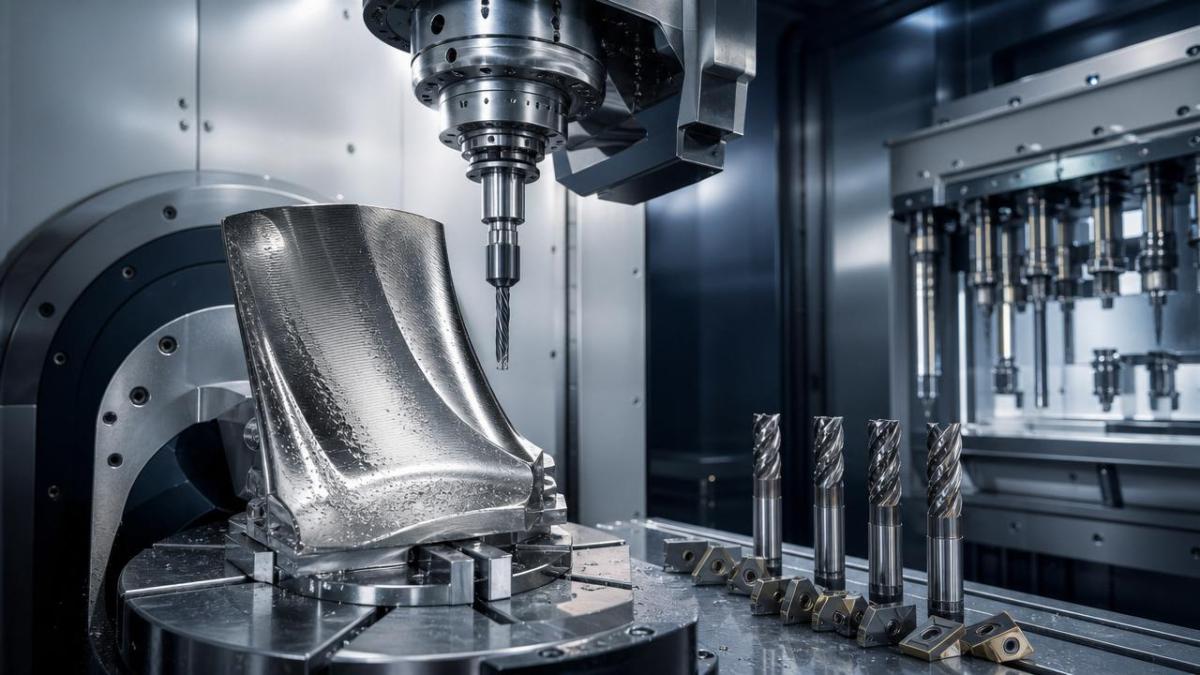
Inconel grades used for turbine components retain strength at elevated temperatures, resist oxidation, and work harden rapidly. Those three traits improve in-service performance, but they also shorten tool life during roughing, semi-finishing, and finishing. In many shops, tool consumption can vary by 20% to 40% between two suppliers producing the same geometry.
That variation matters because turbine blade machining rarely runs as a simple 2-axis job. A typical blade program may involve 4 to 7 tool families, multiple flute lengths, and several toolpath revisions before stable output is reached. If a quote assumes aggressive tool life and the shop later experiences premature edge breakdown, the financial overrun appears in surcharge requests, delayed delivery, or reduced quality yield.
The four cost multipliers behind the quote
For finance reviewers, tooling cost should be evaluated through four linked variables: tool wear rate, spindle time, scrap exposure, and process interruption. These variables compound. A cutter that lasts 15% less than planned does not just increase insert spend; it can also add tool changes, re-touch offsets, and non-cutting downtime.
- Tool wear per blade or per batch
- Cycle time spread between first-off and stable production
- Scrap or rework rate after dimensional drift
- Unplanned stoppage frequency during long 5-axis runs
In practical sourcing terms, a blade quoted at an attractive unit price may become expensive if it requires 2 additional tool replacements every 10 parts or if scrap rises from 3% to 8% during thin-wall finishing.
Where the money goes in a real turbine blade program
The table below breaks down common cost pressure points in inconel machining for turbine blades. Percentages are not universal benchmarks, but realistic planning ranges used in supplier evaluation when exact process data is unavailable.
The key takeaway is that tooling is not an isolated consumable line. It is a trigger for broader cost movement across labor, machine occupancy, quality assurance, and delivery performance.
Why low tool price does not equal low tool cost
A cheaper end mill or insert may reduce purchase price by 10% to 15%, but if tool life drops from 12 blades to 8 blades, the effective tool cost per good part rises sharply. Add one extra stoppage on a 90-minute cycle, and the total cost penalty can exceed the nominal savings on cutting consumables.
This is especially relevant for finance teams approving annual supply agreements. A supplier with disciplined process windows, even at a slightly higher quoted rate, often presents lower full-program cost than a supplier relying on optimistic assumptions.
How to Evaluate Inconel Machining for Turbine Blades Like a Cost Analyst
A robust sourcing review should move beyond part price and ask for process evidence. Inconel machining for turbine blades should be evaluated through measurable production signals, not generic statements about difficult materials or premium workmanship.
For finance-oriented approval, five checkpoints usually matter most: tool life consistency, cycle time repeatability, yield rate, revision control, and inspection burden. If a supplier cannot quantify these areas within a reasonable range, the quoted number carries a higher contingency premium.
Five procurement questions that expose real process maturity
- What is the expected tool life by operation: roughing, slotting, and finishing?
- What cycle time range is typical from first article to serial production?
- What scrap allowance is built into the quote: 2%, 5%, or higher?
- How often are toolpaths or offsets adjusted during a 20-part run?
- What inspection steps are in-process versus final CMM verification?
These questions create a useful filter. A capable supplier does not need to disclose proprietary details, but should be able to provide stable ranges such as 6 to 10 parts per finishing tool, 75 to 110 minutes per blade, or a first-pass yield target above 90% after process validation.
Decision matrix for finance approval
The following matrix helps compare suppliers when pricing appears close but process risk differs. It is especially useful for buyers reviewing 2 to 4 shortlisted vendors for aerospace or high-temperature rotating components.
From a budgeting standpoint, lower-risk suppliers may not always present the lowest line-item quote. However, they are more likely to protect annualized cost, especially where part families, repeat orders, or qualification lots extend across 6 to 12 months.
What “cost transparency” should look like
A transparent quote usually separates setup, programming, tooling burden, inspection, and production rate assumptions. If every cost is merged into one opaque unit price, it becomes difficult to understand whether a supplier is efficient or simply adding a large risk buffer.
For turbine blade programs, a quote review cycle of 3 steps is often effective: first compare baseline unit price, then stress-test tooling assumptions, and finally review what happens if order volume moves by 25% up or down. This reveals whether the supplier’s economics are stable or fragile.
The Hidden Variables That Change Tool Cost Per Blade
Not all Inconel jobs consume tooling in the same way. Two blades of similar size may produce very different tool costs because of geometry, stock condition, and tolerance strategy. Finance teams should watch for hidden variables that can shift cost per blade by 15% to 35% without obvious changes in the drawing title.
Geometry complexity and thin-wall behavior
Airfoil curvature, root form detail, and trailing-edge thickness all affect vibration and heat concentration. Thin sections below roughly 1.5 mm often require reduced engagement and lighter finishing passes, which can increase cycle time by 10 to 20 minutes per blade while preserving surface integrity.
If a supplier prices a complex blade using assumptions from a simpler profile, the mismatch often appears later as higher tool wear, chatter marks, or repeated finishing passes.
Material condition and stock allowance
Forged stock, cast preforms, and oversize billets do not machine the same way. A stock allowance shift from 2 mm to 4 mm can significantly increase roughing load, especially on heat-resistant alloys. More stock means more heat, more cutter engagement, and more opportunities for work hardening if feeds and speeds are not tightly controlled.
This is why buyers should request quote assumptions on incoming stock condition, not just final part geometry. Inconel machining for turbine blades is sensitive to the path from raw form to net shape, not only the final dimensions.
Inspection strategy and process interruption
High-accuracy turbine work may involve in-process probing, post-op dimensional checks, and final CMM inspection. While essential, each checkpoint adds time. A supplier with integrated probing may lose 3 to 5 minutes inside the cycle but avoid a much larger rework risk later.
For finance approval, this trade-off should be viewed as risk insurance rather than waste. A 4% increase in inspection-related time can be acceptable if it prevents an 8% scrap exposure on high-value parts.
How Buyers Can Reduce Total Cost Without Forcing Unrealistic Prices
The best cost reductions in inconel machining for turbine blades usually come from specification clarity and production planning, not from pressuring suppliers into unsustainable rates. When a supplier cuts quote price without changing process realities, cost often reappears through delays, claims, or unstable quality.
Three levers that improve commercial outcomes
- Freeze drawings and revision control before pilot machining begins
- Align lot size with economic tool change intervals, such as 10, 20, or 50 parts
- Separate prototype pricing from repeat-order pricing after process stabilization
Prototype lots often carry 15% to 30% more process uncertainty than repeat runs. Treating both phases as identical in a contract usually distorts supplier behavior and makes budget forecasting less accurate.
What to request in a serious supplier discussion
A practical request package should include drawing revision level, estimated annual volume, target lead time, raw material condition, critical tolerances, and expected validation route. Even a 1-page structured RFQ can reduce pricing variance by 10% to 20% because it limits assumption gaps between competing suppliers.
For organizations following a data-driven sourcing model, this is where technical benchmarking adds value. Instead of rewarding the loudest commercial claim, buyers can compare process logic, cost transparency, and manufacturability discipline across the supplier base.
Common mistakes finance teams should avoid
Mistake 1: Using unit price as the main decision metric
A low quote may exclude expected scrap, process tuning, or shorter tool life. The apparent saving disappears after the first disrupted batch.
Mistake 2: Ignoring capacity fit
A supplier may have good rates but weak 5-axis availability. If lead time stretches from 3 weeks to 7 weeks during peak load, carrying cost and program delay can outweigh any nominal machining discount.
Mistake 3: Treating tooling as a fixed number
Tool cost is dynamic. It changes with geometry, volume, revision frequency, and process maturity. A fixed tooling assumption across all lots is usually a red flag.
For finance decision-makers, the strongest position is not to negotiate blindly, but to demand measurable production assumptions. Inconel machining for turbine blades becomes commercially manageable when tool life, cycle time, and yield are discussed as linked variables rather than isolated claims.
TechStat Vanguard advocates this data-first approach because it reduces qualification noise and improves sourcing confidence across advanced manufacturing programs. If you are reviewing turbine blade suppliers, validating quote logic, or building a more defensible procurement framework for heat-resistant alloy parts, now is the right time to move from marketing language to engineering evidence.
Contact us to discuss a tailored supplier evaluation framework, request a benchmark-oriented review checklist, or learn more solutions for precision machining procurement with clearer cost visibility.
Search News
Hot Articles
- Carbon Fiber StructuresHow to Specify Aerospace Carbon Fiber Assemblies for Lightweight, Load-Bearing PartsJul 11, 2026
- Machine VisionXiaomi, Alibaba DAMO Academy Drive Open-Source Robotics Model Ecosystem, Lowering Algorithm Development Barriers for Overseas SMEs Adopting Chinese Robotics SolutionsMar 30, 2026
- Cobots & ArmsShanxi 'AI+' Conference Showcases Embodied Intelligence with Multinational Buyer Engagement: Key Industry ImplicationsMar 30, 2026
Popular Tags
Recommended News
 Jul 11, 2026How to Specify Aerospace Carbon Fiber Assemblies for Lightweight, Load-Bearing PartsAerospace carbon fiber assemblies: learn how to specify laminate design, load data, joining methods, and inspection controls for lighter, reliable load-bearing aerospace parts.Elena Rostova (UAV Systems Researcher)
 Mar 30, 2026Xiaomi, Alibaba DAMO Academy Drive Open-Source Robotics Model Ecosystem, Lowering Algorithm Development Barriers for Overseas SMEs Adopting Chinese Robotics SolutionsXiaomi & Alibaba DAMO Academy's open-source robotics models lower algorithm barriers for global SMEs. Boost efficiency in manufacturing, logistics & smart retail with ROS 2 compatible solutions.TSV Data Lab
 Mar 30, 2026Shanxi 'AI+' Conference Showcases Embodied Intelligence with Multinational Buyer Engagement: Key Industry ImplicationsShanxi 'AI+' Conference highlights embodied intelligence with Tesla, Ubtech & Jiantao showcasing multimodal robotics. 40+ global buyers validated tech on-site, creating new B2B channels for industrial automation & AI solutions.Chen Wei (Automation Lead Engineer)
 Mar 30, 2026Zhongguancun Unveils 6G Integrated Sensing-Computing-Intelligence Platform to Empower Embodied Robots for Global Industrial ApplicationsZhongguancun's new 6G platform revolutionizes industrial robotics with <10ms latency, empowering global automotive, logistics & port automation. Discover how this tech boosts China's smart manufacturing exports.TSV Data Lab
 Mar 30, 2026Mech-Mind Tianjin Embodied Intelligence R&D and Production Base Goes Live, Cutting Delivery Time by 20%–30% for Global Customized AMR+Vision SolutionsMech-Mind's Tianjin AMR+Vision production base cuts delivery time by 20%-30% for欧美 & Latin American markets. Discover how this PLd-certified facility accelerates customized robotics solutions for smart manufacturing and logistics.Chen Wei (Automation Lead Engineer)
 Mar 30, 2026Boao Forum Reveals 'Co-evolution of Big and Small Brains' Trend in Humanoid Robots, China's Embodied Intelligence Accelerates Adaptation to Overseas Manufacturing Service ScenariosDiscover how China's humanoid robots, featuring 'Co-evolution of Big and Small Brains,' are revolutionizing global manufacturing. Learn about Embodied Tian Gong 3.0's ISO compliance and overseas deployment at Boao Forum 2026.Chen Wei (Automation Lead Engineer)
 Mar 30, 2026China Railway Industrial Secures Patent for Embodied Robotics in Material Handling, Boosting High-Precision Delivery Capabilities for Overseas Infrastructure and Manufacturing ProjectsChina Railway Industrial's new patent for embodied robotics in material handling boosts high-precision delivery for global infrastructure & manufacturing. Discover how this innovation enhances logistics accuracy in automotive, rail transit & EPC projects.Chen Wei (Automation Lead Engineer)
 Sep 28, 2026Spindle Runout Measurement in Germany: DIN Standards, Methods, and Acceptance LimitsSpindle runout measurement Germany: explore DIN standards, proven methods, acceptance limits, and audit-ready practices for reliable machining quality.Dr. Marcus Vance
 Sep 27, 2026How to Select Wall-Mount Edge Devices for Space-Constrained Factory NetworksWall mount edge devices for space-constrained factories: evaluate workload, thermal design, power resilience, cable access, and network reliability for smarter deployments.TSV Data Lab
 Sep 26, 2026Machining Tolerance Analysis: How to Set Limits That Meet Function and Cost TargetsMachining tolerance analysis: learn how to set functional limits, control tolerance stacks, reduce inspection risk, and balance precision with production cost.Dr. Marcus Vance
 Sep 25, 2026How to Evaluate an Industrial Infrastructure Data Platform for Multi-Site OperationsIndustrial infrastructure data platform evaluation guide for multi-site operations: compare data quality, edge resilience, interoperability, governance, and scalable proof-of-value criteria.Victor Lin (Chief Software Architect)
 Sep 24, 2026How to Select Machine Vision Optics for Accurate Inspection at Different Working DistancesMachine vision optics selection guide for accurate inspection at every working distance. Compare FOV, pixel scale, DOF, distortion, lighting, and telecentric options.TSV Data Lab
 Sep 23, 2026How to Evaluate a Machine Vision System Integrator for High-Speed Inspection LinesChoose a machine vision system integrator with proven expertise in high-speed inspection, reliable reject timing, robust optics, and measurable acceptance criteria.TSV Data Lab
 Sep 28, 2026When is a SCADA API the right choice for connecting plant systems?SCADA API guide: learn when governed plant data integration improves traceability, security, and scalability—without compromising real-time control.Victor Lin (Chief Software Architect)
 Sep 27, 2026How SCADA data integration improves traceability across production linesSCADA data integration connects production-line data to improve traceability, accelerate quality investigations, and strengthen safety decisions.Victor Lin (Chief Software Architect)
 Sep 26, 2026What to define before starting SCADA integration planningSCADA integration planning starts with clear scope, control boundaries, data models, cybersecurity, and testing. Discover the definitions that reduce risk and costly rework.Victor Lin (Chief Software Architect)
 Sep 25, 2026How a smart factory with Industrial IoT reduces production blind spotsDiscover how a smart factory with Industrial IoT turns real-time machine, quality, and workflow data into actionable insights that reduce production blind spots and delivery risks.Victor Lin (Chief Software Architect)
 Sep 24, 2026When does Industrial IoT make smart manufacturing easier to scale?Smart manufacturing Industrial IoT scales when trusted data, interoperable systems, and secure workflows turn connected assets into measurable gains.TSV Data Lab
 Sep 23, 2026What drives ultra-precision machining cost at 1-micron tolerance?Ultra precision machining cost per part at 1 micron tolerance depends on process, material, metrology, and yield. Learn how to compare quotes confidently.Dr. Marcus Vance
 Sep 22, 2026Drone Engine-T550CC Applications: Build the UAV Power System Around the MissionAn application guide for Drone Engine-T550CC integration, covering payload planning, airframe matching, cooling, fuel, vibration, test procedures, documentation, and service preparation.Elena Rostova (UAV Systems Researcher)
 Sep 22, 2026How to Evaluate Industrial Edge Computing Vendors for Factory DeploymentIndustrial edge computing vendor evaluation guide for factories: compare latency, protocol fit, reliability, security, and lifecycle support before deployment.TSV Data Lab
 Sep 21, 2026Drone Payload Integration: Matching Power, Data, and Center of Gravity for Reliable FlightsDrone payload integration made practical: balance power, data, center of gravity, and endurance to build safer, more reliable mission-ready flights.Elena Rostova (UAV Systems Researcher)
 Sep 20, 2026Autonomous Navigation Pricing: Cost Drivers and Budget Benchmarks for AMR ProjectsAutonomous navigation price explained: compare AMR cost drivers, software, sensors, integration, safety, and lifecycle budgets to build a scalable project plan.Chen Wei (Automation Lead Engineer)
 Sep 19, 2026How to Scope Automation Integration Services for Multi-System Factory ProjectsAutomation integration services: learn how to scope multi-system factory projects with clear workflows, interface contracts, safety boundaries, and acceptance criteria.Victor Lin (Chief Software Architect)