Custom Inconel parts manufacturer or local shop: which fits low-volume work?
Publication Date
author
For low-volume aerospace, medical, or prototype runs, choosing between a custom inconel parts manufacturer and a local shop is not just about price—it is about tolerance control, lead time, and process depth. This guide compares sourcing paths through the lens of a titanium cnc machining supplier, an iso13485 medical machining factory, and 5 axis cnc machining aerospace china capabilities, helping engineers, buyers, and decision-makers reduce qualification risk with data-driven clarity.
Inconel is rarely forgiving. It work-hardens quickly, generates high cutting heat, and often demands more than a standard 3-axis setup if the geometry includes deep pockets, thin walls, compound angles, or complex sealing surfaces. For buyers evaluating low-volume work in batches of 5, 20, or 100 pieces, the wrong sourcing path can turn a short prototype cycle into a 6- to 10-week delay.
That is why supplier selection should be based on engineering fit. A nearby machine shop may be ideal for simple brackets, fixtures, or quick-turn revisions. A custom inconel parts manufacturer, however, may be the safer option when the project requires process validation, material traceability, CMM reporting, or standards alignment such as AS9100 or ISO13485.
For TSV-style technical evaluation, the practical question is not “Which option is better in general?” It is “Which option best matches the risk profile, documentation burden, and machining complexity of this exact low-volume job?”
What really changes when low-volume Inconel work moves from a local shop to a specialist manufacturer
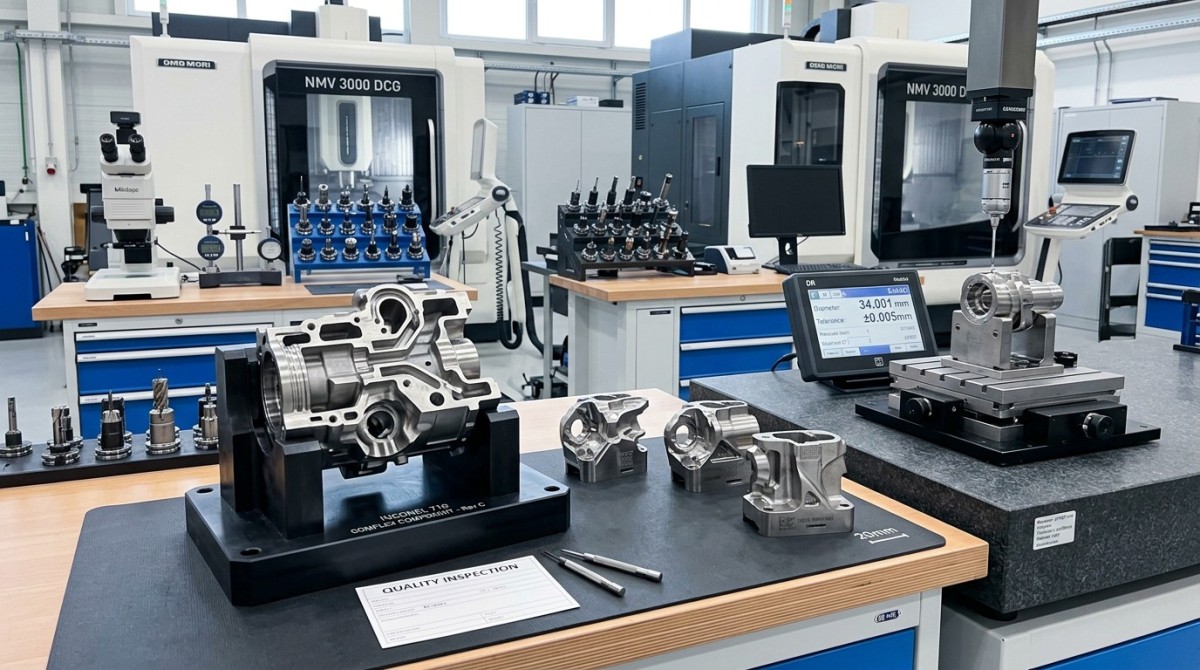
Low-volume does not mean low-risk. In aerospace ducts, medical housings, thermal shields, turbine-adjacent fixtures, and high-heat prototype parts, order quantity may stay below 50 units while the technical stakes remain high. A local shop often competes on convenience and communication speed, but a specialist custom inconel parts manufacturer usually brings deeper process controls for difficult alloys and repeatable documentation.
The difference starts with machining behavior. Inconel 625 and Inconel 718 typically require conservative feeds, rigid workholding, high-pressure coolant, and careful toolpath planning to avoid rapid tool wear. Shops that mainly cut aluminum or mild steel may quote aggressively, yet struggle when surface integrity, burr control, or flatness tolerance moves into the ±0.02 mm to ±0.05 mm range.
A specialist manufacturer is also more likely to understand adjacent material strategy. In early-stage programs, teams may benchmark Inconel against titanium or stainless for weight, thermal stability, or cost. That is where the perspective of a titanium cnc machining supplier matters: suppliers with experience in both titanium and nickel-based superalloys tend to have stronger thermal management, better fixture planning, and more realistic cycle-time estimates.
For regulated sectors, documentation can outweigh freight distance. An iso13485 medical machining factory or an aerospace-focused 5 axis cnc machining aerospace china supplier may provide first article inspection, material cert packs, revision traceability, and process route visibility. For a local shop, these items may be available only on request or may not be standardized across jobs.
Core differences in capability depth
The comparison below shows where a local machine shop often fits and where a custom inconel parts manufacturer usually delivers more value for low-volume production.
The key conclusion is simple: if the drawing includes demanding datums, thin-wall features under 1.5 mm, or critical bores that must stay stable across multiple setups, the specialist route usually lowers overall risk even if the unit price is higher on the first quote.
How tolerance, geometry, and certification should drive the sourcing decision
The right sourcing path begins with part classification. A low-volume Inconel part can fall into at least 3 practical groups: simple non-critical components, complex functional parts, and regulated or qualification-sensitive parts. Each group needs a different supplier profile. Treating all three as standard CNC work is a common procurement mistake.
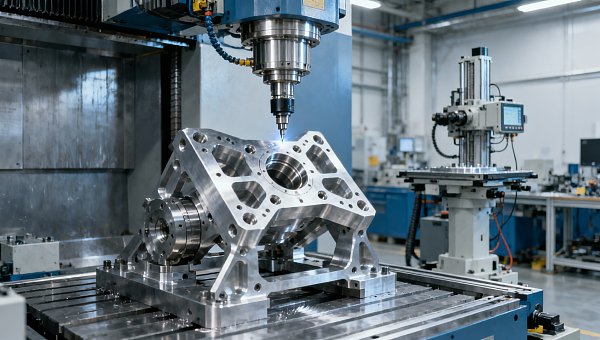
For simple parts, such as flat plates, spacers, or low-feature housings, a local shop can often perform well if tolerances remain around ±0.10 mm and documentation demands are light. If the design has angled surfaces, undercuts, blend transitions, or deep cavity milling, 5-axis access becomes much more relevant. In those cases, a supplier with 5 axis cnc machining aerospace china experience may deliver better consistency because fewer setups usually mean fewer datum-transfer errors.
Certification is another dividing line. In medical and aerospace procurement, the issue is not only whether a supplier can cut the part, but whether the supplier can support the quality file. An iso13485 medical machining factory is more likely to understand controlled records, revision discipline, nonconformance handling, and inspection retention periods expected in medical supply chains.
This is especially important when low-volume runs are pre-production bridges. A 12-piece pilot order today may become a 200-piece annual program next year. If the supplier cannot maintain the same inspection method, fixture logic, and material documentation from prototype through repeat orders, the buyer may need to requalify the entire job later.
A practical sourcing matrix
Use the following matrix to map the part profile to the most suitable source type before sending RFQs.
The matrix highlights a pattern seen across hard-tech procurement: geometry complexity and documentation burden often outweigh geographic proximity. If the cost of one failed lot exceeds the savings from local sourcing, the specialist option becomes economically rational.
Four indicators buyers should check before awarding the job
- Whether the supplier machines Inconel regularly, not occasionally, and can discuss tooling wear, heat control, and burr management in practical terms.
- Whether the quote identifies setup count, inspection scope, and any outsourced processes such as heat treatment, EDM, or passivation.
- Whether the supplier can support first article inspection, typically on 1 piece from the first batch, before full release of the remaining 9, 20, or 50 parts.
- Whether revision control is formalized, especially if the part may move from prototype to low-volume production within 3–12 months.
Lead time, hidden cost, and risk: the economics behind low-volume sourcing
Many buyers compare only piece price, but low-volume Inconel economics should be evaluated in 4 layers: machining price, qualification effort, schedule exposure, and downstream failure cost. A local shop may quote 8% to 20% lower on straightforward work, yet that advantage can disappear if rework, scrap, or delayed inspection adds another 1 to 2 weeks.
For custom Inconel parts, the first production cycle often includes CAM verification, fixture design, test cuts, and inspection planning. A specialist manufacturer usually builds those steps into a realistic lead time, often 2–4 weeks for complex prototypes and 4–6 weeks for qualified low-volume batches. A local shop may initially estimate faster delivery, but the schedule can slip if the part requires unexpected tooling changes or outsourced metrology.
Shipping distance matters, but it is only one variable. For example, an overseas 5-axis supplier may add 3–7 days of logistics but save 2 full setups and reduce tolerance drift on a multi-face aerospace component. In that case, total calendar time can still be lower than using a nearby shop with limited machine envelope or fixture capability.
The largest hidden cost is failed qualification. If a 15-piece pilot lot misses bore position, surface finish, or traceability requirements, the result is not just scrap value. It can delay design freeze, PPAP-style internal approval, or customer validation milestones. In engineering-led procurement, avoiding one failed iteration often matters more than negotiating a lower unit rate.
Where the real cost usually appears
Before choosing between a custom inconel parts manufacturer and a local shop, buyers should model the likely sources of cost inflation over the full order cycle.
- Setup inefficiency: multiple setups increase datum-transfer risk and extend machining time by 10% to 30% on complex parts.
- Inspection mismatch: missing CMM routines or incomplete reports can trigger repeat measurement or customer-side verification delays.
- Tool wear underestimation: difficult alloys may consume more inserts and reduce spindle productivity if process windows are not optimized.
- Documentation gaps: absent certs, lot traceability, or revision records can stop receiving or delay internal release.
- Change-order friction: prototype programs often involve 1 to 3 drawing updates, and suppliers without disciplined revision control lose time fast.
A disciplined RFQ should therefore ask for three lead-time numbers, not one: machining lead time, finishing or secondary processing lead time, and documentation release time. This creates a clearer total-delivery picture than a single promised ship date.
How to qualify a supplier for aerospace, medical, and prototype Inconel parts
Supplier qualification should be short, technical, and evidence-based. For low-volume work, buyers do not need a 40-page audit every time, but they do need a consistent screening framework. The most useful approach is to evaluate the supplier across 5 dimensions: material control, machine capability, inspection depth, quality documentation, and communication discipline.
For aerospace parts, ask whether the supplier can machine from a stable datum structure in 5-axis mode and provide dimensional verification on critical features such as true position, profile, and bore-to-face relationships. For medical work, focus on controlled records, lot-level traceability, and process consistency. For prototypes, responsiveness and engineering feedback may matter more than formal paperwork, but not at the expense of basic dimensional control.
A titanium cnc machining supplier with proven superalloy experience can be a strong candidate because titanium and Inconel share some process realities: heat concentration, tool wear sensitivity, and the need for rigid workholding. That overlap does not guarantee competence, but it is a better starting point than choosing a shop whose portfolio is dominated by easy-cut materials.
Qualification also works best when the drawing package is complete. Include 3D files, revision marks, critical-to-function dimensions, surface finish callouts, thread standards, and any inspection priorities. The supplier can only quote process risk accurately if the technical package exposes where failure would matter most.
A compact supplier qualification checklist
The following checklist helps procurement teams and engineers align around the same acceptance logic before PO release.
This checklist is intentionally practical. It does not require buyers to become machining experts, but it does force the supplier conversation away from generic claims and toward measurable process readiness.
Common qualification mistakes
- Approving a supplier based only on sample photos instead of alloy-specific process discussion.
- Skipping first article review on low-volume work because the batch is “too small” to justify it.
- Assuming local proximity guarantees faster issue resolution even when the supplier lacks in-house inspection depth.
- Comparing quotes without normalizing scope, especially when one supplier includes full documentation and another does not.
FAQ: practical questions buyers and engineers ask before placing a low-volume Inconel order
How low can the order volume be before a custom inconel parts manufacturer stops making sense?
Even 1 to 5 pieces can justify a specialist if the part is technically sensitive. This is common when the geometry is complex, the material is expensive, or the buyer needs documented inspection. For simple shapes with loose tolerances, a local shop may remain the better fit. For functional components with ±0.03 mm features or multi-side machining, a specialist often pays off at very low volumes.
When should a buyer prioritize an iso13485 medical machining factory?
Prioritize that route when the part enters a medical device workflow, supports validation builds, or requires controlled records and traceability. Even if the initial lot is only 10 or 20 pieces, using an iso13485 medical machining factory early can reduce future transfer risk when the program scales or enters more formal quality review.
Is a 5 axis cnc machining aerospace china supplier only relevant for aerospace programs?
No. The same capability is valuable for any part with compound angles, thin-wall access limits, or multiple critical features that benefit from fewer setups. Aerospace suppliers are often mentioned because their process discipline is strong on positional control and complex geometry, but the capability can benefit industrial, energy, UAV, and high-end prototype work as well.
What is a reasonable lead time for low-volume Inconel prototypes?
For straightforward parts, 7–15 working days is often realistic. For complex 5-axis geometry, inspection-heavy work, or jobs requiring secondary processing, 2–4 weeks is more typical. Buyers should request separate timing for machining, finishing, and documentation release rather than relying on one headline delivery date.
What should be included in the RFQ package to reduce delays?
At minimum, send the latest drawing revision, 3D model, material specification, quantity split, surface finish requirements, thread details, critical dimensions, and expected inspection output. If 3 features are especially important, flag them directly. That allows the supplier to engineer the process around actual function instead of making assumptions.
For low-volume sourcing, the best choice is rarely the cheapest headline quote or the closest postal address. It is the supplier whose real capability matches the part’s complexity, tolerance target, documentation burden, and downstream consequence of failure. In simple prototype cases, a local shop can be efficient and economical. In regulated, high-precision, or multi-axis Inconel work, a custom inconel parts manufacturer often reduces qualification risk and protects schedule integrity.
If your team is comparing a local machine shop, a titanium cnc machining supplier, an iso13485 medical machining factory, or a 5 axis cnc machining aerospace china source for a low-volume project, use a structured technical review before issuing the PO. Clear drawings, defined inspection scope, and realistic lead-time assumptions will save more time than last-minute vendor switching. To move faster with fewer unknowns, contact us to discuss your part profile, qualification goals, and custom sourcing strategy.
Search News
Hot Articles
- Carbon Fiber StructuresHow to Specify Aerospace Carbon Fiber Assemblies for Lightweight, Load-Bearing PartsJul 11, 2026
- Machine VisionXiaomi, Alibaba DAMO Academy Drive Open-Source Robotics Model Ecosystem, Lowering Algorithm Development Barriers for Overseas SMEs Adopting Chinese Robotics SolutionsMar 30, 2026
- Cobots & ArmsShanxi 'AI+' Conference Showcases Embodied Intelligence with Multinational Buyer Engagement: Key Industry ImplicationsMar 30, 2026
Popular Tags
Recommended News
 Jul 11, 2026How to Specify Aerospace Carbon Fiber Assemblies for Lightweight, Load-Bearing PartsAerospace carbon fiber assemblies: learn how to specify laminate design, load data, joining methods, and inspection controls for lighter, reliable load-bearing aerospace parts.Elena Rostova (UAV Systems Researcher)
 Mar 30, 2026Xiaomi, Alibaba DAMO Academy Drive Open-Source Robotics Model Ecosystem, Lowering Algorithm Development Barriers for Overseas SMEs Adopting Chinese Robotics SolutionsXiaomi & Alibaba DAMO Academy's open-source robotics models lower algorithm barriers for global SMEs. Boost efficiency in manufacturing, logistics & smart retail with ROS 2 compatible solutions.TSV Data Lab
 Mar 30, 2026Shanxi 'AI+' Conference Showcases Embodied Intelligence with Multinational Buyer Engagement: Key Industry ImplicationsShanxi 'AI+' Conference highlights embodied intelligence with Tesla, Ubtech & Jiantao showcasing multimodal robotics. 40+ global buyers validated tech on-site, creating new B2B channels for industrial automation & AI solutions.Chen Wei (Automation Lead Engineer)
 Mar 30, 2026Zhongguancun Unveils 6G Integrated Sensing-Computing-Intelligence Platform to Empower Embodied Robots for Global Industrial ApplicationsZhongguancun's new 6G platform revolutionizes industrial robotics with <10ms latency, empowering global automotive, logistics & port automation. Discover how this tech boosts China's smart manufacturing exports.TSV Data Lab
 Mar 30, 2026Mech-Mind Tianjin Embodied Intelligence R&D and Production Base Goes Live, Cutting Delivery Time by 20%–30% for Global Customized AMR+Vision SolutionsMech-Mind's Tianjin AMR+Vision production base cuts delivery time by 20%-30% for欧美 & Latin American markets. Discover how this PLd-certified facility accelerates customized robotics solutions for smart manufacturing and logistics.Chen Wei (Automation Lead Engineer)
 Mar 30, 2026Boao Forum Reveals 'Co-evolution of Big and Small Brains' Trend in Humanoid Robots, China's Embodied Intelligence Accelerates Adaptation to Overseas Manufacturing Service ScenariosDiscover how China's humanoid robots, featuring 'Co-evolution of Big and Small Brains,' are revolutionizing global manufacturing. Learn about Embodied Tian Gong 3.0's ISO compliance and overseas deployment at Boao Forum 2026.Chen Wei (Automation Lead Engineer)
 Mar 30, 2026China Railway Industrial Secures Patent for Embodied Robotics in Material Handling, Boosting High-Precision Delivery Capabilities for Overseas Infrastructure and Manufacturing ProjectsChina Railway Industrial's new patent for embodied robotics in material handling boosts high-precision delivery for global infrastructure & manufacturing. Discover how this innovation enhances logistics accuracy in automotive, rail transit & EPC projects.Chen Wei (Automation Lead Engineer)
 Oct 20, 2026KUKA Launches iiQKA.AI Vision to Simplify Industrial Image ProcessingKUKA iiQKA.AI Vision simplifies industrial image processing with controller-based 2D and 3D vision. Explore drag-and-drop setup for vision-guided automation.TSV Data Lab
 Oct 20, 2026Smart Industrial Edge Devices: Key Criteria for Legacy PLC IntegrationChoose smart industrial edge devices for legacy PLC integration. Discover key criteria for compatibility, data quality, security, and reliable collection without disrupting control.TSV Data Lab
 Oct 19, 2026Choosing a Radar Sensor by Application: Range, Resolution, and Field of ViewSimplify radar sensor application based product selection. Compare range, resolution, and field of view to avoid blind spots and choose with confidence. Explore the guide.TSV Data Lab
 Oct 18, 2026Comparing Material Options for Procurement: Specs, Costs, and Supply RisksExplore procurement oriented technical content on material options, specs, costs, and supply risks. Compare alternatives to cut hidden expenses and make confident sourcing decisions.Dr. Marcus Vance
 Oct 17, 20265-Axis CNC Positioning Accuracy: How to Interpret ISO 230-2 Test ResultsAssess 5 axis CNC machining positioning accuracy with ISO 230-2. Learn to interpret repeatability, reversal error, and test conditions to compare suppliers and make confident acceptance decisions.Dr. Marcus Vance
 Oct 16, 2026Choosing a Rugged Edge AI Box Supplier: Thermal Tests and Lifecycle SupportChoose a rugged edge AI box supplier with proven thermal performance and reliable lifecycle support. Discover the tests and commitments to verify before you buy.TSV Data Lab
 Oct 15, 2026R&D Cost Reduction Services: How to Evaluate Fees, Savings, and ROIEvaluate R&D cost reduction services with confidence. Compare fees, verify savings, and calculate ROI without compromising performance. Discover how to choose a provider that delivers real value.Chen Wei (Automation Lead Engineer)
 Oct 20, 2026How Do You Measure Industrial IoT Gateway Latency Under Load?Measure industrial IoT gateway latency under load with reliable timestamps, realistic traffic, and tail-latency analysis. Discover how to expose bottlenecks and choose the right gateway.TSV Data Lab
 Oct 19, 2026How Do You Verify That Precision Machined Parts Meet Tolerances?Master precision machining tolerance verification with the right tools, datum setups, and acceptance rules. Learn how to validate parts confidently and reduce costly inspection errors.Dr. Marcus Vance
 Oct 18, 2026What Should an AS9100 Machining Supplier Checklist Include?Build an AS9100 machining supplier checklist that verifies capability, traceability, inspection, and outsourced processes. Discover what to check before approving your next aerospace supplier.Dr. Marcus Vance
 Oct 17, 2026How Should You Interpret Industrial Robot Repeatability Specs?Decode industrial robot repeatability specifications, understand ISO 9283 test conditions, and avoid costly selection mistakes. Learn how to verify performance for your process.Chen Wei (Automation Lead Engineer)
 Oct 16, 2026How Can You Fairly Compare MTBF Across Industrial Servo Motors?Make a fair industrial servo motor MTBF comparison with matched operating profiles, failure criteria, and confidence bounds. Discover how to assess reliability beyond advertised numbers.Chen Wei (Automation Lead Engineer)
 Oct 15, 2026How Should You Compare TechStat Vanguard 5-Axis CNC Tolerances?TechStat Vanguard 5-axis CNC tolerance comparison: learn how to verify part accuracy, assess inspection evidence, and choose suppliers that reliably meet your drawing requirements.Dr. Marcus Vance
 Oct 14, 2026Drone Frame Composites: Carbon Fiber vs. Fiberglass for Weight and StiffnessExplore drone structural materials composites: compare carbon fiber and fiberglass for weight, stiffness, cost, and antenna compatibility. Find the right material for your drone frame.Elena Rostova (UAV Systems Researcher)
 Oct 13, 2026Smart Cameras vs. PC-Based Machine Vision: Which Fits High-Speed Inspection?This industrial product comparison for machine vision weighs smart cameras vs. PC-based systems on latency, throughput, and cost. Discover your best fit for high-speed inspection.TSV Data Lab
 Oct 12, 2026How to Verify RoHS Compliance in Industrial Sensing Systems Before DeploymentRoHS compliant sensing systems: learn how to verify materials, supplier declarations, testing, and configuration controls before industrial deployment.TSV Data Lab
 Oct 11, 2026How Procurement-Oriented Content Taxonomy Improves B2B Buying JourneysProcurement-oriented content taxonomy streamlines B2B buying journeys with clearer evidence, supplier comparisons, risk visibility, and faster approvals.TSV Data Lab