Why 5-axis CNC machining titanium alloys gets so expensive
Publication Date
author
Why does 5-axis CNC machining titanium alloys become a budget shock for procurement teams? Beyond the machine hour rate, the real cost drivers lie in titanium’s poor thermal conductivity, aggressive tool wear, complex 5-axis programming, tight tolerance control, and low-risk quality assurance. This article breaks down where the money goes, helping buyers evaluate suppliers with engineering clarity instead of marketing claims.
For buyers in aerospace, medical, robotics, UAV, and other precision manufacturing programs, the issue is rarely just the quoted hourly rate. A titanium part that appears comparable to an aluminum or stainless component on a drawing can cost 2x to 5x more once real machining risk is priced in.
That premium is not arbitrary. In 5-axis CNC machining titanium alloys, cost accumulates through slower material removal, shorter tool life, more expensive fixtures, tighter process control, and higher scrap exposure. Procurement teams that understand these cost layers can negotiate more effectively and qualify suppliers with far less uncertainty.
Where the cost starts: titanium is difficult before the first finished cut
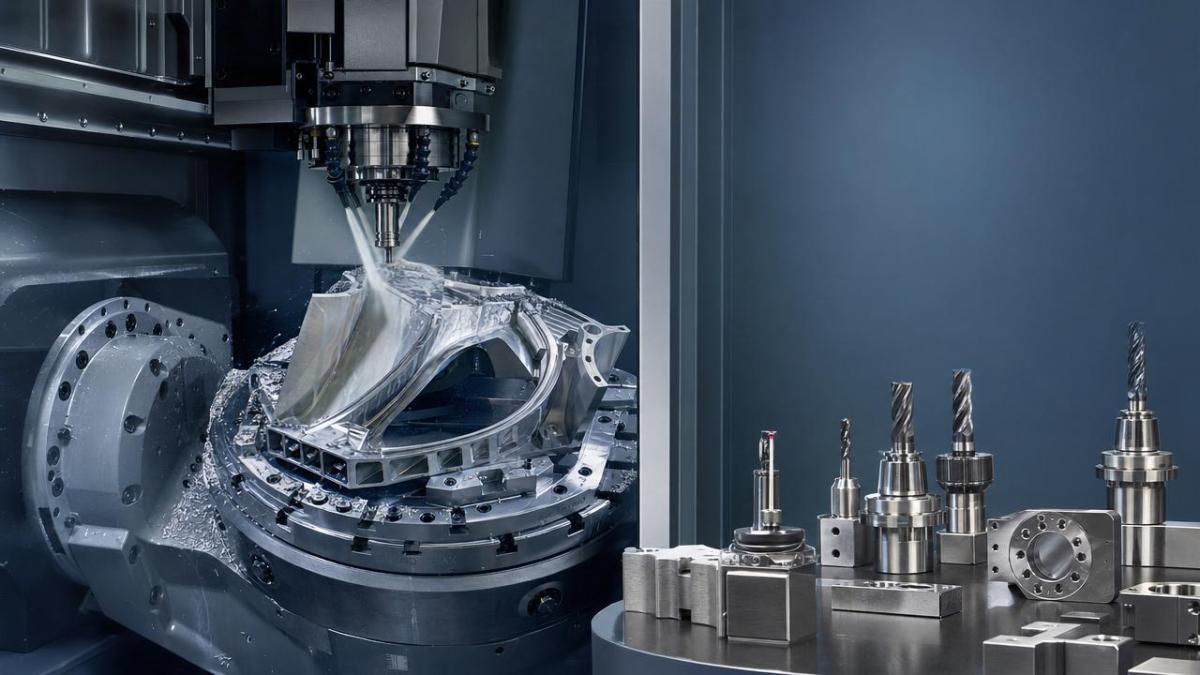
Titanium alloys are valued for high strength-to-weight ratio, corrosion resistance, and thermal stability. Grades such as Ti-6Al-4V are common in structural parts, brackets, housings, turbine-adjacent components, and implantable devices. Those same properties that make titanium desirable also make it expensive to machine.
Low thermal conductivity raises cutting risk
Titanium conducts heat poorly compared with aluminum. During cutting, a larger share of heat stays concentrated near the cutting edge instead of dispersing into the chip or workpiece. In practical terms, that means higher edge temperature, faster wear, and stricter limits on spindle speed and feed strategy.
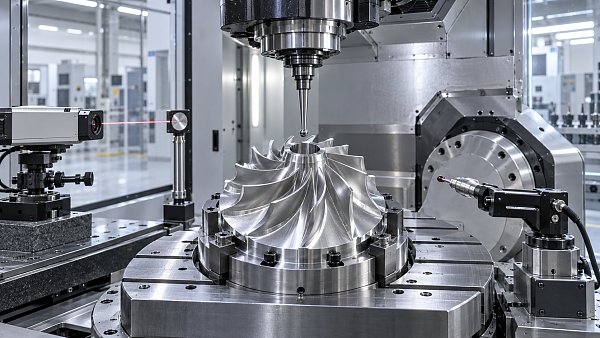
On many jobs, suppliers must reduce cutting speeds into conservative windows such as 30–80 m/min depending on alloy, cutter geometry, and tool coating. That is dramatically slower than the conditions used for aluminum. Longer cycle time directly increases machine occupancy on expensive 5-axis equipment.
Titanium’s springback and cutting forces complicate stability
Titanium tends to deflect rather than shear as easily as softer metals. It can spring away from the tool and then recover, creating chatter, rubbing, work hardening on local surfaces, and inconsistent dimensional outcomes. Thin-wall parts are especially sensitive when wall thickness drops below 1.5–2.0 mm.
For procurement, this matters because a supplier quoting low on a complex titanium part may be assuming aggressive parameters that do not survive first-article reality. A credible quote usually reflects process stability margins, not just nominal machining time.
The table below shows why 5-axis CNC machining titanium alloys often costs substantially more than machining easier metals, even before inspection and compliance requirements are added.
The main takeaway is simple: titanium is not expensive only because the raw material costs more. The machining environment itself is less forgiving, and suppliers price that risk into every stage from CAM strategy to inspection planning.
Why 5-axis machining amplifies the cost instead of reducing it
Procurement teams sometimes assume that 5-axis equipment should automatically lower total cost because it reduces setups. In many titanium applications, that is only partly true. Five-axis capability improves access, surface continuity, and geometric freedom, but it also introduces programming complexity and higher process sensitivity.
Programming and simulation take longer
A true 5-axis titanium part often requires collision-aware toolpath design, holder clearance verification, dynamic tool orientation control, and post-processing checks. CAM time can extend well beyond a simple 3-axis job, especially when deep pockets, undercuts, or compound angles are involved.
For prototype or low-volume orders of 5 to 50 pieces, non-recurring engineering can represent a significant share of the quoted price. If the part also needs first article inspection or process documentation, that front-end cost becomes even more visible.
Tool reach and part access create instability
Complex titanium components often force the use of long-reach tools, reduced stepovers, and careful engagement angles. As tool overhang increases, vibration resistance falls. On difficult features, the supplier may need to choose between cycle time and surface integrity rather than optimize both simultaneously.
Common cost multipliers in 5-axis titanium work
- 2 to 4 CAM revisions before release for collision-free machining
- Additional probing cycles to verify stock position and work offsets
- Special fixture design for thin-wall or freeform parts
- Reduced roughing aggression to protect both tool life and geometry
- Longer prove-out time on first production runs
In short, 5-axis CNC machining titanium alloys is valuable because it makes difficult parts possible. It is not inherently a low-cost process. Buyers should treat 5-axis as a capability decision first and a cost-reduction lever second.
The biggest hidden expenses: tooling, scrap, and inspection
Many quotes hide the true economic pressure inside indirect items. Machine time is visible. Tool consumption, scrap probability, and metrology overhead are less visible but often more decisive in final pricing, especially in regulated sectors.
Tooling costs escalate fast
Titanium cutting commonly requires premium carbide tools, advanced coatings, stable holders, and carefully controlled coolant delivery. Tool life may vary widely depending on geometry and alloy condition. A roughing tool that lasts predictably in stainless may fail much earlier in titanium due to heat concentration and notch wear.
If a supplier expects one cutter to finish 40 parts but real production only supports 12 to 18 parts per edge, the quote can quickly become underwater. Experienced suppliers prevent this by pricing realistic tool consumption into the job from day one.
Scrap is expensive because titanium blanks are expensive
A scrap event in aluminum is painful. A scrap event in a large titanium billet is financially severe. For parts with high buy-to-fly ratios, where the starting stock may weigh 3 to 10 times the finished part, a single machining failure can erase margin on multiple good parts.
This is one reason reputable shops invest extra time in setup verification, in-process probing, and staged roughing. Procurement teams should not interpret these controls as inefficiency. They are often the mechanism that prevents schedule slips and hidden rework cost.
Inspection and documentation are part of the cost stack
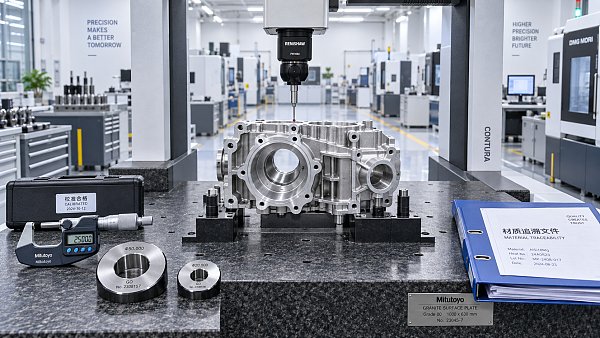
Many titanium components serve mission-critical uses. Typical buyer requirements include CMM reports, material traceability, surface roughness verification, and dimensional records on key characteristics. Tolerances such as ±0.01 mm to ±0.05 mm, flatness controls, or positional tolerances can add several hours of inspection time per batch.
The following table helps procurement teams distinguish visible quote items from hidden cost drivers in 5-axis CNC machining titanium alloys.
The lowest quote often underestimates one of these four layers. That can lead to delayed delivery, engineering change requests, or silent quality compromises that only surface during incoming inspection or assembly.
How procurement teams should evaluate a titanium machining supplier
A strong buying decision is not based on hourly rate alone. For precision titanium work, supplier selection should combine technical fit, process control, quality assurance, and communication discipline. A cheaper source that misses tolerance on 1 out of 20 parts may become the most expensive option in the program.
Five practical evaluation criteria
- Experience with titanium alloys in comparable geometries, not just generic 5-axis capability
- Documented approach to tool wear management, coolant delivery, and thermal stability
- Ability to hold required tolerances repeatedly across batch sizes such as 10, 100, or 500 parts
- Inspection capability for CMM, surface finish, traceability, and first article documentation
- Transparent quotation structure separating material, NRE, machining, finishing, and QA
Questions that reveal supplier maturity
Ask how the supplier manages thin-wall distortion below 2 mm, how often in-process probing is used, and whether they simulate holder interference before releasing the program. Ask what tolerance capability they can sustain at scale, not only on one approved first article.
Lead time also matters. A realistic prototype timeline for complex titanium parts may be 2–4 weeks, while repeat production can range from 4–8 weeks depending on stock availability, post-processing, and documentation. Extremely short promises should trigger deeper review.
Common procurement mistakes to avoid
- Comparing suppliers without aligning tolerance scope and inspection requirements
- Ignoring buy-to-fly ratio when reviewing scrap exposure
- Assuming all Ti-6Al-4V supply conditions machine the same way
- Treating CAM and setup charges as negotiable overhead instead of risk control
- Approving on sample appearance without reviewing process repeatability
This is where engineering-focused due diligence matters. In the TSV view, parameters tell the story better than slogans. A supplier that can discuss cutter engagement, tolerance stack-up, fixture restraint, and inspection checkpoints in detail is usually more trustworthy than one relying on general quality claims.
How to reduce total cost without forcing unsafe price cuts
The most effective way to lower cost in 5-axis CNC machining titanium alloys is not to pressure the supplier into an unrealistic rate. It is to improve manufacturability while preserving part function. Even modest geometry adjustments can reduce cycle time, tool wear, and inspection burden.
Design and sourcing levers buyers can support
If engineering permits, increase internal corner radii to fit more stable cutter diameters, reduce unnecessary deep pockets, and avoid cosmetic surface requirements tighter than function demands. A surface finish of Ra 1.6 μm where Ra 3.2 μm is acceptable can change both cutting strategy and post-machining effort.
Batch strategy also matters. Combining 20 parts into one order instead of 4 separate releases of 5 parts can spread NRE, setup, and proving costs. For stable designs, longer scheduling horizons let the supplier optimize tooling and raw stock purchasing rather than expedite every stage.
Build a quote package that reduces ambiguity
Procurement can materially improve pricing quality by providing a complete RFQ package. That should include 3D model, 2D drawing with critical dimensions clearly flagged, material condition, finish requirement, annual volume estimate, and inspection expectations. Missing inputs often result in padded quotes because the supplier must price unknowns.
When buyers ask suppliers to quote the same package under the same assumptions, the commercial comparison becomes more meaningful. Instead of evaluating marketing language, the team can compare process realism, risk assumptions, and total lifecycle value.
What a smart titanium machining RFQ should contain
For organizations buying high-value components, the RFQ itself is the first cost-control tool. A disciplined RFQ can shorten supplier clarification loops by 30% to 50% and reduce avoidable quoting buffers.
Minimum information checklist
- Material grade and condition, such as Ti-6Al-4V annealed or equivalent callout
- Required tolerances, including critical-to-function dimensions and GD&T priorities
- Surface finish, edge break, burr standard, and cosmetic zone requirements
- Inspection scope: CMM, FAI, material certs, lot traceability, special records
- Annual forecast, MOQ expectations, and delivery cadence
- Post-processing requirements such as passivation, blasting, anodizing, or marking
A complete RFQ helps both sides. Buyers get quotes with fewer hidden assumptions. Suppliers can identify whether the part is best produced from billet, near-net preform, or a mixed route involving machining and secondary finishing.
5-axis CNC machining titanium alloys gets expensive because every step carries more technical risk than easier materials: heat stays at the cut, tools wear faster, programming takes longer, fixturing becomes more demanding, and inspection cannot be casual. The right question for procurement is not “Why is the hourly rate high?” but “Which risks are being controlled, and how transparently are they priced?”
For teams sourcing critical precision parts, engineering clarity beats generic claims every time. If you need a more rigorous framework for supplier comparison, quotation review, or titanium machining capability assessment, contact TechStat Vanguard to discuss your project, request a tailored evaluation checklist, or explore deeper hard-tech sourcing benchmarks.
Search News
Hot Articles
- Carbon Fiber StructuresHow to Specify Aerospace Carbon Fiber Assemblies for Lightweight, Load-Bearing PartsJul 11, 2026
- Machine VisionXiaomi, Alibaba DAMO Academy Drive Open-Source Robotics Model Ecosystem, Lowering Algorithm Development Barriers for Overseas SMEs Adopting Chinese Robotics SolutionsMar 30, 2026
- Cobots & ArmsShanxi 'AI+' Conference Showcases Embodied Intelligence with Multinational Buyer Engagement: Key Industry ImplicationsMar 30, 2026
Popular Tags
Recommended News
 Jul 11, 2026How to Specify Aerospace Carbon Fiber Assemblies for Lightweight, Load-Bearing PartsAerospace carbon fiber assemblies: learn how to specify laminate design, load data, joining methods, and inspection controls for lighter, reliable load-bearing aerospace parts.Elena Rostova (UAV Systems Researcher)
 Mar 30, 2026Xiaomi, Alibaba DAMO Academy Drive Open-Source Robotics Model Ecosystem, Lowering Algorithm Development Barriers for Overseas SMEs Adopting Chinese Robotics SolutionsXiaomi & Alibaba DAMO Academy's open-source robotics models lower algorithm barriers for global SMEs. Boost efficiency in manufacturing, logistics & smart retail with ROS 2 compatible solutions.TSV Data Lab
 Mar 30, 2026Shanxi 'AI+' Conference Showcases Embodied Intelligence with Multinational Buyer Engagement: Key Industry ImplicationsShanxi 'AI+' Conference highlights embodied intelligence with Tesla, Ubtech & Jiantao showcasing multimodal robotics. 40+ global buyers validated tech on-site, creating new B2B channels for industrial automation & AI solutions.Chen Wei (Automation Lead Engineer)
 Mar 30, 2026Zhongguancun Unveils 6G Integrated Sensing-Computing-Intelligence Platform to Empower Embodied Robots for Global Industrial ApplicationsZhongguancun's new 6G platform revolutionizes industrial robotics with <10ms latency, empowering global automotive, logistics & port automation. Discover how this tech boosts China's smart manufacturing exports.TSV Data Lab
 Mar 30, 2026Mech-Mind Tianjin Embodied Intelligence R&D and Production Base Goes Live, Cutting Delivery Time by 20%–30% for Global Customized AMR+Vision SolutionsMech-Mind's Tianjin AMR+Vision production base cuts delivery time by 20%-30% for欧美 & Latin American markets. Discover how this PLd-certified facility accelerates customized robotics solutions for smart manufacturing and logistics.Chen Wei (Automation Lead Engineer)
 Mar 30, 2026Boao Forum Reveals 'Co-evolution of Big and Small Brains' Trend in Humanoid Robots, China's Embodied Intelligence Accelerates Adaptation to Overseas Manufacturing Service ScenariosDiscover how China's humanoid robots, featuring 'Co-evolution of Big and Small Brains,' are revolutionizing global manufacturing. Learn about Embodied Tian Gong 3.0's ISO compliance and overseas deployment at Boao Forum 2026.Chen Wei (Automation Lead Engineer)
 Mar 30, 2026China Railway Industrial Secures Patent for Embodied Robotics in Material Handling, Boosting High-Precision Delivery Capabilities for Overseas Infrastructure and Manufacturing ProjectsChina Railway Industrial's new patent for embodied robotics in material handling boosts high-precision delivery for global infrastructure & manufacturing. Discover how this innovation enhances logistics accuracy in automotive, rail transit & EPC projects.Chen Wei (Automation Lead Engineer)
 Oct 06, 2026Navigation Fault Tolerance Standards for AMRs: What Safety Teams Must VerifyNavigation fault tolerance standards: learn what AMR safety teams must verify, from localization loss and sensor faults to stopping distance, safe restart, and site-specific validation.Chen Wei (Automation Lead Engineer)
 Oct 05, 2026Calculating Edge Computing Total Cost of Ownership Across Distributed SitesEdge computing ownership cost explained: calculate deployment, energy, connectivity, security, remote support, and refresh costs across distributed sites.TSV Data Lab
 Oct 04, 2026CAD/CAM Benchmarking in the GCC: What Manufacturers Should Ask a ConsultantCAD CAM benchmark consultant GCC guide: learn the key questions manufacturers should ask to validate post-processors, workflows, machine performance, and production risk.Victor Lin (Chief Software Architect)
 Oct 03, 2026Selecting Automotive Radar Sensor Modules for ADAS Range, Resolution, and IntegrationAutomotive radar sensor module selection guide for ADAS: compare range, resolution, field of view, latency, and integration to build safer, reliable vehicle systems.TSV Data Lab
 Oct 02, 2026How to Qualify Machined Parts Suppliers for Hard Tech ProgramsHard tech supply chain machined parts demand rigorous supplier qualification. Learn how to assess capability, traceability, quality controls, and delivery resilience.Dr. Marcus Vance
 Oct 01, 2026How to Select an Outdoor Security Radar Sensor for Perimeter Detection?Outdoor security radar sensor selection guide: compare range, accuracy, false-alarm control, integration, and field testing for reliable perimeter detection.TSV Data Lab
 Sep 30, 2026How to Evaluate Solid-State LiDAR Hardware for Outdoor Autonomous VehiclesSolid state LiDAR hardware evaluation guide for outdoor autonomous vehicles—compare range, point-cloud quality, environmental resilience, integration, and safety.TSV Data Lab
 Sep 29, 2026ISO 9283 Repeatability: How to Evaluate Cobot Positioning PerformanceISO 9283 cobot repeatability explained: learn how payload, reach, approach direction, and test conditions affect positioning performance and cell capability.Chen Wei (Automation Lead Engineer)
 Oct 06, 2026Are Collaborative Robots Safe Enough to Operate Without Fencing?Are collaborative robots safe enough to work without fencing? Explore risk assessment, safeguarding options, and practical guidance for safer, productive cobot cells.Chen Wei (Automation Lead Engineer)
 Oct 05, 2026What Causes Machine Vision Systems to Miss Small Defects?What causes machine vision systems to miss small defects? Discover how lighting, optics, motion, and AI thresholds affect detection—and prevent costly escapes.TSV Data Lab
 Oct 04, 2026How Should You Compare 5-Axis CNC Machine Accuracy Claims?How do I compare 5-axis CNC machine accuracy claims? Learn how to assess standards, thermal stability, TCP accuracy, and real-world test evidence.Dr. Marcus Vance
 Oct 03, 2026Is Edge Computing Necessary for Real-Time Quality Inspection?Is industrial edge computing necessary for real-time quality inspection? Explore how latency, data volume, reliability, and control integration shape the right architecture.TSV Data Lab
 Oct 02, 2026What Documents Prove a Precision Machining Supplier Can Hold Tolerance?What documents prove a precision machining supplier can hold tolerance? Explore certificates, FAI reports, calibration, SPC, and traceability evidence to qualify suppliers with confidence.Dr. Marcus Vance
 Oct 01, 2026Can a Machining Supplier Meet Aerospace Fatigue Testing Requirements?Can a machining supplier meet aerospace fatigue testing requirements? Learn the traceability, process control, and test evidence needed for reliable aerospace parts.Dr. Marcus Vance
 Sep 30, 2026Which Industrial Robot Specifications Matter for High-Precision Assembly?Which industrial robot specifications matter most for high-precision assembly? Explore repeatability, accuracy, stiffness, vibration, calibration, and force control for reliable yields.Chen Wei (Automation Lead Engineer)
 Sep 29, 2026How Do You Verify Servo Motor Torque Under Continuous Load?How do I verify servo motor torque under continuous load? Learn RMS torque checks, torque-speed limits, thermal derating, and real-machine testing.Chen Wei (Automation Lead Engineer)
 Oct 02, 2026ZD330 Software Configuration: Verifying Cut-List Import Before PurchaseZD330 software and machine configuration: verify cut-list imports, data mapping, labels, and workflow before purchase to reduce errors and choose with confidence.Victor Lin (Chief Software Architect)