5-Axis CNC Machining for Medical Devices: Where Tolerances Get Risky
Publication Date
author
In 5-axis CNC machining for medical devices, tolerance drift is not a minor deviation—it can become a patient safety risk, a compliance failure, or a costly recall. For quality and safety leaders, the real challenge is knowing where dimensional precision starts to break down, why complex geometries amplify that risk, and how data-driven machining controls can protect both performance and regulatory confidence.
For quality managers, validation engineers, and safety officers, the stakes are unusually high. A dimensional shift of just 10–20 µm may be irrelevant in a low-risk industrial bracket, yet in orthopedic components, surgical instrument interfaces, or implantable housings, that same drift can affect fit, sealing, wear, sterilization outcomes, or traceability acceptance. In 5-axis CNC machining for medical devices, risk does not begin at final rejection; it begins much earlier, when process variation stops being visible to routine production reporting.
This is why procurement and supplier qualification in the medical machining chain must move beyond generic promises. TechStat Vanguard’s engineering perspective is simple: parameters matter more than claims. When buyers assess a 5-axis CNC machining partner, they need evidence on tolerance capability, machine stability, metrology discipline, material behavior, and process control frequency—not broad statements about precision. The practical question is where tolerance exposure becomes dangerous, and what controls reduce that exposure before it escalates into nonconformance.
Why Tolerance Risk Escalates in 5-Axis Medical Machining
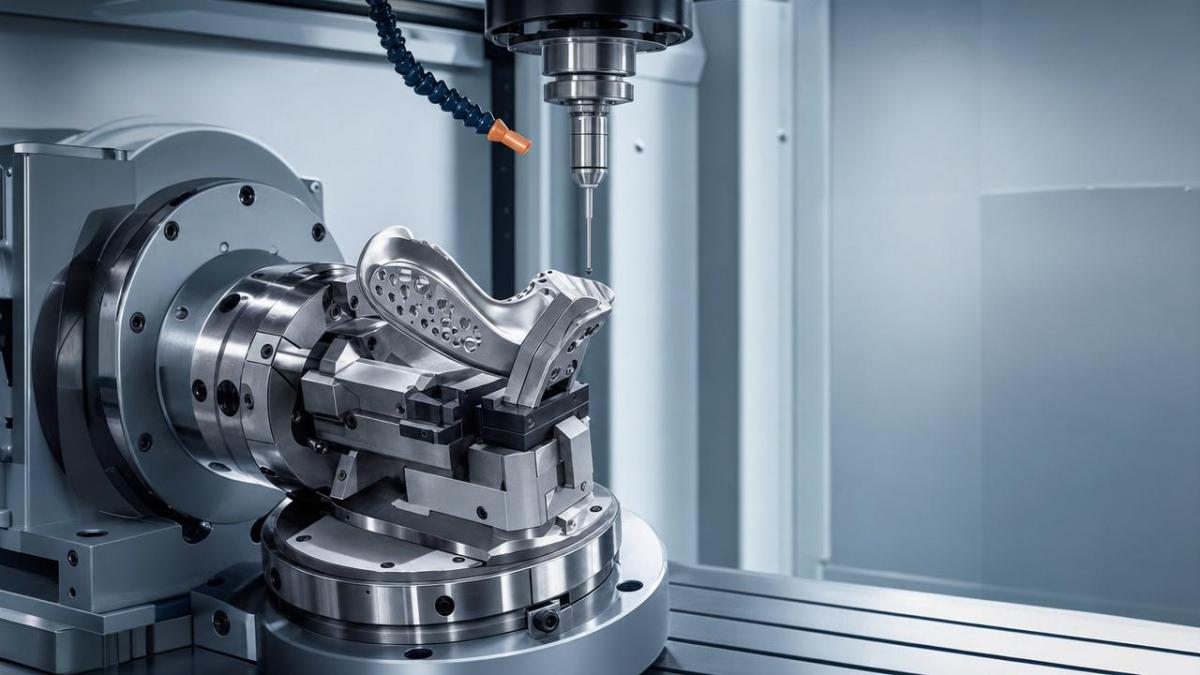
5-axis CNC machining for medical devices is used because many components are not simple prismatic parts. Bone plates, spinal implants, arthroscopy tools, end-effector housings, and minimally invasive instrument parts often require compound angles, undercuts, contoured surfaces, and multi-plane features in one setup. That capability improves geometric freedom, but it also introduces more variables. Rotary axis interpolation, thermal expansion, tool deflection, fixture access, and CAM path transitions all interact with the final dimension stack.
In practical terms, risk rises when three conditions appear together: tight tolerance bands, complex surface transitions, and difficult-to-measure features. A slot tolerance of ±0.01 mm on a flat face is one challenge. The same tolerance on a contoured surface that must mate with another component at 2 or 3 angular orientations is a different risk category entirely. The issue is not only whether the nominal dimension is hit once, but whether it is repeatable across 20, 50, or 200 parts over multiple shifts.
The Main Sources of Drift
Most tolerance breakdowns in medical 5-axis work are cumulative rather than singular. Machine kinematic error, spindle growth after 30–90 minutes of operation, holder runout above 5 µm, and material response during semi-finishing can combine into a final deviation that is difficult to trace to one root cause. In titanium, cobalt-chrome, stainless steel, and PEEK-related medical applications, the effect of heat and cutting force can vary significantly from one geometry to the next.
- Rotary axis misalignment or calibration drift over time
- Tool wear progression across long cycle times, often 25–90 minutes per part
- Fixture distortion or inconsistent clamping on thin-wall sections
- CAM strategy transitions at steep angles or blended contours
- Measurement blind spots on internal radii, deep pockets, or compound surfaces
For safety and compliance teams, this means dimensional risk should never be treated as a single final-inspection event. It is a process behavior problem. Once variation starts to cluster near an upper or lower limit, the probability of downstream failure rises sharply, even if a small sample still passes incoming verification.
Why Medical Parts Are Less Forgiving Than General Precision Parts
Medical parts face a more severe acceptance environment than many industrial components. They often move through machining, deburring, passivation, cleaning, coating, marking, assembly, and sterilization-related handling. If a part begins close to a tolerance edge, even a minor secondary-process effect can shift it out of spec. A bore that changes by 8 µm after finishing and cleaning may still assemble poorly if the mating part is also near its own limit.
This is also where quality documentation becomes operational, not administrative. Under ISO 13485-linked supplier expectations, dimensional evidence, revision control, first article rigor, and nonconformance traceability all need to support the safety case. A supplier that can machine a complex part once is not enough. The supplier must show process discipline over batches, engineering changes, and validation cycles.
The table below outlines where tolerance risk most often becomes critical in 5-axis CNC machining for medical devices and why quality teams should classify these zones differently during supplier audits and control planning.
The key takeaway is that not all tolerances carry the same risk weight. Quality teams should identify which dimensions are simply controlled and which are safety-relevant, interface-critical, or validation-sensitive. That distinction changes how often parts should be checked, how fixtures are designed, and how supplier capability should be reviewed during onboarding.
What Quality and Safety Teams Should Audit Before Approving a Supplier
A capable supplier for 5-axis CNC machining for medical devices must be evaluated as a controlled system, not just a machine shop with modern equipment. The machine itself matters, but it is only one layer. Procurement, quality, and safety leaders should review at least 6 operational dimensions: machine capability, programming discipline, tooling strategy, fixturing approach, inspection depth, and traceability controls. Weakness in any one of these areas can cancel out the strength of the others.
Core Audit Questions That Reduce Hidden Risk
- How often are 5-axis machines volumetrically calibrated—monthly, quarterly, or only after a failure event?
- Is tool life managed by documented wear criteria, or by operator judgment alone?
- Are first article inspections tied to revision-controlled programs and fixtures?
- Can the supplier measure complex geometry in-house using CMM, optical systems, or probing routines?
- What is the response time for containment if one lot shows trend drift—4 hours, 24 hours, or longer?
- How are nonconforming parts traced back to machine, operator, tool batch, and material heat?
These questions sound basic, but they expose whether the supplier’s process is robust or reactive. In regulated medical manufacturing, a fast quote and attractive lead time mean little if the shop cannot explain how it controls dimensional variation across 3 shifts, multiple revisions, or mixed-material production.
Documentation Matters as Much as Machining
From a quality management perspective, the evidence package should be reviewed early. Typical documents may include first article records, in-process inspection plans, gauge calibration status, material certificates, setup sheets, revision logs, and final release documentation. If any of these records are incomplete or manually inconsistent, the real process capability is harder to trust, even when dimensional samples look acceptable.
For safety leaders, one practical rule is useful: if the supplier cannot reconstruct the history of a suspect feature within 1 business day, the traceability system is probably too weak for high-risk medical work. Speed of root-cause analysis is not just a convenience metric; it is part of containment quality.
The comparison below helps procurement and QA teams distinguish between a supplier that is merely equipped for 5-axis work and one that is actually prepared for medical-grade control.
This distinction is critical during supplier qualification. For quality and safety stakeholders, the strongest indicator is not whether a supplier says they can hold ±0.01 mm. It is whether they can explain how that capability is maintained, verified, documented, and recovered when the process begins to move.
How Data-Driven Process Control Reduces Compliance and Recall Exposure
The most effective way to control tolerance risk in 5-axis CNC machining for medical devices is to treat machining data as an early warning system. Shops that rely only on end-of-line pass/fail decisions usually react too late. By the time several parts fail final inspection, the actual process shift may have started dozens of cycles earlier. In contrast, process-aware operations monitor offsets, spindle behavior, tool life, probing results, and inspection trends before nonconformity becomes visible at lot level.
The 5 Control Layers That Matter Most
A practical medical machining control plan often includes 5 interlocking layers. First, stable machine calibration. Second, validated CAM and setup control. Third, disciplined tool management. Fourth, in-process verification using touch probes or interim metrology. Fifth, final dimensional release with traceable records. Missing one layer does not always create failure immediately, but it narrows the margin before failure appears.
- Machine thermal stabilization before critical runs, often 20–40 minutes depending on workload
- Probe-based offset correction at setup and after defined cycle counts
- Scheduled tool replacement based on wear trend rather than visible failure
- SPC-style monitoring on key dimensions where repeatability is critical
- Segregated review for special features such as sealing faces, bone-contact profiles, or implant interfaces
For quality teams, this layered model improves confidence because it shifts control upstream. It also helps with investigation discipline. If a feature trends out by 12 µm over 40 parts, the corrective path is clearer when machine temperature, offset history, and tool replacement logs are available in one record set.
Where Measurement Strategy Often Fails
One common weakness in medical machining programs is overconfidence in measurement coverage. A supplier may inspect 100% of easy-access dimensions while sampling only a few hard-to-reach features that actually drive assembly or clinical performance. In 5-axis work, the most important dimensions are often the most difficult to inspect. This creates a false sense of control.
A stronger approach is to classify features into at least 3 groups: general dimensions, functional interfaces, and high-risk critical features. Each group should have different inspection frequency, measurement method, and escalation rule. For example, general dimensions may be sampled every 10 pieces, while high-risk critical features may require first-off, every 5 pieces, and final confirmation until process capability is demonstrated.
A Practical Escalation Model
Safety and QA leaders can reduce recall exposure by adopting a simple escalation threshold system with suppliers. If a critical feature reaches 75% of tolerance consumption, increase check frequency. At 85%, review tool condition and offsets. At 95%, stop the run, quarantine recent output, and revalidate the setup. These thresholds are not universal standards, but they provide a disciplined structure that is far safer than waiting for an outright fail condition.
This method also aligns with TechStat Vanguard’s data-first philosophy. What matters is not rhetorical quality language, but whether the supplier can show trend lines, response triggers, and documented containment behavior. In high-value hard-tech supply chains, trust is built when process data explains outcomes.
Implementation Priorities for Procurement, Quality, and Safety Leaders
For organizations sourcing 5-axis CNC machining for medical devices, implementation should focus on decision points that reduce qualification time without lowering control. Start by defining which features are clinically or functionally sensitive. Then align supplier selection, inspection planning, and change control around those features. This is far more effective than applying the same control level to every dimension on a drawing.
A 4-Step Qualification Framework
- Review part complexity, material type, and target tolerance bands before RFQ release.
- Request evidence of machine capability, metrology coverage, and document control discipline.
- Run a pilot batch with first article review, in-process checks, and variation analysis.
- Approve production only after traceability, deviation response, and change management are verified.
In many programs, this framework can be completed in 2–6 weeks depending on part complexity, regulatory documentation depth, and whether tooling or fixtures must be developed. Compressing that timeline is possible, but skipping the pilot control stage usually increases risk later in validation or post-launch support.
Common Procurement Mistakes
The most frequent sourcing mistake is treating 5-axis capability as interchangeable across suppliers. Another is comparing quotes without separating prototype, validation, and production control requirements. A low-cost quote may exclude probe cycles, complex inspection, or documented containment procedures. That cost often reappears later as delay, scrap, requalification effort, or engineering investigation time.
A better procurement model is to ask for transparent assumptions: expected tolerance hold, inspection method, batch size, rework policy, tool change frequency, and document package scope. These details make supplier comparison meaningful. They also help internal quality and safety teams defend sourcing decisions with engineering logic rather than price alone.
Tolerance risk in medical machining is manageable when it is measured early, classified correctly, and controlled with discipline. For quality controllers and safety managers, the central issue is not whether 5-axis machining is advanced enough; it is whether the supplier’s process is stable enough for regulated, patient-adjacent applications. The strongest partners combine complex machining capability with transparent inspection data, structured traceability, and fast deviation response.
If your team is evaluating 5-axis CNC machining for medical devices and needs a clearer benchmark for supplier capability, risk control, or tolerance planning, TechStat Vanguard can help you translate machining claims into measurable decision criteria. Contact us today to discuss your specification challenges, request a tailored evaluation framework, or learn more about data-driven precision manufacturing solutions.
Search News
Hot Articles
- Carbon Fiber StructuresHow to Specify Aerospace Carbon Fiber Assemblies for Lightweight, Load-Bearing PartsJul 11, 2026
- Machine VisionXiaomi, Alibaba DAMO Academy Drive Open-Source Robotics Model Ecosystem, Lowering Algorithm Development Barriers for Overseas SMEs Adopting Chinese Robotics SolutionsMar 30, 2026
- Cobots & ArmsShanxi 'AI+' Conference Showcases Embodied Intelligence with Multinational Buyer Engagement: Key Industry ImplicationsMar 30, 2026
Popular Tags
Recommended News
 Jul 11, 2026How to Specify Aerospace Carbon Fiber Assemblies for Lightweight, Load-Bearing PartsAerospace carbon fiber assemblies: learn how to specify laminate design, load data, joining methods, and inspection controls for lighter, reliable load-bearing aerospace parts.Elena Rostova (UAV Systems Researcher)
 Mar 30, 2026Xiaomi, Alibaba DAMO Academy Drive Open-Source Robotics Model Ecosystem, Lowering Algorithm Development Barriers for Overseas SMEs Adopting Chinese Robotics SolutionsXiaomi & Alibaba DAMO Academy's open-source robotics models lower algorithm barriers for global SMEs. Boost efficiency in manufacturing, logistics & smart retail with ROS 2 compatible solutions.TSV Data Lab
 Mar 30, 2026Shanxi 'AI+' Conference Showcases Embodied Intelligence with Multinational Buyer Engagement: Key Industry ImplicationsShanxi 'AI+' Conference highlights embodied intelligence with Tesla, Ubtech & Jiantao showcasing multimodal robotics. 40+ global buyers validated tech on-site, creating new B2B channels for industrial automation & AI solutions.Chen Wei (Automation Lead Engineer)
 Mar 30, 2026Zhongguancun Unveils 6G Integrated Sensing-Computing-Intelligence Platform to Empower Embodied Robots for Global Industrial ApplicationsZhongguancun's new 6G platform revolutionizes industrial robotics with <10ms latency, empowering global automotive, logistics & port automation. Discover how this tech boosts China's smart manufacturing exports.TSV Data Lab
 Mar 30, 2026Mech-Mind Tianjin Embodied Intelligence R&D and Production Base Goes Live, Cutting Delivery Time by 20%–30% for Global Customized AMR+Vision SolutionsMech-Mind's Tianjin AMR+Vision production base cuts delivery time by 20%-30% for欧美 & Latin American markets. Discover how this PLd-certified facility accelerates customized robotics solutions for smart manufacturing and logistics.Chen Wei (Automation Lead Engineer)
 Mar 30, 2026Boao Forum Reveals 'Co-evolution of Big and Small Brains' Trend in Humanoid Robots, China's Embodied Intelligence Accelerates Adaptation to Overseas Manufacturing Service ScenariosDiscover how China's humanoid robots, featuring 'Co-evolution of Big and Small Brains,' are revolutionizing global manufacturing. Learn about Embodied Tian Gong 3.0's ISO compliance and overseas deployment at Boao Forum 2026.Chen Wei (Automation Lead Engineer)
 Mar 30, 2026China Railway Industrial Secures Patent for Embodied Robotics in Material Handling, Boosting High-Precision Delivery Capabilities for Overseas Infrastructure and Manufacturing ProjectsChina Railway Industrial's new patent for embodied robotics in material handling boosts high-precision delivery for global infrastructure & manufacturing. Discover how this innovation enhances logistics accuracy in automotive, rail transit & EPC projects.Chen Wei (Automation Lead Engineer)
 Sep 28, 2026Spindle Runout Measurement in Germany: DIN Standards, Methods, and Acceptance LimitsSpindle runout measurement Germany: explore DIN standards, proven methods, acceptance limits, and audit-ready practices for reliable machining quality.Dr. Marcus Vance
 Sep 27, 2026How to Select Wall-Mount Edge Devices for Space-Constrained Factory NetworksWall mount edge devices for space-constrained factories: evaluate workload, thermal design, power resilience, cable access, and network reliability for smarter deployments.TSV Data Lab
 Sep 26, 2026Machining Tolerance Analysis: How to Set Limits That Meet Function and Cost TargetsMachining tolerance analysis: learn how to set functional limits, control tolerance stacks, reduce inspection risk, and balance precision with production cost.Dr. Marcus Vance
 Sep 25, 2026How to Evaluate an Industrial Infrastructure Data Platform for Multi-Site OperationsIndustrial infrastructure data platform evaluation guide for multi-site operations: compare data quality, edge resilience, interoperability, governance, and scalable proof-of-value criteria.Victor Lin (Chief Software Architect)
 Sep 24, 2026How to Select Machine Vision Optics for Accurate Inspection at Different Working DistancesMachine vision optics selection guide for accurate inspection at every working distance. Compare FOV, pixel scale, DOF, distortion, lighting, and telecentric options.TSV Data Lab
 Sep 23, 2026How to Evaluate a Machine Vision System Integrator for High-Speed Inspection LinesChoose a machine vision system integrator with proven expertise in high-speed inspection, reliable reject timing, robust optics, and measurable acceptance criteria.TSV Data Lab
 Sep 28, 2026When is a SCADA API the right choice for connecting plant systems?SCADA API guide: learn when governed plant data integration improves traceability, security, and scalability—without compromising real-time control.Victor Lin (Chief Software Architect)
 Sep 27, 2026How SCADA data integration improves traceability across production linesSCADA data integration connects production-line data to improve traceability, accelerate quality investigations, and strengthen safety decisions.Victor Lin (Chief Software Architect)
 Sep 26, 2026What to define before starting SCADA integration planningSCADA integration planning starts with clear scope, control boundaries, data models, cybersecurity, and testing. Discover the definitions that reduce risk and costly rework.Victor Lin (Chief Software Architect)
 Sep 25, 2026How a smart factory with Industrial IoT reduces production blind spotsDiscover how a smart factory with Industrial IoT turns real-time machine, quality, and workflow data into actionable insights that reduce production blind spots and delivery risks.Victor Lin (Chief Software Architect)
 Sep 24, 2026When does Industrial IoT make smart manufacturing easier to scale?Smart manufacturing Industrial IoT scales when trusted data, interoperable systems, and secure workflows turn connected assets into measurable gains.TSV Data Lab
 Sep 23, 2026What drives ultra-precision machining cost at 1-micron tolerance?Ultra precision machining cost per part at 1 micron tolerance depends on process, material, metrology, and yield. Learn how to compare quotes confidently.Dr. Marcus Vance
 Sep 22, 2026Drone Engine-T550CC Applications: Build the UAV Power System Around the MissionAn application guide for Drone Engine-T550CC integration, covering payload planning, airframe matching, cooling, fuel, vibration, test procedures, documentation, and service preparation.Elena Rostova (UAV Systems Researcher)
 Sep 22, 2026How to Evaluate Industrial Edge Computing Vendors for Factory DeploymentIndustrial edge computing vendor evaluation guide for factories: compare latency, protocol fit, reliability, security, and lifecycle support before deployment.TSV Data Lab
 Sep 21, 2026Drone Payload Integration: Matching Power, Data, and Center of Gravity for Reliable FlightsDrone payload integration made practical: balance power, data, center of gravity, and endurance to build safer, more reliable mission-ready flights.Elena Rostova (UAV Systems Researcher)
 Sep 20, 2026Autonomous Navigation Pricing: Cost Drivers and Budget Benchmarks for AMR ProjectsAutonomous navigation price explained: compare AMR cost drivers, software, sensors, integration, safety, and lifecycle budgets to build a scalable project plan.Chen Wei (Automation Lead Engineer)
 Sep 19, 2026How to Scope Automation Integration Services for Multi-System Factory ProjectsAutomation integration services: learn how to scope multi-system factory projects with clear workflows, interface contracts, safety boundaries, and acceptance criteria.Victor Lin (Chief Software Architect)