Solid-State LiDAR Specs That Look Strong on Paper Only
Publication Date
author
On spec sheets, many solid-state LiDAR platforms appear equally capable—but procurement decisions cannot rely on headline numbers alone. When evaluating solid-state LiDAR anti-interference parameters, buyers need to look beyond marketing claims and examine how performance holds up under glare, dust, vibration, and dense signal environments. This article highlights which specifications matter, which ones mislead, and how to separate engineering truth from paper strength.
Why Procurement Standards Are Shifting Faster Than Spec Sheets
The market for solid-state LiDAR has changed in a way that directly affects sourcing decisions. A few years ago, buyers often compared range, field of view, angular resolution, and price. Today, those numbers still matter, but they no longer tell the full story. In automated logistics, robotics, industrial vehicles, UAV payloads, and smart perimeter systems, the operating environment has become more hostile to sensor reliability. More devices are deployed in reflective warehouses, mixed outdoor light, dusty corridors, and signal-dense multi-sensor fleets. As a result, solid-state LiDAR anti-interference parameters have moved from a secondary line item to a frontline procurement concern.
This shift is also being driven by a broader purchasing reality: engineering teams are under pressure to shorten validation cycles, while procurement teams are expected to reduce field failure risk before purchase orders are issued. That combination changes how buyers read datasheets. A LiDAR that looks excellent on paper but degrades sharply under sunlight, electromagnetic noise, or cross-talk from adjacent units can create integration delays, false object detection, unstable autonomy behavior, and expensive supplier replacement cycles.
For purchasing managers, the trend is clear: spec inflation is rising, but tolerance for uncertainty is falling. This is exactly where disciplined review of solid-state LiDAR anti-interference parameters becomes decisive.
The New Signal Buyers Should Notice: “Paper Strength” Is Losing Value
One of the strongest market signals is that more vendors now present polished headline specs that are technically true under narrow conditions but weak predictors of deployed performance. Maximum range may be measured with highly reflective targets under controlled lighting. Point cloud density may fall once interference suppression is activated. Multi-echo capability may look strong in lab demonstrations yet perform inconsistently in fog, glass-heavy spaces, or near high-power emitters.
For procurement personnel, this means the decision process is moving away from simple feature comparison toward condition-based validation. The key question is no longer, “What is the advertised number?” but rather, “Under what interference conditions does this number remain usable?” That is a fundamentally different buying lens.
The practical takeaway is simple: paper strength is losing value because deployment environments are becoming less forgiving. A procurement process that still prioritizes brochure leadership over interference resilience is now materially riskier than it was in earlier adoption stages.

What Is Driving the Rise of Solid-State LiDAR Anti-Interference Parameters
Several forces are pushing anti-interference performance into the center of technical evaluation.
1. Denser sensor environments
Facilities and vehicles increasingly carry multiple sensing devices at once: LiDAR, machine vision, radar, GNSS modules, edge processors, wireless systems, and high-current power components. This raises the probability of optical cross-talk, thermal drift, and electromagnetic interaction. A sensor may pass isolated lab testing yet struggle in realistic co-deployment.
2. Migration from pilot use to scaled deployment
Early pilot projects often tolerate frequent recalibration and operator oversight. Scaled fleets cannot. Once devices are deployed across dozens or hundreds of units, even modest false-positive or missed-detection behavior becomes a serious cost issue. That makes solid-state LiDAR anti-interference parameters more relevant to total cost of ownership, not just sensor selection.
3. Broader operating exposure
Solid-state LiDAR is no longer limited to relatively controlled applications. It is now expected to function across dock doors, bright yards, agricultural edges, construction staging areas, and mixed indoor-outdoor logistics routes. Buyers must therefore assess how interference resilience changes with weather, reflectivity variation, contamination, and mechanical shock.
4. Procurement accountability is rising
Senior procurement leaders are increasingly asked to justify not only price but robustness. In hard-tech environments, failure analysis often reveals that the missed question was not “What was the top-line spec?” but “What was the survivable spec under stress?” This is why supplier transparency around solid-state LiDAR anti-interference parameters is becoming a differentiator.
Which Specifications Mislead Buyers Most Often
Not every metric on a LiDAR datasheet is equally useful for decision-making. Procurement teams should be especially careful with the following categories.
Maximum range without environmental context
A long-range claim can be valid while still being operationally weak. Ask whether the figure was measured at a specific reflectivity, at what ambient illumination, and with what target geometry. Also ask how quickly range falls when multiple LiDAR units operate nearby.
Generic sunlight resistance language
Phrases such as “strong anti-glare design” or “optimized for outdoor conditions” are not procurement-grade evidence. Buyers need threshold-based test descriptions: lux conditions, angle of incidence, false return behavior, and signal recovery time.
Interference immunity stated without failure definition
Some suppliers claim anti-interference capability but do not define whether immunity means no frame loss, acceptable noise increase, no hazardous ghost objects, or merely partial function retention. Those are very different outcomes.
Performance tested only in clean lab conditions
For industrial use, clean-room style validation is rarely enough. Dust, smudging, enclosure contamination, vibration, temperature cycling, and reflective clutter can alter the real meaning of solid-state LiDAR anti-interference parameters.
How the Trend Affects Different Procurement Stakeholders
The same market change affects different roles in different ways. Understanding this helps procurement teams coordinate technical reviews more effectively.
The Most Useful Questions Buyers Should Ask Suppliers Now
As the market matures, procurement teams should replace broad requests with targeted qualification questions. These questions reveal whether solid-state LiDAR anti-interference parameters are backed by engineering rigor or marketing language.
- What interfering sources were used during testing: sunlight, other LiDAR units, LEDs, reflective surfaces, dust, or EMI?
- At what point does detection performance fall below acceptable system thresholds?
- How does interference filtering affect latency, frame rate, point cloud density, and power draw?
- Were tests repeated during vibration, temperature cycling, or enclosure contamination?
- Can the supplier provide raw test conditions rather than summary claims only?
- What failure patterns have been observed in existing deployments, and what mitigation path is documented?
These questions do more than improve technical understanding. They also test supplier maturity. Vendors that can clearly explain their solid-state LiDAR anti-interference parameters typically have stronger process discipline, better field feedback loops, and lower ambiguity during commercial negotiation.
How to Judge the Next Phase of the Market
Looking ahead, buyers should expect a continued separation between visually impressive LiDAR marketing and operationally reliable LiDAR platforms. Three signals are worth watching.
Test transparency will become a competitive advantage
Suppliers that publish clearer validation boundaries, environmental assumptions, and degradation curves will likely gain credibility with advanced buyers. The value of undisclosed “best case” numbers will continue to decline.
System-level behavior will matter more than isolated sensor performance
Procurement teams will increasingly judge LiDAR in the context of compute load, enclosure design, thermal management, network timing, and software fusion. That means solid-state LiDAR anti-interference parameters should be reviewed as part of a system acceptance framework, not a standalone component checklist.
Acceptance criteria will become more application-specific
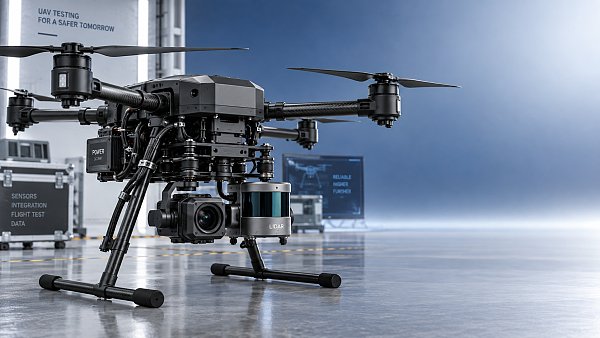
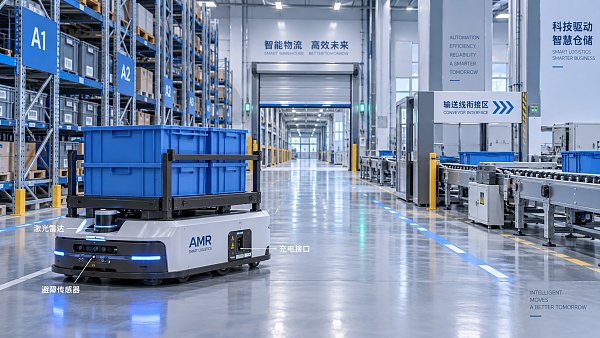
A warehouse AMR, an outdoor security node, and a UAV mapping payload do not need identical anti-interference behavior. Smart procurement will define fit-for-purpose thresholds rather than chase universally large numbers.
A Practical Buying Framework for 2025 and Beyond
For procurement professionals, the strongest response to market noise is a structured comparison model. Start with the application environment, then map the failure cost of interference, then request proof under those same conditions. If a supplier cannot connect datasheet claims to field-relevant evidence, the product may be optimized more for quotation-stage appeal than deployment-stage performance.
A better procurement sequence is: define environmental stressors, define unacceptable failure modes, define measurable pass/fail criteria, and only then compare commercial terms. This approach keeps solid-state LiDAR anti-interference parameters tied to business risk rather than abstract specification ranking.
For organizations sourcing across robotics, industrial automation, UAV systems, or smart infrastructure, the broader lesson is consistent with TSV’s engineering-first view: parameters only matter when their test boundaries are explicit. Buyers do not need the loudest claim. They need the most defensible one.
Conclusion: Focus on Survivable Performance, Not Just Attractive Numbers
The solid-state LiDAR market is entering a more disciplined phase. As deployments scale and environments become less controlled, solid-state LiDAR anti-interference parameters are no longer optional technical details—they are indicators of whether a sensor will remain trustworthy when the operating world gets messy. For procurement teams, the most important change is not in the datasheet itself, but in how the datasheet should be read.
If your organization wants to judge the trend’s impact on upcoming sourcing decisions, focus on four questions: under which interference conditions are specs valid, how performance degrades outside ideal conditions, what test methods support the claims, and which failure modes create the highest business cost in your application. Those answers will do far more to protect project outcomes than any headline range figure ever can.
Search News
Hot Articles
- Carbon Fiber StructuresHow to Specify Aerospace Carbon Fiber Assemblies for Lightweight, Load-Bearing PartsJul 11, 2026
- Machine VisionXiaomi, Alibaba DAMO Academy Drive Open-Source Robotics Model Ecosystem, Lowering Algorithm Development Barriers for Overseas SMEs Adopting Chinese Robotics SolutionsMar 30, 2026
- Cobots & ArmsShanxi 'AI+' Conference Showcases Embodied Intelligence with Multinational Buyer Engagement: Key Industry ImplicationsMar 30, 2026
Popular Tags
Recommended News
 Jul 11, 2026How to Specify Aerospace Carbon Fiber Assemblies for Lightweight, Load-Bearing PartsAerospace carbon fiber assemblies: learn how to specify laminate design, load data, joining methods, and inspection controls for lighter, reliable load-bearing aerospace parts.Elena Rostova (UAV Systems Researcher)
 Mar 30, 2026Xiaomi, Alibaba DAMO Academy Drive Open-Source Robotics Model Ecosystem, Lowering Algorithm Development Barriers for Overseas SMEs Adopting Chinese Robotics SolutionsXiaomi & Alibaba DAMO Academy's open-source robotics models lower algorithm barriers for global SMEs. Boost efficiency in manufacturing, logistics & smart retail with ROS 2 compatible solutions.TSV Data Lab
 Mar 30, 2026Shanxi 'AI+' Conference Showcases Embodied Intelligence with Multinational Buyer Engagement: Key Industry ImplicationsShanxi 'AI+' Conference highlights embodied intelligence with Tesla, Ubtech & Jiantao showcasing multimodal robotics. 40+ global buyers validated tech on-site, creating new B2B channels for industrial automation & AI solutions.Chen Wei (Automation Lead Engineer)
 Mar 30, 2026Zhongguancun Unveils 6G Integrated Sensing-Computing-Intelligence Platform to Empower Embodied Robots for Global Industrial ApplicationsZhongguancun's new 6G platform revolutionizes industrial robotics with <10ms latency, empowering global automotive, logistics & port automation. Discover how this tech boosts China's smart manufacturing exports.TSV Data Lab
 Mar 30, 2026Mech-Mind Tianjin Embodied Intelligence R&D and Production Base Goes Live, Cutting Delivery Time by 20%–30% for Global Customized AMR+Vision SolutionsMech-Mind's Tianjin AMR+Vision production base cuts delivery time by 20%-30% for欧美 & Latin American markets. Discover how this PLd-certified facility accelerates customized robotics solutions for smart manufacturing and logistics.Chen Wei (Automation Lead Engineer)
 Mar 30, 2026Boao Forum Reveals 'Co-evolution of Big and Small Brains' Trend in Humanoid Robots, China's Embodied Intelligence Accelerates Adaptation to Overseas Manufacturing Service ScenariosDiscover how China's humanoid robots, featuring 'Co-evolution of Big and Small Brains,' are revolutionizing global manufacturing. Learn about Embodied Tian Gong 3.0's ISO compliance and overseas deployment at Boao Forum 2026.Chen Wei (Automation Lead Engineer)
 Mar 30, 2026China Railway Industrial Secures Patent for Embodied Robotics in Material Handling, Boosting High-Precision Delivery Capabilities for Overseas Infrastructure and Manufacturing ProjectsChina Railway Industrial's new patent for embodied robotics in material handling boosts high-precision delivery for global infrastructure & manufacturing. Discover how this innovation enhances logistics accuracy in automotive, rail transit & EPC projects.Chen Wei (Automation Lead Engineer)
 Sep 28, 2026Spindle Runout Measurement in Germany: DIN Standards, Methods, and Acceptance LimitsSpindle runout measurement Germany: explore DIN standards, proven methods, acceptance limits, and audit-ready practices for reliable machining quality.Dr. Marcus Vance
 Sep 27, 2026How to Select Wall-Mount Edge Devices for Space-Constrained Factory NetworksWall mount edge devices for space-constrained factories: evaluate workload, thermal design, power resilience, cable access, and network reliability for smarter deployments.TSV Data Lab
 Sep 26, 2026Machining Tolerance Analysis: How to Set Limits That Meet Function and Cost TargetsMachining tolerance analysis: learn how to set functional limits, control tolerance stacks, reduce inspection risk, and balance precision with production cost.Dr. Marcus Vance
 Sep 25, 2026How to Evaluate an Industrial Infrastructure Data Platform for Multi-Site OperationsIndustrial infrastructure data platform evaluation guide for multi-site operations: compare data quality, edge resilience, interoperability, governance, and scalable proof-of-value criteria.Victor Lin (Chief Software Architect)
 Sep 24, 2026How to Select Machine Vision Optics for Accurate Inspection at Different Working DistancesMachine vision optics selection guide for accurate inspection at every working distance. Compare FOV, pixel scale, DOF, distortion, lighting, and telecentric options.TSV Data Lab
 Sep 23, 2026How to Evaluate a Machine Vision System Integrator for High-Speed Inspection LinesChoose a machine vision system integrator with proven expertise in high-speed inspection, reliable reject timing, robust optics, and measurable acceptance criteria.TSV Data Lab
 Sep 28, 2026When is a SCADA API the right choice for connecting plant systems?SCADA API guide: learn when governed plant data integration improves traceability, security, and scalability—without compromising real-time control.Victor Lin (Chief Software Architect)
 Sep 27, 2026How SCADA data integration improves traceability across production linesSCADA data integration connects production-line data to improve traceability, accelerate quality investigations, and strengthen safety decisions.Victor Lin (Chief Software Architect)
 Sep 26, 2026What to define before starting SCADA integration planningSCADA integration planning starts with clear scope, control boundaries, data models, cybersecurity, and testing. Discover the definitions that reduce risk and costly rework.Victor Lin (Chief Software Architect)
 Sep 25, 2026How a smart factory with Industrial IoT reduces production blind spotsDiscover how a smart factory with Industrial IoT turns real-time machine, quality, and workflow data into actionable insights that reduce production blind spots and delivery risks.Victor Lin (Chief Software Architect)
 Sep 24, 2026When does Industrial IoT make smart manufacturing easier to scale?Smart manufacturing Industrial IoT scales when trusted data, interoperable systems, and secure workflows turn connected assets into measurable gains.TSV Data Lab
 Sep 23, 2026What drives ultra-precision machining cost at 1-micron tolerance?Ultra precision machining cost per part at 1 micron tolerance depends on process, material, metrology, and yield. Learn how to compare quotes confidently.Dr. Marcus Vance
 Sep 22, 2026Drone Engine-T550CC Applications: Build the UAV Power System Around the MissionAn application guide for Drone Engine-T550CC integration, covering payload planning, airframe matching, cooling, fuel, vibration, test procedures, documentation, and service preparation.Elena Rostova (UAV Systems Researcher)
 Sep 22, 2026How to Evaluate Industrial Edge Computing Vendors for Factory DeploymentIndustrial edge computing vendor evaluation guide for factories: compare latency, protocol fit, reliability, security, and lifecycle support before deployment.TSV Data Lab
 Sep 21, 2026Drone Payload Integration: Matching Power, Data, and Center of Gravity for Reliable FlightsDrone payload integration made practical: balance power, data, center of gravity, and endurance to build safer, more reliable mission-ready flights.Elena Rostova (UAV Systems Researcher)
 Sep 20, 2026Autonomous Navigation Pricing: Cost Drivers and Budget Benchmarks for AMR ProjectsAutonomous navigation price explained: compare AMR cost drivers, software, sensors, integration, safety, and lifecycle budgets to build a scalable project plan.Chen Wei (Automation Lead Engineer)
 Sep 19, 2026How to Scope Automation Integration Services for Multi-System Factory ProjectsAutomation integration services: learn how to scope multi-system factory projects with clear workflows, interface contracts, safety boundaries, and acceptance criteria.Victor Lin (Chief Software Architect)