Factory Automation OPC UA: When to Use It for PLC, SCADA, and MES Connectivity
Publication Date
author
Factory automation OPC UA starts making sense when data must move across layers
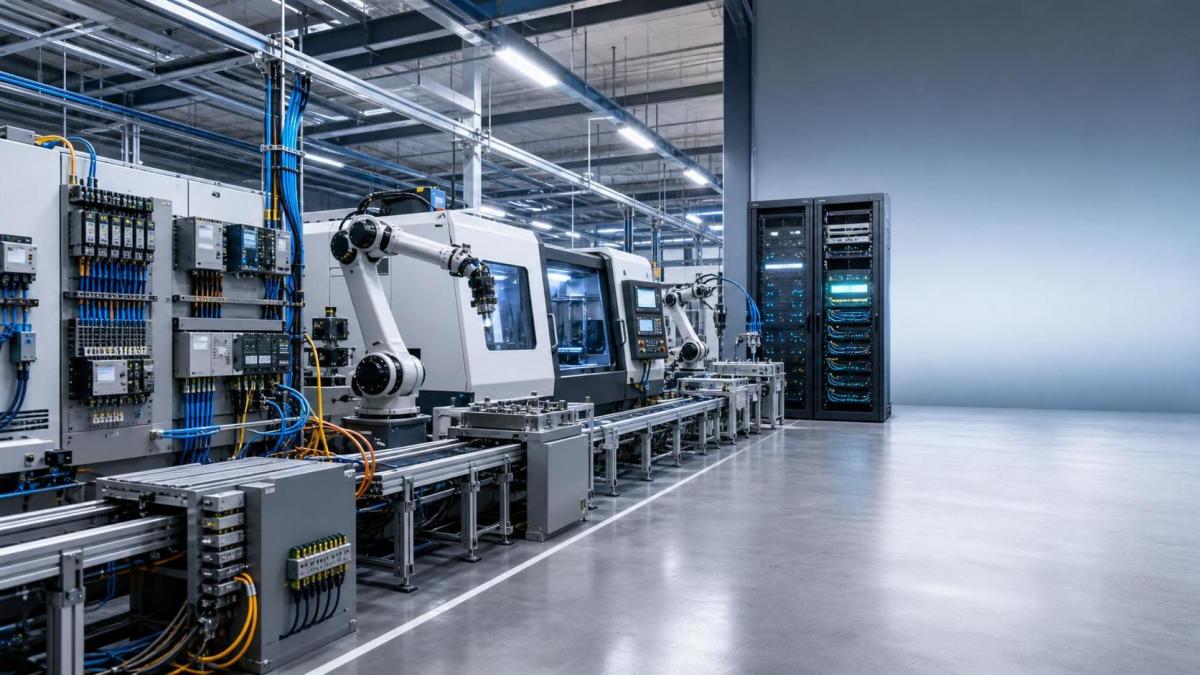
Factory automation OPC UA matters most when machine data must travel reliably from PLC logic to SCADA visibility and then into MES workflows.
That sounds straightforward, but the real decision is rarely about protocol preference alone.
In one plant, the priority is stable alarm and status exchange.
In another, it is structured production context, recipe traceability, or cross-vendor expansion over several years.
This is where factory automation OPC UA earns attention.
It is less about marketing claims of openness, and more about whether the information model matches the way operations actually run.
From the TSV perspective, the useful question is not whether OPC UA is modern.
The useful question is whether it reduces ambiguity, engineering rework, and long integration cycles with measurable discipline.
Actual deployment conditions change the answer
Different automation stacks create different expectations for factory automation OPC UA.
A packaging line with one PLC family behaves very differently from a mixed facility linking CNC cells, robot stations, vision systems, and historian platforms.
When systems stay inside one vendor ecosystem, native drivers may be faster to deploy.
When data must remain usable across software upgrades, supplier changes, and edge analytics projects, factory automation OPC UA usually becomes more attractive.
The difference lies in structure.
A simple tag list can move values.
A well-designed OPC UA model can move values together with meaning, state, timestamps, quality indicators, and equipment relationships.
That distinction matters in regulated production, aerospace components, robotics cells, and precision machining environments where data context cannot be guessed later.
A quick way to compare the common situations
For PLC connectivity, the best use case is usually mixed equipment and long lifecycle support
At the PLC level, factory automation OPC UA is strongest when equipment diversity is already real, or clearly coming.
This often happens in plants that expanded in phases.
One line may run Siemens, another Rockwell, and a later retrofit may introduce Beckhoff, Codesys, or a machine builder’s embedded controller.
In that setting, maintaining custom driver logic for every connection slowly becomes a cost center.
Factory automation OPC UA helps by standardizing secure access to variables, status, alarms, and equipment objects.
The gain is not only easier data extraction.
The gain is cleaner migration when a controller changes, because applications above the PLC layer do not need a full rewrite.
However, it is a poor fit for replacing field-level deterministic control traffic by itself.
If the objective is sub-millisecond coordination for motion axes or safety I/O behavior, other technologies remain primary.
A common mistake is asking factory automation OPC UA to solve a timing problem it was not selected to solve.
For SCADA integration, the value appears in context, not just connectivity
SCADA projects often start with visible needs: screens, alarms, trends, and user permissions.
But over time, the deeper issue becomes data consistency.
If every machine exposes tags in a different naming style, the SCADA layer becomes a translation patchwork.
Factory automation OPC UA can reduce that disorder when the namespace is engineered with discipline.
In practical terms, that means pumps, drives, ovens, robot stations, and inspection units should expose predictable structures.
Status, command, fault, batch, and quality fields should not be improvised line by line.
This matters in facilities where SCADA is expected to unify operations from discrete manufacturing, process islands, and utility systems.
A broader industrial estate may include compressors, environmental controls, test benches, and AGV charging areas.
Factory automation OPC UA works well there because it supports one information framework across very different assets.
MES connectivity is where factory automation OPC UA usually shows its full value
MES does not only need raw values.
It needs production meaning: which order ran, which recipe version applied, which serial number failed, and which machine state caused downtime.
That is why factory automation OPC UA is often most effective between equipment and MES-facing integration layers.
In precision machining, part genealogy may depend on machine identity, tool offsets, cycle completion, and inspection handoff.
In electronics assembly, material lot consumption and rework state need consistent timestamps and event logic.
In aerospace subassembly, traceability can extend across torque events, environmental conditions, and operator authorization records.
Those are not abstract scenarios.
They are exactly the environments where information noise creates cost, and where TSV-style engineering truth depends on structured, verifiable plant data.
If the model is shallow, MES will still need heavy middleware mapping.
If the model is sound, factory automation OPC UA becomes a durable bridge instead of another translation layer.
What usually changes from one MES-linked scenario to another
- Batch production focuses on recipe control, lot identity, and exception logging.
- Discrete assembly focuses on work order status, serial genealogy, and station interlocks.
- Robotics cells focus on cycle timing, fault classification, and handoff with vision or conveyors.
- High compliance operations focus on auditability, version control, and timestamp integrity.
Different settings ask different questions before choosing factory automation OPC UA
A useful evaluation method is to compare the plant condition, not the brochure language.
The questions below usually separate a justified deployment from a fashionable one.
Where projects go wrong before factory automation OPC UA ever reaches production
The first misread is assuming compliance equals usefulness.
A device may support OPC UA, yet still expose a weak and inconsistent data structure.
The second misread is focusing only on initial connection cost.
In long-lived industrial systems, remapping, troubleshooting, version drift, and maintenance windows usually cost more.
Another overlooked point is organizational readiness.
If naming conventions, alarm philosophy, and equipment hierarchy are undefined, factory automation OPC UA will expose the disorder rather than fix it.
There is also a timing mistake.
Some projects add factory automation OPC UA late, after PLC logic, SCADA tags, and MES interfaces were already frozen.
That usually turns a useful architecture choice into a patch exercise.
A practical next step is to define the decision around plant evidence
The cleanest next step is to document three things before selecting the integration path.
- Map which data must stay inside PLC and which data must move to SCADA or MES.
- List required context fields, not only process values.
- Check whether future lines, suppliers, or analytics tools will need the same model.
When those answers are explicit, factory automation OPC UA becomes easier to judge with engineering precision.
If the site needs cross-vendor interoperability, structured semantics, and scalable lifecycle support, it is usually the right direction.
If the need is only a narrow point connection with fixed architecture, a simpler option may be enough.
The better choice comes from measured plant conditions, clear information requirements, and disciplined validation of what each endpoint really exposes.
Search News
Hot Articles
- Carbon Fiber StructuresHow to Specify Aerospace Carbon Fiber Assemblies for Lightweight, Load-Bearing PartsJul 11, 2026
- Machine VisionXiaomi, Alibaba DAMO Academy Drive Open-Source Robotics Model Ecosystem, Lowering Algorithm Development Barriers for Overseas SMEs Adopting Chinese Robotics SolutionsMar 30, 2026
- Cobots & ArmsShanxi 'AI+' Conference Showcases Embodied Intelligence with Multinational Buyer Engagement: Key Industry ImplicationsMar 30, 2026
Popular Tags
Recommended News
 Jul 11, 2026How to Specify Aerospace Carbon Fiber Assemblies for Lightweight, Load-Bearing PartsAerospace carbon fiber assemblies: learn how to specify laminate design, load data, joining methods, and inspection controls for lighter, reliable load-bearing aerospace parts.Elena Rostova (UAV Systems Researcher)
 Mar 30, 2026Xiaomi, Alibaba DAMO Academy Drive Open-Source Robotics Model Ecosystem, Lowering Algorithm Development Barriers for Overseas SMEs Adopting Chinese Robotics SolutionsXiaomi & Alibaba DAMO Academy's open-source robotics models lower algorithm barriers for global SMEs. Boost efficiency in manufacturing, logistics & smart retail with ROS 2 compatible solutions.TSV Data Lab
 Mar 30, 2026Shanxi 'AI+' Conference Showcases Embodied Intelligence with Multinational Buyer Engagement: Key Industry ImplicationsShanxi 'AI+' Conference highlights embodied intelligence with Tesla, Ubtech & Jiantao showcasing multimodal robotics. 40+ global buyers validated tech on-site, creating new B2B channels for industrial automation & AI solutions.Chen Wei (Automation Lead Engineer)
 Mar 30, 2026Zhongguancun Unveils 6G Integrated Sensing-Computing-Intelligence Platform to Empower Embodied Robots for Global Industrial ApplicationsZhongguancun's new 6G platform revolutionizes industrial robotics with <10ms latency, empowering global automotive, logistics & port automation. Discover how this tech boosts China's smart manufacturing exports.TSV Data Lab
 Mar 30, 2026Mech-Mind Tianjin Embodied Intelligence R&D and Production Base Goes Live, Cutting Delivery Time by 20%–30% for Global Customized AMR+Vision SolutionsMech-Mind's Tianjin AMR+Vision production base cuts delivery time by 20%-30% for欧美 & Latin American markets. Discover how this PLd-certified facility accelerates customized robotics solutions for smart manufacturing and logistics.Chen Wei (Automation Lead Engineer)
 Mar 30, 2026Boao Forum Reveals 'Co-evolution of Big and Small Brains' Trend in Humanoid Robots, China's Embodied Intelligence Accelerates Adaptation to Overseas Manufacturing Service ScenariosDiscover how China's humanoid robots, featuring 'Co-evolution of Big and Small Brains,' are revolutionizing global manufacturing. Learn about Embodied Tian Gong 3.0's ISO compliance and overseas deployment at Boao Forum 2026.Chen Wei (Automation Lead Engineer)
 Mar 30, 2026China Railway Industrial Secures Patent for Embodied Robotics in Material Handling, Boosting High-Precision Delivery Capabilities for Overseas Infrastructure and Manufacturing ProjectsChina Railway Industrial's new patent for embodied robotics in material handling boosts high-precision delivery for global infrastructure & manufacturing. Discover how this innovation enhances logistics accuracy in automotive, rail transit & EPC projects.Chen Wei (Automation Lead Engineer)
 Oct 12, 2026How to Verify RoHS Compliance in Industrial Sensing Systems Before DeploymentRoHS compliant sensing systems: learn how to verify materials, supplier declarations, testing, and configuration controls before industrial deployment.TSV Data Lab
 Oct 11, 2026How Procurement-Oriented Content Taxonomy Improves B2B Buying JourneysProcurement-oriented content taxonomy streamlines B2B buying journeys with clearer evidence, supplier comparisons, risk visibility, and faster approvals.TSV Data Lab
 Oct 10, 2026How to Select a Machine Performance Monitoring Platform for OEE and Downtime ReductionMachine performance monitoring platform selection guide: validate machine states, OEE data, downtime reasons, integrations, and scalability to reduce losses with confidence.TSV Data Lab
 Oct 08, 2026How to Machine Inconel 625 Blades Without Heat Cracks or Edge ChippingInconel 625 blade machining guide: prevent heat cracks, edge chipping, chatter, and work hardening with proven tooling, cooling, fixturing, and inspection strategies.Dr. Marcus Vance
 Oct 07, 2026How to Evaluate an HMI Panel Distributor for Industrial Automation ProjectsHMI panel distributor evaluation guide: verify technical compatibility, traceability, supply reliability, lifecycle support, and total cost for automation projects.Victor Lin (Chief Software Architect)
 Oct 06, 2026Navigation Fault Tolerance Standards for AMRs: What Safety Teams Must VerifyNavigation fault tolerance standards: learn what AMR safety teams must verify, from localization loss and sensor faults to stopping distance, safe restart, and site-specific validation.Chen Wei (Automation Lead Engineer)
 Oct 05, 2026Calculating Edge Computing Total Cost of Ownership Across Distributed SitesEdge computing ownership cost explained: calculate deployment, energy, connectivity, security, remote support, and refresh costs across distributed sites.TSV Data Lab
 Oct 04, 2026CAD/CAM Benchmarking in the GCC: What Manufacturers Should Ask a ConsultantCAD CAM benchmark consultant GCC guide: learn the key questions manufacturers should ask to validate post-processors, workflows, machine performance, and production risk.Victor Lin (Chief Software Architect)
 Oct 03, 2026Selecting Automotive Radar Sensor Modules for ADAS Range, Resolution, and IntegrationAutomotive radar sensor module selection guide for ADAS: compare range, resolution, field of view, latency, and integration to build safer, reliable vehicle systems.TSV Data Lab
 Oct 02, 2026How to Qualify Machined Parts Suppliers for Hard Tech ProgramsHard tech supply chain machined parts demand rigorous supplier qualification. Learn how to assess capability, traceability, quality controls, and delivery resilience.Dr. Marcus Vance
 Oct 01, 2026How to Select an Outdoor Security Radar Sensor for Perimeter Detection?Outdoor security radar sensor selection guide: compare range, accuracy, false-alarm control, integration, and field testing for reliable perimeter detection.TSV Data Lab
 Sep 30, 2026How to Evaluate Solid-State LiDAR Hardware for Outdoor Autonomous VehiclesSolid state LiDAR hardware evaluation guide for outdoor autonomous vehicles—compare range, point-cloud quality, environmental resilience, integration, and safety.TSV Data Lab
 Sep 29, 2026ISO 9283 Repeatability: How to Evaluate Cobot Positioning PerformanceISO 9283 cobot repeatability explained: learn how payload, reach, approach direction, and test conditions affect positioning performance and cell capability.Chen Wei (Automation Lead Engineer)
 Oct 12, 2026What should be included in predictive maintenance pricing for factories?Predictive maintenance pricing for factories: compare sensors, software, integration, support, and total cost to secure measurable uptime gains and avoid hidden expenses.TSV Data Lab
 Oct 11, 2026How payload and reach change the cost of an industrial robotCost of industrial robot systems depends heavily on payload and reach. Learn how sizing, torque, tooling, safety, and lifecycle factors shape smarter automation investments.Chen Wei (Automation Lead Engineer)
 Oct 10, 2026When does the cost of industrial robots pay back in high-volume production?Cost of industrial robots: discover how high-volume manufacturers calculate payback through uptime, cycle time, labor, quality, and integration before investing.Chen Wei (Automation Lead Engineer)
 Oct 09, 2026What does a manufacturing robot really cost beyond the purchase price?Manufacturing robot cost goes far beyond the purchase price. Explore integration, tooling, safety, uptime, and total ownership factors for smarter automation investments.Chen Wei (Automation Lead Engineer)