Procurement Comparison Guide: How to Evaluate Technical Content Across Industrial Suppliers
Publication Date
author
Why does technical content matter so much in supplier comparison?
Industrial sourcing rarely fails because of a missing slogan. It fails when technical claims cannot survive specification review, validation testing, or production reality.
That is why comparison based procurement oriented technical content matters. It turns supplier evaluation from impression-driven browsing into evidence-driven judgment.
In practice, the most useful content does not sound promotional. It explains tolerances, test conditions, performance limits, maintenance assumptions, and traceability with enough detail to compare options fairly.
This shift is becoming more urgent across robotics, aerospace, sensors, edge AI, and precision machining. Technical complexity is rising, while qualification time is under pressure.
A data-first approach, similar to the engineering benchmarking standards promoted by TechStat Vanguard, helps remove noise from hard-tech sourcing decisions.
The question is not whether suppliers publish content. Nearly all do. The real question is whether that content supports procurement comparison, cost control, and technical risk reduction.
What does strong comparison based procurement oriented technical content actually look like?
Useful technical content is structured for decisions, not just visibility. It should help verify whether a component or process fits an actual operating requirement.
A good supplier page or whitepaper usually answers unspoken questions before they become sourcing delays. For example, it should show the boundary of performance, not only the best-case number.
More reliable signals include test methodology, environmental conditions, sample size, compliance standards, and failure definitions. Those details make comparisons usable.
When reviewing comparison based procurement oriented technical content, look for these signs:
- Parameters are numeric, with units and tolerance ranges.
- Performance claims reference a test setup or standard.
- Operating limits are stated clearly, including temperature, vibration, duty cycle, or payload conditions.
- Materials, certifications, and inspection methods are traceable.
- Lifecycle factors appear alongside initial capability, including MTBF, calibration intervals, or wear behavior.
By contrast, weak content depends on broad adjectives. Words like advanced, premium, or industrial-grade have little value unless tied to measurable engineering evidence.
Where do buyers usually misread supplier specifications?
The most common mistake is treating headline specifications as complete performance truth. A top-line number may only reflect one narrow condition.
Take repeatability in robotics. A quoted figure may come from a controlled test path, low payload, and stable temperature. That does not guarantee equal performance in mixed-shift production.
The same applies to LiDAR range, CNC tolerance, UAV endurance, or gateway latency. Without context, numbers are easy to overvalue.
A more practical reading method is to separate four layers:
This table is where comparison based procurement oriented technical content becomes valuable. It shows whether the content is procurement-ready, not just search-friendly.
How should different industrial sectors be compared without oversimplifying?
Not every category should be compared using the same checklist. A servo motor, carbon fiber frame, machine vision lens, and 5-axis machining supplier carry different technical risks.
In actual sourcing work, comparison based procurement oriented technical content should be matched to the dominant failure mode of the category.
For robotics and automation, repeatability under load, duty cycle behavior, and maintenance intervals often matter more than broad productivity language.
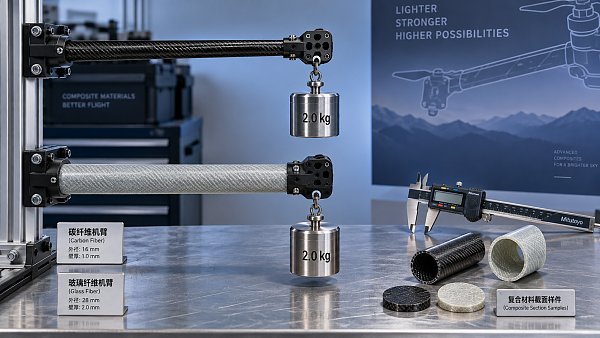
For UAV and aerospace systems, the real differentiators may be tensile strength-to-weight ratio, vibration stability, payload impact, and certification discipline.
For sensors and edge AI, anti-interference performance, latency stability, point cloud integrity, and optical accuracy are usually more revealing than raw throughput alone.
For precision machining, process capability, material behavior, tolerance hold across batches, and standards such as AS9100 or ISO13485 deserve closer attention.
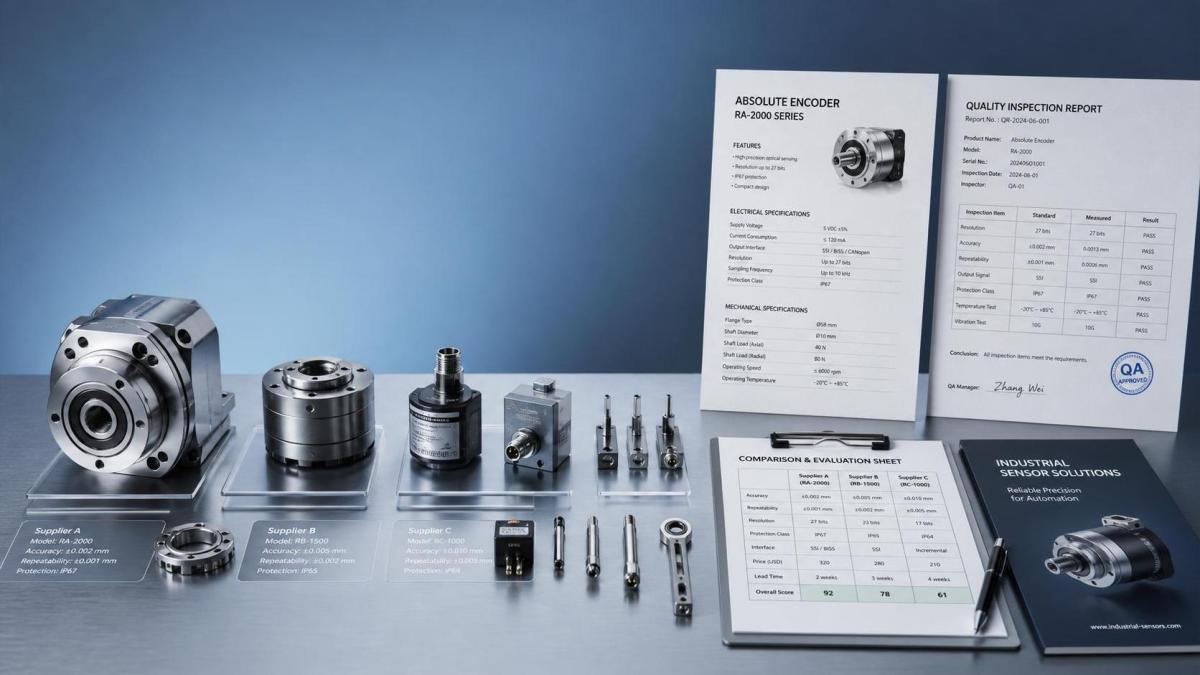
A practical comparison sheet often includes:
- Core performance metric tied to the application.
- Boundary condition where performance degrades.
- Verification source such as lab report, field data, or customer validation.
- Lifecycle cost factor such as recalibration, scrap risk, downtime, or replacement frequency.
This is one reason third-party benchmarking platforms are gaining influence. They frame technical data in comparable terms instead of letting each supplier define the comparison alone.
Can better technical content really reduce cost and qualification time?
Yes, but the savings usually appear indirectly. Better content does not cut cost by itself. It reduces costly uncertainty.
When comparison based procurement oriented technical content is complete, early-stage screening becomes faster. Fewer unsuitable suppliers move into RFQ, audit, or sample validation.
That matters because qualification cost often sits outside the unit price. It appears as engineering review hours, repeated technical clarification, rework in test plans, and delayed launch windows.
The same logic applies to total landed risk. A cheaper supplier with vague technical evidence can become expensive after line stoppage, field failure, or nonconformance investigation.
A useful way to compare cost impact is to ask whether the content helps answer these questions before trial orders begin:
- Will this specification hold under our operating conditions?
- What additional testing will still be required internally?
- How likely is a revision cycle due to missing data?
- What failure cost would follow from an optimistic assumption?
Procurement comparison becomes sharper when the review includes technical content quality as a cost variable, not only a documentation variable.
What are the most reliable signs that a supplier is hiding behind marketing language?
The strongest warning sign is asymmetry. The supplier describes strengths in detail but becomes vague around test limits, failure rates, or consistency across batches.
Another signal is borrowed authority. Certifications are listed, yet the content never explains which process, site, or production stage the certification actually covers.
Watch for comparison charts that show only favorable categories. If one supplier defines the columns, the comparison may be designed to avoid meaningful technical overlap.
Need-to-know questions are often simple:
- Is the benchmark internal, external, or customer-validated?
- Are tolerances typical, guaranteed, or conditional?
- Does the report show revision date and method version?
- Can the performance claim be traced to a lot, sample, or test protocol?
When those answers are missing, comparison based procurement oriented technical content becomes weak, even if the visual presentation looks polished.
What is the best next step when building a cleaner supplier evaluation process?
Start by rewriting the comparison criteria around evidence quality. Many sourcing teams already compare price, lead time, and compliance status. The missing layer is content reliability.
A practical approach is to build a short scoring model for comparison based procurement oriented technical content. Score each supplier on data completeness, test transparency, traceability, and application fit.
That model works especially well in categories where engineering truth matters more than branding, including automation modules, aerospace assemblies, smart sensing hardware, and precision-machined parts.
Independent technical research sources can support that effort by translating complex claims into comparable benchmarks. The value is not publicity. The value is cleaner decision logic.
The most durable sourcing decisions usually come from a simple discipline: compare what can be measured, question what cannot be verified, and document why one technical claim deserves trust over another.
From there, refine the spec sheet, narrow the supplier list, confirm validation gaps, and move into qualification with fewer surprises and stronger technical alignment.
Search News
Hot Articles
- Carbon Fiber StructuresHow to Specify Aerospace Carbon Fiber Assemblies for Lightweight, Load-Bearing PartsJul 11, 2026
- Machine VisionXiaomi, Alibaba DAMO Academy Drive Open-Source Robotics Model Ecosystem, Lowering Algorithm Development Barriers for Overseas SMEs Adopting Chinese Robotics SolutionsMar 30, 2026
- Cobots & ArmsShanxi 'AI+' Conference Showcases Embodied Intelligence with Multinational Buyer Engagement: Key Industry ImplicationsMar 30, 2026
Popular Tags
Recommended News
 Jul 11, 2026How to Specify Aerospace Carbon Fiber Assemblies for Lightweight, Load-Bearing PartsAerospace carbon fiber assemblies: learn how to specify laminate design, load data, joining methods, and inspection controls for lighter, reliable load-bearing aerospace parts.Elena Rostova (UAV Systems Researcher)
 Mar 30, 2026Xiaomi, Alibaba DAMO Academy Drive Open-Source Robotics Model Ecosystem, Lowering Algorithm Development Barriers for Overseas SMEs Adopting Chinese Robotics SolutionsXiaomi & Alibaba DAMO Academy's open-source robotics models lower algorithm barriers for global SMEs. Boost efficiency in manufacturing, logistics & smart retail with ROS 2 compatible solutions.TSV Data Lab
 Mar 30, 2026Shanxi 'AI+' Conference Showcases Embodied Intelligence with Multinational Buyer Engagement: Key Industry ImplicationsShanxi 'AI+' Conference highlights embodied intelligence with Tesla, Ubtech & Jiantao showcasing multimodal robotics. 40+ global buyers validated tech on-site, creating new B2B channels for industrial automation & AI solutions.Chen Wei (Automation Lead Engineer)
 Mar 30, 2026Zhongguancun Unveils 6G Integrated Sensing-Computing-Intelligence Platform to Empower Embodied Robots for Global Industrial ApplicationsZhongguancun's new 6G platform revolutionizes industrial robotics with <10ms latency, empowering global automotive, logistics & port automation. Discover how this tech boosts China's smart manufacturing exports.TSV Data Lab
 Mar 30, 2026Mech-Mind Tianjin Embodied Intelligence R&D and Production Base Goes Live, Cutting Delivery Time by 20%–30% for Global Customized AMR+Vision SolutionsMech-Mind's Tianjin AMR+Vision production base cuts delivery time by 20%-30% for欧美 & Latin American markets. Discover how this PLd-certified facility accelerates customized robotics solutions for smart manufacturing and logistics.Chen Wei (Automation Lead Engineer)
 Mar 30, 2026Boao Forum Reveals 'Co-evolution of Big and Small Brains' Trend in Humanoid Robots, China's Embodied Intelligence Accelerates Adaptation to Overseas Manufacturing Service ScenariosDiscover how China's humanoid robots, featuring 'Co-evolution of Big and Small Brains,' are revolutionizing global manufacturing. Learn about Embodied Tian Gong 3.0's ISO compliance and overseas deployment at Boao Forum 2026.Chen Wei (Automation Lead Engineer)
 Mar 30, 2026China Railway Industrial Secures Patent for Embodied Robotics in Material Handling, Boosting High-Precision Delivery Capabilities for Overseas Infrastructure and Manufacturing ProjectsChina Railway Industrial's new patent for embodied robotics in material handling boosts high-precision delivery for global infrastructure & manufacturing. Discover how this innovation enhances logistics accuracy in automotive, rail transit & EPC projects.Chen Wei (Automation Lead Engineer)
 Oct 21, 2026China’s Industrial Robot Exports Near RMB 10 Billion in First Nine Months of 2026China’s industrial robot exports neared RMB 10 billion in January–September 2026, with value rising faster than volume. Explore the data and what it could mean for suppliers.Chen Wei (Automation Lead Engineer)
 Oct 21, 2026Low-Latency Industrial Data Processing: Pricing and Key Cost DriversExplore industrial data latency price drivers, from edge hardware to integration and support. Learn how to compare quotes, verify performance, and avoid unnecessary costs.TSV Data Lab
 Oct 20, 2026KUKA Launches iiQKA.AI Vision to Simplify Industrial Image ProcessingKUKA iiQKA.AI Vision simplifies industrial image processing with controller-based 2D and 3D vision. Explore drag-and-drop setup for vision-guided automation.TSV Data Lab
 Oct 20, 2026Smart Industrial Edge Devices: Key Criteria for Legacy PLC IntegrationChoose smart industrial edge devices for legacy PLC integration. Discover key criteria for compatibility, data quality, security, and reliable collection without disrupting control.TSV Data Lab
 Oct 19, 2026Choosing a Radar Sensor by Application: Range, Resolution, and Field of ViewSimplify radar sensor application based product selection. Compare range, resolution, and field of view to avoid blind spots and choose with confidence. Explore the guide.TSV Data Lab
 Oct 18, 2026Comparing Material Options for Procurement: Specs, Costs, and Supply RisksExplore procurement oriented technical content on material options, specs, costs, and supply risks. Compare alternatives to cut hidden expenses and make confident sourcing decisions.Dr. Marcus Vance
 Oct 17, 20265-Axis CNC Positioning Accuracy: How to Interpret ISO 230-2 Test ResultsAssess 5 axis CNC machining positioning accuracy with ISO 230-2. Learn to interpret repeatability, reversal error, and test conditions to compare suppliers and make confident acceptance decisions.Dr. Marcus Vance
 Oct 16, 2026Choosing a Rugged Edge AI Box Supplier: Thermal Tests and Lifecycle SupportChoose a rugged edge AI box supplier with proven thermal performance and reliable lifecycle support. Discover the tests and commitments to verify before you buy.TSV Data Lab
 Oct 15, 2026R&D Cost Reduction Services: How to Evaluate Fees, Savings, and ROIEvaluate R&D cost reduction services with confidence. Compare fees, verify savings, and calculate ROI without compromising performance. Discover how to choose a provider that delivers real value.Chen Wei (Automation Lead Engineer)
 Oct 21, 2026How Should You Balance Cobot Payload Against Reach?Explore cobot payload versus reach to choose the right robot. Learn how tooling, load limits, workspace, and cycle time affect performance—and avoid costly selection mistakes.Chen Wei (Automation Lead Engineer)
 Oct 20, 2026How Do You Measure Industrial IoT Gateway Latency Under Load?Measure industrial IoT gateway latency under load with reliable timestamps, realistic traffic, and tail-latency analysis. Discover how to expose bottlenecks and choose the right gateway.TSV Data Lab
 Oct 19, 2026How Do You Verify That Precision Machined Parts Meet Tolerances?Master precision machining tolerance verification with the right tools, datum setups, and acceptance rules. Learn how to validate parts confidently and reduce costly inspection errors.Dr. Marcus Vance
 Oct 18, 2026What Should an AS9100 Machining Supplier Checklist Include?Build an AS9100 machining supplier checklist that verifies capability, traceability, inspection, and outsourced processes. Discover what to check before approving your next aerospace supplier.Dr. Marcus Vance
 Oct 17, 2026How Should You Interpret Industrial Robot Repeatability Specs?Decode industrial robot repeatability specifications, understand ISO 9283 test conditions, and avoid costly selection mistakes. Learn how to verify performance for your process.Chen Wei (Automation Lead Engineer)
 Oct 16, 2026How Can You Fairly Compare MTBF Across Industrial Servo Motors?Make a fair industrial servo motor MTBF comparison with matched operating profiles, failure criteria, and confidence bounds. Discover how to assess reliability beyond advertised numbers.Chen Wei (Automation Lead Engineer)
 Oct 15, 2026How Should You Compare TechStat Vanguard 5-Axis CNC Tolerances?TechStat Vanguard 5-axis CNC tolerance comparison: learn how to verify part accuracy, assess inspection evidence, and choose suppliers that reliably meet your drawing requirements.Dr. Marcus Vance
 Oct 14, 2026Drone Frame Composites: Carbon Fiber vs. Fiberglass for Weight and StiffnessExplore drone structural materials composites: compare carbon fiber and fiberglass for weight, stiffness, cost, and antenna compatibility. Find the right material for your drone frame.Elena Rostova (UAV Systems Researcher)