Automation Trends in Broiler Chicken Cage Systems for High-Volume Poultry Operations
Publication Date
author
Automation Trends in Broiler Chicken Cage Systems for High-Volume Poultry Operations
High-volume poultry operations are under growing pressure to improve throughput, reduce labor dependency, and maintain tighter control over flock conditions. In broiler production, those pressures are intensified by thinner margins, rising input costs, stricter biosecurity expectations, and greater scrutiny around animal welfare and food safety. As a result, automation in housing and handling systems is no longer a niche topic for engineering teams alone. It has become a commercial issue that affects capital planning, operating resilience, and supplier selection across the poultry value chain.
For business evaluators, distributors, and approval teams, the key question is not whether automation has a role in broiler rearing, but how far that automation should go and which system features are most likely to deliver reliable returns. In many markets, investment decisions are shifting away from simple equipment comparisons toward broader reviews of labor exposure, maintenance intensity, ventilation compatibility, manure handling, feeding consistency, and long-term hygiene performance. That shift is shaping how broiler chicken cage systems are designed, specified, and procured.
Several structural trends explain why this topic deserves attention now. First, agriculture continues to face labor shortages in many regions. The International Labour Organization has noted persistent employment and productivity challenges across agricultural sectors, especially where work is repetitive, physically demanding, and difficult to standardize at scale. Second, feed remains the largest cost component in poultry production, making feed management accuracy a major economic priority. Third, disease prevention and traceability expectations have increased after repeated global animal health disruptions, which has pushed farms to look more closely at housing systems that support controlled workflows and easier sanitation.
Automation in broiler cage systems is therefore developing along two paths at the same time. One path focuses on reducing manual work through mechanized feeding, watering, manure removal, and environmental coordination. The other focuses on making the production environment more measurable, with sensors, control panels, and integration points that allow managers to monitor performance and detect problems earlier. In high-volume operations, the commercial value often comes from the interaction between these two paths rather than from any single feature.
Why Design Choices Are Becoming More Strategic
Broiler chicken cages design has moved beyond basic space planning. Selection factors for commercial farms now typically include material corrosion resistance, tier configuration, structural load stability, ventilation compatibility, drinker line accessibility, cleaning practicality, and whether the system can support predictable flock movement and daily management routines. These points matter because poorly matched design can cancel out the expected gains from automation. A system that looks efficient on paper may create bottlenecks if it is difficult to inspect, hard to clean, or incompatible with local climate control practices.
For financial approvers, this means equipment assessment should include total lifecycle logic rather than only initial purchase price. Galvanization quality, spare parts availability, installation tolerances, and service support can influence useful life and downtime risk. For dealers and distributors, it means technical consultation is increasingly part of the sales process. End users often need guidance on how cage design interacts with stocking density targets, waste handling routes, and worker access patterns before they can make a defensible procurement decision.
The Food and Agriculture Organization has repeatedly emphasized that housing, management, and biosecurity are interdependent in poultry systems, especially where flock density is high and disease spread can have significant economic consequences. In practice, that makes design standardization and operational consistency more important than isolated feature claims. Decision-makers are paying closer attention to whether automation supports a stable daily routine across feeding, watering, inspection, litter or manure management, and bird removal.
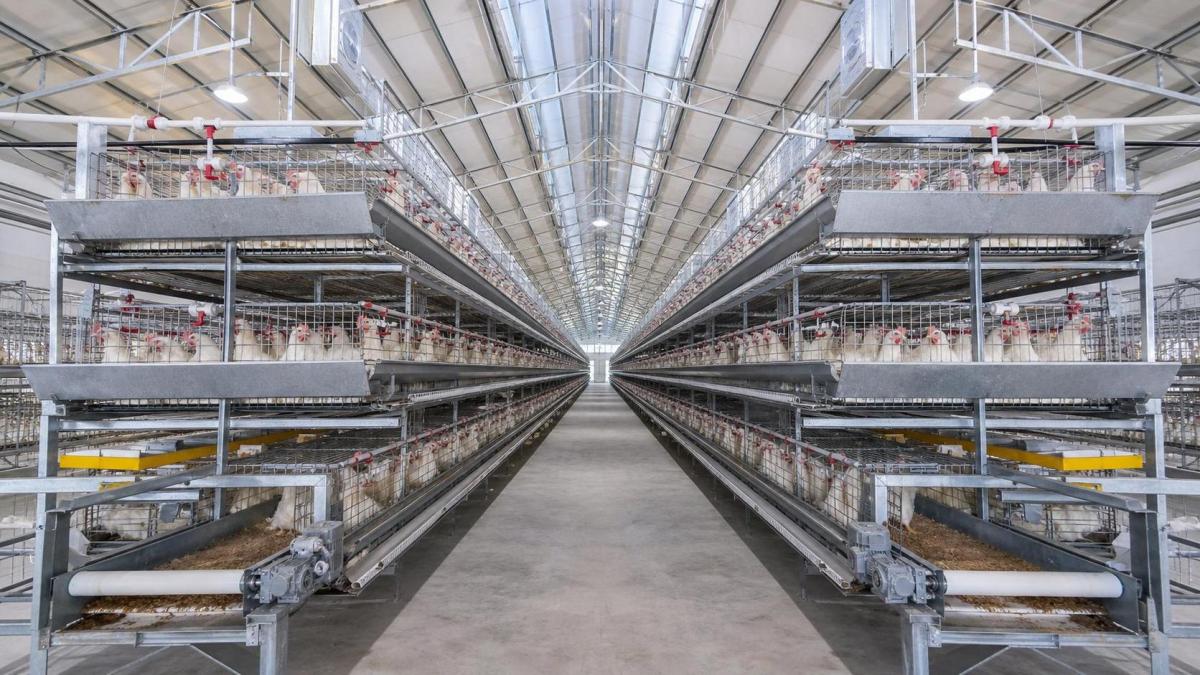
The Main Automation Trends Shaping the Market
One major trend is the integration of automated feeding systems that aim to improve ration distribution consistency across large flocks. Feed conversion performance can be sensitive to uneven delivery or interruptions, so equipment that supports uniform access and reduces manual handling may help operators stabilize outcomes. The economic rationale is clear: even modest efficiency improvements can matter when feed accounts for a large share of total production cost. The United States Department of Agriculture and other industry monitoring bodies consistently identify feed cost as a central driver of poultry profitability, reinforcing why automation tied to feed delivery receives close commercial attention.
Another trend is the wider adoption of automated manure removal and waste management support. In high-density production settings, delayed waste handling can affect hygiene conditions, ammonia concentration, and labor intensity. The European Food Safety Authority has highlighted the importance of environmental control, litter or waste condition, and housing management in poultry welfare and health outcomes. While production systems differ across markets, the broader implication remains relevant: waste handling efficiency is not a secondary feature. It is part of risk control, air quality management, and workforce efficiency.
A third trend is the closer link between cage systems and environmental control infrastructure. Buyers increasingly ask whether housing equipment is compatible with ventilation layouts, cooling strategies, and water line monitoring. Automation is becoming less standalone and more system-oriented. This reflects the reality that bird performance depends on multiple variables being kept within workable ranges, including temperature, humidity, airflow, and water access. The World Organisation for Animal Health has also underscored the importance of environmental management and welfare-related husbandry conditions in poultry production frameworks, giving additional weight to integrated system planning.
Digital monitoring is also gaining ground, although adoption levels vary by region and farm scale. In some projects, operators prioritize simple controller-based automation with alarms and mechanical reliability. In others, there is stronger interest in sensor-supported management, usage tracking, and early warning signals for feed or water disruptions. For enterprise buyers, the practical question is whether the data layer serves decisions or merely adds complexity. The most useful systems are usually those that translate equipment status into actionable maintenance or management signals without creating excessive training burdens.
What These Trends Mean for Business and Procurement Teams
For poultry companies expanding capacity, automation may improve scalability by reducing dependence on highly variable manual routines. That can matter in regions where trained farm labor is costly, scarce, or difficult to retain. For distributors and agents, it expands demand for technically differentiated systems, but it also raises the importance of after-sales support. A product line that lacks installation guidance, commissioning support, or replacement parts access may be harder to position in serious commercial projects.
For investment reviewers, the strongest evaluation frameworks usually consider five areas at once: labor savings potential, flock management consistency, maintenance complexity, compliance exposure, and asset lifespan. A lower-cost structure may be attractive at bidding stage but become expensive if it corrodes quickly, requires frequent manual correction, or cannot be cleaned efficiently between cycles. In contrast, a more durable system with a clearer maintenance pathway may support better cost control over time, even if its upfront price is higher.
Biosecurity is another factor that deserves more weight in commercial assessment. The more tasks that can be carried out through structured, repeatable equipment processes, the fewer points of unnecessary disruption there may be in daily flock management. That does not eliminate disease risk, but it can support more disciplined workflows. The FAO and WOAH both emphasize biosecurity planning, controlled access, and management discipline as essential components of poultry risk reduction, which gives automation a role beyond simple labor substitution.
Where Cage System Automation Fits in Practical Evaluation
In practical sourcing discussions, automated broiler chicken cage systems are usually assessed as part of a broader production architecture rather than as isolated hardware. Buyers often compare frame structure, anti-corrosion treatment, feeding line reliability, drinker performance, manure discharge logic, and compatibility with house dimensions and ventilation schemes. The commercial value tends to be strongest when the system helps standardize management across multiple flocks or facilities while keeping maintenance demands predictable for local teams.
That is why commercial farms often benefit from reviewing not only rated capacity, but also installation conditions and operating assumptions. A system designed for one climate, labor pattern, or cleaning routine may not perform the same way in another setting. Procurement teams should ask whether the cage layout supports inspection access, whether automated components can be serviced without major disruption, and whether local staff can realistically manage the control logic. Those questions are especially relevant for enterprises planning multi-house deployment, where small design weaknesses can scale into meaningful operating losses.
Common Mistakes in Decision-Making
One common mistake is treating automation as a universal efficiency upgrade without testing fit for the actual production model. In reality, system value depends on flock size, labor cost structure, utility reliability, and management discipline. Another mistake is focusing too heavily on mechanical features while underestimating corrosion resistance, sanitation access, and parts support. These factors may look secondary during quotation review but often determine whether the equipment remains productive after repeated production cycles.
A third mistake is overlooking compliance and stakeholder expectations. Even where regulations differ, customers, lenders, and supply-chain partners increasingly pay attention to welfare-related management standards, hygiene controls, and operational traceability. Equipment choices that support cleaner routines, more consistent monitoring, and better house management may therefore carry strategic value beyond direct production metrics.
How Companies Can Respond
Enterprises evaluating new broiler housing investments should start with a site-specific requirements review. That includes stocking objectives, house dimensions, labor availability, ventilation design, water quality, waste handling workflow, and expected maintenance capacity. From there, they can compare cage system designs using a lifecycle lens rather than a unit-price lens. A structured supplier review should also examine documentation quality, installation support, training scope, parts planning, and whether the system has been designed for sustained commercial use rather than short-term cost minimization.
For channel partners, the market opportunity is likely to favor suppliers that can explain performance logic clearly and support customers after installation. As poultry operations become more data-aware and efficiency-focused, buyers tend to respond better to grounded operational evidence than to broad promotional claims. That makes technical transparency, realistic performance discussion, and service readiness more valuable in market positioning.
Automation in broiler chicken cage systems is moving from optional enhancement to strategic infrastructure in many high-volume poultry environments. The strongest solutions are not necessarily the most complex. They are usually the ones that align cage design, mechanical reliability, environmental coordination, and maintenance practicality into a system that works under real farm conditions. For commercial decision-makers, that is the central trend to watch: automation is increasingly judged by how well it supports disciplined, scalable, and lower-risk production.
Sources: Food and Agriculture Organization of the United Nations (FAO) guidance and publications on poultry production and biosecurity; World Organisation for Animal Health (WOAH) animal welfare and poultry production system guidance; European Food Safety Authority (EFSA) scientific opinions on broiler welfare and housing-related factors; International Labour Organization (ILO) analysis on agricultural labor conditions and productivity; United States Department of Agriculture (USDA) market and cost reporting relevant to poultry production economics.
Search News
Hot Articles
- Carbon Fiber StructuresHow to Specify Aerospace Carbon Fiber Assemblies for Lightweight, Load-Bearing PartsJul 11, 2026
- Machine VisionXiaomi, Alibaba DAMO Academy Drive Open-Source Robotics Model Ecosystem, Lowering Algorithm Development Barriers for Overseas SMEs Adopting Chinese Robotics SolutionsMar 30, 2026
- Cobots & ArmsShanxi 'AI+' Conference Showcases Embodied Intelligence with Multinational Buyer Engagement: Key Industry ImplicationsMar 30, 2026
Popular Tags
Recommended News
 Jul 11, 2026How to Specify Aerospace Carbon Fiber Assemblies for Lightweight, Load-Bearing PartsAerospace carbon fiber assemblies: learn how to specify laminate design, load data, joining methods, and inspection controls for lighter, reliable load-bearing aerospace parts.Elena Rostova (UAV Systems Researcher)
 Mar 30, 2026Xiaomi, Alibaba DAMO Academy Drive Open-Source Robotics Model Ecosystem, Lowering Algorithm Development Barriers for Overseas SMEs Adopting Chinese Robotics SolutionsXiaomi & Alibaba DAMO Academy's open-source robotics models lower algorithm barriers for global SMEs. Boost efficiency in manufacturing, logistics & smart retail with ROS 2 compatible solutions.TSV Data Lab
 Mar 30, 2026Shanxi 'AI+' Conference Showcases Embodied Intelligence with Multinational Buyer Engagement: Key Industry ImplicationsShanxi 'AI+' Conference highlights embodied intelligence with Tesla, Ubtech & Jiantao showcasing multimodal robotics. 40+ global buyers validated tech on-site, creating new B2B channels for industrial automation & AI solutions.Chen Wei (Automation Lead Engineer)
 Mar 30, 2026Zhongguancun Unveils 6G Integrated Sensing-Computing-Intelligence Platform to Empower Embodied Robots for Global Industrial ApplicationsZhongguancun's new 6G platform revolutionizes industrial robotics with <10ms latency, empowering global automotive, logistics & port automation. Discover how this tech boosts China's smart manufacturing exports.TSV Data Lab
 Mar 30, 2026Mech-Mind Tianjin Embodied Intelligence R&D and Production Base Goes Live, Cutting Delivery Time by 20%–30% for Global Customized AMR+Vision SolutionsMech-Mind's Tianjin AMR+Vision production base cuts delivery time by 20%-30% for欧美 & Latin American markets. Discover how this PLd-certified facility accelerates customized robotics solutions for smart manufacturing and logistics.Chen Wei (Automation Lead Engineer)
 Mar 30, 2026Boao Forum Reveals 'Co-evolution of Big and Small Brains' Trend in Humanoid Robots, China's Embodied Intelligence Accelerates Adaptation to Overseas Manufacturing Service ScenariosDiscover how China's humanoid robots, featuring 'Co-evolution of Big and Small Brains,' are revolutionizing global manufacturing. Learn about Embodied Tian Gong 3.0's ISO compliance and overseas deployment at Boao Forum 2026.Chen Wei (Automation Lead Engineer)
 Mar 30, 2026China Railway Industrial Secures Patent for Embodied Robotics in Material Handling, Boosting High-Precision Delivery Capabilities for Overseas Infrastructure and Manufacturing ProjectsChina Railway Industrial's new patent for embodied robotics in material handling boosts high-precision delivery for global infrastructure & manufacturing. Discover how this innovation enhances logistics accuracy in automotive, rail transit & EPC projects.Chen Wei (Automation Lead Engineer)
 Oct 24, 2026Guotai Haitong: Global Entry-Level 3D Printer Shipments Rose 39% in Q1 2026Entry-level 3D printer shipments rose 39% in Q1 2026, Guotai Haitong reports. Explore how AI, multicolor printing and print farms are shaping market growth.Dr. Marcus Vance
 Oct 24, 2026Choosing an Industrial Vision Inspection Supplier: Acceptance Tests That MatterChoose an industrial vision inspection supplier with confidence. Discover acceptance tests for defect detection, false rejects, production speed, and reliable part rejection before you buy.TSV Data Lab
 Oct 23, 2026US Navy Raises Gecko Robotics Contract Ceiling to $300M for Robotic Fleet MaintenanceUS Navy raises Gecko Robotics’ contract ceiling to $300M for Pacific Fleet robotic inspections. Explore potential opportunities for maintenance suppliers and key procurement considerations.Chen Wei (Automation Lead Engineer)
 Oct 23, 2026Choosing Industrial Sensing Systems for Global Plants: Protocol CompatibilityCompare industrial sensing systems international buyers can trust. Explore protocol compatibility, reduce integration risks, and select proven configurations for reliable global plant deployments.TSV Data Lab
 Oct 22, 2026KUKA Showcases Physical AI and iiQKA.AI Vision at NVIDIA GTC BerlinExplore KUKA’s Physical AI showcase at NVIDIA GTC Berlin and discover how iiQKA.AI Vision aims to simplify robotic vision integration and improve 2D and 3D scene recognition.TSV Data Lab
 Oct 22, 2026Robotic Machining of Advanced Composites: What Tolerances Are Achievable?Explore advanced materials machining robotics: discover what drives achievable composite tolerances and how to validate accuracy before investing in your next machining system.Dr. Marcus Vance
 Oct 21, 2026China’s Industrial Robot Exports Near RMB 10 Billion in First Nine Months of 2026China’s industrial robot exports neared RMB 10 billion in January–September 2026, with value rising faster than volume. Explore the data and what it could mean for suppliers.Chen Wei (Automation Lead Engineer)
 Oct 21, 2026Low-Latency Industrial Data Processing: Pricing and Key Cost DriversExplore industrial data latency price drivers, from edge hardware to integration and support. Learn how to compare quotes, verify performance, and avoid unnecessary costs.TSV Data Lab
 Oct 20, 2026KUKA Launches iiQKA.AI Vision to Simplify Industrial Image ProcessingKUKA iiQKA.AI Vision simplifies industrial image processing with controller-based 2D and 3D vision. Explore drag-and-drop setup for vision-guided automation.TSV Data Lab
 Oct 20, 2026Smart Industrial Edge Devices: Key Criteria for Legacy PLC IntegrationChoose smart industrial edge devices for legacy PLC integration. Discover key criteria for compatibility, data quality, security, and reliable collection without disrupting control.TSV Data Lab
 Oct 19, 2026Choosing a Radar Sensor by Application: Range, Resolution, and Field of ViewSimplify radar sensor application based product selection. Compare range, resolution, and field of view to avoid blind spots and choose with confidence. Explore the guide.TSV Data Lab
 Oct 18, 2026Comparing Material Options for Procurement: Specs, Costs, and Supply RisksExplore procurement oriented technical content on material options, specs, costs, and supply risks. Compare alternatives to cut hidden expenses and make confident sourcing decisions.Dr. Marcus Vance
 Oct 17, 20265-Axis CNC Positioning Accuracy: How to Interpret ISO 230-2 Test ResultsAssess 5 axis CNC machining positioning accuracy with ISO 230-2. Learn to interpret repeatability, reversal error, and test conditions to compare suppliers and make confident acceptance decisions.Dr. Marcus Vance
 Oct 16, 2026Choosing a Rugged Edge AI Box Supplier: Thermal Tests and Lifecycle SupportChoose a rugged edge AI box supplier with proven thermal performance and reliable lifecycle support. Discover the tests and commitments to verify before you buy.TSV Data Lab
 Oct 15, 2026R&D Cost Reduction Services: How to Evaluate Fees, Savings, and ROIEvaluate R&D cost reduction services with confidence. Compare fees, verify savings, and calculate ROI without compromising performance. Discover how to choose a provider that delivers real value.Chen Wei (Automation Lead Engineer)
 Oct 24, 2026How Do You Measure a Machine Vision System's False Reject Rate?Measure machine vision false reject rate with the right formula, independent ground truth, and confidence intervals. Learn how to validate performance and reduce costly good-part losses.TSV Data Lab
 Oct 23, 2026How Do You Evaluate Solid-State LiDAR Point Cloud Density?Evaluate solid-state LiDAR point cloud density using valid returns, angular spacing, and real-world coverage. Discover how to compare sensors and choose the right fit for your application.TSV Data Lab