Choosing a Digital Twin Solution Provider Without Paying Twice
Publication Date
author
Choosing a digital twin solution provider should reduce risk, not introduce a second bill through integration failures, model drift, and delayed validation.
Across manufacturing, logistics, energy, buildings, and aerospace, digital twin programs are moving from pilot experiments to operational infrastructure.
That shift changes the buying logic.
The real issue is no longer interface polish or presentation quality.
It is whether the digital twin solution provider can deliver verified data models, stable synchronization, and scalable lifecycle value without forcing expensive rework later.
For organizations aligned with engineering-first thinking, the best provider is the one that proves technical truth with measurable parameters.
Why the market is shifting from demo twins to operational twins
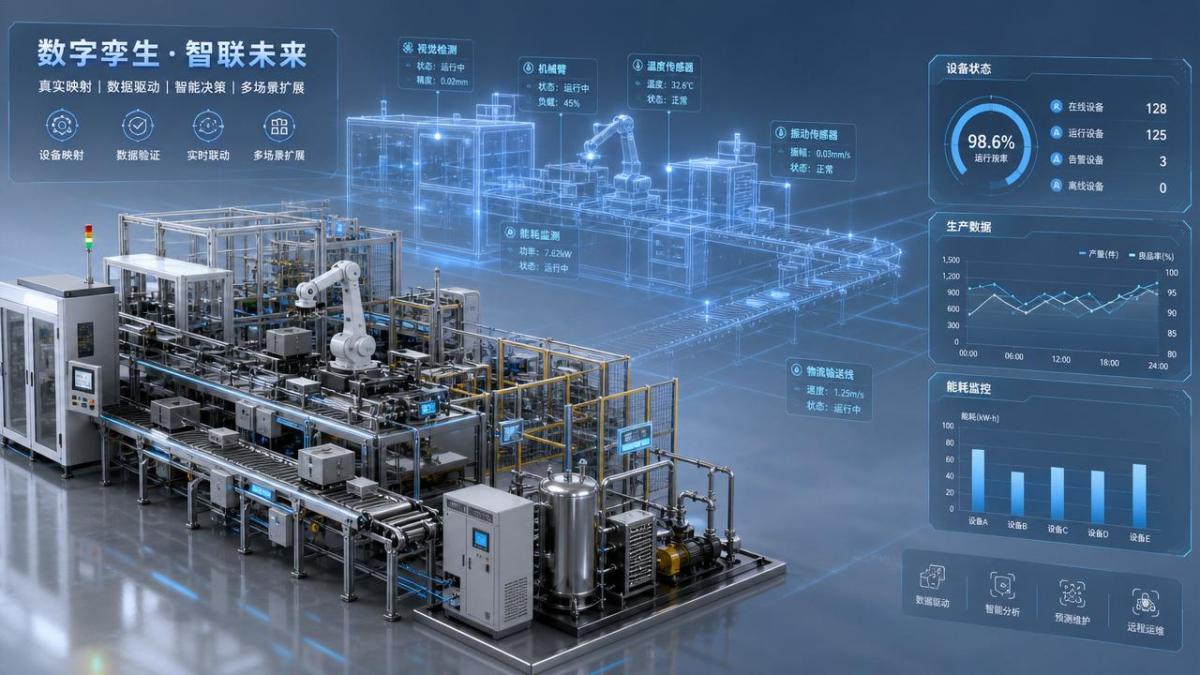
The digital twin market has matured.
Earlier projects often focused on visualization, dashboards, and showcase simulations.
Now, teams expect operational outcomes.
They want maintenance prediction, throughput improvement, energy optimization, quality traceability, and scenario testing tied to real assets.
This means a digital twin solution provider must support engineering depth, not only software appearance.
In complex environments, a weak data architecture creates hidden costs.
Those costs appear in sensor remapping, inconsistent semantics, poor interoperability, and repeated commissioning work.
Paying twice usually begins when the first deployment cannot scale beyond the pilot boundary.
The strongest trend signals behind digital twin adoption
Several trend signals explain why selecting the right digital twin solution provider has become a strategic decision.
- Industrial assets now generate higher data volumes from edge devices, vision systems, PLCs, and IIoT gateways.
- Simulation and operational technology are converging across production, maintenance, and planning functions.
- Supply chain volatility increases demand for scenario modeling and capacity forecasting.
- Energy efficiency and compliance reporting require more granular asset-level observability.
- Multi-site deployment is replacing isolated proof-of-concept programs.
These signals reward providers that can normalize data, preserve model integrity, and support repeatable deployment patterns.
What is driving the change in provider evaluation criteria
The selection criteria have changed because digital twins now sit closer to operational decisions.
A capable digital twin solution provider should explain these areas with specific methods, not broad claims.
Where hidden costs usually appear after vendor selection
Most overspend does not come from the initial license.
It comes later, when the real environment exposes architectural weakness.
Common double-payment zones
- Manual data mapping repeated for each asset type.
- Custom connectors replacing promised standard interoperability.
- Consulting-heavy model updates after every process change.
- Low-quality simulation outputs requiring separate validation tools.
- Security retrofits added after deployment design is already fixed.
- Rebuilding the twin for each site because templates were not portable.
If a digital twin solution provider cannot show how these costs are prevented, the total cost picture is incomplete.
How the choice affects operations, engineering, and business performance
Provider quality affects far more than software implementation timelines.
It influences how quickly organizations can trust digital decisions.
In operations, poor twins create noisy alerts and weak optimization recommendations.
In engineering, they distort failure analysis and reduce confidence in simulation-backed changes.
In planning, they weaken scenario modeling for capacity, maintenance windows, and inventory flow.
A strong digital twin solution provider improves traceability between physical assets, data pipelines, and decision outputs.
That traceability is critical in regulated, high-precision, and high-value environments.
What deserves close attention before signing any contract
Before comparing pricing sheets, focus on the engineering realities behind the proposal.
- Model source: Ask whether the twin is built from CAD, scan data, process logic, live telemetry, or mixed sources.
- Semantic consistency: Confirm how tags, asset hierarchies, and event definitions remain consistent across sites.
- Latency profile: Measure acceptable delay between physical events and digital representation.
- Validation method: Require benchmark procedures against historical and live operational data.
- Change management: Review how model updates are governed after equipment or process modifications.
- Portability: Check whether templates can be reused across lines, facilities, or regions.
- Ownership: Clarify who controls schemas, connectors, derived data, and export rights.
Any digital twin solution provider worth considering should answer these points in measurable terms.
A practical framework for comparing providers without guesswork
A structured comparison reduces bias and marketing noise.
This framework helps identify the digital twin solution provider that can scale with less downstream friction.
How engineering-first evaluation creates a better long-term result
An engineering-first evaluation avoids the trap of buying a digital promise instead of a usable digital twin.
That means checking tolerance for missing data, synchronization failure behavior, recalibration effort, and benchmark repeatability.
It also means valuing evidence over adjectives.
This is where data-driven thinking matters.
A credible digital twin solution provider should be comfortable discussing model assumptions, uncertainty boundaries, and operational limits.
Providers that avoid those discussions often transfer the future risk back to the buyer.
The next step: test the provider before the budget absorbs rework
The safest next step is a tightly scoped validation exercise.
Choose one asset group, one business outcome, and one measurable performance window.
Then require the digital twin solution provider to prove ingestion reliability, model fidelity, alert quality, and update discipline.
Use predefined acceptance metrics.
Examples include synchronization latency, data completeness, forecast error, and model maintenance effort per change request.
The right provider will welcome scrutiny because technical truth is easier to defend than marketing language.
In a market full of polished claims, the best digital twin solution provider is the one that helps you pay once, validate early, and scale with confidence.
Search News
Hot Articles
- Carbon Fiber StructuresHow to Specify Aerospace Carbon Fiber Assemblies for Lightweight, Load-Bearing PartsJul 11, 2026
- Machine VisionXiaomi, Alibaba DAMO Academy Drive Open-Source Robotics Model Ecosystem, Lowering Algorithm Development Barriers for Overseas SMEs Adopting Chinese Robotics SolutionsMar 30, 2026
- Cobots & ArmsShanxi 'AI+' Conference Showcases Embodied Intelligence with Multinational Buyer Engagement: Key Industry ImplicationsMar 30, 2026
Popular Tags
Recommended News
 Jul 11, 2026How to Specify Aerospace Carbon Fiber Assemblies for Lightweight, Load-Bearing PartsAerospace carbon fiber assemblies: learn how to specify laminate design, load data, joining methods, and inspection controls for lighter, reliable load-bearing aerospace parts.Elena Rostova (UAV Systems Researcher)
 Mar 30, 2026Xiaomi, Alibaba DAMO Academy Drive Open-Source Robotics Model Ecosystem, Lowering Algorithm Development Barriers for Overseas SMEs Adopting Chinese Robotics SolutionsXiaomi & Alibaba DAMO Academy's open-source robotics models lower algorithm barriers for global SMEs. Boost efficiency in manufacturing, logistics & smart retail with ROS 2 compatible solutions.TSV Data Lab
 Mar 30, 2026Shanxi 'AI+' Conference Showcases Embodied Intelligence with Multinational Buyer Engagement: Key Industry ImplicationsShanxi 'AI+' Conference highlights embodied intelligence with Tesla, Ubtech & Jiantao showcasing multimodal robotics. 40+ global buyers validated tech on-site, creating new B2B channels for industrial automation & AI solutions.Chen Wei (Automation Lead Engineer)
 Mar 30, 2026Zhongguancun Unveils 6G Integrated Sensing-Computing-Intelligence Platform to Empower Embodied Robots for Global Industrial ApplicationsZhongguancun's new 6G platform revolutionizes industrial robotics with <10ms latency, empowering global automotive, logistics & port automation. Discover how this tech boosts China's smart manufacturing exports.TSV Data Lab
 Mar 30, 2026Mech-Mind Tianjin Embodied Intelligence R&D and Production Base Goes Live, Cutting Delivery Time by 20%–30% for Global Customized AMR+Vision SolutionsMech-Mind's Tianjin AMR+Vision production base cuts delivery time by 20%-30% for欧美 & Latin American markets. Discover how this PLd-certified facility accelerates customized robotics solutions for smart manufacturing and logistics.Chen Wei (Automation Lead Engineer)
 Mar 30, 2026Boao Forum Reveals 'Co-evolution of Big and Small Brains' Trend in Humanoid Robots, China's Embodied Intelligence Accelerates Adaptation to Overseas Manufacturing Service ScenariosDiscover how China's humanoid robots, featuring 'Co-evolution of Big and Small Brains,' are revolutionizing global manufacturing. Learn about Embodied Tian Gong 3.0's ISO compliance and overseas deployment at Boao Forum 2026.Chen Wei (Automation Lead Engineer)
 Mar 30, 2026China Railway Industrial Secures Patent for Embodied Robotics in Material Handling, Boosting High-Precision Delivery Capabilities for Overseas Infrastructure and Manufacturing ProjectsChina Railway Industrial's new patent for embodied robotics in material handling boosts high-precision delivery for global infrastructure & manufacturing. Discover how this innovation enhances logistics accuracy in automotive, rail transit & EPC projects.Chen Wei (Automation Lead Engineer)
 Sep 28, 2026Spindle Runout Measurement in Germany: DIN Standards, Methods, and Acceptance LimitsSpindle runout measurement Germany: explore DIN standards, proven methods, acceptance limits, and audit-ready practices for reliable machining quality.Dr. Marcus Vance
 Sep 27, 2026How to Select Wall-Mount Edge Devices for Space-Constrained Factory NetworksWall mount edge devices for space-constrained factories: evaluate workload, thermal design, power resilience, cable access, and network reliability for smarter deployments.TSV Data Lab
 Sep 26, 2026Machining Tolerance Analysis: How to Set Limits That Meet Function and Cost TargetsMachining tolerance analysis: learn how to set functional limits, control tolerance stacks, reduce inspection risk, and balance precision with production cost.Dr. Marcus Vance
 Sep 25, 2026How to Evaluate an Industrial Infrastructure Data Platform for Multi-Site OperationsIndustrial infrastructure data platform evaluation guide for multi-site operations: compare data quality, edge resilience, interoperability, governance, and scalable proof-of-value criteria.Victor Lin (Chief Software Architect)
 Sep 24, 2026How to Select Machine Vision Optics for Accurate Inspection at Different Working DistancesMachine vision optics selection guide for accurate inspection at every working distance. Compare FOV, pixel scale, DOF, distortion, lighting, and telecentric options.TSV Data Lab
 Sep 23, 2026How to Evaluate a Machine Vision System Integrator for High-Speed Inspection LinesChoose a machine vision system integrator with proven expertise in high-speed inspection, reliable reject timing, robust optics, and measurable acceptance criteria.TSV Data Lab
 Sep 28, 2026When is a SCADA API the right choice for connecting plant systems?SCADA API guide: learn when governed plant data integration improves traceability, security, and scalability—without compromising real-time control.Victor Lin (Chief Software Architect)
 Sep 27, 2026How SCADA data integration improves traceability across production linesSCADA data integration connects production-line data to improve traceability, accelerate quality investigations, and strengthen safety decisions.Victor Lin (Chief Software Architect)
 Sep 26, 2026What to define before starting SCADA integration planningSCADA integration planning starts with clear scope, control boundaries, data models, cybersecurity, and testing. Discover the definitions that reduce risk and costly rework.Victor Lin (Chief Software Architect)
 Sep 25, 2026How a smart factory with Industrial IoT reduces production blind spotsDiscover how a smart factory with Industrial IoT turns real-time machine, quality, and workflow data into actionable insights that reduce production blind spots and delivery risks.Victor Lin (Chief Software Architect)
 Sep 24, 2026When does Industrial IoT make smart manufacturing easier to scale?Smart manufacturing Industrial IoT scales when trusted data, interoperable systems, and secure workflows turn connected assets into measurable gains.TSV Data Lab
 Sep 23, 2026What drives ultra-precision machining cost at 1-micron tolerance?Ultra precision machining cost per part at 1 micron tolerance depends on process, material, metrology, and yield. Learn how to compare quotes confidently.Dr. Marcus Vance
 Sep 22, 2026Drone Engine-T550CC Applications: Build the UAV Power System Around the MissionAn application guide for Drone Engine-T550CC integration, covering payload planning, airframe matching, cooling, fuel, vibration, test procedures, documentation, and service preparation.Elena Rostova (UAV Systems Researcher)
 Sep 22, 2026How to Evaluate Industrial Edge Computing Vendors for Factory DeploymentIndustrial edge computing vendor evaluation guide for factories: compare latency, protocol fit, reliability, security, and lifecycle support before deployment.TSV Data Lab
 Sep 21, 2026Drone Payload Integration: Matching Power, Data, and Center of Gravity for Reliable FlightsDrone payload integration made practical: balance power, data, center of gravity, and endurance to build safer, more reliable mission-ready flights.Elena Rostova (UAV Systems Researcher)
 Sep 20, 2026Autonomous Navigation Pricing: Cost Drivers and Budget Benchmarks for AMR ProjectsAutonomous navigation price explained: compare AMR cost drivers, software, sensors, integration, safety, and lifecycle budgets to build a scalable project plan.Chen Wei (Automation Lead Engineer)
 Sep 19, 2026How to Scope Automation Integration Services for Multi-System Factory ProjectsAutomation integration services: learn how to scope multi-system factory projects with clear workflows, interface contracts, safety boundaries, and acceptance criteria.Victor Lin (Chief Software Architect)