Tolerance Analysis Platform Buying Guide: Key Features for Multi-CAD Teams
Publication Date
author
Tolerance Analysis Platform Buying Guide: Key Features for Multi-CAD Teams
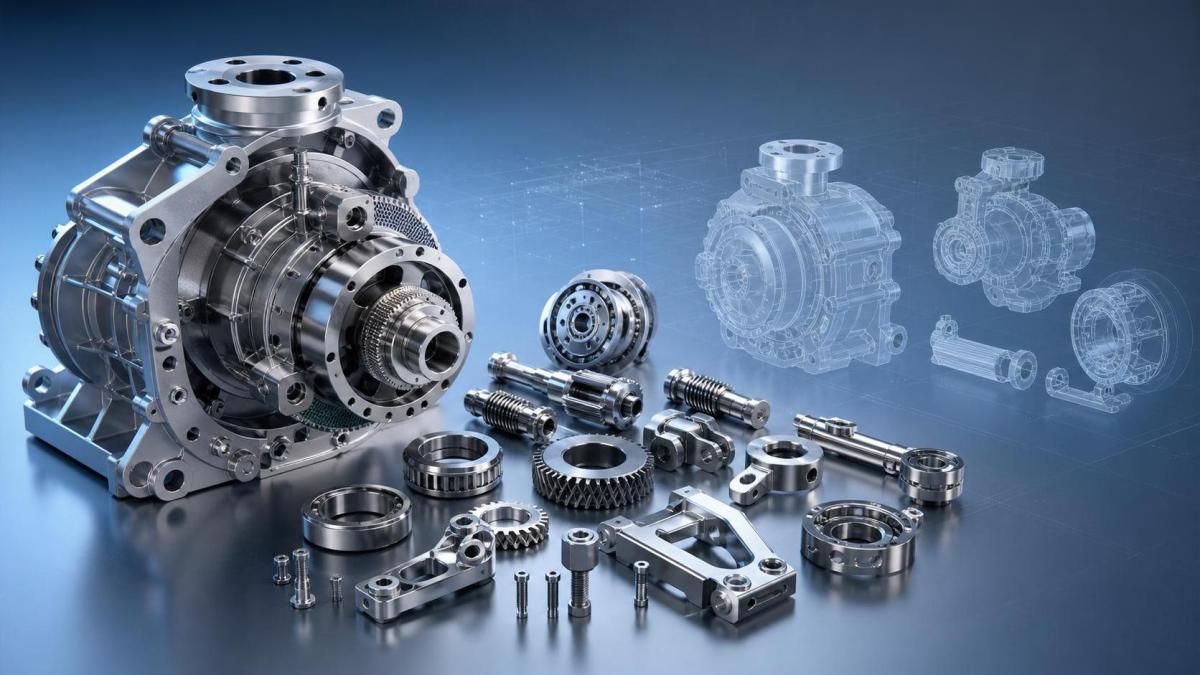
Choosing a tolerance analysis platform is no longer just a software decision for multi-CAD teams. It directly affects project risk, quality control, and supplier alignment.
When assemblies move between CAD systems, small interpretation gaps become expensive delays. A capable tolerance analysis platform turns those gaps into measurable, manageable engineering decisions.
That shift matters more now. Programs are faster, teams are more distributed, and supplier networks are broader than before.
At TechStat Vanguard, the rule is simple: parameters matter more than claims. In tolerance analysis, that means evaluating hard capability, not brochure language.
This guide focuses on the features that support reliable selection. It is built for decisions where rework, validation delays, and cross-platform confusion are not acceptable.
Why Multi-CAD Environments Raise the Stakes
A single-CAD workflow is already demanding. A multi-CAD workflow adds translation risk, model ownership issues, and inconsistent tolerance definitions across partners.
In practical terms, one team may design in CATIA, another in NX, and a supplier may review in SolidWorks or Creo. The tolerance analysis platform must keep intent intact.
If it cannot, stack-up results become hard to trust. Once trust drops, teams fall back to manual checks, duplicated spreadsheets, and slower design reviews.
That is why platform selection should be treated as a delivery decision. It affects schedule confidence as much as it affects engineering accuracy.
Start With Native Multi-CAD Interoperability
The first checkpoint is straightforward. Can the tolerance analysis platform work across your real CAD mix without damaging geometry, PMI, or assembly constraints?
This is not just about opening files. It is about preserving datum structure, feature relationships, and tolerancing logic during import, update, and revision cycles.
Look for support in three layers:
- Direct connectors for major systems such as CATIA, NX, Creo, and SolidWorks.
- Stable handling of neutral formats, especially STEP and JT.
- Associativity that updates analysis when source models change.
Ask vendors to demonstrate change propagation. A tolerance analysis platform that breaks when revisions arrive will create hidden cost during production ramp-up.
Evaluate the Analysis Depth, Not Just the Interface
A clean interface helps, but it is not the core buying criterion. The real question is whether the engine supports the variation methods your assemblies actually need.
For many programs, worst-case analysis is too conservative. Statistical analysis is more realistic, but only if assumptions are transparent and traceable.
A strong tolerance analysis platform should support:
- Worst-case, RSS, and Monte Carlo methods.
- 1D and 3D stack-up analysis.
- Sensitivity analysis for key contributors.
- Assembly sequence and constraint-aware modeling.
- GD&T-based calculations aligned with ASME or ISO practice.
This matters because the platform should guide decisions, not just generate colorful charts. Good analysis explains why a requirement fails and where the risk comes from.
Check Whether the Platform Reflects Real Manufacturing Variation
Many teams buy a tolerance analysis platform and then discover a gap. The software models ideal dimensions better than real manufacturing behavior.
That gap becomes obvious in precision machining, molded parts, and supplier-heavy assemblies. Material behavior, process capability, and fixture conditions all influence actual variation.
A more useful platform lets teams account for process assumptions, not just geometric limits. It should connect design tolerance decisions with how parts are actually made.
From a buying perspective, ask whether the platform supports Cp, Cpk, historical quality data, and supplier-specific process capability ranges. That is where more credible forecasts begin.
Traceability and Revision Control Are Procurement Features Too
This point is often underestimated. A tolerance analysis platform is not only for engineers. It also supports sourcing decisions, change approvals, and supplier qualification reviews.
If analysis results cannot be traced back to a model version, tolerance scheme, and assumption set, the decision record becomes weak.
That weakness shows up later during audits, cost disputes, or launch issues. Suddenly nobody is sure which result informed the approved design.
Look for clear revision comparison, assumption logs, approval history, and report versioning. In serious programs, traceability is part of engineering governance, not admin overhead.
Collaboration Features Should Reduce Review Friction
In multi-CAD teams, the best tolerance analysis platform is often the one that shortens review cycles across design, manufacturing, quality, and suppliers.
That means stakeholders should be able to understand results without needing the original author beside them. Review friction is usually a software design problem, not a people problem.
Useful collaboration capabilities include:
- Role-based access for engineering, quality, and suppliers.
- Shareable reports with visual stack paths and assumptions.
- Commenting, review workflows, and decision sign-off.
- PLM or QMS integration for controlled release processes.
The platform should help teams converge faster. If it needs side spreadsheets to complete a review, the workflow is incomplete.
Reporting Quality Is a Decision-Making Capability
Reports are where engineering analysis becomes program action. A weak reporting layer can make a capable tolerance analysis platform look unreliable.
Decision-ready reporting should show the stack path, tolerance contributors, statistical assumptions, risk thresholds, and pass-fail implications in plain language.
It should also separate technical detail by audience. Design engineers need depth. Program and procurement leaders need clarity, risk position, and next-step options.
A practical buying test is simple: can a decision meeting use the exported report directly? If not, reporting maturity is still low.
Questions to Ask During Vendor Evaluation
A structured evaluation avoids glossy demos and keeps the discussion technical. These questions usually reveal whether a tolerance analysis platform is ready for serious deployment.
- Which CAD systems are supported natively, and what breaks during model updates?
- How are GD&T definitions interpreted across imported models?
- What analysis methods are available for complex 3D assemblies?
- Can the platform use process capability data from suppliers?
- How are assumptions, revisions, and approvals tracked?
- What integrations exist with PLM, QMS, or MES environments?
- How long does a pilot take on a real assembly, not a demo model?
The strongest signal is not a polished presentation. It is a vendor’s willingness to test the platform against your own data and constraints.
A Practical Scoring Framework for Shortlisting
To keep selection objective, score each tolerance analysis platform against a fixed set of weighted criteria. This reduces bias from brand familiarity or demo theatrics.
The exact weighting can change by program. Still, this structure keeps the evaluation tied to business impact and engineering risk.
Final Decision: Buy for Confidence, Not Just Functionality
The right tolerance analysis platform should do more than complete stack-up studies. It should improve decision confidence across design reviews, supplier discussions, and launch planning.
That is the real buying lens. Multi-CAD compatibility, analysis depth, traceability, and reporting are not separate boxes. Together, they determine whether engineering truth survives complexity.
In today’s environment, where teams move fast and tolerances drive cost, the better tolerance analysis platform is the one that reduces ambiguity at every handoff.
Use pilot data, score vendors against real workflows, and challenge every claim with measurable evidence. That approach leads to better software choices and stronger delivery outcomes.
Search News
Hot Articles
- Carbon Fiber StructuresHow to Specify Aerospace Carbon Fiber Assemblies for Lightweight, Load-Bearing PartsJul 11, 2026
- Machine VisionXiaomi, Alibaba DAMO Academy Drive Open-Source Robotics Model Ecosystem, Lowering Algorithm Development Barriers for Overseas SMEs Adopting Chinese Robotics SolutionsMar 30, 2026
- Cobots & ArmsShanxi 'AI+' Conference Showcases Embodied Intelligence with Multinational Buyer Engagement: Key Industry ImplicationsMar 30, 2026
Popular Tags
Recommended News
 Jul 11, 2026How to Specify Aerospace Carbon Fiber Assemblies for Lightweight, Load-Bearing PartsAerospace carbon fiber assemblies: learn how to specify laminate design, load data, joining methods, and inspection controls for lighter, reliable load-bearing aerospace parts.Elena Rostova (UAV Systems Researcher)
 Mar 30, 2026Xiaomi, Alibaba DAMO Academy Drive Open-Source Robotics Model Ecosystem, Lowering Algorithm Development Barriers for Overseas SMEs Adopting Chinese Robotics SolutionsXiaomi & Alibaba DAMO Academy's open-source robotics models lower algorithm barriers for global SMEs. Boost efficiency in manufacturing, logistics & smart retail with ROS 2 compatible solutions.TSV Data Lab
 Mar 30, 2026Shanxi 'AI+' Conference Showcases Embodied Intelligence with Multinational Buyer Engagement: Key Industry ImplicationsShanxi 'AI+' Conference highlights embodied intelligence with Tesla, Ubtech & Jiantao showcasing multimodal robotics. 40+ global buyers validated tech on-site, creating new B2B channels for industrial automation & AI solutions.Chen Wei (Automation Lead Engineer)
 Mar 30, 2026Zhongguancun Unveils 6G Integrated Sensing-Computing-Intelligence Platform to Empower Embodied Robots for Global Industrial ApplicationsZhongguancun's new 6G platform revolutionizes industrial robotics with <10ms latency, empowering global automotive, logistics & port automation. Discover how this tech boosts China's smart manufacturing exports.TSV Data Lab
 Mar 30, 2026Mech-Mind Tianjin Embodied Intelligence R&D and Production Base Goes Live, Cutting Delivery Time by 20%–30% for Global Customized AMR+Vision SolutionsMech-Mind's Tianjin AMR+Vision production base cuts delivery time by 20%-30% for欧美 & Latin American markets. Discover how this PLd-certified facility accelerates customized robotics solutions for smart manufacturing and logistics.Chen Wei (Automation Lead Engineer)
 Mar 30, 2026Boao Forum Reveals 'Co-evolution of Big and Small Brains' Trend in Humanoid Robots, China's Embodied Intelligence Accelerates Adaptation to Overseas Manufacturing Service ScenariosDiscover how China's humanoid robots, featuring 'Co-evolution of Big and Small Brains,' are revolutionizing global manufacturing. Learn about Embodied Tian Gong 3.0's ISO compliance and overseas deployment at Boao Forum 2026.Chen Wei (Automation Lead Engineer)
 Mar 30, 2026China Railway Industrial Secures Patent for Embodied Robotics in Material Handling, Boosting High-Precision Delivery Capabilities for Overseas Infrastructure and Manufacturing ProjectsChina Railway Industrial's new patent for embodied robotics in material handling boosts high-precision delivery for global infrastructure & manufacturing. Discover how this innovation enhances logistics accuracy in automotive, rail transit & EPC projects.Chen Wei (Automation Lead Engineer)
 Oct 07, 2026How to Evaluate an HMI Panel Distributor for Industrial Automation ProjectsHMI panel distributor evaluation guide: verify technical compatibility, traceability, supply reliability, lifecycle support, and total cost for automation projects.Victor Lin (Chief Software Architect)
 Oct 06, 2026Navigation Fault Tolerance Standards for AMRs: What Safety Teams Must VerifyNavigation fault tolerance standards: learn what AMR safety teams must verify, from localization loss and sensor faults to stopping distance, safe restart, and site-specific validation.Chen Wei (Automation Lead Engineer)
 Oct 05, 2026Calculating Edge Computing Total Cost of Ownership Across Distributed SitesEdge computing ownership cost explained: calculate deployment, energy, connectivity, security, remote support, and refresh costs across distributed sites.TSV Data Lab
 Oct 04, 2026CAD/CAM Benchmarking in the GCC: What Manufacturers Should Ask a ConsultantCAD CAM benchmark consultant GCC guide: learn the key questions manufacturers should ask to validate post-processors, workflows, machine performance, and production risk.Victor Lin (Chief Software Architect)
 Oct 03, 2026Selecting Automotive Radar Sensor Modules for ADAS Range, Resolution, and IntegrationAutomotive radar sensor module selection guide for ADAS: compare range, resolution, field of view, latency, and integration to build safer, reliable vehicle systems.TSV Data Lab
 Oct 02, 2026How to Qualify Machined Parts Suppliers for Hard Tech ProgramsHard tech supply chain machined parts demand rigorous supplier qualification. Learn how to assess capability, traceability, quality controls, and delivery resilience.Dr. Marcus Vance
 Oct 01, 2026How to Select an Outdoor Security Radar Sensor for Perimeter Detection?Outdoor security radar sensor selection guide: compare range, accuracy, false-alarm control, integration, and field testing for reliable perimeter detection.TSV Data Lab
 Sep 30, 2026How to Evaluate Solid-State LiDAR Hardware for Outdoor Autonomous VehiclesSolid state LiDAR hardware evaluation guide for outdoor autonomous vehicles—compare range, point-cloud quality, environmental resilience, integration, and safety.TSV Data Lab
 Sep 29, 2026ISO 9283 Repeatability: How to Evaluate Cobot Positioning PerformanceISO 9283 cobot repeatability explained: learn how payload, reach, approach direction, and test conditions affect positioning performance and cell capability.Chen Wei (Automation Lead Engineer)
 Oct 06, 2026Are Collaborative Robots Safe Enough to Operate Without Fencing?Are collaborative robots safe enough to work without fencing? Explore risk assessment, safeguarding options, and practical guidance for safer, productive cobot cells.Chen Wei (Automation Lead Engineer)
 Oct 05, 2026What Causes Machine Vision Systems to Miss Small Defects?What causes machine vision systems to miss small defects? Discover how lighting, optics, motion, and AI thresholds affect detection—and prevent costly escapes.TSV Data Lab
 Oct 04, 2026How Should You Compare 5-Axis CNC Machine Accuracy Claims?How do I compare 5-axis CNC machine accuracy claims? Learn how to assess standards, thermal stability, TCP accuracy, and real-world test evidence.Dr. Marcus Vance
 Oct 03, 2026Is Edge Computing Necessary for Real-Time Quality Inspection?Is industrial edge computing necessary for real-time quality inspection? Explore how latency, data volume, reliability, and control integration shape the right architecture.TSV Data Lab
 Oct 02, 2026What Documents Prove a Precision Machining Supplier Can Hold Tolerance?What documents prove a precision machining supplier can hold tolerance? Explore certificates, FAI reports, calibration, SPC, and traceability evidence to qualify suppliers with confidence.Dr. Marcus Vance
 Oct 01, 2026Can a Machining Supplier Meet Aerospace Fatigue Testing Requirements?Can a machining supplier meet aerospace fatigue testing requirements? Learn the traceability, process control, and test evidence needed for reliable aerospace parts.Dr. Marcus Vance
 Sep 30, 2026Which Industrial Robot Specifications Matter for High-Precision Assembly?Which industrial robot specifications matter most for high-precision assembly? Explore repeatability, accuracy, stiffness, vibration, calibration, and force control for reliable yields.Chen Wei (Automation Lead Engineer)
 Sep 29, 2026How Do You Verify Servo Motor Torque Under Continuous Load?How do I verify servo motor torque under continuous load? Learn RMS torque checks, torque-speed limits, thermal derating, and real-machine testing.Chen Wei (Automation Lead Engineer)