
What can go wrong in VTOL transition phase aerodynamics
Publication Date
author
In VTOL platforms, the transition phase is where aerodynamic assumptions fail fastest—and where costly design, control, and procurement mistakes surface. This article examines vtol transition phase aerodynamics through an engineering-first lens, helping researchers, operators, buyers, and decision-makers understand instability triggers, test priorities, and how these risks affect real-world missions such as vtol drone for pipeline inspection.
Why does the VTOL transition phase create the highest aerodynamic risk?
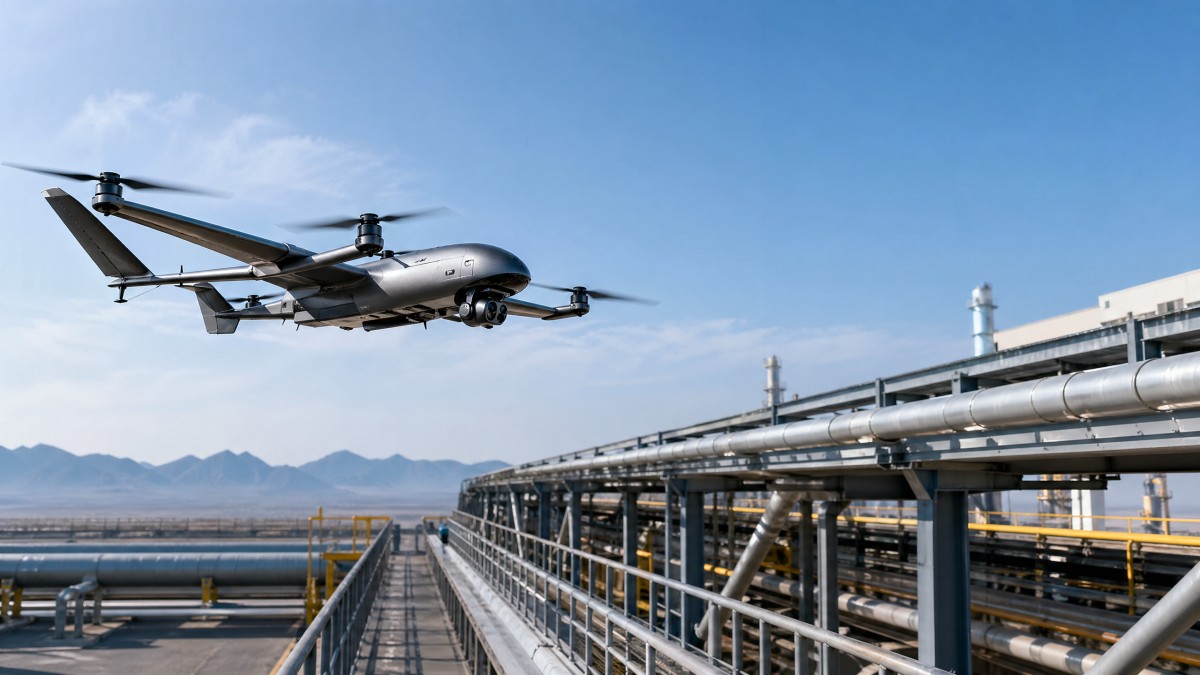
For most VTOL aircraft, hover and forward flight are not the hardest parts to model in isolation. The real challenge sits between them. During transition, the aircraft moves through a mixed-flow state in which propeller wash, wing lift, fuselage interference, and control surface effectiveness all change within a short time window that may last only a few seconds, yet determine the safety margin of the entire mission.
This is why vtol transition phase aerodynamics deserves separate evaluation rather than being treated as a small extension of hover tuning or cruise sizing. A platform may hold position well at low speed and cruise efficiently at 20–35 m/s, but still experience pitch excursions, roll coupling, or sudden sink during the 5–20 m/s band where lift redistribution happens fastest.
From an engineering and procurement perspective, the transition phase is where marketing language often hides the biggest uncertainty. Suppliers may quote endurance, payload, and maximum speed, yet leave out transition corridor limits, control law robustness, or crosswind sensitivity. For buyers comparing systems for infrastructure inspection, mapping, or logistics, that missing data can cause long qualification cycles and expensive field failures.
TechStat Vanguard approaches this topic from a data-first position. Instead of asking whether a VTOL platform is “stable,” the better question is: under what airspeed range, attitude envelope, thrust setting, payload location, and wind condition does the transition remain controllable with repeatable margins? That framing is more useful for R&D teams, operators, and senior procurement directors alike.
What changes physically during transition?
At least 4 aerodynamic shifts occur almost at once. First, rotor thrust vectoring no longer acts alone because the wing starts generating a meaningful share of lift. Second, control authority migrates from rotor-dominant moments to a mixed rotor-plus-surface regime. Third, local flow angles over the wing and tail become highly nonuniform because propeller slipstream and free-stream velocity combine unevenly. Fourth, induced drag and interference effects can peak before cruise stabilizes.
- Lift transfer can occur too early or too late, causing either nose drop or ballooning.
- Propeller wake may mask stall onset on one section while another section already loses margin.
- Elevators, rudders, or flaperons can become effective unevenly across 10–15 m/s speed growth.
- A center-of-gravity shift of only a few percent of mean aerodynamic chord can materially change trim demand.
This mixed regime explains why transition incidents are not always dramatic in simulation, but become obvious in flight testing. Basic models often assume cleaner flow than reality provides. Once the aircraft sees real gusts, thermal activity, payload mounting offsets, or sensor pods near lifting surfaces, aerodynamic interference becomes much more visible.
What can go wrong in vtol transition phase aerodynamics in real operations?
The most common failures are not always total loss-of-control events. Many begin as small deviations that consume control margin. An aircraft may pitch up during acceleration, require excessive front-motor thrust to compensate, then enter a high-power, low-efficiency state that reduces range and increases thermal stress. Another may roll toward a wingtip when one side exits prop wash earlier than the other.
For field teams using a vtol drone for pipeline inspection, these issues are especially costly. Pipelines often run through open corridors, uneven terrain, and crosswind-prone areas. A transition conducted near obstacles, towers, or changing terrain elevation leaves less recovery time. If the aircraft needs 30–80 m of horizontal distance to complete a stable acceleration profile, launch site assumptions become operational constraints rather than planning details.
Several failure modes also have procurement implications. If the flight controller depends on narrowly tuned gains for one payload class, a small camera swap or RF module addition can alter transition behavior. If the airframe relies on aggressive software compensation for weak passive stability, long-term maintainability may suffer when firmware revisions, component aging, or field repairs introduce small deviations.
The table below summarizes high-impact transition risks in a way that supports both technical review and sourcing decisions.
A practical reading of the table is this: transition risk is rarely a single-component problem. It is usually an interaction problem across propulsion, aerodynamics, controls, and manufacturing tolerances. That is why TSV emphasizes benchmark-style validation and traceable parameter review instead of headline specifications alone.
Which missions are most exposed?
Missions with low-altitude departures, repeated takeoff-and-landing cycles, and changing payload drag are the most exposed. Pipeline inspection, powerline survey, agricultural scouting, and tactical perimeter mapping often fit this profile. In these use cases, even a 10%–15% reduction in transition efficiency can translate into fewer kilometers per sortie, tighter weather windows, and more battery swap cycles per day.
The risk also rises when the mission requires frequent site relocation. A platform that transitions smoothly from a prepared test field may behave differently from a roadside launch area with uneven wind shear and thermal turbulence. Operators should therefore evaluate not just successful transitions, but repeatability across at least 3 conditions: calm air, moderate crosswind, and payload-near-maximum configuration.
Which parameters and tests matter most before design freeze or procurement approval?
If a team is screening VTOL platforms, it should avoid over-weighting only endurance and payload. In vtol transition phase aerodynamics, the higher-value indicators are often hidden inside test methodology. Ask how the aircraft behaves across a speed corridor, not just whether it “completed transition.” Ask whether transition data was gathered at different gross weights, center-of-gravity settings, and wind angles within an operationally relevant range.
For most B2B buyers, 5 core parameter groups deserve review: thrust reserve, control authority migration, stall margin under slipstream interaction, sensor latency in airspeed estimation, and structural loading during oscillatory events. These are the variables that determine whether a platform remains predictable after integration changes, field maintenance, and seasonal weather variation.
The next table converts this into a practical screening tool for engineering, operations, and sourcing teams. It is especially useful when comparing multiple suppliers who present different test narratives and data formats.
These dimensions allow teams to compare unlike platforms on a common basis. A tilt-rotor, lift-plus-cruise, and tail-sitter architecture will not share the same transition mechanics, but they can still be assessed using the same evidence categories: margin, repeatability, controllability, and tolerance to variation.
A practical 4-step validation path
- Start with configuration review: propulsion layout, wing position, payload location, and CG envelope.
- Request evidence from at least 3 operating states: light payload, nominal payload, and near-maximum mission payload.
- Check environmental robustness in 2–3 wind scenarios, including a moderate crosswind case relevant to field launch.
- Map transition findings to mission economics: aborted flights, battery replacement cadence, operator workload, and maintenance burden.
This approach shortens the supplier qualification cycle because it shifts the review from broad claims to comparable evidence. For CTOs and procurement leaders, that means fewer redesign loops after factory acceptance and fewer surprises during pilot deployment.
How TSV reads transition data differently
TSV’s engineering-benchmarking mindset is useful when the market is full of incomplete specification sheets. We focus on parameter traceability: how tolerance stack-up, airflow interaction, and controller behavior combine at the mission level. In practice, that means looking for evidence chains rather than isolated numbers. A stable transition claim is stronger when supported by geometry control, test repeatability, and performance logs under realistic payload installation.
For organizations sourcing across borders, this data discipline also improves supplier communication. Exact questions about transition envelope, control surface onset speed, or power margin at low state-of-charge lead to better technical responses than generic requests for “reliability.” Parameters do not lie; they expose whether a design is robust or merely tuned for demonstration conditions.
How should operators and buyers compare VTOL architectures for transition-sensitive missions?
Different architectures fail differently in transition. A lift-plus-cruise design may simplify cruise aerodynamics but add deadweight and handoff complexity. A tilt-rotor can offer efficient wing-borne flight with strong propulsion integration, yet the rotor tilt mechanism and control coordination become critical reliability points. A tail-sitter reduces mechanical complexity in some cases, but operational training and transition attitude management become more demanding.
There is no universally best architecture for vtol transition phase aerodynamics. The right choice depends on mission corridor width, payload drag, available launch area, operator skill, maintenance capacity, and acceptable qualification effort. Buyers should align architecture with the actual mission profile instead of being guided only by headline range or deployment convenience.
The comparison below is designed for decision-makers who need a quick architecture-level screen before moving to detailed flight evidence review.
For a vtol drone for pipeline inspection, lift-plus-cruise and tilt-rotor concepts are frequently shortlisted because they balance vertical launch flexibility with efficient corridor flight. Even then, the decisive factor is not the category label but the demonstrated transition margin under real payloads, repeat sorties, and moderate crosswinds.
Buyer checklist for transition-sensitive procurement
- Request a defined transition envelope, not just maximum speed and endurance.
- Verify whether the test article matches production geometry and propulsion hardware.
- Ask for evidence with the intended payload mount, fairings, antennas, and cable routing installed.
- Review maintenance implications of transition-critical parts such as tilt mechanisms, actuators, and air-data sensors.
- Confirm operator training requirements, including emergency transition abort logic and recovery altitude procedures.
A disciplined checklist helps procurement teams avoid a common trap: buying for nominal performance and then spending 8–12 weeks resolving field integration problems that should have been identified during technical due diligence.
FAQ and next-step guidance for research, operations, and sourcing teams
The questions below reflect common search intent around vtol transition phase aerodynamics, especially from organizations balancing mission reliability, budget limits, and supplier qualification timelines.
How do I know whether transition data from a supplier is enough?
It is usually enough when it covers at least 3 dimensions: payload variation, environmental variation, and control response visibility. A single successful demo is not enough. Look for logs or reports showing airspeed growth, attitude behavior, altitude deviation, actuator demand, and power usage during transition. If those elements are missing, the risk is being transferred from supplier testing to your field operation.
What are the most overlooked mistakes in transition-focused procurement?
Three mistakes appear often. First, assuming hover stability guarantees transition stability. Second, evaluating with a clean airframe while the actual mission adds sensors, protective housings, and communication equipment. Third, ignoring low-battery and crosswind behavior. These conditions often expose the real margin. If the mission includes repeated sorties, even small transition inefficiencies accumulate into cost, schedule, and maintenance impacts.
Is transition risk mainly a software problem or an airframe problem?
Usually both. Software can compensate for aerodynamic nonlinearity, but only within the physical limits of geometry, thrust, and sensor quality. If the airframe has weak passive margins or strong interference effects, the controller may need aggressive correction that increases oscillation, power draw, or maintenance sensitivity. Strong procurement practice therefore reviews airframe design, control logic, and manufacturing tolerance together.
What is a reasonable implementation path before fleet rollout?
A practical path often includes 4 stages over several weeks: desktop parameter review, controlled flight validation, mission-configuration testing, and operational acceptance. During acceptance, define 5–6 objective checks such as altitude deviation during transition, crosswind repeatability, battery reserve after mission completion, payload image stability, recovery logic, and maintenance inspection findings after repeated cycles.
Why work with TSV when transition-phase data is unclear?
When hard-tech teams are overloaded by noisy claims, TSV provides a structured engineering filter. We do not rely on vague adjectives. We help teams examine the details that matter: tolerance-sensitive aerodynamic behavior, transition test evidence, payload-induced instability risk, sensor and control interactions, and the sourcing implications of those findings. This is especially relevant when evaluating UAV and aerospace systems for inspection, mapping, and industrial autonomy programs.
For information researchers, we can help clarify which aerodynamic questions deserve deeper benchmarking. For operators, we can outline transition-related acceptance checks and mission risk points. For procurement teams, we can assist in turning broad supplier promises into measurable spec-sheet requirements. For enterprise decision-makers, we can support a more disciplined link between technical risk, deployment timeline, and total qualification cost.
If you are assessing vtol transition phase aerodynamics for a new platform or a vtol drone for pipeline inspection, contact TSV to discuss parameter confirmation, architecture comparison, transition test checklist design, supplier evidence review, delivery-risk questions, payload integration constraints, and technical benchmarking priorities. A focused discussion early in the process can reduce trial-and-error loops and shorten supplier qualification cycles.
The most useful starting point is simple: share your mission profile, payload range, expected wind conditions, target deployment timeline, and current shortlist. From there, TSV can help frame the right engineering questions before budget is committed to the wrong airframe, control strategy, or procurement path.
Search News
Hot Articles
- Carbon Fiber StructuresHow to Specify Aerospace Carbon Fiber Assemblies for Lightweight, Load-Bearing PartsJul 11, 2026
- Machine VisionXiaomi, Alibaba DAMO Academy Drive Open-Source Robotics Model Ecosystem, Lowering Algorithm Development Barriers for Overseas SMEs Adopting Chinese Robotics SolutionsMar 30, 2026
- Cobots & ArmsShanxi 'AI+' Conference Showcases Embodied Intelligence with Multinational Buyer Engagement: Key Industry ImplicationsMar 30, 2026
Popular Tags
Recommended News
 Jul 11, 2026How to Specify Aerospace Carbon Fiber Assemblies for Lightweight, Load-Bearing PartsAerospace carbon fiber assemblies: learn how to specify laminate design, load data, joining methods, and inspection controls for lighter, reliable load-bearing aerospace parts.Elena Rostova (UAV Systems Researcher)
 Mar 30, 2026Xiaomi, Alibaba DAMO Academy Drive Open-Source Robotics Model Ecosystem, Lowering Algorithm Development Barriers for Overseas SMEs Adopting Chinese Robotics SolutionsXiaomi & Alibaba DAMO Academy's open-source robotics models lower algorithm barriers for global SMEs. Boost efficiency in manufacturing, logistics & smart retail with ROS 2 compatible solutions.TSV Data Lab
 Mar 30, 2026Shanxi 'AI+' Conference Showcases Embodied Intelligence with Multinational Buyer Engagement: Key Industry ImplicationsShanxi 'AI+' Conference highlights embodied intelligence with Tesla, Ubtech & Jiantao showcasing multimodal robotics. 40+ global buyers validated tech on-site, creating new B2B channels for industrial automation & AI solutions.Chen Wei (Automation Lead Engineer)
 Mar 30, 2026Zhongguancun Unveils 6G Integrated Sensing-Computing-Intelligence Platform to Empower Embodied Robots for Global Industrial ApplicationsZhongguancun's new 6G platform revolutionizes industrial robotics with <10ms latency, empowering global automotive, logistics & port automation. Discover how this tech boosts China's smart manufacturing exports.TSV Data Lab
 Mar 30, 2026Mech-Mind Tianjin Embodied Intelligence R&D and Production Base Goes Live, Cutting Delivery Time by 20%–30% for Global Customized AMR+Vision SolutionsMech-Mind's Tianjin AMR+Vision production base cuts delivery time by 20%-30% for欧美 & Latin American markets. Discover how this PLd-certified facility accelerates customized robotics solutions for smart manufacturing and logistics.Chen Wei (Automation Lead Engineer)
 Mar 30, 2026Boao Forum Reveals 'Co-evolution of Big and Small Brains' Trend in Humanoid Robots, China's Embodied Intelligence Accelerates Adaptation to Overseas Manufacturing Service ScenariosDiscover how China's humanoid robots, featuring 'Co-evolution of Big and Small Brains,' are revolutionizing global manufacturing. Learn about Embodied Tian Gong 3.0's ISO compliance and overseas deployment at Boao Forum 2026.Chen Wei (Automation Lead Engineer)
 Mar 30, 2026China Railway Industrial Secures Patent for Embodied Robotics in Material Handling, Boosting High-Precision Delivery Capabilities for Overseas Infrastructure and Manufacturing ProjectsChina Railway Industrial's new patent for embodied robotics in material handling boosts high-precision delivery for global infrastructure & manufacturing. Discover how this innovation enhances logistics accuracy in automotive, rail transit & EPC projects.Chen Wei (Automation Lead Engineer)
 Oct 26, 2026AMAXiMAL Releases Open-Source TopMod 3D v3 With Claude AIExplore AMAXiMAL’s free, open-source TopMod 3D v3 with Claude AI assistance, topology-based modeling and plywood fabrication tools that connect complex designs to physical builds.Dr. Marcus Vance
 Oct 26, 2026Choosing a SCADA System Integrator Company: PLC Compatibility and Long-Term SupportChoose a scada system integrator company with proven PLC compatibility and reliable long-term support. Discover what to test, compare, and require before investing.Victor Lin (Chief Software Architect)
 Oct 25, 2026Hesai Leads Global ADAS Main Lidar Shipments in Yole’s 2026 ReportHesai led global ADAS main lidar shipments with a 43% share in 2025, according to Yole’s 2026 report. Explore what this ranking reveals about its automotive market position.TSV Data Lab
 Oct 25, 2026Choosing an Aerospace Materials Manufacturer: Quality and Traceability ChecksChoosing an aerospace materials manufacturer? Learn how to verify certifications, test reports, and lot traceability to qualify suppliers confidently and reduce costly sourcing risks.Dr. Marcus Vance
 Oct 24, 2026Guotai Haitong: Global Entry-Level 3D Printer Shipments Rose 39% in Q1 2026Entry-level 3D printer shipments rose 39% in Q1 2026, Guotai Haitong reports. Explore how AI, multicolor printing and print farms are shaping market growth.Dr. Marcus Vance
 Oct 24, 2026Choosing an Industrial Vision Inspection Supplier: Acceptance Tests That MatterChoose an industrial vision inspection supplier with confidence. Discover acceptance tests for defect detection, false rejects, production speed, and reliable part rejection before you buy.TSV Data Lab
 Oct 23, 2026US Navy Raises Gecko Robotics Contract Ceiling to $300M for Robotic Fleet MaintenanceUS Navy raises Gecko Robotics’ contract ceiling to $300M for Pacific Fleet robotic inspections. Explore potential opportunities for maintenance suppliers and key procurement considerations.Chen Wei (Automation Lead Engineer)
 Oct 23, 2026Choosing Industrial Sensing Systems for Global Plants: Protocol CompatibilityCompare industrial sensing systems international buyers can trust. Explore protocol compatibility, reduce integration risks, and select proven configurations for reliable global plant deployments.TSV Data Lab
 Oct 22, 2026KUKA Showcases Physical AI and iiQKA.AI Vision at NVIDIA GTC BerlinExplore KUKA’s Physical AI showcase at NVIDIA GTC Berlin and discover how iiQKA.AI Vision aims to simplify robotic vision integration and improve 2D and 3D scene recognition.TSV Data Lab
 Oct 22, 2026Robotic Machining of Advanced Composites: What Tolerances Are Achievable?Explore advanced materials machining robotics: discover what drives achievable composite tolerances and how to validate accuracy before investing in your next machining system.Dr. Marcus Vance
 Oct 21, 2026China’s Industrial Robot Exports Near RMB 10 Billion in First Nine Months of 2026China’s industrial robot exports neared RMB 10 billion in January–September 2026, with value rising faster than volume. Explore the data and what it could mean for suppliers.Chen Wei (Automation Lead Engineer)
 Oct 21, 2026Low-Latency Industrial Data Processing: Pricing and Key Cost DriversExplore industrial data latency price drivers, from edge hardware to integration and support. Learn how to compare quotes, verify performance, and avoid unnecessary costs.TSV Data Lab
 Oct 20, 2026KUKA Launches iiQKA.AI Vision to Simplify Industrial Image ProcessingKUKA iiQKA.AI Vision simplifies industrial image processing with controller-based 2D and 3D vision. Explore drag-and-drop setup for vision-guided automation.TSV Data Lab
 Oct 20, 2026Smart Industrial Edge Devices: Key Criteria for Legacy PLC IntegrationChoose smart industrial edge devices for legacy PLC integration. Discover key criteria for compatibility, data quality, security, and reliable collection without disrupting control.TSV Data Lab
 Oct 19, 2026Choosing a Radar Sensor by Application: Range, Resolution, and Field of ViewSimplify radar sensor application based product selection. Compare range, resolution, and field of view to avoid blind spots and choose with confidence. Explore the guide.TSV Data Lab
 Oct 18, 2026Comparing Material Options for Procurement: Specs, Costs, and Supply RisksExplore procurement oriented technical content on material options, specs, costs, and supply risks. Compare alternatives to cut hidden expenses and make confident sourcing decisions.Dr. Marcus Vance
 Oct 17, 20265-Axis CNC Positioning Accuracy: How to Interpret ISO 230-2 Test ResultsAssess 5 axis CNC machining positioning accuracy with ISO 230-2. Learn to interpret repeatability, reversal error, and test conditions to compare suppliers and make confident acceptance decisions.Dr. Marcus Vance























