
Choosing a SCADA System Integrator Company: PLC Compatibility and Long-Term Support
Publication Date
author
Choose a SCADA system integrator company by asking it to prove two things: that the proposed system works with your installed PLCs under realistic operating conditions, and that your team can maintain it throughout its service life. A successful demonstration establishes neither on its own. A screen can display live values while communication faults, unsupported firmware, or unclear support responsibilities remain hidden.
Platform certifications and relevant project references help establish a shortlist. The purchasing decision needs stronger evidence: a tested compatibility matrix, measurable acceptance criteria, a recoverable system configuration, and a support agreement that defines ownership when something fails.
Start with the installed controllers and operating constraints
Give each candidate the same equipment inventory before requesting a detailed proposal. “Supports Siemens and Allen-Bradley” is too broad to establish compatibility. Controller family, CPU model, firmware revision, communication module, and available network interface can all affect the connection method.
Include existing SCADA software, engineering tools, historians, industrial PCs, operating systems, and network boundaries. Record which controllers can be modified and which must remain untouched. A production line with an available maintenance window presents a different integration problem from equipment that cannot stop during deployment.
Describe the required behavior as well as the equipment. Separate monitoring from command functions, identify critical alarms, and distinguish fast-changing process values from slowly changing totals. These requirements determine polling strategy, network traffic, controller workload, and the consequences of communication loss.
Ask candidates to return a compatibility matrix with at least the following information:
A documented limitation can be manageable. An unrecorded assumption is harder to budget, test, or assign to an owner.
PLC compatibility extends beyond establishing a connection
A driver that reads a value has passed only an initial check. The integration must preserve what that value means, how current it is, and whether operators can safely act on it.
Verify data interpretation and command behavior
Test representative data types, including signed integers, floating-point values, strings, arrays, and structured tags where relevant. Legacy register-based connections also need explicit checks for byte order, word order, scaling, and address offsets. A plausible-looking number can still be wrong.
For commands, examine the complete transaction. How does the PLC acknowledge a request? What happens if communication drops after the request arrives but before the acknowledgment returns? Repeated command attempts can create unintended behavior unless the application handles them deliberately.
SCADA should respect controller permissives, operating modes, and interlocks. Safety functions should remain within the designated safety architecture; a supervisory display should not become an undocumented dependency for protective action.
Separate protocol support from usable interoperability
OPC UA, Modbus TCP, and vendor-specific drivers offer different capabilities. Modbus commonly requires explicit register mapping and interpretation. OPC UA can expose richer information, but its usefulness depends on what the server implements and how the client handles it. A protocol name alone does not establish timestamp handling, security configuration, or support for the required data structures.
Gateways can make older equipment accessible and reduce the need for controller changes. They also add configuration, power, firmware, and replacement dependencies. Request a diagram showing every component between the PLC and the operator screen, with responsibility assigned at each boundary.
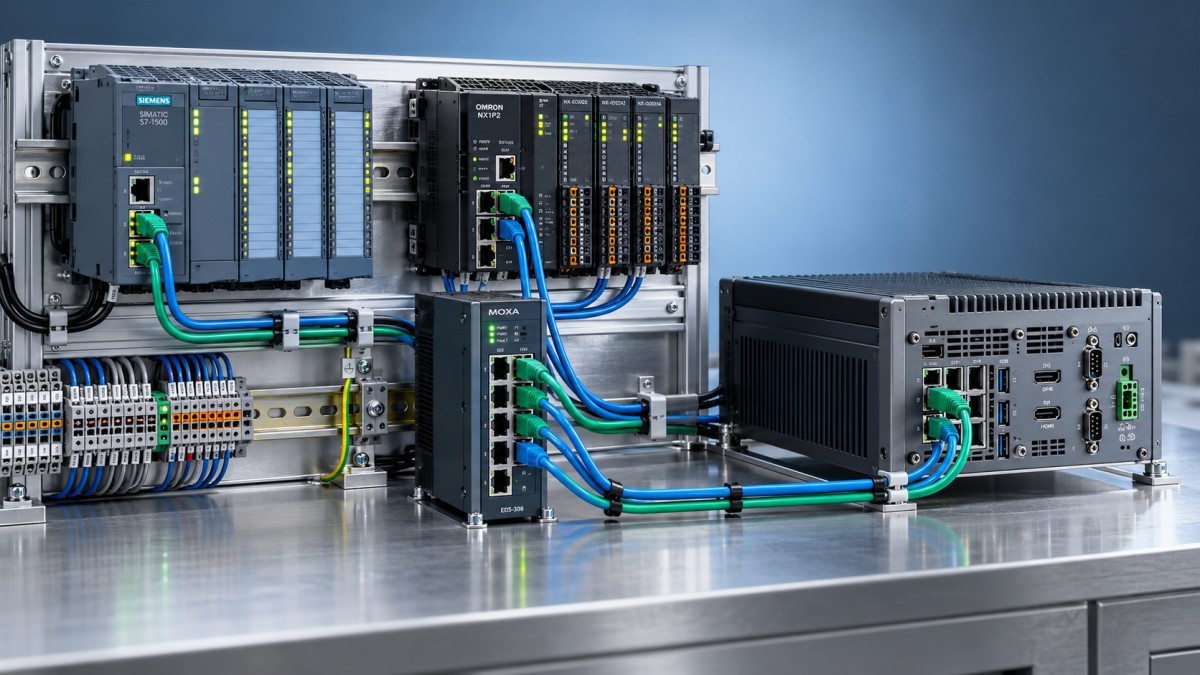
The diagram should also trace data toward the historian and any external systems. This makes it easier to identify shared failure points, such as a single gateway serving several production areas.
Require a demonstration that exposes failure behavior
A useful proof of concept uses representative controllers, firmware, tag types, and communication paths. Where production hardware is unavailable, record what the test environment reproduces and what remains outside its coverage. Simulation can validate application logic, but it cannot establish every characteristic of a physical controller or network.
Agree on acceptance criteria before testing. “Fast response” and “reliable communication” leave too much room for interpretation. Define acceptable display freshness, command acknowledgment time, historical data behavior, and recovery conditions according to the process. Different values may require different limits.
Test normal operation alongside conditions that reveal architectural weaknesses:
- Communication interruption: Disconnect a PLC connection and check stale-value indication, alarm behavior, and reconnection.
- Server restart: Confirm service startup, retained configuration, client reconnection, and visibility of data gaps.
- Representative operating load: Include active clients, historian writes, reports, and expected alarm activity.
- Redundancy transfer: Where redundancy is included, observe interrupted commands, alarm duplication, and historical continuity.
- Time disruption: Check how missing synchronization or differing device clocks affect event interpretation.
Measure controller communication load as well as server performance. Aggressive polling may make a demonstration look responsive while consuming capacity needed by other clients or engineering tools. Ask the integrator to explain scan groups, subscriptions where supported, and how traffic changes as the system grows.
Historical recovery deserves separate attention. A historian cannot reconstruct measurements that were never buffered. If continuous records matter, identify where buffering occurs, how timestamps are preserved, and how recovered records are distinguished from current values.
Choose the architecture around your maintenance capabilities
A platform closely aligned with the installed controller ecosystem may simplify access to controller features and support escalation. A platform serving multiple vendors may suit a mixed fleet or reduce dependence on one controller supplier. Neither approach removes the need to test the actual combinations in your plant.
Evaluate custom code by its operational value and maintenance burden. A supported driver with standard configuration is usually easier to transfer than a proprietary communication service maintained by one engineer. Custom software can still be justified when it solves a defined requirement that standard functions cannot meet.
For every custom component, require source-code access rights, build instructions, dependency records, and a named maintenance owner. Have the integrator explain how another qualified engineer would diagnose and modify it.
Check licensing against the planned deployment. Relevant cost drivers may include tags, clients, historian connections, redundancy, development tools, and remote access. Clarify how standby servers, replacement hardware, and temporary migration environments are licensed. These details influence future changes as much as the initial purchase price.
Make long-term support a deliverable
“Ongoing support available” does not describe how a production incident will be handled. The agreement should specify coverage hours, contact methods, severity definitions, escalation routes, and responsibility for coordinating with software, controller, or gateway suppliers.
Distinguish an initial response from technical engagement and service restoration. Acknowledging a ticket says little about when someone capable of diagnosing the system will begin work. Define what remote support includes, when onsite attendance becomes necessary, and how work outside the agreement is authorized.
Ask who covers the system when the original project engineer is unavailable. Continuity depends on accessible documentation, shared technical knowledge, and a supported configuration—not simply on the availability of a named individual.
Define ownership across the complete system
Incidents often cross organizational boundaries. A frozen display might originate in the PLC, driver, virtual host, network, or authentication service. Assign ownership for initial diagnosis and identify who coordinates the investigation when the cause is uncertain.
Remote access also needs an agreed operating model. Specify authorization, individual accounts, access duration, logging, and revocation. The support process must remain workable when the usual remote connection is unavailable.
Connect patching to compatibility and recovery
Operating-system updates, SCADA patches, driver releases, and controller firmware changes can affect one another. Require a documented process for reviewing dependencies, testing changes, scheduling deployment, and restoring the previous configuration if necessary.
Ask how the integrator handles an urgent security issue when a compatible update is unavailable. The answer should address operational impact, temporary risk-reduction measures, and responsibility for approving changes. A permanent freeze and automatic installation of every update both leave important engineering decisions unresolved.
Lifecycle planning should identify unsupported components, replacement options, and migration triggers. If a gateway or industrial PC fails after its original model is discontinued, the recovery plan needs a viable replacement path.
Test the handover before accepting the project
A backup is useful only when the system can be restored from it. Include a recovery exercise in acceptance, using replacement or isolated infrastructure appropriate to the deployment. Confirm the availability of installers, licenses, certificates, project files, configurations, and required credentials.
The handover package should contain:
- Editable SCADA projects, PLC changes, and agreed custom source code.
- Network diagrams, tag mappings, alarm definitions, and driver settings.
- Software versions, installation dependencies, and license recovery instructions.
- Backup, restoration, failover, and routine maintenance procedures.
- Test records, unresolved exceptions, and support escalation contacts.
Training should cover the tasks assigned to your staff: diagnosing bad data, managing accounts, acknowledging alarms, checking backups, and recognizing when escalation is necessary. Watching the integrator perform these tasks provides less evidence than having the receiving team carry them out.
Compare proposals using evidence and lifecycle cost
Apply mandatory requirements before scoring preferences. A candidate that cannot demonstrate compatibility with a critical controller, provide necessary project access, or meet required support coverage should not recover that gap through a polished interface or lower implementation fee.
For the remaining candidates, compare compatibility evidence, failure recovery, maintainability, support arrangements, and total cost over the planned service period. Include software maintenance, infrastructure replacement, patch testing, staff training, and likely expansion. Request rates and assumptions for additional controllers, clients, sites, and custom changes.
Use relevant references to explore how the company behaves after commissioning. Ask about incident ownership, documentation quality, upgrades, and the transfer of knowledge to replacement engineers. A similar controller fleet and support requirement are more informative than a familiar customer name.
Before awarding the project, turn the leading proposal into an acceptance schedule: the exact equipment to connect, functions to demonstrate, failures to recover from, documents to deliver, and support obligations to maintain. Any unresolved compatibility assumption should have a defined test and an agreed consequence if it fails. That gives both parties a practical basis for delivery—and gives your maintenance team a system it can continue to operate.
Search News
Hot Articles
- Carbon Fiber StructuresHow to Specify Aerospace Carbon Fiber Assemblies for Lightweight, Load-Bearing PartsJul 11, 2026
- Machine VisionXiaomi, Alibaba DAMO Academy Drive Open-Source Robotics Model Ecosystem, Lowering Algorithm Development Barriers for Overseas SMEs Adopting Chinese Robotics SolutionsMar 30, 2026
- Cobots & ArmsShanxi 'AI+' Conference Showcases Embodied Intelligence with Multinational Buyer Engagement: Key Industry ImplicationsMar 30, 2026
Popular Tags
Recommended News
 Jul 11, 2026How to Specify Aerospace Carbon Fiber Assemblies for Lightweight, Load-Bearing PartsAerospace carbon fiber assemblies: learn how to specify laminate design, load data, joining methods, and inspection controls for lighter, reliable load-bearing aerospace parts.Elena Rostova (UAV Systems Researcher)
 Mar 30, 2026Xiaomi, Alibaba DAMO Academy Drive Open-Source Robotics Model Ecosystem, Lowering Algorithm Development Barriers for Overseas SMEs Adopting Chinese Robotics SolutionsXiaomi & Alibaba DAMO Academy's open-source robotics models lower algorithm barriers for global SMEs. Boost efficiency in manufacturing, logistics & smart retail with ROS 2 compatible solutions.TSV Data Lab
 Mar 30, 2026Shanxi 'AI+' Conference Showcases Embodied Intelligence with Multinational Buyer Engagement: Key Industry ImplicationsShanxi 'AI+' Conference highlights embodied intelligence with Tesla, Ubtech & Jiantao showcasing multimodal robotics. 40+ global buyers validated tech on-site, creating new B2B channels for industrial automation & AI solutions.Chen Wei (Automation Lead Engineer)
 Mar 30, 2026Zhongguancun Unveils 6G Integrated Sensing-Computing-Intelligence Platform to Empower Embodied Robots for Global Industrial ApplicationsZhongguancun's new 6G platform revolutionizes industrial robotics with <10ms latency, empowering global automotive, logistics & port automation. Discover how this tech boosts China's smart manufacturing exports.TSV Data Lab
 Mar 30, 2026Mech-Mind Tianjin Embodied Intelligence R&D and Production Base Goes Live, Cutting Delivery Time by 20%–30% for Global Customized AMR+Vision SolutionsMech-Mind's Tianjin AMR+Vision production base cuts delivery time by 20%-30% for欧美 & Latin American markets. Discover how this PLd-certified facility accelerates customized robotics solutions for smart manufacturing and logistics.Chen Wei (Automation Lead Engineer)
 Mar 30, 2026Boao Forum Reveals 'Co-evolution of Big and Small Brains' Trend in Humanoid Robots, China's Embodied Intelligence Accelerates Adaptation to Overseas Manufacturing Service ScenariosDiscover how China's humanoid robots, featuring 'Co-evolution of Big and Small Brains,' are revolutionizing global manufacturing. Learn about Embodied Tian Gong 3.0's ISO compliance and overseas deployment at Boao Forum 2026.Chen Wei (Automation Lead Engineer)
 Mar 30, 2026China Railway Industrial Secures Patent for Embodied Robotics in Material Handling, Boosting High-Precision Delivery Capabilities for Overseas Infrastructure and Manufacturing ProjectsChina Railway Industrial's new patent for embodied robotics in material handling boosts high-precision delivery for global infrastructure & manufacturing. Discover how this innovation enhances logistics accuracy in automotive, rail transit & EPC projects.Chen Wei (Automation Lead Engineer)
 Oct 26, 2026Choosing a SCADA System Integrator Company: PLC Compatibility and Long-Term SupportChoose a scada system integrator company with proven PLC compatibility and reliable long-term support. Discover what to test, compare, and require before investing.Victor Lin (Chief Software Architect)
 Oct 25, 2026Hesai Leads Global ADAS Main Lidar Shipments in Yole’s 2026 ReportHesai led global ADAS main lidar shipments with a 43% share in 2025, according to Yole’s 2026 report. Explore what this ranking reveals about its automotive market position.TSV Data Lab
 Oct 25, 2026Choosing an Aerospace Materials Manufacturer: Quality and Traceability ChecksChoosing an aerospace materials manufacturer? Learn how to verify certifications, test reports, and lot traceability to qualify suppliers confidently and reduce costly sourcing risks.Dr. Marcus Vance
 Oct 24, 2026Guotai Haitong: Global Entry-Level 3D Printer Shipments Rose 39% in Q1 2026Entry-level 3D printer shipments rose 39% in Q1 2026, Guotai Haitong reports. Explore how AI, multicolor printing and print farms are shaping market growth.Dr. Marcus Vance
 Oct 24, 2026Choosing an Industrial Vision Inspection Supplier: Acceptance Tests That MatterChoose an industrial vision inspection supplier with confidence. Discover acceptance tests for defect detection, false rejects, production speed, and reliable part rejection before you buy.TSV Data Lab
 Oct 23, 2026US Navy Raises Gecko Robotics Contract Ceiling to $300M for Robotic Fleet MaintenanceUS Navy raises Gecko Robotics’ contract ceiling to $300M for Pacific Fleet robotic inspections. Explore potential opportunities for maintenance suppliers and key procurement considerations.Chen Wei (Automation Lead Engineer)
 Oct 23, 2026Choosing Industrial Sensing Systems for Global Plants: Protocol CompatibilityCompare industrial sensing systems international buyers can trust. Explore protocol compatibility, reduce integration risks, and select proven configurations for reliable global plant deployments.TSV Data Lab
 Oct 22, 2026KUKA Showcases Physical AI and iiQKA.AI Vision at NVIDIA GTC BerlinExplore KUKA’s Physical AI showcase at NVIDIA GTC Berlin and discover how iiQKA.AI Vision aims to simplify robotic vision integration and improve 2D and 3D scene recognition.TSV Data Lab
 Oct 22, 2026Robotic Machining of Advanced Composites: What Tolerances Are Achievable?Explore advanced materials machining robotics: discover what drives achievable composite tolerances and how to validate accuracy before investing in your next machining system.Dr. Marcus Vance
 Oct 21, 2026China’s Industrial Robot Exports Near RMB 10 Billion in First Nine Months of 2026China’s industrial robot exports neared RMB 10 billion in January–September 2026, with value rising faster than volume. Explore the data and what it could mean for suppliers.Chen Wei (Automation Lead Engineer)
 Oct 21, 2026Low-Latency Industrial Data Processing: Pricing and Key Cost DriversExplore industrial data latency price drivers, from edge hardware to integration and support. Learn how to compare quotes, verify performance, and avoid unnecessary costs.TSV Data Lab
 Oct 20, 2026KUKA Launches iiQKA.AI Vision to Simplify Industrial Image ProcessingKUKA iiQKA.AI Vision simplifies industrial image processing with controller-based 2D and 3D vision. Explore drag-and-drop setup for vision-guided automation.TSV Data Lab
 Oct 20, 2026Smart Industrial Edge Devices: Key Criteria for Legacy PLC IntegrationChoose smart industrial edge devices for legacy PLC integration. Discover key criteria for compatibility, data quality, security, and reliable collection without disrupting control.TSV Data Lab
 Oct 19, 2026Choosing a Radar Sensor by Application: Range, Resolution, and Field of ViewSimplify radar sensor application based product selection. Compare range, resolution, and field of view to avoid blind spots and choose with confidence. Explore the guide.TSV Data Lab
 Oct 18, 2026Comparing Material Options for Procurement: Specs, Costs, and Supply RisksExplore procurement oriented technical content on material options, specs, costs, and supply risks. Compare alternatives to cut hidden expenses and make confident sourcing decisions.Dr. Marcus Vance
 Oct 17, 20265-Axis CNC Positioning Accuracy: How to Interpret ISO 230-2 Test ResultsAssess 5 axis CNC machining positioning accuracy with ISO 230-2. Learn to interpret repeatability, reversal error, and test conditions to compare suppliers and make confident acceptance decisions.Dr. Marcus Vance
 Oct 16, 2026Choosing a Rugged Edge AI Box Supplier: Thermal Tests and Lifecycle SupportChoose a rugged edge AI box supplier with proven thermal performance and reliable lifecycle support. Discover the tests and commitments to verify before you buy.TSV Data Lab























