Selecting an aerospace materials manufacturer requires more than comparing prices and datasheets. Procurement teams need verifiable evidence that each delivered lot meets specified requirements.
The strongest qualification process connects three things: your purchase specification, the supplier’s demonstrated manufacturing capability, and records linking delivered material to its production history.
An AS9100 certificate alone does not establish material conformity. Certification scope, test reports, identification controls, and subcontracted processing all require separate, practical verification.
This guide applies TSV’s evidence-led approach to supplier selection, helping procurement teams identify documentation gaps, compare credible offers, and establish defensible acceptance criteria before ordering.
What Must the Supplier Prove Before You Request a Quote?
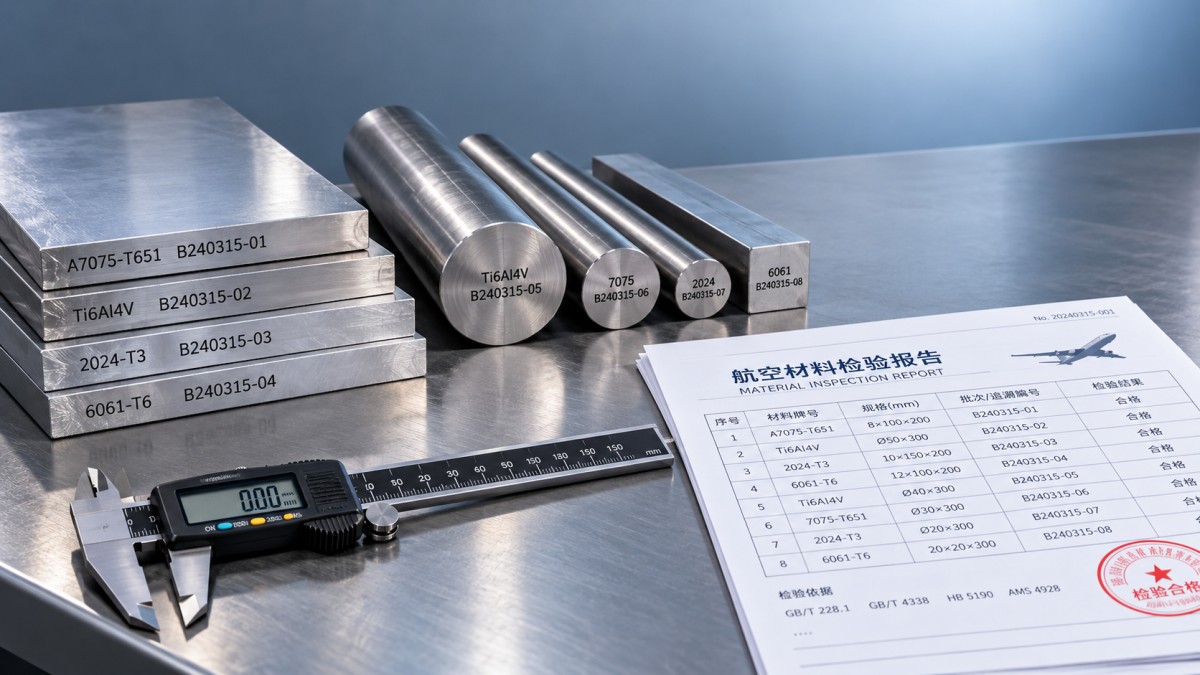
Begin with a precise material requirement. An alloy designation alone rarely defines everything needed to establish suitability for a particular aerospace component or application.
Your enquiry should identify the material specification, applicable revision, product form, dimensions, condition or temper, required testing, and any customer-specific source or processing restrictions.
Ask engineering to confirm which requirements are mandatory. Procurement should avoid accepting an apparently equivalent grade or specification without documented approval from the responsible technical authority.
A supplier capable of producing plate may lack qualification for forgings, tubing, or another product form, even when the nominal alloy chemistry appears identical.
Also establish the supplier’s role: original producer, converter, processor, distributor, or a combination. Each role changes which production records and upstream approvals require verification.
A distributor can provide conforming material with complete traceability, but its documentation must preserve the connection to the original producer and every relevant intermediate operation.
Before comparing prices, ask each bidder to return a compliance matrix identifying accepted requirements, exceptions, proposed substitutions, and evidence available with the final shipment.
Does the Quality Certificate Cover the Facility and Work You Need?
Check the certificate’s legal entity, site address, validity, issuing body, and scope. A certificate belonging to another group company does not automatically cover your supplier.
For AS9100 certification, verify status through the IAQG OASIS database where accessible. Resolve inconsistencies with the certification body rather than relying on a downloaded logo.
AS9100 evaluates a quality management system. It does not independently certify a particular heat, batch, mechanical property, or shipment against your purchase order requirements.
Read the scope closely enough to understand whether it covers manufacturing, distribution, or other activities relevant to the order. Request clarification where wording remains ambiguous.
Where special-process accreditation is contractually required, check the applicable Nadcap accreditation scope, site, process coverage, and current status against the work actually being purchased.
Nadcap accreditation does not replace customer approval requirements. A processor may hold accreditation yet still lack approval for a particular customer, specification, or product application.
Use certification as an initial screening criterion, then evaluate the production evidence. Strong candidates can explain exactly which approvals apply and provide records supporting that explanation.
Can You Connect Every Delivered Piece to Its Original Heat or Batch?
Traceability should let you follow delivered material backward through relevant processing and inspection to its original production identity, without relying on undocumented assumptions or recollection.
For metals, this commonly involves heat numbers and subsequent lot identifiers. Composite materials may require resin batches, reinforcement lots, production batches, and storage history.
A heat number and a lot number serve different purposes. Ask how the supplier defines each and handles multiple processing lots from one heat.
Request a representative traceability package before placing the order. It should show how the supplier connects incoming records, internal routing, subcontract operations, inspection, and dispatch.
Cutting and repackaging deserve particular attention because they create opportunities to separate material from its identification. Verify how markings transfer onto remnants and smaller pieces.
Where individual marking is impractical or prohibited, the supplier should demonstrate an approved alternative, such as controlled containers, labels, or documented segregation preventing material mixing.
Check whether split shipments retain the same underlying records and whether quantities reconcile. Unexplained changes in identifiers, weights, or piece counts require investigation before acceptance.
A useful qualification exercise selects one finished item and asks the supplier to retrieve its complete history. Evaluate completeness, consistency, and retrieval time together.
What Should a Mill Test Report Actually Demonstrate?
A mill test report, material test report, or inspection certificate should identify the material supplied and document the results required by the applicable specification.
A certificate of conformity generally declares compliance; it may not contain actual test results. Specify the required documentation rather than accepting interchangeable document names.
Compare reported results against the correct specification revision, product form, thickness range, material condition, and sampling requirements. A passing value under different conditions proves little.
Mechanical properties need context. Test orientation, specimen location, heat treatment condition, and applicable test method can determine whether a reported result supports your intended acceptance.
Confirm that required tests were completed and that reports identify the tested heat or lot. Generic capability data cannot substitute for required production acceptance evidence.
Not every order requires fatigue, fracture toughness, corrosion, or ultrasonic testing. Define these through engineering requirements instead of assuming that “aerospace grade” includes them.
If an EN 10204 inspection document is required, specify its type explicitly. Do not treat a particular document type as universally mandatory for aerospace purchases.
When results look inconsistent, request clarification from the issuing organization through a verified channel. Preserve original documents and record any corrected versions with their explanations.
How Are Testing and Subcontracted Processes Controlled?
Material conformity can change after initial production. Heat treatment, forging, coating, chemical processing, and other operations must remain connected to applicable specifications and records.
Ask which operations the aerospace materials manufacturer performs internally and which it outsources. Require visibility of subcontractors where contract terms or customer requirements demand approval.
Review how purchase requirements flow to outside processors. Relevant specification revisions, testing obligations, identification rules, and restrictions must survive each handoff without undocumented interpretation.
For heat treatment, seek evidence linking the material lot to the processing record and required equipment controls. The necessary detail depends on the governing specification.
For nondestructive testing, verify applicable methods, acceptance criteria, personnel qualifications, and report identification. The presence of an inspection stamp alone provides insufficient acceptance evidence.
Where laboratory accreditation matters, check that ISO/IEC 17025 accreditation covers the specific test method. Accreditation for unrelated testing does not establish competence for your requirement.
For shelf-life-sensitive composites, examine storage limits, shipping conditions, remaining shelf life, and out-time records where applicable. Metallic material documentation cannot answer these different acceptance questions.
Which Supplier Responses Signal an Unacceptable Qualification Gap?
Incomplete records do not always indicate defective material, but they can prevent you from demonstrating conformity. Treat unresolved evidence gaps as qualification issues requiring closure.
Warning signs include refusal to identify the original producer when required, unexplained certificate alterations, and claims that quality certification makes batch documentation unnecessary for acceptance.
Another concern is unrestricted substitution. A supplier should not change a specified source, material condition, or required process without following the applicable contractual approval procedure.
Ask how nonconforming material is identified, segregated, and dispositioned. Acceptance under a concession requires the authorization specified by your contract and quality management procedures.
Review change notification arrangements for manufacturing locations, critical processes, and approved subcontractors. Define notification and approval obligations explicitly instead of assuming that every change requires approval.
Business continuity also matters. Ask how the supplier protects records, manages upstream shortages, and preserves traceability when emergency sourcing or alternate production routes become necessary.
Close each significant gap with objective evidence and an accountable owner. Verbal assurances should not become the basis for releasing material into production without approval.
How Should Procurement Compare Suppliers and Control the First Order?
Use mandatory requirements as qualification gates before applying a commercial scorecard. An attractive price cannot compensate for an unresolved requirement essential to material acceptance.
Compare qualified suppliers on documented conformity, traceability completeness, delivery reliability, technical responsiveness, and total landed cost. Choose weighting appropriate to the application and supply risk.
Include inspection effort, documentation correction, minimum order quantities, scrap exposure, and schedule disruption in the cost assessment. Purchase price alone can conceal substantial downstream expense.
Request a sample document package during quotation review, then consider a limited initial order where appropriate. Define acceptance evidence before committing to larger volumes.
The purchase order should state required certificates, test reports, identification, packaging, permitted substitutions, record retention, and applicable access rights. Include customer requirements where they apply.
At receipt, reconcile physical markings, quantities, condition, and documentation against the order. Use risk-based verification, including independent testing where justified by requirements or identified concerns.
Keep material on hold until discrepancies are resolved through your quality process. Track document accuracy and corrective-action performance alongside delivery metrics when reviewing ongoing approval.
Choose the Supplier Whose Evidence Supports Acceptance
The right aerospace materials manufacturer can demonstrate how your requirements become controlled production steps, verified test results, and identifiable material delivered with an auditable history.
Before awarding the order, establish certification coverage, review a representative traceability package, confirm required testing, and close significant gaps in subcontractor control or documentation.
Procurement gains confidence when every acceptance decision points to evidence. That discipline supports faster qualification, clearer supplier accountability, and fewer avoidable disruptions after material arrives.