
How to improve VTOL transition phase stability
Publication Date
author
Improving VTOL transition phase stability starts with understanding vtol transition phase aerodynamics, control-loop tuning, and sensor reliability under real operating loads. For engineers, operators, buyers, and decision-makers evaluating a vtol drone for pipeline inspection, the challenge is not marketing claims but measurable flight behavior, payload impact, and data confidence—especially when benchmarks such as drone thermal camera resolution comparison and tethered uav continuous flight time can directly influence mission safety and procurement decisions.
Why the VTOL transition phase is where most stability problems begin
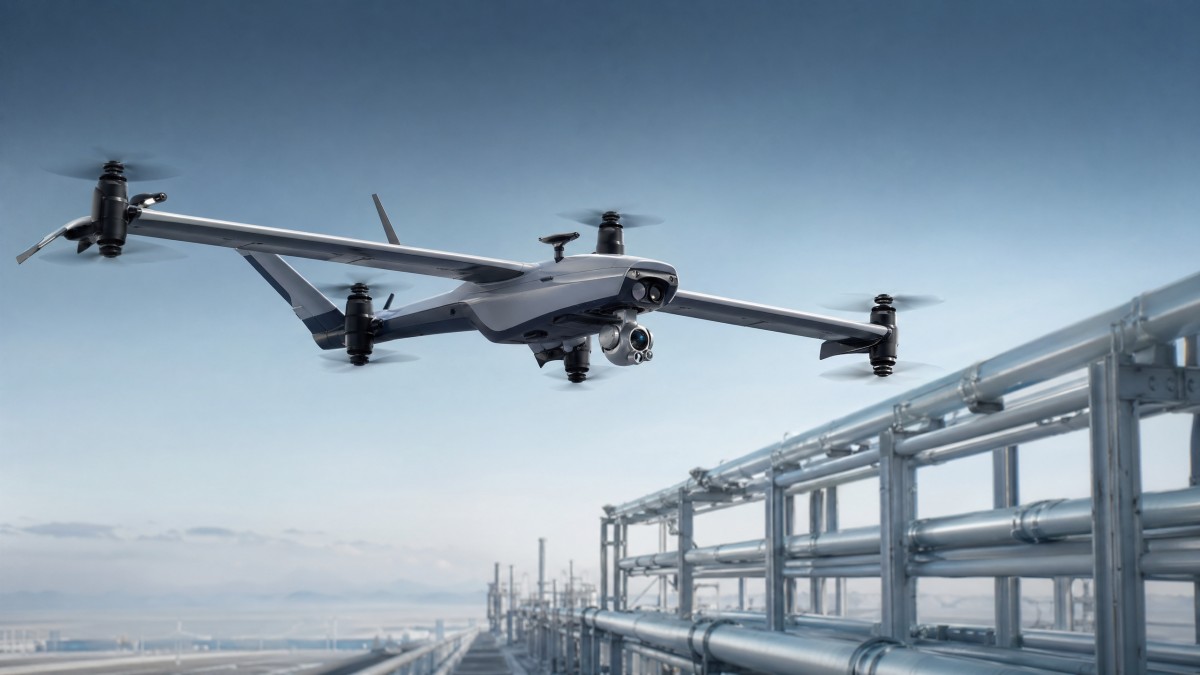
In a VTOL aircraft, the transition phase is the short but highly dynamic interval when lift generation shifts from primarily vertical thrust to wing-borne forward flight. In many field systems, this window lasts only a few seconds, often in a 3–15 second range depending on airframe size, thrust-to-weight ratio, and autopilot strategy. Yet it is the point where aerodynamic uncertainty, actuator lag, and sensor disagreement can combine into pitch oscillation, roll divergence, altitude drop, or aborted mission logic.
For information researchers, the key issue is that many brochures discuss endurance or payload but not transition stability margins. For operators, instability shows up as visible nose-up or nose-down swings, wing rock, or poor crosswind tolerance. For procurement teams, the risk is hidden lifecycle cost: an aircraft that looks efficient on paper may require repeated tuning sessions, more pilot oversight, or tighter weather restrictions. For enterprise decision-makers, this affects mission continuity, safety envelopes, and data capture reliability.
TechStat Vanguard approaches this topic from an engineering benchmark perspective. Rather than relying on vague claims such as “smooth transition,” the evaluation should focus on measurable items: transition airspeed threshold, pitch-rate peak, altitude deviation during handoff, motor current transient, control saturation time, and sensor consistency under vibration. Parameters do not lie, and transition stability is one of the clearest places where that principle matters.
The transition problem is also strongly application dependent. A lightweight mapping platform may tolerate brief oscillation without destroying mission value. A vtol drone for pipeline inspection, powerline patrol, or thermal anomaly scanning often cannot. When the payload includes EO/IR optics, gimbals, or communication relays, unstable transition directly affects georeferencing accuracy, image sharpness, and operator confidence. That is why transition stability should be treated as a purchasing criterion, not just a flight-test curiosity.
- Aerodynamic handoff issue: rotor thrust declines before wing lift has built enough margin.
- Control issue: gains tuned for hover may be too aggressive or too slow for accelerating forward flight.
- Sensor issue: airspeed, GNSS, IMU, and magnetometer inputs may disagree during vibration and rapid attitude change.
- Payload issue: added mass or changed center of gravity can shift the safe transition corridor by several percent.
Which technical factors most affect VTOL transition phase stability?
The first factor is aerodynamic sequencing. The aircraft must accelerate enough to generate stable wing lift before vertical propulsion is reduced beyond a recoverable level. If the transition schedule is too early, the aircraft can sink. If too late, it may climb excessively, waste power, or enter unstable pitch coupling. Typical engineering checks include minimum transition airspeed, angle-of-attack margin, and elevator effectiveness once propwash on the wing begins to change.
The second factor is center-of-gravity management. Even a small payload shift can move the aircraft from a forgiving trim condition into a narrow-control regime. In field procurement, this matters because advertised payload capacity does not automatically mean stable transition behavior at all payload positions. Buyers should ask for the allowed CG envelope, whether the vehicle was tested at front, mid, and rear mounting points, and how transition behavior changes from 30% payload to 80% payload loading.
The third factor is control-loop architecture. Stable transition depends on how the autopilot blends hover control with fixed-wing control. This includes gain scheduling, thrust vector blending, attitude-rate limits, and failure logic. A robust system usually defines at least 3 stages: pre-transition acceleration, mixed-lift blending, and fixed-wing lock-in. If one stage has poor tuning, the aircraft may overshoot attitude targets or repeatedly hunt around the desired flight path.
The fourth factor is sensor quality under dynamic disturbance. Airspeed estimation errors, pitot installation issues, GNSS latency, and magnetometer interference can all degrade transition decisions. In practical UAV and aerospace metrics work, it is not enough to ask whether a sensor exists. The better question is how reliable its reading remains during vibration, motor current spikes, and changing airflow. A system that transitions based on a noisy airspeed threshold is structurally more fragile than one using fused and validated inputs.
Core variables engineers and buyers should review
The table below converts technical discussion into a procurement-friendly checklist. It highlights which variables affect VTOL transition phase stability, what signs indicate weak performance, and why those signs matter when a fleet is deployed across inspection, mapping, or surveillance missions.
For B2B evaluation, this table helps separate genuine engineering maturity from superficial feature lists. A vendor that can discuss these variables with clear ranges, test conditions, and limitations is usually easier to qualify than one that only provides headline endurance figures.
Why payload and mission equipment change the stability picture
Payload influence is often underestimated. A thermal gimbal, LiDAR pod, mapping camera, or tether interface may add drag, shift inertial moments, and alter vibration paths. This is especially relevant when teams compare drone thermal camera resolution comparison results across aircraft. Higher-resolution optics may improve detection capability, but they can also add weight and increase stabilization demand during transition.
Tethered systems create a different challenge. Tethered uav continuous flight time is a strong selling point for persistent observation, but the tether adds drag, external force variation, and directional bias. Transition stability under tether load is therefore not equivalent to free-flight transition. If the aircraft was only tuned in untethered mode, its behavior in gusty industrial corridors may change materially.
A disciplined evaluation should therefore test at least 3 payload states: baseline empty mission kit, nominal working payload, and upper-envelope payload. If the supplier cannot provide transition notes across these load states, procurement risk rises because the user may be funding the tuning cycle after delivery.
How to improve VTOL transition phase stability in real operations
Improvement starts with structured testing rather than broad assumptions. In practice, teams should separate design-level issues from tuning-level issues. If the aircraft lacks sufficient wing area, thrust margin, or control authority, no amount of software tuning will fully solve the transition. If the hardware is sound, however, a disciplined tuning program can often reduce instability substantially over 2–4 test cycles.
The first practical step is to establish a repeatable test envelope. Fly in low-gust conditions first, then increase complexity. Use the same takeoff mass, battery state window, and mission payload for each run. A useful battery test window is often 90% to 60% state of charge, because voltage sag near low charge can distort results. Record pitch, roll, airspeed, altitude deviation, motor current, and control saturation in each transition attempt.
The second step is control-loop refinement. Reduce excessive pitch-rate response if the nose hunts during acceleration. Increase damping if wing rock appears as the lift source shifts. Check whether transition triggers depend on a single airspeed value or a fused set of conditions such as speed, attitude, climb rate, and elapsed time. The most stable systems usually avoid one-sensor decisions when operating in noisy field environments.
The third step is sensor and installation validation. A pitot tube in disturbed airflow, a loose IMU mounting stack, or poor cable routing can create instability that looks like an autopilot problem. In industrial UAV work, many “software issues” are actually installation-quality issues. If a supplier offers transition tuning but not sensor-placement verification, the improvement program may stop short of the real cause.
A practical improvement workflow
Engineering teams can use the 6-step workflow below to improve VTOL transition phase stability while preserving auditability for procurement and internal review. This is especially valuable when several departments must agree on the release standard.
- Define baseline metrics: transition duration, altitude change, max pitch rate, and success rate over 10–20 repeated runs.
- Lock the payload and CG configuration so tuning data are comparable across days and operators.
- Validate sensor quality: vibration levels, airspeed consistency, GNSS update behavior, and compass interference near power wiring.
- Tune mode blending gradually: adjust transition trigger logic, rate limits, and damping rather than changing many gains at once.
- Retest in wider conditions: moderate crosswind, different battery states, and alternate mission payloads.
- Release only after documenting pass criteria, fallback logic, and pilot or operator intervention rules.
This workflow is not only useful for developers. It also gives operators a common language for reporting issues and gives buyers a way to ask whether the platform has undergone disciplined validation instead of ad hoc trial flights.
Field conditions that commonly degrade transition stability
Several conditions repeatedly challenge transition behavior in commercial deployment. Crosswinds during acceleration can delay wing lift buildup and trigger asymmetric corrections. High-density payload bays can shift airflow around sensors. Repeated launches from uneven terrain can affect takeoff posture before transition begins. In corridor inspection, local turbulence near structures can introduce abrupt disturbances within the first 20–50 meters of forward acceleration.
Because of this, acceptance testing should not stop at a calm-weather demo. Teams should define the usable weather and payload envelope clearly. If operations are expected in 5–8 m/s wind bands, test evidence near that range matters more than a perfect low-wind brochure video. Stable engineering performance is about envelope clarity, not ideal-condition storytelling.
What should buyers compare when selecting a VTOL drone for stable transition performance?
Procurement teams often compare endurance, payload, and sensor options first. Those are important, but they do not fully predict VTOL transition phase stability. A stronger sourcing framework uses 5 decision layers: aerodynamic margin, control maturity, sensor reliability, payload integration effect, and service support for tuning and validation. This is where an independent engineering filter becomes useful, because vendor documents rarely present all five with equal transparency.
The best comparison is scenario-based. For example, a vtol drone for pipeline inspection may need stable transition with EO/IR payload, moderate crosswind tolerance, and repeatable launches over long linear routes. A security monitoring platform may prioritize tethered uav continuous flight time and stationary reliability more than long-range cruise efficiency. A mapping platform may accept different transition behavior if image triggering begins only after stable fixed-wing entry.
Decision-makers should also ask whether the supplier supports parameter traceability. Can they show transition logs, payload-dependent tuning notes, or environmental limitations? Can they explain how drone thermal camera resolution comparison interacts with gimbal mass and aerodynamic drag? If not, apparent specification strength may hide integration weakness.
The table below is intended for sourcing reviews, technical due diligence, and cross-functional meetings between engineering, operations, and procurement. It converts complex stability concerns into comparable items that can be scored during supplier qualification.
When used in supplier comparison, this structure helps prevent overbuying based on endurance alone or underestimating the cost of unstable operations. A slightly more conservative platform with clearer transition data often delivers better total project value than a headline-driven design with limited validation depth.
Common sourcing mistakes that increase downstream risk
One common mistake is assuming that published maximum payload equals usable payload in all modes. Another is evaluating fixed-wing cruise efficiency without checking transition loss rates. A third is ignoring the interaction between mission sensor choices and flight-control behavior. This is particularly relevant when buyers focus on drone thermal camera resolution comparison without checking whether the heavier optics package changes the CG or transition timing.
- Do not approve a system based only on a single demonstration flight.
- Do not separate payload procurement from airframe stability review.
- Do not accept “software can fix it later” without a documented tuning and validation plan.
- Do not overlook maintenance access to sensors, mounts, and wiring that influence transition reliability.
A disciplined sourcing process can shorten qualification cycles by weeks because the right questions are asked before delivery. That aligns with TSV’s broader mission: reduce trial-and-error costs by replacing marketing noise with engineering-grade evaluation logic.
FAQ: practical questions about improving VTOL transition phase stability
How do I know whether a VTOL transition problem is aerodynamic or tuning related?
Look at repeatability and operating envelope. If instability appears across many gain sets and grows significantly with payload or wind, the issue may be aerodynamic or CG related. If the airframe behaves acceptably in narrow conditions but degrades during mode blending, tuning and sensor fusion are more likely contributors. Flight logs over 10–20 repeated transitions usually reveal which pattern dominates.
What should operators monitor during each transition?
Operators should monitor pitch attitude change, roll correction amplitude, altitude drop, airspeed buildup, and whether the aircraft hesitates before committing to fixed-wing mode. If available, review post-flight logs for peak pitch rate, motor current spikes, and control saturation duration. Even simple operator notes, captured consistently over 3–5 flights, can reveal trends before a larger reliability issue develops.
Is higher payload always bad for transition stability?
Not always. A well-integrated payload within the approved CG and drag envelope may have limited effect. The problem appears when the payload changes mass distribution, creates external drag, or adds vibration near sensitive sensors. This is why payload mass alone is not enough; placement, mounting stiffness, cable routing, and aerodynamic exposure all matter.
How does tethered uav continuous flight time affect transition evaluation?
A tether can greatly improve mission endurance, but it adds a persistent external force path and can alter yaw and pitch behavior during acceleration. If your mission concept combines tethered operation with VTOL movement phases, request test evidence in both free and tethered states. Continuous flight time is valuable only if the aircraft remains controllable and predictable during all required mode changes.
Why choose TSV when evaluating VTOL stability, payload trade-offs, and procurement risk?
TechStat Vanguard is built for teams that need engineering truth, not generic product language. When you are assessing how to improve VTOL transition phase stability, the real challenge is often not lack of options but lack of comparable technical evidence. TSV helps turn scattered claims into decision-ready criteria by focusing on measurable parameters, tolerance boundaries, and mission-specific trade-offs.
For researchers and engineers, we help clarify which variables deserve deeper benchmarking: transition thresholds, payload-induced CG shifts, sensor anti-interference behavior, and controller blending logic. For operators, we highlight the field conditions that most often expose instability. For procurement teams, we structure supplier comparison around repeatability, integration risk, and support depth. For enterprise leaders, we reduce the cost of wrong assumptions before they become multi-cycle qualification delays.
You can contact TSV for focused support on parameter confirmation, product selection logic, payload impact review, delivery-cycle evaluation, custom benchmarking requests, certification-related documentation scope, and quotation-stage technical clarification. If your use case involves a vtol drone for pipeline inspection, drone thermal camera resolution comparison, or tethered uav continuous flight time trade-offs, we can help frame the right questions before capital is committed.
The most effective next step is to prepare 4 items for discussion: your mission profile, payload range, expected weather envelope, and required flight endurance or persistence model. With those inputs, the conversation moves from vague preferences to engineering-grade judgment. That is the TSV approach: strip away noise, compare what matters, and make procurement decisions on the basis of hard data.
Search News
Hot Articles
- Carbon Fiber StructuresHow to Specify Aerospace Carbon Fiber Assemblies for Lightweight, Load-Bearing PartsJul 11, 2026
- Machine VisionXiaomi, Alibaba DAMO Academy Drive Open-Source Robotics Model Ecosystem, Lowering Algorithm Development Barriers for Overseas SMEs Adopting Chinese Robotics SolutionsMar 30, 2026
- Cobots & ArmsShanxi 'AI+' Conference Showcases Embodied Intelligence with Multinational Buyer Engagement: Key Industry ImplicationsMar 30, 2026
Popular Tags
Recommended News
 Jul 11, 2026How to Specify Aerospace Carbon Fiber Assemblies for Lightweight, Load-Bearing PartsAerospace carbon fiber assemblies: learn how to specify laminate design, load data, joining methods, and inspection controls for lighter, reliable load-bearing aerospace parts.Elena Rostova (UAV Systems Researcher)
 Mar 30, 2026Xiaomi, Alibaba DAMO Academy Drive Open-Source Robotics Model Ecosystem, Lowering Algorithm Development Barriers for Overseas SMEs Adopting Chinese Robotics SolutionsXiaomi & Alibaba DAMO Academy's open-source robotics models lower algorithm barriers for global SMEs. Boost efficiency in manufacturing, logistics & smart retail with ROS 2 compatible solutions.TSV Data Lab
 Mar 30, 2026Shanxi 'AI+' Conference Showcases Embodied Intelligence with Multinational Buyer Engagement: Key Industry ImplicationsShanxi 'AI+' Conference highlights embodied intelligence with Tesla, Ubtech & Jiantao showcasing multimodal robotics. 40+ global buyers validated tech on-site, creating new B2B channels for industrial automation & AI solutions.Chen Wei (Automation Lead Engineer)
 Mar 30, 2026Zhongguancun Unveils 6G Integrated Sensing-Computing-Intelligence Platform to Empower Embodied Robots for Global Industrial ApplicationsZhongguancun's new 6G platform revolutionizes industrial robotics with <10ms latency, empowering global automotive, logistics & port automation. Discover how this tech boosts China's smart manufacturing exports.TSV Data Lab
 Mar 30, 2026Mech-Mind Tianjin Embodied Intelligence R&D and Production Base Goes Live, Cutting Delivery Time by 20%–30% for Global Customized AMR+Vision SolutionsMech-Mind's Tianjin AMR+Vision production base cuts delivery time by 20%-30% for欧美 & Latin American markets. Discover how this PLd-certified facility accelerates customized robotics solutions for smart manufacturing and logistics.Chen Wei (Automation Lead Engineer)
 Mar 30, 2026Boao Forum Reveals 'Co-evolution of Big and Small Brains' Trend in Humanoid Robots, China's Embodied Intelligence Accelerates Adaptation to Overseas Manufacturing Service ScenariosDiscover how China's humanoid robots, featuring 'Co-evolution of Big and Small Brains,' are revolutionizing global manufacturing. Learn about Embodied Tian Gong 3.0's ISO compliance and overseas deployment at Boao Forum 2026.Chen Wei (Automation Lead Engineer)
 Mar 30, 2026China Railway Industrial Secures Patent for Embodied Robotics in Material Handling, Boosting High-Precision Delivery Capabilities for Overseas Infrastructure and Manufacturing ProjectsChina Railway Industrial's new patent for embodied robotics in material handling boosts high-precision delivery for global infrastructure & manufacturing. Discover how this innovation enhances logistics accuracy in automotive, rail transit & EPC projects.Chen Wei (Automation Lead Engineer)
 Oct 26, 2026AMAXiMAL Releases Open-Source TopMod 3D v3 With Claude AIExplore AMAXiMAL’s free, open-source TopMod 3D v3 with Claude AI assistance, topology-based modeling and plywood fabrication tools that connect complex designs to physical builds.Dr. Marcus Vance
 Oct 26, 2026Choosing a SCADA System Integrator Company: PLC Compatibility and Long-Term SupportChoose a scada system integrator company with proven PLC compatibility and reliable long-term support. Discover what to test, compare, and require before investing.Victor Lin (Chief Software Architect)
 Oct 25, 2026Hesai Leads Global ADAS Main Lidar Shipments in Yole’s 2026 ReportHesai led global ADAS main lidar shipments with a 43% share in 2025, according to Yole’s 2026 report. Explore what this ranking reveals about its automotive market position.TSV Data Lab
 Oct 25, 2026Choosing an Aerospace Materials Manufacturer: Quality and Traceability ChecksChoosing an aerospace materials manufacturer? Learn how to verify certifications, test reports, and lot traceability to qualify suppliers confidently and reduce costly sourcing risks.Dr. Marcus Vance
 Oct 24, 2026Guotai Haitong: Global Entry-Level 3D Printer Shipments Rose 39% in Q1 2026Entry-level 3D printer shipments rose 39% in Q1 2026, Guotai Haitong reports. Explore how AI, multicolor printing and print farms are shaping market growth.Dr. Marcus Vance
 Oct 24, 2026Choosing an Industrial Vision Inspection Supplier: Acceptance Tests That MatterChoose an industrial vision inspection supplier with confidence. Discover acceptance tests for defect detection, false rejects, production speed, and reliable part rejection before you buy.TSV Data Lab
 Oct 23, 2026US Navy Raises Gecko Robotics Contract Ceiling to $300M for Robotic Fleet MaintenanceUS Navy raises Gecko Robotics’ contract ceiling to $300M for Pacific Fleet robotic inspections. Explore potential opportunities for maintenance suppliers and key procurement considerations.Chen Wei (Automation Lead Engineer)
 Oct 23, 2026Choosing Industrial Sensing Systems for Global Plants: Protocol CompatibilityCompare industrial sensing systems international buyers can trust. Explore protocol compatibility, reduce integration risks, and select proven configurations for reliable global plant deployments.TSV Data Lab
 Oct 22, 2026KUKA Showcases Physical AI and iiQKA.AI Vision at NVIDIA GTC BerlinExplore KUKA’s Physical AI showcase at NVIDIA GTC Berlin and discover how iiQKA.AI Vision aims to simplify robotic vision integration and improve 2D and 3D scene recognition.TSV Data Lab
 Oct 22, 2026Robotic Machining of Advanced Composites: What Tolerances Are Achievable?Explore advanced materials machining robotics: discover what drives achievable composite tolerances and how to validate accuracy before investing in your next machining system.Dr. Marcus Vance
 Oct 21, 2026China’s Industrial Robot Exports Near RMB 10 Billion in First Nine Months of 2026China’s industrial robot exports neared RMB 10 billion in January–September 2026, with value rising faster than volume. Explore the data and what it could mean for suppliers.Chen Wei (Automation Lead Engineer)
 Oct 21, 2026Low-Latency Industrial Data Processing: Pricing and Key Cost DriversExplore industrial data latency price drivers, from edge hardware to integration and support. Learn how to compare quotes, verify performance, and avoid unnecessary costs.TSV Data Lab
 Oct 20, 2026KUKA Launches iiQKA.AI Vision to Simplify Industrial Image ProcessingKUKA iiQKA.AI Vision simplifies industrial image processing with controller-based 2D and 3D vision. Explore drag-and-drop setup for vision-guided automation.TSV Data Lab
 Oct 20, 2026Smart Industrial Edge Devices: Key Criteria for Legacy PLC IntegrationChoose smart industrial edge devices for legacy PLC integration. Discover key criteria for compatibility, data quality, security, and reliable collection without disrupting control.TSV Data Lab
 Oct 19, 2026Choosing a Radar Sensor by Application: Range, Resolution, and Field of ViewSimplify radar sensor application based product selection. Compare range, resolution, and field of view to avoid blind spots and choose with confidence. Explore the guide.TSV Data Lab
 Oct 18, 2026Comparing Material Options for Procurement: Specs, Costs, and Supply RisksExplore procurement oriented technical content on material options, specs, costs, and supply risks. Compare alternatives to cut hidden expenses and make confident sourcing decisions.Dr. Marcus Vance
 Oct 17, 20265-Axis CNC Positioning Accuracy: How to Interpret ISO 230-2 Test ResultsAssess 5 axis CNC machining positioning accuracy with ISO 230-2. Learn to interpret repeatability, reversal error, and test conditions to compare suppliers and make confident acceptance decisions.Dr. Marcus Vance























