
Pixhawk Flight Controller Supplier: Support Matters
Publication Date
author
When evaluating a pixhawk flight controller supplier, support is not a soft benefit—it is a core engineering variable that affects integration speed, flight stability, and lifecycle risk. For buyers comparing a fixed wing uav supplier, mapping drone supplier, or custom vtol uav factory, this article examines why technical responsiveness, documentation quality, and post-sales problem solving matter as much as specifications.
In UAV procurement, the flight controller often appears on paper as a list of interfaces, processor capabilities, firmware compatibility, and supported sensors. Yet in real deployment, the difference between a smooth integration and a costly delay usually comes down to supplier support. A board that looks ideal in a catalog can still create weeks of troubleshooting if wiring guidance is vague, parameter documentation is incomplete, or firmware recovery procedures are poorly explained.
This is especially relevant for engineering teams, operators, sourcing managers, and enterprise decision-makers working in mapping, inspection, agriculture, and long-endurance fixed wing programs. In these scenarios, support quality influences 3 critical variables at once: time-to-flight, operational reliability, and total cost of ownership over a 12- to 36-month lifecycle.
From a data-first procurement perspective, support should be assessed with the same rigor as IMU performance, GPS integration, redundant power design, or vibration isolation. The goal is not to buy the cheapest controller or the most advertised one. The goal is to reduce integration risk, shorten validation cycles, and secure a dependable technical partner when real-world issues occur.
Why support is an engineering parameter, not a marketing add-on
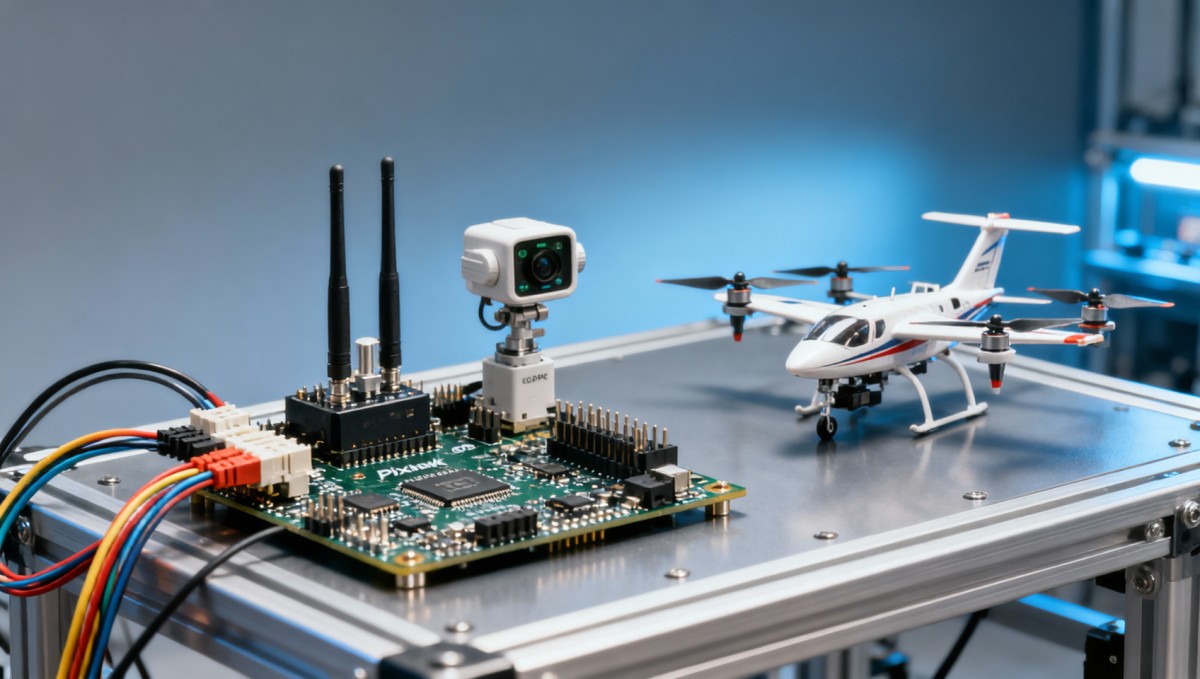
A pixhawk flight controller supplier affects far more than shipment status. In a practical UAV program, support touches airframe matching, ESC calibration, power module configuration, GPS compass placement, failsafe setup, mission planning logic, and firmware version control. If any of these steps are unclear, even a capable avionics stack can become unstable in the field.
For example, a mapping drone supplier may need stable waypoint execution with altitude consistency inside a tolerance band of ±3 m to ±5 m depending on GNSS conditions and terrain compensation strategy. A custom vtol uav factory, by contrast, must verify transition behavior, control mixing, and redundancy logic across multiple flight phases. In both cases, supplier support reduces the number of test loops required before deployment.
A common procurement mistake is to compare only hardware parameters: number of UART ports, CAN interfaces, PWM outputs, or supported sensor buses. Those factors matter, but support determines whether those interfaces can be configured correctly within 2 to 5 working days or whether the project loses 2 to 4 weeks in repeated bench testing. For R&D teams under launch pressure, that delay is a real cost center.
This becomes even more important when the supply chain spans multiple parties: airframe manufacturer, payload vendor, ground control software team, and local integrator. If the flight controller supplier cannot provide clear pinout confirmation, parameter baselines, and troubleshooting feedback within 24 to 72 hours, coordination overhead rises quickly and fault ownership becomes difficult to isolate.
Where poor support creates measurable risk
Weak support rarely shows up as a single dramatic failure. More often, it creates cumulative friction across the project. The engineering impact is measurable in delayed test windows, extra labor hours, and avoidable field incidents.
- Initial integration extends from 3–7 days to 2–3 weeks because wiring, firmware, or sensor alignment issues are unresolved.
- Flight tuning requires repeated site visits because default parameters are generic and not tailored to fixed wing, quadplane, or mapping payload conditions.
- Operators face higher mission abort rates when failsafe logic, RC loss behavior, or battery alarms are not validated in advance.
- Procurement teams struggle to compare vendors because support scope is not documented in quotations or technical proposals.
How support changes total lifecycle cost
Lifecycle cost is not limited to unit price. A controller that costs 8% less but adds 40 engineering hours during setup may be more expensive than a well-supported alternative. This is particularly true for enterprise fleets of 10, 20, or 50 aircraft where configuration repeatability and training efficiency matter.
For procurement teams, the better question is not “What is the board price?” but “How much technical effort is needed from first power-on to validated mission readiness?” A reliable supplier reduces rework, shortens acceptance cycles, and lowers dependency on ad hoc fixes from third-party forums.
What buyers should evaluate in a pixhawk flight controller supplier
Support quality should be evaluated through defined criteria rather than general promises. Whether you are sourcing from a fixed wing uav supplier or a mapping drone supplier, the supplier should be able to explain what they support before sale, during integration, and after field deployment. That support scope must be visible in technical communication, not hidden behind sales language.
The most useful evaluation model combines 4 dimensions: response speed, documentation depth, integration competence, and post-sales fault handling. Together, these dimensions show whether the supplier can assist your team at the bench, in flight testing, and during scaled deployment. This is especially important if your UAV program includes LiDAR, RTK, gimbal payloads, or hybrid VTOL power systems.
The table below provides a practical framework for comparing suppliers in procurement reviews. It is designed for engineering teams and sourcing managers who need a decision structure beyond brochure-level claims.
The key takeaway is that support should be auditable. If a supplier cannot show sample documentation, explain fault escalation steps, or discuss prior integration workflows in detail, the risk profile is higher. Strong support is visible in process clarity, not only in friendly sales communication.
Questions procurement teams should ask before purchase
A short but precise supplier questionnaire can expose whether support is substantive. Buyers should ask technical and process-based questions, then compare the specificity of the answers.
- What firmware versions are recommended for my airframe type, and why?
- What documents are included for wiring, calibration, and failsafe configuration?
- How are flight logs reviewed, and what is the typical feedback cycle?
- Can you provide baseline parameters for mapping, fixed wing cruise, or VTOL transition scenarios?
- What is the replacement or repair procedure if a unit fails during commissioning?
These questions are useful because they test practical support readiness. A technically mature supplier usually answers with steps, limits, and document references rather than broad statements about quality.
Documentation, firmware control, and troubleshooting depth
In UAV systems, documentation is part of the product. A pixhawk flight controller supplier that delivers reliable documentation reduces both operator error and engineering ambiguity. This includes pin mapping, power input recommendations, peripheral compatibility notes, firmware loading procedures, accelerometer and compass calibration guidance, and known limitations for specific payload combinations.
Documentation quality matters because many field failures begin as setup errors rather than hardware defects. A power module connected incorrectly, an external compass mounted too close to high-current wires, or a mismatched baud rate for telemetry can all lead to unstable behavior. Clear documentation can prevent these errors before the first test flight, often saving 1 to 3 test sessions.
Firmware control is equally important. In practice, engineering teams need to know which version is validated for their use case, what changed in newer releases, how to back up parameters, and how to recover from a failed update. A supplier who simply says “use the latest firmware” is not providing enough engineering support for enterprise deployment.
For operators and maintenance teams, troubleshooting depth determines downtime. If the supplier can review logs, identify vibration problems, power brownout risks, GPS glitches, or EKF inconsistencies within a structured process, the aircraft returns to service faster. If not, teams may spend several days isolating issues through trial and error.
Minimum documentation package to request
Before issuing a purchase order, ask for the documentation package that will be available to your engineers and operators. The following checklist helps separate mature suppliers from resellers with limited technical depth.
A good rule is simple: if documentation cannot support a new technician within 1 to 2 days of training, the supplier is transferring technical risk to your team. That may be acceptable for hobby projects, but it is a weak position for enterprise UAV operations.
Common documentation gaps that increase risk
- Pinout diagrams without voltage warnings or peripheral current limits.
- Firmware instructions that do not specify version compatibility with mission software or airframe type.
- Calibration guides that omit vibration control, compass interference, or GPS placement constraints.
- Troubleshooting notes that lack log interpretation examples or escalation timing.
These gaps seem minor during quotation review, but in commissioning they often lead to missed flight windows, repeated component swaps, and unclear fault attribution between supplier and integrator.
Support expectations across fixed wing, mapping, and custom VTOL projects
Not every UAV application needs the same type of support. Buyers should align supplier capability with mission profile. A fixed wing uav supplier prioritizes cruise stability, waypoint efficiency, airspeed integration, and longer endurance planning. A mapping drone supplier often prioritizes mission repeatability, payload synchronization, and geospatial workflow compatibility. A custom vtol uav factory must manage both hover and forward-flight logic, which increases setup complexity.
Because these mission profiles differ, the support model should also differ. A supplier that only understands generic multirotor tuning may not be enough for long-range fixed wing or transition-sensitive VTOL programs. Procurement teams should confirm whether support includes application-specific parameter advice, airframe-specific risk warnings, and guidance for payload interaction.
The practical issue is not whether a controller can technically operate in several aircraft types. Many can. The issue is whether the supplier can help your team bring that controller to stable, repeatable operation within a controlled number of test cycles. In engineering terms, support reduces validation uncertainty.
The comparison below shows how support requirements change by application. This framework is useful for enterprises running mixed fleets or planning to standardize procurement specifications across several UAV categories.
For multi-aircraft procurement, this table also helps sourcing managers write a better technical requirement sheet. Instead of requesting “support included,” specify response windows, documentation scope, and application-specific setup assistance. That approach makes supplier comparison more objective and contract discussions more precise.
A practical support checklist for project teams
Before confirming a supplier, engineering and procurement teams should align on a simple support checklist. This avoids the common gap where purchasing evaluates price while the R&D team later discovers the integration burden.
- Confirm whether pre-sales support includes interface review and component matching.
- Request estimated turnaround for installation, calibration, and fault analysis questions.
- Check whether flight logs can be reviewed remotely and what file formats are accepted.
- Ask whether support is limited to board-level issues or extends to system-level integration.
- Verify whether operator training materials are available for 1 aircraft or scalable to fleets of 10+ units.
This checklist is not complex, but it creates a shared decision basis between users, engineers, and management. That alignment is often more valuable than negotiating a small unit-price reduction.
How to build supplier selection and post-sales support into procurement decisions
The strongest procurement outcomes happen when support is written into the decision process from the start. For enterprise buyers, the flight controller should not be treated as a simple component purchase. It should be treated as part of a supportable avionics package with a defined service path over the project lifecycle.
A practical procurement model is to evaluate suppliers across 5 stages: requirement definition, technical review, sample validation, deployment preparation, and post-sales service review. This turns support from an informal promise into a measurable deliverable. In many projects, this reduces commissioning surprises and improves accountability after delivery.
For example, during sample validation, buyers should test more than basic flight. They should deliberately assess support responsiveness by submitting 2 to 3 realistic technical questions, asking for parameter advice, and reviewing the clarity of the answers. The purpose is to measure how the supplier behaves under real engineering pressure, not just how fast they issue quotations.
Post-sales support should also be connected to fleet operations. If your UAV program expects seasonal peaks, overseas deployment, or operator turnover, support continuity matters. Response quality over a 6- to 12-month period is often more important than the first week after purchase.
Suggested 5-step procurement workflow
- Define mission profile: fixed wing, mapping, VTOL, payload type, endurance target, and integration constraints.
- Request support evidence: manuals, firmware notes, sample parameter files, and service response commitments.
- Run sample evaluation: bench test, sensor integration, calibration flow, and controlled flight validation.
- Document support terms: escalation path, replacement policy, expected response time, and training scope.
- Review lifecycle fit: spare availability, future firmware management, and fleet standardization potential over 12–36 months.
This workflow helps decision-makers compare suppliers on engineering merit instead of marketing volume. It also supports a data-oriented sourcing culture aligned with hard-tech procurement principles, where parameters, process discipline, and service traceability matter more than slogans.
FAQ for buyers and operators
How fast should a capable supplier respond to technical issues?
For pre-sales and integration questions, 24–72 hours is a practical benchmark for meaningful technical feedback. For log review or complex troubleshooting, 3–5 business days is often reasonable, provided the supplier communicates the diagnosis path clearly.
Is documentation really as important as hardware quality?
Yes. In many enterprise UAV projects, documentation determines whether hardware quality can be used effectively. Incomplete instructions increase wiring errors, firmware mismatch, calibration mistakes, and repeated field tests. Good documentation directly improves repeatability.
What should a mapping drone supplier support beyond the controller itself?
At minimum, support should extend to payload trigger logic, GNSS or RTK integration, mission planning parameters, failsafe behavior, and log-based troubleshooting for route consistency. For survey work, small setup errors can create expensive reflights.
Why do custom VTOL projects need stronger support?
VTOL systems combine hover, transition, and forward flight, which introduces more interactions between sensors, control logic, and propulsion. Support is critical because problems may not appear in one flight phase only; they may emerge during transitions where tuning margins are narrower.
For organizations evaluating a pixhawk flight controller supplier, support should be scored as a technical asset with direct impact on deployment speed, mission reliability, and long-term operating cost. The right supplier helps engineering teams move from bench setup to validated flight faster, gives operators clearer procedures, supports procurement with transparent deliverables, and gives decision-makers a lower-risk path to fleet deployment.
If you are comparing a fixed wing uav supplier, mapping drone supplier, or custom vtol uav factory, focus on evidence: response times, documentation quality, firmware discipline, troubleshooting depth, and application-specific guidance. For data-driven sourcing, those factors often matter as much as board architecture itself. To evaluate support readiness for your next UAV project, contact us to discuss your mission profile, request a tailored supplier assessment framework, or explore a more structured procurement checklist.
Search News
Hot Articles
- Carbon Fiber StructuresHow to Specify Aerospace Carbon Fiber Assemblies for Lightweight, Load-Bearing PartsJul 11, 2026
- Machine VisionXiaomi, Alibaba DAMO Academy Drive Open-Source Robotics Model Ecosystem, Lowering Algorithm Development Barriers for Overseas SMEs Adopting Chinese Robotics SolutionsMar 30, 2026
- Cobots & ArmsShanxi 'AI+' Conference Showcases Embodied Intelligence with Multinational Buyer Engagement: Key Industry ImplicationsMar 30, 2026
Popular Tags
Recommended News
 Jul 11, 2026How to Specify Aerospace Carbon Fiber Assemblies for Lightweight, Load-Bearing PartsAerospace carbon fiber assemblies: learn how to specify laminate design, load data, joining methods, and inspection controls for lighter, reliable load-bearing aerospace parts.Elena Rostova (UAV Systems Researcher)
 Mar 30, 2026Xiaomi, Alibaba DAMO Academy Drive Open-Source Robotics Model Ecosystem, Lowering Algorithm Development Barriers for Overseas SMEs Adopting Chinese Robotics SolutionsXiaomi & Alibaba DAMO Academy's open-source robotics models lower algorithm barriers for global SMEs. Boost efficiency in manufacturing, logistics & smart retail with ROS 2 compatible solutions.TSV Data Lab
 Mar 30, 2026Shanxi 'AI+' Conference Showcases Embodied Intelligence with Multinational Buyer Engagement: Key Industry ImplicationsShanxi 'AI+' Conference highlights embodied intelligence with Tesla, Ubtech & Jiantao showcasing multimodal robotics. 40+ global buyers validated tech on-site, creating new B2B channels for industrial automation & AI solutions.Chen Wei (Automation Lead Engineer)
 Mar 30, 2026Zhongguancun Unveils 6G Integrated Sensing-Computing-Intelligence Platform to Empower Embodied Robots for Global Industrial ApplicationsZhongguancun's new 6G platform revolutionizes industrial robotics with <10ms latency, empowering global automotive, logistics & port automation. Discover how this tech boosts China's smart manufacturing exports.TSV Data Lab
 Mar 30, 2026Mech-Mind Tianjin Embodied Intelligence R&D and Production Base Goes Live, Cutting Delivery Time by 20%–30% for Global Customized AMR+Vision SolutionsMech-Mind's Tianjin AMR+Vision production base cuts delivery time by 20%-30% for欧美 & Latin American markets. Discover how this PLd-certified facility accelerates customized robotics solutions for smart manufacturing and logistics.Chen Wei (Automation Lead Engineer)
 Mar 30, 2026Boao Forum Reveals 'Co-evolution of Big and Small Brains' Trend in Humanoid Robots, China's Embodied Intelligence Accelerates Adaptation to Overseas Manufacturing Service ScenariosDiscover how China's humanoid robots, featuring 'Co-evolution of Big and Small Brains,' are revolutionizing global manufacturing. Learn about Embodied Tian Gong 3.0's ISO compliance and overseas deployment at Boao Forum 2026.Chen Wei (Automation Lead Engineer)
 Mar 30, 2026China Railway Industrial Secures Patent for Embodied Robotics in Material Handling, Boosting High-Precision Delivery Capabilities for Overseas Infrastructure and Manufacturing ProjectsChina Railway Industrial's new patent for embodied robotics in material handling boosts high-precision delivery for global infrastructure & manufacturing. Discover how this innovation enhances logistics accuracy in automotive, rail transit & EPC projects.Chen Wei (Automation Lead Engineer)
 Oct 15, 2026R&D Cost Reduction Services: How to Evaluate Fees, Savings, and ROIEvaluate R&D cost reduction services with confidence. Compare fees, verify savings, and calculate ROI without compromising performance. Discover how to choose a provider that delivers real value.Chen Wei (Automation Lead Engineer)
 Oct 14, 2026Drone Frame Composites: Carbon Fiber vs. Fiberglass for Weight and StiffnessExplore drone structural materials composites: compare carbon fiber and fiberglass for weight, stiffness, cost, and antenna compatibility. Find the right material for your drone frame.Elena Rostova (UAV Systems Researcher)
 Oct 13, 2026Smart Cameras vs. PC-Based Machine Vision: Which Fits High-Speed Inspection?This industrial product comparison for machine vision weighs smart cameras vs. PC-based systems on latency, throughput, and cost. Discover your best fit for high-speed inspection.TSV Data Lab
 Oct 12, 2026How to Verify RoHS Compliance in Industrial Sensing Systems Before DeploymentRoHS compliant sensing systems: learn how to verify materials, supplier declarations, testing, and configuration controls before industrial deployment.TSV Data Lab
 Oct 11, 2026How Procurement-Oriented Content Taxonomy Improves B2B Buying JourneysProcurement-oriented content taxonomy streamlines B2B buying journeys with clearer evidence, supplier comparisons, risk visibility, and faster approvals.TSV Data Lab
 Oct 10, 2026How to Select a Machine Performance Monitoring Platform for OEE and Downtime ReductionMachine performance monitoring platform selection guide: validate machine states, OEE data, downtime reasons, integrations, and scalability to reduce losses with confidence.TSV Data Lab
 Oct 08, 2026How to Machine Inconel 625 Blades Without Heat Cracks or Edge ChippingInconel 625 blade machining guide: prevent heat cracks, edge chipping, chatter, and work hardening with proven tooling, cooling, fixturing, and inspection strategies.Dr. Marcus Vance
 Oct 07, 2026How to Evaluate an HMI Panel Distributor for Industrial Automation ProjectsHMI panel distributor evaluation guide: verify technical compatibility, traceability, supply reliability, lifecycle support, and total cost for automation projects.Victor Lin (Chief Software Architect)
 Oct 06, 2026Navigation Fault Tolerance Standards for AMRs: What Safety Teams Must VerifyNavigation fault tolerance standards: learn what AMR safety teams must verify, from localization loss and sensor faults to stopping distance, safe restart, and site-specific validation.Chen Wei (Automation Lead Engineer)
 Oct 05, 2026Calculating Edge Computing Total Cost of Ownership Across Distributed SitesEdge computing ownership cost explained: calculate deployment, energy, connectivity, security, remote support, and refresh costs across distributed sites.TSV Data Lab
 Oct 04, 2026CAD/CAM Benchmarking in the GCC: What Manufacturers Should Ask a ConsultantCAD CAM benchmark consultant GCC guide: learn the key questions manufacturers should ask to validate post-processors, workflows, machine performance, and production risk.Victor Lin (Chief Software Architect)
 Oct 03, 2026Selecting Automotive Radar Sensor Modules for ADAS Range, Resolution, and IntegrationAutomotive radar sensor module selection guide for ADAS: compare range, resolution, field of view, latency, and integration to build safer, reliable vehicle systems.TSV Data Lab
 Oct 02, 2026How to Qualify Machined Parts Suppliers for Hard Tech ProgramsHard tech supply chain machined parts demand rigorous supplier qualification. Learn how to assess capability, traceability, quality controls, and delivery resilience.Dr. Marcus Vance
 Oct 01, 2026How to Select an Outdoor Security Radar Sensor for Perimeter Detection?Outdoor security radar sensor selection guide: compare range, accuracy, false-alarm control, integration, and field testing for reliable perimeter detection.TSV Data Lab
 Sep 30, 2026How to Evaluate Solid-State LiDAR Hardware for Outdoor Autonomous VehiclesSolid state LiDAR hardware evaluation guide for outdoor autonomous vehicles—compare range, point-cloud quality, environmental resilience, integration, and safety.TSV Data Lab
 Sep 29, 2026ISO 9283 Repeatability: How to Evaluate Cobot Positioning PerformanceISO 9283 cobot repeatability explained: learn how payload, reach, approach direction, and test conditions affect positioning performance and cell capability.Chen Wei (Automation Lead Engineer)
 Oct 14, 2026How tight can micro machining aerospace tolerances be in production?Micro machining aerospace tolerances can reach low-micron levels in production. Learn what controls repeatability, inspection confidence, and flight-critical quality.Dr. Marcus Vance























