
Drone Propeller Manufacturer: Balance vs Durability
Publication Date
author
Choosing the right drone propeller manufacturer is not just about thrust—it is a tradeoff between balance, durability, and mission reliability. For buyers evaluating custom aerospace structural parts, carbon fiber tube for aerospace, or a fixed wing uav supplier, understanding how propeller design affects vibration, fatigue life, and flight stability is essential before making any high-stakes procurement decision.
Why balance and durability matter more than a simple thrust claim
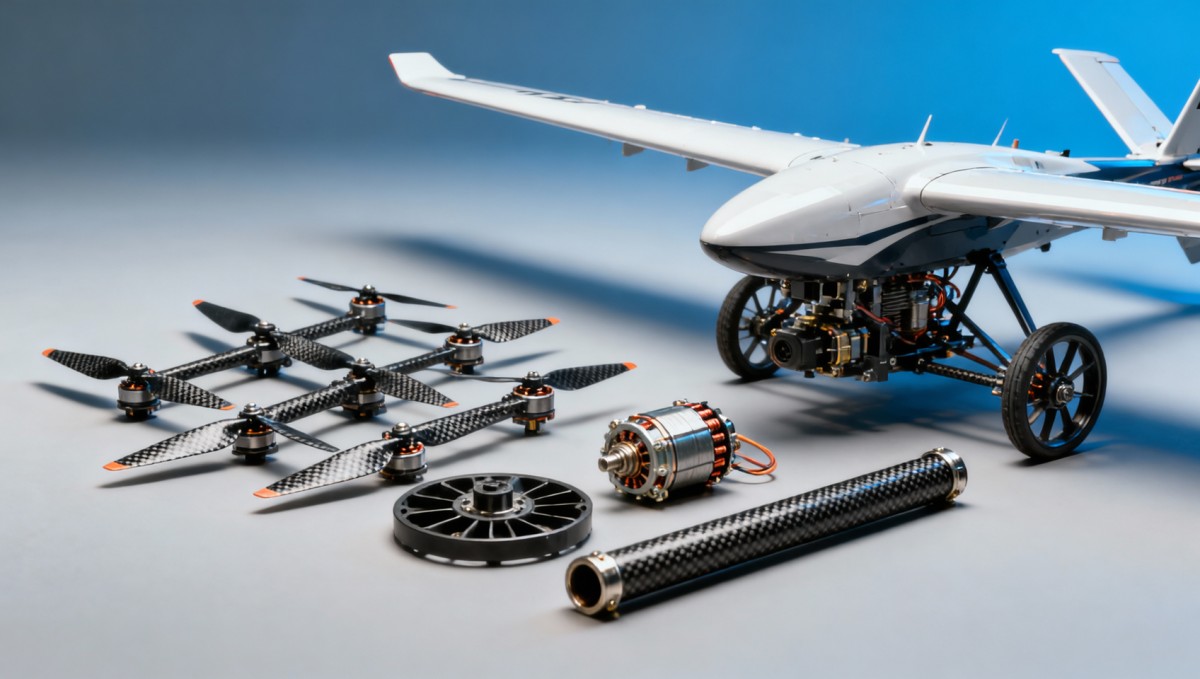
In UAV procurement, propellers are often treated as consumables. That view is expensive. A drone propeller manufacturer influences not only propulsion efficiency, but also motor loading, bearing wear, controller tuning stability, payload image quality, and structural fatigue across the airframe. In practical operations, a poorly balanced propeller can introduce vibration within minutes, while a poorly durable propeller may pass bench tests but degrade after repeated field cycles.
For information researchers and engineering teams, the central question is not whether balance is important or whether durability is important. The real question is which one limits mission success first in a specific use case. Mapping drones, agricultural UAVs, inspection platforms, and fixed-wing systems do not fail in the same way. A propeller optimized for peak responsiveness in a 10–20 minute flight profile may not be the right choice for 40–90 minute endurance missions.
This is where TSV’s data-first perspective is useful. Instead of relying on vague promises, procurement teams should compare measurable items: blade mass consistency, static and dynamic balance tolerance, edge impact resistance, hub stiffness, temperature behavior, and fatigue cycle stability. Parameters do not lie. If two suppliers offer the same diameter and pitch, but one cannot explain balancing method or fatigue validation range, they are not equivalent options.
Operators also feel this difference immediately. Better balance usually means lower vibration, cleaner sensor output, and less autopilot correction. Better durability usually means fewer unplanned swaps, less risk of crack growth, and more predictable maintenance intervals. The procurement challenge is to decide the acceptable trade window rather than chase a single “best” feature.
What balance actually changes in flight behavior
Balance affects the rotating system at several levels. First, mass imbalance changes radial loading on the motor shaft and bearings. Second, aerodynamic imbalance changes the force profile through every rotation. Third, vibration can propagate into arms, carbon fiber tube for aerospace structures, landing assemblies, and camera mounts. Over dozens of flights, that vibration may become a hidden cost driver.
Typical warning signs include unstable hover, blurred imagery, faster fastener loosening, and higher current spikes during throttle transitions. In heavy-lift systems, even a small deviation in blade consistency can become significant because rotational energy rises quickly with blade size and RPM. That is why a drone propeller manufacturer should disclose not only nominal dimensions, but also balancing controls and inspection methods.
What durability really means in procurement terms
Durability is not just “harder material.” It includes resistance to edge wear, hub deformation, repeated loading, moisture exposure, UV aging, and handling damage during transport or field replacement. In commercial UAV operations, propellers may be removed and installed many times across a 6–12 month service window. Poor hub durability can create fit issues long before the blade visibly fails.
A reliable manufacturer should be able to explain the expected use envelope: low-temperature brittleness risk, impact sensitivity, maximum continuous operating recommendation, and replacement triggers after visible nicks, delamination, or strike events. If a supplier cannot define these thresholds, procurement teams are left managing risk after purchase instead of before it.
- Balance protects system smoothness, sensor quality, and motor life.
- Durability protects service continuity, field safety, and replacement cost.
- The better supplier is usually the one that defines the tradeoff with test logic, not slogans.
How to compare a drone propeller manufacturer across real engineering criteria
Many buyers compare propellers by diameter, pitch, and price only. That is too narrow for B2B sourcing. A commercial UAV platform must evaluate manufacturing consistency, materials, verification method, and how the propeller interacts with neighboring systems such as motors, ESCs, and custom aerospace structural parts. The same blade can behave very differently on different mounting geometries or mission loads.
The table below outlines a practical comparison framework for teams screening a drone propeller manufacturer. It focuses on measurable procurement dimensions rather than marketing phrases, making it useful for researchers, operators, buyers, and enterprise decision-makers building a supplier shortlist in 2–4 weeks.
A strong supplier response is specific. A weak response uses generic language. When TSV evaluates hard-tech sourcing categories, the difference often appears here: disciplined suppliers define tolerances, process windows, and inspection nodes, while weaker suppliers repeat broad claims without linking them to acceptance criteria.
Three supplier signals that deserve extra attention
First, look for traceability across batches. If a propeller set changes material lot, tool condition, or curing profile, the supplier should be able to identify it. Second, ask whether the manufacturer understands platform-level integration. A vendor serving only hobby demand may not appreciate the relationship between propeller resonance and payload sensor drift. Third, check whether they can coordinate with adjacent components, including a fixed wing uav supplier or carbon structural partner.
This is especially important for procurement teams buying custom aerospace structural parts together with propulsion items. Structural stiffness, arm length, motor KV, and blade inertia form one system. Selecting each component in isolation often creates hidden tuning and maintenance costs later.
A short screening checklist
- Request dimensional, mass, and bore consistency information for at least 3 core checks.
- Ask how the supplier validates balance before shipment and after process change.
- Confirm recommended flight envelope, replacement interval logic, and strike inspection rules.
- Verify whether the manufacturer can support prototype, pilot batch, and recurring orders.
Balance vs durability by application: the right answer depends on the mission
The balance-versus-durability decision becomes clearer when tied to use case. A drone propeller manufacturer serving cinematic UAVs may prioritize low vibration and low acoustic disturbance. A manufacturer serving agricultural spraying platforms may prioritize impact tolerance, replacement practicality, and stable output under repetitive work cycles. The same material or blade profile does not suit every fleet.
Procurement teams should define the mission profile in 3 parts: average flight duration, environment severity, and payload sensitivity. A 15–25 minute urban inspection mission with stabilized optics has different priorities from a 30–60 minute mapping sortie or a repetitive field operation with dust, moisture, and frequent handling. Once the mission is clear, manufacturer evaluation becomes much more objective.
The following table helps users align propeller priorities with application needs. It also helps enterprise decision-makers avoid overbuying high-cost features that do not improve the actual mission outcome.
A common mistake is to assume that a more rigid or more durable propeller automatically performs better in all roles. In practice, extra stiffness may improve responsiveness but increase transmitted vibration if the platform is not tuned for it. Conversely, a more damage-tolerant blade may reduce replacement frequency but sacrifice precision in high-sensitivity imaging work. The right choice is mission-specific, not universal.
Where custom aerospace structural parts change the decision
If your UAV platform uses custom aerospace structural parts or carbon fiber tube for aerospace frames, structural stiffness can amplify or reduce how propeller behavior is felt by the system. A lighter arm may improve efficiency but shift resonance. A stiffer mount may preserve geometry but pass more vibration into avionics. That is why propeller sourcing should not be separated from frame and motor integration reviews.
For fixed-wing programs, the interaction becomes even more important. A fixed wing uav supplier should assess not only cruise efficiency, but also launch loads, throttle transition behavior, and propeller compatibility with mission payload power demand. In these cases, durability is not just a blade issue; it is a system reliability issue.
What procurement teams should ask before placing a trial order
A trial order is the moment when engineering theory meets supply-chain reality. Buyers should use this phase to reduce uncertainty in 4 areas: technical fit, quality consistency, delivery predictability, and post-delivery support. A drone propeller manufacturer that performs well in prototypes but struggles in repeated supply may still become a bottleneck for scale-up.
For many B2B programs, a practical validation path runs in 3 stages over roughly 2–6 weeks: sample review, bench verification, and controlled field deployment. Each stage should have acceptance logic. Without that structure, teams often make decisions based on one successful flight or one failed incident, neither of which is enough for supplier qualification.
Questions that uncover real manufacturing capability
- How do you control blade-to-blade mass variation and hub concentricity across batches?
- What environmental range is recommended for storage and operation, such as low temperature, high humidity, or dusty field conditions?
- What is the standard lead time for samples, pilot quantities, and recurring supply? In practice, buyers often compare windows like 7–15 days for samples and 3–6 weeks for production lots.
- Can you support joint review with adjacent suppliers, such as frame, motor, or fixed-wing integrators?
TSV’s broader hard-tech lens is valuable here because procurement rarely happens in isolation. In UAV and aerospace-adjacent sourcing, the propeller vendor, structural vendor, and system integrator all affect final performance. Teams that qualify components separately often spend longer in troubleshooting and revalidation. Teams that ask cross-component questions earlier usually reduce rework and supplier switching costs.
Minimum acceptance areas for a pilot batch
A sensible pilot batch review covers at least 5 checks: dimensional consistency, mounting fit, vibration behavior, visual durability after repeated cycles, and supply documentation clarity. If the application is payload-sensitive, add image or sensor quality review under hover, climb, and cruise conditions. If the mission involves long endurance, include thermal and post-flight inspection after repeated runs.
These checks do not require exaggerated laboratory claims. They require disciplined comparison under realistic mission conditions. That is consistent with TSV’s position: engineering truth comes from parameter-based evaluation and traceable benchmarks, not from unverified adjectives.
Common misconceptions, compliance context, and what a reliable partner should provide
One common misconception is that “carbon fiber” automatically means higher durability and better flight quality. Carbon-based blades can offer stiffness and weight advantages, but the final result depends on laminate design, hub reinforcement, manufacturing control, and impact behavior. Another misconception is that a propeller that performs well on one motor setup will transfer directly to another. Diameter and pitch alone do not guarantee safe compatibility.
Buyers should also understand that compliance in aerospace-adjacent supply chains is layered. The propeller itself may not carry a single universal certification path for every commercial UAV application, but the broader sourcing process may still require documentation discipline, material traceability, inspection records, and compatibility with quality-managed manufacturing environments. For programs involving custom aerospace structural parts, standards awareness becomes even more important.
FAQ for buyers and technical evaluators
How should I choose between a highly balanced propeller and a more damage-tolerant one?
Start with payload sensitivity and field conditions. If your platform carries imaging, mapping, or inspection sensors, prioritize balance and repeatability first. If your platform faces repetitive handling, debris exposure, or frequent blade changes, durability may take priority. In many fleets, the best answer is a controlled compromise validated over 10–20 representative missions rather than a single short test.
What lead time is typical when sourcing from a drone propeller manufacturer?
Lead time varies by tooling readiness, finishing process, and order size. In many industrial sourcing situations, samples may take 7–15 days, while pilot or production batches can range from 3–6 weeks. Buyers should confirm whether the quoted timeline includes balancing, inspection, packaging, and export preparation if cross-border supply is involved.
What documents are useful even when no special certification is claimed?
Useful documents include dimensional inspection records, material descriptions, batch identification, handling recommendations, and replacement guidance after impact or visible damage. For enterprise procurement, even basic traceability can make a major difference during failure analysis, warranty discussions, or future supplier audits.
Can propeller sourcing affect the choice of carbon fiber tube for aerospace frames or a fixed wing uav supplier?
Yes. Propeller stiffness, inertia, and vibration profile affect structural loading and tuning. If you are developing a new UAV platform, sourcing decisions for propellers, frame tubes, and fixed-wing assemblies should be reviewed together. This is especially important in endurance aircraft, precision mapping systems, and heavy-lift platforms where small integration errors can cascade into reliability problems.
Why work with a data-driven partner when evaluating suppliers
In hard-tech sourcing, the biggest risk is rarely a lack of options. It is excess noise. TechStat Vanguard focuses on engineering-grounded evaluation for advanced manufacturing and UAV supply chains, helping teams compare what matters: tolerances, fatigue logic, traceability depth, and platform compatibility. That approach is designed for researchers who need clarity, operators who need reliability, buyers who need defensible qualification, and decision-makers who need lower trial-and-error cost.
If you are assessing a drone propeller manufacturer, TSV can help structure the discussion around parameter confirmation, supplier comparison, pilot-batch evaluation, custom aerospace structural parts coordination, carbon fiber tube for aerospace compatibility, and fixed wing uav supplier alignment. This is not about adding more marketing claims to the process. It is about filtering them out.
You can engage around concrete topics: target thrust range, balance and durability tradeoff, sample plan, expected delivery window, documentation expectations, replacement policy logic, and integration concerns with motors, frames, or payloads. For procurement teams under schedule pressure, these early clarifications often save weeks of avoidable rework.
If your team needs a structured benchmark view before RFQ or supplier approval, contact TSV to discuss specification review, application matching, supplier shortlisting, sample support criteria, certification-related documentation expectations, and quotation communication priorities. In UAV procurement, the right decision starts when engineering data becomes the basis of trust.
Search News
Hot Articles
- Carbon Fiber StructuresHow to Specify Aerospace Carbon Fiber Assemblies for Lightweight, Load-Bearing PartsJul 11, 2026
- Machine VisionXiaomi, Alibaba DAMO Academy Drive Open-Source Robotics Model Ecosystem, Lowering Algorithm Development Barriers for Overseas SMEs Adopting Chinese Robotics SolutionsMar 30, 2026
- Cobots & ArmsShanxi 'AI+' Conference Showcases Embodied Intelligence with Multinational Buyer Engagement: Key Industry ImplicationsMar 30, 2026
Popular Tags
Recommended News
 Jul 11, 2026How to Specify Aerospace Carbon Fiber Assemblies for Lightweight, Load-Bearing PartsAerospace carbon fiber assemblies: learn how to specify laminate design, load data, joining methods, and inspection controls for lighter, reliable load-bearing aerospace parts.Elena Rostova (UAV Systems Researcher)
 Mar 30, 2026Xiaomi, Alibaba DAMO Academy Drive Open-Source Robotics Model Ecosystem, Lowering Algorithm Development Barriers for Overseas SMEs Adopting Chinese Robotics SolutionsXiaomi & Alibaba DAMO Academy's open-source robotics models lower algorithm barriers for global SMEs. Boost efficiency in manufacturing, logistics & smart retail with ROS 2 compatible solutions.TSV Data Lab
 Mar 30, 2026Shanxi 'AI+' Conference Showcases Embodied Intelligence with Multinational Buyer Engagement: Key Industry ImplicationsShanxi 'AI+' Conference highlights embodied intelligence with Tesla, Ubtech & Jiantao showcasing multimodal robotics. 40+ global buyers validated tech on-site, creating new B2B channels for industrial automation & AI solutions.Chen Wei (Automation Lead Engineer)
 Mar 30, 2026Zhongguancun Unveils 6G Integrated Sensing-Computing-Intelligence Platform to Empower Embodied Robots for Global Industrial ApplicationsZhongguancun's new 6G platform revolutionizes industrial robotics with <10ms latency, empowering global automotive, logistics & port automation. Discover how this tech boosts China's smart manufacturing exports.TSV Data Lab
 Mar 30, 2026Mech-Mind Tianjin Embodied Intelligence R&D and Production Base Goes Live, Cutting Delivery Time by 20%–30% for Global Customized AMR+Vision SolutionsMech-Mind's Tianjin AMR+Vision production base cuts delivery time by 20%-30% for欧美 & Latin American markets. Discover how this PLd-certified facility accelerates customized robotics solutions for smart manufacturing and logistics.Chen Wei (Automation Lead Engineer)
 Mar 30, 2026Boao Forum Reveals 'Co-evolution of Big and Small Brains' Trend in Humanoid Robots, China's Embodied Intelligence Accelerates Adaptation to Overseas Manufacturing Service ScenariosDiscover how China's humanoid robots, featuring 'Co-evolution of Big and Small Brains,' are revolutionizing global manufacturing. Learn about Embodied Tian Gong 3.0's ISO compliance and overseas deployment at Boao Forum 2026.Chen Wei (Automation Lead Engineer)
 Mar 30, 2026China Railway Industrial Secures Patent for Embodied Robotics in Material Handling, Boosting High-Precision Delivery Capabilities for Overseas Infrastructure and Manufacturing ProjectsChina Railway Industrial's new patent for embodied robotics in material handling boosts high-precision delivery for global infrastructure & manufacturing. Discover how this innovation enhances logistics accuracy in automotive, rail transit & EPC projects.Chen Wei (Automation Lead Engineer)
 Oct 15, 2026R&D Cost Reduction Services: How to Evaluate Fees, Savings, and ROIEvaluate R&D cost reduction services with confidence. Compare fees, verify savings, and calculate ROI without compromising performance. Discover how to choose a provider that delivers real value.Chen Wei (Automation Lead Engineer)
 Oct 14, 2026Drone Frame Composites: Carbon Fiber vs. Fiberglass for Weight and StiffnessExplore drone structural materials composites: compare carbon fiber and fiberglass for weight, stiffness, cost, and antenna compatibility. Find the right material for your drone frame.Elena Rostova (UAV Systems Researcher)
 Oct 13, 2026Smart Cameras vs. PC-Based Machine Vision: Which Fits High-Speed Inspection?This industrial product comparison for machine vision weighs smart cameras vs. PC-based systems on latency, throughput, and cost. Discover your best fit for high-speed inspection.TSV Data Lab
 Oct 12, 2026How to Verify RoHS Compliance in Industrial Sensing Systems Before DeploymentRoHS compliant sensing systems: learn how to verify materials, supplier declarations, testing, and configuration controls before industrial deployment.TSV Data Lab
 Oct 11, 2026How Procurement-Oriented Content Taxonomy Improves B2B Buying JourneysProcurement-oriented content taxonomy streamlines B2B buying journeys with clearer evidence, supplier comparisons, risk visibility, and faster approvals.TSV Data Lab
 Oct 10, 2026How to Select a Machine Performance Monitoring Platform for OEE and Downtime ReductionMachine performance monitoring platform selection guide: validate machine states, OEE data, downtime reasons, integrations, and scalability to reduce losses with confidence.TSV Data Lab
 Oct 08, 2026How to Machine Inconel 625 Blades Without Heat Cracks or Edge ChippingInconel 625 blade machining guide: prevent heat cracks, edge chipping, chatter, and work hardening with proven tooling, cooling, fixturing, and inspection strategies.Dr. Marcus Vance
 Oct 07, 2026How to Evaluate an HMI Panel Distributor for Industrial Automation ProjectsHMI panel distributor evaluation guide: verify technical compatibility, traceability, supply reliability, lifecycle support, and total cost for automation projects.Victor Lin (Chief Software Architect)
 Oct 06, 2026Navigation Fault Tolerance Standards for AMRs: What Safety Teams Must VerifyNavigation fault tolerance standards: learn what AMR safety teams must verify, from localization loss and sensor faults to stopping distance, safe restart, and site-specific validation.Chen Wei (Automation Lead Engineer)
 Oct 05, 2026Calculating Edge Computing Total Cost of Ownership Across Distributed SitesEdge computing ownership cost explained: calculate deployment, energy, connectivity, security, remote support, and refresh costs across distributed sites.TSV Data Lab
 Oct 04, 2026CAD/CAM Benchmarking in the GCC: What Manufacturers Should Ask a ConsultantCAD CAM benchmark consultant GCC guide: learn the key questions manufacturers should ask to validate post-processors, workflows, machine performance, and production risk.Victor Lin (Chief Software Architect)
 Oct 03, 2026Selecting Automotive Radar Sensor Modules for ADAS Range, Resolution, and IntegrationAutomotive radar sensor module selection guide for ADAS: compare range, resolution, field of view, latency, and integration to build safer, reliable vehicle systems.TSV Data Lab
 Oct 02, 2026How to Qualify Machined Parts Suppliers for Hard Tech ProgramsHard tech supply chain machined parts demand rigorous supplier qualification. Learn how to assess capability, traceability, quality controls, and delivery resilience.Dr. Marcus Vance
 Oct 01, 2026How to Select an Outdoor Security Radar Sensor for Perimeter Detection?Outdoor security radar sensor selection guide: compare range, accuracy, false-alarm control, integration, and field testing for reliable perimeter detection.TSV Data Lab
 Sep 30, 2026How to Evaluate Solid-State LiDAR Hardware for Outdoor Autonomous VehiclesSolid state LiDAR hardware evaluation guide for outdoor autonomous vehicles—compare range, point-cloud quality, environmental resilience, integration, and safety.TSV Data Lab
 Sep 29, 2026ISO 9283 Repeatability: How to Evaluate Cobot Positioning PerformanceISO 9283 cobot repeatability explained: learn how payload, reach, approach direction, and test conditions affect positioning performance and cell capability.Chen Wei (Automation Lead Engineer)
 Oct 14, 2026How tight can micro machining aerospace tolerances be in production?Micro machining aerospace tolerances can reach low-micron levels in production. Learn what controls repeatability, inspection confidence, and flight-critical quality.Dr. Marcus Vance























