
Why Carbon Fiber Tube Selection Fails in Aerospace
Publication Date
author
Why does carbon fiber tube selection fail so often in aerospace programs that demand certainty? The short answer is that failure rarely starts with the tube itself—it starts with a mismatch between mission requirements and the way teams define, compare, and validate structural performance. A tube that looks strong on a datasheet can still underperform in a UAV boom, payload support arm, antenna mast, or lightweight fuselage substructure if stiffness direction, fatigue behavior, bond compatibility, dimensional tolerance, or process consistency were misunderstood. For engineers, buyers, and technical leaders sourcing custom aerospace structural parts, the real risk is not simply buying the “wrong material,” but approving a part with the wrong assumptions behind it.
In aerospace, carbon fiber tubes are selected for high strength-to-weight ratio, corrosion resistance, and design flexibility. But these advantages only translate into reliable performance when the tube’s layup, resin system, manufacturing method, interface design, and quality controls match the actual load case and operational environment. This article explains why carbon fiber tube selection fails in aerospace, what technical signals are often missed during procurement, and how teams can make more defensible decisions before qualification costs escalate.
Why aerospace carbon fiber tube selection fails even when the datasheet looks acceptable
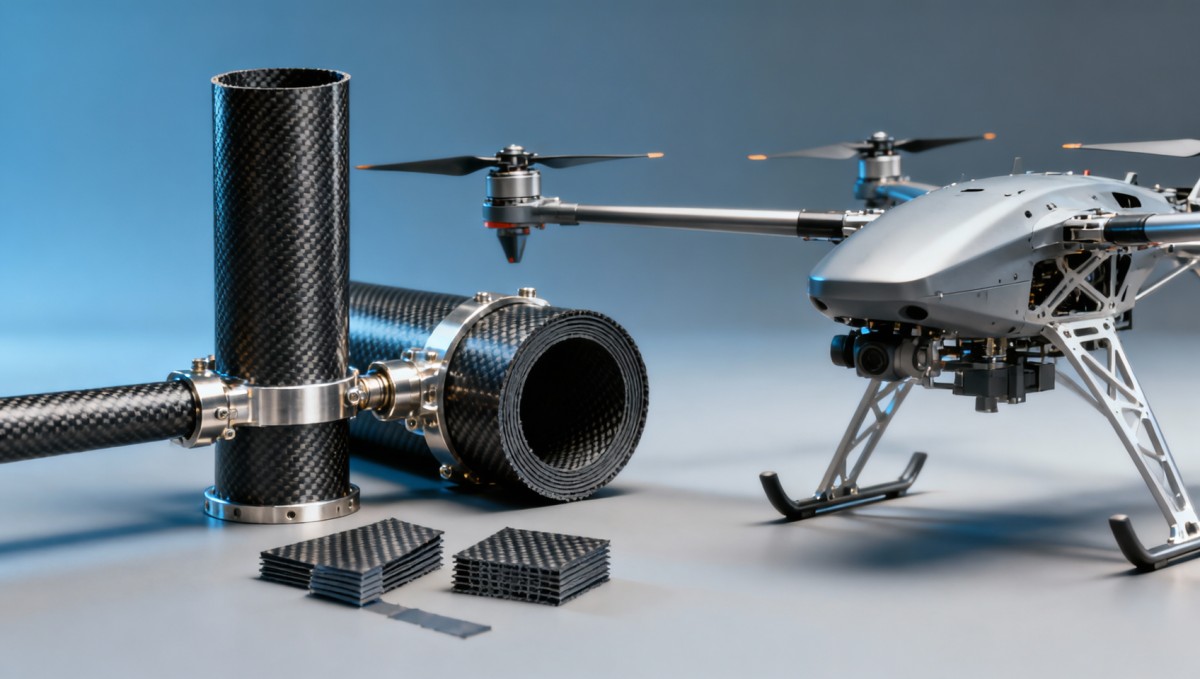
The most common cause of selection failure is simple: teams compare carbon fiber tubes as if they were standardized commodities. In reality, two tubes with similar outer diameter, wall thickness, and headline tensile strength can behave very differently in service. Aerospace applications expose this gap quickly because structures are rarely loaded in one ideal direction under one static condition.
Selection typically fails for five reasons:
- The load case is oversimplified. Buyers may focus on axial strength while the real application is governed by bending stiffness, torsion, local buckling, vibration, or impact.
- Fiber layup is not matched to the structure. A tube optimized for one-direction stiffness may be weak in off-axis loading or poor in torsional stability.
- Bonding and joining are treated as secondary issues. Many tube failures begin at inserts, clamps, adhesive joints, or drilled locations rather than in the tube body.
- Manufacturing variation is underestimated. Resin content, fiber volume fraction, voids, cure quality, and diameter consistency all affect repeatability.
- Qualification data is incomplete. Suppliers often provide promotional mechanical values but not enough application-specific evidence for aerospace decision-making.
In other words, aerospace tube selection fails when specification language is too generic and validation is too shallow. This is especially common in UAV platforms, lightweight support structures, and custom assemblies where teams move fast and assume “carbon fiber” itself guarantees performance.
What engineers, procurement teams, and decision-makers actually need to verify
If the goal is reliable aerospace sourcing, the key question is not “Is this tube high quality?” but “Is this tube engineered and controlled for our exact use case?” That changes what teams should ask for during evaluation.
For engineers and operators, the priority is structural fit. They need to know whether the tube can maintain stiffness, dimensional stability, and fatigue resistance under the true combination of loads. This includes:
- Axial, bending, and torsional stiffness values
- Layup orientation and ply architecture
- Fatigue performance under cyclic loading
- Buckling resistance for slender tube geometries
- Thermal stability and coefficient mismatch with joined materials
- Drillability, machinability, and edge integrity if post-processing is required
For procurement teams, the priority is supplier comparability and process control. A sourcing failure often happens because RFQs compare dimensions and price but not manufacturing discipline. Procurement should verify:
- Tube manufacturing method, such as roll-wrapped, pultruded, filament wound, or bladder molded
- Dimensional tolerance capability on outer diameter, inner diameter, straightness, concentricity, and wall thickness
- Batch consistency and inspection methods
- Traceability of raw fiber and resin systems
- Evidence of aerospace-adjacent quality systems or process documentation
For enterprise decision-makers, the priority is risk reduction. The wrong carbon fiber tube can trigger redesign loops, qualification delays, field failures, or payload instability that far outweigh unit-price savings. Leadership teams should care about total cost of validation, reliability margin, and supplier maturity—not just quoted part cost.
Where carbon fiber tube specifications usually go wrong
Many aerospace tube specifications are too short, too generic, or copied from previous projects with different load paths. This creates hidden ambiguity that suppliers fill with assumptions.
Common specification failures include:
- Calling out only basic dimensions. Diameter and wall thickness do not define structural behavior.
- Using tensile strength as the primary comparator. In many aerospace assemblies, stiffness, fatigue life, and connection integrity matter more.
- Ignoring anisotropy. Carbon fiber composites do not behave like isotropic metals. Direction matters.
- Leaving the resin system undefined. Resin choice affects temperature capability, toughness, moisture resistance, and bonding behavior.
- Not specifying tolerance priorities. A tube may meet average dimensions but still cause assembly instability if straightness or concentricity drifts.
- Omitting surface and interface requirements. Bond-ready surfaces, sanding conditions, peel ply preparation, or insert interfaces should not be assumed.
For example, a UAV boom may appear structurally sufficient in static testing, but if torsional stiffness is lower than expected, the aircraft can suffer from degraded control response, sensor vibration, or payload misalignment. The failure was not “material weakness” in a general sense—it was poor requirement definition.
How manufacturing method changes real aerospace performance
One of the most overlooked reasons carbon fiber tube selection fails in aerospace is that manufacturing route changes mechanical behavior, dimensional quality, and scalability.
Pultruded tubes can offer good axial properties and cost efficiency, but they may be less ideal when the application requires balanced multi-directional loading or custom local reinforcement.
Roll-wrapped tubes are often preferred for engineered layup control and better tuning of axial, hoop, and torsional properties. For aerospace structures, this can be critical when vibration, bending, and torsion interact.
Filament-wound tubes can provide strong hoop performance and good repeatability for certain geometries, but they must still be evaluated carefully for the exact load profile.
Molded or bladder-formed composite tubes may support more complex geometries, tighter integration features, or local reinforcement strategies, but process capability and tooling maturity become especially important.
The mistake many teams make is assuming the same nominal material can simply be transferred across processes. It cannot. Manufacturing method affects fiber alignment, resin distribution, void content, surface finish, and tolerance reliability. In aerospace, these differences can directly influence part qualification and in-service behavior.
Why joints, inserts, and interfaces cause more failures than the tube body
In many aerospace applications, the tube itself is not the first thing to fail. The real weakness is often where loads enter or exit the structure.
This is especially relevant in:
- Bonded end fittings
- Metal insert interfaces
- Clamped mounting points
- Fastener holes and local drilled features
- Telescoping or nested tube systems
Carbon fiber tubes are excellent at carrying load when the load path respects the laminate architecture. They become vulnerable when designers or buyers assume standard metal joining logic applies unchanged. Excessive clamp force can crush the laminate. Poor adhesive compatibility can cause debonding. Galvanic interaction with metals can create long-term durability issues. Local stress concentration around holes can trigger damage that is not obvious in basic inspection.
That is why aerospace carbon fiber tube selection should always include joint strategy review. A technically strong tube can still be a bad selection if it cannot be integrated safely into the assembly.
How to evaluate fatigue, tolerance, and environmental reliability before purchase
If a carbon fiber tube will be used in aerospace, teams should not rely solely on room-temperature static strength data. Real service conditions matter.
At minimum, evaluation should include these questions:
- Fatigue: Is there cyclic test data relevant to bending, torsion, or vibration exposure?
- Tolerance: What are the guaranteed limits for straightness, wall thickness, concentricity, and cut-length accuracy?
- Environmental durability: How do humidity, UV exposure, thermal cycling, or elevated temperature affect performance?
- Damage tolerance: What happens after minor impact, handling damage, or edge abrasion?
- Inspection: What NDT or QC methods are used—visual inspection, ultrasonic checks, dimensional metrology, batch coupons?
For procurement teams, the practical takeaway is that reliable aerospace sourcing depends on test relevance, not document volume. A long brochure with generic claims is less valuable than a compact data package tied to the actual use case.
A practical selection framework for custom aerospace structural parts
To avoid expensive carbon fiber tube selection mistakes, aerospace teams can use a more disciplined review process:
- Define the true load environment. Include axial, bending, torsion, vibration, shock, and thermal exposure.
- Identify failure-critical interfaces. Review inserts, bonds, clamps, and machined features early.
- Specify performance, not just dimensions. Call out stiffness, tolerance priorities, fatigue expectations, and environmental limits.
- Match manufacturing process to application. Do not compare dissimilar tube processes as direct equivalents.
- Request evidence of repeatability. Ask for batch consistency, QC methods, and real inspection capability.
- Validate with representative testing. Use coupon and assembly-level tests that reflect real load paths.
- Evaluate supplier engineering depth. The best supplier is not always the one with the lowest quote, but the one that can discuss laminate logic, tolerance risk, and interface design with precision.
This framework is especially useful for organizations sourcing custom carbon fiber tube solutions for UAV airframes, aerospace sensor mounts, lightweight robotic arms, and high-performance structural subassemblies. In these cases, procurement and engineering must work from the same technical baseline.
What a good supplier conversation should sound like
If a supplier only talks about “high strength,” “lightweight,” or “premium quality,” that is not enough for aerospace. A credible technical conversation should include questions such as:
- What layup options are available for our bending-to-torsion ratio?
- How does your tube perform under cyclic loading, not just static tension?
- What are your measured tolerances across production batches?
- How do you prepare surfaces for adhesive bonding?
- What is the recommended insert design to reduce local stress concentration?
- Which properties are tested directly, and which are estimated from material models?
The best suppliers welcome these questions because they understand aerospace risk. They respond with data, boundary conditions, and process specifics—not vague assurance.
Conclusion: aerospace success depends on engineered selection, not material hype
Carbon fiber tube selection fails in aerospace when teams treat composite structures like simple catalog parts. Most failures come from incorrect assumptions about load direction, layup behavior, joining, tolerance control, or long-term durability—not from carbon fiber being unsuitable. For aerospace engineers, buyers, operators, and executives, the right approach is to define the real structural requirement, interrogate the interface conditions, and demand evidence that matches the application rather than the marketing claim.
When selection is engineered around stiffness, fatigue, bonding, manufacturing consistency, and validation relevance, carbon fiber tubes can deliver exactly what aerospace programs need: lower mass, stable structural performance, and a clearer path to qualification. The lesson is straightforward: in aerospace, the best carbon fiber tube is not the one with the boldest datasheet—it is the one whose parameters, tolerances, and process controls are proven against the mission.
Search News
Hot Articles
- Carbon Fiber StructuresHow to Specify Aerospace Carbon Fiber Assemblies for Lightweight, Load-Bearing PartsJul 11, 2026
- Machine VisionXiaomi, Alibaba DAMO Academy Drive Open-Source Robotics Model Ecosystem, Lowering Algorithm Development Barriers for Overseas SMEs Adopting Chinese Robotics SolutionsMar 30, 2026
- Cobots & ArmsShanxi 'AI+' Conference Showcases Embodied Intelligence with Multinational Buyer Engagement: Key Industry ImplicationsMar 30, 2026
Popular Tags
Recommended News
 Jul 11, 2026How to Specify Aerospace Carbon Fiber Assemblies for Lightweight, Load-Bearing PartsAerospace carbon fiber assemblies: learn how to specify laminate design, load data, joining methods, and inspection controls for lighter, reliable load-bearing aerospace parts.Elena Rostova (UAV Systems Researcher)
 Mar 30, 2026Xiaomi, Alibaba DAMO Academy Drive Open-Source Robotics Model Ecosystem, Lowering Algorithm Development Barriers for Overseas SMEs Adopting Chinese Robotics SolutionsXiaomi & Alibaba DAMO Academy's open-source robotics models lower algorithm barriers for global SMEs. Boost efficiency in manufacturing, logistics & smart retail with ROS 2 compatible solutions.TSV Data Lab
 Mar 30, 2026Shanxi 'AI+' Conference Showcases Embodied Intelligence with Multinational Buyer Engagement: Key Industry ImplicationsShanxi 'AI+' Conference highlights embodied intelligence with Tesla, Ubtech & Jiantao showcasing multimodal robotics. 40+ global buyers validated tech on-site, creating new B2B channels for industrial automation & AI solutions.Chen Wei (Automation Lead Engineer)
 Mar 30, 2026Zhongguancun Unveils 6G Integrated Sensing-Computing-Intelligence Platform to Empower Embodied Robots for Global Industrial ApplicationsZhongguancun's new 6G platform revolutionizes industrial robotics with <10ms latency, empowering global automotive, logistics & port automation. Discover how this tech boosts China's smart manufacturing exports.TSV Data Lab
 Mar 30, 2026Mech-Mind Tianjin Embodied Intelligence R&D and Production Base Goes Live, Cutting Delivery Time by 20%–30% for Global Customized AMR+Vision SolutionsMech-Mind's Tianjin AMR+Vision production base cuts delivery time by 20%-30% for欧美 & Latin American markets. Discover how this PLd-certified facility accelerates customized robotics solutions for smart manufacturing and logistics.Chen Wei (Automation Lead Engineer)
 Mar 30, 2026Boao Forum Reveals 'Co-evolution of Big and Small Brains' Trend in Humanoid Robots, China's Embodied Intelligence Accelerates Adaptation to Overseas Manufacturing Service ScenariosDiscover how China's humanoid robots, featuring 'Co-evolution of Big and Small Brains,' are revolutionizing global manufacturing. Learn about Embodied Tian Gong 3.0's ISO compliance and overseas deployment at Boao Forum 2026.Chen Wei (Automation Lead Engineer)
 Mar 30, 2026China Railway Industrial Secures Patent for Embodied Robotics in Material Handling, Boosting High-Precision Delivery Capabilities for Overseas Infrastructure and Manufacturing ProjectsChina Railway Industrial's new patent for embodied robotics in material handling boosts high-precision delivery for global infrastructure & manufacturing. Discover how this innovation enhances logistics accuracy in automotive, rail transit & EPC projects.Chen Wei (Automation Lead Engineer)
 Oct 16, 2026Choosing a Rugged Edge AI Box Supplier: Thermal Tests and Lifecycle SupportChoose a rugged edge AI box supplier with proven thermal performance and reliable lifecycle support. Discover the tests and commitments to verify before you buy.TSV Data Lab
 Oct 15, 2026R&D Cost Reduction Services: How to Evaluate Fees, Savings, and ROIEvaluate R&D cost reduction services with confidence. Compare fees, verify savings, and calculate ROI without compromising performance. Discover how to choose a provider that delivers real value.Chen Wei (Automation Lead Engineer)
 Oct 15, 2026How Should You Compare TechStat Vanguard 5-Axis CNC Tolerances?TechStat Vanguard 5-axis CNC tolerance comparison: learn how to verify part accuracy, assess inspection evidence, and choose suppliers that reliably meet your drawing requirements.Dr. Marcus Vance
 Oct 14, 2026Drone Frame Composites: Carbon Fiber vs. Fiberglass for Weight and StiffnessExplore drone structural materials composites: compare carbon fiber and fiberglass for weight, stiffness, cost, and antenna compatibility. Find the right material for your drone frame.Elena Rostova (UAV Systems Researcher)
 Oct 13, 2026Smart Cameras vs. PC-Based Machine Vision: Which Fits High-Speed Inspection?This industrial product comparison for machine vision weighs smart cameras vs. PC-based systems on latency, throughput, and cost. Discover your best fit for high-speed inspection.TSV Data Lab
 Oct 12, 2026How to Verify RoHS Compliance in Industrial Sensing Systems Before DeploymentRoHS compliant sensing systems: learn how to verify materials, supplier declarations, testing, and configuration controls before industrial deployment.TSV Data Lab
 Oct 11, 2026How Procurement-Oriented Content Taxonomy Improves B2B Buying JourneysProcurement-oriented content taxonomy streamlines B2B buying journeys with clearer evidence, supplier comparisons, risk visibility, and faster approvals.TSV Data Lab
 Oct 10, 2026How to Select a Machine Performance Monitoring Platform for OEE and Downtime ReductionMachine performance monitoring platform selection guide: validate machine states, OEE data, downtime reasons, integrations, and scalability to reduce losses with confidence.TSV Data Lab
 Oct 08, 2026How to Machine Inconel 625 Blades Without Heat Cracks or Edge ChippingInconel 625 blade machining guide: prevent heat cracks, edge chipping, chatter, and work hardening with proven tooling, cooling, fixturing, and inspection strategies.Dr. Marcus Vance
 Oct 07, 2026How to Evaluate an HMI Panel Distributor for Industrial Automation ProjectsHMI panel distributor evaluation guide: verify technical compatibility, traceability, supply reliability, lifecycle support, and total cost for automation projects.Victor Lin (Chief Software Architect)
 Oct 06, 2026Navigation Fault Tolerance Standards for AMRs: What Safety Teams Must VerifyNavigation fault tolerance standards: learn what AMR safety teams must verify, from localization loss and sensor faults to stopping distance, safe restart, and site-specific validation.Chen Wei (Automation Lead Engineer)
 Oct 05, 2026Calculating Edge Computing Total Cost of Ownership Across Distributed SitesEdge computing ownership cost explained: calculate deployment, energy, connectivity, security, remote support, and refresh costs across distributed sites.TSV Data Lab
 Oct 04, 2026CAD/CAM Benchmarking in the GCC: What Manufacturers Should Ask a ConsultantCAD CAM benchmark consultant GCC guide: learn the key questions manufacturers should ask to validate post-processors, workflows, machine performance, and production risk.Victor Lin (Chief Software Architect)
 Oct 03, 2026Selecting Automotive Radar Sensor Modules for ADAS Range, Resolution, and IntegrationAutomotive radar sensor module selection guide for ADAS: compare range, resolution, field of view, latency, and integration to build safer, reliable vehicle systems.TSV Data Lab
 Oct 02, 2026How to Qualify Machined Parts Suppliers for Hard Tech ProgramsHard tech supply chain machined parts demand rigorous supplier qualification. Learn how to assess capability, traceability, quality controls, and delivery resilience.Dr. Marcus Vance
 Oct 01, 2026How to Select an Outdoor Security Radar Sensor for Perimeter Detection?Outdoor security radar sensor selection guide: compare range, accuracy, false-alarm control, integration, and field testing for reliable perimeter detection.TSV Data Lab
 Sep 30, 2026How to Evaluate Solid-State LiDAR Hardware for Outdoor Autonomous VehiclesSolid state LiDAR hardware evaluation guide for outdoor autonomous vehicles—compare range, point-cloud quality, environmental resilience, integration, and safety.TSV Data Lab























