
UAV ground control station wholesale: what to check first
Publication Date
author
Before evaluating any uav ground control station wholesale offer, buyers should verify the engineering basics that actually affect mission reliability, operator efficiency, and lifecycle cost. From interface stability and encrypted links to compatibility with vtol drone for pipeline inspection workflows and drone thermal camera resolution comparison needs, the right checklist helps procurement teams cut through marketing noise and make evidence-based sourcing decisions.
For research teams, pilots, procurement managers, and executive decision-makers, the challenge is rarely finding suppliers. The real challenge is separating presentation from measurable performance. In UAV operations, a weak ground control station can reduce situational awareness, delay field decisions, and increase mission interruption rates even when the airframe itself is well specified.
A wholesale purchase also creates longer-term exposure. Once an organization standardizes on 10, 20, or 50 stations across inspection, mapping, security, or emergency response programs, retraining, spare parts, software compatibility, and support responsiveness become procurement-critical. This article outlines what to check first so sourcing decisions stay anchored in engineering truth rather than generic marketing claims.
Start with mission profile, not catalog language
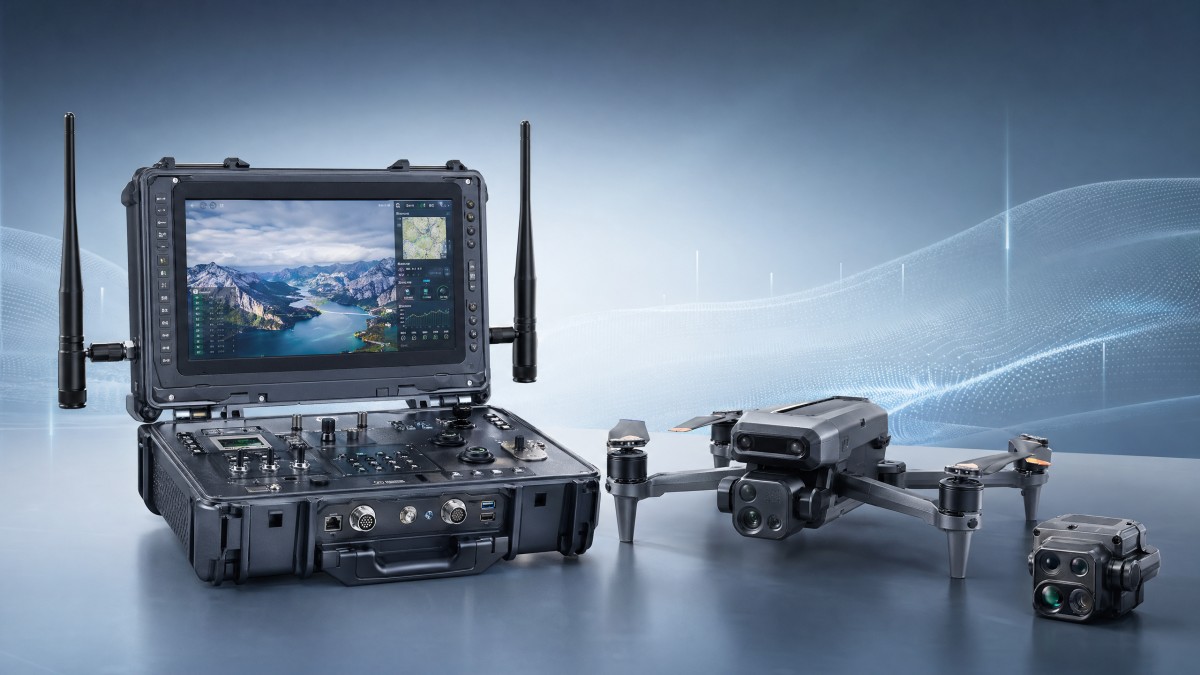
The first mistake in uav ground control station wholesale buying is evaluating stations as if they were universal. They are not. A console used for short-range agricultural spraying has different requirements from a station supporting a vtol drone for pipeline inspection over 30–80 km corridors, or a command unit used for thermal survey work where image interpretation speed matters more than screen brightness alone.
Before comparing vendors, define 4 basic mission variables: control range, payload data type, operator workload, and environmental exposure. For example, a two-person team flying 3 missions per day in mild conditions can tolerate a simpler setup than a field crew running 8-hour shifts in dust, vibration, and high-glare sunlight. These operating realities should shape the ground station specification from day one.
Decision-makers should also distinguish between tactical and strategic procurement. A low initial unit price may look attractive for a 5-unit pilot program, but the wrong ecosystem can create 12–24 months of integration friction when fleets expand. In practice, station selection should be tied to planned fleet growth, software stack continuity, and expected maintenance burden across the full lifecycle.
Map the mission to an operating checklist
A practical evaluation should begin with a short operating checklist rather than a product brochure. This prevents teams from overvaluing cosmetic features and undervaluing field reliability.
- Flight distance and link margin: define whether your real requirement is 5 km, 20 km, or beyond visual line of sight support under regulated conditions.
- Data workload: identify whether the station must handle RGB video only, or simultaneous telemetry, mapping layers, and thermal feeds.
- Deployment speed: note whether setup must be completed in under 10 minutes or whether a longer fixed-site installation is acceptable.
- Crew structure: clarify if one operator manages both flight and payload, or if dual-operator coordination is required.
- Power strategy: determine whether the station needs 2–4 hours of internal battery runtime or external AC/DC support for full-day missions.
The table below shows how mission type changes the “must-check-first” criteria in a wholesale decision. This helps procurement teams align technical review with operational use instead of generic product positioning.
The key takeaway is simple: “best” depends on mission architecture. If the supplier cannot discuss your workflow in technical terms within the first 15–30 minutes of qualification, that is already a warning sign for wholesale procurement.
Check the core engineering layer: hardware, links, and interface stability
Once the mission profile is defined, buyers should inspect the engineering layer that directly affects reliability. In many deployments, three issues account for most ground station dissatisfaction: unstable human-machine interface behavior, poor communication resilience, and under-specified environmental tolerance. These problems often remain hidden until field operations begin.
Screen performance is one example. Outdoor operations often require brightness in the 800–1500 nit range for acceptable readability, especially in midday inspection use. A station with an attractive UI but poor visibility can slow decision-making, increase operator fatigue, and force shade improvisation in the field. Touch response, glove usability, and button layout matter as much as raw screen size.
Communications must be reviewed beyond headline range claims. Ask for supported frequency bands, anti-interference strategies, failover behavior, and latency under realistic load. A system that performs well in a clean demo may behave very differently near industrial assets, substations, or congested RF environments. Buyers should request evidence of link stability during telemetry and payload data transmission at the same time.
Parameters that deserve early verification
The following baseline parameters are not universal standards, but they are useful screening points when evaluating uav ground control station wholesale offers across commercial fleets.
- Ingress protection target: commonly IP54 to IP65 for outdoor field handling, depending on dust and rain exposure.
- Operating temperature: typical commercial range is -10°C to 50°C, with harsher deployments needing wider tolerance.
- Internal battery runtime: often 2–6 hours, but all-day teams may require hot-swappable power or external packs.
- Video and telemetry latency: the lower the better, especially for inspection and response tasks where sub-second responsiveness improves control confidence.
- Redundancy behavior: define what happens after link drop, low battery, software freeze, or storage overflow.
Do not ignore ergonomic engineering
For operators, ergonomics are not secondary. A station used continuously for 4–8 hours should be evaluated for grip geometry, harness compatibility, shoulder load, heat dissipation, and one-handed access to emergency controls. Procurement teams that ignore ergonomics often pay later through longer training curves and higher operator rejection.
A grounded vendor discussion should include interface lock-up recovery time, boot sequence duration, and firmware rollback procedure. If a station needs 6–8 minutes to recover from a field crash, that may be acceptable for low-pressure surveying but unacceptable for asset inspection windows or emergency deployments.
Verify software compatibility, payload integration, and security controls
A ground control station is not only a control device. It is a software and data node. That means wholesale buyers must review mission planning logic, telemetry handling, payload integration, export pathways, and access control. In many fleets, software mismatch causes more downtime than hardware failure because it affects planning, execution, and reporting at once.
Compatibility is especially important when the station must support mixed UAV types, including multicopter and VTOL platforms. If your operation includes a vtol drone for pipeline inspection, verify how the station manages transition phases, route editing, geofence settings, lost-link behavior, and payload switching. These details determine whether the system supports repeatable corridor missions or creates workflow friction at scale.
Payload support is equally critical. Teams performing drone thermal camera resolution comparison need more than a video feed. They may need side-by-side metadata interpretation, palette control, timestamp consistency, storage integrity, and clean export into inspection or asset management systems. A ground station that cannot preserve this chain reduces the value of the airborne sensor.
A practical software and security review table
The table below highlights software and cyber-control checkpoints that should be discussed before price negotiations move too far. These items often determine whether deployment stays smooth after the first 30–90 days.
A supplier that answers these questions clearly is usually easier to qualify than one that redirects discussion to vague ecosystem benefits. For procurement teams, clarity on software control is often worth more than a small discount because integration costs can exceed initial hardware savings within the first year.
Evaluate wholesale readiness: support model, spares, and total lifecycle cost
Wholesale buying changes the evaluation logic. You are no longer selecting a single device for testing; you are selecting a support ecosystem. This means supplier readiness should be measured in lead time consistency, spare part availability, warranty scope, training resources, and after-sales escalation discipline. A station may be technically capable but commercially weak for scale deployment.
Ask for realistic delivery windows rather than optimistic promises. In many B2B hardware programs, standard lead times may fall in the 2–8 week range depending on configuration, battery transport rules, and software preload requirements. For larger orders, staged delivery can be safer than full-batch shipment because it allows early field validation before the entire rollout is locked in.
Support quality should be quantified as much as possible. Procurement teams should ask how quickly the vendor responds to critical faults, whether remote diagnostics are available, and what spare components are stocked regionally. For operational fleets, even a 72-hour delay on chargers, antennas, joysticks, or display modules can disrupt utilization plans and create hidden project costs.
Key lifecycle cost factors
The lowest quoted unit price rarely represents the lowest operating cost. Total lifecycle cost should include at least the following dimensions:
- Initial hardware package, including antennas, batteries, chargers, and transport cases.
- Software licensing structure, especially where annual renewal or feature unlocks apply after deployment.
- Operator training time, often 1–3 days for basic use and longer for mixed payload workflows.
- Maintenance cycle, including battery replacement intervals and field-wear consumables.
- Downtime cost when a failed station leaves an airframe idle or forces mission rescheduling.
Qualification questions for the supplier
A strong wholesale discussion should move beyond “Can you supply?” and into “Can you support repeatability?” Ask whether the vendor can provide serial traceability, acceptance testing records, software version control, and replacement part handling. These are not administrative extras. They are the foundation of a controllable UAV procurement program.
For executive buyers, the decision should also consider platform longevity. If the roadmap suggests product discontinuity in 12–18 months, expansion risk rises. A more stable supplier with slightly higher pricing may be the stronger strategic fit if it reduces retraining, requalification, and compatibility drift across the fleet.
Common procurement mistakes and a smarter first-pass buying process
Several recurring mistakes appear in uav ground control station wholesale projects. The first is treating demo performance as production performance. Controlled demonstrations rarely reproduce RF congestion, operator stress, weather glare, or back-to-back mission loading. The second is overvaluing the aircraft brand while under-evaluating the station that operators actually touch all day.
Another common error is checking compatibility at a superficial level. “Works with thermal camera” is not enough. Buyers should define exactly what that means: live preview, image capture control, metadata retention, synchronized logging, playback review, and export to existing reporting systems. If these details are not tested, deployment friction tends to appear after procurement is complete.
The safest approach is a phased qualification path. It is slower than buying on brochure confidence, but usually faster than correcting a poor fleet standard later. In practice, a 3-stage process reduces uncertainty without turning procurement into an endless pilot cycle.
Recommended first-pass buying process
- Define operational requirements in 1 concise matrix covering mission range, payload type, environment, operator model, and data export needs.
- Shortlist 2–4 suppliers and request engineering-level responses instead of sales summaries.
- Run a field-oriented validation over 1–2 representative missions, including thermal or VTOL workflow checks if relevant.
- Review support readiness, lead time, and replacement policy before negotiating unit pricing.
- Approve staged procurement with acceptance criteria for the first batch and clear feedback loops for scale-up.
FAQ: what buyers ask most often
How many units should be included in an initial wholesale order?
That depends on fleet maturity, but many organizations start with a pilot batch large enough to test standardization, often 3–10 units. This is usually enough to validate training consistency, support responsiveness, and integration with UAV workflows before committing to a larger rollout.
What matters most for pipeline inspection workflows?
For a vtol drone for pipeline inspection, focus first on route planning logic, transition management, long-range link quality, screen readability in field conditions, and reliable telemetry logging. Those factors affect corridor continuity and repeatable asset inspection more than cosmetic interface features.
How should thermal camera compatibility be checked?
Do not stop at live display confirmation. Test control response, file naming consistency, export path, palette options, timestamp integrity, and how easily operators can perform drone thermal camera resolution comparison during or after flight. The decision should be workflow-based, not checkbox-based.
A disciplined qualification process helps all stakeholders. Researchers gain cleaner technical data, operators get more reliable tools, procurement teams reduce avoidable rework, and executives improve confidence in fleet-scale investment decisions. That is the real value of checking the engineering basics first.
The strongest uav ground control station wholesale decision is rarely the one with the loudest product story. It is the one built on mission fit, measurable interface stability, secure communications, practical software compatibility, and supplier readiness over the next 12–36 months. If your team is comparing platforms for inspection, mapping, thermal analysis, or mixed UAV operations, a structured technical review will save time and reduce lifecycle risk.
TechStat Vanguard focuses on data-driven hard-tech evaluation for teams that need engineering clarity rather than marketing noise. If you want a more rigorous sourcing framework, tailored checklist, or deeper comparison of ground control station options for your UAV program, contact us now to discuss your use case, request a customized assessment, or learn more about practical procurement benchmarks.
Search News
Hot Articles
- Carbon Fiber StructuresHow to Specify Aerospace Carbon Fiber Assemblies for Lightweight, Load-Bearing PartsJul 11, 2026
- Machine VisionXiaomi, Alibaba DAMO Academy Drive Open-Source Robotics Model Ecosystem, Lowering Algorithm Development Barriers for Overseas SMEs Adopting Chinese Robotics SolutionsMar 30, 2026
- Cobots & ArmsShanxi 'AI+' Conference Showcases Embodied Intelligence with Multinational Buyer Engagement: Key Industry ImplicationsMar 30, 2026
Popular Tags
Recommended News
 Jul 11, 2026How to Specify Aerospace Carbon Fiber Assemblies for Lightweight, Load-Bearing PartsAerospace carbon fiber assemblies: learn how to specify laminate design, load data, joining methods, and inspection controls for lighter, reliable load-bearing aerospace parts.Elena Rostova (UAV Systems Researcher)
 Mar 30, 2026Xiaomi, Alibaba DAMO Academy Drive Open-Source Robotics Model Ecosystem, Lowering Algorithm Development Barriers for Overseas SMEs Adopting Chinese Robotics SolutionsXiaomi & Alibaba DAMO Academy's open-source robotics models lower algorithm barriers for global SMEs. Boost efficiency in manufacturing, logistics & smart retail with ROS 2 compatible solutions.TSV Data Lab
 Mar 30, 2026Shanxi 'AI+' Conference Showcases Embodied Intelligence with Multinational Buyer Engagement: Key Industry ImplicationsShanxi 'AI+' Conference highlights embodied intelligence with Tesla, Ubtech & Jiantao showcasing multimodal robotics. 40+ global buyers validated tech on-site, creating new B2B channels for industrial automation & AI solutions.Chen Wei (Automation Lead Engineer)
 Mar 30, 2026Zhongguancun Unveils 6G Integrated Sensing-Computing-Intelligence Platform to Empower Embodied Robots for Global Industrial ApplicationsZhongguancun's new 6G platform revolutionizes industrial robotics with <10ms latency, empowering global automotive, logistics & port automation. Discover how this tech boosts China's smart manufacturing exports.TSV Data Lab
 Mar 30, 2026Mech-Mind Tianjin Embodied Intelligence R&D and Production Base Goes Live, Cutting Delivery Time by 20%–30% for Global Customized AMR+Vision SolutionsMech-Mind's Tianjin AMR+Vision production base cuts delivery time by 20%-30% for欧美 & Latin American markets. Discover how this PLd-certified facility accelerates customized robotics solutions for smart manufacturing and logistics.Chen Wei (Automation Lead Engineer)
 Mar 30, 2026Boao Forum Reveals 'Co-evolution of Big and Small Brains' Trend in Humanoid Robots, China's Embodied Intelligence Accelerates Adaptation to Overseas Manufacturing Service ScenariosDiscover how China's humanoid robots, featuring 'Co-evolution of Big and Small Brains,' are revolutionizing global manufacturing. Learn about Embodied Tian Gong 3.0's ISO compliance and overseas deployment at Boao Forum 2026.Chen Wei (Automation Lead Engineer)
 Mar 30, 2026China Railway Industrial Secures Patent for Embodied Robotics in Material Handling, Boosting High-Precision Delivery Capabilities for Overseas Infrastructure and Manufacturing ProjectsChina Railway Industrial's new patent for embodied robotics in material handling boosts high-precision delivery for global infrastructure & manufacturing. Discover how this innovation enhances logistics accuracy in automotive, rail transit & EPC projects.Chen Wei (Automation Lead Engineer)
 Oct 26, 2026AMAXiMAL Releases Open-Source TopMod 3D v3 With Claude AIExplore AMAXiMAL’s free, open-source TopMod 3D v3 with Claude AI assistance, topology-based modeling and plywood fabrication tools that connect complex designs to physical builds.Dr. Marcus Vance
 Oct 26, 2026Choosing a SCADA System Integrator Company: PLC Compatibility and Long-Term SupportChoose a scada system integrator company with proven PLC compatibility and reliable long-term support. Discover what to test, compare, and require before investing.Victor Lin (Chief Software Architect)
 Oct 25, 2026Hesai Leads Global ADAS Main Lidar Shipments in Yole’s 2026 ReportHesai led global ADAS main lidar shipments with a 43% share in 2025, according to Yole’s 2026 report. Explore what this ranking reveals about its automotive market position.TSV Data Lab
 Oct 25, 2026Choosing an Aerospace Materials Manufacturer: Quality and Traceability ChecksChoosing an aerospace materials manufacturer? Learn how to verify certifications, test reports, and lot traceability to qualify suppliers confidently and reduce costly sourcing risks.Dr. Marcus Vance
 Oct 24, 2026Guotai Haitong: Global Entry-Level 3D Printer Shipments Rose 39% in Q1 2026Entry-level 3D printer shipments rose 39% in Q1 2026, Guotai Haitong reports. Explore how AI, multicolor printing and print farms are shaping market growth.Dr. Marcus Vance
 Oct 24, 2026Choosing an Industrial Vision Inspection Supplier: Acceptance Tests That MatterChoose an industrial vision inspection supplier with confidence. Discover acceptance tests for defect detection, false rejects, production speed, and reliable part rejection before you buy.TSV Data Lab
 Oct 23, 2026US Navy Raises Gecko Robotics Contract Ceiling to $300M for Robotic Fleet MaintenanceUS Navy raises Gecko Robotics’ contract ceiling to $300M for Pacific Fleet robotic inspections. Explore potential opportunities for maintenance suppliers and key procurement considerations.Chen Wei (Automation Lead Engineer)
 Oct 23, 2026Choosing Industrial Sensing Systems for Global Plants: Protocol CompatibilityCompare industrial sensing systems international buyers can trust. Explore protocol compatibility, reduce integration risks, and select proven configurations for reliable global plant deployments.TSV Data Lab
 Oct 22, 2026KUKA Showcases Physical AI and iiQKA.AI Vision at NVIDIA GTC BerlinExplore KUKA’s Physical AI showcase at NVIDIA GTC Berlin and discover how iiQKA.AI Vision aims to simplify robotic vision integration and improve 2D and 3D scene recognition.TSV Data Lab
 Oct 22, 2026Robotic Machining of Advanced Composites: What Tolerances Are Achievable?Explore advanced materials machining robotics: discover what drives achievable composite tolerances and how to validate accuracy before investing in your next machining system.Dr. Marcus Vance
 Oct 21, 2026China’s Industrial Robot Exports Near RMB 10 Billion in First Nine Months of 2026China’s industrial robot exports neared RMB 10 billion in January–September 2026, with value rising faster than volume. Explore the data and what it could mean for suppliers.Chen Wei (Automation Lead Engineer)
 Oct 21, 2026Low-Latency Industrial Data Processing: Pricing and Key Cost DriversExplore industrial data latency price drivers, from edge hardware to integration and support. Learn how to compare quotes, verify performance, and avoid unnecessary costs.TSV Data Lab
 Oct 20, 2026KUKA Launches iiQKA.AI Vision to Simplify Industrial Image ProcessingKUKA iiQKA.AI Vision simplifies industrial image processing with controller-based 2D and 3D vision. Explore drag-and-drop setup for vision-guided automation.TSV Data Lab
 Oct 20, 2026Smart Industrial Edge Devices: Key Criteria for Legacy PLC IntegrationChoose smart industrial edge devices for legacy PLC integration. Discover key criteria for compatibility, data quality, security, and reliable collection without disrupting control.TSV Data Lab
 Oct 19, 2026Choosing a Radar Sensor by Application: Range, Resolution, and Field of ViewSimplify radar sensor application based product selection. Compare range, resolution, and field of view to avoid blind spots and choose with confidence. Explore the guide.TSV Data Lab
 Oct 18, 2026Comparing Material Options for Procurement: Specs, Costs, and Supply RisksExplore procurement oriented technical content on material options, specs, costs, and supply risks. Compare alternatives to cut hidden expenses and make confident sourcing decisions.Dr. Marcus Vance
 Oct 17, 20265-Axis CNC Positioning Accuracy: How to Interpret ISO 230-2 Test ResultsAssess 5 axis CNC machining positioning accuracy with ISO 230-2. Learn to interpret repeatability, reversal error, and test conditions to compare suppliers and make confident acceptance decisions.Dr. Marcus Vance























