Flight Controller Latency Benchmark: How Much Delay Is Too Much?
Publication Date
author
In UAV performance engineering, a flight controller latency benchmark is more than a spec—it directly shapes stability, safety, and operator confidence. For teams comparing a heavy lift uav for construction, a mapping drone for mining industry, or validating a drone electromagnetic interference test, the real question is simple: how much delay is too much? This introduction explores measurable latency thresholds, field impacts, and the data-driven criteria buyers and engineers should use before deployment.
What does flight controller latency actually include in a real UAV stack?
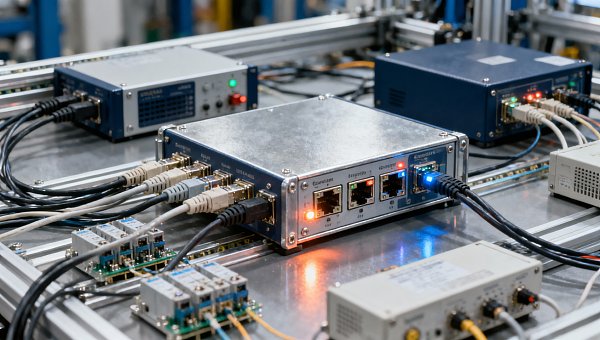
[[IMG:img_01]]A useful flight controller latency benchmark starts by separating total delay into its real components. In practice, latency is not one number. It is the sum of sensor acquisition time, filtering, estimator update rate, control loop execution, ESC command transfer, motor response, and sometimes telemetry or companion-computer overhead. If procurement teams compare only a brochure claim such as “fast response,” they miss the engineering truth that matters in the field.
For operators, the difference between 8 ms and 25 ms may feel small on paper, yet it becomes visible during gust rejection, waypoint correction, precision hover, and payload stabilization. For enterprise decision-makers, that delay directly affects mission risk. A mapping drone for mining industry may tolerate moderate delay in calm, repetitive flight paths, while a heavy lift uav for construction carrying unstable loads will expose every weakness in the control loop within the first few minutes of operation.
TechStat Vanguard approaches this issue the same way engineering teams should: by filtering out marketing vocabulary and forcing all discussion back to measurable parameters. The key question is not whether a controller is “advanced,” but whether its end-to-end delay remains predictable across 3 core conditions: nominal flight, high vibration, and electromagnetic disturbance. Repeatability matters as much as average speed.
In most commercial UAV evaluations, engineers should distinguish between control loop latency and pilot link latency. A controller may run internal loops at 250 Hz, 400 Hz, or 1 kHz, but the effective closed-loop response still depends on the slowest segment in the chain. That is why a clean benchmark always documents update rate, jitter, sensor fusion delay, and the test environment over at least 3 to 5 repeated runs.
The delay sources buyers often overlook
Many sourcing teams focus on processor class or firmware brand and ignore system integration. In reality, latency often rises because of poor IMU isolation, overloaded CAN or UART buses, low-quality power regulation, or filtering settings that are too conservative for the aircraft mass. A control board that performs well on a 2 kg quadrotor may not behave the same way on a 25 kg platform with long arms and structural resonance.
- Sensor delay: IMU sampling, barometer smoothing, GNSS update intervals, and magnetometer filtering can add several milliseconds before the controller even computes an output.
- Computation delay: estimator and PID or model-based control loops vary by CPU load, logging settings, and companion computer tasks.
- Actuation delay: ESC protocol, motor inertia, propeller size, and payload mass determine how quickly thrust changes become real motion.
- Interference-related delay: in a drone electromagnetic interference test, packet retries, sensor corruption, and control-loop filtering may increase effective latency and jitter together.
A practical benchmark range for initial screening
The table below gives a practical screening framework for UAV teams. These values are not universal pass-fail rules, but they are useful starting points for comparing flight controller latency benchmark results across common enterprise applications.
The key takeaway is that “too much delay” depends on aircraft class and mission profile. However, once delay climbs beyond roughly 20 ms, the burden of proof shifts to the supplier. Buyers should ask for evidence from integrated system tests, not isolated bench screenshots.
How much delay is too much in different UAV mission scenarios?
A single flight controller latency benchmark cannot serve every operation. UAV control tolerance changes with airframe mass, thrust reserve, payload instability, and environmental disturbance. For that reason, information researchers and technical buyers should evaluate delay by mission type rather than by generic category labels. A controller acceptable for agriculture is not automatically suitable for construction lift or mining survey near electromagnetic noise sources.
For a heavy lift uav for construction, delay becomes critical because the payload can amplify oscillation and slow recovery. Suspended tools, inspection devices, or material carriers create pendulum effects. In this class, low average latency alone is not enough. Teams should care about latency consistency over 10 to 20 minute duty cycles and under mass changes from empty to full load. Even moderate delay spikes can trigger visible sway and larger pilot correction demands.
A mapping drone for mining industry faces a different challenge. Straight flight lines and automated waypoint execution may reduce stick sensitivity, but positioning quality still depends on timely control corrections. When flying near haul roads, conveyors, substations, or metallic infrastructure, control delay and heading instability may degrade overlap consistency and image quality. The result is not always a crash; often it is a costly remapping mission 1 to 3 days later.
EMI-sensitive environments introduce another layer. A drone electromagnetic interference test should not ask only whether the aircraft loses link. It should also measure whether control delay increases under radio exposure, power-line proximity, or onboard payload emissions. Some systems remain airborne but exhibit subtle command lag, yaw drift, or estimator hesitation, which is enough to compromise mission assurance.
Scenario-based latency judgment
The following comparison helps teams interpret what “too much” means in field use, not only in a lab. It is especially useful during prequalification when several suppliers provide incomplete benchmark language.
This scenario view prevents a common procurement mistake: rejecting a capable controller because its raw benchmark is not class-leading, or approving a risky controller because its average number looks attractive. Mission fit matters more than a single headline figure.
Three warning signs that latency is already too high
- The aircraft needs large, repeated corrections after small disturbances, especially during hover or precision positioning within 1–2 meters of obstacles or structures.
- Payload stabilization degrades as mission time increases, suggesting that thermal load, CPU utilization, or bus saturation is changing the effective control loop.
- EMI, vibration, or logging activation produces visibly different handling even when nominal flight specs remain unchanged.
Which benchmark methods give procurement teams useful evidence?
A flight controller latency benchmark is only valuable if the test method is traceable. Buyers should request whether delay was measured on a bench, in hardware-in-the-loop simulation, or in actual flight. A bench test may isolate computation delay well, but it cannot reveal motor inertia, propeller loading, or vibration-coupled filtering effects. In enterprise sourcing, the best practice is to combine at least 3 layers of evidence before approval.
The first layer is signal-path measurement. Engineers check sensor timestamp to controller output timestamp, often across 100 to 1,000 cycles, and examine average delay plus jitter. The second layer is actuation response, where controller output is matched to measurable motor or attitude change. The third layer is mission-level performance: hover variance, disturbance recovery, and path tracking under realistic payload and environmental loads.
For a drone electromagnetic interference test, the benchmark should include a before-and-after comparison under controlled exposure conditions. Even if no certification-grade chamber is available, structured field tests near known emitters can still show whether delay shifts by 2 ms, 5 ms, or more. What matters is disciplined repetition, consistent configuration, and documented ambient conditions. Without that, latency claims become anecdotal.
TSV’s engineering perspective is especially relevant here: parameters must be interpreted as systems behavior, not isolated component sales claims. A controller that looks efficient in a lab can underperform once high-current payloads, edge AI modules, or mixed-protocol sensors share the same power and communication stack. Procurement teams should benchmark the aircraft they plan to fly, not an idealized reference build.
A practical 4-step validation workflow
- Define the mission envelope: aircraft mass, payload range, wind tolerance, flight duration, EMI exposure, and acceptable control margin.
- Measure base latency: collect nominal data at standard operating voltage and thermal state for at least 3 repeat sessions.
- Stress the system: add logging, payload power draw, vibration, and electromagnetic disturbance to observe delay drift and jitter growth.
- Link results to procurement criteria: compare benchmark output against mission risk, training burden, maintenance load, and supplier transparency.
What evidence should a supplier be able to provide?
A credible supplier does not need to claim perfection. They do need to show structured engineering data. For example, they should explain loop frequency, sensor configuration, ESC protocol, payload test conditions, and whether the benchmark reflects a bare flight stack or a full operational aircraft. If results are available across 2 to 4 payload classes or multiple propeller sets, the value for procurement rises significantly because system sensitivity becomes visible.
Teams should also ask whether firmware updates affect latency behavior. In many cases, software revisions improve features but change CPU load, filter timing, or logging overhead. A benchmark older than 6 to 12 months may no longer represent current field behavior. That is particularly important for fleets planning phased deployment across several quarters.
How should operators and buyers select a controller when latency is a deciding factor?
Selection should begin with risk ranking, not with price ranking. The operational and financial impact of excess delay can be much larger than the initial hardware delta. A controller that saves a modest amount upfront but increases pilot workload, retuning effort, or reflight frequency may cost more over a 12 to 24 month ownership period. This is why latency benchmark review belongs in both technical qualification and procurement approval.
For users and operators, the most important question is handling confidence. Can the aircraft maintain stable hover, return to track quickly, and respond consistently at different battery states? For procurement teams, the question is repeatable evidence. Is the benchmark documented under defined conditions? For enterprise leaders, the question is deployment risk. Will the selected platform reduce field interruptions, retraining, and supplier disputes?
Latency should also be weighed against adjacent system properties. Some platforms offer slightly higher control delay but stronger EMI resilience, cleaner power architecture, or better maintenance access. Others deliver impressive raw loop speed but weak system transparency. For B2B decision-making, a robust and well-documented 12–18 ms system may be a better investment than an opaque “ultra-fast” platform with unknown jitter behavior.
The right purchase process usually includes 5 checkpoints: benchmark traceability, mission fit, environmental robustness, integration burden, and lifecycle support. If any one of these remains unclear, delay-related risk remains hidden. That is exactly where many industrial UAV projects lose time and budget during commissioning.
Procurement checklist for flight controller latency benchmark review
Use the table below during supplier comparison meetings or technical clarification rounds. It converts a complex control topic into a structured buying framework.
This checklist helps teams avoid a common trap: purchasing for headline responsiveness instead of operationally verified responsiveness. The best sourcing outcome comes from combining benchmark data with mission trials and supplier disclosure quality.
Common selection mistakes
- Treating pilot radio latency and internal controller latency as the same metric.
- Approving a platform without testing full payload mass and real propeller combinations.
- Ignoring EMI exposure until after field deployment near substations, cranes, or dense industrial assets.
- Comparing loop frequency claims without reviewing total closed-loop delay and jitter.
FAQ: what do teams still get wrong about delay, stability, and procurement risk?
Because flight controller latency benchmark language is often simplified in the market, buyers and operators tend to ask the wrong questions. The answers below address the issues that most often affect field outcomes, qualification speed, and supplier selection confidence.
Is lower latency always better?
Not automatically. Very low latency can be beneficial, but only when the control system remains stable, noise handling is appropriate, and actuation hardware can respond cleanly. A system tuned too aggressively may react fast yet oscillate under vibration or payload shifts. In industrial procurement, the target is usually the best stable delay range for the mission, not the lowest standalone number.
Can a mapping drone for mining industry tolerate higher delay than a heavy lift UAV for construction?
Often yes, but with limits. Mapping missions may tolerate moderate delay during steady autonomous flight, especially in open areas and mild wind. However, if the site includes metallic infrastructure, blast vibration, or frequent crosswind correction, the acceptable margin narrows. A heavy lift uav for construction generally has less tolerance because suspended loads and close-proximity work increase the cost of slow recovery.
What should a drone electromagnetic interference test include if latency is a concern?
At minimum, teams should compare baseline and disturbed conditions using the same aircraft configuration, payload power state, and firmware version. Measure control delay, jitter, heading behavior, estimator confidence, and any failsafe or sensor fallback events. If exposure cannot be tightly controlled, repeat the test over at least 3 sessions and document environmental variables clearly so the result still supports engineering decisions.
How long does a credible latency validation process usually take?
For a straightforward platform, initial screening can often be completed in 7–15 days if test tools and aircraft access are ready. For enterprise deployment involving multiple payloads, EMI review, and comparative supplier analysis, 2–4 weeks is more realistic. Rushing this phase may save days upfront but often extends retuning, requalification, or supplier clarification later.
Why work with TSV when latency data must support procurement and deployment decisions?
TSV was built for teams that need engineering-grade clarity, not brochure language. In UAV and aerospace metrics, that means translating a flight controller latency benchmark into usable procurement intelligence: what the number includes, what test conditions shaped it, where it breaks down, and how it affects real missions such as construction lift, mining mapping, and interference-prone inspection work.
Our value is not generic commentary. It is structured technical filtering. We help engineering teams, sourcing managers, and business leaders compare parameters that actually govern field success: latency range, jitter behavior, environmental stability, payload sensitivity, and benchmark transparency. That approach reduces trial-and-error cost and shortens supplier qualification cycles when projects cannot afford vague answers.
If your team is reviewing a heavy lift uav for construction, a mapping drone for mining industry, or planning a drone electromagnetic interference test, TSV can support the decision process with benchmark interpretation, evaluation criteria, and specification guidance. We can help clarify which latency thresholds are acceptable, what validation steps are missing, and which supplier claims deserve deeper scrutiny.
Contact TSV to discuss parameter confirmation, flight controller latency benchmark review, platform selection logic, validation workflow, delivery timing assumptions, customization constraints, certification-related questions, sample evaluation planning, or quotation-stage technical clarification. In hard-tech procurement, confidence should come from data, and that is exactly where our work begins.
Search News
Hot Articles
- Carbon Fiber StructuresHow to Specify Aerospace Carbon Fiber Assemblies for Lightweight, Load-Bearing PartsJul 11, 2026
- Machine VisionXiaomi, Alibaba DAMO Academy Drive Open-Source Robotics Model Ecosystem, Lowering Algorithm Development Barriers for Overseas SMEs Adopting Chinese Robotics SolutionsMar 30, 2026
- Cobots & ArmsShanxi 'AI+' Conference Showcases Embodied Intelligence with Multinational Buyer Engagement: Key Industry ImplicationsMar 30, 2026
Popular Tags
Recommended News
 Jul 11, 2026How to Specify Aerospace Carbon Fiber Assemblies for Lightweight, Load-Bearing PartsAerospace carbon fiber assemblies: learn how to specify laminate design, load data, joining methods, and inspection controls for lighter, reliable load-bearing aerospace parts.Elena Rostova (UAV Systems Researcher)
 Mar 30, 2026Xiaomi, Alibaba DAMO Academy Drive Open-Source Robotics Model Ecosystem, Lowering Algorithm Development Barriers for Overseas SMEs Adopting Chinese Robotics SolutionsXiaomi & Alibaba DAMO Academy's open-source robotics models lower algorithm barriers for global SMEs. Boost efficiency in manufacturing, logistics & smart retail with ROS 2 compatible solutions.TSV Data Lab
 Mar 30, 2026Shanxi 'AI+' Conference Showcases Embodied Intelligence with Multinational Buyer Engagement: Key Industry ImplicationsShanxi 'AI+' Conference highlights embodied intelligence with Tesla, Ubtech & Jiantao showcasing multimodal robotics. 40+ global buyers validated tech on-site, creating new B2B channels for industrial automation & AI solutions.Chen Wei (Automation Lead Engineer)
 Mar 30, 2026Zhongguancun Unveils 6G Integrated Sensing-Computing-Intelligence Platform to Empower Embodied Robots for Global Industrial ApplicationsZhongguancun's new 6G platform revolutionizes industrial robotics with <10ms latency, empowering global automotive, logistics & port automation. Discover how this tech boosts China's smart manufacturing exports.TSV Data Lab
 Mar 30, 2026Mech-Mind Tianjin Embodied Intelligence R&D and Production Base Goes Live, Cutting Delivery Time by 20%–30% for Global Customized AMR+Vision SolutionsMech-Mind's Tianjin AMR+Vision production base cuts delivery time by 20%-30% for欧美 & Latin American markets. Discover how this PLd-certified facility accelerates customized robotics solutions for smart manufacturing and logistics.Chen Wei (Automation Lead Engineer)
 Mar 30, 2026Boao Forum Reveals 'Co-evolution of Big and Small Brains' Trend in Humanoid Robots, China's Embodied Intelligence Accelerates Adaptation to Overseas Manufacturing Service ScenariosDiscover how China's humanoid robots, featuring 'Co-evolution of Big and Small Brains,' are revolutionizing global manufacturing. Learn about Embodied Tian Gong 3.0's ISO compliance and overseas deployment at Boao Forum 2026.Chen Wei (Automation Lead Engineer)
 Mar 30, 2026China Railway Industrial Secures Patent for Embodied Robotics in Material Handling, Boosting High-Precision Delivery Capabilities for Overseas Infrastructure and Manufacturing ProjectsChina Railway Industrial's new patent for embodied robotics in material handling boosts high-precision delivery for global infrastructure & manufacturing. Discover how this innovation enhances logistics accuracy in automotive, rail transit & EPC projects.Chen Wei (Automation Lead Engineer)
 Oct 22, 2026KUKA Showcases Physical AI and iiQKA.AI Vision at NVIDIA GTC BerlinExplore KUKA’s Physical AI showcase at NVIDIA GTC Berlin and discover how iiQKA.AI Vision aims to simplify robotic vision integration and improve 2D and 3D scene recognition.TSV Data Lab
 Oct 22, 2026Robotic Machining of Advanced Composites: What Tolerances Are Achievable?Explore advanced materials machining robotics: discover what drives achievable composite tolerances and how to validate accuracy before investing in your next machining system.Dr. Marcus Vance
 Oct 21, 2026China’s Industrial Robot Exports Near RMB 10 Billion in First Nine Months of 2026China’s industrial robot exports neared RMB 10 billion in January–September 2026, with value rising faster than volume. Explore the data and what it could mean for suppliers.Chen Wei (Automation Lead Engineer)
 Oct 21, 2026Low-Latency Industrial Data Processing: Pricing and Key Cost DriversExplore industrial data latency price drivers, from edge hardware to integration and support. Learn how to compare quotes, verify performance, and avoid unnecessary costs.TSV Data Lab
 Oct 20, 2026KUKA Launches iiQKA.AI Vision to Simplify Industrial Image ProcessingKUKA iiQKA.AI Vision simplifies industrial image processing with controller-based 2D and 3D vision. Explore drag-and-drop setup for vision-guided automation.TSV Data Lab
 Oct 20, 2026Smart Industrial Edge Devices: Key Criteria for Legacy PLC IntegrationChoose smart industrial edge devices for legacy PLC integration. Discover key criteria for compatibility, data quality, security, and reliable collection without disrupting control.TSV Data Lab
 Oct 19, 2026Choosing a Radar Sensor by Application: Range, Resolution, and Field of ViewSimplify radar sensor application based product selection. Compare range, resolution, and field of view to avoid blind spots and choose with confidence. Explore the guide.TSV Data Lab
 Oct 18, 2026Comparing Material Options for Procurement: Specs, Costs, and Supply RisksExplore procurement oriented technical content on material options, specs, costs, and supply risks. Compare alternatives to cut hidden expenses and make confident sourcing decisions.Dr. Marcus Vance
 Oct 17, 20265-Axis CNC Positioning Accuracy: How to Interpret ISO 230-2 Test ResultsAssess 5 axis CNC machining positioning accuracy with ISO 230-2. Learn to interpret repeatability, reversal error, and test conditions to compare suppliers and make confident acceptance decisions.Dr. Marcus Vance
 Oct 16, 2026Choosing a Rugged Edge AI Box Supplier: Thermal Tests and Lifecycle SupportChoose a rugged edge AI box supplier with proven thermal performance and reliable lifecycle support. Discover the tests and commitments to verify before you buy.TSV Data Lab
 Oct 15, 2026R&D Cost Reduction Services: How to Evaluate Fees, Savings, and ROIEvaluate R&D cost reduction services with confidence. Compare fees, verify savings, and calculate ROI without compromising performance. Discover how to choose a provider that delivers real value.Chen Wei (Automation Lead Engineer)
 Oct 22, 2026How Do You Test AMR Navigation Accuracy in a Warehouse?Test AMR navigation accuracy in warehouses with practical methods for localization, path tracking, and docking. Learn to set tolerances and compare robots before deployment.Chen Wei (Automation Lead Engineer)
 Oct 21, 2026How Should You Balance Cobot Payload Against Reach?Explore cobot payload versus reach to choose the right robot. Learn how tooling, load limits, workspace, and cycle time affect performance—and avoid costly selection mistakes.Chen Wei (Automation Lead Engineer)
 Oct 20, 2026How Do You Measure Industrial IoT Gateway Latency Under Load?Measure industrial IoT gateway latency under load with reliable timestamps, realistic traffic, and tail-latency analysis. Discover how to expose bottlenecks and choose the right gateway.TSV Data Lab
 Oct 19, 2026How Do You Verify That Precision Machined Parts Meet Tolerances?Master precision machining tolerance verification with the right tools, datum setups, and acceptance rules. Learn how to validate parts confidently and reduce costly inspection errors.Dr. Marcus Vance
 Oct 18, 2026What Should an AS9100 Machining Supplier Checklist Include?Build an AS9100 machining supplier checklist that verifies capability, traceability, inspection, and outsourced processes. Discover what to check before approving your next aerospace supplier.Dr. Marcus Vance
 Oct 17, 2026How Should You Interpret Industrial Robot Repeatability Specs?Decode industrial robot repeatability specifications, understand ISO 9283 test conditions, and avoid costly selection mistakes. Learn how to verify performance for your process.Chen Wei (Automation Lead Engineer)