Trampoline park equipment choices that shape daily capacity
Publication Date
author
Choosing the right trampoline park equipment directly influences daily capacity, guest flow, maintenance cycles, and long-term profitability. For business decision-makers, the question is not only which attractions look appealing, but which configurations support higher throughput, safer operations, and better space efficiency. This article examines the equipment choices that most strongly affect how many visitors your park can serve each day.
For operators, investors, and procurement teams, daily capacity is not a marketing concept. It is a measurable output shaped by layout efficiency, bounce cycle time, supervision ratios, queue management, maintenance downtime, and the mix of attractions installed on the floor. In practice, the same building footprint can produce very different attendance ceilings depending on how trampoline park equipment is specified.
A data-first approach is especially important in a category where visual appeal can distract from operational reality. A foam pit that photographs well may slow turnover. A high-impact attraction may attract attention but require longer resets, higher staffing, or stricter age segmentation. Decision-makers need equipment choices that support throughput per hour, predictable service intervals, and safe multi-user circulation.
How Equipment Mix Determines Daily Capacity
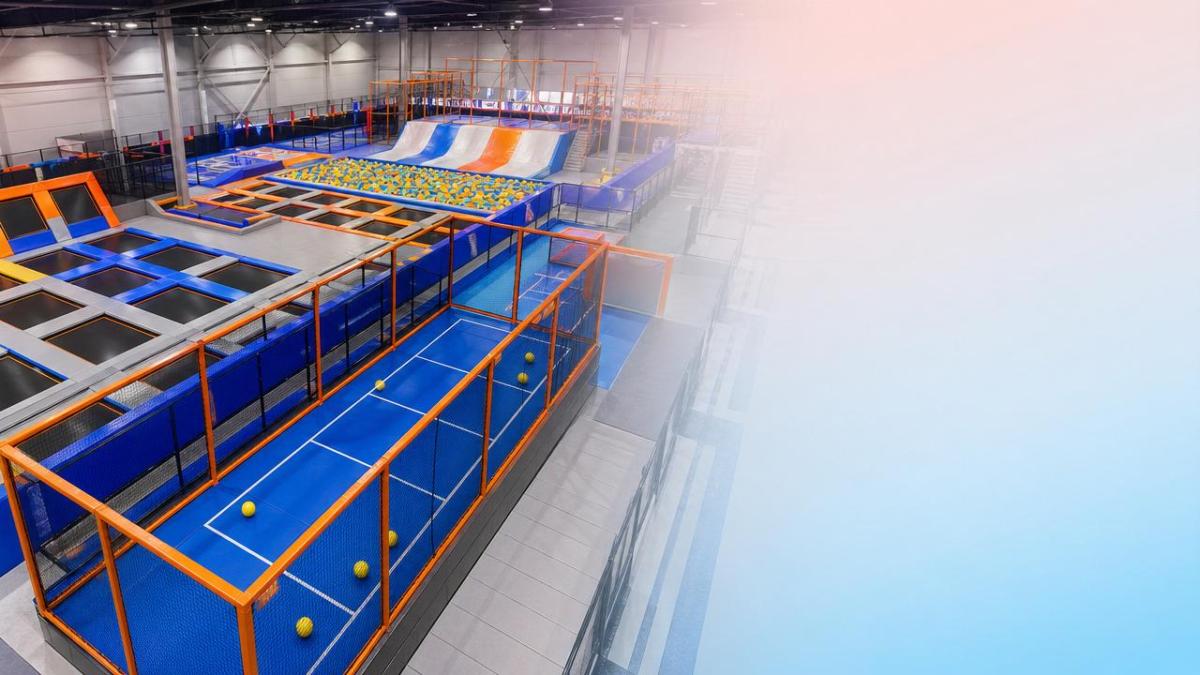
The first capacity question is simple: how many guests can each zone process per 10-minute, 30-minute, and 60-minute period without creating unsafe density? In most indoor parks, daily output depends less on total square footage alone and more on how trampoline park equipment is distributed between high-throughput zones, skill-based zones, and dwell-heavy attractions.
As a practical rule, a park targeting family traffic, group bookings, and weekend peak utilization should prioritize zones with short cycle times and broad age accessibility. Equipment that supports continuous flow can often outperform more complex attractions that deliver excitement but reduce guest turnover by 15% to 30% during peak blocks.
Core Throughput Drivers on the Park Floor
Capacity is affected by at least 4 interlocking variables: usable jump area, participant turnover speed, supervision requirement, and reset or interruption frequency. If one attraction requires 2 staff members, a 3-minute safety briefing, and staggered use, it may consume premium floor space while serving fewer guests per hour than a standard jump court.
- Open jump courts usually provide the highest throughput per square meter.
- Dodgeball zones add strong group appeal but require session coordination.
- Ninja or challenge elements improve ticket value perception but often slow movement.
- Airbag landings and performance lanes appeal to older users but need tighter supervision.
Why Open Courts Often Anchor Capacity
Standard interconnected trampoline beds remain the base layer of efficient park design because they support continuous use, low instruction time, and broad participation. In many operating models, an open court can absorb fluctuating demand across age groups with fewer stoppages than specialized equipment. That flexibility matters most during 2 peak windows: weekends and school holiday sessions.
By contrast, highly specialized installations may increase average ticket value but reduce total guest handling if they create bottlenecks. For example, a single-feature attraction with 1-at-a-time use can cap hourly throughput even if it has strong novelty value. The right answer is rarely to eliminate such features, but to limit their floor share and place them strategically.
The table below compares common trampoline park equipment types from a capacity planning perspective rather than a pure entertainment perspective.
The main takeaway is that not all popular attractions contribute equally to daily attendance capacity. High-visibility equipment should be balanced against high-volume equipment. A commercially sound mix often gives 50% to 70% of active floor allocation to flexible, repeat-use zones and reserves the remainder for differentiated features that improve customer appeal and dwell value.
Capacity Loss Often Comes from Circulation, Not Just Equipment Count
Many procurement teams focus on how many attractions can fit inside a site, but circulation efficiency is equally important. Poor transitions between check-in, shoe storage, briefing areas, spectator paths, and jump zones can reduce usable participation time by 10 to 20 minutes per session. That directly lowers the number of guests served in a day, especially if the operating model runs 60-minute or 90-minute ticket slots.
Equipment selection should therefore support visible sightlines, clean queue entry points, and low-conflict traffic paths. Corner-mounted challenge units, dead-end lanes, and attractions that spill users into main walkways often create hidden inefficiencies. In throughput planning, layout and equipment must be evaluated together rather than as separate procurement decisions.
Which Trampoline Park Equipment Choices Improve Space Efficiency
Space efficiency is the ratio between occupied floor area and productive guest use. For a decision-maker, this means asking whether each square meter contributes to revenue-generating activity, guest circulation, or mandatory safety buffering. The strongest trampoline park equipment plans improve all 3 without overcommitting to attractions that look large but process too few users.
A practical planning range is to separate floor allocation into 3 categories: active attractions, safety/runoff areas, and support circulation. If support and dead space grow above roughly 30% to 35% of the guest zone, the site may struggle to achieve strong peak throughput even with solid attendance demand.
Choosing Between Modular and Custom Installations
Modular systems can reduce design lead times and simplify maintenance part replacement. Custom installations may improve fit in irregular buildings and help operators create a differentiated brand experience. From a capacity standpoint, the best choice depends on whether the building has clean geometry or structural constraints such as columns, mezzanines, or nonuniform ceiling heights.
In a simple rectangular site, modular trampoline park equipment can often deliver faster implementation within 6 to 10 weeks for production and shipment planning, while also enabling predictable zone sizing. In a complex footprint, custom configuration may recover 5% to 12% more usable activity area by building around obstacles rather than leaving awkward gaps.
When Vertical Design Affects Throughput
Ceiling clearance influences which attractions are viable and how safely users can interact with them. Performance walls, elevated obstacles, and jump-to-airbag features require more than visual planning; they affect supervision lines, insurance considerations, and age segmentation. If the ceiling limits what can be installed, forcing a high-vertical feature into the plan may reduce both safety margin and operational capacity.
Decision-makers should model at least 3 scenarios: a family-volume layout, a mixed-volume layout, and a premium-experience layout. Comparing these scenarios helps quantify whether a visually ambitious feature set actually produces more revenue per day than a simpler but higher-throughput arrangement.
The following table outlines how common configuration decisions affect floor efficiency and usable daily throughput.
This comparison shows that efficient trampoline park equipment planning is not about maximizing the number of attraction types. It is about ensuring that every installed zone has a clear operational role: volume generation, premium differentiation, age segmentation, or event programming. When roles are mixed carelessly, capacity drops and staffing pressure rises.
Maintenance, Safety Downtime, and Staffing Ratios
Daily capacity is never just a function of guest demand. It is also limited by inspection intervals, component wear, cleaning routines, and the number of trained staff required to supervise different zones. Two parks with similar attendance potential can produce very different daily volumes if one loses 60 to 90 minutes of effective capacity to resets, closures, or understaffed operations.
This is why procurement teams should evaluate trampoline park equipment not only by installation price, but also by maintenance burden per week, expected wear points, replacement part availability, and downtime risk during peak trading periods. A lower initial cost can become expensive if the park must repeatedly close key attractions for unscheduled maintenance.
Equipment Categories with Higher Maintenance Demands
High-contact, high-impact, and high-complexity attractions usually need more frequent inspection. Foam pits require deeper hygiene management. Obstacle-based features can involve multiple connection points, pads, or moving elements. Performance lanes may experience concentrated wear because users repeatedly target the same takeoff areas. These patterns should be built into procurement scoring.
- Daily pre-opening checks commonly cover pads, springs, surfaces, frame exposure, and net integrity.
- Weekly checks often include connection hardware, anchor stability, and wear concentration points.
- Monthly review cycles may involve deeper component assessment and replacement forecasting.
Staffing Ratio as a Hidden Capacity Variable
Some trampoline park equipment can operate effectively with broad visual supervision, while other zones require closer intervention because of user behavior, landing risk, or queue conflict. If one attraction increases staffing needs from 1 supervisor per zone to 2 or more during peak periods, its true operating cost rises and its contribution to net capacity may fall.
For many parks, the most scalable layouts are those that allow one staff member to monitor multiple adjacent activity areas with clear sightlines. Poor visibility can create operational fragmentation even if the installed equipment itself is well built. Procurement and layout review should therefore include a supervision map, not just a product list.
A Practical 5-Point Procurement Checklist
- Measure throughput per zone, not just total attraction count.
- Estimate peak-hour staffing needs for each attraction type.
- Review routine maintenance frequency and typical wear components.
- Check whether the equipment supports future reconfiguration or expansion.
- Compare how each zone affects queue time, safety briefing time, and guest rotation.
Using this checklist helps decision-makers compare suppliers and layouts on operational merit. It also aligns with a more disciplined procurement philosophy: parameters matter, and performance should be evaluated where it affects the business most—capacity, safety continuity, and predictable operating cost.
How to Build a Capacity-Oriented Equipment Strategy
A strong strategy starts with customer mix. A park designed for birthday parties and family sessions will prioritize different trampoline park equipment than a site aimed at teens, fitness programming, or corporate events. Capacity planning should begin with the top 3 revenue segments the business expects to serve over the first 12 to 24 months.
Once demand segments are clear, operators can map them against session length, average group size, and peak density periods. For example, a family-focused park may benefit from shorter-flow, high-accessibility zones, while a premium urban site may accept lower raw throughput in exchange for higher spend per visit. The key is to make that tradeoff explicit before procurement begins.
Recommended Decision Sequence
- Define target attendance by weekday, weekend, and holiday periods.
- Set zone roles: volume anchor, premium feature, party attraction, or age-specific area.
- Calculate expected throughput per zone in 60-minute operating blocks.
- Stress-test staffing, cleaning, and maintenance assumptions.
- Choose trampoline park equipment that supports both launch capacity and future optimization.
Common Procurement Mistakes to Avoid
One common mistake is overinvesting in novelty features before establishing a reliable throughput base. Another is treating supplier drawings as final capacity proof without modeling guest movement. A third is underestimating the effect of maintenance and staffing on actual daily output. In all 3 cases, the problem is the same: buying attractions without fully measuring operating consequences.
The most resilient parks usually combine a dependable core of high-volume equipment with a limited number of differentiated attractions that support branding and upsell opportunities. That balance protects revenue during peak periods while still giving the venue a distinct market position.
Choosing trampoline park equipment should therefore be treated as an operational engineering decision, not only a design or entertainment decision. The right mix improves guest flow, reduces avoidable downtime, supports safer supervision, and enables more visitors to use the facility each day without compromising experience quality.
For business decision-makers, the best procurement outcomes come from translating attraction ideas into measurable capacity logic: zone turnover, staffing ratio, maintenance interval, and space efficiency. If you are evaluating layouts, comparing suppliers, or planning a new venue, now is the time to request a capacity-oriented equipment review, obtain a tailored configuration proposal, and discuss which solutions best match your traffic model and commercial goals.
Search News
Hot Articles
- Carbon Fiber StructuresHow to Specify Aerospace Carbon Fiber Assemblies for Lightweight, Load-Bearing PartsJul 11, 2026
- Machine VisionXiaomi, Alibaba DAMO Academy Drive Open-Source Robotics Model Ecosystem, Lowering Algorithm Development Barriers for Overseas SMEs Adopting Chinese Robotics SolutionsMar 30, 2026
- Cobots & ArmsShanxi 'AI+' Conference Showcases Embodied Intelligence with Multinational Buyer Engagement: Key Industry ImplicationsMar 30, 2026
Popular Tags
Recommended News
 Jul 11, 2026How to Specify Aerospace Carbon Fiber Assemblies for Lightweight, Load-Bearing PartsAerospace carbon fiber assemblies: learn how to specify laminate design, load data, joining methods, and inspection controls for lighter, reliable load-bearing aerospace parts.Elena Rostova (UAV Systems Researcher)
 Mar 30, 2026Xiaomi, Alibaba DAMO Academy Drive Open-Source Robotics Model Ecosystem, Lowering Algorithm Development Barriers for Overseas SMEs Adopting Chinese Robotics SolutionsXiaomi & Alibaba DAMO Academy's open-source robotics models lower algorithm barriers for global SMEs. Boost efficiency in manufacturing, logistics & smart retail with ROS 2 compatible solutions.TSV Data Lab
 Mar 30, 2026Shanxi 'AI+' Conference Showcases Embodied Intelligence with Multinational Buyer Engagement: Key Industry ImplicationsShanxi 'AI+' Conference highlights embodied intelligence with Tesla, Ubtech & Jiantao showcasing multimodal robotics. 40+ global buyers validated tech on-site, creating new B2B channels for industrial automation & AI solutions.Chen Wei (Automation Lead Engineer)
 Mar 30, 2026Zhongguancun Unveils 6G Integrated Sensing-Computing-Intelligence Platform to Empower Embodied Robots for Global Industrial ApplicationsZhongguancun's new 6G platform revolutionizes industrial robotics with <10ms latency, empowering global automotive, logistics & port automation. Discover how this tech boosts China's smart manufacturing exports.TSV Data Lab
 Mar 30, 2026Mech-Mind Tianjin Embodied Intelligence R&D and Production Base Goes Live, Cutting Delivery Time by 20%–30% for Global Customized AMR+Vision SolutionsMech-Mind's Tianjin AMR+Vision production base cuts delivery time by 20%-30% for欧美 & Latin American markets. Discover how this PLd-certified facility accelerates customized robotics solutions for smart manufacturing and logistics.Chen Wei (Automation Lead Engineer)
 Mar 30, 2026Boao Forum Reveals 'Co-evolution of Big and Small Brains' Trend in Humanoid Robots, China's Embodied Intelligence Accelerates Adaptation to Overseas Manufacturing Service ScenariosDiscover how China's humanoid robots, featuring 'Co-evolution of Big and Small Brains,' are revolutionizing global manufacturing. Learn about Embodied Tian Gong 3.0's ISO compliance and overseas deployment at Boao Forum 2026.Chen Wei (Automation Lead Engineer)
 Mar 30, 2026China Railway Industrial Secures Patent for Embodied Robotics in Material Handling, Boosting High-Precision Delivery Capabilities for Overseas Infrastructure and Manufacturing ProjectsChina Railway Industrial's new patent for embodied robotics in material handling boosts high-precision delivery for global infrastructure & manufacturing. Discover how this innovation enhances logistics accuracy in automotive, rail transit & EPC projects.Chen Wei (Automation Lead Engineer)
 Sep 28, 2026Spindle Runout Measurement in Germany: DIN Standards, Methods, and Acceptance LimitsSpindle runout measurement Germany: explore DIN standards, proven methods, acceptance limits, and audit-ready practices for reliable machining quality.Dr. Marcus Vance
 Sep 27, 2026How to Select Wall-Mount Edge Devices for Space-Constrained Factory NetworksWall mount edge devices for space-constrained factories: evaluate workload, thermal design, power resilience, cable access, and network reliability for smarter deployments.TSV Data Lab
 Sep 26, 2026Machining Tolerance Analysis: How to Set Limits That Meet Function and Cost TargetsMachining tolerance analysis: learn how to set functional limits, control tolerance stacks, reduce inspection risk, and balance precision with production cost.Dr. Marcus Vance
 Sep 25, 2026How to Evaluate an Industrial Infrastructure Data Platform for Multi-Site OperationsIndustrial infrastructure data platform evaluation guide for multi-site operations: compare data quality, edge resilience, interoperability, governance, and scalable proof-of-value criteria.Victor Lin (Chief Software Architect)
 Sep 24, 2026How to Select Machine Vision Optics for Accurate Inspection at Different Working DistancesMachine vision optics selection guide for accurate inspection at every working distance. Compare FOV, pixel scale, DOF, distortion, lighting, and telecentric options.TSV Data Lab
 Sep 23, 2026How to Evaluate a Machine Vision System Integrator for High-Speed Inspection LinesChoose a machine vision system integrator with proven expertise in high-speed inspection, reliable reject timing, robust optics, and measurable acceptance criteria.TSV Data Lab
 Sep 28, 2026When is a SCADA API the right choice for connecting plant systems?SCADA API guide: learn when governed plant data integration improves traceability, security, and scalability—without compromising real-time control.Victor Lin (Chief Software Architect)
 Sep 27, 2026How SCADA data integration improves traceability across production linesSCADA data integration connects production-line data to improve traceability, accelerate quality investigations, and strengthen safety decisions.Victor Lin (Chief Software Architect)
 Sep 26, 2026What to define before starting SCADA integration planningSCADA integration planning starts with clear scope, control boundaries, data models, cybersecurity, and testing. Discover the definitions that reduce risk and costly rework.Victor Lin (Chief Software Architect)
 Sep 25, 2026How a smart factory with Industrial IoT reduces production blind spotsDiscover how a smart factory with Industrial IoT turns real-time machine, quality, and workflow data into actionable insights that reduce production blind spots and delivery risks.Victor Lin (Chief Software Architect)
 Sep 24, 2026When does Industrial IoT make smart manufacturing easier to scale?Smart manufacturing Industrial IoT scales when trusted data, interoperable systems, and secure workflows turn connected assets into measurable gains.TSV Data Lab
 Sep 23, 2026What drives ultra-precision machining cost at 1-micron tolerance?Ultra precision machining cost per part at 1 micron tolerance depends on process, material, metrology, and yield. Learn how to compare quotes confidently.Dr. Marcus Vance
 Sep 22, 2026Drone Engine-T550CC Applications: Build the UAV Power System Around the MissionAn application guide for Drone Engine-T550CC integration, covering payload planning, airframe matching, cooling, fuel, vibration, test procedures, documentation, and service preparation.Elena Rostova (UAV Systems Researcher)
 Sep 22, 2026How to Evaluate Industrial Edge Computing Vendors for Factory DeploymentIndustrial edge computing vendor evaluation guide for factories: compare latency, protocol fit, reliability, security, and lifecycle support before deployment.TSV Data Lab
 Sep 21, 2026Drone Payload Integration: Matching Power, Data, and Center of Gravity for Reliable FlightsDrone payload integration made practical: balance power, data, center of gravity, and endurance to build safer, more reliable mission-ready flights.Elena Rostova (UAV Systems Researcher)
 Sep 20, 2026Autonomous Navigation Pricing: Cost Drivers and Budget Benchmarks for AMR ProjectsAutonomous navigation price explained: compare AMR cost drivers, software, sensors, integration, safety, and lifecycle budgets to build a scalable project plan.Chen Wei (Automation Lead Engineer)
 Sep 19, 2026How to Scope Automation Integration Services for Multi-System Factory ProjectsAutomation integration services: learn how to scope multi-system factory projects with clear workflows, interface contracts, safety boundaries, and acceptance criteria.Victor Lin (Chief Software Architect)