Dynamic navigation failures in AGV AMR systems often start small
Publication Date
author
Minor path drift, occasional sensor latency, or brief map mismatches may seem harmless at first, but in automated fleets they often signal deeper reliability risks. For project leaders responsible for uptime, safety, and ROI, understanding AGV AMR dynamic navigation fault tolerance is essential to preventing small anomalies from escalating into system-wide disruption, supplier disputes, and costly deployment setbacks.
Why small navigation anomalies become major project risks
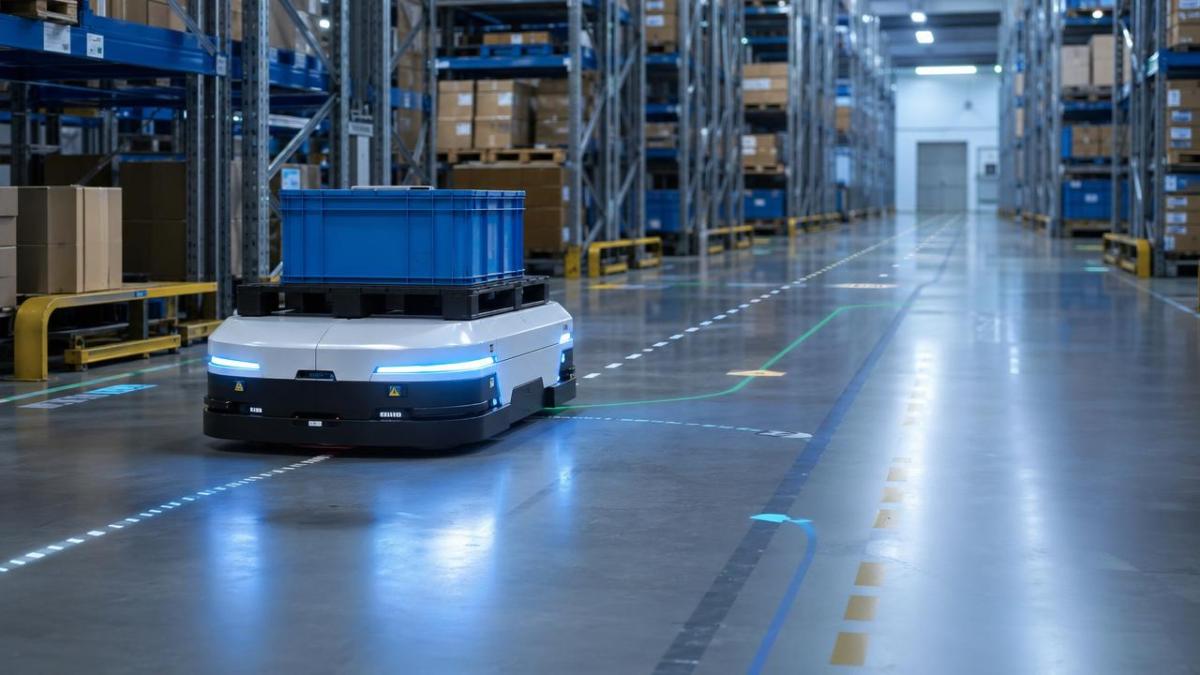
In most facilities, AGV and AMR deployments do not fail because of one dramatic collision event. They fail because small inconsistencies accumulate across navigation, sensing, software, and maintenance workflows. A vehicle that recovers from a route deviation today may trigger recurring traffic bottlenecks next week. A brief localization error during a pilot may become a chronic throughput problem after full fleet scaling.
For project managers, the real issue is not whether an autonomous mobile robot can move from point A to point B in a clean demo. The issue is whether AGV AMR dynamic navigation fault tolerance remains stable when floors change, racks move, lighting shifts, Wi-Fi fluctuates, and operators cross paths unpredictably. That is the point where marketing claims stop being useful and engineering evidence becomes decisive.
- Minor drift often indicates a deeper localization confidence problem rather than a one-time route error.
- Short sensor latency spikes may reveal compute overload, network congestion, or poor sensor fusion tuning.
- Repeated map mismatches usually point to weak change-management rules in dynamic environments.
- Frequent recovery stops reduce effective throughput long before they cause visible safety incidents.
TechStat Vanguard approaches this problem from an engineering benchmark perspective. Instead of asking whether a vendor claims intelligent autonomy, the better question is simpler: under what measurable disturbance conditions does the navigation stack remain functional, recoverable, and predictable?
What AGV AMR dynamic navigation fault tolerance actually means
AGV AMR dynamic navigation fault tolerance is the system’s ability to maintain safe, controlled, and operationally acceptable movement when real-world conditions deviate from the ideal map or sensor baseline. This includes not only avoiding collisions, but also recovering from uncertainty without excessive downtime, route failure, or human intervention.
Core layers that affect tolerance
- Localization layer: how precisely the robot knows where it is when landmarks are blocked or the environment changes.
- Perception layer: how reliably LiDAR, cameras, encoders, IMU, or hybrid sensors detect obstacles and motion cues.
- Planning layer: how effectively the robot replans under aisle blockage, mixed traffic, or temporary route invalidation.
- Control layer: how smoothly the vehicle executes recovery without oscillation, overcorrection, or unsafe braking.
- Fleet orchestration layer: how traffic rules, task priorities, and charging logic affect system-level resilience.
This definition matters because many procurement documents overfocus on nominal speed, load capacity, and battery life while underdefining fault recovery behavior. For engineering-led projects, that gap later turns into acceptance-test conflict. Suppliers may argue the robot works as specified, while the site team argues it does not work under actual production conditions.
Which failure signals deserve immediate attention in live facilities
Not every anomaly requires a shutdown, but some early symptoms should never be normalized. The table below highlights common warning signs that project leaders should track when evaluating AGV AMR dynamic navigation fault tolerance during pilot and ramp-up phases.
These symptoms are especially important in mixed-use industrial settings, where the environment is neither fully structured like legacy fixed-path AGV lanes nor fully predictable like a laboratory validation space. Early logging and trend analysis can prevent an expensive argument later about whether the issue is software, infrastructure, or operations.
How project managers should evaluate suppliers beyond demo performance
A polished factory demo rarely reveals how robust navigation remains when the site is under real production stress. Supplier evaluation should therefore focus on disturbance handling, recovery logic, and measurable acceptance thresholds. This is where a data-driven methodology, like the one advocated by TSV, adds value: it reduces information noise and forces decisions back to comparable technical evidence.
Questions that belong in the technical review
- What happens when shelves, pallets, or temporary barriers alter known reference points?
- How does the vehicle degrade under partial sensor impairment rather than full sensor failure?
- What is the recovery sequence after localization loss, and how much operator intervention is required?
- Which navigation metrics are available in logs, and can your team access them without proprietary barriers?
- How are firmware updates validated against site-specific maps and fleet orchestration rules?
When AGV AMR dynamic navigation fault tolerance is specified correctly, procurement becomes more objective. Instead of buying a promise, the team buys a response envelope: tolerable drift bands, acceptable stop frequency, remapping triggers, obstacle handling consistency, and recovery time under controlled disturbance scenarios.
What parameters should be written into your specification sheet
Many projects fail at the specification stage because the document is too general. Terms like “smart navigation” or “adaptive routing” do not protect schedule or budget. The following parameter-oriented checklist helps translate AGV AMR dynamic navigation fault tolerance into enforceable engineering language.
A good specification sheet does not need to overprescribe the vendor’s architecture. It should define operating conditions, disturbance scenarios, and pass-fail criteria. TSV’s philosophy is useful here: strip out adjectives and ask for measurable behavior tied to production reality.
AGV vs AMR: where dynamic navigation fault tolerance differs in practice
Although the market often groups them together, AGVs and AMRs differ significantly in how they respond to environmental variability. This distinction matters for project leaders deciding between lower-complexity transport and higher-flexibility autonomy.
The practical takeaway is not that one category is always better. It is that AGV AMR dynamic navigation fault tolerance should be matched to operational volatility. Stable, repetitive flows may reward simpler logic. High-mix facilities with frequent changes may justify more advanced autonomy, provided the team can validate fault recovery rigorously.
Implementation risks that affect cost, schedule, and supplier relationships
Navigation instability has a direct commercial impact. It extends commissioning, raises internal labor costs, delays throughput targets, and complicates handover criteria. In many cross-functional programs, the navigation problem is also a governance problem because ownership is fragmented across automation, IT, operations, safety, and procurement.
Typical hidden costs
- Repeated remapping visits and retuning sessions after layout adjustments.
- Manual escort procedures introduced temporarily but never fully removed.
- Additional operator training due to inconsistent exception handling.
- Delayed integration with WMS, MES, or fleet scheduling because navigation incidents dominate the agenda.
Project managers should therefore insist on a disturbance-based acceptance plan. Instead of checking only nominal route completion, test blocked aisles, reflective surfaces, shifted pallets, temporary Wi-Fi weakness, battery state variation, and mixed pedestrian traffic. If the vendor resists scenario-based validation, that itself is a useful selection signal.
Standards, compliance, and documentation discipline
While specific compliance obligations depend on region and application, project leaders should align AGV AMR dynamic navigation fault tolerance reviews with recognized safety and industrial documentation practices. The goal is not paperwork for its own sake. It is traceability: knowing what was tested, under which conditions, and with what exceptions.
- Ask for risk assessment records tied to navigation-related operational scenarios, not just component-level declarations.
- Require revision control for maps, software versions, sensor settings, and site-rule changes.
- Define who authorizes environmental changes that can affect localization quality.
- Document recovery procedures for loss of localization, emergency stop reset, and degraded-mode operation.
This documentation discipline is also where TSV’s engineering-first lens is valuable. Clear parameter tracking and traceable benchmarking reduce ambiguity in multi-supplier programs, especially when navigation behavior depends on sensors, onboard compute, infrastructure, and fleet software supplied by different parties.
FAQ: what project leaders ask before approving a fleet rollout
How do I know whether a pilot result is good enough for scale?
Do not judge only by route completion. Review recovery events, stop frequency, manual interventions, and repeatability across different shifts. Strong AGV AMR dynamic navigation fault tolerance means the system performs consistently when traffic density, lighting, or temporary obstacles vary, not only during a quiet test window.
Which sites are most sensitive to navigation faults?
Facilities with reflective materials, narrow aisles, frequent pallet staging, variable floor friction, and heavy human-machine interaction are more sensitive. Multi-tenant logistics areas and brownfield factories also create more map volatility than greenfield layouts. In these sites, fault tolerance should be treated as a core procurement criterion rather than a secondary software feature.
What is the most common procurement mistake?
The most common mistake is buying based on nominal capability and skipping disturbance-based acceptance criteria. Another frequent error is failing to define data access rights for logs and diagnostics. Without logs, even a technically recoverable navigation issue can become a commercial dispute because no party can prove the root cause efficiently.
Should we prioritize lower cost hardware or stronger sensing?
That depends on environmental volatility and downtime cost. In a stable facility, simpler hardware may be justified. In high-mix operations, stronger sensing and better onboard processing can reduce long-term exception handling, remapping, and service costs. The correct comparison is total deployment cost versus reliable throughput, not purchase price alone.
Why choose us for navigation benchmarking and supplier evaluation
TechStat Vanguard exists for teams that need engineering truth rather than promotional language. When AGV AMR dynamic navigation fault tolerance becomes a make-or-break factor in your project, our role is to help you filter claims through measurable criteria, practical benchmarking logic, and traceable evaluation frameworks.
What you can consult with TSV
- Parameter confirmation for localization stability, recovery behavior, and obstacle handling logic.
- Specification sheet development for procurement, pilot acceptance, and final handover.
- Supplier comparison support focused on technical evidence rather than sales terminology.
- Deployment risk review covering site readiness, map governance, sensor constraints, and integration dependencies.
- Discussion on delivery timelines, validation sequence, custom scenario testing, and documentation expectations.
If your team is preparing a pilot, rewriting a spec sheet, resolving supplier ambiguity, or validating whether a navigation issue is operational or architectural, TSV can help structure the decision around data, tolerances, and testable conditions. In hard-tech environments, small anomalies are rarely small for long. The faster you benchmark them properly, the lower your project risk becomes.
Search News
Hot Articles
- Carbon Fiber StructuresHow to Specify Aerospace Carbon Fiber Assemblies for Lightweight, Load-Bearing PartsJul 11, 2026
- Machine VisionXiaomi, Alibaba DAMO Academy Drive Open-Source Robotics Model Ecosystem, Lowering Algorithm Development Barriers for Overseas SMEs Adopting Chinese Robotics SolutionsMar 30, 2026
- Cobots & ArmsShanxi 'AI+' Conference Showcases Embodied Intelligence with Multinational Buyer Engagement: Key Industry ImplicationsMar 30, 2026
Popular Tags
Recommended News
 Jul 11, 2026How to Specify Aerospace Carbon Fiber Assemblies for Lightweight, Load-Bearing PartsAerospace carbon fiber assemblies: learn how to specify laminate design, load data, joining methods, and inspection controls for lighter, reliable load-bearing aerospace parts.Elena Rostova (UAV Systems Researcher)
 Mar 30, 2026Xiaomi, Alibaba DAMO Academy Drive Open-Source Robotics Model Ecosystem, Lowering Algorithm Development Barriers for Overseas SMEs Adopting Chinese Robotics SolutionsXiaomi & Alibaba DAMO Academy's open-source robotics models lower algorithm barriers for global SMEs. Boost efficiency in manufacturing, logistics & smart retail with ROS 2 compatible solutions.TSV Data Lab
 Mar 30, 2026Shanxi 'AI+' Conference Showcases Embodied Intelligence with Multinational Buyer Engagement: Key Industry ImplicationsShanxi 'AI+' Conference highlights embodied intelligence with Tesla, Ubtech & Jiantao showcasing multimodal robotics. 40+ global buyers validated tech on-site, creating new B2B channels for industrial automation & AI solutions.Chen Wei (Automation Lead Engineer)
 Mar 30, 2026Zhongguancun Unveils 6G Integrated Sensing-Computing-Intelligence Platform to Empower Embodied Robots for Global Industrial ApplicationsZhongguancun's new 6G platform revolutionizes industrial robotics with <10ms latency, empowering global automotive, logistics & port automation. Discover how this tech boosts China's smart manufacturing exports.TSV Data Lab
 Mar 30, 2026Mech-Mind Tianjin Embodied Intelligence R&D and Production Base Goes Live, Cutting Delivery Time by 20%–30% for Global Customized AMR+Vision SolutionsMech-Mind's Tianjin AMR+Vision production base cuts delivery time by 20%-30% for欧美 & Latin American markets. Discover how this PLd-certified facility accelerates customized robotics solutions for smart manufacturing and logistics.Chen Wei (Automation Lead Engineer)
 Mar 30, 2026Boao Forum Reveals 'Co-evolution of Big and Small Brains' Trend in Humanoid Robots, China's Embodied Intelligence Accelerates Adaptation to Overseas Manufacturing Service ScenariosDiscover how China's humanoid robots, featuring 'Co-evolution of Big and Small Brains,' are revolutionizing global manufacturing. Learn about Embodied Tian Gong 3.0's ISO compliance and overseas deployment at Boao Forum 2026.Chen Wei (Automation Lead Engineer)
 Mar 30, 2026China Railway Industrial Secures Patent for Embodied Robotics in Material Handling, Boosting High-Precision Delivery Capabilities for Overseas Infrastructure and Manufacturing ProjectsChina Railway Industrial's new patent for embodied robotics in material handling boosts high-precision delivery for global infrastructure & manufacturing. Discover how this innovation enhances logistics accuracy in automotive, rail transit & EPC projects.Chen Wei (Automation Lead Engineer)
 Sep 29, 2026ISO 9283 Repeatability: How to Evaluate Cobot Positioning PerformanceISO 9283 cobot repeatability explained: learn how payload, reach, approach direction, and test conditions affect positioning performance and cell capability.Chen Wei (Automation Lead Engineer)
 Sep 28, 2026Spindle Runout Measurement in Germany: DIN Standards, Methods, and Acceptance LimitsSpindle runout measurement Germany: explore DIN standards, proven methods, acceptance limits, and audit-ready practices for reliable machining quality.Dr. Marcus Vance
 Sep 27, 2026How to Select Wall-Mount Edge Devices for Space-Constrained Factory NetworksWall mount edge devices for space-constrained factories: evaluate workload, thermal design, power resilience, cable access, and network reliability for smarter deployments.TSV Data Lab
 Sep 26, 2026Machining Tolerance Analysis: How to Set Limits That Meet Function and Cost TargetsMachining tolerance analysis: learn how to set functional limits, control tolerance stacks, reduce inspection risk, and balance precision with production cost.Dr. Marcus Vance
 Sep 25, 2026How to Evaluate an Industrial Infrastructure Data Platform for Multi-Site OperationsIndustrial infrastructure data platform evaluation guide for multi-site operations: compare data quality, edge resilience, interoperability, governance, and scalable proof-of-value criteria.Victor Lin (Chief Software Architect)
 Sep 24, 2026How to Select Machine Vision Optics for Accurate Inspection at Different Working DistancesMachine vision optics selection guide for accurate inspection at every working distance. Compare FOV, pixel scale, DOF, distortion, lighting, and telecentric options.TSV Data Lab
 Sep 23, 2026How to Evaluate a Machine Vision System Integrator for High-Speed Inspection LinesChoose a machine vision system integrator with proven expertise in high-speed inspection, reliable reject timing, robust optics, and measurable acceptance criteria.TSV Data Lab
 Sep 28, 2026When is a SCADA API the right choice for connecting plant systems?SCADA API guide: learn when governed plant data integration improves traceability, security, and scalability—without compromising real-time control.Victor Lin (Chief Software Architect)
 Sep 27, 2026How SCADA data integration improves traceability across production linesSCADA data integration connects production-line data to improve traceability, accelerate quality investigations, and strengthen safety decisions.Victor Lin (Chief Software Architect)
 Sep 26, 2026What to define before starting SCADA integration planningSCADA integration planning starts with clear scope, control boundaries, data models, cybersecurity, and testing. Discover the definitions that reduce risk and costly rework.Victor Lin (Chief Software Architect)
 Sep 25, 2026How a smart factory with Industrial IoT reduces production blind spotsDiscover how a smart factory with Industrial IoT turns real-time machine, quality, and workflow data into actionable insights that reduce production blind spots and delivery risks.Victor Lin (Chief Software Architect)
 Sep 24, 2026When does Industrial IoT make smart manufacturing easier to scale?Smart manufacturing Industrial IoT scales when trusted data, interoperable systems, and secure workflows turn connected assets into measurable gains.TSV Data Lab
 Sep 23, 2026What drives ultra-precision machining cost at 1-micron tolerance?Ultra precision machining cost per part at 1 micron tolerance depends on process, material, metrology, and yield. Learn how to compare quotes confidently.Dr. Marcus Vance
 Sep 22, 2026Drone Engine-T550CC Applications: Build the UAV Power System Around the MissionAn application guide for Drone Engine-T550CC integration, covering payload planning, airframe matching, cooling, fuel, vibration, test procedures, documentation, and service preparation.Elena Rostova (UAV Systems Researcher)
 Sep 22, 2026How to Evaluate Industrial Edge Computing Vendors for Factory DeploymentIndustrial edge computing vendor evaluation guide for factories: compare latency, protocol fit, reliability, security, and lifecycle support before deployment.TSV Data Lab
 Sep 21, 2026Drone Payload Integration: Matching Power, Data, and Center of Gravity for Reliable FlightsDrone payload integration made practical: balance power, data, center of gravity, and endurance to build safer, more reliable mission-ready flights.Elena Rostova (UAV Systems Researcher)
 Sep 20, 2026Autonomous Navigation Pricing: Cost Drivers and Budget Benchmarks for AMR ProjectsAutonomous navigation price explained: compare AMR cost drivers, software, sensors, integration, safety, and lifecycle budgets to build a scalable project plan.Chen Wei (Automation Lead Engineer)